
50+ languages

 Stuttgart · Germany
 Stuttgart Audio Tours
Discover Stuttgart with self-guided audio walking tours
headphones
3 tours
pin_drop
20 landmarks
translate
Stuttgart tours
Pick a Stuttgart worth walking.
Self-guided audio tours written by people who actually live there.
3 tours

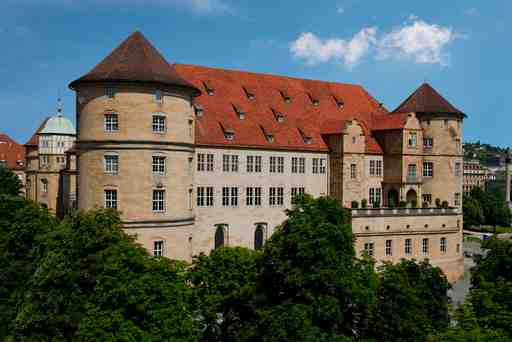
Stuttgart Highlights Audio Tour: Royal and Cultural Heritage
Beneath the gleaming facade of Stuttgart lies a graveyard of burnt archives and forgotten rebellions where history bleeds into the pavement. This self-guided audio tour peels back the layers of the city. Navigate the pulse of Schlossplatz and the shadows of the Old Castle to uncover secret scandals and political betrayals that most travelers walk right past. Did a mad king really orchestrate the final fall of his own dynasty from these walls? What dark ceremony took place inside the Kunstmuseum before the glass cube rose to power? Why was a golden stag seen running through the city center three days before the great fire? Prepare for a visceral journey through shifting power and architectural defiance. Trade the standard guidebooks for a raw exploration of crumbling empires and urban intrigue. Plug in your headphones and start walking to reclaim the city history tried to silence.
Stuttgart Audio Tour: Campus Chronicles and Urban Legends of Universität
Clouds of invention once swirled here alongside whispers of ghosts and revolution. Stuttgart’s storied heart beats beneath the surface, where the University’s thinkers clashed and the silent gravestones of Hoppenlaufriedhof conceal centuries of secrets. This self-guided audio tour leads through hidden side streets, hospital corridors with buried histories, and the vibrant campus where ideas ignited protests and transformed the city. Peel back layers of genius, struggle, and scandal that most visitors never notice. Which urgent message once tore through Stuttgart Clinic’s wards? What unsolved puzzle lingers among the graves in Hoppenlaufriedhof? Why did a single locked classroom change the city’s future forever? Move between past and present, each footstep stirring up drama. Around every corner, find new legends that rewrite how you see Stuttgart. Begin the journey now and stand amidst stories that refuse to rest quietly.
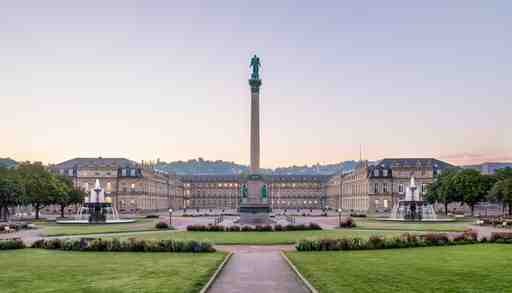
Stuttgart Audio Tour: Historic Gems and Cultural Echoes
A secret room once echoed beneath the marble floors of Stuttgart’s New Palace, hiding more than royal whispers. This self-guided audio tour peels back layers of history as you wander gardens and galleries most travelers overlook. See Stuttgart not through a brochure but through its shadows, intrigue, and artful corners. Why did an ordinary afternoon in Oberer Schlossgarten trigger a political uproar that changed the city forever? What priceless painting vanished from Staatsgalerie Stuttgart only to reappear under suspicious circumstances? Whose story haunts the House of History, where a quiet revolution nearly toppled an entire regime? And why does one statue bear a mysterious crack, unnoticed by hurrying crowds? Move from palace corridors to hidden parks. Trace rebellion in painted halls. Let every footstep pull you deeper into Stuttgart’s secret soul. Press play and unlock the city. Stuttgart is waiting for you to discover its hidden depths.
Top landmarks
The Stuttgart everyone knows.
The landmarks in every guidebook — and the tours that tell you what guidebooks don't.
A few words on Stuttgart
Vineyard terraces and the world's fastest cars.
Stuttgart sits in a bowl, the Kessel, ringed by forested hills and cut through by vineyard terraces that produce actual, drinkable Trollinger and Lemberger wine right within the city limits. It is a strange arrangement: one of Germany's most industrially serious cities, home to Mercedes-Benz and Porsche and their respective museums, wrapped in a topography that looks borrowed from the Rhine valley.
The car museums alone would justify a trip.
The Mercedes-Benz Museum in Bad Cannstatt traces the entire history of the automobile from the Benz Patent-Motorwagen of 1885, and the Porsche Museum in Zuffenhausen is a piece of architecture as interesting as the cars inside it. But Stuttgart is also the city of the Staatsgalerie, one of Germany's finest art collections, whose James Stirling extension from 1984 is a postmodern landmark still worth studying. The Weissenhof Estate, a 1927 housing exhibition designed by Mies van der Rohe, Le Corbusier, and Walter Gropius among others, is a UNESCO World Heritage Site at the edge of the city.
Stuttgart
Stuttgart FAQ
Before you walk.
Yes, Stuttgart is quite hilly and the Kessel topology makes even short routes involve climbs. The city centre around Schlossplatz and Marktplatz is fairly flat, but heading towards the Weissenhof or the vineyard terraces involves significant gradients. Wear comfortable shoes with grip, and consider the cog railway or rack railway for getting between levels.
Stuttgart's U-Bahn, S-Bahn and bus network is excellent and covers the entire city including the car museums in Bad Cannstatt and Zuffenhausen. A day pass (Tageskarte) covers unlimited travel across all zones. The main station, Stuttgart Hauptbahnhof, is in the city centre and is a good starting point.
The Mercedes-Benz Museum and Porsche Museum are both popular and can get busy on weekends. Online booking is available and recommended, especially at weekends or during school holidays. Both are reached by public transport: the S-Bahn to NeckarPark for Mercedes-Benz and the S6 to Neuwirtshaus for Porsche.
Stuttgart takes Swabian cuisine seriously. Look for Maultaschen (pasta parcels in broth), Linsen mit Spatzle (lentils with egg noodles), and Zwiebelstuppe (onion soup) at traditional Besenwirtschaften, the seasonal wine taverns that open in the vineyard-owning suburbs. Trollinger is the local red wine, lighter in style than most German reds.
Every Stuttgart tour, in your language.
All 50+ languages, included with every booking.
🇬🇧 English🇫🇷 Français🇪🇸 Español🇩🇪 Deutsch🇮🇹 Italiano🇯🇵 日本語🇨🇳 中文🇰🇷 한국어+ 41 more
star AudaTours Unlimited
Visiting more than one city? Subscribe.
Unlock every Stuttgart tour — plus thousands more worldwide. Cancel any time.
$4.99/week · Cancel anytime



Loved by travellersThousands of tours started.
Thousands of tours started.
Plenty of opinions.
4.8 across the App Store and Google Play. Here's a few we keep coming back to.
starstarstarstarstar
This tour was such a great way to see the city. The stories were interesting without feeling too scripted, and I loved being able to explore at my own pace.

Jess
Tbilisi Tourstarstarstarstarstar
This was a solid way to get to know Brighton without feeling like a tourist. The narration had depth and context, but didn't overdo it.

Christoph
Brighton Tourstarstarstarstarstar
Started this tour with a croissant in one hand and zero expectations. The app just vibes with you, no pressure, just you, your headphones, and some cool stories.

John
Marseille Tourdownload Get the app Pop your headphones in.


Pop your headphones in.
Step outside.
Free to download. Tours in every city. Start in 60 seconds — no account, no card.

headphones
~ 4 min until your first tour starts
public
1,000+ cities worldwide
all_inclusive
AudaTours
Unlimited
Every tour. Every city. One subscription.
3097 tours2273 cities138 countries50+ languages
$39 /year
all_inclusive Explore Unlimited