
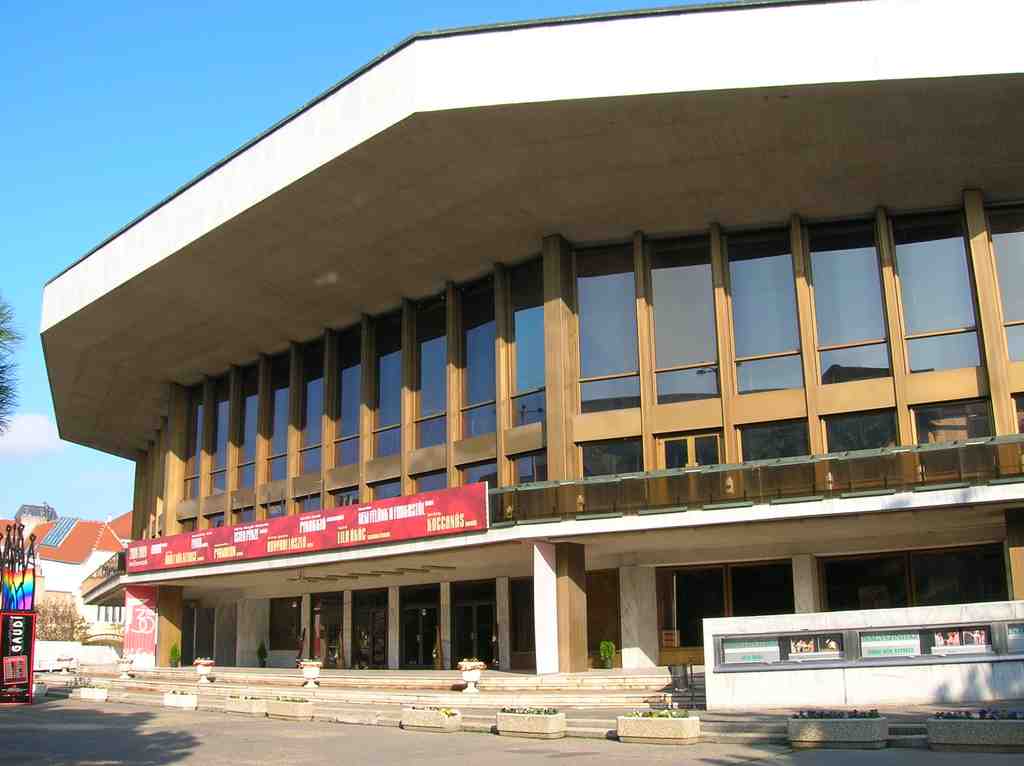
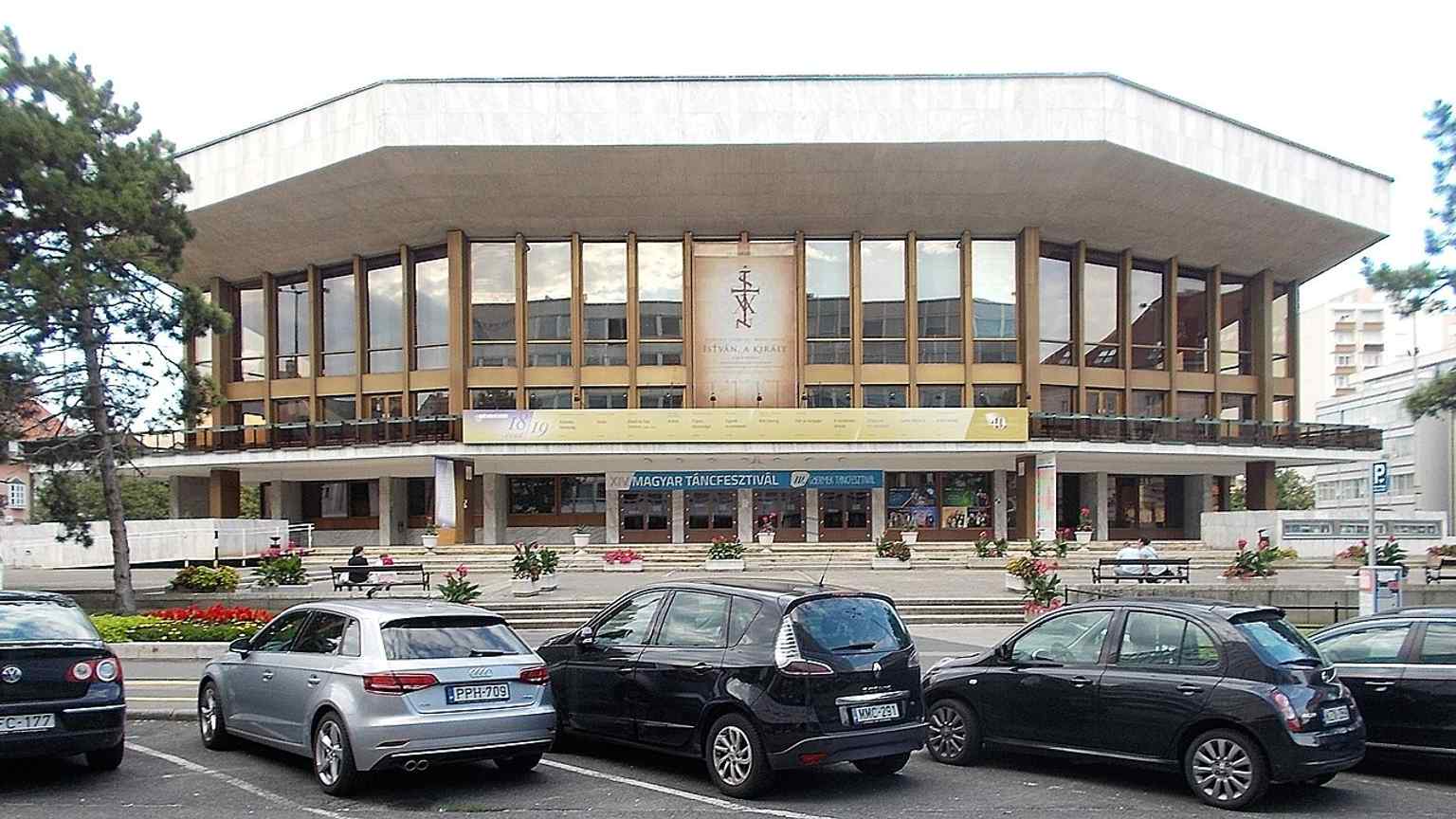
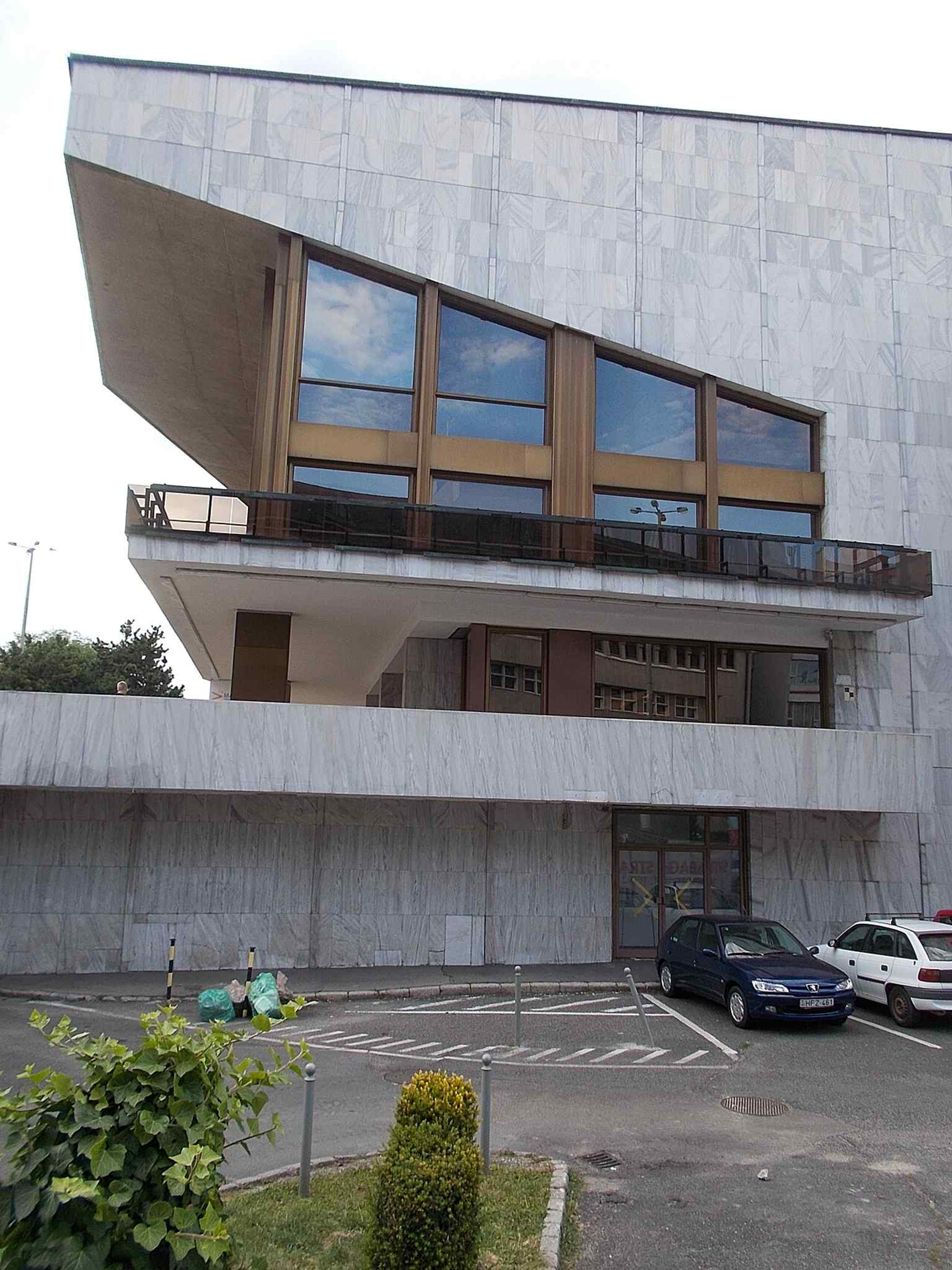
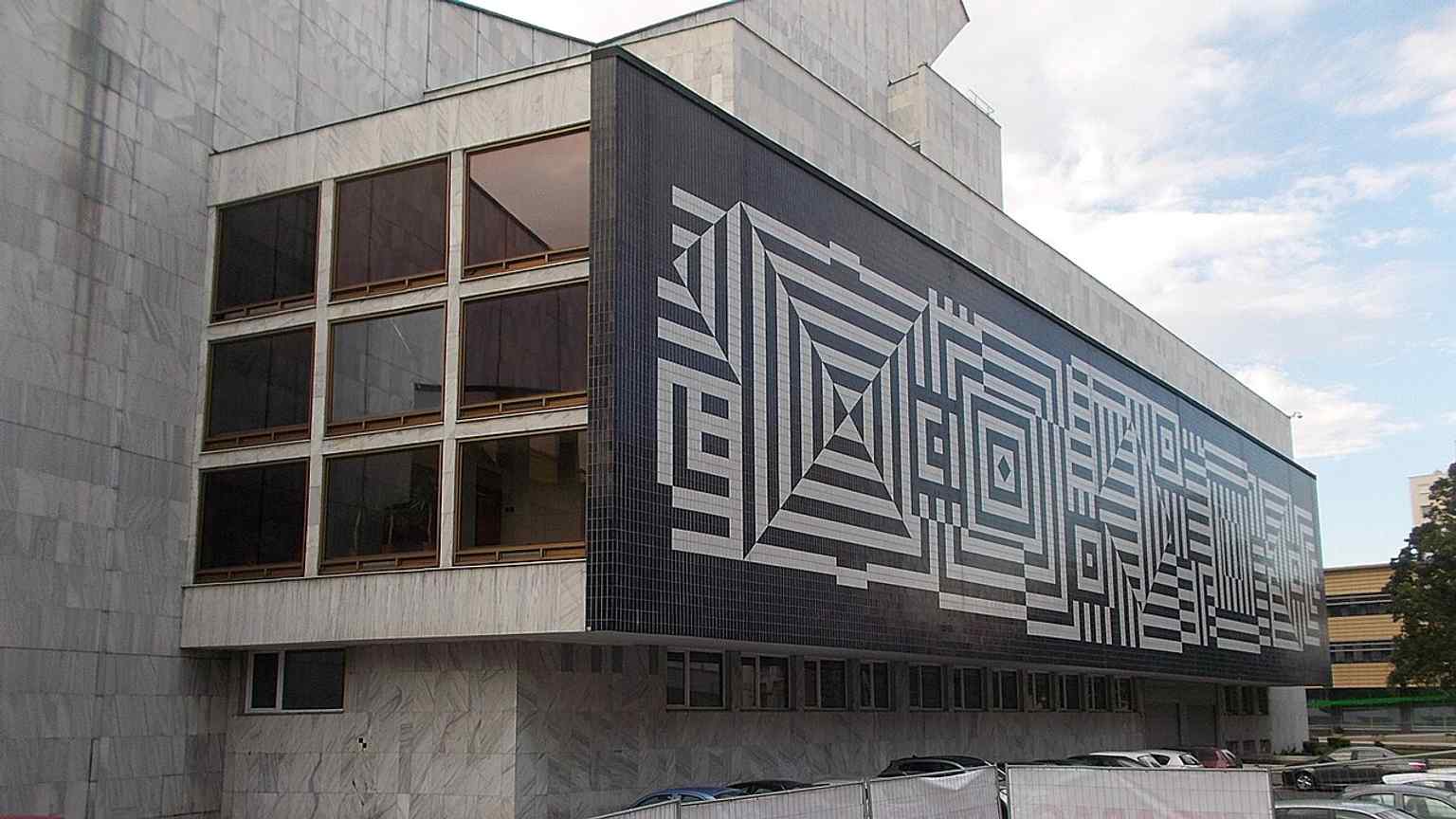
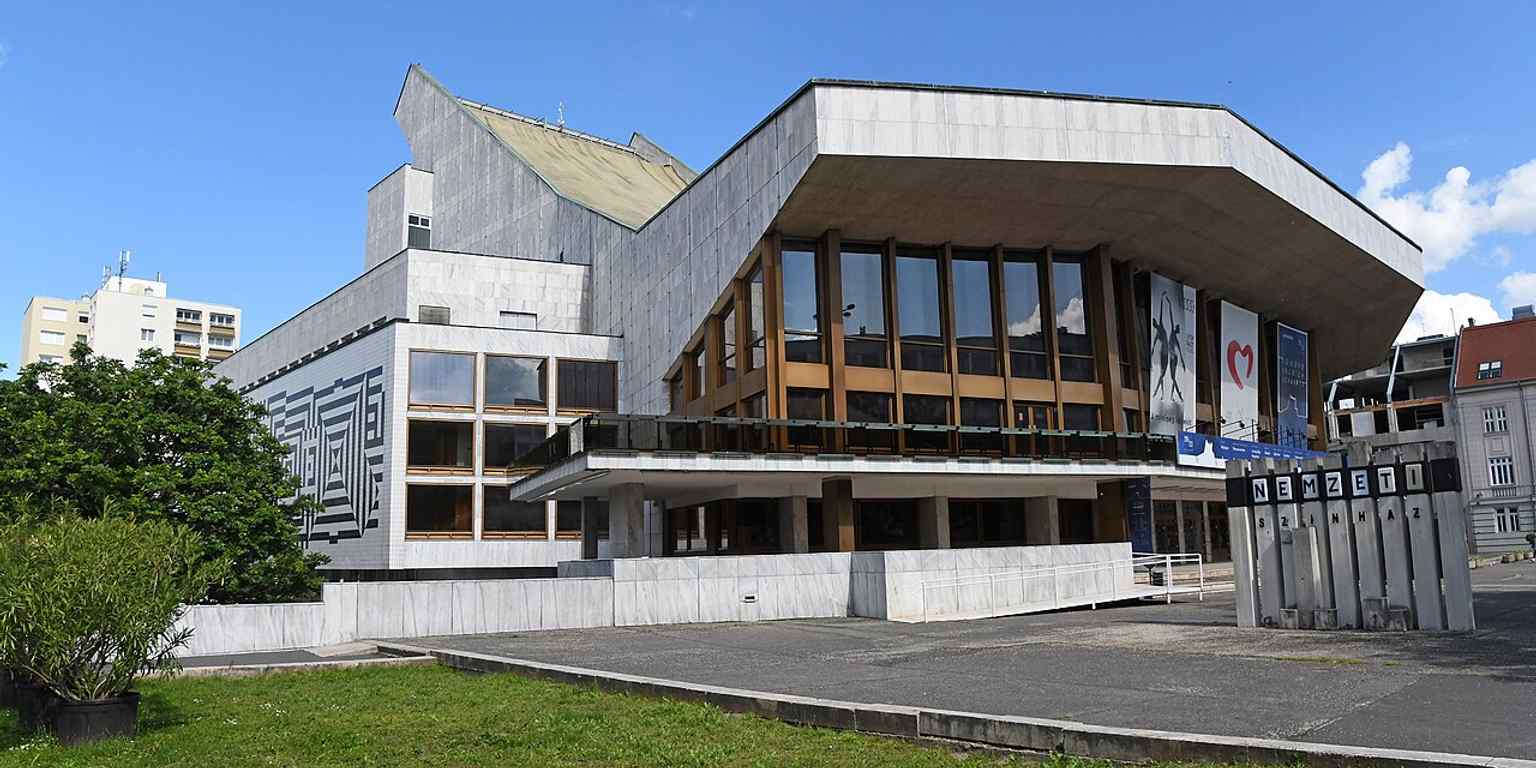
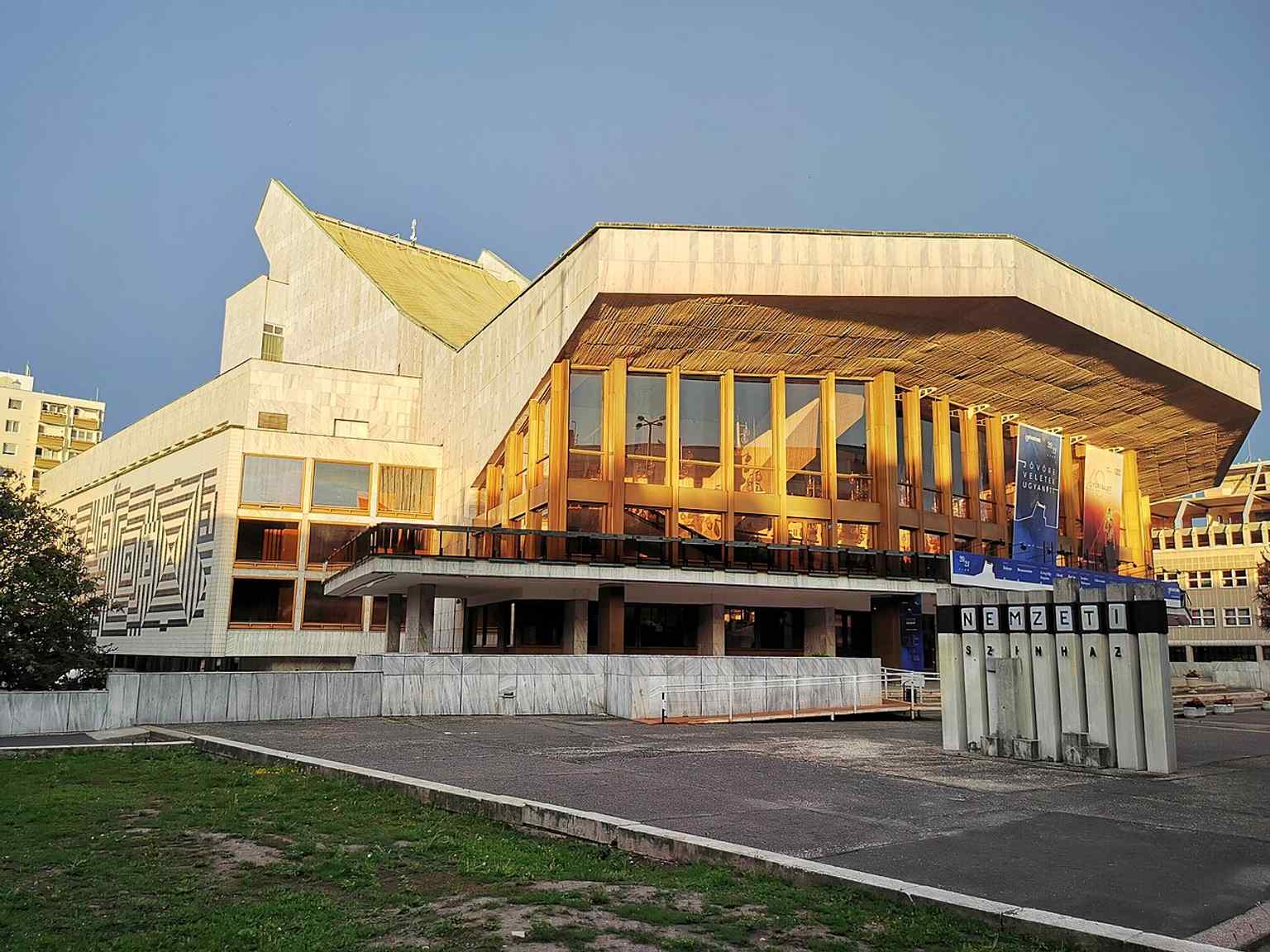
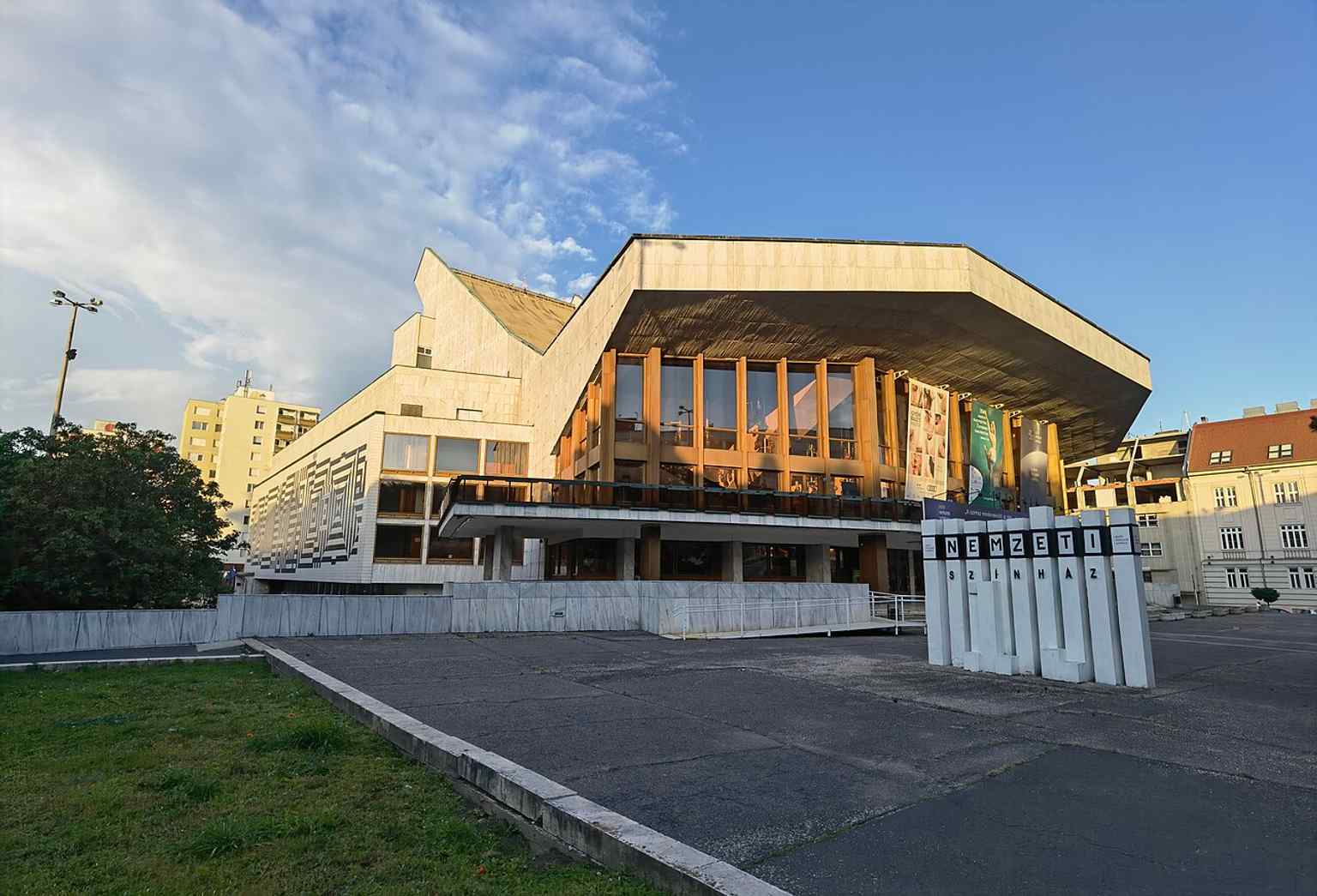
Ahead of you is a broad, pale stone theater with stacked angular volumes and a huge geometric ceramic mural by Victor Vasarely marking the facade.
For a city with such a serious theater building, Győr began with a much scrappier idea of performance. Long before anyone gave drama its own marble-clad headquarters, the city used classrooms, inns, square-side booths, and whatever open space would cooperate. That is a useful clue for this whole walk: in Győr, public life has long liked an audience.
The first known trace of theater here appears in the Jesuit school. In sixteen forty, students performed a Latin school drama called Ignatius Victor. By the eighteenth century, school plays had become regular, mostly in Latin, with the occasional Hungarian piece slipping in. German-language theater arrived early too; the first sure record dates to seventeen forty-two.
And then things got gloriously less formal. Traveling players set up on Széchenyi Square, performed in the great hall of the White Lamb Inn, and sometimes simply played outdoors. In seventeen fifty-two, the earliest Győr performer we know by name, Jakab Brenner, entertained the town with fairy-tale plays. Two years later, three actors from Ignác Piloty’s troupe got accused of disturbing the peace. Which, for actors, is almost job-related behavior. Their director intervened, and they were released.
If you want one person to remember from this beginning, try József Reinpacher. He ran a coffeehouse, looked at Győr’s wandering theatrical life, and in seventeen ninety-eight decided that the city deserved something sturdier. He built the first stone theater on what is now Radó Island. Well... partly stone. The entrance hall was wood, so even the “stone theater” kept one foot in improvisation. German and then Hungarian actors used that building for one hundred and thirty years, until demolition in nineteen twenty-seven.
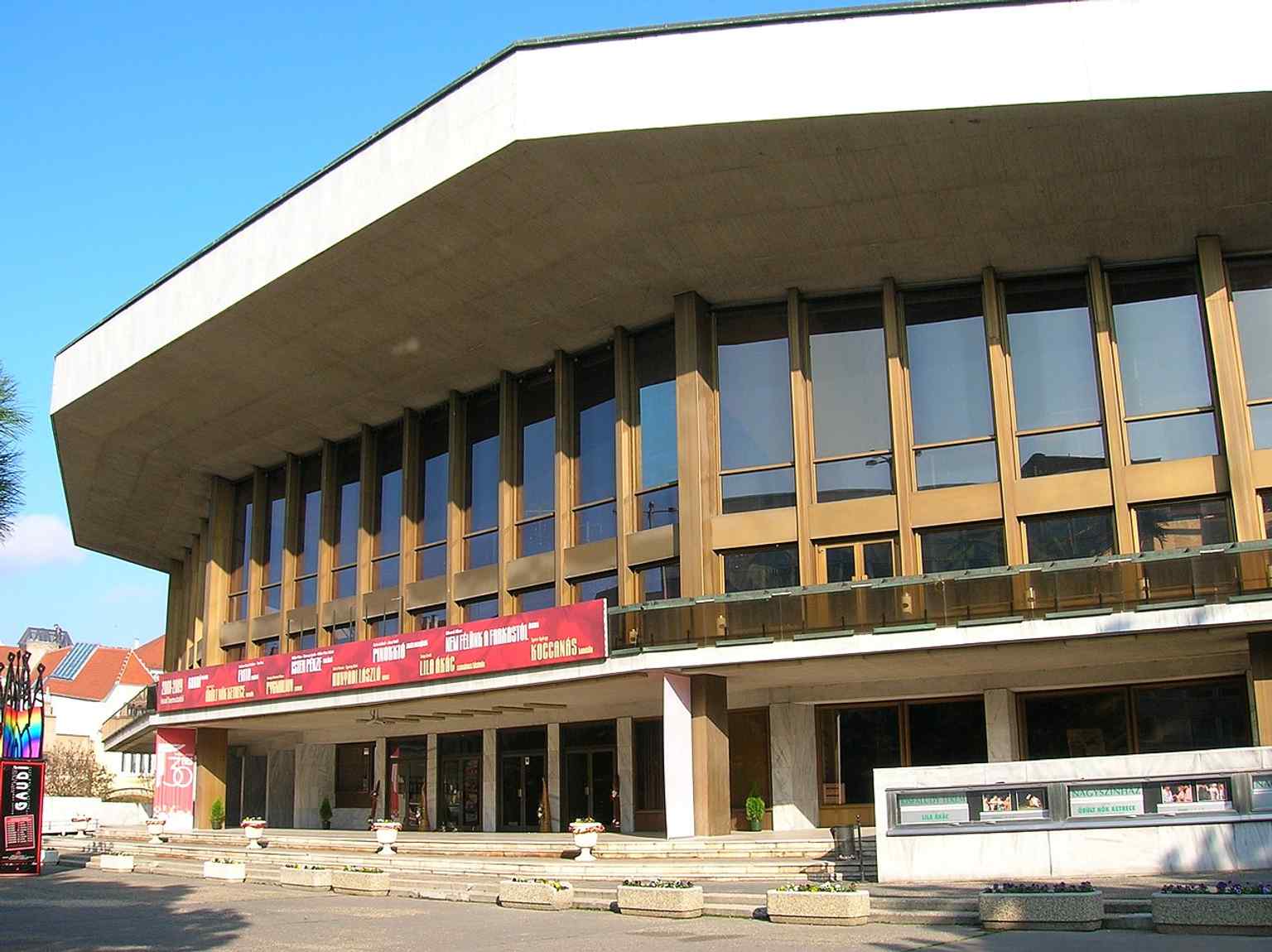
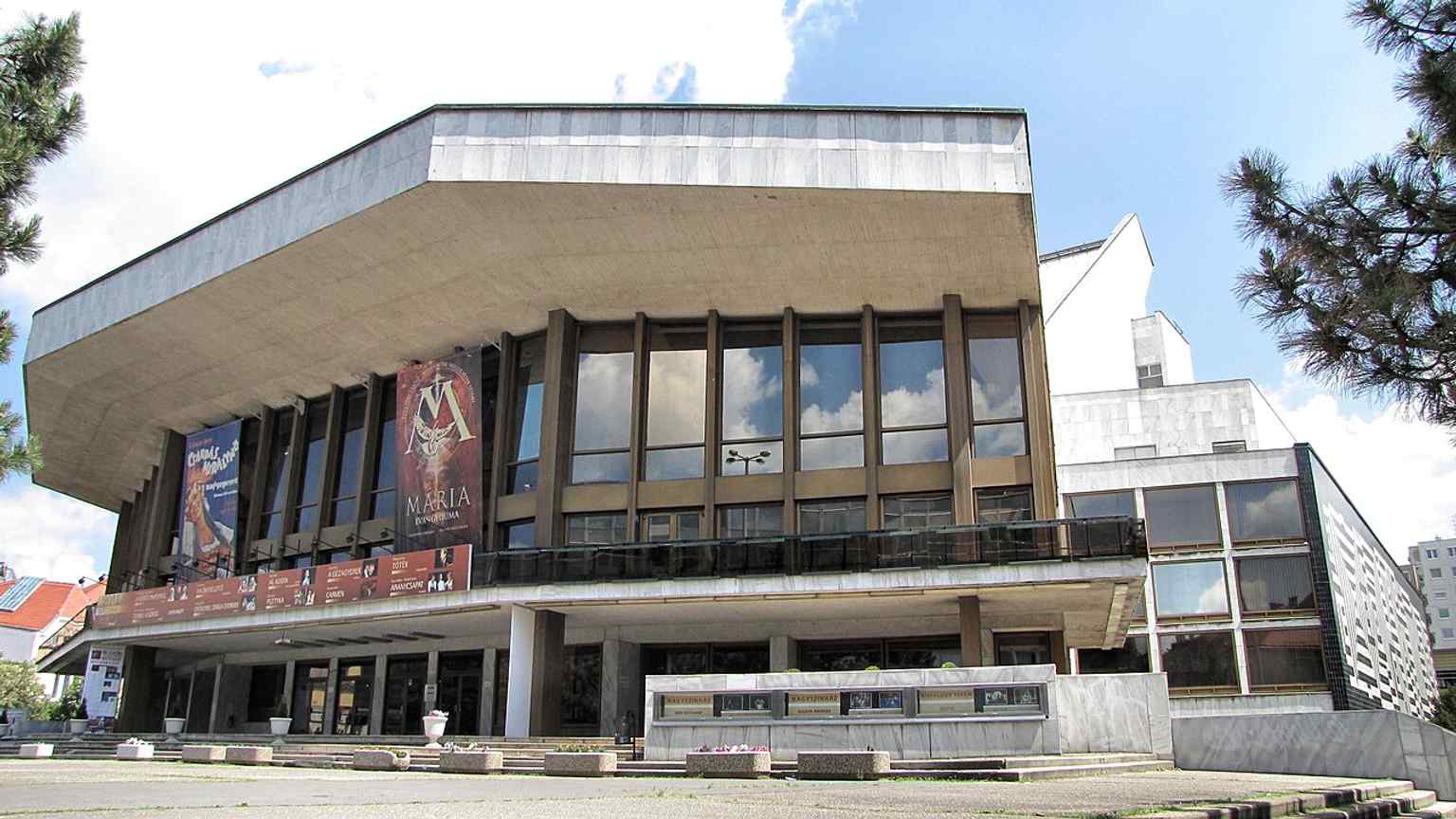
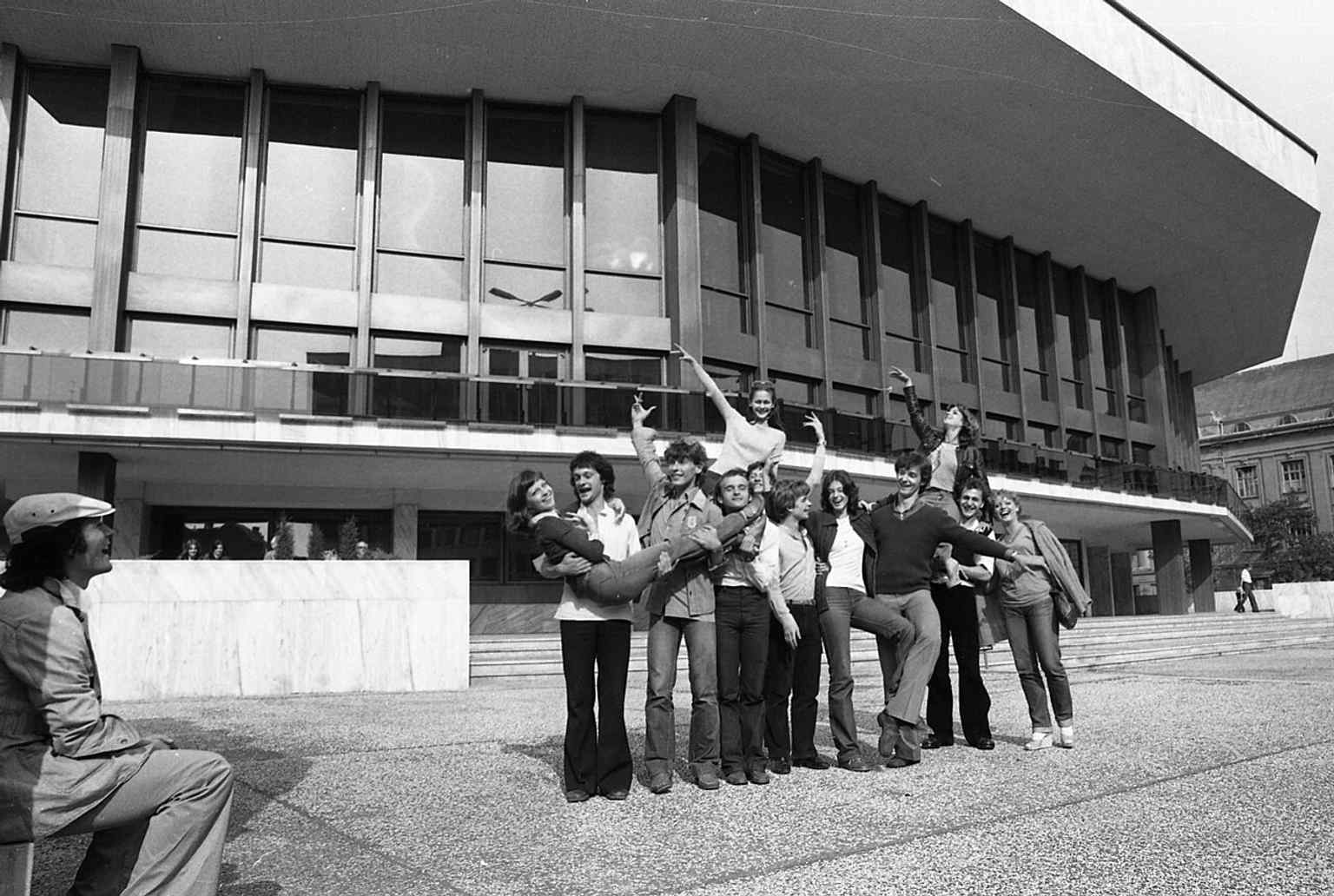
After that, Győr spent decades making do: a summer wooden theater, then a city culture house from nineteen thirty-seven onward. This building finally rose between nineteen seventy-three and nineteen seventy-eight, on a site that partly reused the foundations of the old fortress wall and partly reached into the former moat. When it opened on the second of November, nineteen seventy-eight, it carried the name of Károly Kisfaludy. The first actual performance came two days later: Illyés Gyula’s Fáklyaláng. In nineteen ninety-two, the institution took the name Győr National Theatre.
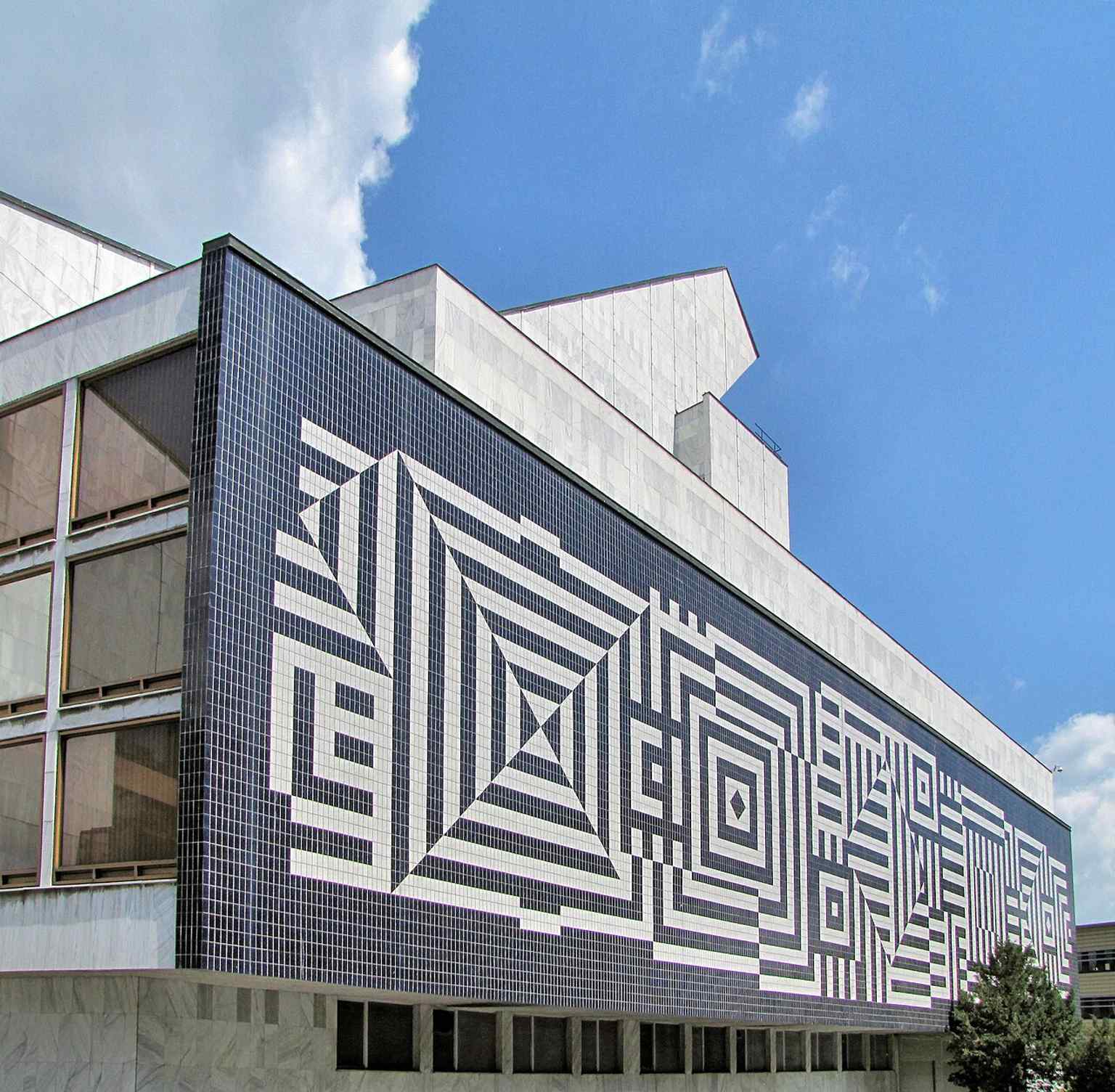
If you check the image in the app, the Vasarely mural becomes easier to read as a giant piece of op-art, meaning abstract geometry that tricks the eye into sensing movement. That restless surface fits the place nicely. Even now, the building performs. It seats about seven hundred people, and its stage machinery was designed to shift shape for opera, drama, and large productions.
And offstage drama has not vanished either. In twenty twenty-one, when Bakos-Kiss Gábor became director, the decision caused a stir well beyond the building. A reminder that theater people are not the only ones who understand timing.
So carry this question with you: when does a city stop merely hosting performances and start presenting itself? We’ll keep testing that idea at the next stop, the county archives, about a six-minute walk from here.







%2C%202018%20Gy%C5%91r.jpg)


