
Gyor Highlights Audio Tour: Historic Charms
Beneath the baroque grace of Győr lies a landscape scorched by fire, radical rebellion, and whispered betrayals that history books often neglect. This self-guided audio tour navigates the narrow, winding streets to reveal the hidden narratives trapped behind ancient stone walls. Discover the secret lives and scandalous turning points that the average traveler walks past without a second glance. Did a phantom hand really orchestrate the chaos during the city’s most brutal political siege? What dark tragedy forced the bells of the Basilica to stay silent for an entire century? And why does a single unmarked floor tile in the Synagogue still command such intense reverence? Stroll through corridors of time where past battles collide with modern beauty. Experience the city not just as a map, but as a living theater of forgotten human drama. Open your ears to the ghosts of Győr and begin your discovery now.
Tour preview
About this tour
- scheduleDuration 90–110 minsGo at your own pace
- straighten3.4 km walking routeFollow the guided path
- location_on
- wifi_offWorks offlineDownload once, use anywhere
- all_inclusiveLifetime accessReplay anytime, forever
- location_onStarts at Győr National Theatre
Stops on this tour
lock_open 3 free previews · 11 unlock with purchase
Ahead of you is a broad, pale stone theater with stacked angular volumes and a huge geometric ceramic mural by Victor Vasarely marking the facade. For a city with such a serious…Read moreShow less
Open dedicated page →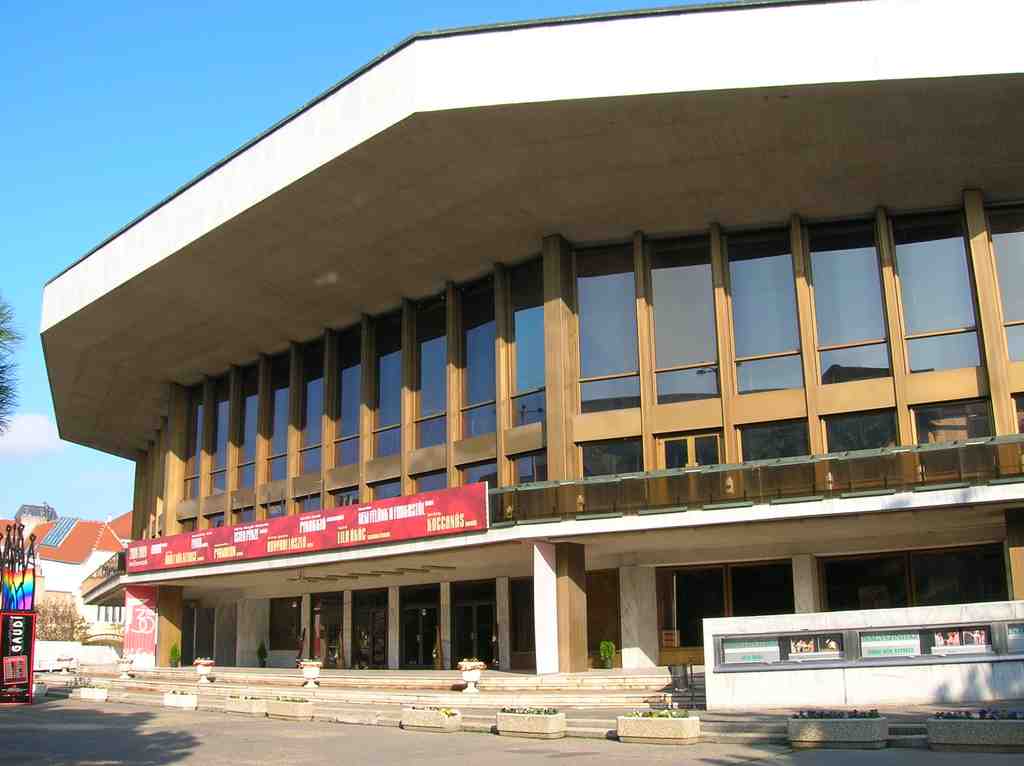
Győr National TheatrePhoto: User:Alensha, Wikimedia Commons, CC BY-SA 3.0. Cropped & resized. Ahead of you is a broad, pale stone theater with stacked angular volumes and a huge geometric ceramic mural by Victor Vasarely marking the facade.
For a city with such a serious theater building, Győr began with a much scrappier idea of performance. Long before anyone gave drama its own marble-clad headquarters, the city used classrooms, inns, square-side booths, and whatever open space would cooperate. That is a useful clue for this whole walk: in Győr, public life has long liked an audience.
The first known trace of theater here appears in the Jesuit school. In sixteen forty, students performed a Latin school drama called Ignatius Victor. By the eighteenth century, school plays had become regular, mostly in Latin, with the occasional Hungarian piece slipping in. German-language theater arrived early too; the first sure record dates to seventeen forty-two.
And then things got gloriously less formal. Traveling players set up on Széchenyi Square, performed in the great hall of the White Lamb Inn, and sometimes simply played outdoors. In seventeen fifty-two, the earliest Győr performer we know by name, Jakab Brenner, entertained the town with fairy-tale plays. Two years later, three actors from Ignác Piloty’s troupe got accused of disturbing the peace. Which, for actors, is almost job-related behavior. Their director intervened, and they were released.
If you want one person to remember from this beginning, try József Reinpacher. He ran a coffeehouse, looked at Győr’s wandering theatrical life, and in seventeen ninety-eight decided that the city deserved something sturdier. He built the first stone theater on what is now Radó Island. Well... partly stone. The entrance hall was wood, so even the “stone theater” kept one foot in improvisation. German and then Hungarian actors used that building for one hundred and thirty years, until demolition in nineteen twenty-seven.
After that, Győr spent decades making do: a summer wooden theater, then a city culture house from nineteen thirty-seven onward. This building finally rose between nineteen seventy-three and nineteen seventy-eight, on a site that partly reused the foundations of the old fortress wall and partly reached into the former moat. When it opened on the second of November, nineteen seventy-eight, it carried the name of Károly Kisfaludy. The first actual performance came two days later: Illyés Gyula’s Fáklyaláng. In nineteen ninety-two, the institution took the name Győr National Theatre.
If you check the image in the app, the Vasarely mural becomes easier to read as a giant piece of op-art, meaning abstract geometry that tricks the eye into sensing movement. That restless surface fits the place nicely. Even now, the building performs. It seats about seven hundred people, and its stage machinery was designed to shift shape for opera, drama, and large productions.
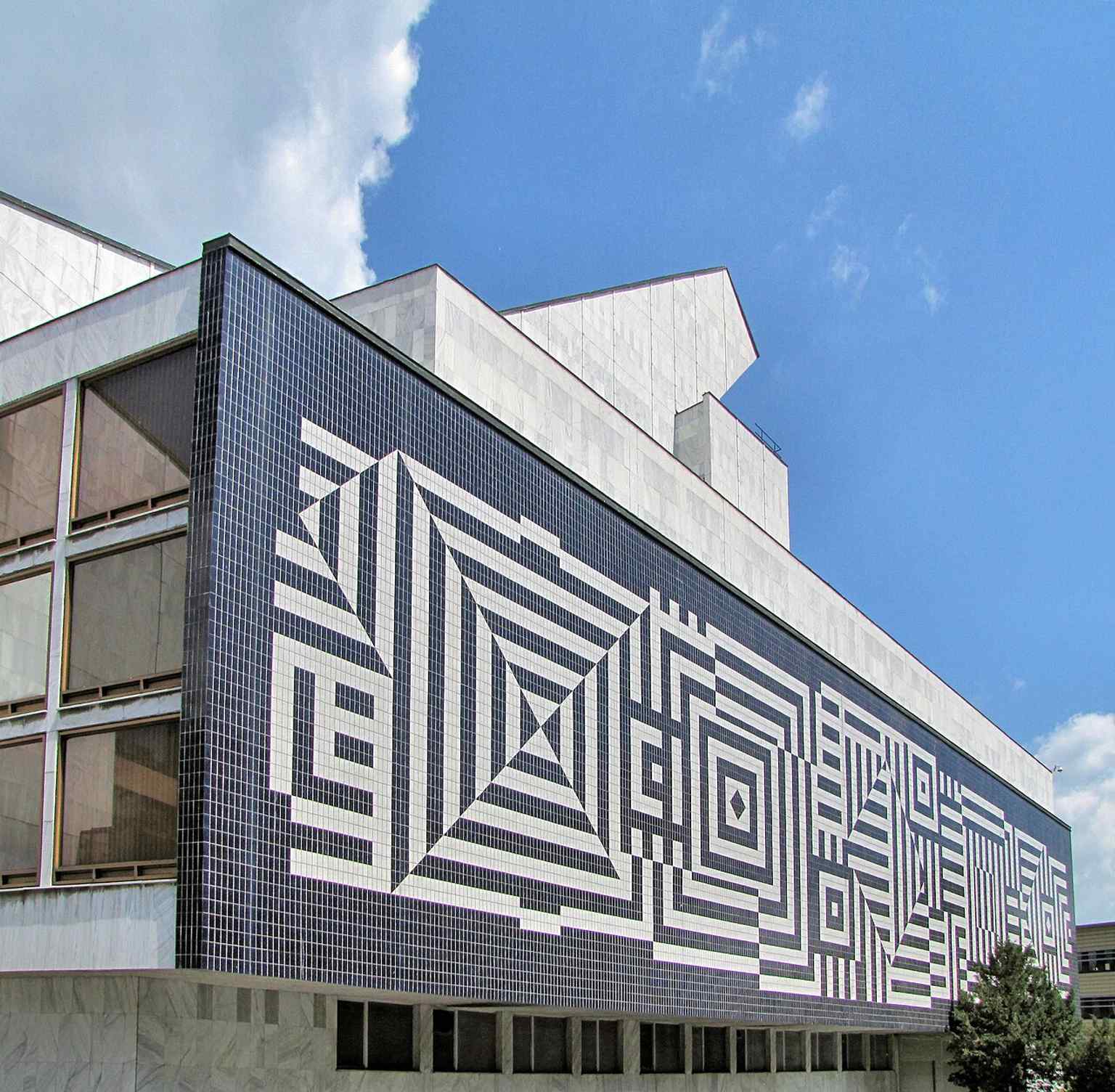
Victor Vasarely’s ceramic op-art facade mural, one of the theatre’s most distinctive details mentioned in the building description.Photo: KovacsDaniel, Wikimedia Commons, CC BY-SA 3.0. Cropped & resized. And offstage drama has not vanished either. In twenty twenty-one, when Bakos-Kiss Gábor became director, the decision caused a stir well beyond the building. A reminder that theater people are not the only ones who understand timing.
So carry this question with you: when does a city stop merely hosting performances and start presenting itself? We’ll keep testing that idea at the next stop, the county archives, about a six-minute walk from here.
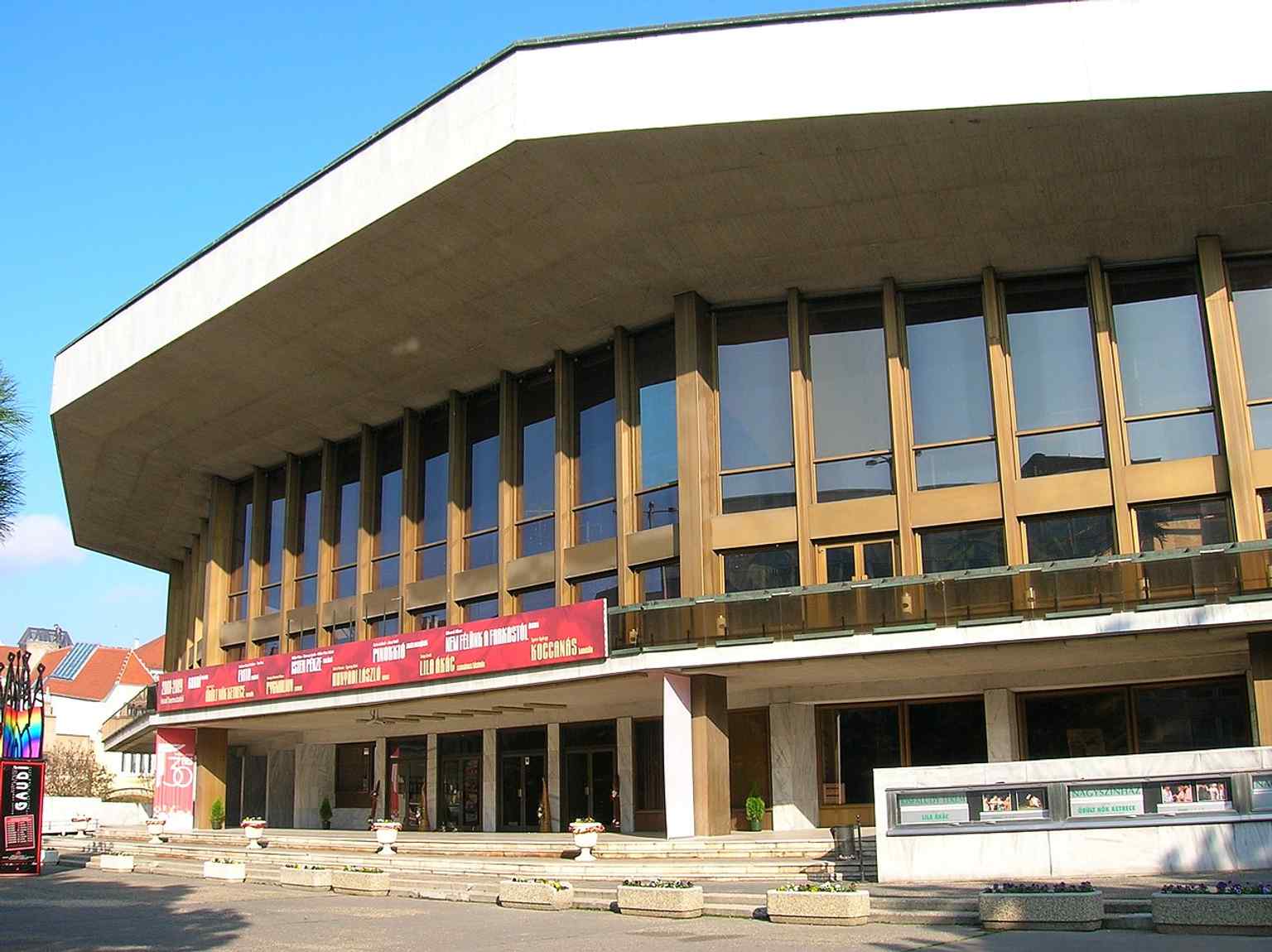
Front view of the Győr National Theatre entrance, the modern building opened in 1978 after decades without a permanent city theatre.Photo: User:Alensha, Wikimedia Commons, CC BY-SA 3.0. Cropped & resized. 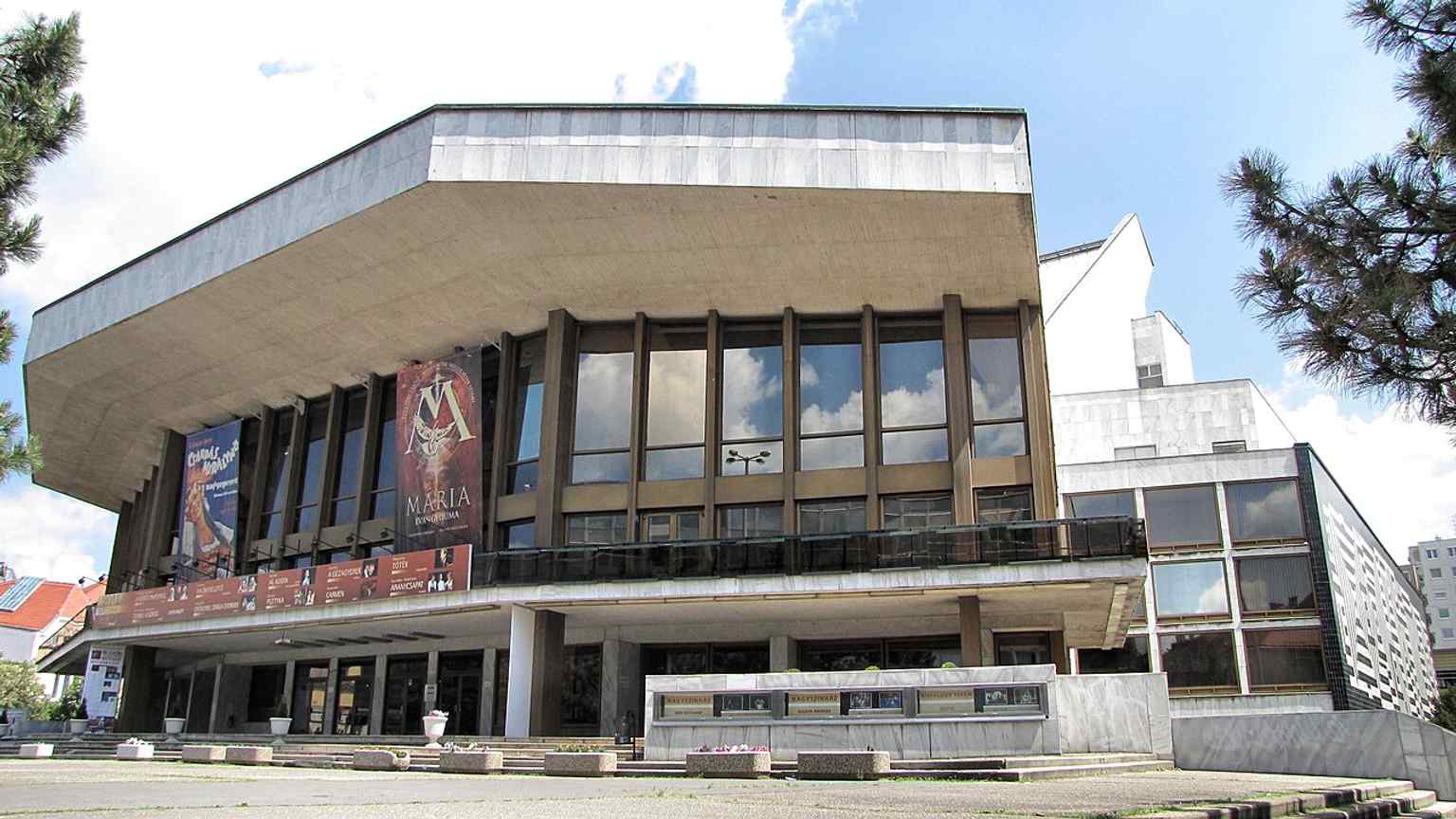
A clear wide exterior of the theatre, matching the 1978 building that replaced the old Radó Island stone theatre.Photo: KovacsDaniel, Wikimedia Commons, CC BY-SA 3.0. Cropped & resized. 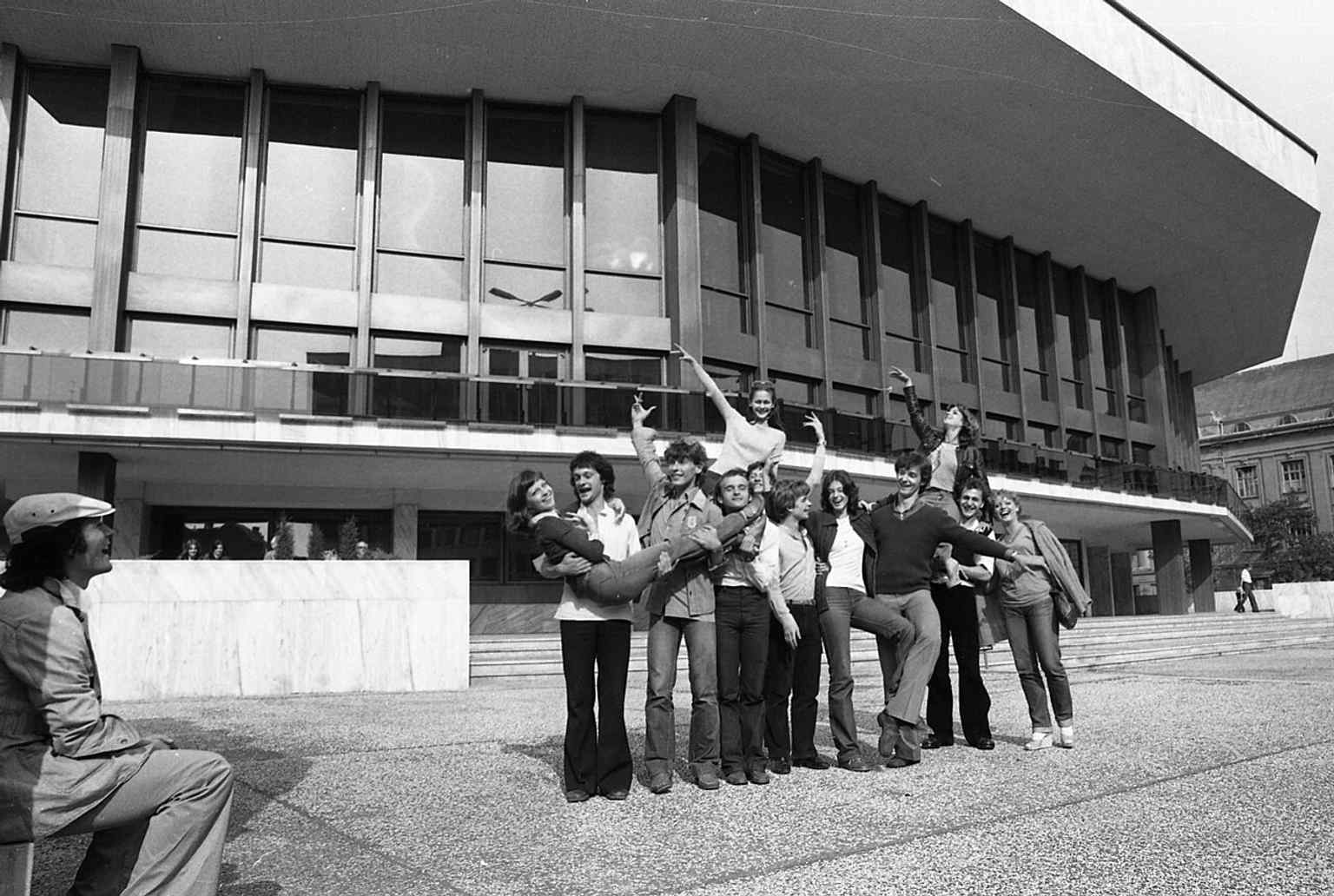
A 1979 Fortepan scene outside the former Kisfaludy Theatre, showing the early years of the modern Győr theatre era and the birth of the Győri Balett.Photo: Fortepan/Urbán Tamás adományozó, Wikimedia Commons, CC BY-SA 3.0. Cropped & resized. 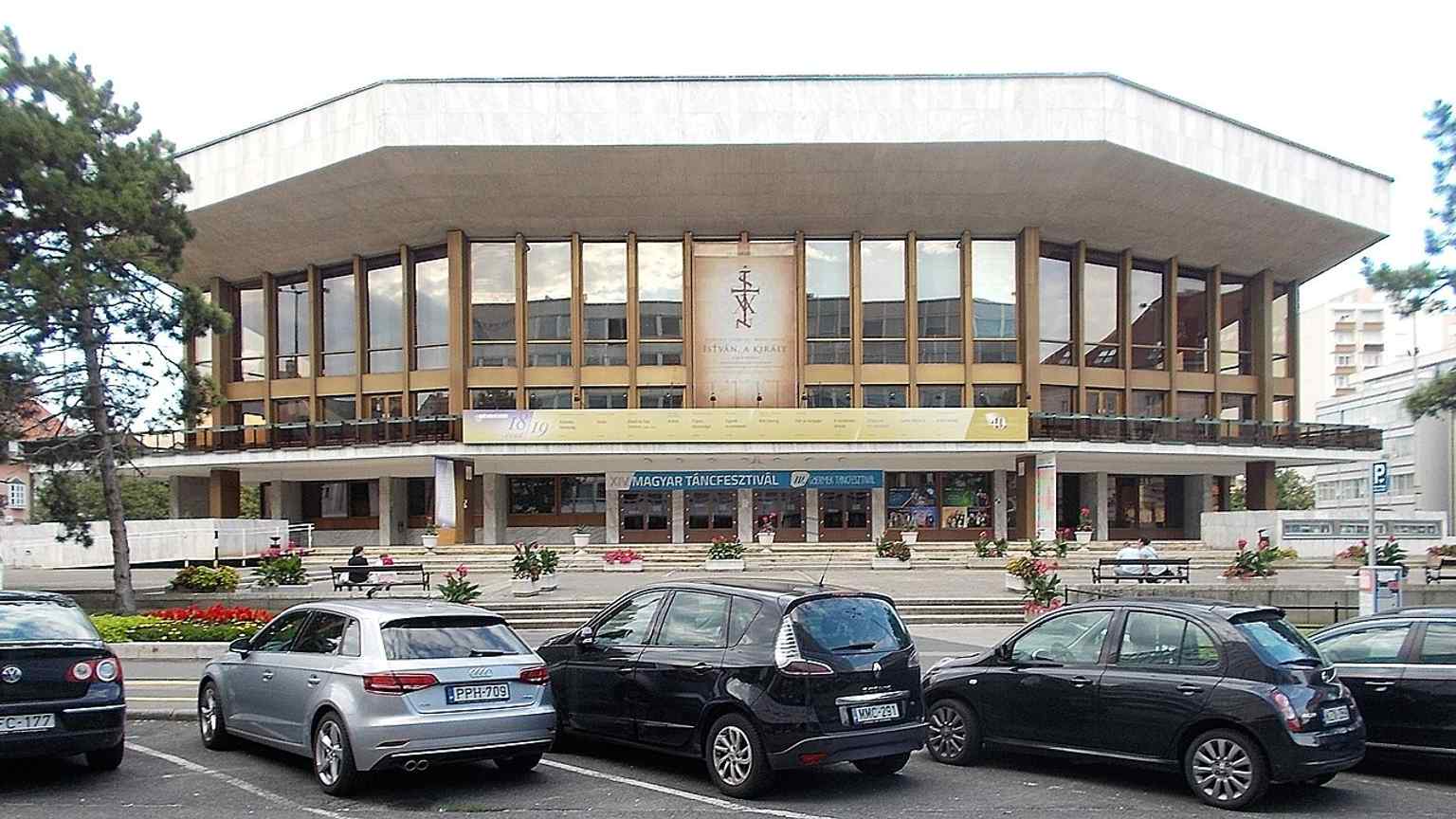
A recent street-level view of the National Theatre in downtown Győr, useful for the current appearance of the landmark.Photo: Globetrotter19, Wikimedia Commons, CC BY-SA 3.0. Cropped & resized. 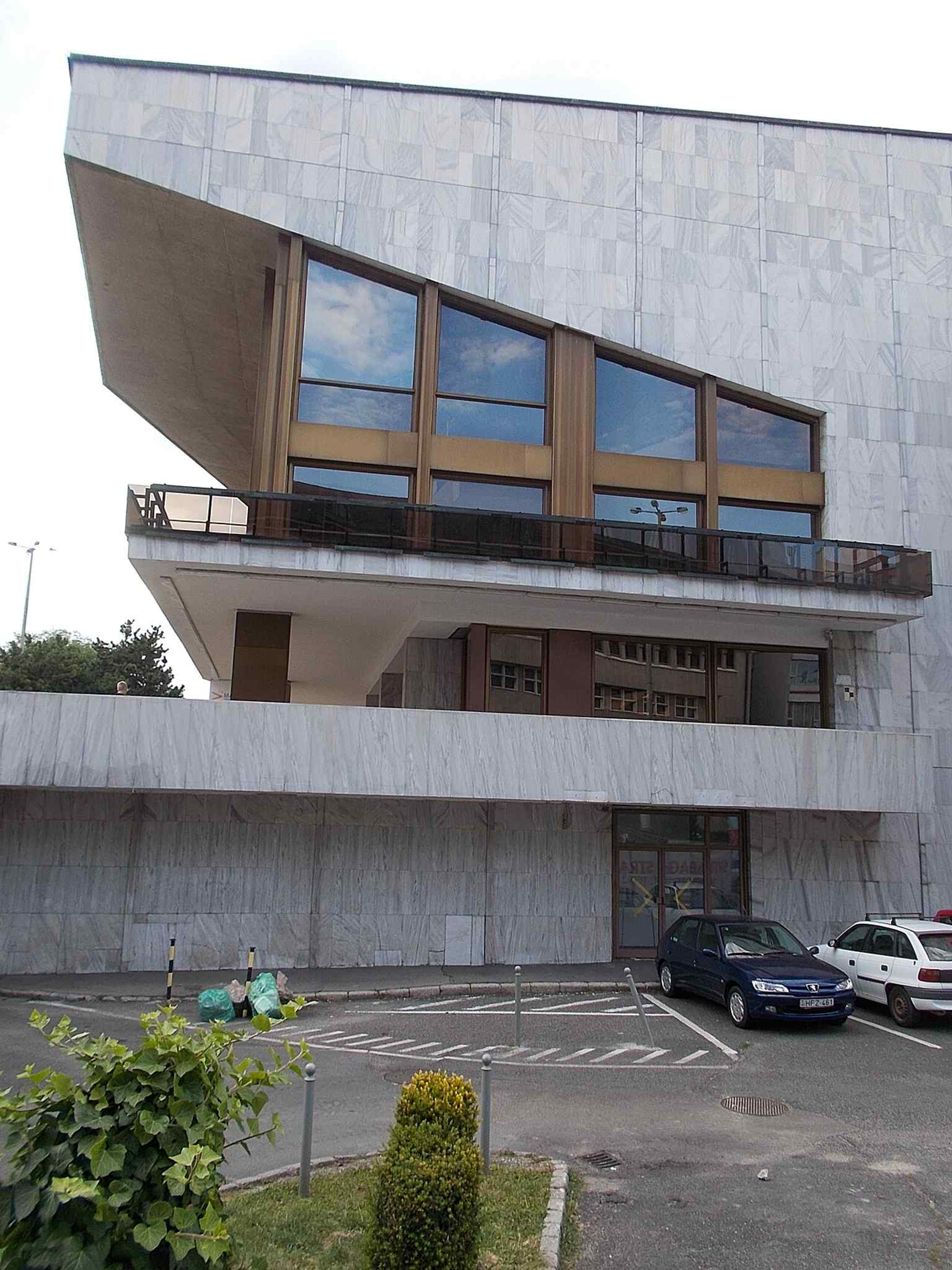
Balcony and facade detail on the Bajcsy-Zsilinszky side, showing the theatre’s modernist architecture up close.Photo: Globetrotter19, Wikimedia Commons, CC BY-SA 3.0. Cropped & resized. 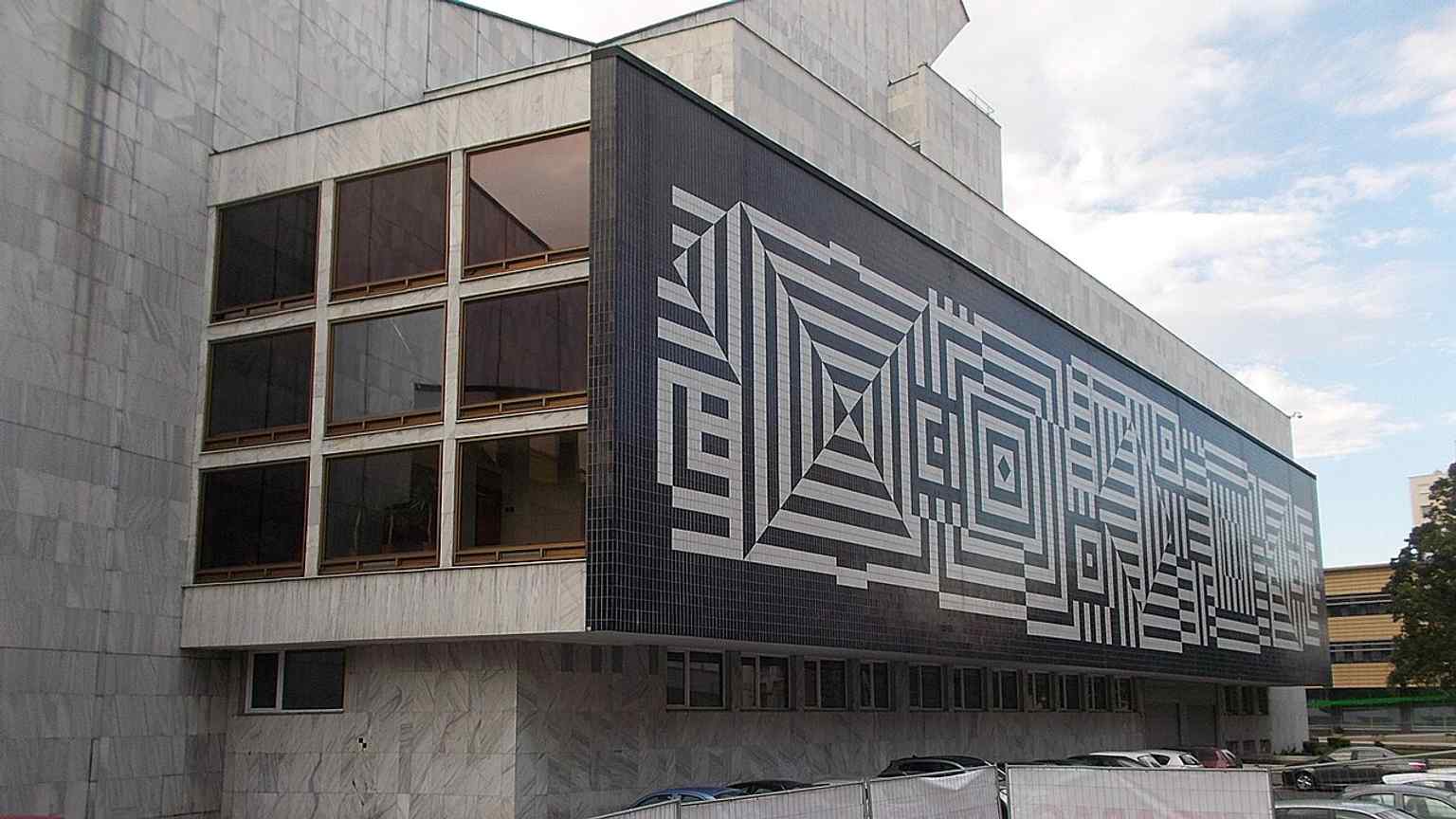
Another view of Vasarely’s 1978 ceramic building decoration, a key artistic feature of the theatre’s exterior.Photo: Globetrotter19, Wikimedia Commons, CC BY-SA 3.0. Cropped & resized. 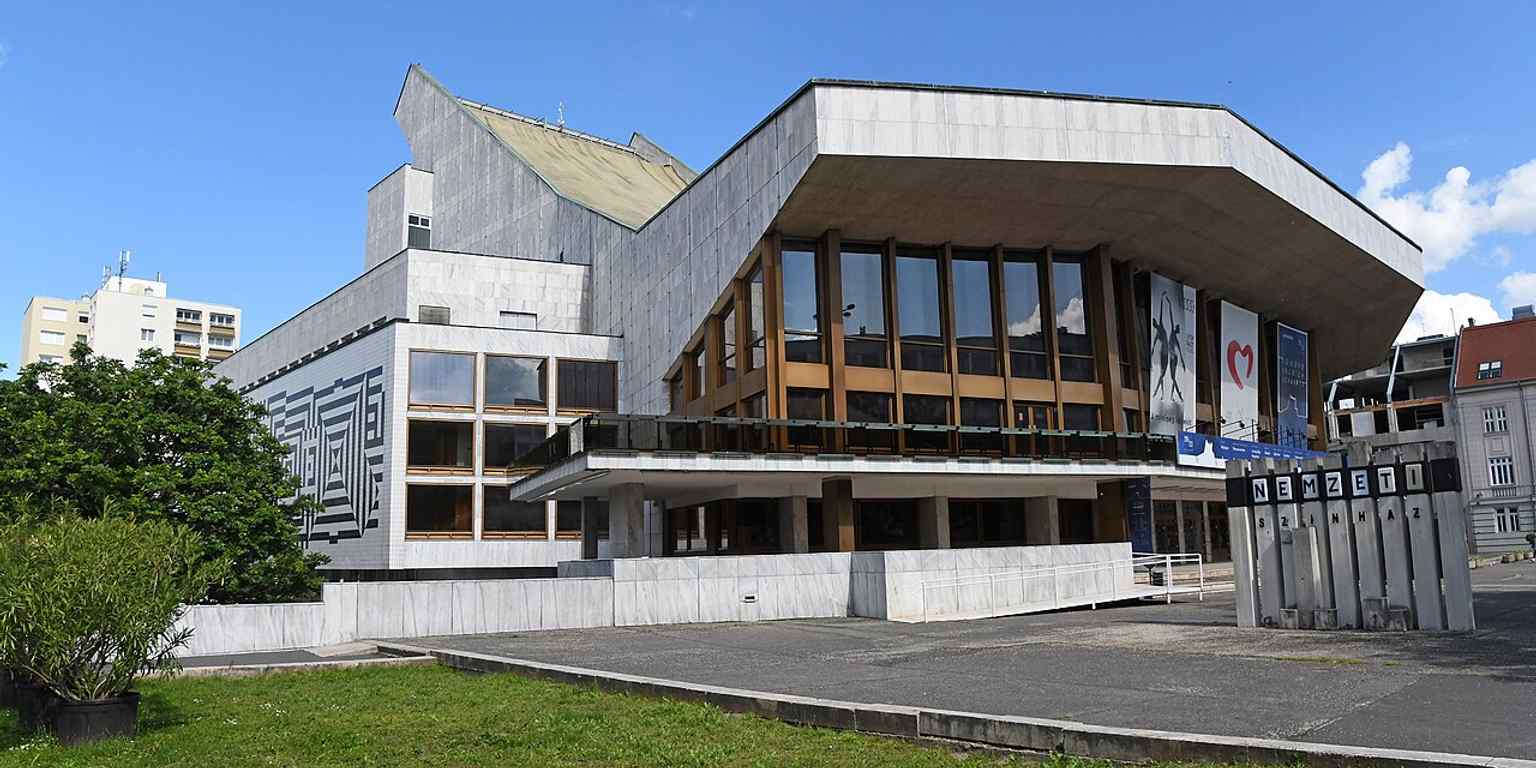
A broad 2021 exterior view of the theatre, fitting the story of the building during the recent leadership change.Photo: Pasztilla aka Attila Terbócs, Wikimedia Commons, CC BY-SA 4.0. Cropped & resized. 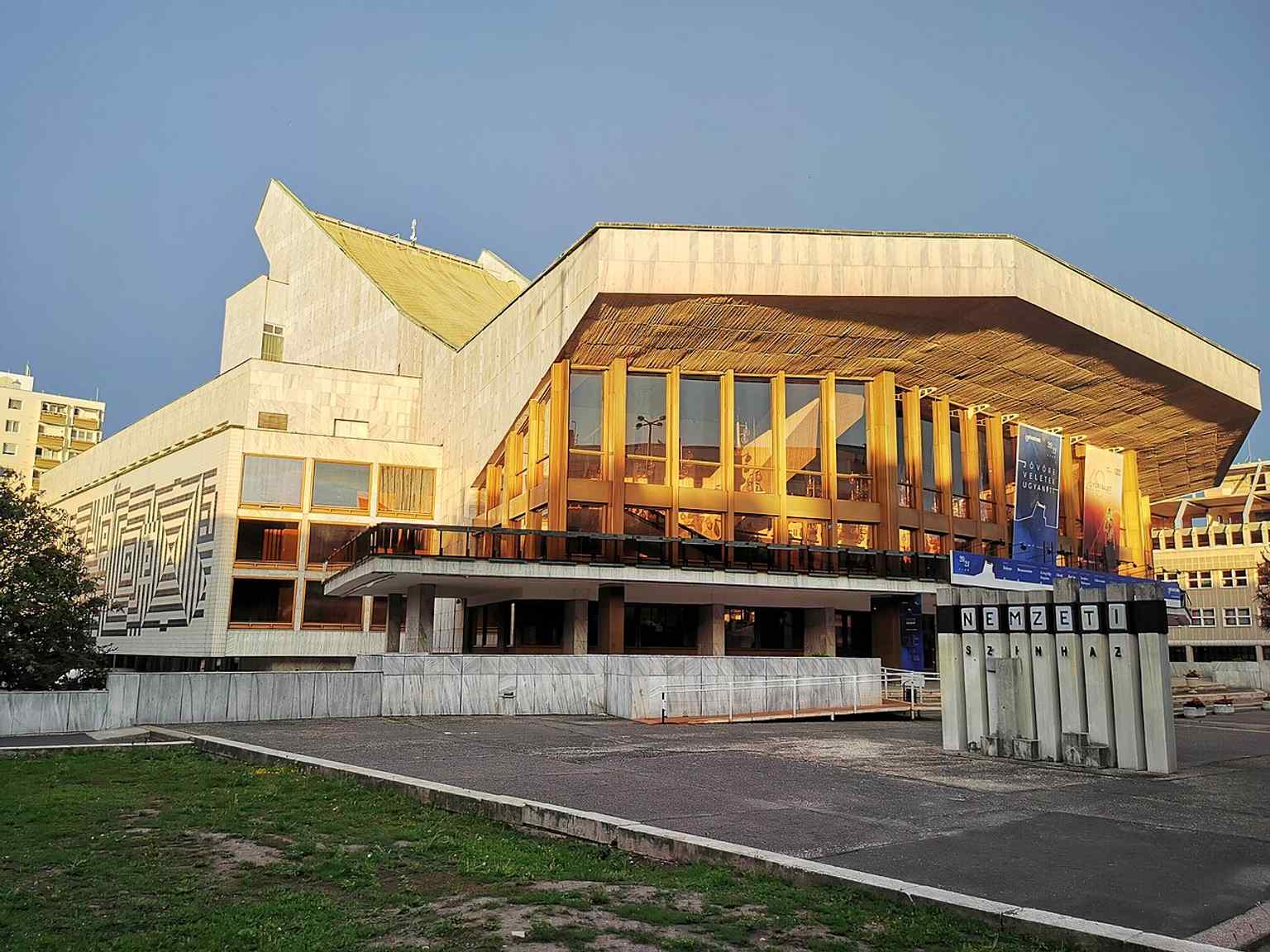
Street-side exterior of the National Theatre in 2020, a straightforward contemporary view of the landmark.Photo: Random photos 1989, Wikimedia Commons, CC0. Cropped & resized. 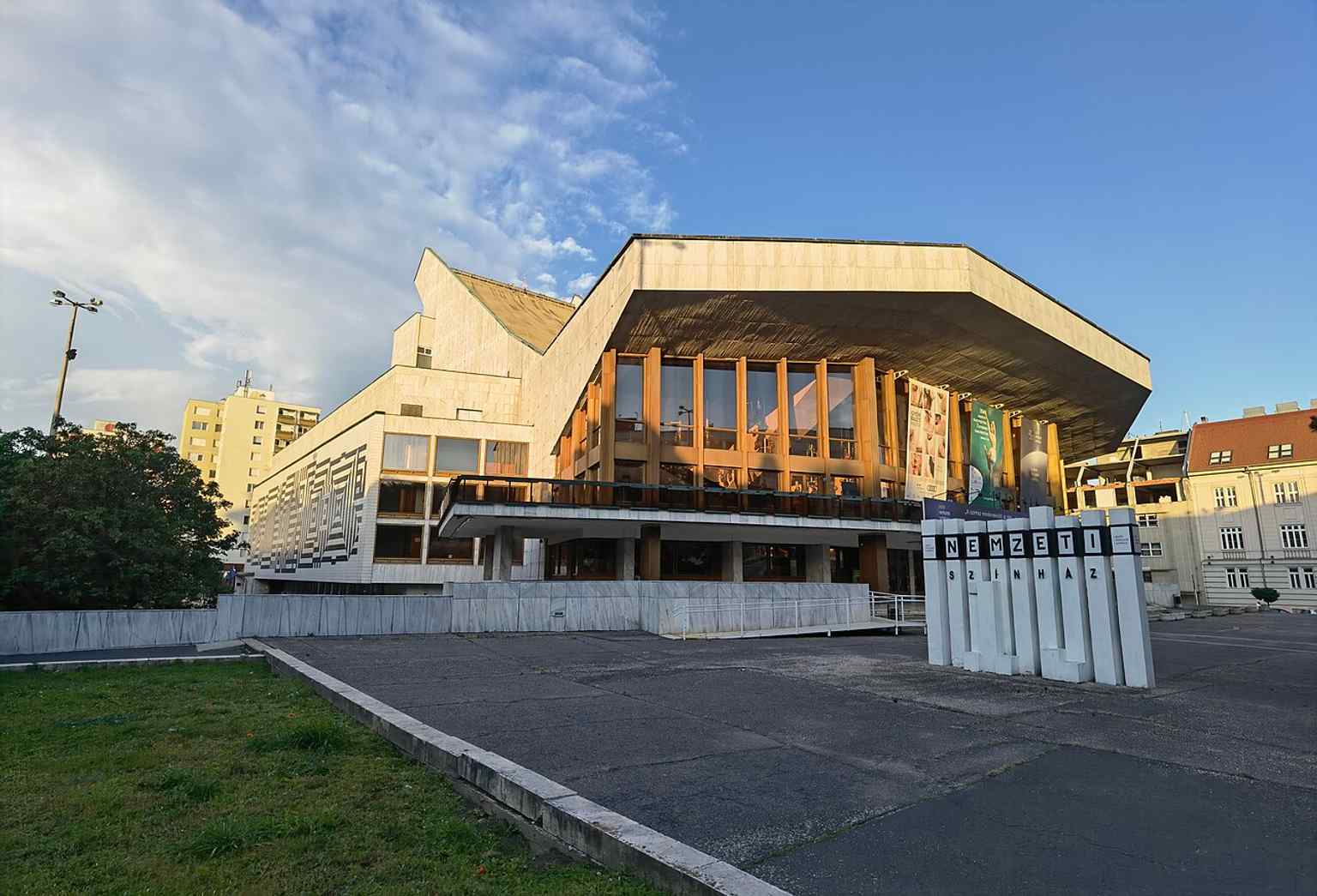
A high-resolution 2022 exterior shot of the theatre, showing the building as it appears today.Photo: Random photos 1989, Wikimedia Commons, CC0. Cropped & resized. Look for the pale historic facade with tall rectangular windows and a broad arched gateway, all set in a long, formal street front that feels more administrative than…Read moreShow less
Open dedicated page →
Magyar Nemzeti Levéltár Győr-Moson-Sopron Vármegye Győri LevéltáraPhoto: NordNordWest, Wikimedia Commons, CC BY-SA 3.0. Cropped & resized. Look for the pale historic facade with tall rectangular windows and a broad arched gateway, all set in a long, formal street front that feels more administrative than theatrical.
This is the Győr branch of the Hungarian National Archives, one of the county’s official state archives, and in a very real sense it is the city’s memory vault. If the theater celebrates performance, this place keeps the paperwork afterward... which, frankly, is how civilizations avoid turning into rumor.
Here’s a useful idea for the rest of the tour: archival memory. That means the organized memory of a community preserved in documents, registers, maps, letters, court files, school records, and all the other papers people create while trying to govern, argue, inherit, teach, punish, and occasionally behave. When centuries of borders, rulers, and administrative systems shift around, archival memory is the quiet infrastructure that lets a city still answer the question, what actually happened here?
Győr’s archive has deep roots. The records mention the county’s papers as early as sixteen twenty-two, and by seventeen twenty-one the collection had already grown so large that officials needed two full weeks just to put it in order and had to assign it its own room. That may not sound dramatic, but for an archive, needing extra room is practically a trumpet fanfare.
The real turning point came in eighteen oh five, when Schedius Kristóf became the first true archivist here. Before that, records were mainly kept. Schedius started something more ambitious: he arranged them, described them, and made them findable. In other words, he turned a pile of official paper into knowledge. That shift matters. Preservation saves documents; arrangement makes history retrievable.
Another key figure followed in the eighteen sixties: Ráth Károly, a historian with the energy of someone who apparently thought sleep was optional. He processed valuable records here, began publishing them, and helped launch local historical organizations with Rómer Flóris. In Győr, archive work did not stay locked in cupboards. It spilled outward into public history and civic identity.
The collection itself is extraordinary. It holds county records from Győr and Moson, material from privileged Magyaróvár, later additions from the civil era of the twentieth century, and records from the socialist period too. In the Győr center alone, the holdings stretch to about five thousand linear meters... meaning if you measured the shelves end to end, they would run for five full kilometers. A strong argument for not misfiling anything.
Some of the oldest treasures include noble assembly minutes from the late sixteenth century and fifty-five original armorial letters, those are royal grants of nobility decorated with coats of arms. The oldest dates to fifteen seventy-four, issued by Maximilian the Second. There are also detailed maps so precise that only aerial photography really rivals them, plus records from the Royal Law Academy founded in seventeen seventy-six, where even Deák Ferenc appears among the students.
And there is one wonderfully unsettling detail about this building: old prison cells of the former county hall later became storage rooms for historical records. Privilege, administration, punishment, memory... all filed under one roof.
From here, we move to a place where memory survives not in papers, but in ritual and stone: the Benedictine Church of Saint Ignatius of Loyola, about a three-minute walk away.
Look for the pale stone facade with two square towers, a high arched doorway, and dark onion-shaped domes rising above the roofline. This church does not play modestly. It faces…Read moreShow less
Open dedicated page →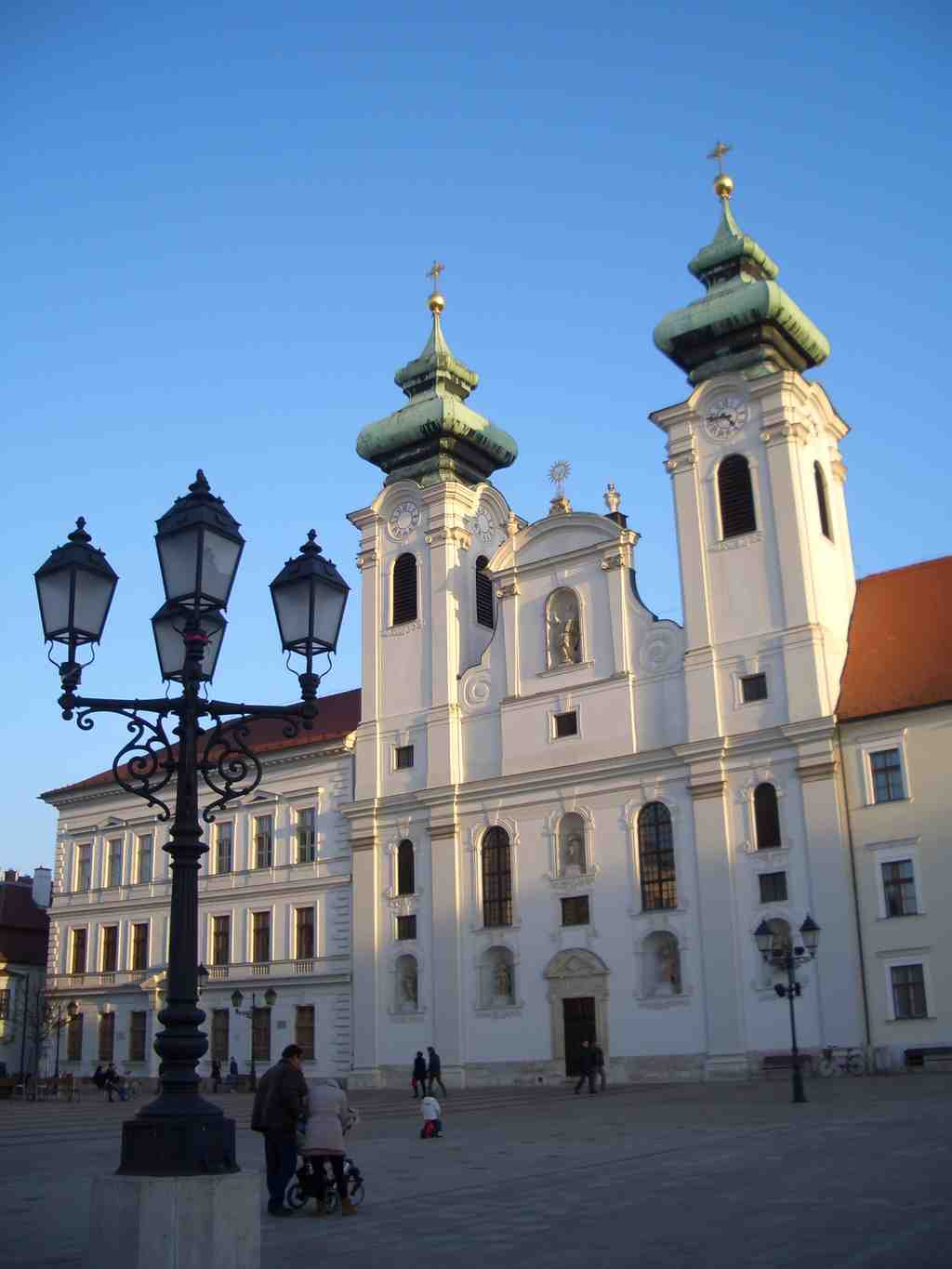
Benedictine Church of St. Ignatius of LoyolaPhoto: Chersounder, Wikimedia Commons, Public domain. Cropped & resized. Look for the pale stone facade with two square towers, a high arched doorway, and dark onion-shaped domes rising above the roofline.
This church does not play modestly. It faces the square like a set piece, and that is fitting, because baroque architecture aimed for drama: movement, grandeur, and the feeling that faith should reach you through the eyes before it ever reaches the sermon. Locals sometimes point out something most visitors miss: this is not simply a beautiful church in Győr. It is considered the earliest baroque-style church built in present-day Hungary, which gives this facade a place in the national story, not just the local one.
The Jesuits started that story. In the sixteen twenties, Bishop Miklós Dallos gave them this plot, and Archbishop György Szelepcsényi pushed the project forward. Between sixteen thirty-four and sixteen forty-one, the Jesuits followed plans by Baccio del Bianco and raised a church that helped define the rebuilt city after the Ottoman wars. They taught, studied, supported science, and staged school dramas too, so even here, education and spectacle walked hand in hand.
Then came a sharp institutional turn. In seventeen seventy-three, Maria Theresa enforced the papal suppression of the Jesuits. Empires did love reorganizing other people’s lives. But here the story did not break. The Benedictines stepped in, took over the church, school, and monastery, and carried on the same educational and spiritual mission. It feels less like replacement than a careful passing of custody.
You can still read some of that continuity on the front. Above the entrance, a stone-framed date marks the church’s consecration in sixteen forty-one. Statues stand in the facade niches like actors paused between entrances. The twin towers, finished by the sixteen fifties, gave the whole composition a formal balance that still commands the square.
Inside, the design becomes even more deliberate. The main hall opens directly to side chapels, instead of connecting chapel to chapel, so the space feels unusually unified, almost theatrical in the best baroque sense. In the seventeen forties, Bishop Ádám Acsády donated a new high altar of red limestone, and Paul Troger painted the great altar image of Saint Ignatius in glory. Troger also slipped his own face into the sanctuary ceiling, painting himself as Saint Luke. Painters, like playwrights, do enjoy a cameo.
This place kept company with real people, not just saints. Tradition says Lajos Batthyány and Ányos Jedlik both wore down these pews, along with generations of students from the Benedictine school beside it. That matters. A building survives in stone, but a community survives in repeated acts: teaching, worship, music, memory. Even the restoration respected that long thread, and the renewed main hall earned major international conservation praise in two thousand seven.
Now let your attention drift from this disciplined facade to the square in front of it. The church offers order, but the open space ahead has seen markets, ceremony, and some far less serene public business. We’ll step into Széchenyi Square next, about a minute away. If you want to return later, the church is generally open every day from eight in the morning until seven in the evening.


Show 11 more stopsShow fewer stopsexpand_moreexpand_less
On your left, Széchenyi Square opens as a broad stone plaza framed by pastel baroque facades, with the tall Maria Column rising from a railed pedestal and Mary holding the child…Read moreShow less
Open dedicated page →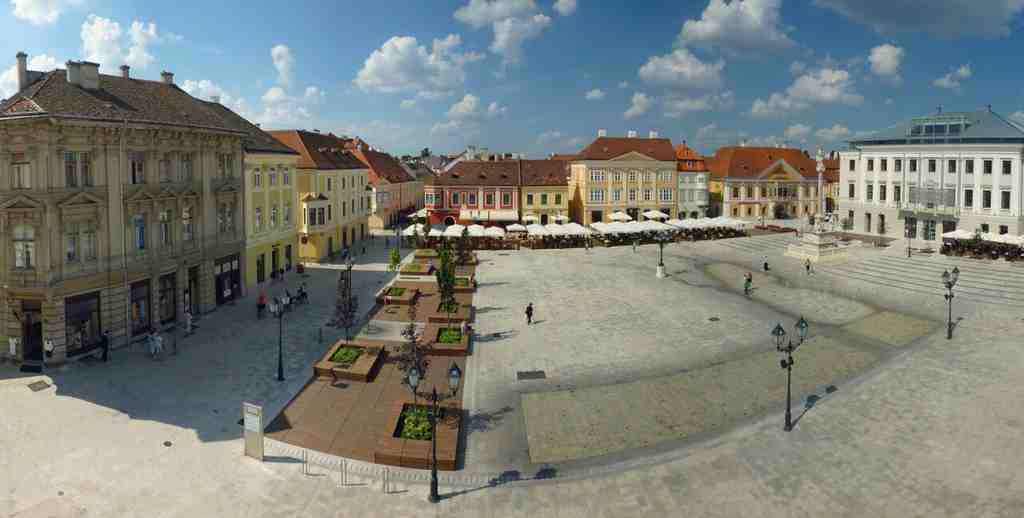
Széchenyi Square (Győr)Photo: Sudika, Wikimedia Commons, CC BY-SA 3.0. Cropped & resized. On your left, Széchenyi Square opens as a broad stone plaza framed by pastel baroque facades, with the tall Maria Column rising from a railed pedestal and Mary holding the child Jesus at the top.
This is Győr’s baroque main square... and like many handsome public rooms, it has seen both ceremony and cruelty. The buildings around you mostly date from the seventeenth and eighteenth centuries. The north side shows off a row of baroque palaces, while the Benedictine complex along the south edge gives the square a steady, watchful backdrop, as if faith itself had front-row seats.
What you see above ground is only half the story. Under these paving stones lies a stack of city history so dense it would make an archaeologist grin and reach for a brush. Finds here run from the Bronze Age to Roman, Migration-period, medieval, early modern, and modern layers. During excavations in two thousand eight and two thousand nine, archaeologists dug down about three and a half meters, far enough to reach the walking level of Roman Arrabona. Then they stopped on purpose, leaving deeper layers for future researchers. A rare case of a renovation not paving over curiosity for good.
But this square was not only a marketplace or a showpiece. In Ottoman times an underground prison lay here, later the pillory stood above it, and in front of today’s Apátúr House noble prisoners faced execution. In seventeen ten, Győr carried out its last witch-burning here, and in either seventeen fourteen or seventeen fifteen - the sources squabble a bit - officials beheaded Géczy Julianna, later made famous by Mór Jókai as the White Lady of Levoca. Literature turned her into a symbol of betrayal, but before that she was a real woman brought into a real square to die before a real crowd.
How do you stand in a place this elegant and make room for the fact that it once staged shame, sentencing, and death in full public view?
That tension is everywhere here. The Maria Column on the eastern half of the square looks devotional, triumphant even. Bishop Lipót Kolonich raised it to mark the recapture of Buda in sixteen eighty-six. Mary stands above with the child Jesus, while four saints guard the corners below: Saint Stephen, John the Baptist, Saint Anthony of Padua, and Saint Leopold. Nearby stood the ornate candelabrum that became Győr’s first gas-powered civic light. Of course the city gave its main stage better lighting.
And around the edges, the facades keep changing roles. One ornate baroque house here has already worn many hats over time. The narrow Vastuskós House turned a merchant’s idea into a landmark when Mátyás Zittrisch opened a spice shop in eighteen thirty-three and fixed an iron stump sign to the corner, borrowing the idea from Vienna and old guild traditions.
Since nineteen eighty-nine, cars no longer park here, and the square has belonged to pedestrians again. In a moment, we’ll head to the Xántus János Museum in the Apátúr House, where some of the city’s buried stories climb back into view... and since this is a public square, you can visit it at any hour, any day.
Look for a narrow stone-paved street lined with tall plastered houses, marked by projecting corner balconies and backed along its northern side by the old fortress wall of…Read moreShow less
Open dedicated page →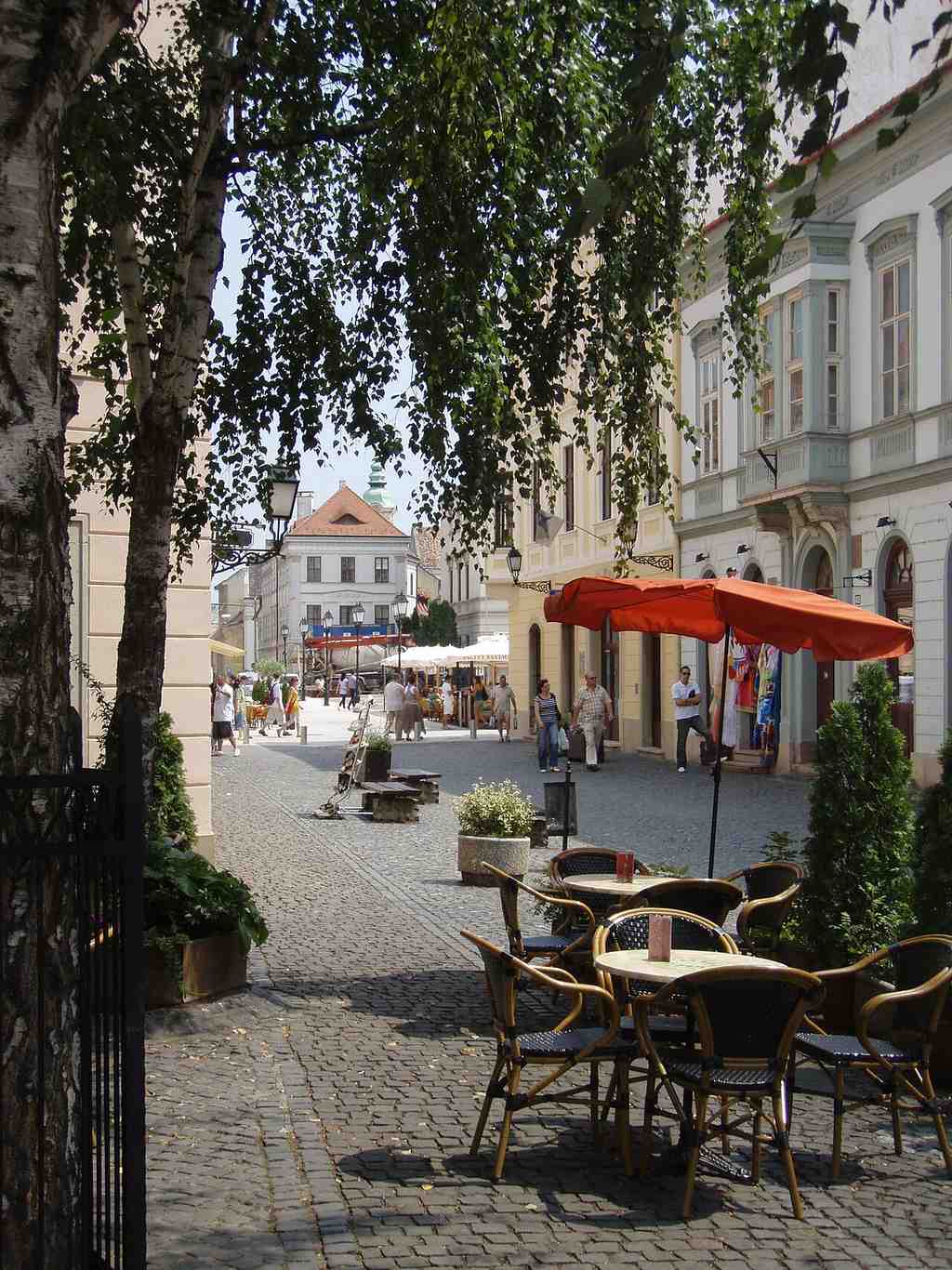
King StreetPhoto: PePM, Wikimedia Commons, CC BY-SA 3.0. Cropped & resized. Look for a narrow stone-paved street lined with tall plastered houses, marked by projecting corner balconies and backed along its northern side by the old fortress wall of Káptalandomb.
Király Street does not try very hard to impress you... which is exactly why it works. This is one of the most intimate stretches of old Győr, linking Vienna Gate Square to the northwest corner of Széchenyi Square, and every single house along it carries monument protection. In other words, even the quiet façades here have legal proof that they matter.
The street begins near Vienna Gate Square between two houses with corner balconies, and that little flourish tells you something important. This lane may be narrow, but it has stage instincts. Győr seems constitutionally unable to keep its history off display.
One of the loveliest examples is the Probst House at number three. It grew from two sixteenth-century houses and took on its present shape in the early eighteenth century. Its east-facing front is slim and topped by a curved gable, while the upper part along Király Street pushes outward on stone supports, as if the house wanted a slightly better view of passing gossip. Right beside it opens one of the step-passages climbing toward Káptalandomb.
If you can spot that narrow side passage, let your eyes follow its tight walls toward the steps... It is a very small gap in the street, yet it holds a whole biography. In that almost Italian-feeling little alley, Blaha Lujza spent part of her childhood. Long before she became one of Hungary’s most beloved actresses, a future star began in a tucked-away corner like this. For a city with a national theatre, that feels fitting.
A few doors along, number four carries one of the best names in town: the Napoleon House. This restrained late baroque palace came together from several older buildings and took its present form in the seventeen seventies. Local tradition insists Napoleon slept here after the Battle of Győr, and in this case tradition appears to be right: he spent the night here on the thirty-first of August, eighteen oh nine. Conqueror of Europe by day, overnight guest on Király Street by night. These days the house hosts art exhibitions, so even its celebrity story kept evolving.
Király Street likes that sort of double life. Number five served in the eighteenth century as the lodging house of the Pauline monks from Pápa, then turned into the Arany Bárány Hotel in the nineteenth. Through its vaulted entrance lies a courtyard edged by the former fortress wall. Number eight adds another literary trace: Gárdonyi Géza lived there from eighteen eighty-three to eighteen eighty-eight. And number twelve hides a small surprise behind an eclectic nineteenth-century face: a late Renaissance courtyard with arcades resting on Tuscan columns.
That is the trick of this street. Thresholds, passages, stairways, inner courts... everyday addresses, and then suddenly a famous guest, a future actress, a writer, a monastery connection, a hidden wall.
When you are ready, continue toward the northern opening. In about three minutes, this close-grained lane gives way to one of Győr’s grander urban scenes at Vienna Gate Square.
Vienna Gate Square opens as an irregular stone plaza framed by pale Baroque facades, with the steep-roofed Carmelite church and its tucked oval dome marking the southern…Read moreShow less
Open dedicated page →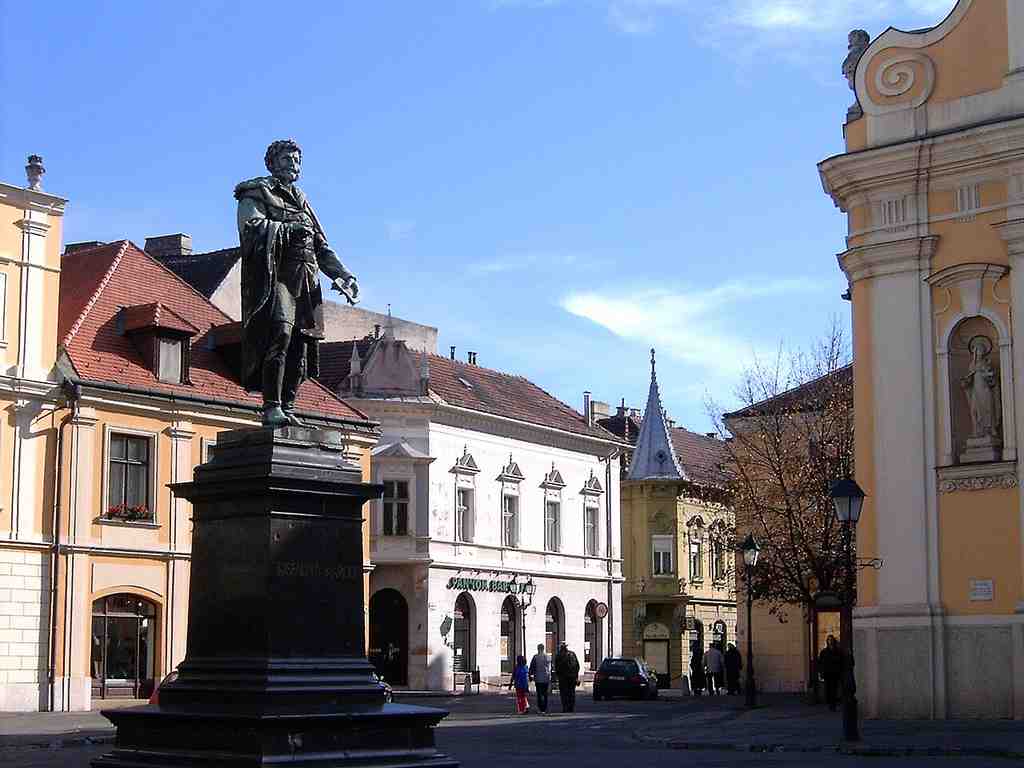
Vienna Gate Square (Győr)Photo: Balint86, Wikimedia Commons, CC BY-SA 3.0. Cropped & resized. Vienna Gate Square opens as an irregular stone plaza framed by pale Baroque facades, with the steep-roofed Carmelite church and its tucked oval dome marking the southern edge.
This is one of Győr’s oldest squares, and for a long time it worked less like a salon and more like a threshold. The old town’s western gate once stood here in Renaissance form, and travelers entered through it after crossing the double bridge over the Rába and the Rábca from Sziget and Újváros. Since the middle of the nineteenth century, the square has stood open toward the river instead. That missing gate matters. You’re looking at a place shaped by arrivals, departures, and the uncomfortable fact that water never asks permission.
Győr likes to call itself a city of waters, and not just for poetry’s sake. The rivers pushed its streets into certain shapes, exposed its defenses, and even rearranged its monuments when floods got the final word. Most visitors never notice that one of the square’s most intimate memorials is a migrant. The Hab Mária statue, in the little chapel niche beside the Carmelite church, did not begin life here at all. People brought it from Radó Island in eighteen ninety-one as a flood memorial. So even devotion, here, has an address change on file.
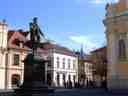
The same goes for the bronze poet in the center. Kisfaludy Károly first stood on Radó Island too, from eighteen ninety-two. Then the flood of nineteen twenty left him underwater for days. Not ideal conditions for literary reflection. In nineteen twenty-one, the city moved him here, and Vienna Gate Square adopted him as one of its permanent residents.
Look across to the eastern side and the square starts behaving like theater scenery. The Baroque house row closes the space with a neat flourish, and the Ott House plays a particularly clever trick: it looks like it has a full second floor, but that upper level is really a raised attic behind the facade. Pure architectural swagger. In the second half of the eighteenth century, the corner building at number fourteen also hosted Győr’s first coffeehouse, which feels exactly right. A square like this was made for watching people pretend not to watch each other.
But the square has a harder memory too. Near the mouth of King Street, in the corner house at number eleven, doctor Gyula Schrőder once lived, an early Hungarian pioneer of X-ray research. Later, in nineteen forty-one, that same elegant Baroque home became an emergency shelter. There’s the turn in the story: refined facades, yes... and also a city preparing for danger inside them.
If you glance toward the river edge, steps drop to a smaller riverside space with a bronze equestrian Saint Stephen below, and along the old wall you may spot cannon barrels from Vienna. They look martial, but they arrived here as decoration, which is a very Central European joke: the warlike object with a surprisingly polite biography.
From here, the route turns toward the synagogue, about thirteen minutes away. A city built on crossings can connect people brilliantly... and it can also decide, with terrible efficiency, who no longer gets to cross. This square is open all day, every day.
On your left, look for the pale masonry synagogue with its large central dome, tall round-arched windows, and compact corner towers framing the front. This building has…Read moreShow less
Open dedicated page →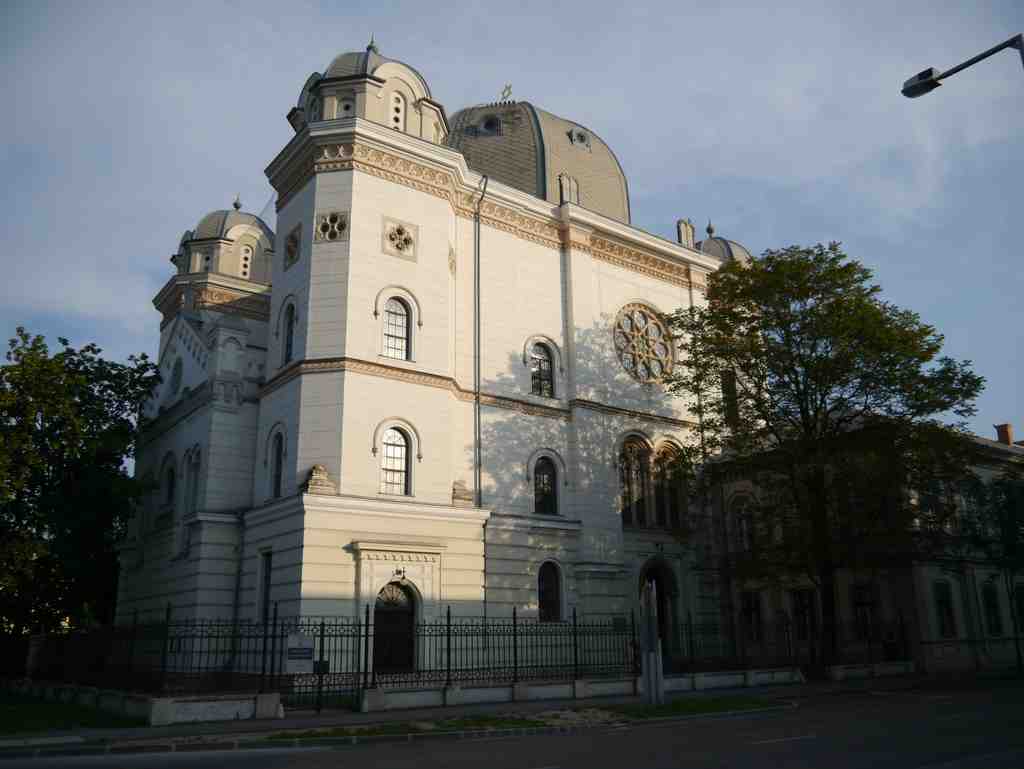
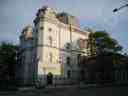
Synagogue of GyőrPhoto: Zairon, Wikimedia Commons, CC BY-SA 3.0. Cropped & resized. On your left, look for the pale masonry synagogue with its large central dome, tall round-arched windows, and compact corner towers framing the front.
This building has presence... the kind that does not need to shout. A Pest architect, Károly Benkó, drew the winning design after officials, including the county engineer József Kliegl, argued over the plans. The synagogue opened on the fifteenth of September, eighteen seventy, together with a two-story school beside it. In style, it mixes historicism, meaning it borrows older architectural forms, with touches of Art Nouveau, the more flowing late nineteenth-century taste. Győr quickly treated it as one of the city’s showpieces, and other towns looked to it as a model for a large urban synagogue.
Even then, people found things to worry about. Contemporary critics said major holy days might pack it too tightly, and the three spiral stair towers could make a fire evacuation dangerously slow. Human beings, bless us, can admire a building and argue with it in the same breath.
But the real break came later. In nineteen forty-four, ghettoization and deportation severed this synagogue from the community that built it, filled it, and gave it meaning. Jews from Győr and the surrounding area were forced into the ghetto linked to this very place, then deported. One of the most painful stories is that of Chief Rabbi Dr. Emil Róth, whom men beat inside the ghetto before they deported him.
Once you know that, the dome looks different.
After the war, survivors tried to rebuild Jewish communal life here, but loss and emigration hollowed it out. By nineteen fifty-six, the Orthodox community had disappeared, and the Neolog community kept shrinking. The sacred hall later sat unused, and in the nineteen eighties officials turned it into a furniture warehouse... which is about as bleak a second act as a sanctuary can get.
And yet the building stayed. That matters. Records, testimony, old photographs, and walls like these become witnesses to what was lost when a community has been violently scattered. Since two thousand and three, restorers have given the interior back its original octagonal central space, reconstructed the dome painting from old images, and rebuilt wall patterns with stencils. Today the synagogue serves as a museum and cultural venue, run by Széchenyi István University and the City Art Museum, with concerts, exhibitions, and a permanent exhibition on Jewish life and achievement.
So here is the hard question to carry with you: what does it mean when a holy building survives, but the people who gave it prayer, argument, music, and daily life are largely gone?
Hold that thought as you continue to the Carmelite Church, about an eight-minute walk away. If you want to return inside, it generally opens Monday, Tuesday, Thursday, and Friday from noon to four.
On your left, the Carmelite Church rises in pale plaster and stone like a Baroque stage set, with a broad triangular gable, a tall onion-domed tower, and a Madonna standing in the…Read moreShow less
Open dedicated page →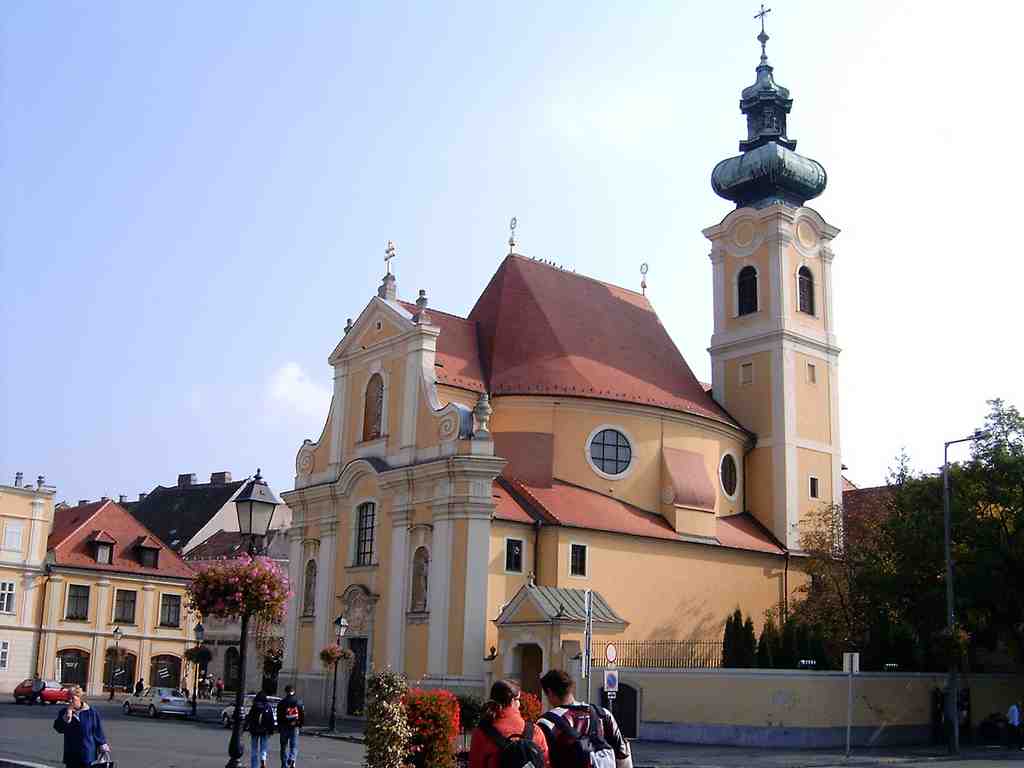
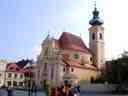
Carmelite Church (Győr)Photo: Balint86, Wikimedia Commons, CC BY-SA 3.0. Cropped & resized. On your left, the Carmelite Church rises in pale plaster and stone like a Baroque stage set, with a broad triangular gable, a tall onion-domed tower, and a Madonna standing in the facade niche.
This church does an awful lot with one facade. It greets Vienna Gate Square like a carefully arranged performance, which is fitting in Győr, where public space so often feels like a set built for faith, memory, and a little civic self-respect.
The Carmelites came here because Archbishop György Szelepcsényi left them fifty thousand forints in his will - a substantial sum - on one condition: they had to found a monastery somewhere in Hungary. Bishop Lipót Kolonich offered a few possible cities. The friars chose Győr, arrived in sixteen ninety-seven, and settled beside the old western gate near the Rába. They owned no estates, so donations kept the whole venture alive. That is why the church took its time, rising between seventeen sixteen and seventeen twenty-five instead of appearing in one grand burst of confidence.
The person to remember here is Martin Athanáz Wittwer, a Carmelite friar who also happened to be an architect. Handy fellow. He designed something unusual for Hungary: not the long, processional church plan favored by the Jesuits, but an oval central space - an elliptical church under a low dome and steep roof. He even placed the tower outside the main body of the church so the building could connect more neatly to the monastery. Beauty and logistics, working together for once.
Now, let your eyes drift from the front to the church body behind it... and see if you can catch the local joke. Győr residents like to read an owl’s face into the architecture: two round openings as eyes, the little central projection as a beak. The Karmelite “owl face” is one of those affectionate urban habits that tells you a monument has been fully adopted. Once locals start finding animal faces in your masonry, you belong to them.
Back on the facade, the details reward a longer look. Four Doric pilasters - flat classical columns attached to the wall - divide it into three parts. Scroll-like volutes climb upward toward the pediment, the triangular crown at the top. In the niches stand Saint Teresa of Ávila and Saint John of the Cross, and above them the Madonna by the Italian sculptor Diego Carlone. That statue even had a prior life elsewhere in Győr before settling here, which feels appropriate. Buildings in this city rarely keep their stories politely separated.
If you glance at the image in the app, you can peek inside at one of the side altars. Martino Altomonte painted Saint John of Nepomuk at the moment of martyrdom, flung into the river by soldiers in dark red while the saint stands out in white and black. Inside, Francis Richter, a Carmelite brother, shaped the altars, pulpit, benches, and gilded sculpture so the whole interior works like a single Baroque drama.
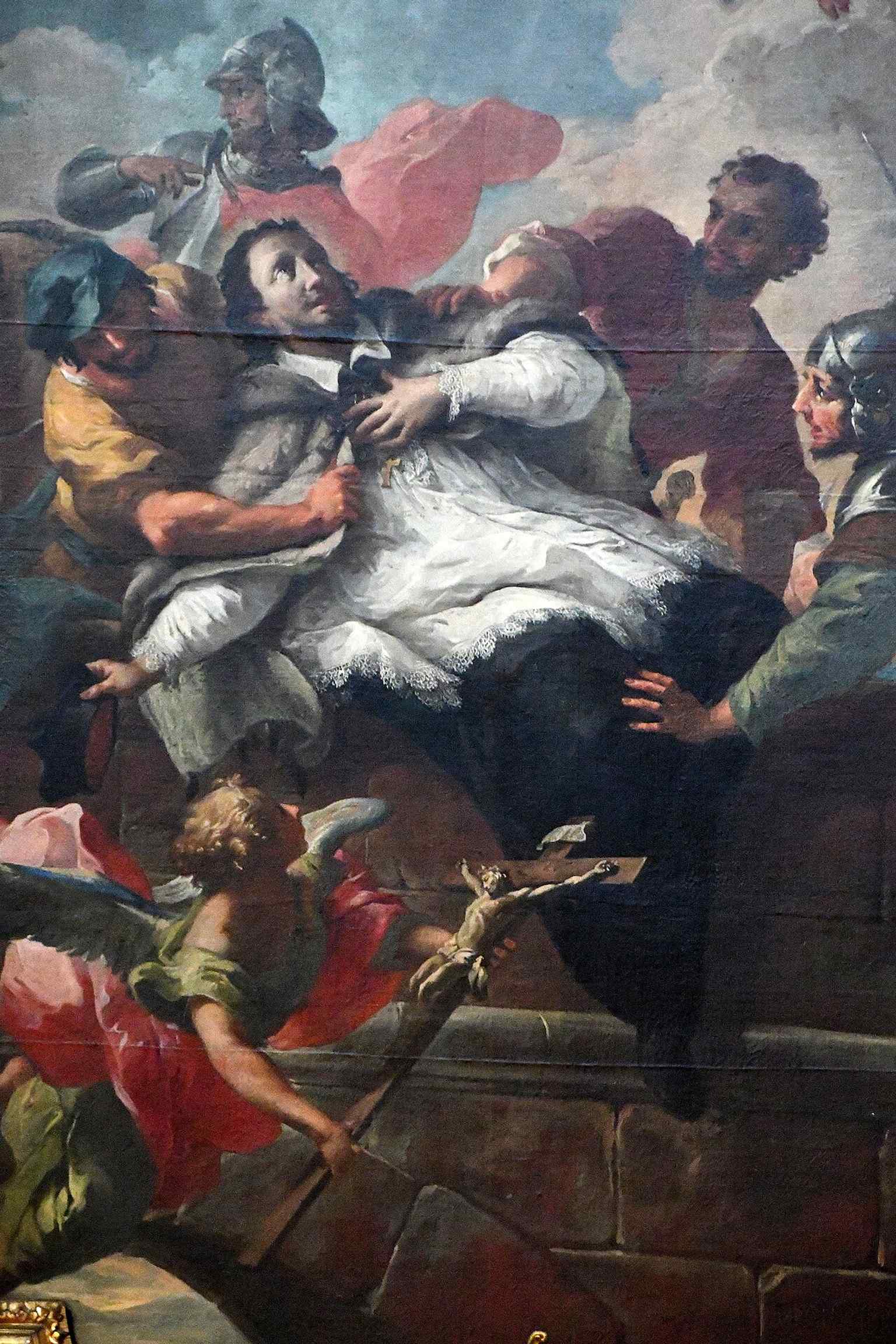
The Saint John of Nepomuk altar inside the Carmelite Church — one of the side altars described in the source, with the martyr scene and the 1762 ‘Help of Christians’ image.Photo: Pasztilla aka Attila Terbócs, Wikimedia Commons, CC BY-SA 4.0. Cropped & resized. And then, quietly, the tone changes. Beneath the church lies a crypt that sits lower than the Rába’s usual water level yet somehow stays dry - a neat little river-city mystery. For decades, Blessed Vilmos Apor’s body rested there, giving this place a deeper charge than ornament alone can carry. In a moment, at Bishop’s Castle, we meet the harder part of that story.
If you want to come back inside later, the church generally opens on Tuesday and Wednesday mornings and late afternoons, Saturday morning and late afternoon, and Sunday around midmorning and late afternoon.
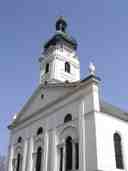
On your left, look for the pale stone front with its large half-round windows, a triangular pediment lined with vases, and the Gothic side chapel tucked against the basilica’s…Read moreShow less
Open dedicated page →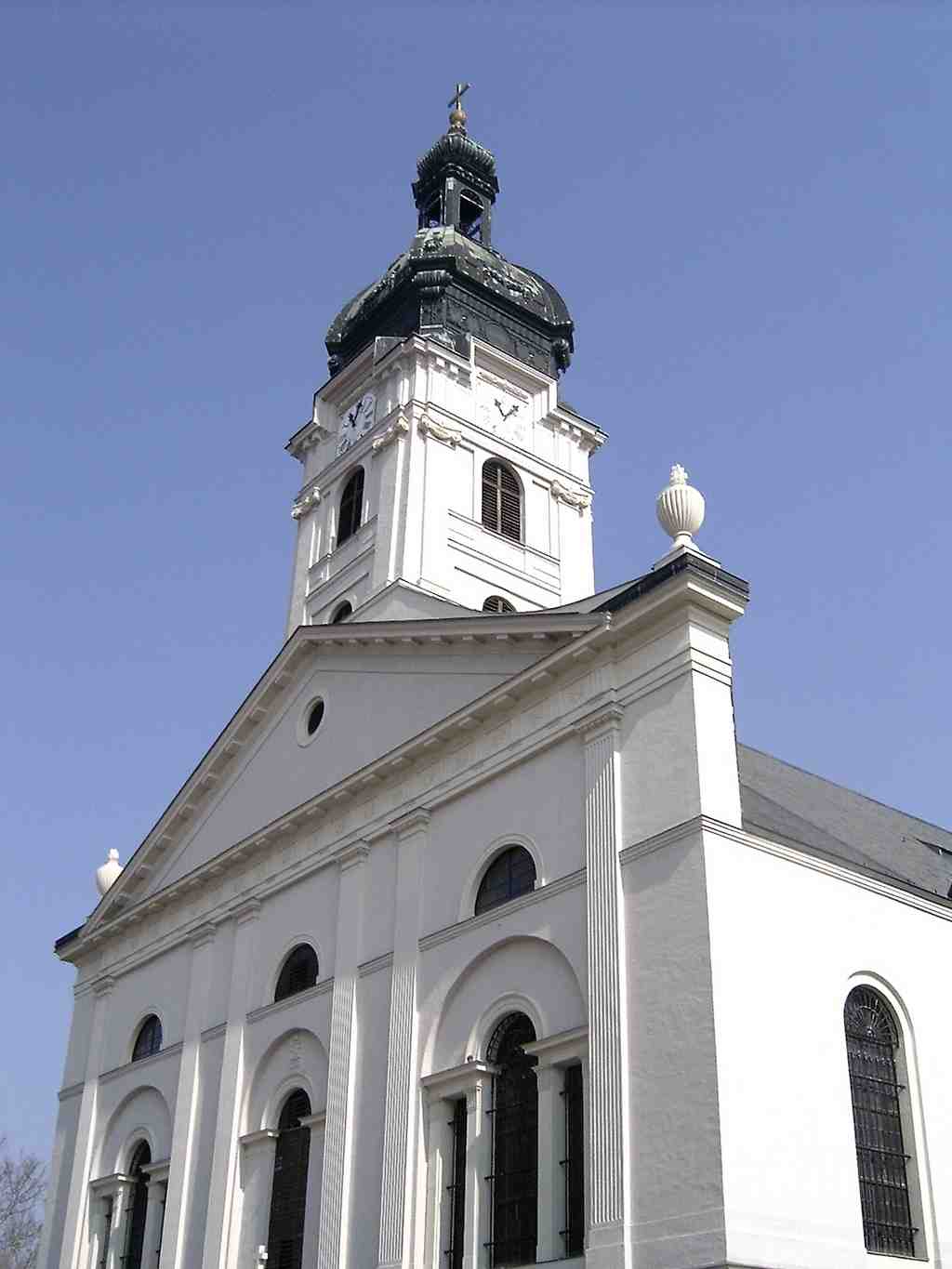
Győr BasilicaPhoto: Balint86, Wikimedia Commons, CC BY-SA 3.0. Cropped & resized. On your left, look for the pale stone front with its large half-round windows, a triangular pediment lined with vases, and the Gothic side chapel tucked against the basilica’s flank.
This is Győr Basilica, dedicated to the Assumption of the Virgin Mary, and it stands on Káptalandomb, the oldest sacred core of the city. If Győr has a memory center, this hill is it: church, bishop, relics, power, grief, and survival all packed into one tight precinct.
King Stephen founded the bishopric here in the eleventh century, and the first cathedral rose in Romanesque form. Only its apse - the rounded end of the earliest church - survived the centuries. After the Mongol invasion, builders raised it again in Gothic style, then János Héderváry added that chapel you can see from here in the early fifteenth century. Inside it rests one of Hungary’s great national relics: the Saint Ladislaus herma, a reliquary bust, meaning a sculpted shrine that holds sacred remains.
The strange thing about old holy places is how unholy their hardest years can get.
After the Ottomans threatened Győr in the sixteenth century, the cathedral suffered badly. One tower collapsed. Lightning destroyed the other. Soldiers turned part of the church into storage, then into a fortress. They filled the north aisle with earth up to the windows for cannon positions, used the sacristy and Héderváry Chapel as powder magazines, and kept horses in the rest. Even cathedrals, it seems, sometimes get assigned deeply unsuitable second jobs.
Then came the bells. In fifteen thirty-one, Captain Pál Bakics ordered them smashed so founders in Pozsony could cast cannon from the metal. Imagine that reversal: bells meant to call people to prayer reborn as weapons.
Bishop György Draskovich refused to let the place end there. He hired the Italian architect Giovanni Battista Rava, who reshaped the ruined cathedral in early baroque style between the late sixteen thirties and mid-sixteen forties. Later, György Széchényi gave it the present tower, and in the seventeen seventies and eighties Menyhért Hefele and Franz Anton Maulbertsch finished the grand interior with altars and sweeping frescoes.
This basilica also gathers more recent memory. Pope John Paul the Second prayed here in nineteen ninety-six, and in nineteen ninety-seven the church was raised to the rank of minor basilica. In the Héderváry Chapel, the city honors Bishop Vilmos Apor, whose story we touched at the castle: martyrdom met memorial here, though the planned nineteen forty-eight cathedral ceremony for him did not unfold as intended. His presence binds conscience to stone.
And still the building keeps renewing itself. In twenty twenty-two, new bells finally replaced those lost to war and requisition. One of them, the Holy Trinity bell, sounded for the first time under a bishop’s hammer. Not a bad ending for a long argument between faith and force.
Next, we leave this deep sacred archive for Jedlik Ányos Street, where memory turns from bishops and relics toward ideas in everyday motion. If you want to step inside later, the basilica is generally open mornings and again in the afternoon, with Sunday opening later in the day.
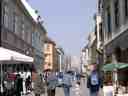
On your right, Jedlik Ányos Street opens as a straight stone-paved lane between pale baroque façades, with enclosed corner balconies marking the entrance. This is one of those…Read moreShow less
Open dedicated page →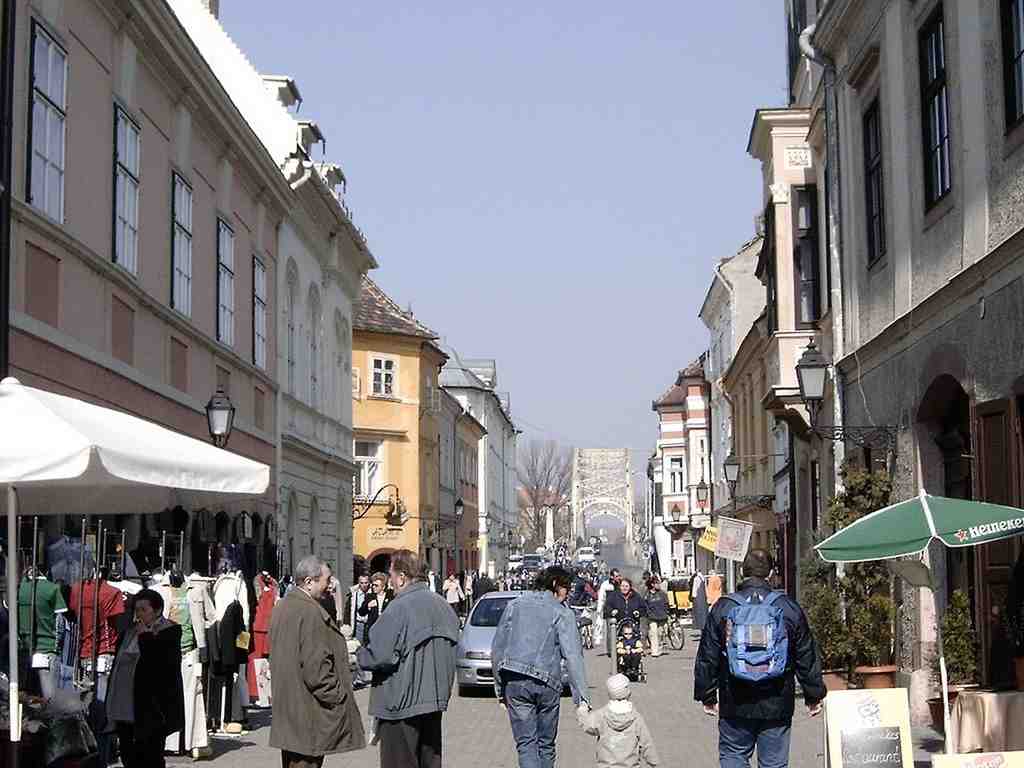
Jedlik Ányos StreetPhoto: user:Balint86, Wikimedia Commons, CC BY-SA 3.0. Cropped & resized. On your right, Jedlik Ányos Street opens as a straight stone-paved lane between pale baroque façades, with enclosed corner balconies marking the entrance.
This is one of those places where a city stops posing and simply keeps going. Jedlik Ányos Street links the western side of Dunakapu Square to the northwestern corner of Széchenyi Square, and today it works as a pedestrian street lined with shops, restaurants, and a long, orderly row of baroque homes. It feels settled... because it is.
Its present name is younger than the buildings. For a long time this was Felső-Duna Street, Upper Danube Street. Then, on the seventeenth of January, nineteen oh one, Győr’s city assembly renamed it for Jedlik Ányos, honoring a modern scientific mind by writing his name into a much older street plan. It is a neat local habit: keep the old walls, add a new layer of memory.
And the walls here really do carry continuity. The corner plot at Dunakapu belonged to the widow of Tamás Mészáros in sixteen seventeen, and Simon Radics held it in seventeen oh three. That means long before the current name, long before the paving and café life, people were already buying, inheriting, and arguing over the same urban ground. Cities are less about sudden change than stubborn address books.
If you glance at the image on your screen, you can see how the street forms a baroque corridor between the two squares, held together by a steady rhythm of façades. One of the finest survivors is number nine, the street’s most valuable historic house. Its present front came together in the late eighteenth century when builders merged two older baroque houses, and one of its enclosed balconies still carries the date sixteen ninety-two carved into the stone. Nearby, number ten keeps an eighteen twenty-three date above a red marble-framed gate.
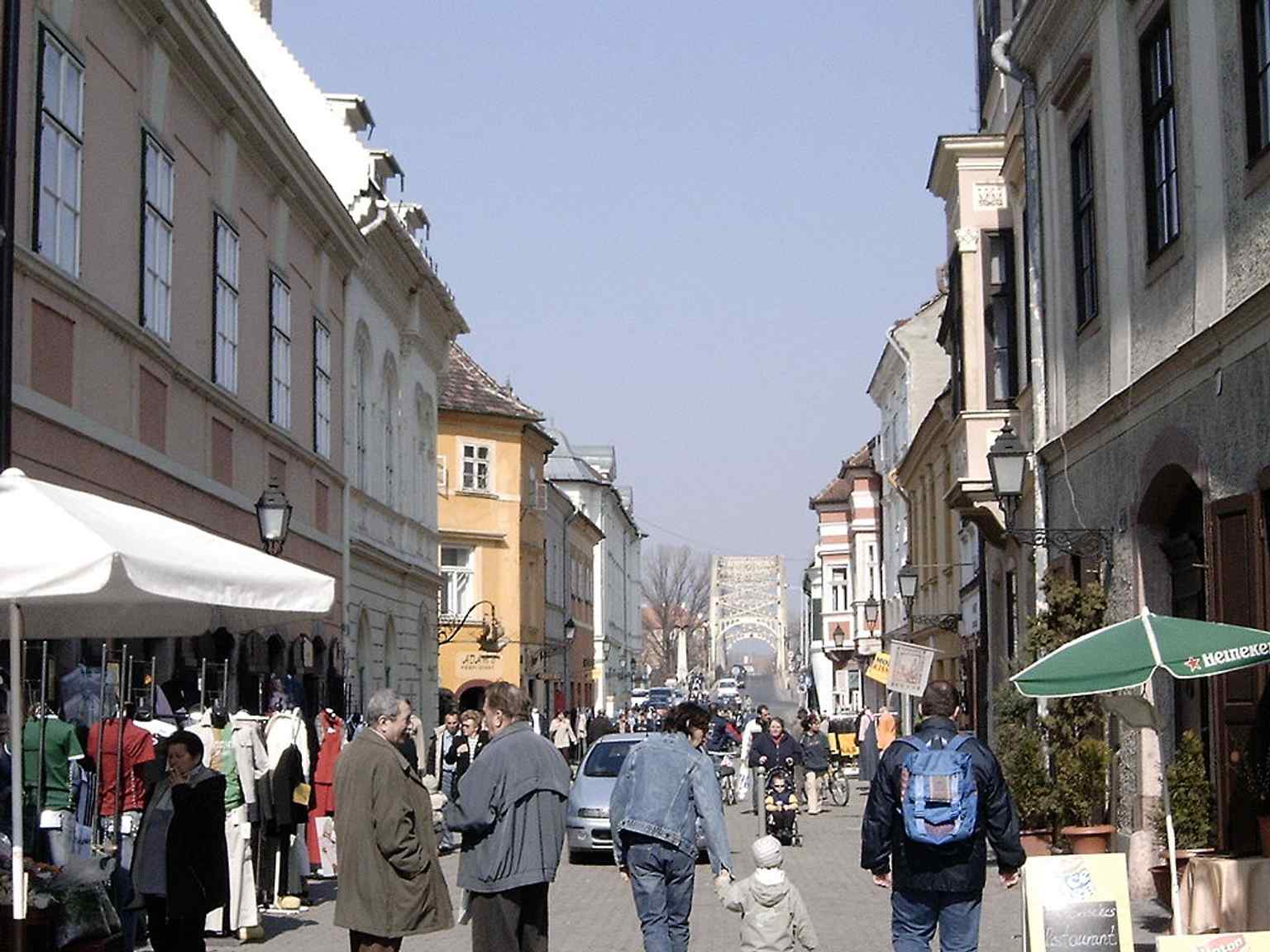
A view toward Jedlik Ányos Street from Széchenyi tér, showing the baroque streetscape that links Győr’s two central squares.Photo: Original uploader was user:Balint86 at hu.wikipedia, Wikimedia Commons, CC BY-SA 3.0. Cropped & resized. A short way along lies little Gutenberg Square, where the Ark monument stands at the center of a story Győr never forgot: in seventeen twenty-nine, guards spotted a disguised deserter in a religious procession, grabbed him, and in the scuffle knocked the sacred vessel from a priest’s hands. King Charles the Third answered the outrage by ordering the monument in seventeen thirty-one. So even here, on an ordinary walking street, devotion, authority, and public memory meet in the middle.
The city renewed this street in twenty eleven and twenty twelve for one hundred and seventy-four million forints... then some of the new stones cracked because the joints were too tight. Baroque dignity, modern engineering, same old human margin for error.
Like the Apátúr-ház, this street shows how names and uses shift while the frame endures. Now it also serves as one of Győr’s north-south cycling routes toward Kossuth Bridge. That’s our next stop, about a three-minute walk away, where the city trades street names for something even plainer and more essential: connection.
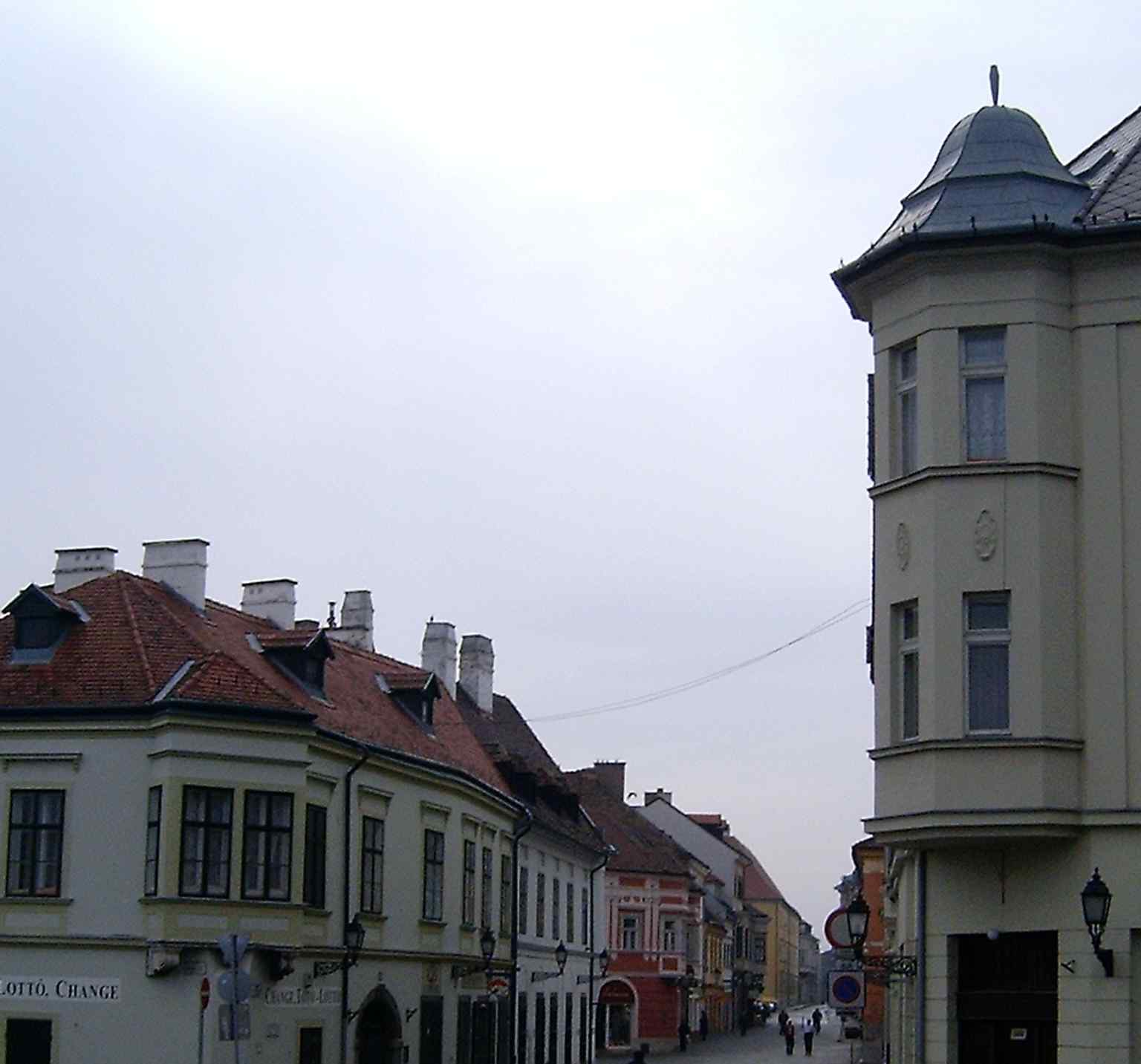
Looking from Dunakapu tér into Jedlik Ányos Street, the pedestrian route begins between the historic corner buildings described in the tour text.Photo: The original uploader was Balint86 at Hungarian Wikipedia., Wikimedia Commons, CC BY-SA 3.0. Cropped & resized. 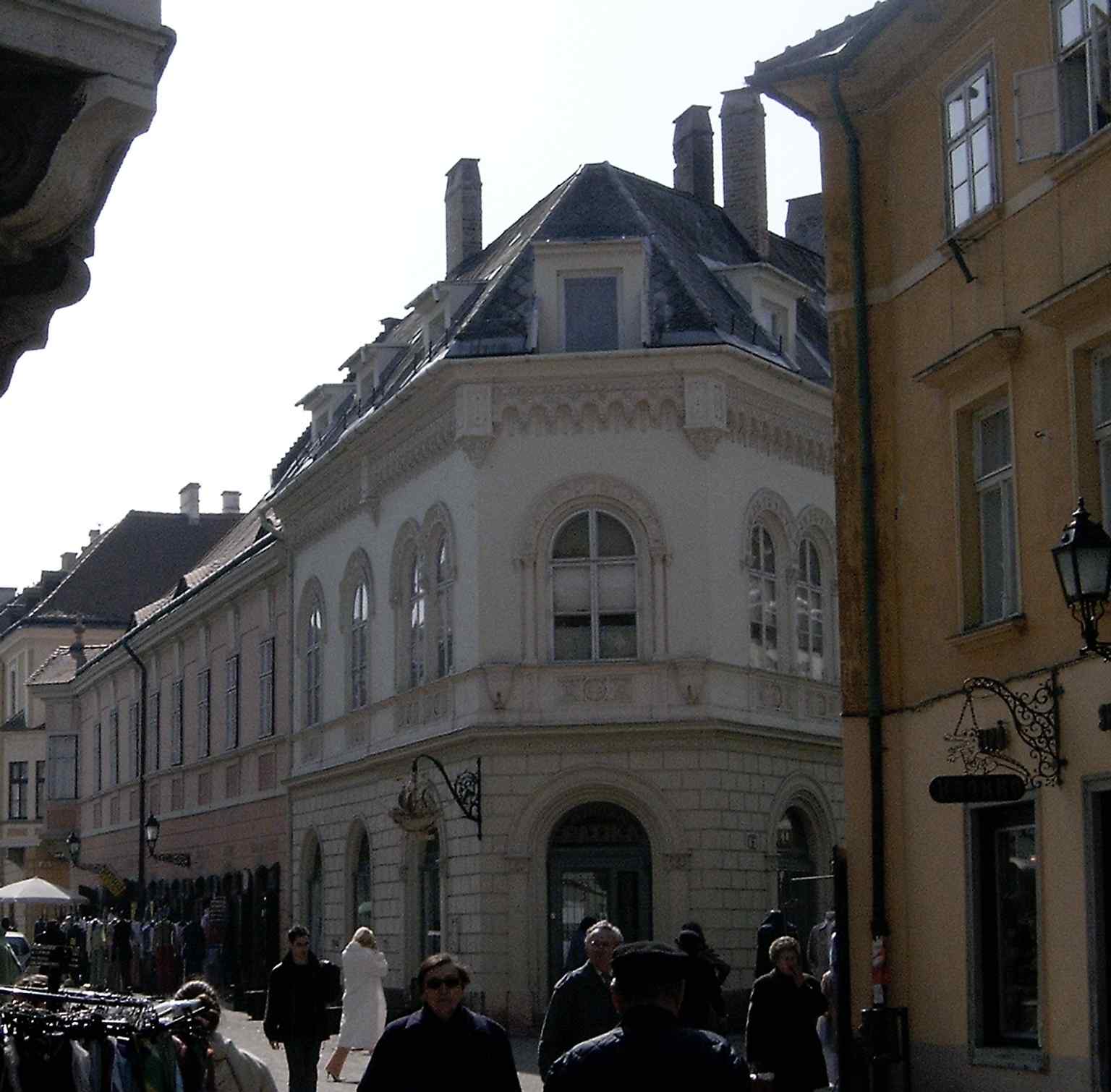
The Aranyhajó Pharmacy building on Jedlik Ányos utca 16, with its ship sign, is one of the street’s notable landmarks.Photo: hu:user:Balint86, Wikimedia Commons, CC BY 3.0. Cropped & resized. 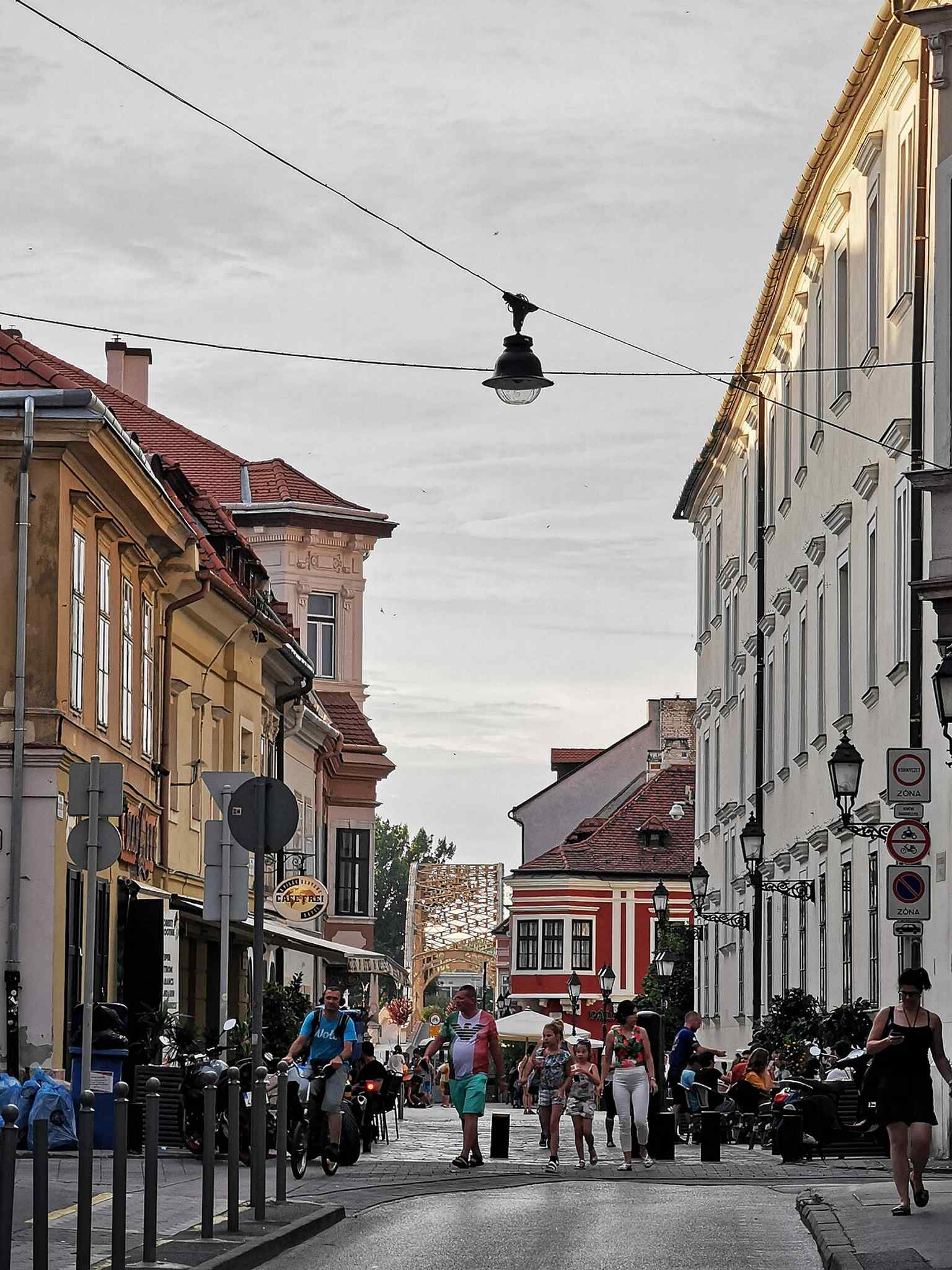
Jedlik Ányos utca 2 is part of the large church-owned residential block that fronts both the street and Dunakapu tér.Photo: Random photos 1989, Wikimedia Commons, CC0. Cropped & resized. 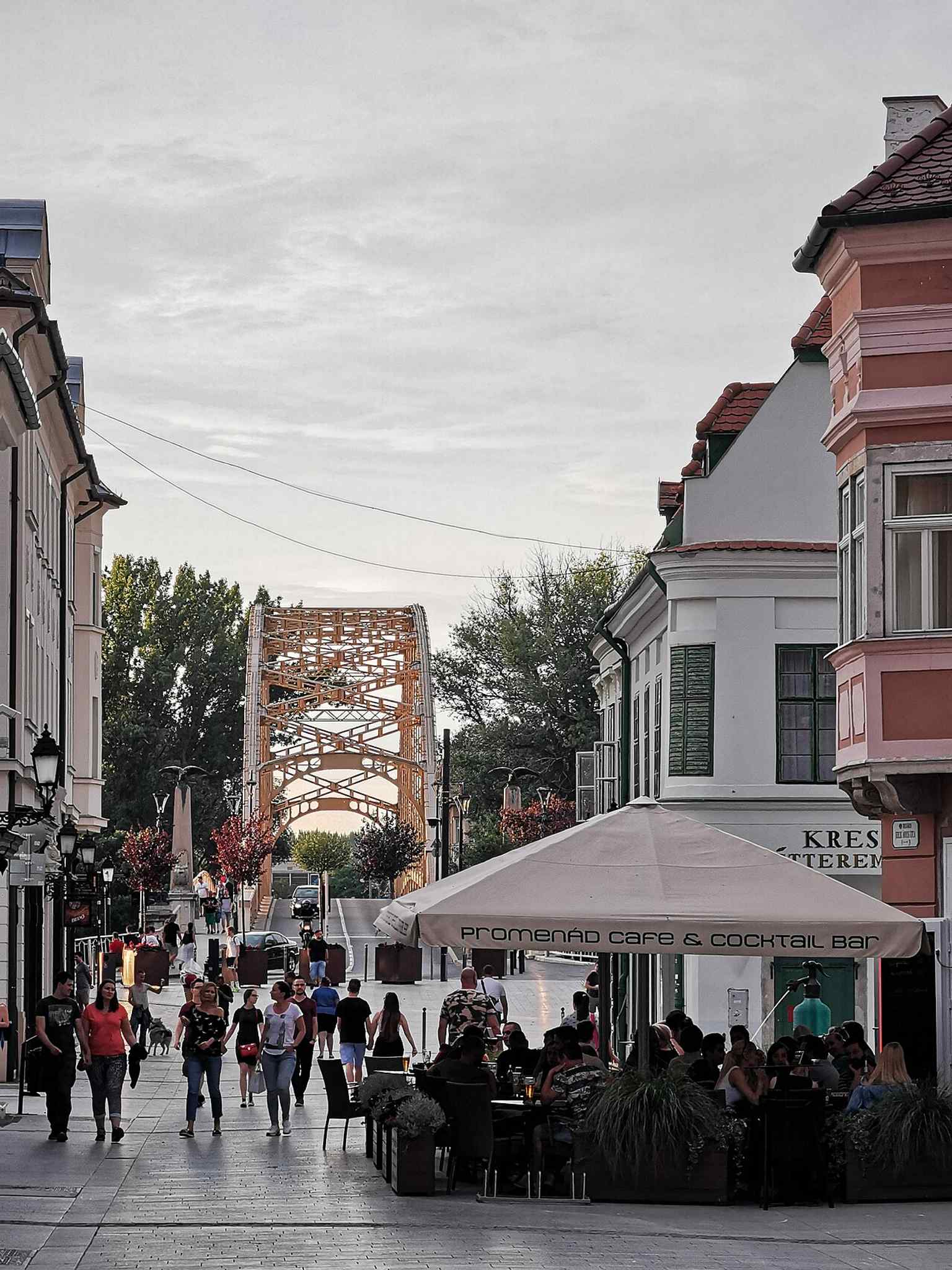
Another facade along the same block, helping show the continuous pedestrian-scale frontage that shapes the street today.Photo: Random photos 1989, Wikimedia Commons, CC0. Cropped & resized. 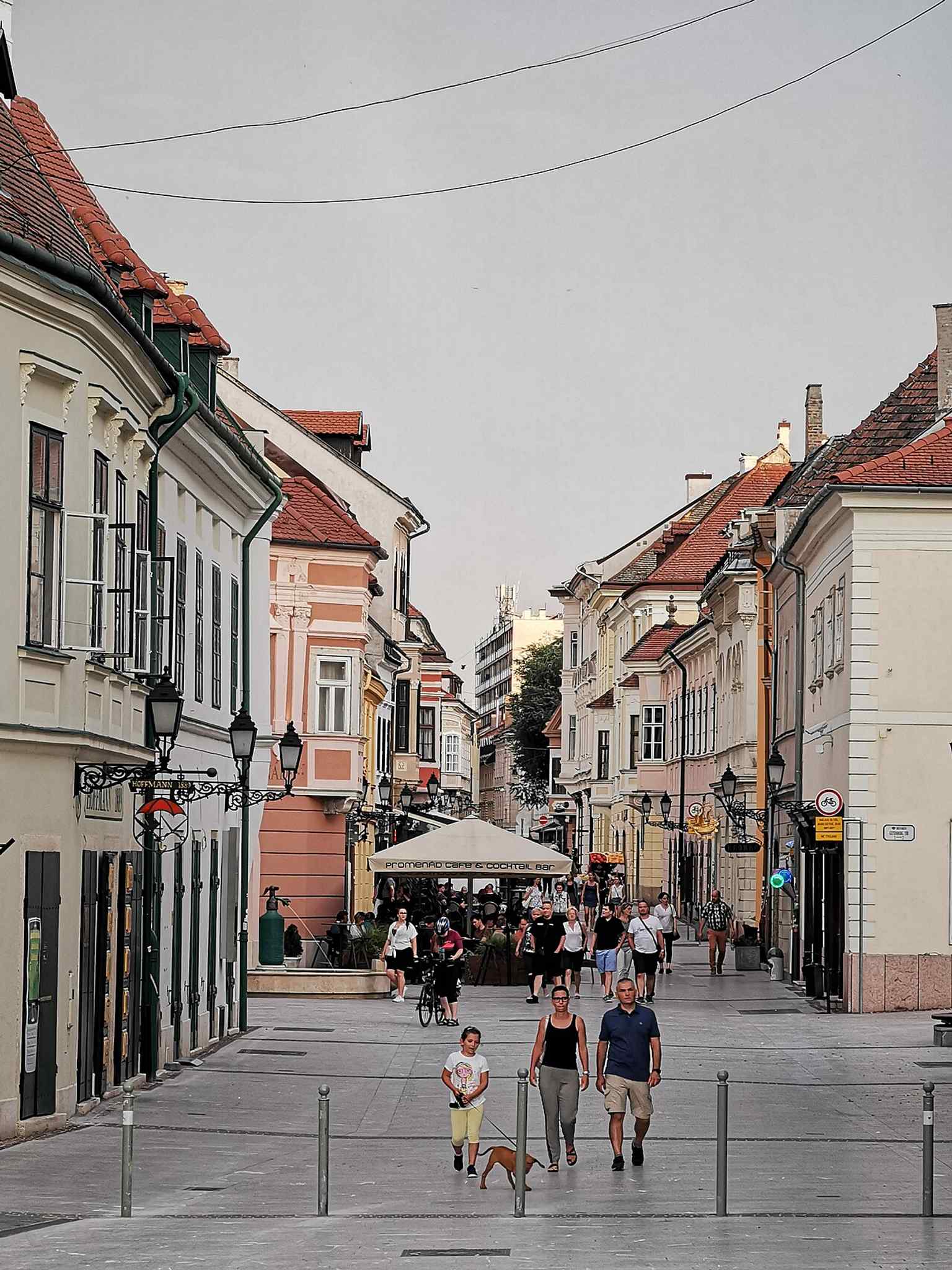
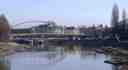
A close street-level view of the numbered houses along Jedlik Ányos Street, where baroque and later façades line the promenade.Photo: Random photos 1989, Wikimedia Commons, CC0. Cropped & resized. Ahead of you is a steel river bridge with a long, slightly arched span, lattice-like metal sides, and turul bird statues guarding both ends. Named for Lajos Kossuth, this bridge…Read moreShow less
Open dedicated page →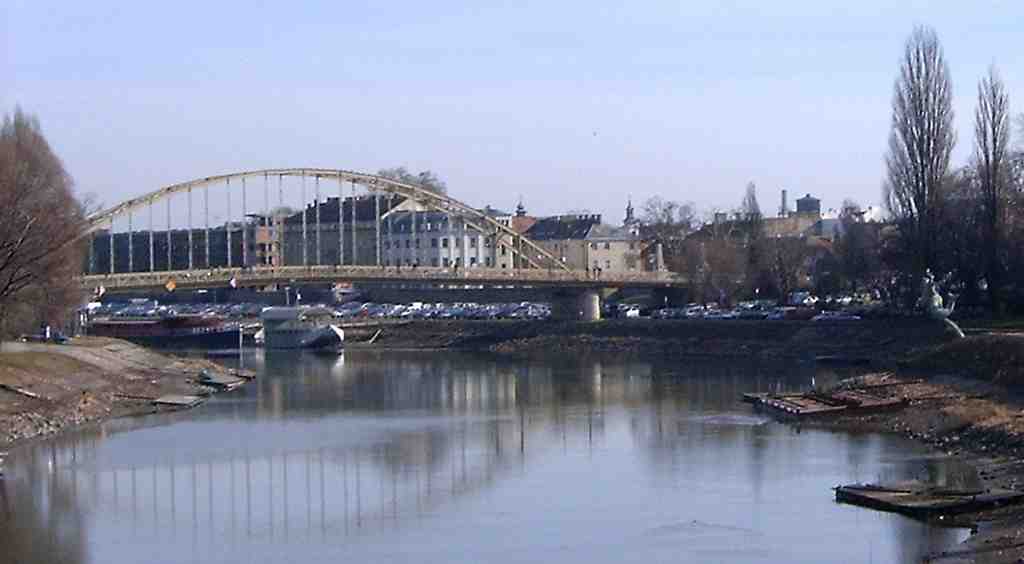
Kossuth Bridge (Győr)Photo: Balint86, Wikimedia Commons, CC BY 3.0. Cropped & resized. Ahead of you is a steel river bridge with a long, slightly arched span, lattice-like metal sides, and turul bird statues guarding both ends.
Named for Lajos Kossuth, this bridge crosses the Mosoni-Danube just after the Rába joins it, and that location explains almost everything. This is a crossing, yes, but also a repair. A bridge stood here as early as the sixteenth century. In eighteen ninety-nine, builders put up a wooden one. Then, between nineteen twenty-six and nineteen twenty-eight, Győr raised the iron bridge you see now, all one hundred and twenty-six meters of it, linking Dunakapu Square to Kálóczy Square in Révfalu. People still call it the Révfalusi Bridge, because locals rarely waste a perfectly useful name.
In nineteen forty-five, German forces blew it up. When the city reopened the rebuilt bridge in nineteen fifty, it restored more than traffic. It stitched downtown back to Révfalu and helped the northern bank stop being a fringe and start becoming part of the city. That is what bridges do at their best: they answer rupture with connection.
If you want, check the before-and-after image in the app; in nineteen sixty-five this bridge barely peeks out behind the riverside streetscape, and by two thousand seven it stands forward as a landmark in its own right. What remains visible is only part of the story; the rest survives because people rebuild it, record it, and keep telling it.
The river still keeps the final word now and then. In twenty fifteen, high water on the Mosoni-Danube and the Rába again threatened this very approach, and officials moved cars away before closures. From the bridge, westward, locals notice a small code for the whole city: a sculpture of a woman riding a water creature near the confluence, with the Cziráky obelisk behind her, and even the Rába’s yellower water folding into the bluer Danube.
That feels like the right last image. Győr makes most sense not as a preserved postcard, but as a connected web of beauty, conscience, loss, and renewal... still carrying people across. And fittingly, the bridge is open all day, every day.
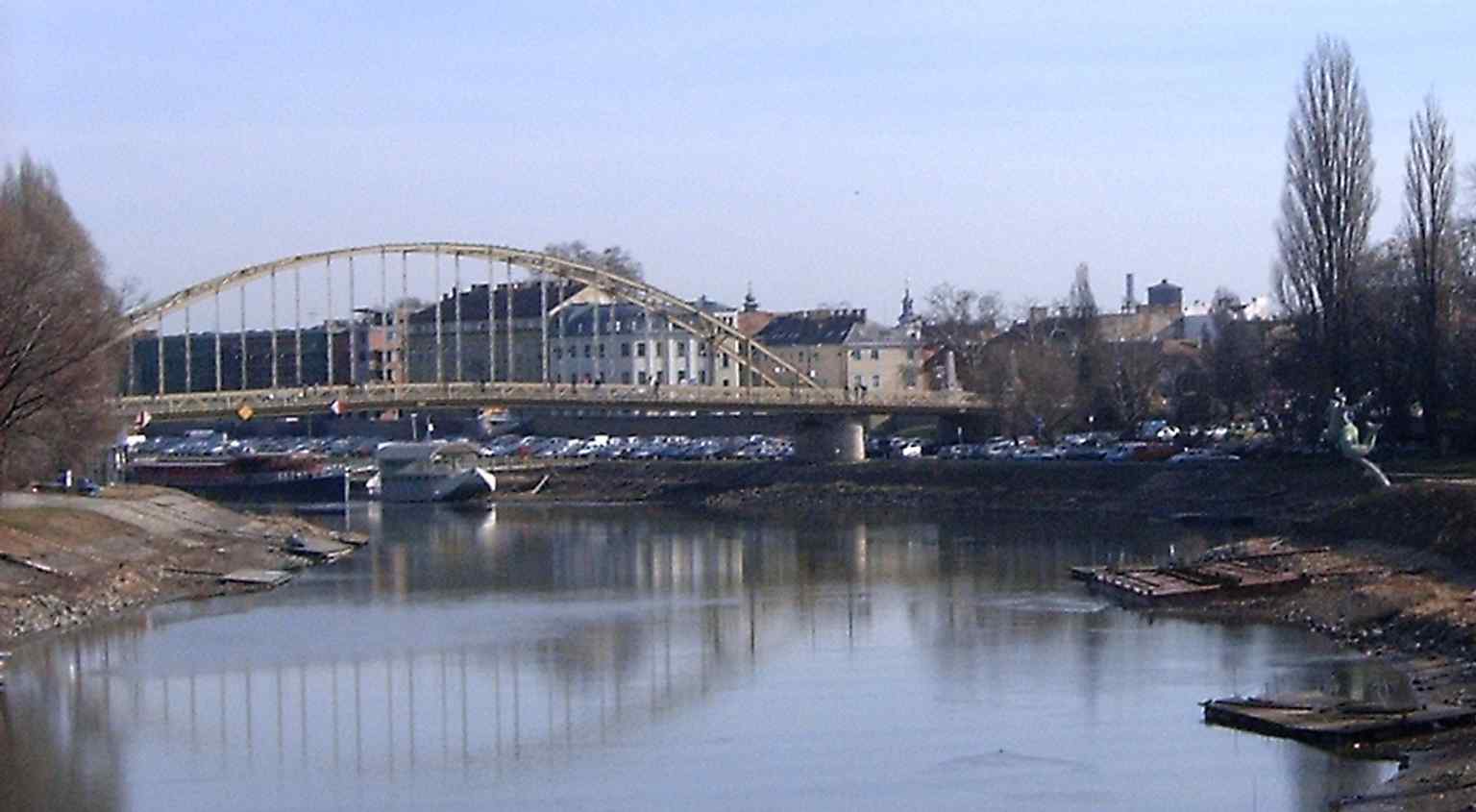
A clear daytime view of Kossuth Bridge, the 126-meter crossing that links Győr’s downtown with Révfalu across the Mosoni-Duna.Photo: Balint86, Wikimedia Commons, CC BY 3.0. Cropped & resized. 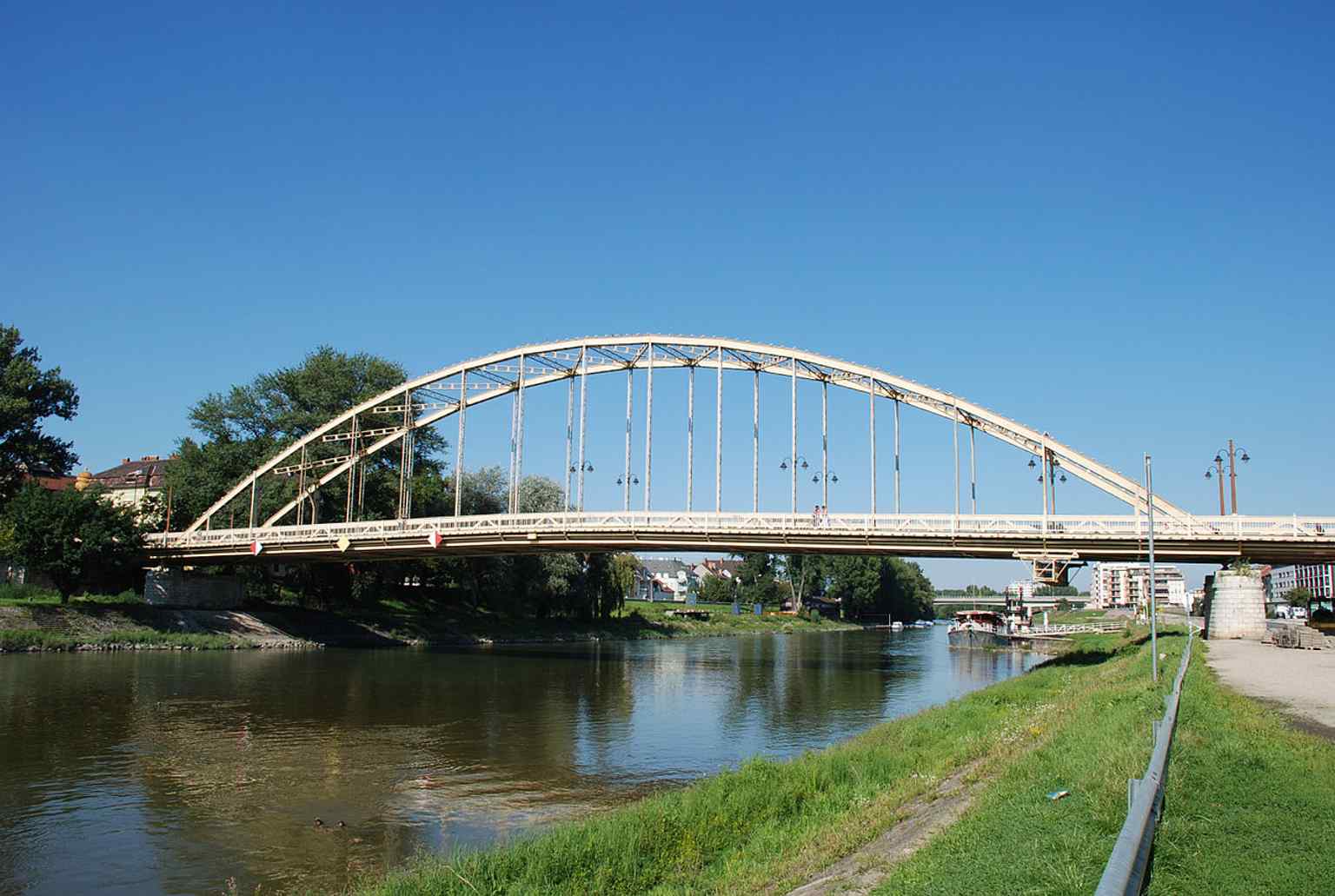
Another broad side view of the bridge, showing the iron structure that replaced earlier crossings here in the 1920s.Photo: Josef Moser, Wikimedia Commons, CC BY-SA 3.0. Cropped & resized. 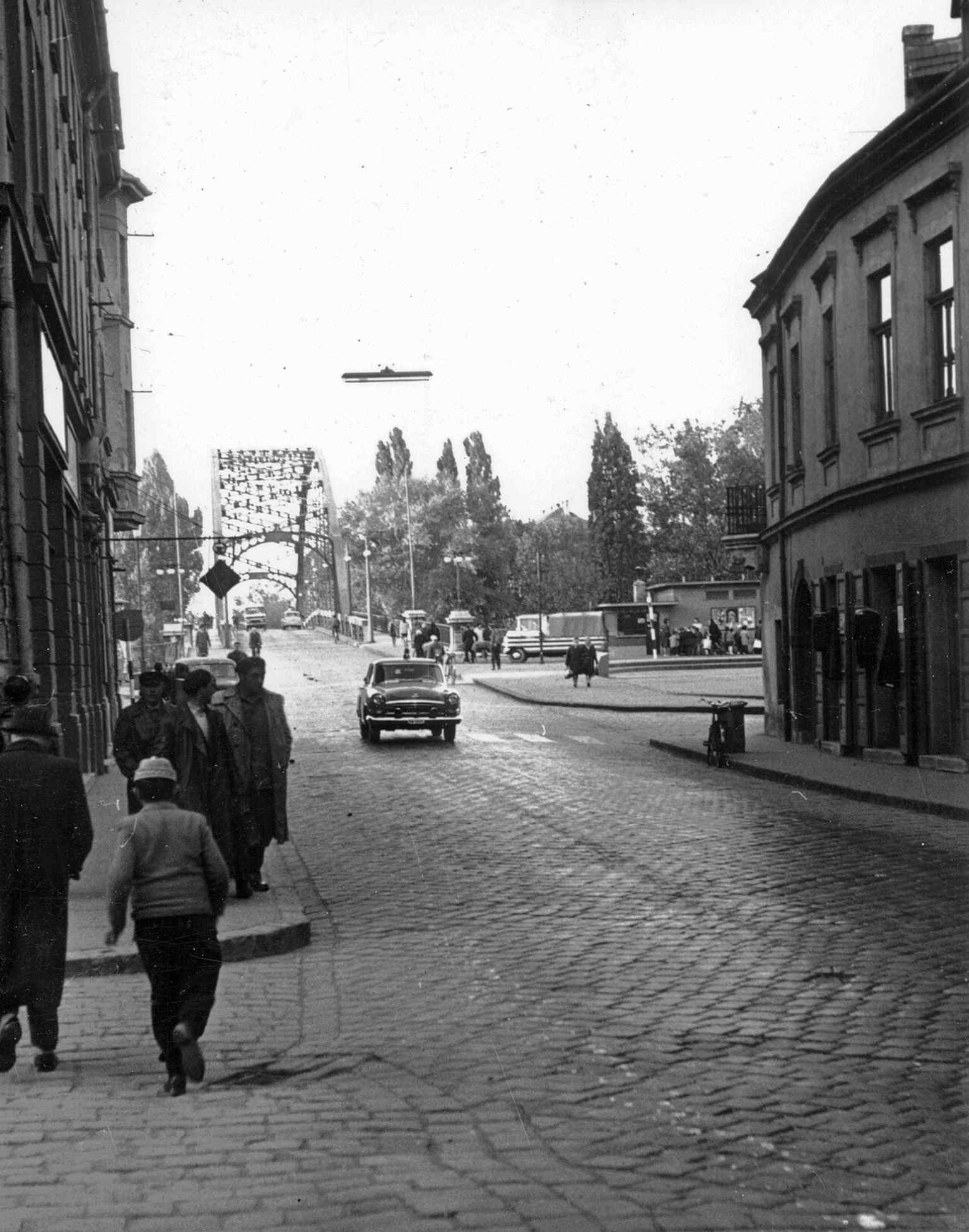
A 1965 Fortepan view with Kossuth Bridge in the background, useful for showing how the bridge has long shaped the city center and riverfront.Photo: FOTO:Fortepan — ID 17091: Adományozó/Donor: Kovács László Péter. archive copy at the Wayback Machine, Wikimedia Commons, CC BY-SA 3.0. Cropped & resized. 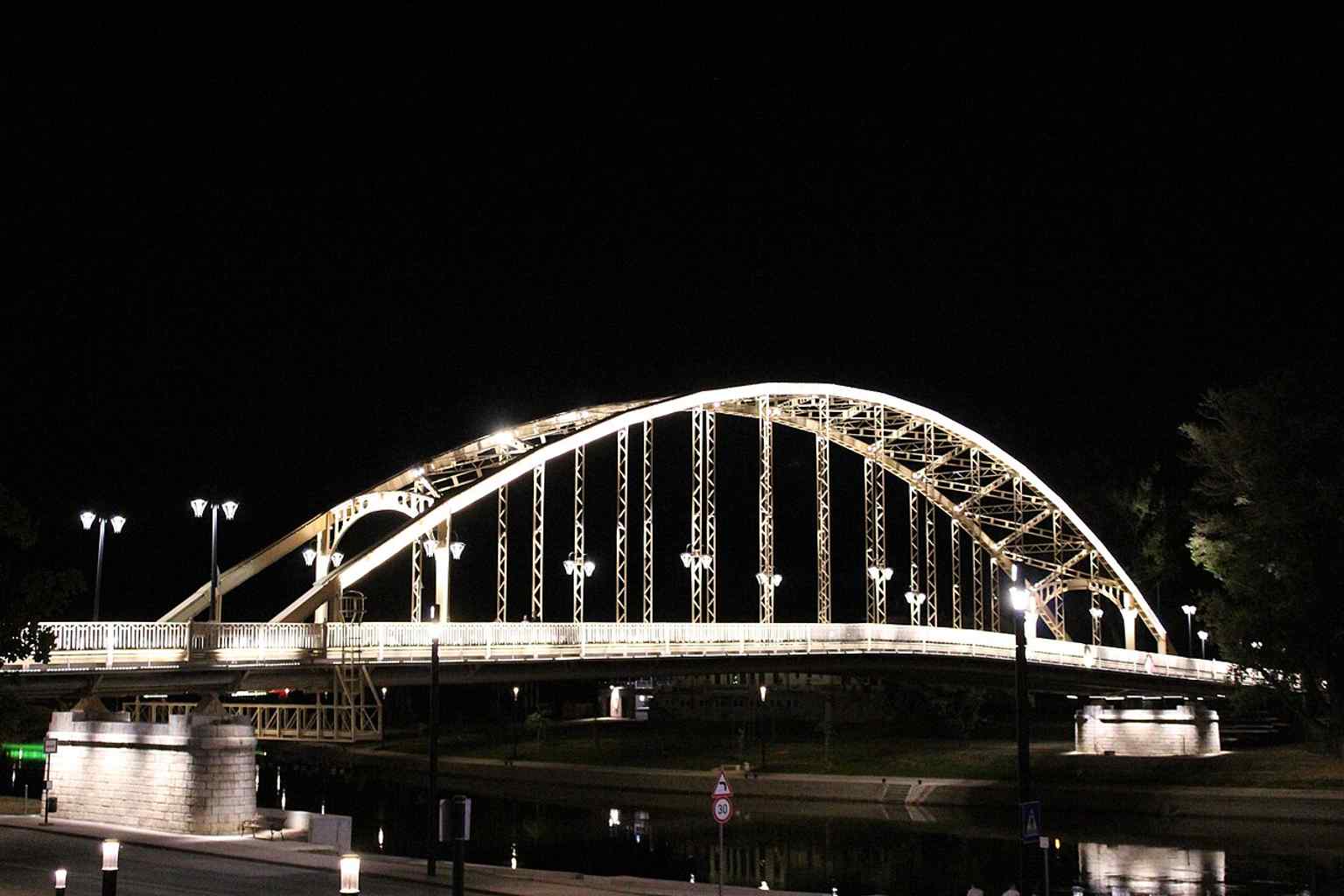
Kossuth Bridge illuminated at night, matching the landmark’s distinctive decorative lighting mentioned in the source text.Photo: Montephess, Wikimedia Commons, CC BY-SA 4.0. Cropped & resized. 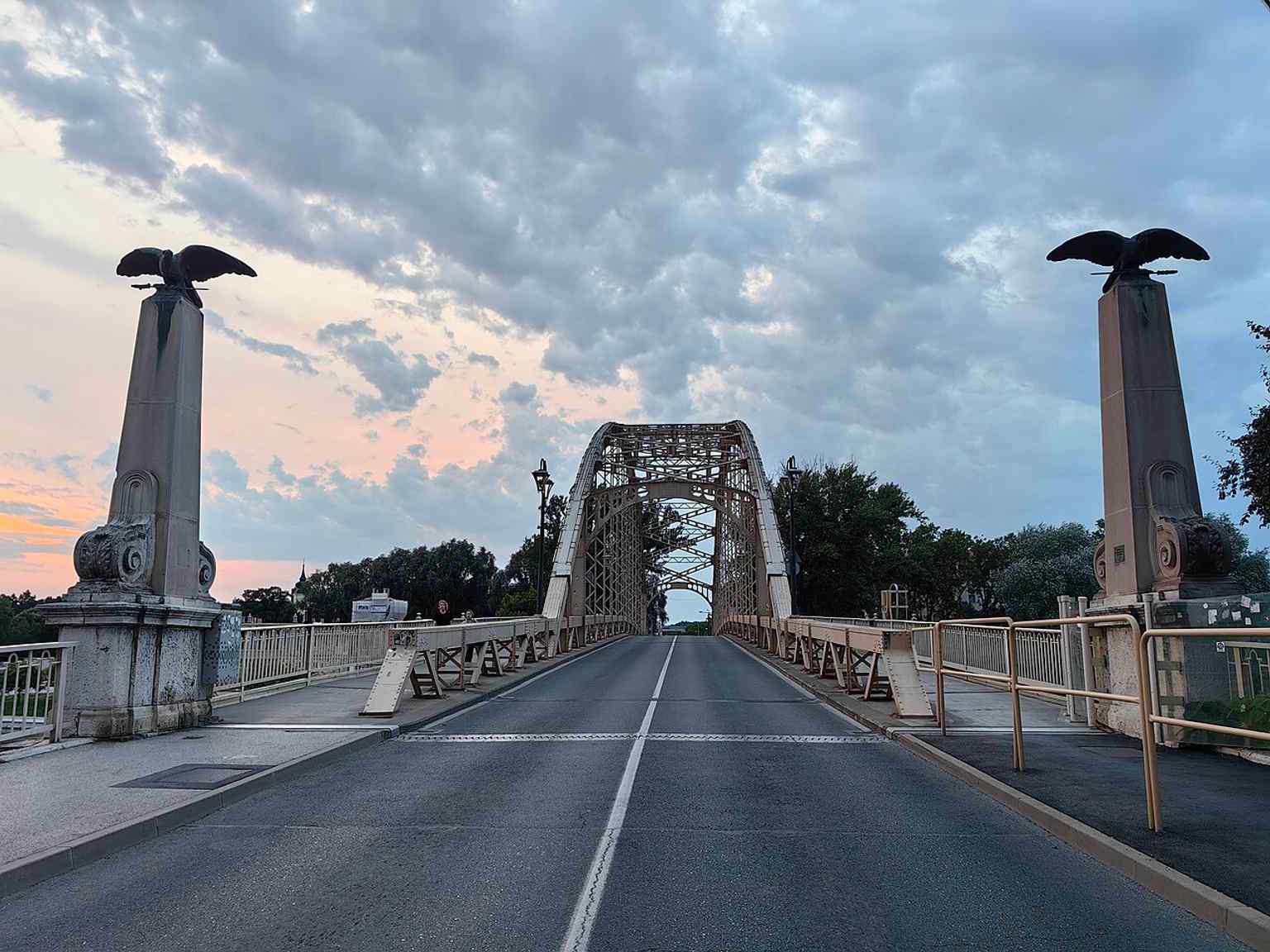
A modern daylight view of the bridge from Győr, highlighting its role as a busy urban connection rather than just a river crossing.Photo: Random photos 1989, Wikimedia Commons, CC BY-SA 4.0. Cropped & resized. 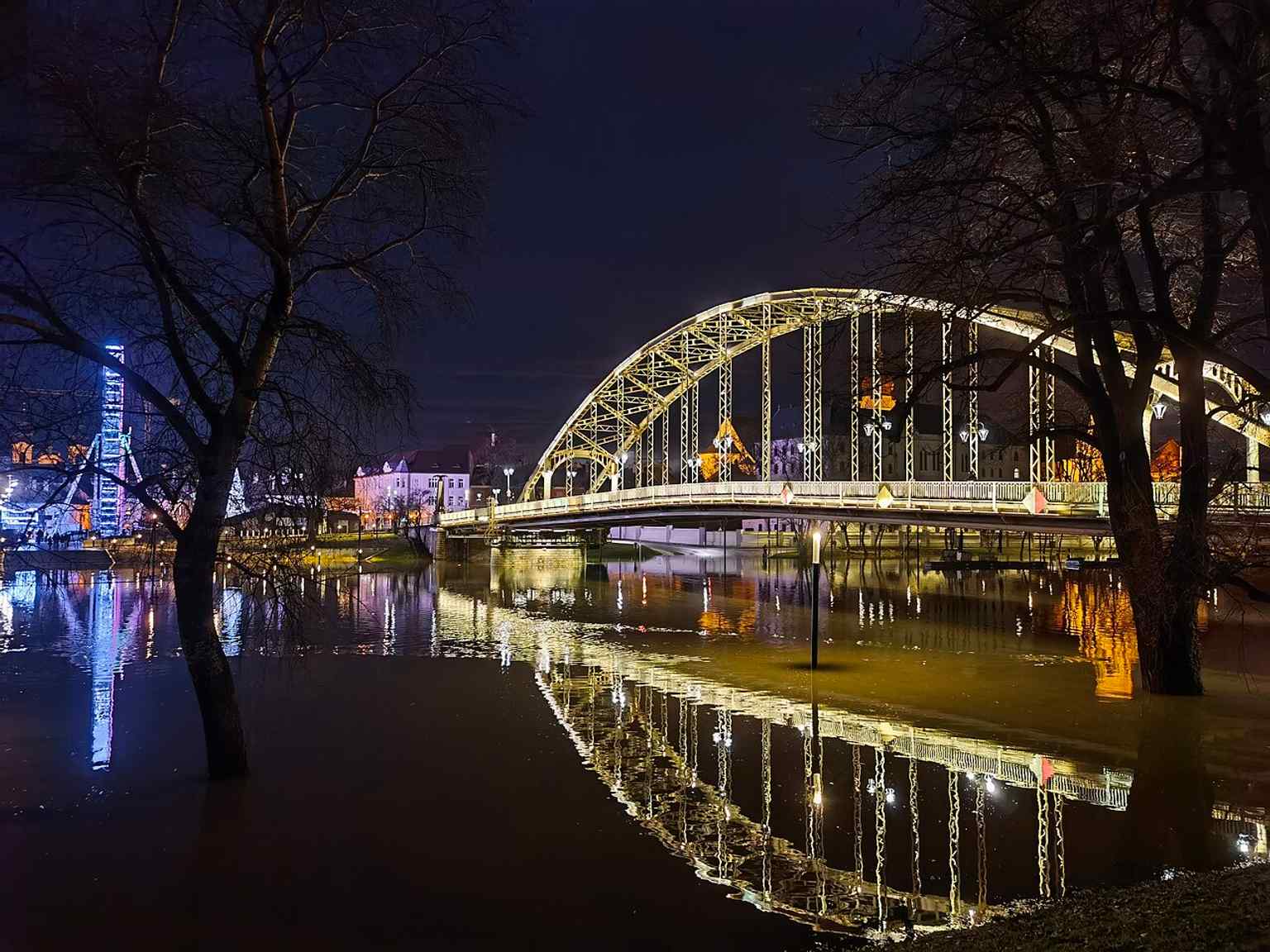
A night-time reflection shot that emphasizes the bridge’s lighting and its strong visual presence over the Mosoni-Duna.Photo: Random photos 1989, Wikimedia Commons, CC0. Cropped & resized. 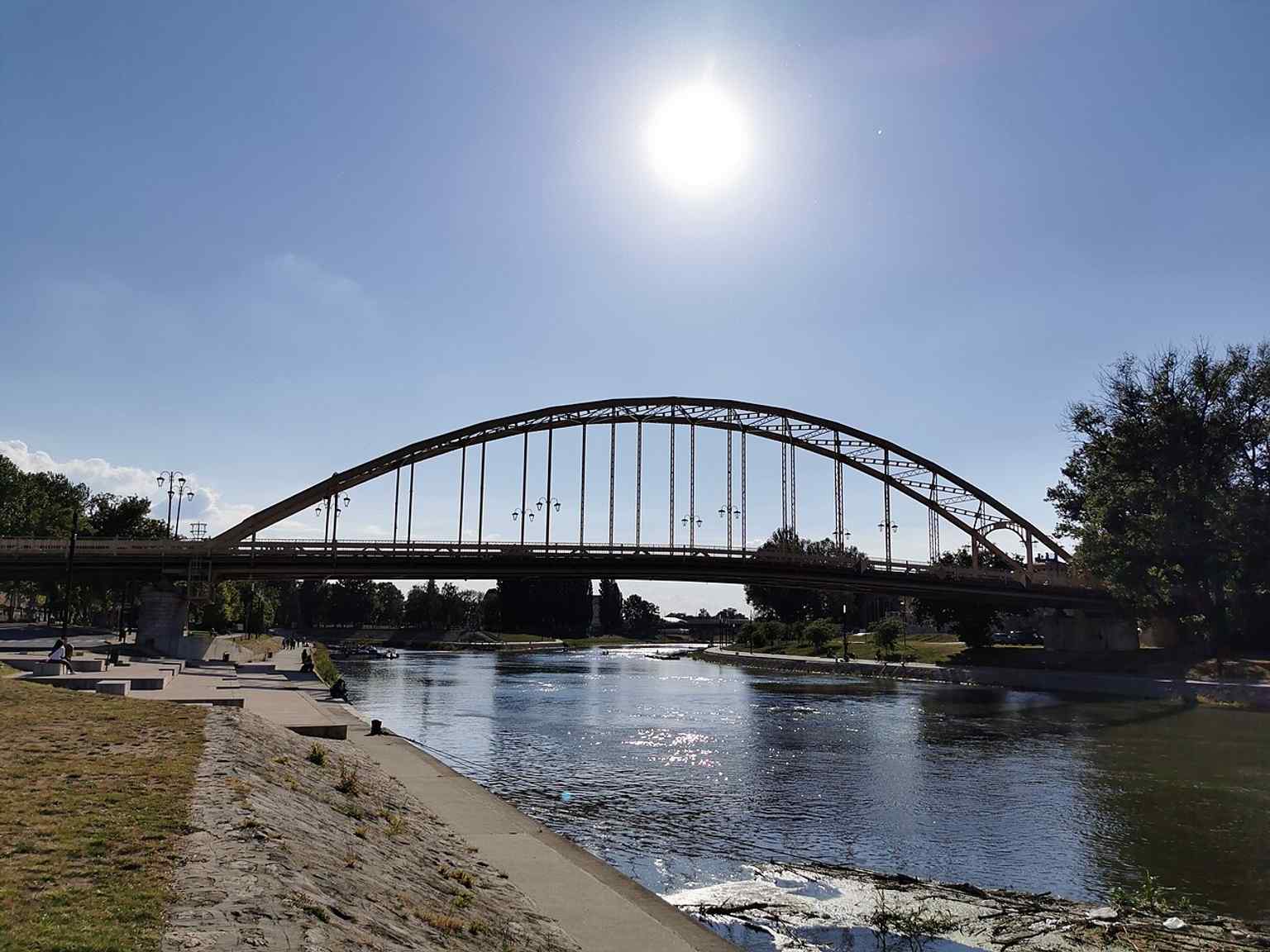
One of the bridge’s many contemporary views, useful for showing the steel span and the river setting around it.Photo: Random photos 1989, Wikimedia Commons, CC0. Cropped & resized. 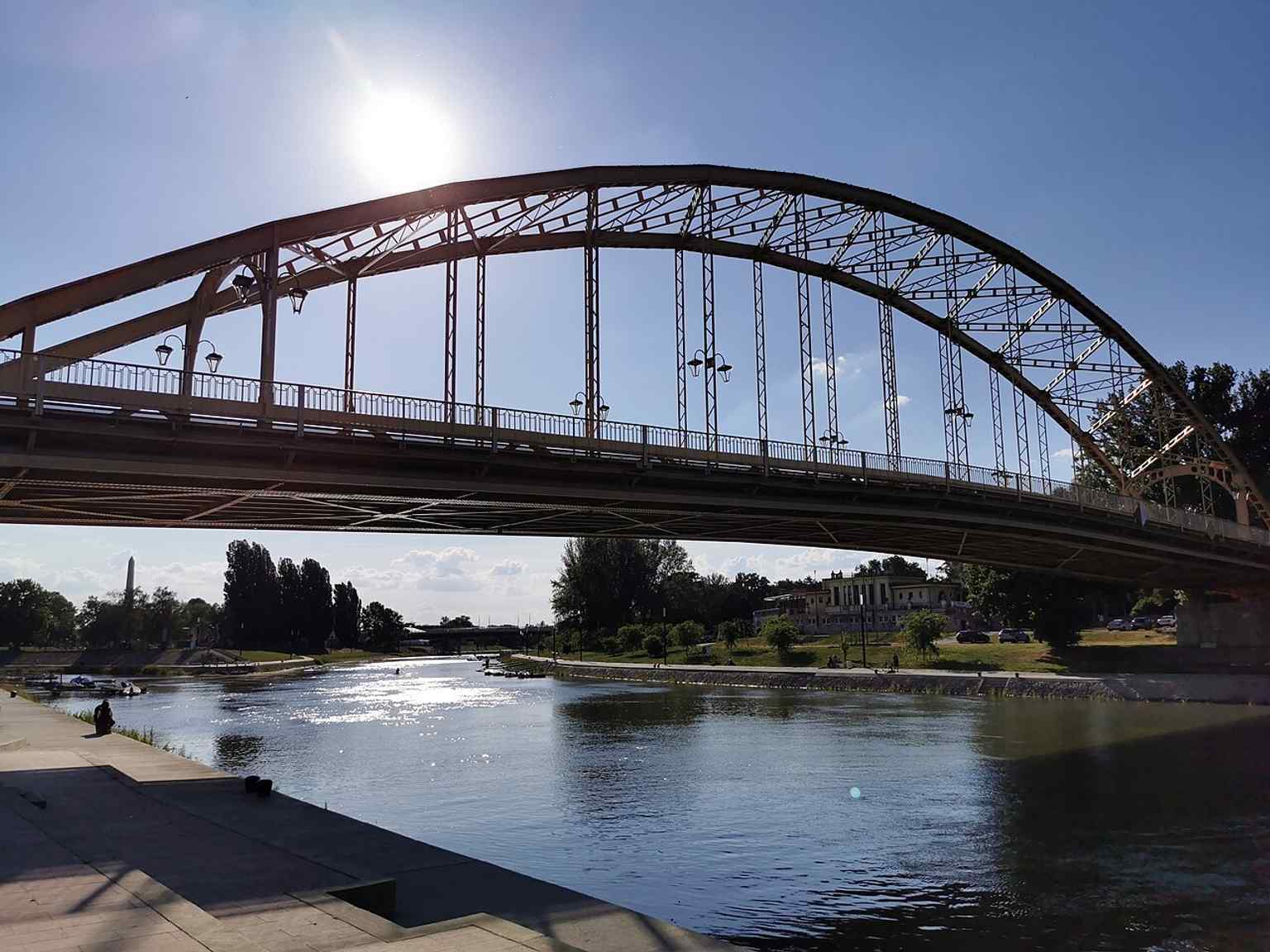
A different angle on Kossuth Bridge, giving variety while still focusing on the landmark itself and its long river crossing.Photo: Random photos 1989, Wikimedia Commons, CC0. Cropped & resized. 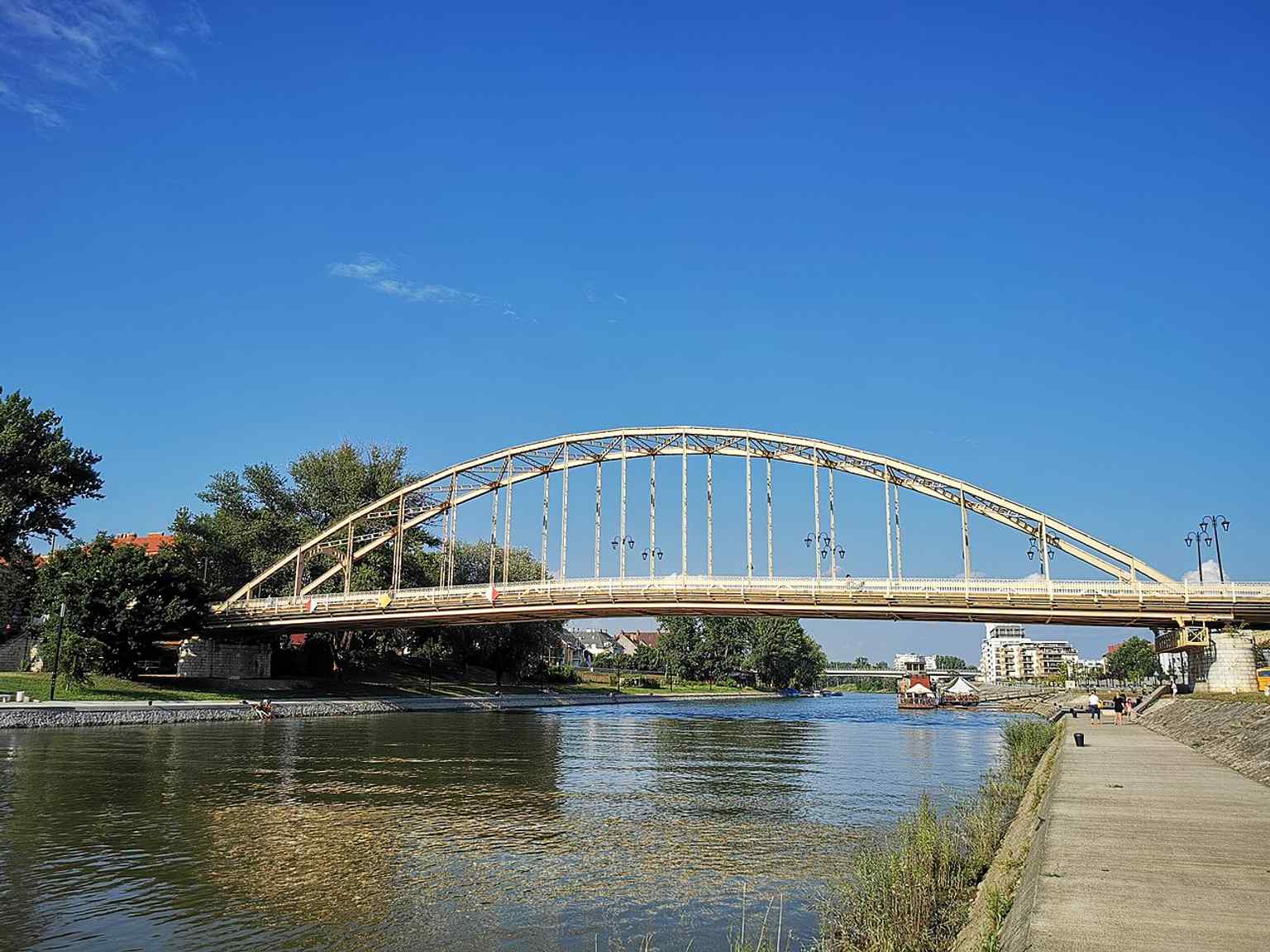
A closer modern view that helps convey the bridge as an everyday city gateway between downtown and Révfalu.Photo: Random photos 1989, Wikimedia Commons, CC0. Cropped & resized. 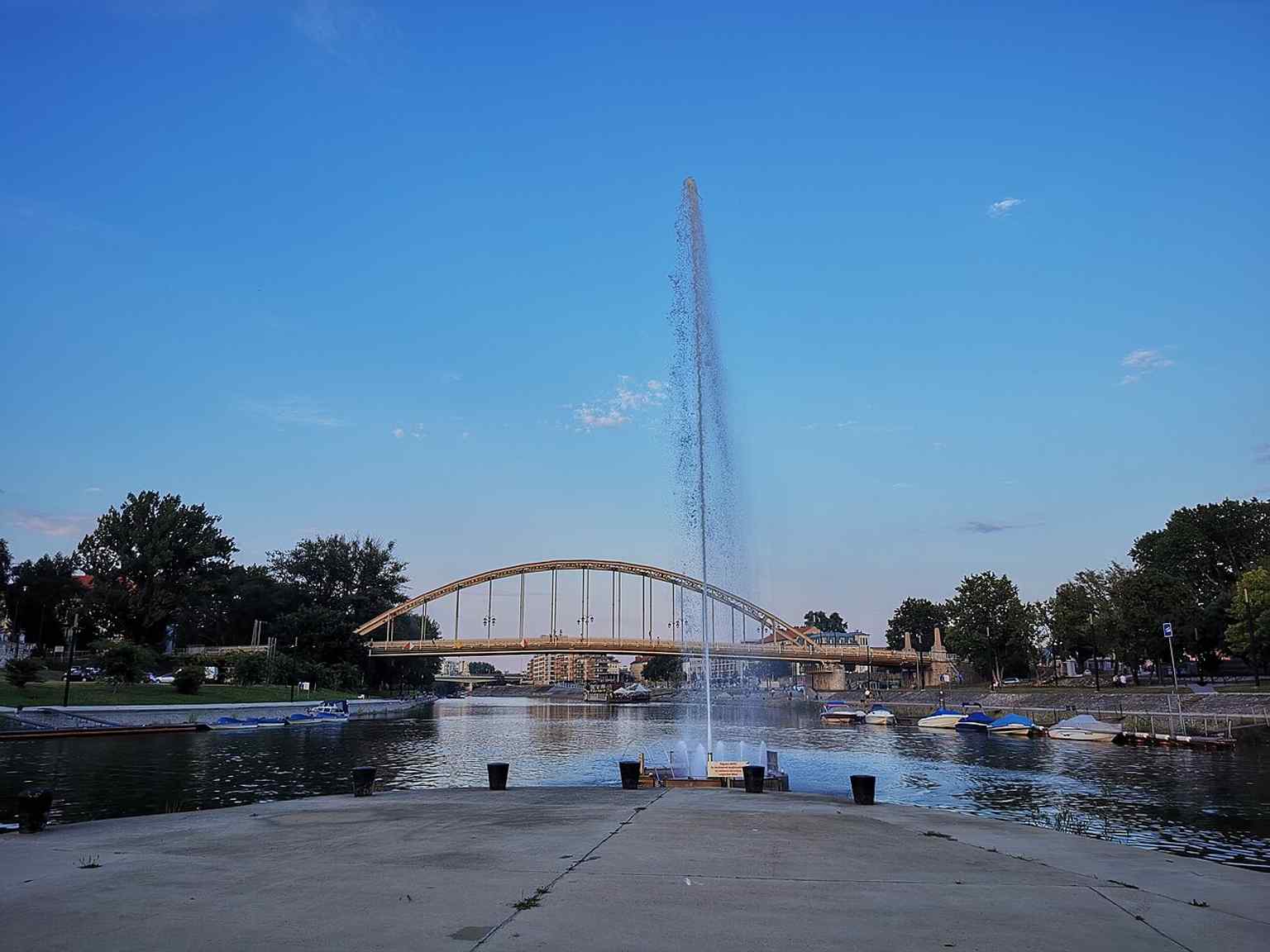
A tighter composition that can work as a detail shot of the bridge’s structure and traffic role in Győr’s riverfront network.Photo: Random photos 1989, Wikimedia Commons, CC0. Cropped & resized. 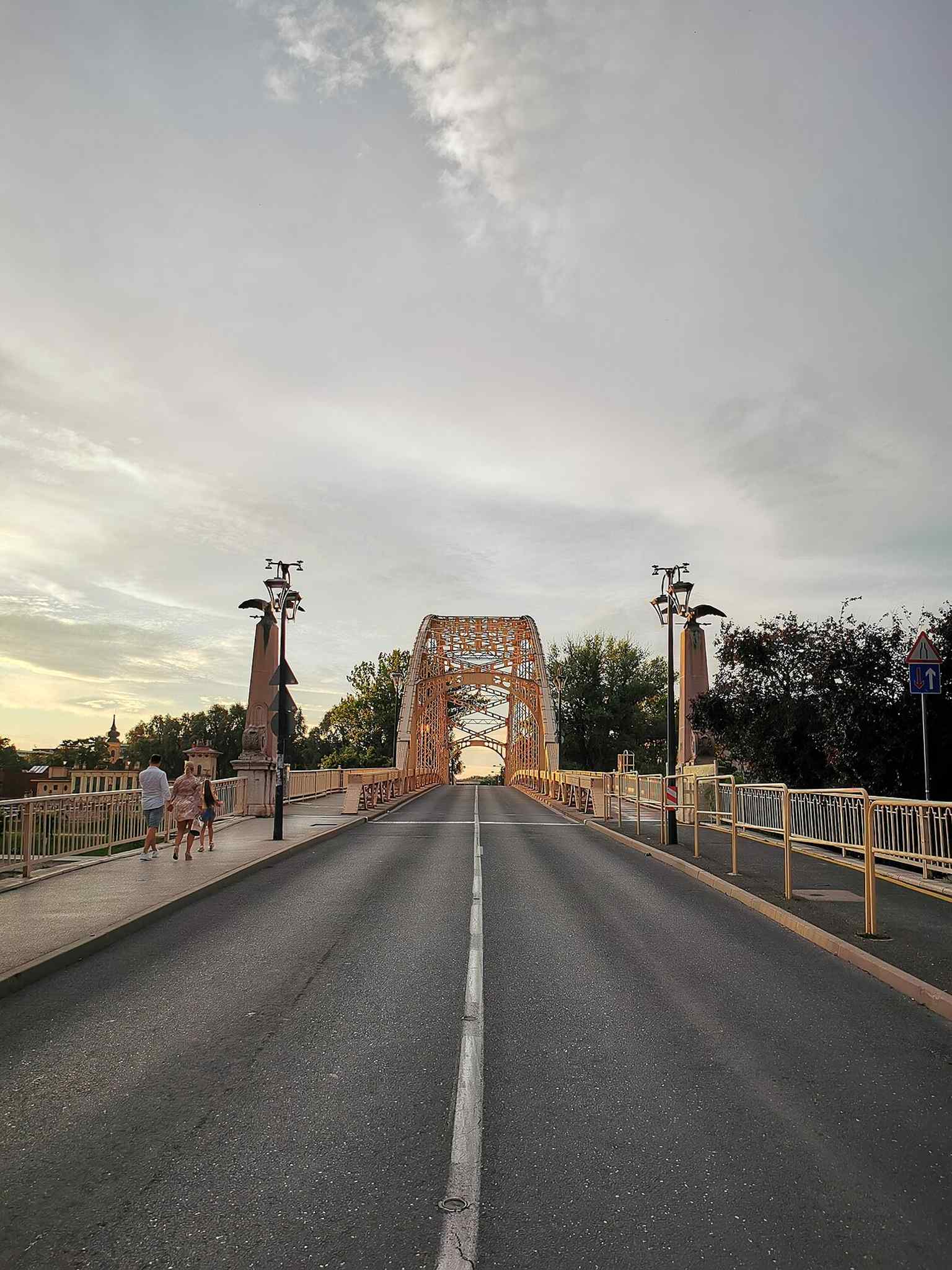
A vertical framing of Kossuth Bridge, adding visual variety and reinforcing its strong presence over the Mosoni-Duna.Photo: Random photos 1989, Wikimedia Commons, CC0. Cropped & resized. 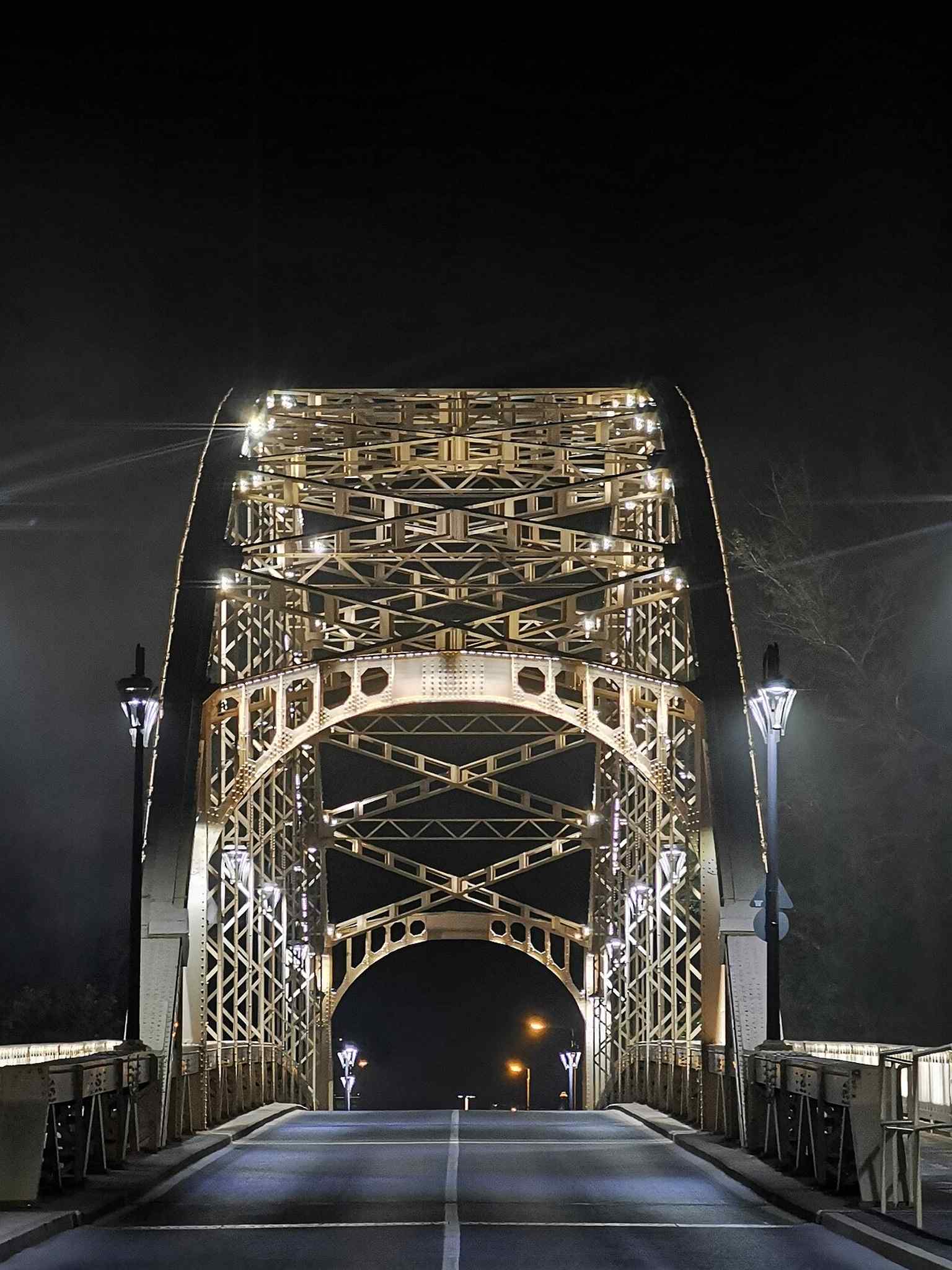
A night image of the bridge that fits the story of Kossuth Bridge as one of Győr’s most photogenic urban scenes.Photo: Random photos 1989, Wikimedia Commons, CC0. Cropped & resized. 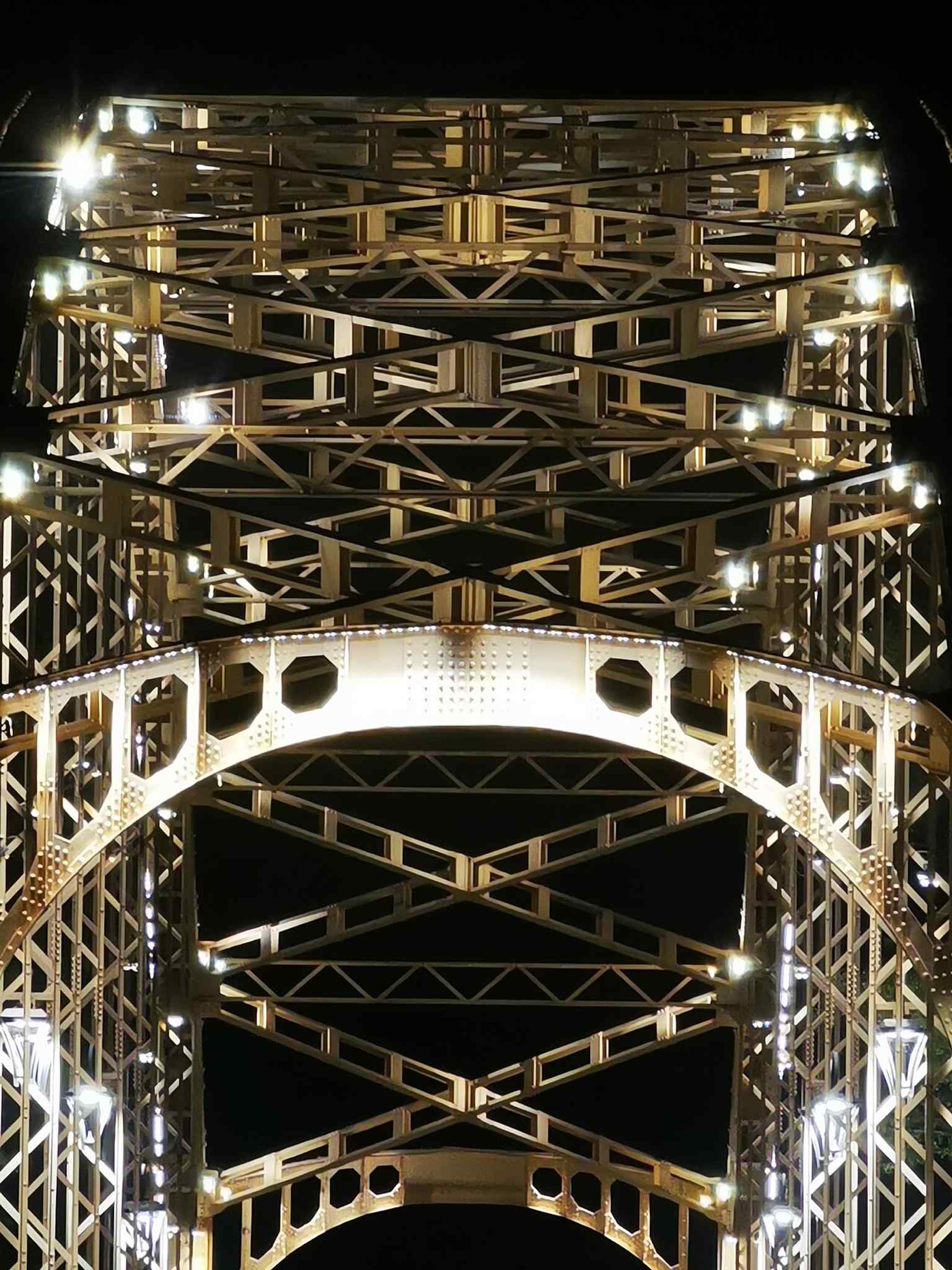
Another illuminated night view, ideal for the tour segment about the bridge as a visible city landmark after dark.Photo: Random photos 1989, Wikimedia Commons, CC0. Cropped & resized. 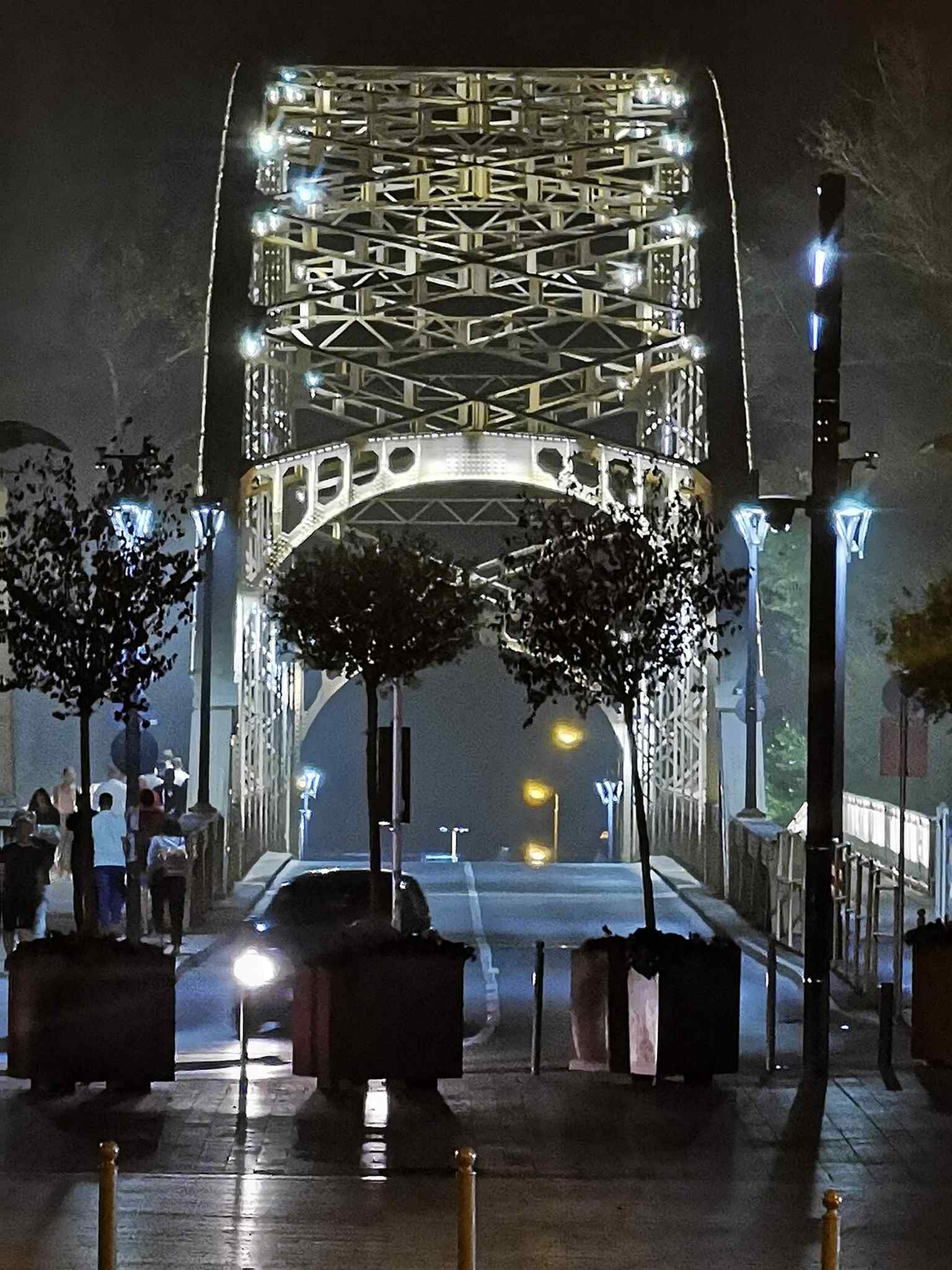
A final night-time angle showing how the bridge’s lighting makes it stand out as a landmark on the river.Photo: Random photos 1989, Wikimedia Commons, CC0. Cropped & resized.
Frequently asked questions
How do I start the tour?
After purchase, download the AudaTours app and enter your redemption code. The tour will be ready to start immediately - just tap play and follow the GPS-guided route.
Do I need internet during the tour?
No! Download the tour before you start and enjoy it fully offline. Only the chat feature requires internet. We recommend downloading on WiFi to save mobile data.
Is this a guided group tour?
No - this is a self-guided audio tour. You explore independently at your own pace, with audio narration playing through your phone. No tour guide, no group, no schedule.
How long does the tour take?
Most tours take 60–90 minutes to complete, but you control the pace entirely. Pause, skip stops, or take breaks whenever you want.
What if I can't finish the tour today?
No problem! Tours have lifetime access. Pause and resume whenever you like - tomorrow, next week, or next year. Your progress is saved.
What languages are available?
All tours are available in 50+ languages. Select your preferred language when redeeming your code. Note: language cannot be changed after tour generation.
Where do I access the tour after purchase?
Download the free AudaTours app from the App Store or Google Play. Enter your redemption code (sent via email) and the tour will appear in your library, ready to download and start.
If you don't enjoy the tour, we'll refund your purchase. Contact us at help@audatours.com
Checkout securely with 












%2C%202018%20Gy%C5%91r.jpg)


