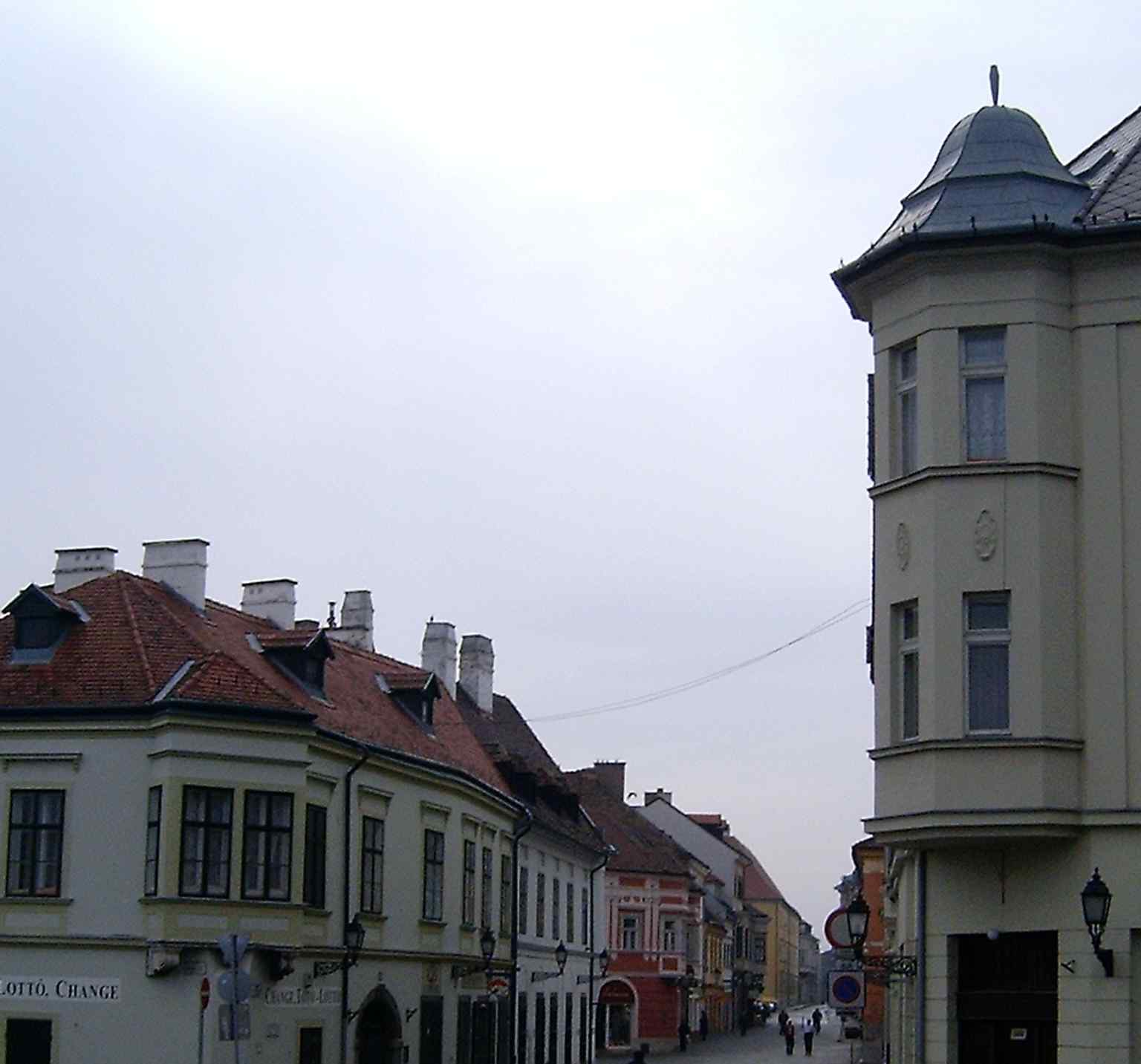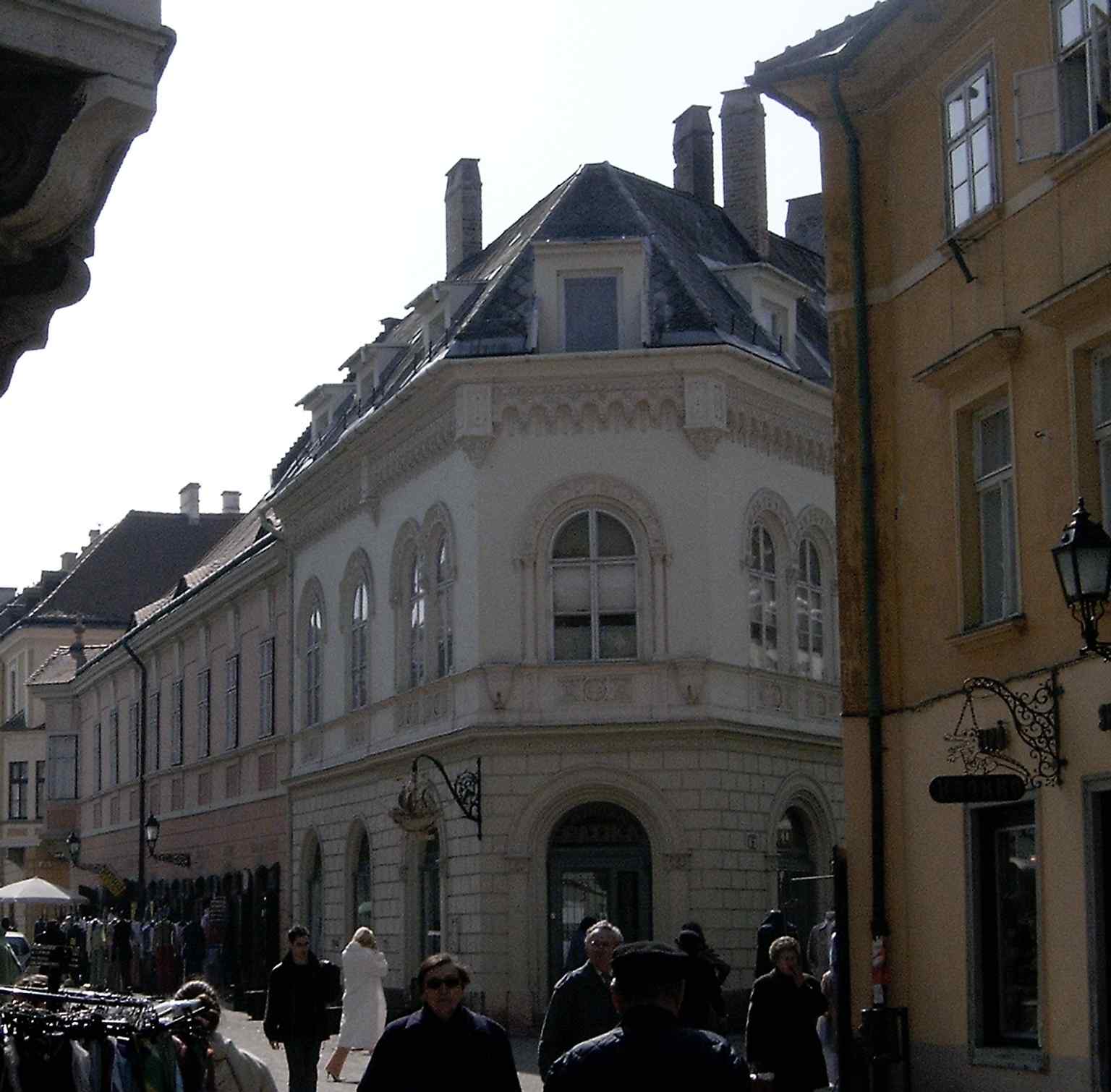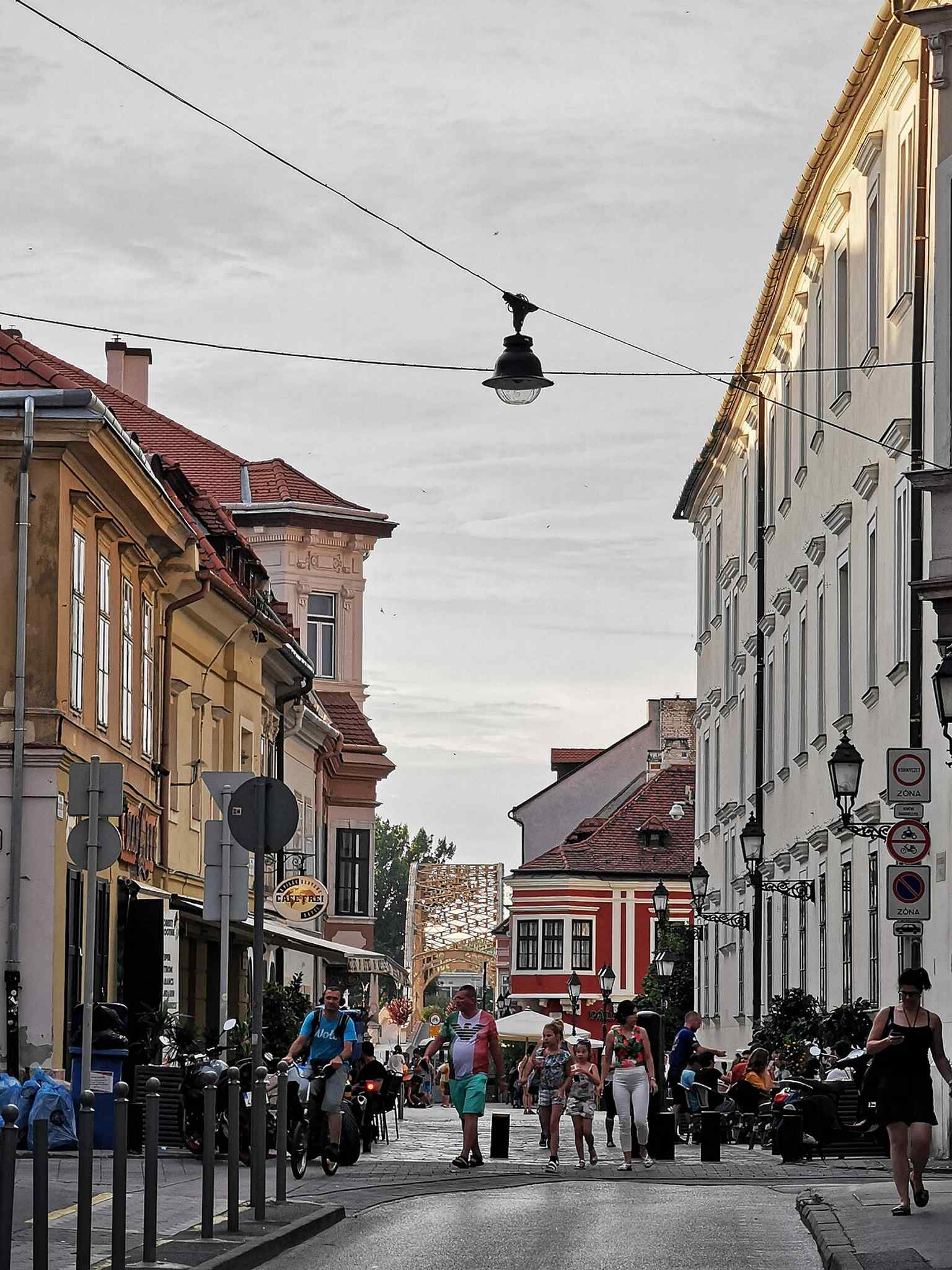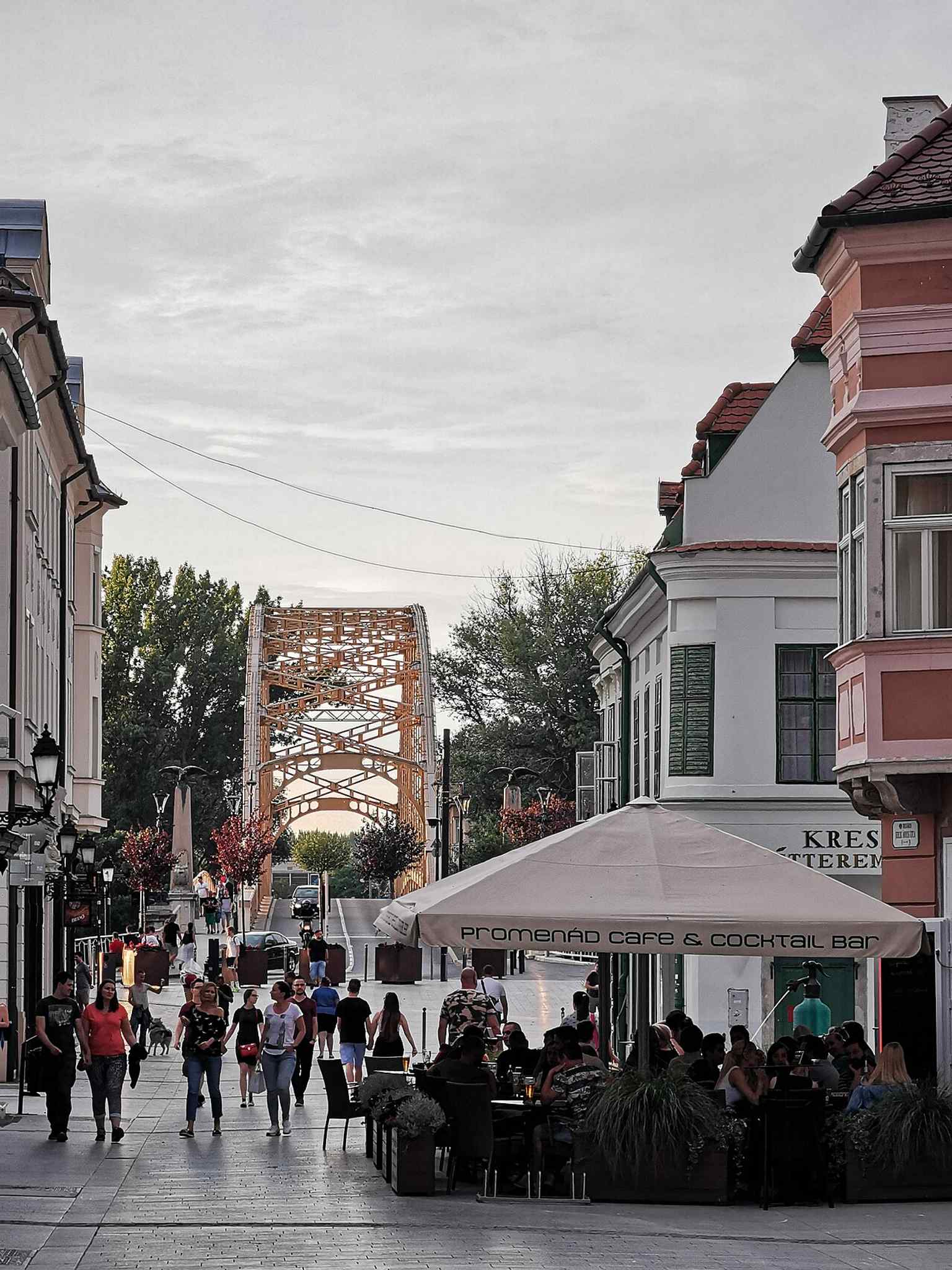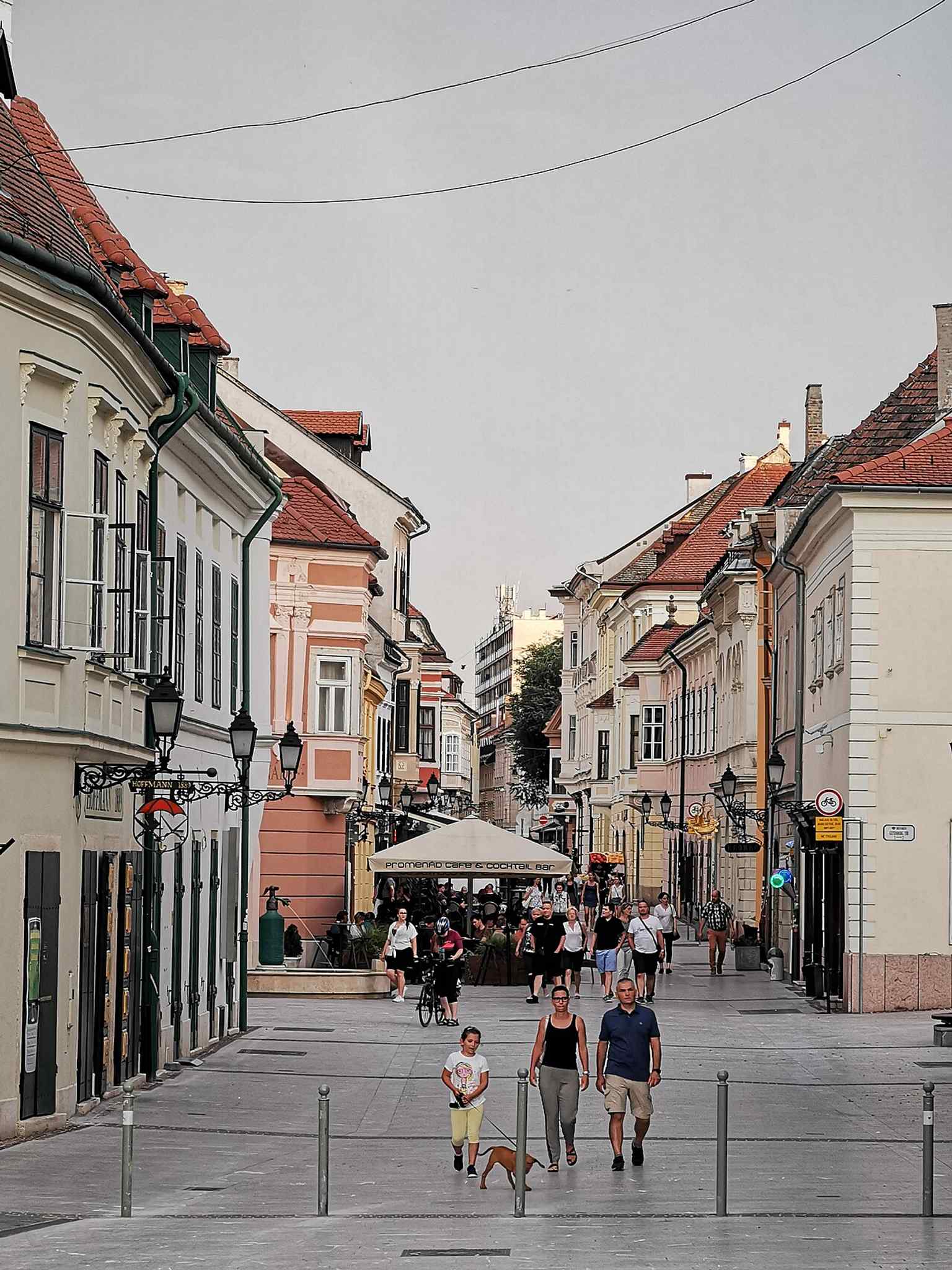
On your right, Jedlik Ányos Street opens as a straight stone-paved lane between pale baroque façades, with enclosed corner balconies marking the entrance.
This is one of those places where a city stops posing and simply keeps going. Jedlik Ányos Street links the western side of Dunakapu Square to the northwestern corner of Széchenyi Square, and today it works as a pedestrian street lined with shops, restaurants, and a long, orderly row of baroque homes. It feels settled... because it is.
Its present name is younger than the buildings. For a long time this was Felső-Duna Street, Upper Danube Street. Then, on the seventeenth of January, nineteen oh one, Győr’s city assembly renamed it for Jedlik Ányos, honoring a modern scientific mind by writing his name into a much older street plan. It is a neat local habit: keep the old walls, add a new layer of memory.
And the walls here really do carry continuity. The corner plot at Dunakapu belonged to the widow of Tamás Mészáros in sixteen seventeen, and Simon Radics held it in seventeen oh three. That means long before the current name, long before the paving and café life, people were already buying, inheriting, and arguing over the same urban ground. Cities are less about sudden change than stubborn address books.
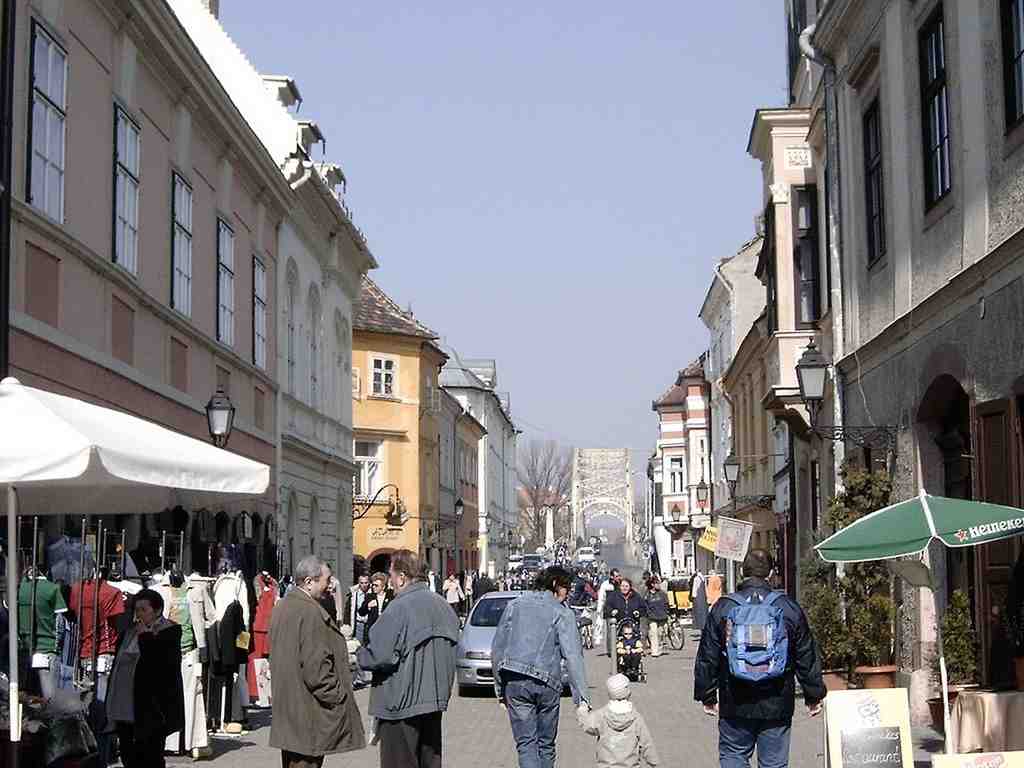
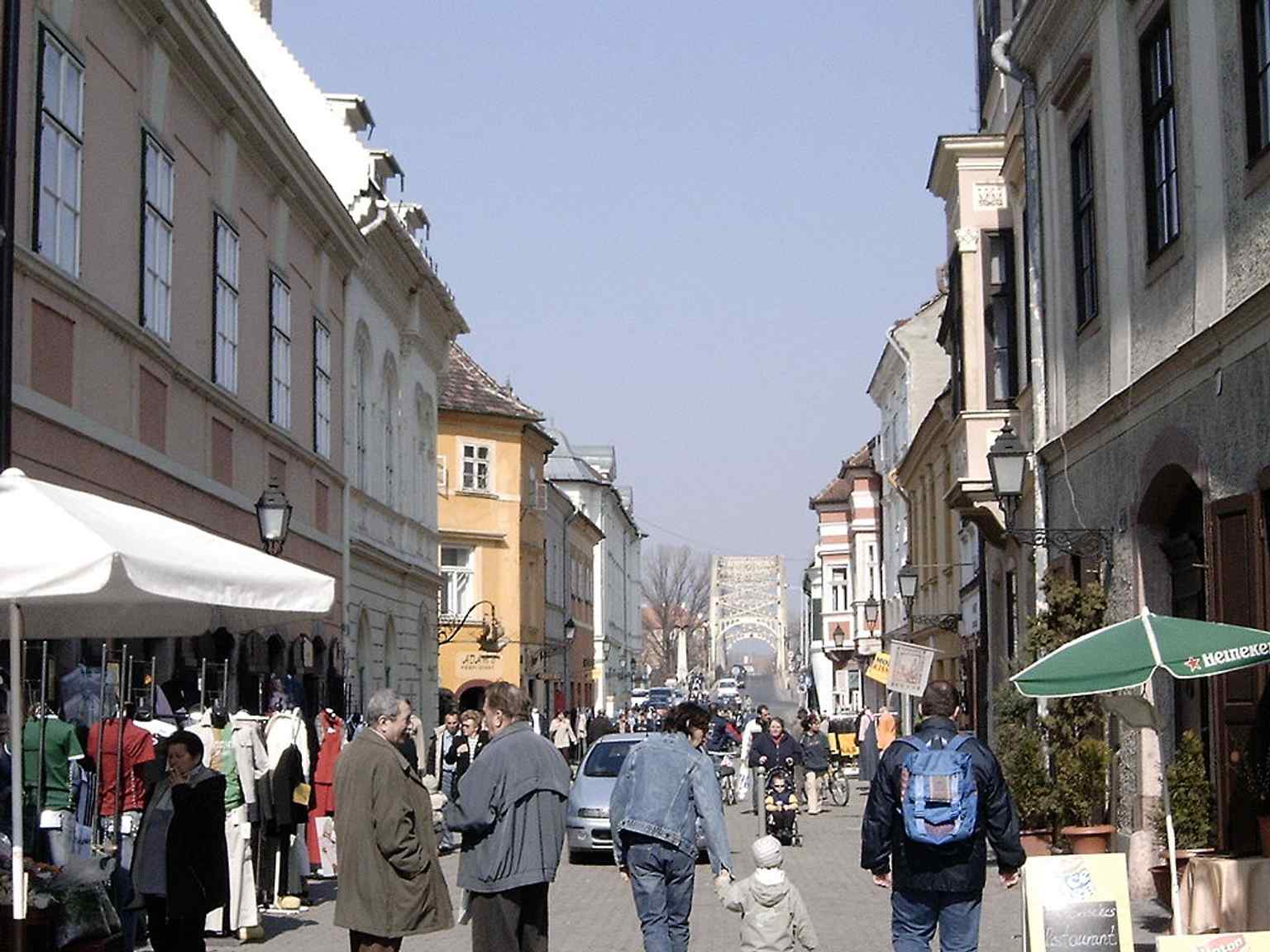
If you glance at the image on your screen, you can see how the street forms a baroque corridor between the two squares, held together by a steady rhythm of façades. One of the finest survivors is number nine, the street’s most valuable historic house. Its present front came together in the late eighteenth century when builders merged two older baroque houses, and one of its enclosed balconies still carries the date sixteen ninety-two carved into the stone. Nearby, number ten keeps an eighteen twenty-three date above a red marble-framed gate.
A short way along lies little Gutenberg Square, where the Ark monument stands at the center of a story Győr never forgot: in seventeen twenty-nine, guards spotted a disguised deserter in a religious procession, grabbed him, and in the scuffle knocked the sacred vessel from a priest’s hands. King Charles the Third answered the outrage by ordering the monument in seventeen thirty-one. So even here, on an ordinary walking street, devotion, authority, and public memory meet in the middle.
The city renewed this street in twenty eleven and twenty twelve for one hundred and seventy-four million forints... then some of the new stones cracked because the joints were too tight. Baroque dignity, modern engineering, same old human margin for error.
Like the Apátúr-ház, this street shows how names and uses shift while the frame endures. Now it also serves as one of Győr’s north-south cycling routes toward Kossuth Bridge. That’s our next stop, about a three-minute walk away, where the city trades street names for something even plainer and more essential: connection.