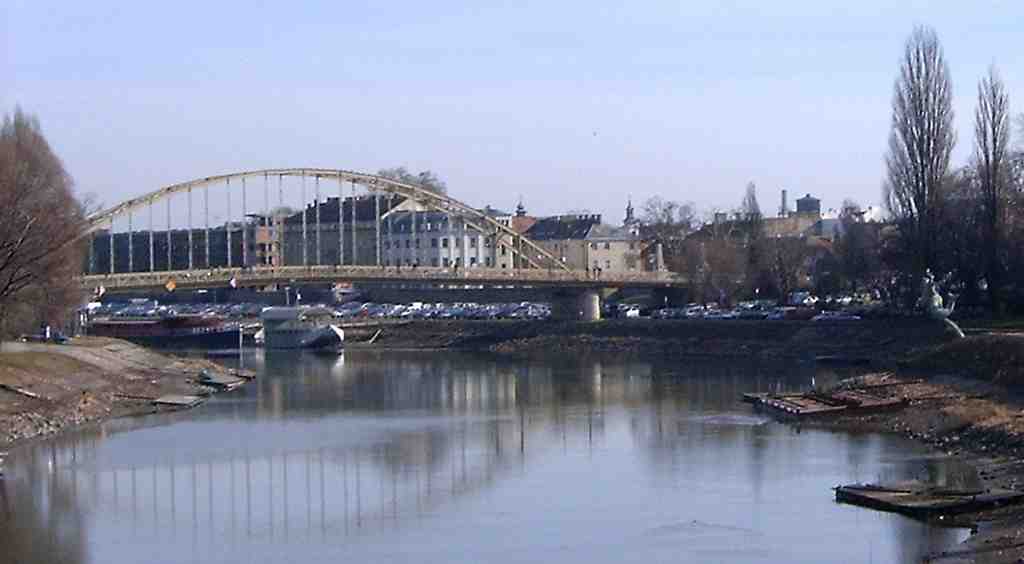
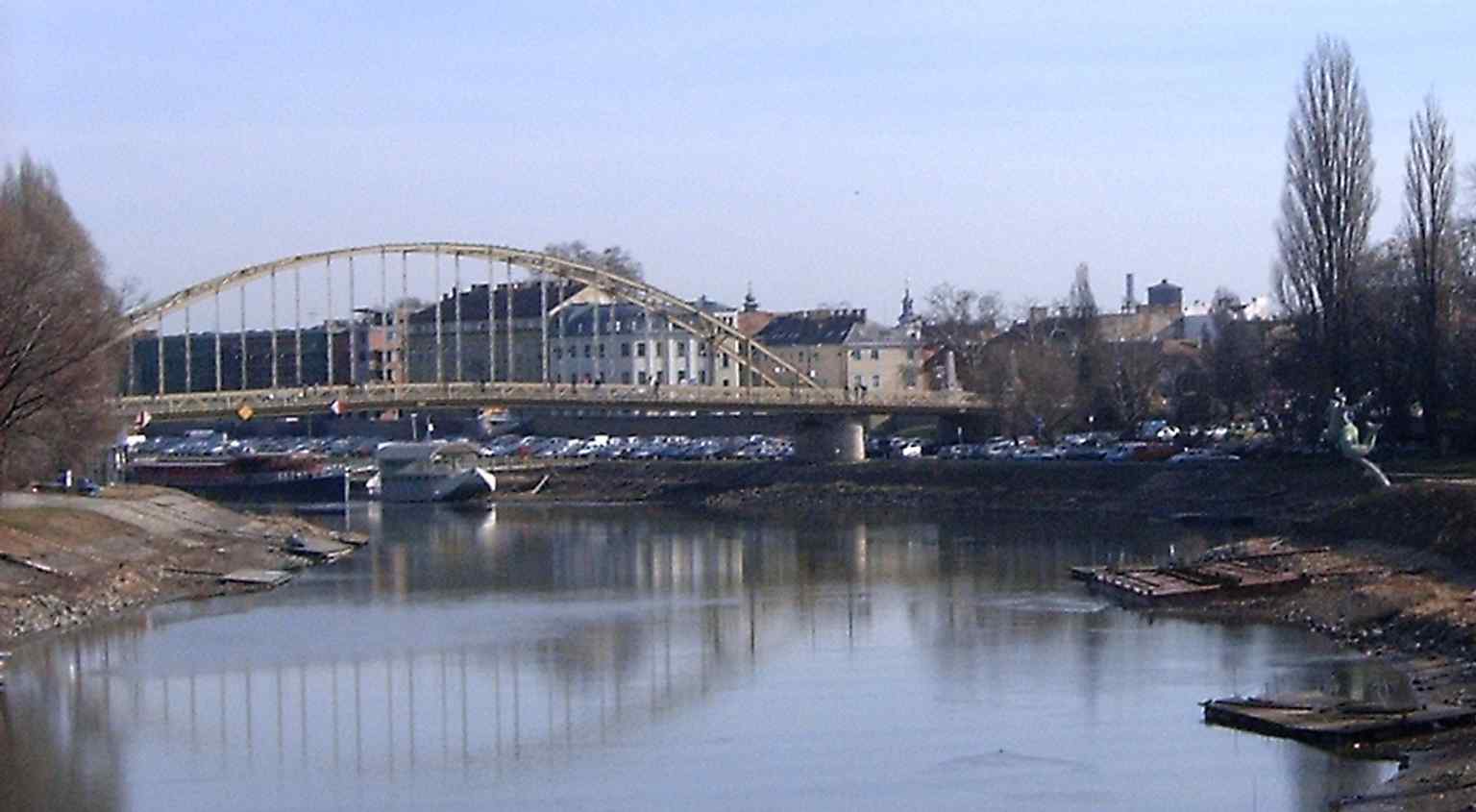
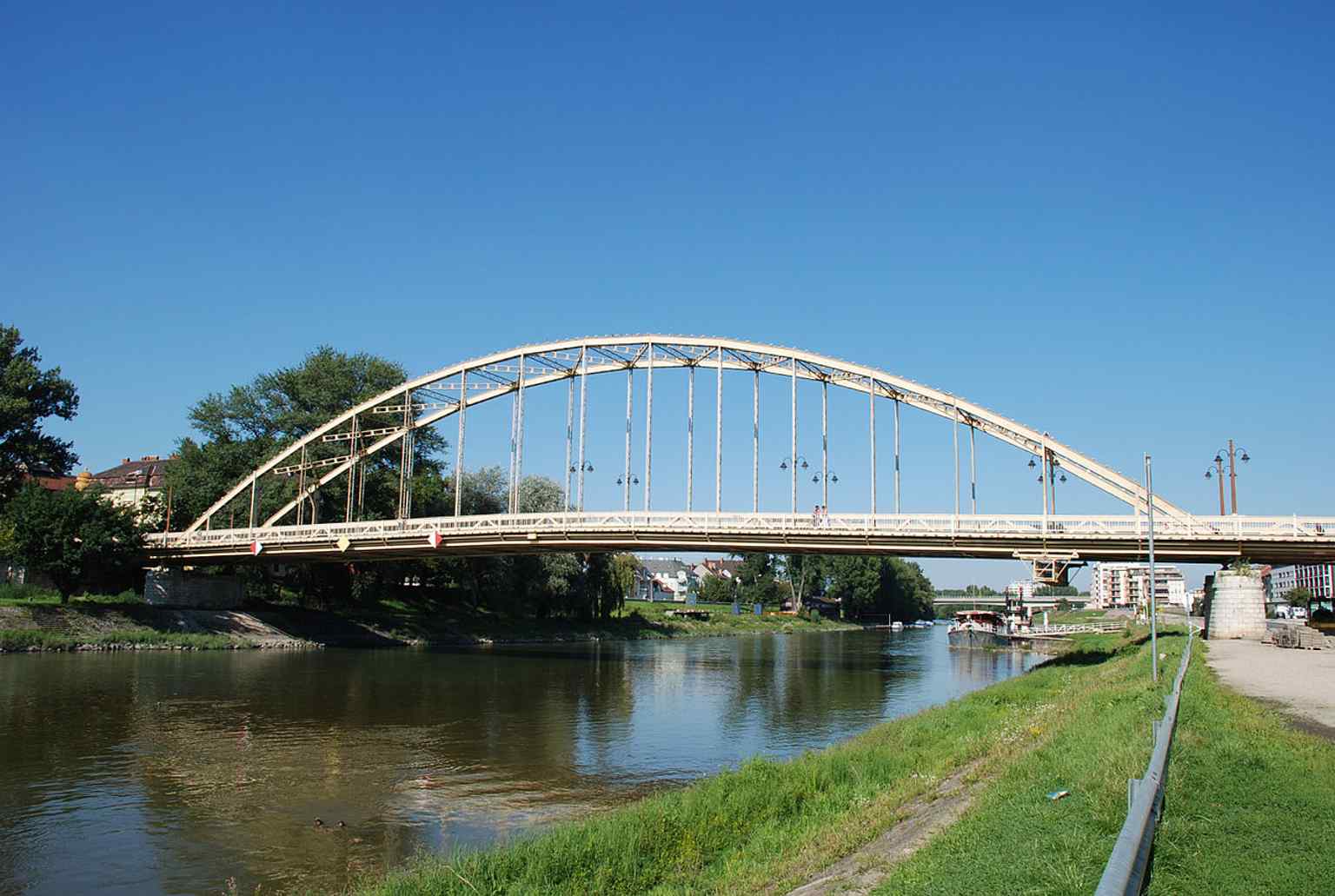
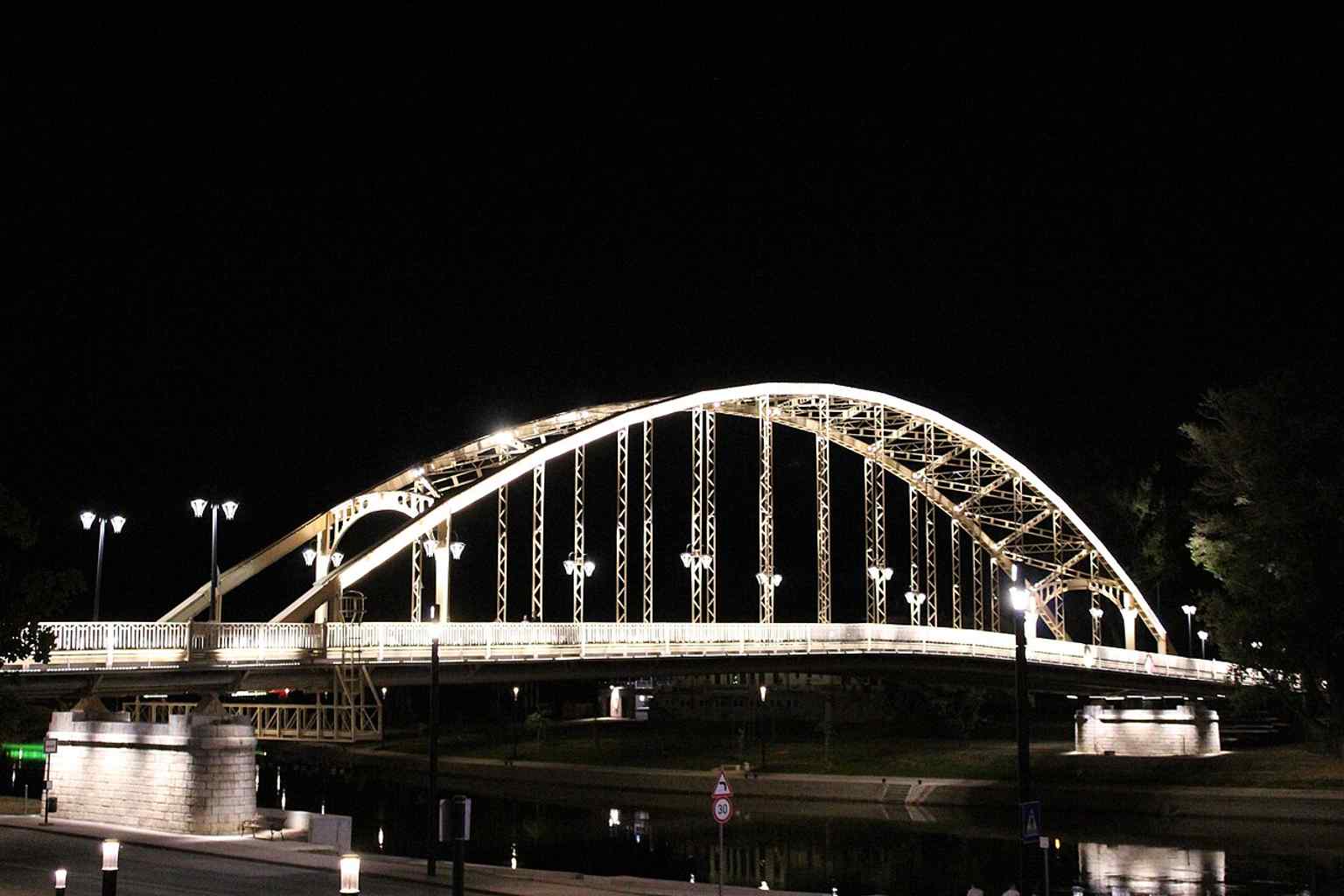
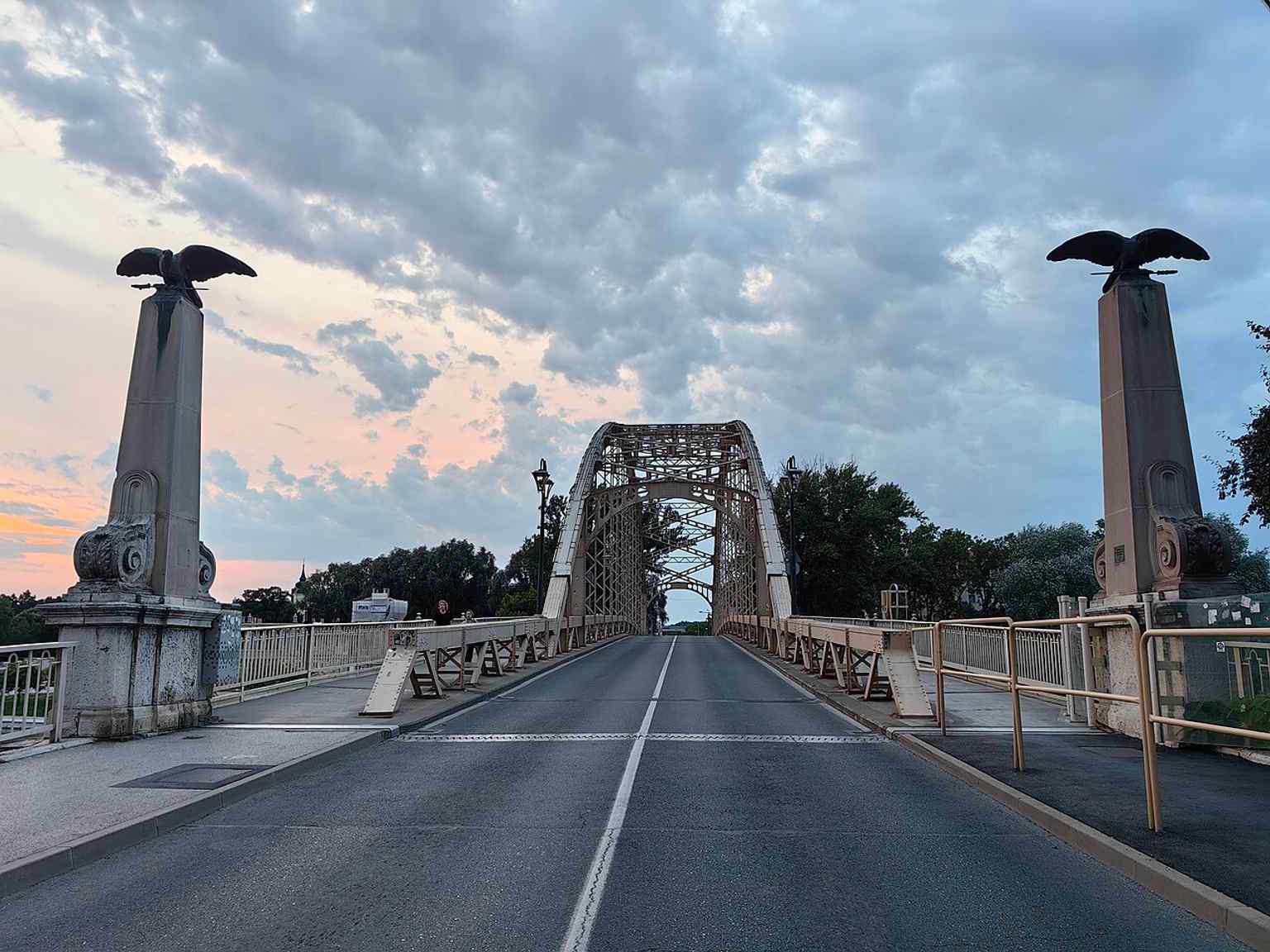
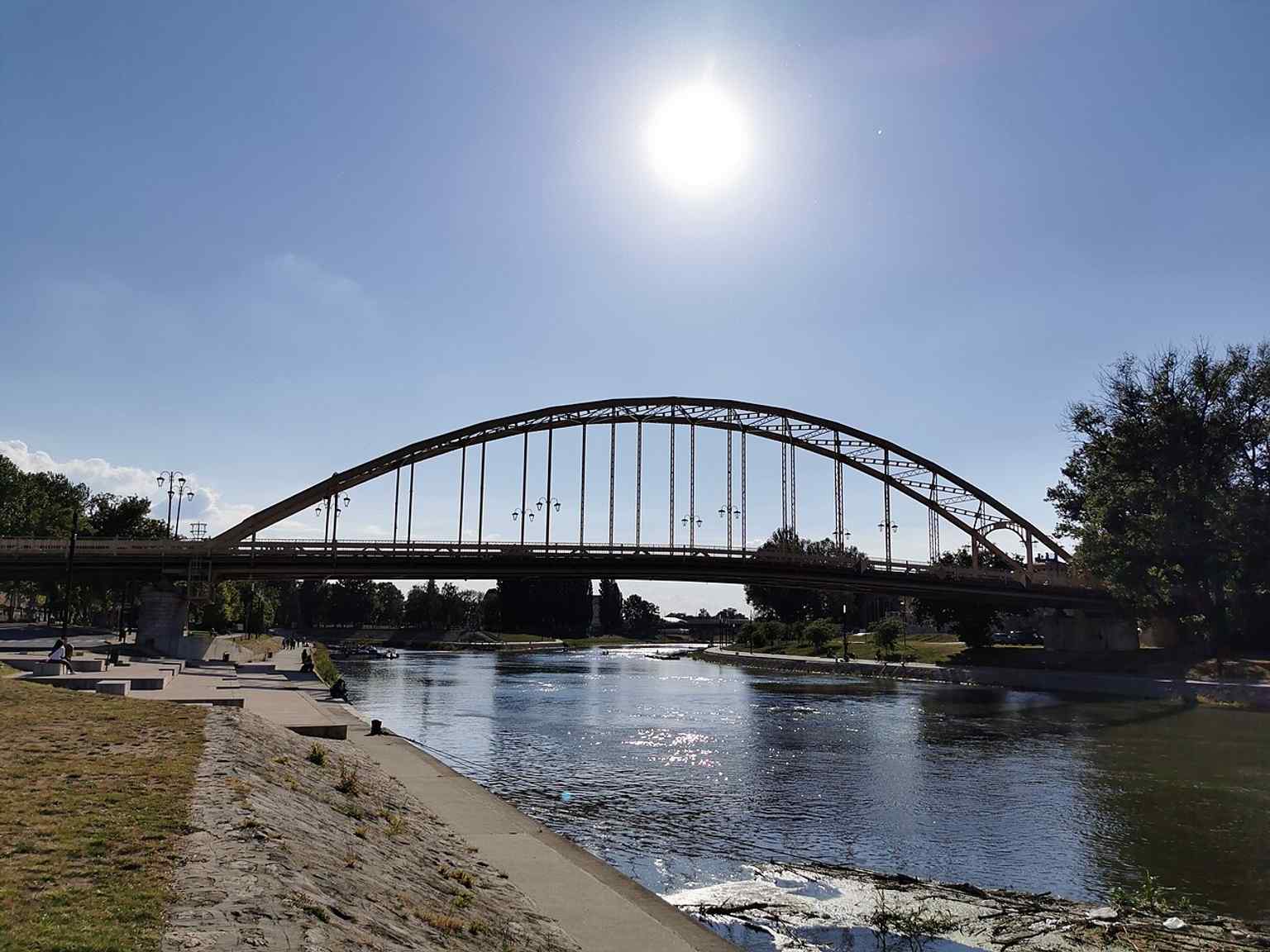
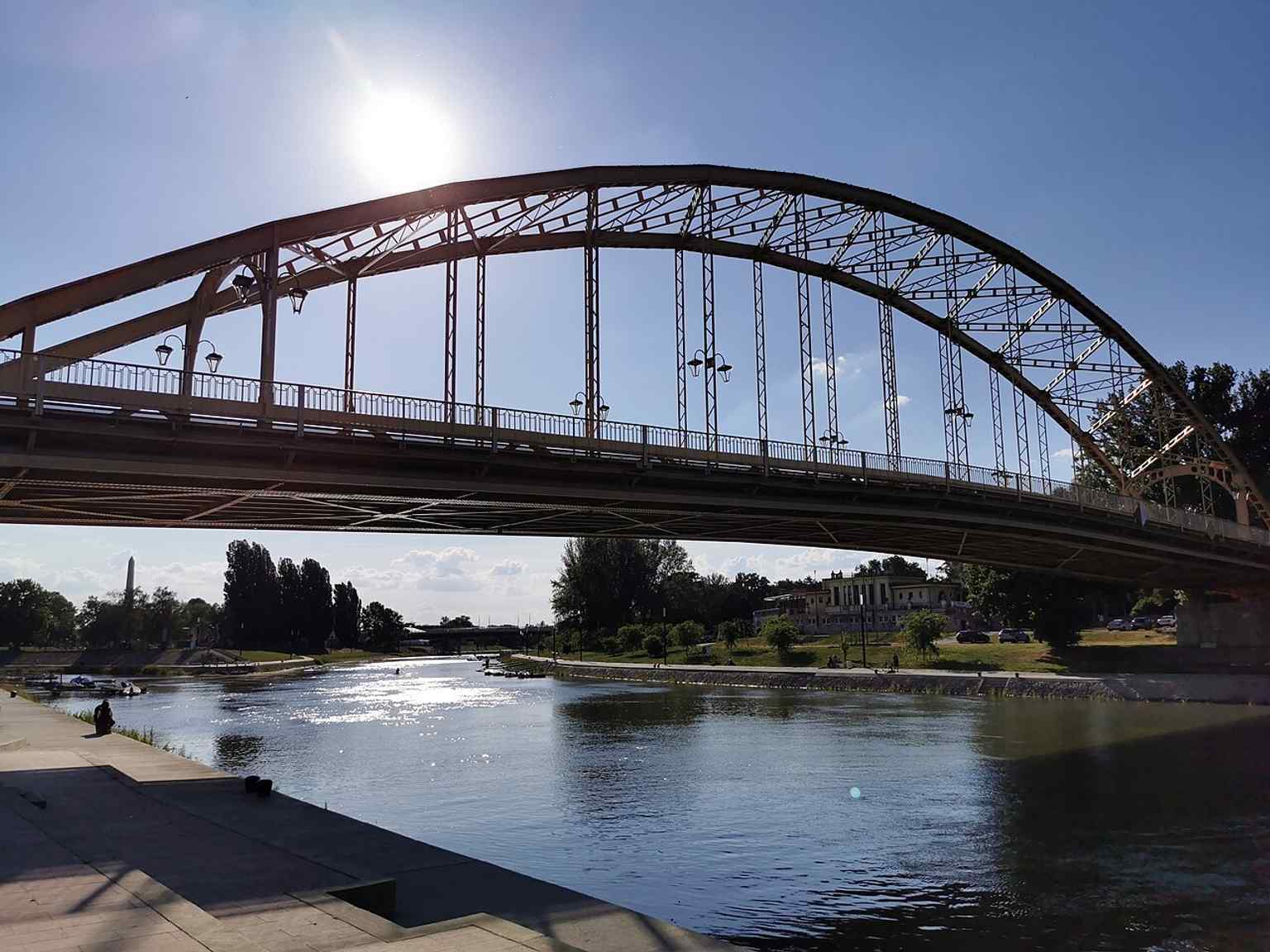
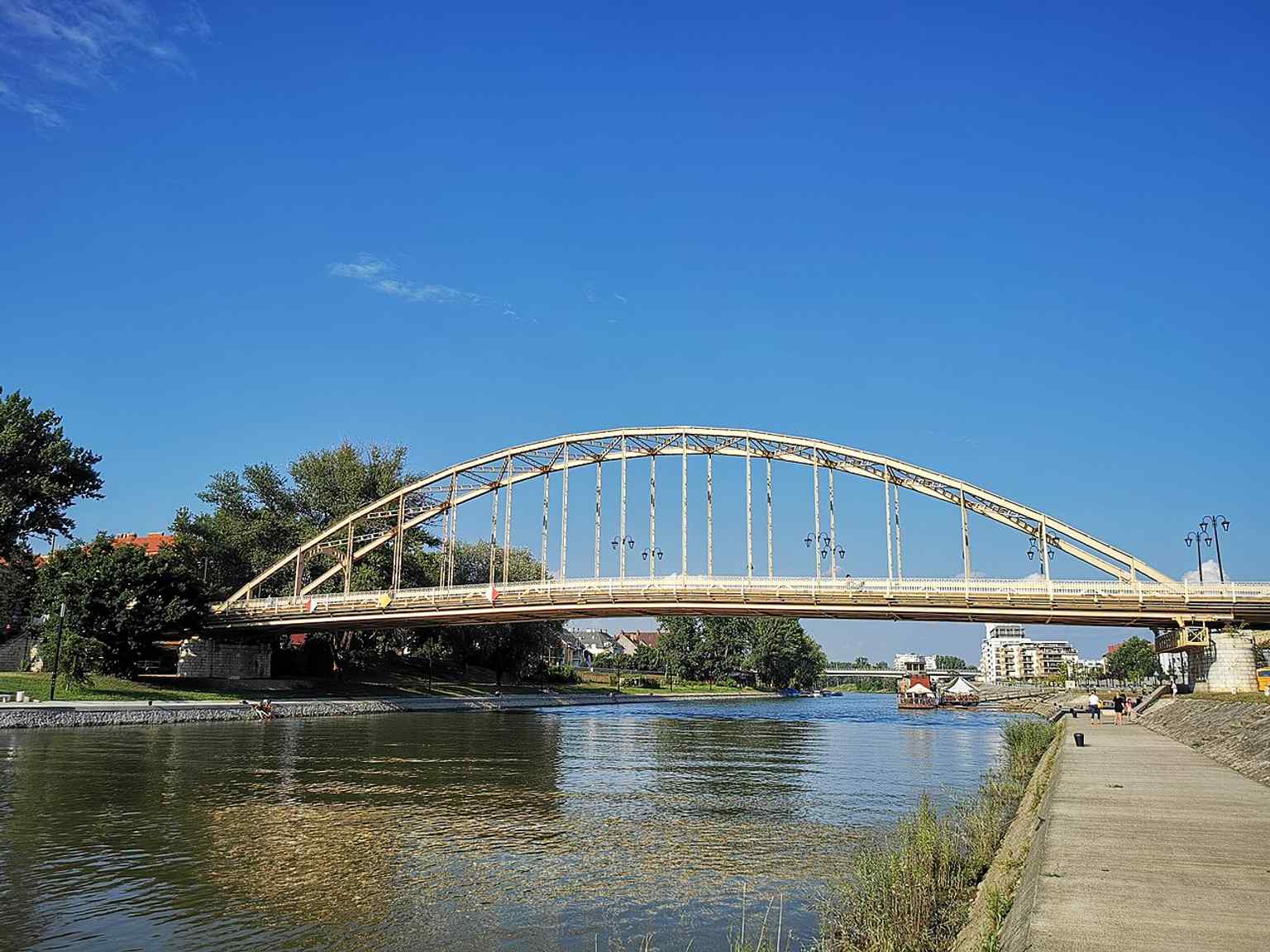
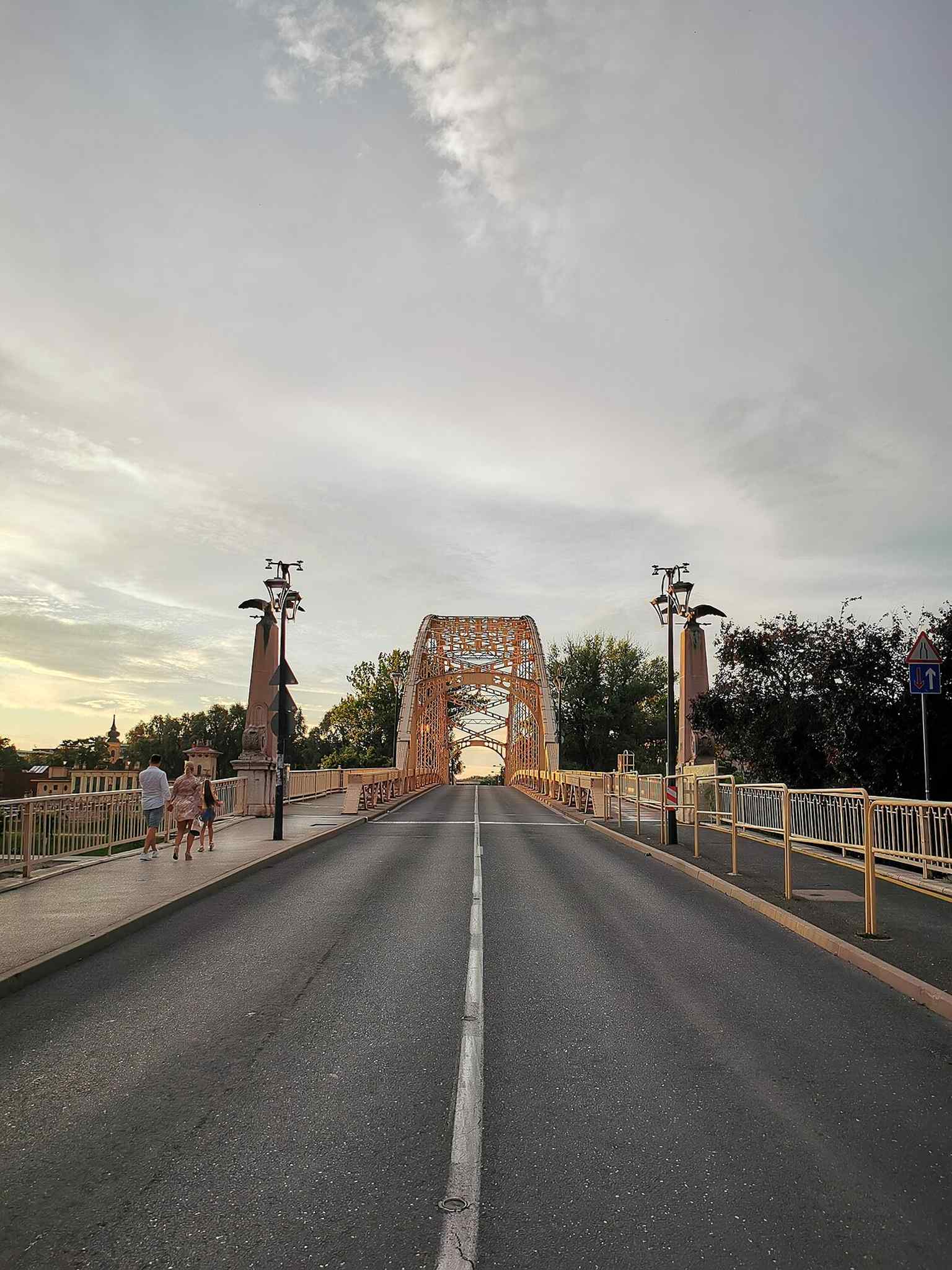
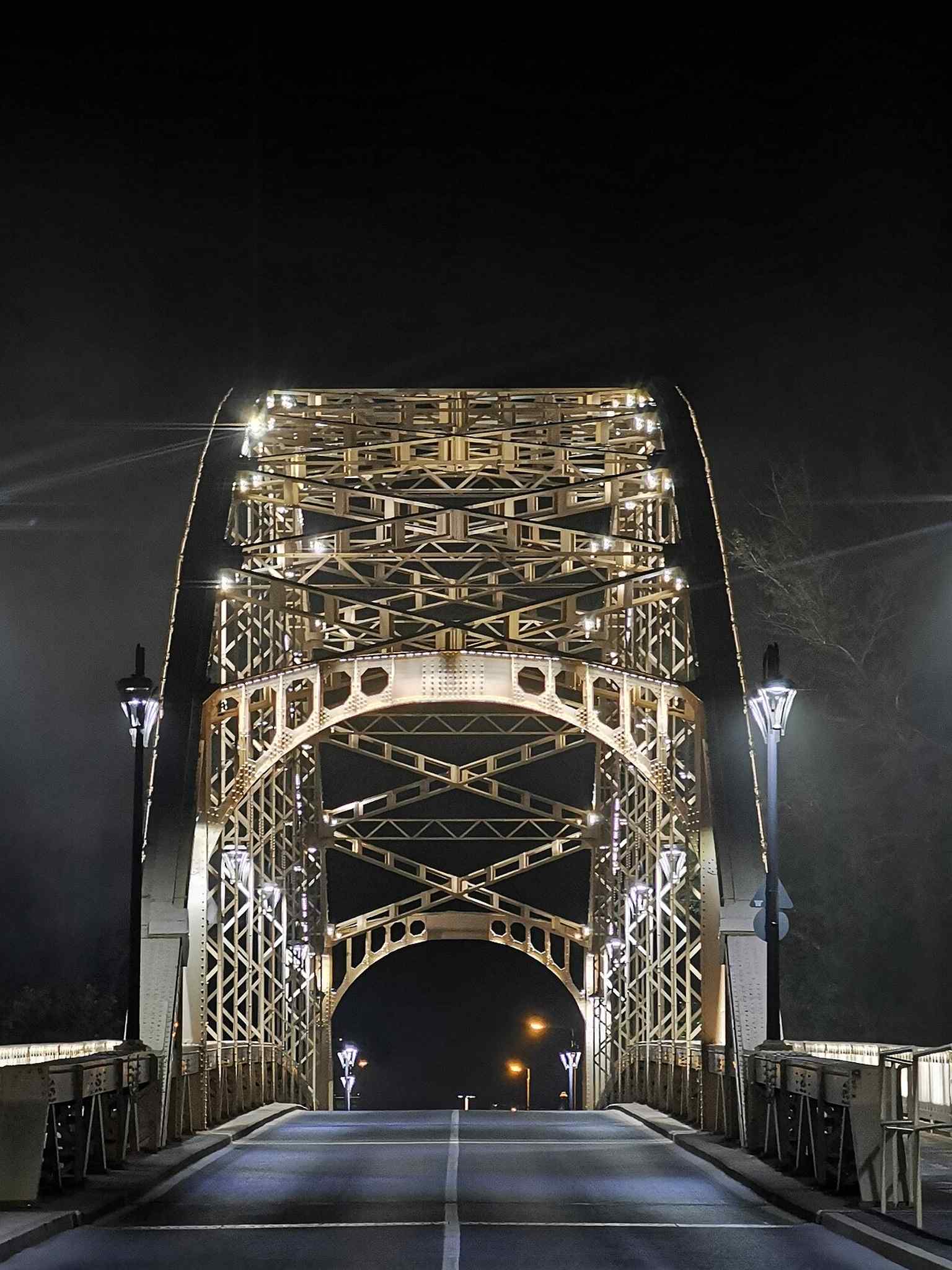
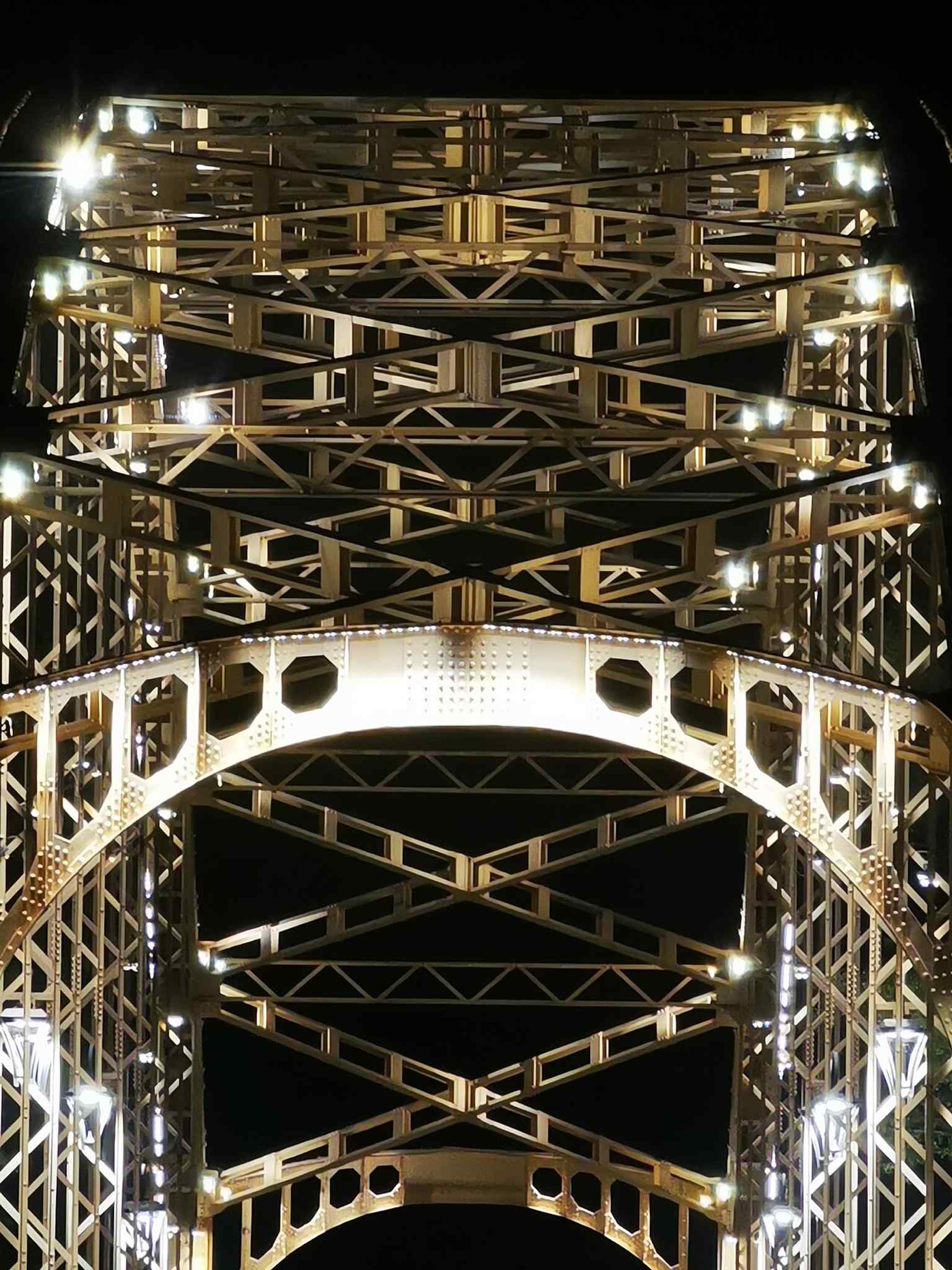
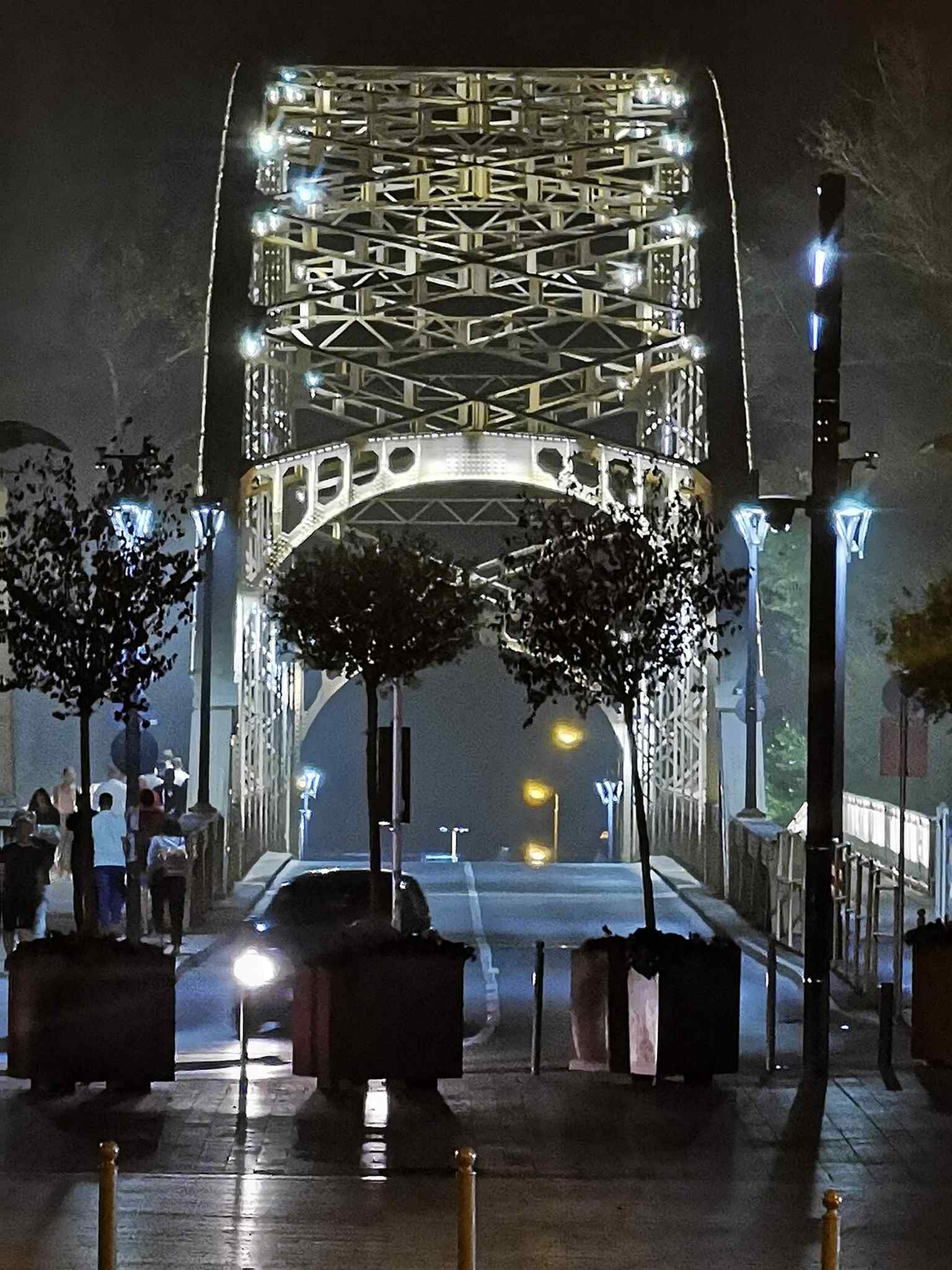
Ahead of you is a steel river bridge with a long, slightly arched span, lattice-like metal sides, and turul bird statues guarding both ends.
Named for Lajos Kossuth, this bridge crosses the Mosoni-Danube just after the Rába joins it, and that location explains almost everything. This is a crossing, yes, but also a repair. A bridge stood here as early as the sixteenth century. In eighteen ninety-nine, builders put up a wooden one. Then, between nineteen twenty-six and nineteen twenty-eight, Győr raised the iron bridge you see now, all one hundred and twenty-six meters of it, linking Dunakapu Square to Kálóczy Square in Révfalu. People still call it the Révfalusi Bridge, because locals rarely waste a perfectly useful name.
In nineteen forty-five, German forces blew it up. When the city reopened the rebuilt bridge in nineteen fifty, it restored more than traffic. It stitched downtown back to Révfalu and helped the northern bank stop being a fringe and start becoming part of the city. That is what bridges do at their best: they answer rupture with connection.
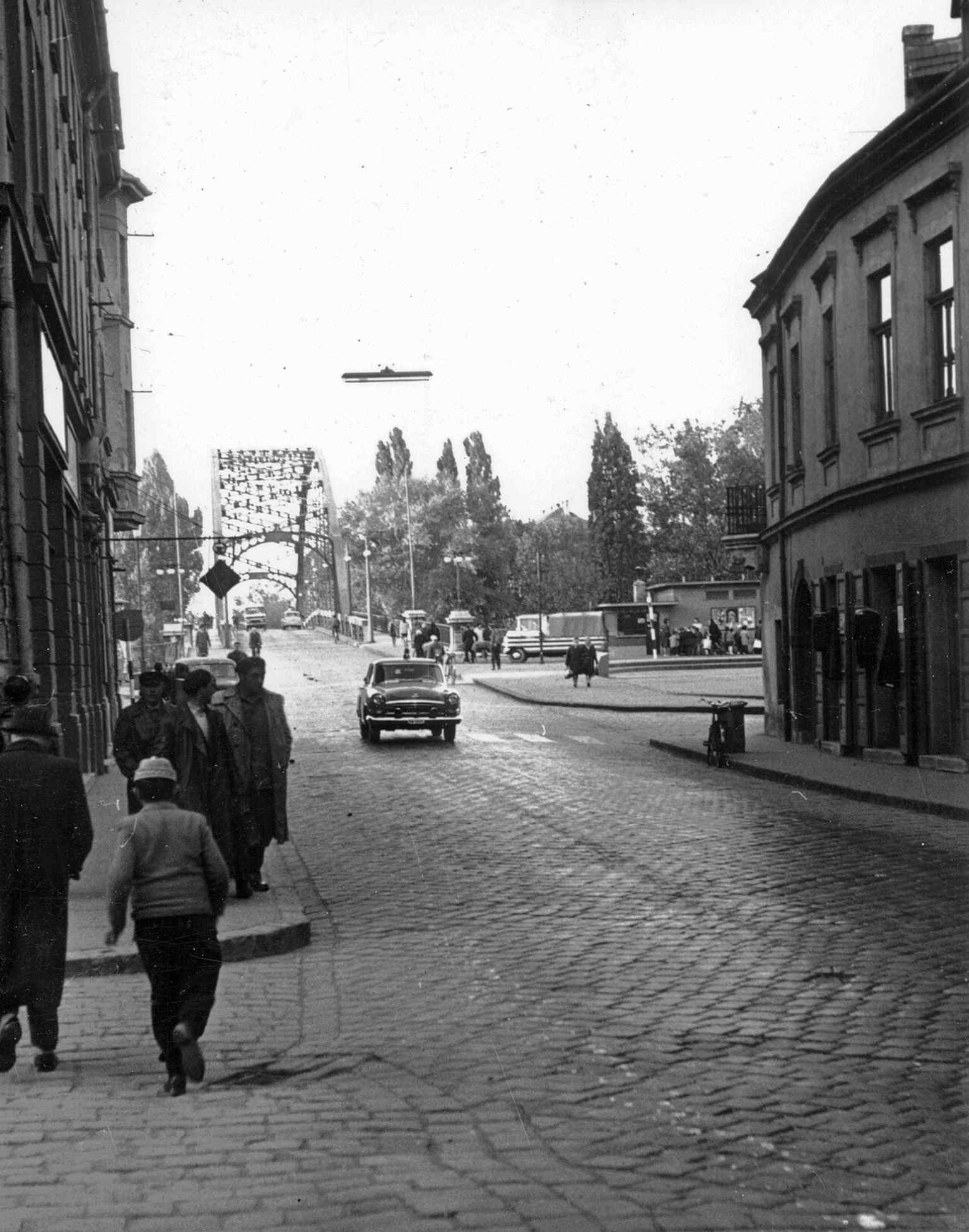
If you want, check the before-and-after image in the app; in nineteen sixty-five this bridge barely peeks out behind the riverside streetscape, and by two thousand seven it stands forward as a landmark in its own right. What remains visible is only part of the story; the rest survives because people rebuild it, record it, and keep telling it.
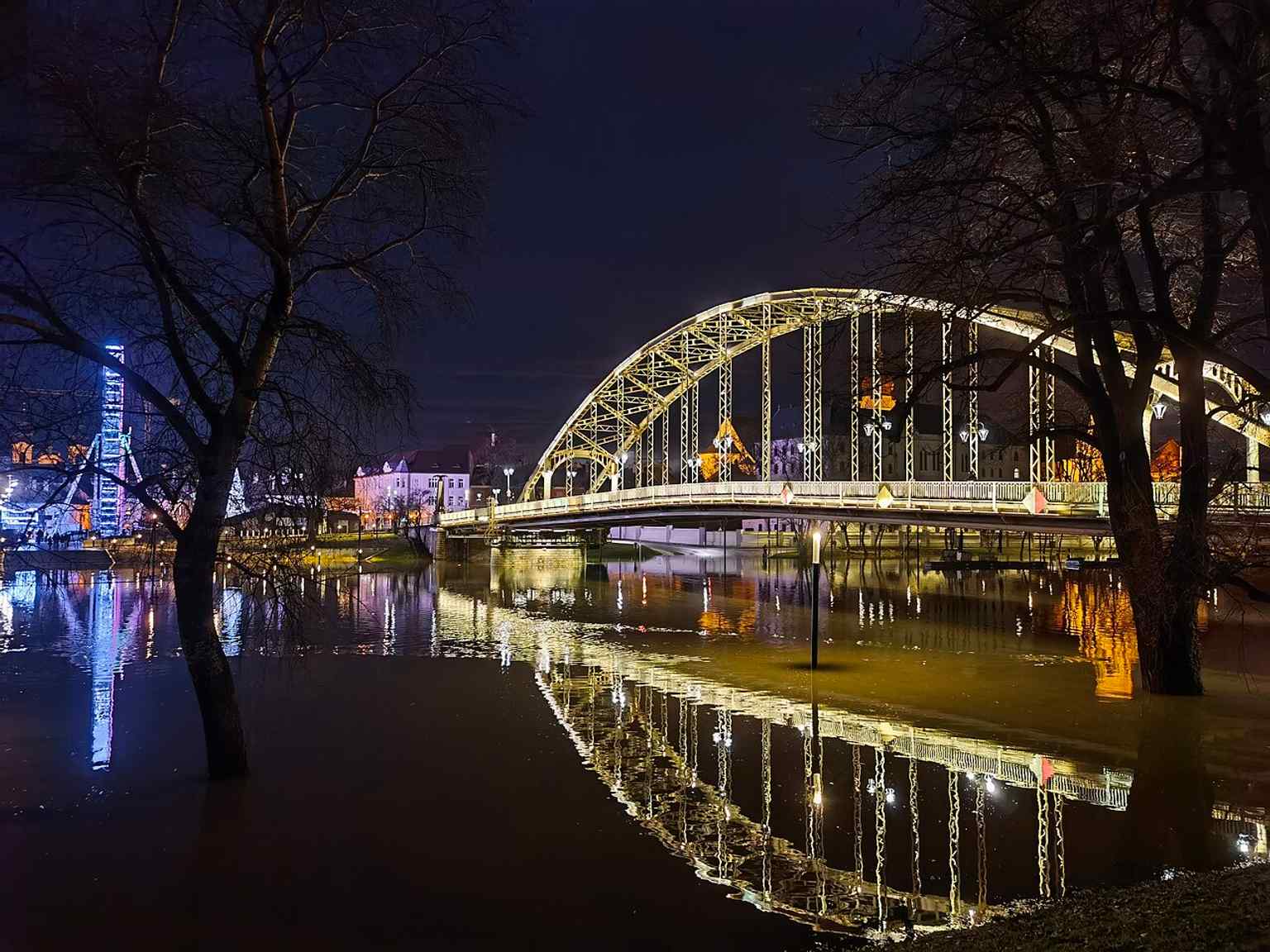
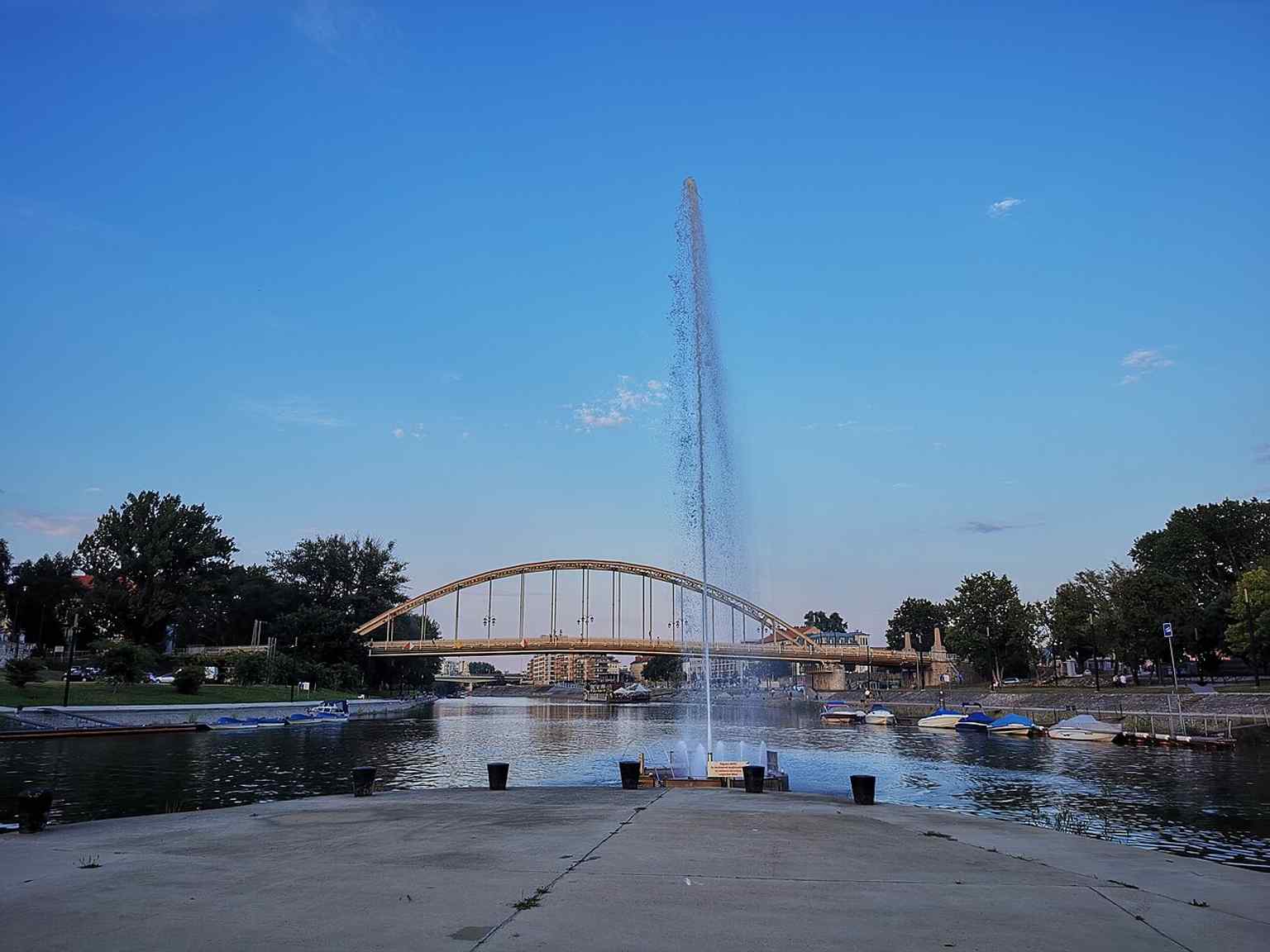
The river still keeps the final word now and then. In twenty fifteen, high water on the Mosoni-Danube and the Rába again threatened this very approach, and officials moved cars away before closures. From the bridge, westward, locals notice a small code for the whole city: a sculpture of a woman riding a water creature near the confluence, with the Cziráky obelisk behind her, and even the Rába’s yellower water folding into the bluer Danube.
That feels like the right last image. Győr makes most sense not as a preserved postcard, but as a connected web of beauty, conscience, loss, and renewal... still carrying people across. And fittingly, the bridge is open all day, every day.
A clear daytime view of Kossuth Bridge, the 126-meter crossing that links Győr’s downtown with Révfalu across the Mosoni-Duna.Photo: Balint86, Wikimedia Commons, CC BY 3.0. Cropped & resized.Another broad side view of the bridge, showing the iron structure that replaced earlier crossings here in the 1920s.Photo: Josef Moser, Wikimedia Commons, CC BY-SA 3.0. Cropped & resized.A 1965 Fortepan view with Kossuth Bridge in the background, useful for showing how the bridge has long shaped the city center and riverfront.Photo: FOTO:Fortepan — ID 17091: Adományozó/Donor: Kovács László Péter. archive copy at the Wayback Machine, Wikimedia Commons, CC BY-SA 3.0. Cropped & resized.Kossuth Bridge illuminated at night, matching the landmark’s distinctive decorative lighting mentioned in the source text.Photo: Montephess, Wikimedia Commons, CC BY-SA 4.0. Cropped & resized.A modern daylight view of the bridge from Győr, highlighting its role as a busy urban connection rather than just a river crossing.Photo: Random photos 1989, Wikimedia Commons, CC BY-SA 4.0. Cropped & resized.A night-time reflection shot that emphasizes the bridge’s lighting and its strong visual presence over the Mosoni-Duna.Photo: Random photos 1989, Wikimedia Commons, CC0. Cropped & resized.One of the bridge’s many contemporary views, useful for showing the steel span and the river setting around it.Photo: Random photos 1989, Wikimedia Commons, CC0. Cropped & resized.A different angle on Kossuth Bridge, giving variety while still focusing on the landmark itself and its long river crossing.Photo: Random photos 1989, Wikimedia Commons, CC0. Cropped & resized.A closer modern view that helps convey the bridge as an everyday city gateway between downtown and Révfalu.Photo: Random photos 1989, Wikimedia Commons, CC0. Cropped & resized.A tighter composition that can work as a detail shot of the bridge’s structure and traffic role in Győr’s riverfront network.Photo: Random photos 1989, Wikimedia Commons, CC0. Cropped & resized.A vertical framing of Kossuth Bridge, adding visual variety and reinforcing its strong presence over the Mosoni-Duna.Photo: Random photos 1989, Wikimedia Commons, CC0. Cropped & resized.A night image of the bridge that fits the story of Kossuth Bridge as one of Győr’s most photogenic urban scenes.Photo: Random photos 1989, Wikimedia Commons, CC0. Cropped & resized.Another illuminated night view, ideal for the tour segment about the bridge as a visible city landmark after dark.Photo: Random photos 1989, Wikimedia Commons, CC0. Cropped & resized.A final night-time angle showing how the bridge’s lighting makes it stand out as a landmark on the river.Photo: Random photos 1989, Wikimedia Commons, CC0. Cropped & resized.arrow_back Back to Gyor Highlights Audio Tour: Historic Charms
Loved by travellers
Thousands of tours started. Plenty of opinions.
4.8 across the App Store and Google Play. Here's a few we keep coming back to.
starstarstarstarstar
This tour was such a great way to see the city. The stories were interesting without feeling too scripted, and I loved being able to explore at my own pace.
Started this tour with a croissant in one hand and zero expectations. The app just vibes with you, no pressure, just you, your headphones, and some cool stories.