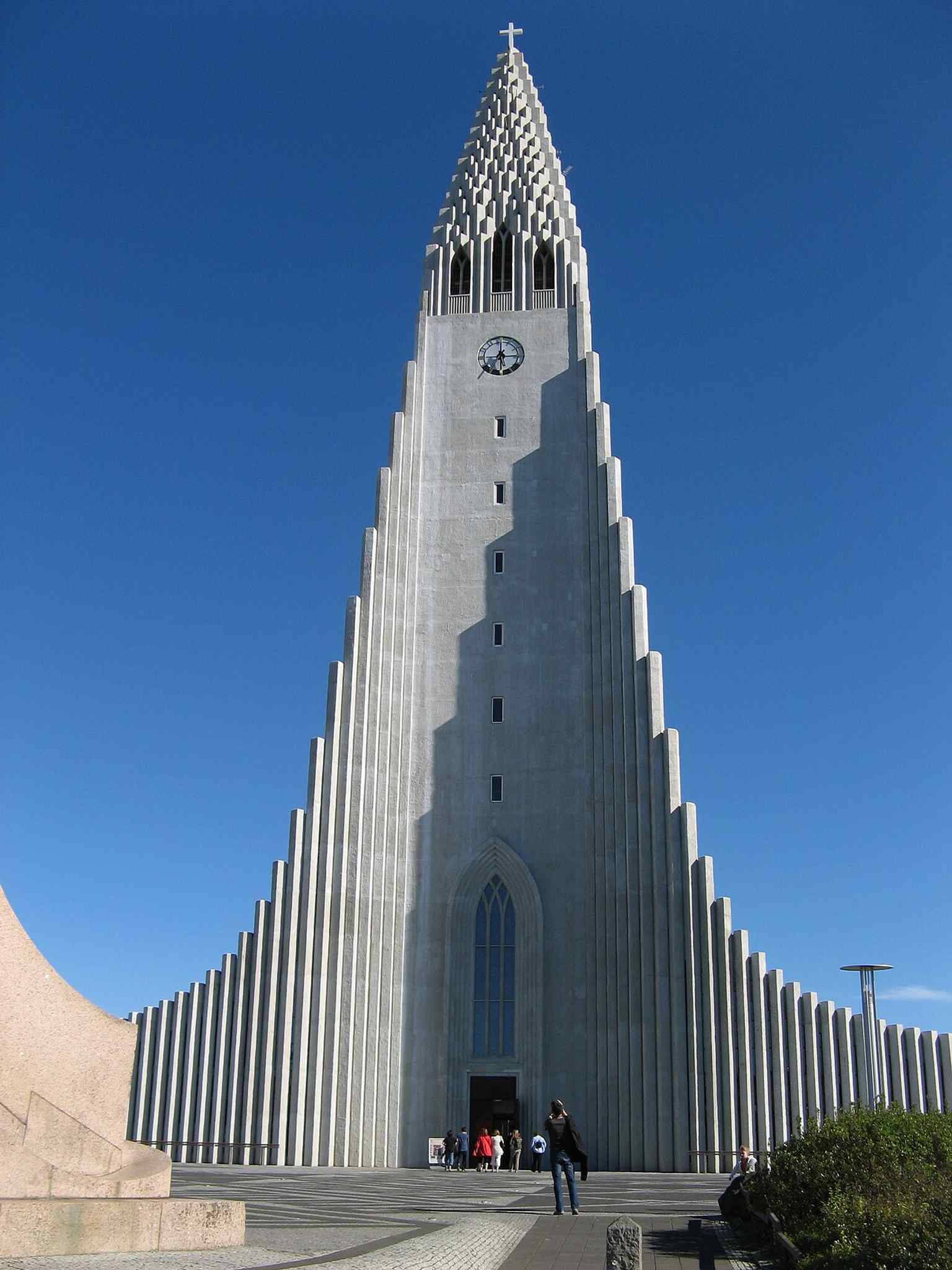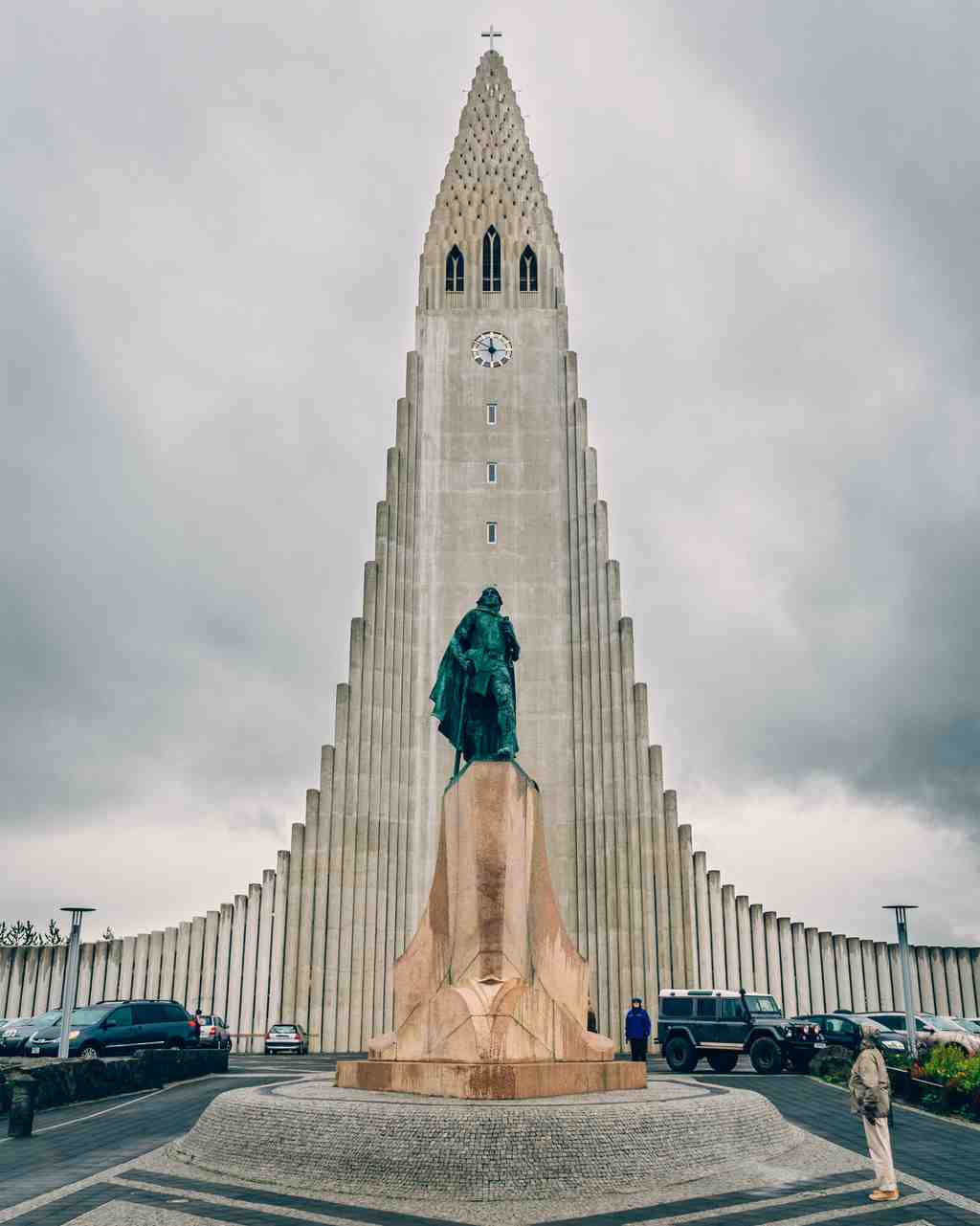
Look to your right for a pale concrete church with ribbed, basalt-like walls, a soaring central tower, and a rounded end like a helmet-shaped drum.
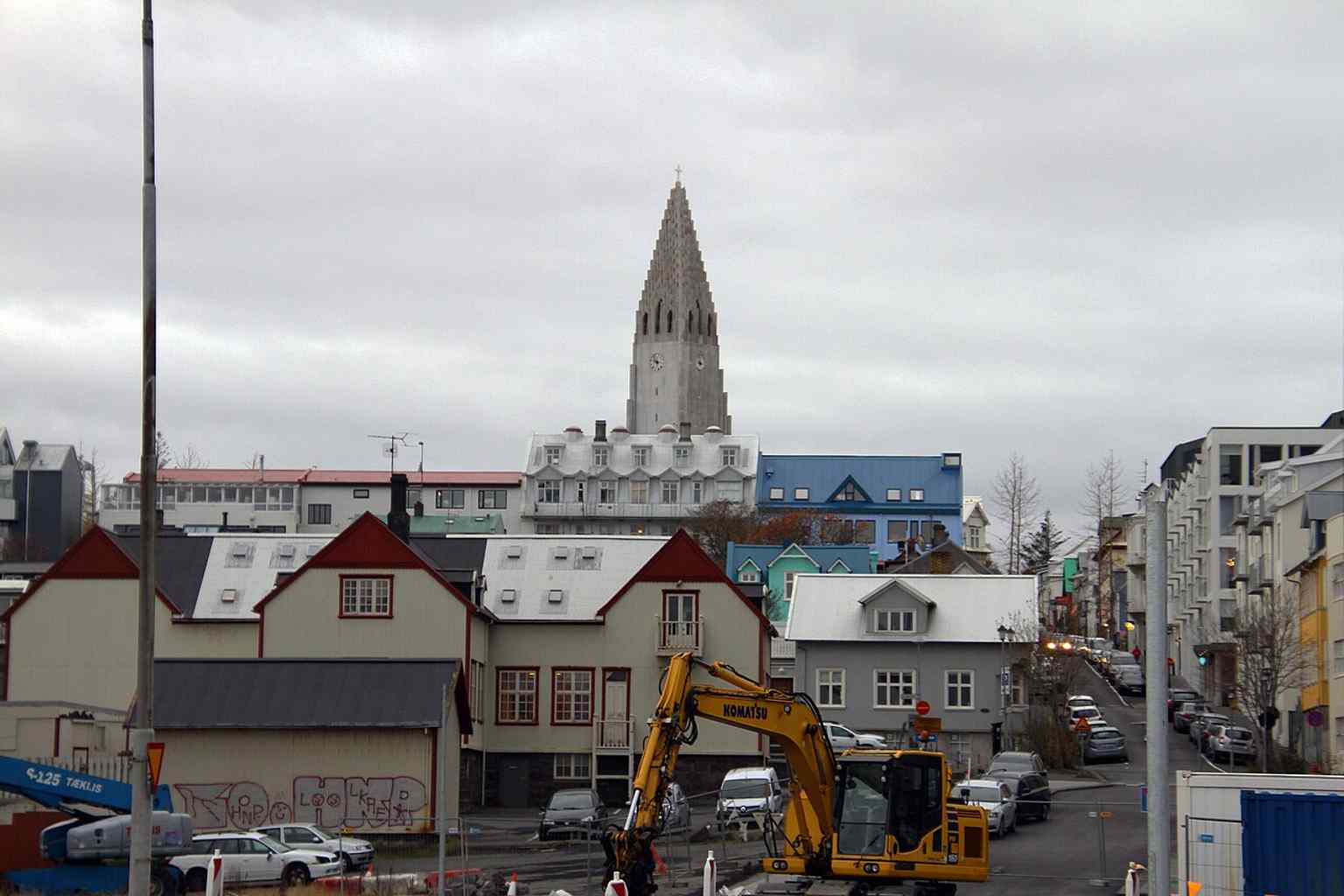
Even from the back, Hallgrímskirkja has a way of introducing itself. The long side wall stretches out like a cliff face that somebody taught to pray, and the tower still steals the show at seventy-four point five meters, making this the largest church in Iceland and the second tallest building in the country.
State architect Guðjón Samúelsson took on this design in nineteen thirty-seven, and he did not reach for the usual church recipe. He looked instead to Iceland itself: trap rock, glaciers, mountains, and especially those columnar basalt formations that rise in neat vertical lines, almost like organ pipes. That is why the tower looks both natural and a little otherworldly. Architects call this expressionism, meaning the building pushes emotion and bold shape ahead of strict tradition.
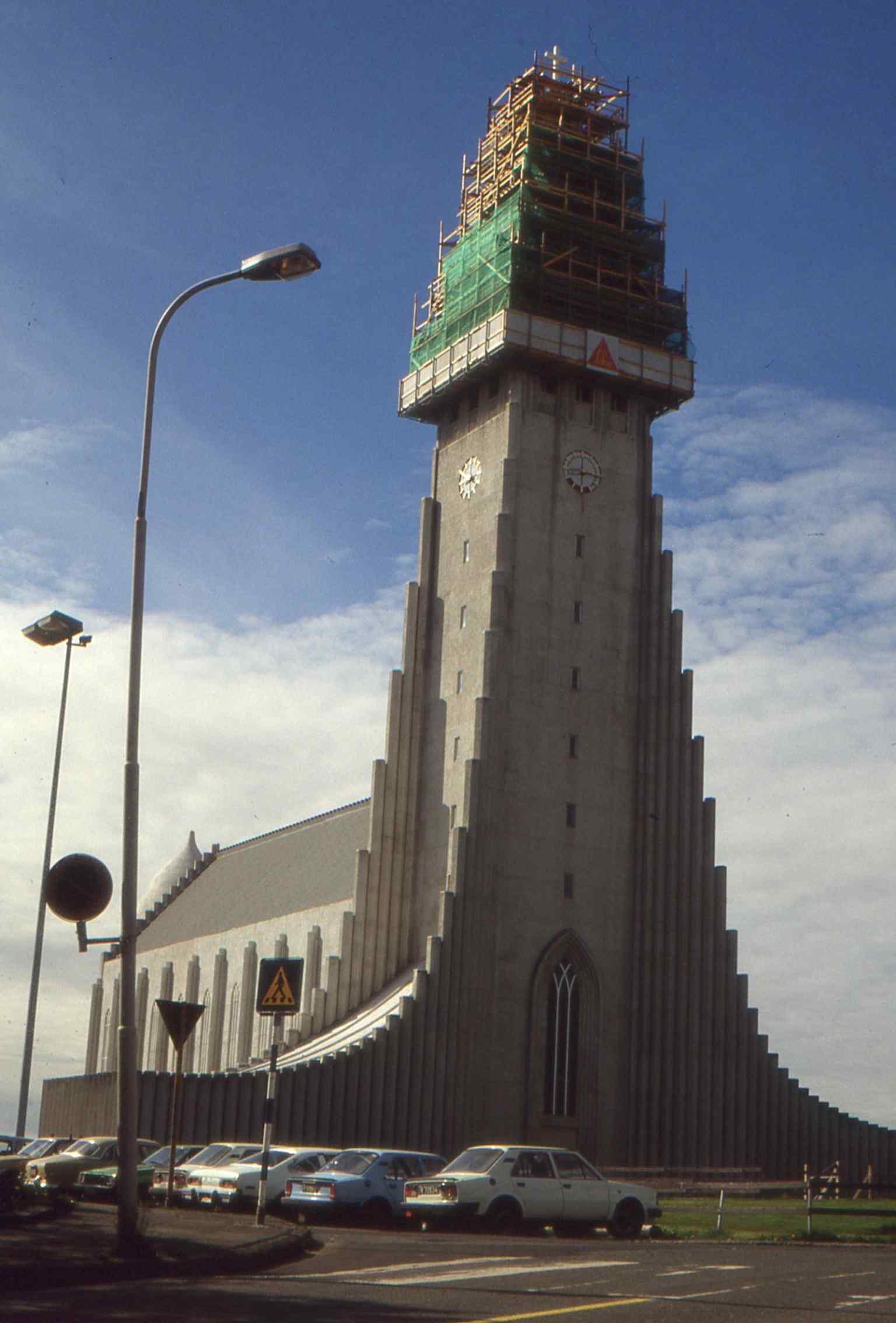
The church honors Hallgrímur Pétursson, the seventeenth-century poet and cleric who wrote the Passion Hymns, but the building came much later... and very slowly. Workers started in nineteen forty-five and kept going for forty-one years. They consecrated the crypt beneath the choir in nineteen forty-eight, finished the steeple and side wings in nineteen seventy-four, and finally consecrated the nave in nineteen eighty-six. The nave, by the way, is the main central hall where the congregation gathers. If you want a quick sense of that long transformation, take a peek at the before-and-after image from nineteen seventy-seven to the completed landmark.
Not everyone loved it at first. Some people complained it looked too old-fashioned, while others thought it mixed too many styles. In other words, it had the standard qualifications for becoming a national symbol. Church leaders even pushed for a taller spire so it would outshine Landakotskirkja, the Catholic cathedral across town. Reykjavík has its polite rivalries.
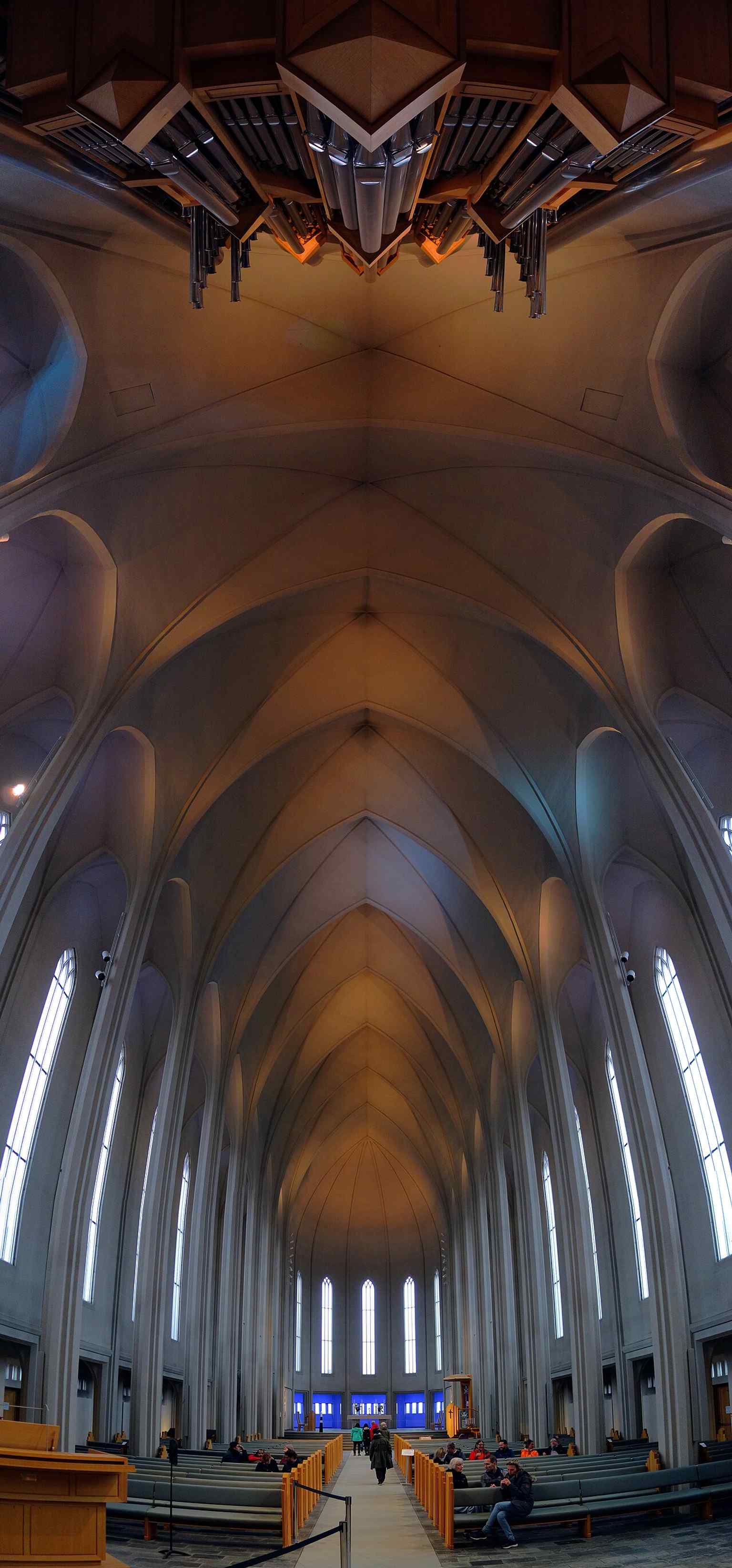
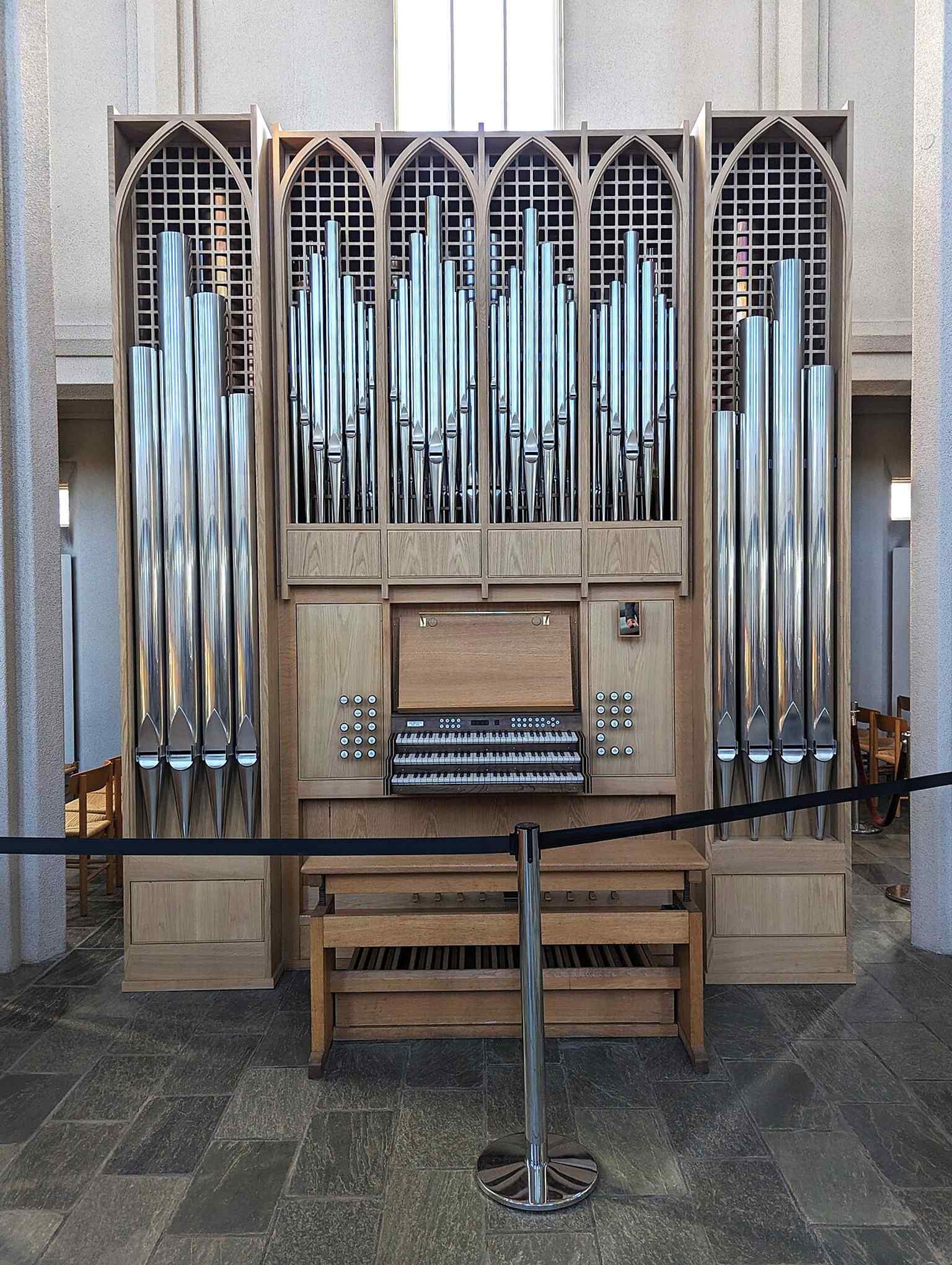
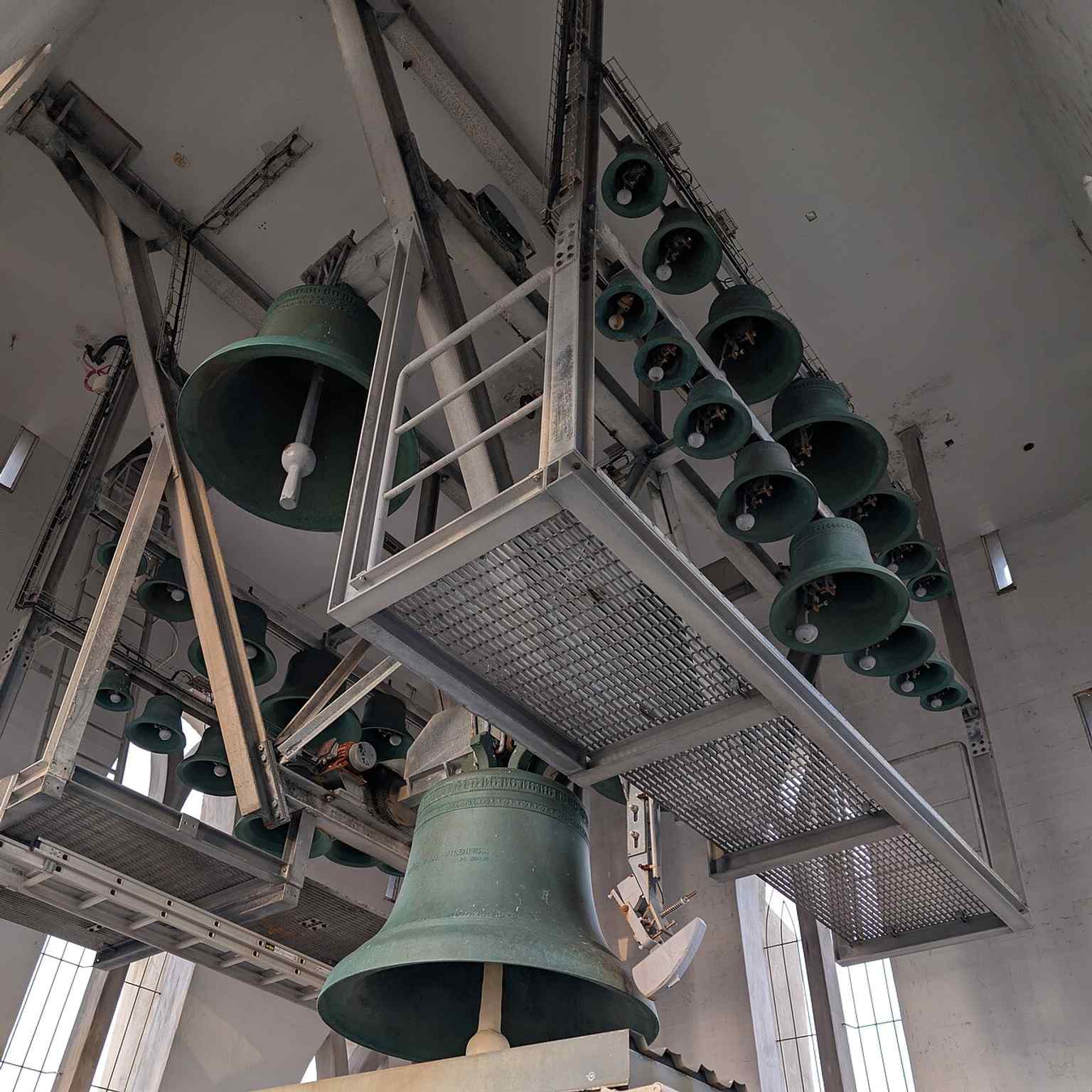
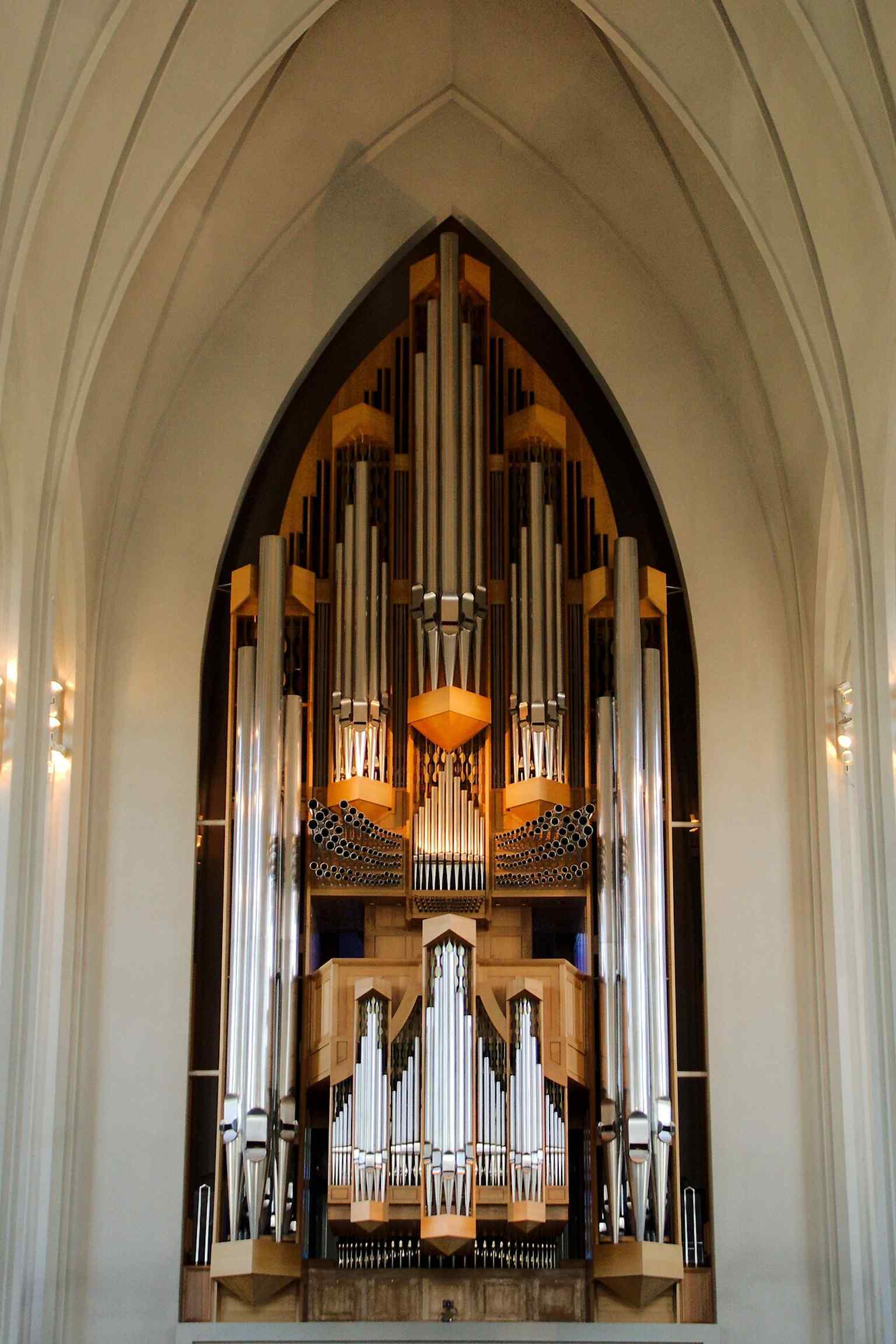
Inside, the church opens into a space of one thousand six hundred seventy-six square meters, and it holds some serious musical hardware. If you glance at the organ image on your screen, you can see the great instrument inside: fifteen meters tall, weighing twenty-five metric tons, with five thousand two hundred seventy-five pipes. Up in the tower, a carillon of twenty-nine bells hangs like a keyboard-powered choir, and the three largest bells carry the names Hallgrímur, Guðríður, and Steinunn, after Hallgrímur, his wife, and their daughter.
Out front, Leif Erikson actually predates the church, and inside you can light a memorial candle for one hundred Icelandic króna or take the lift up to the viewing deck. The church is generally open daily from nine in the morning to eight in the evening.
Hallgrímskirkja feels less like a building and more like Icelandic stone turned into a hymn.
When you are ready, make your way toward Leif Erikson out front for the next story.