Reykjavík Audio Tour: Legends, Lore, and Landmarks Unveiled
Beneath Reykjavík’s crisp air and surreal skies, secrets echo across its ancient stones and soaring towers. Pipes wind through Parliament’s halls and beneath glass floors, the heartbeats of old rebellions and silent intrigues. Set off on a self-guided audio adventure, unlocking stories woven into the very spine of the city. Wander from hidden Viking relics to sacred heights and power’s threshold, uncovering sights and histories that crowds glide straight past. Who once challenged the rule of law from within the Ministry of Finance and risked everything? What chilling discoveries surfaced when the past emerged beneath The Settlement Exhibition? Why do the bells of Hallgrímskirkja play a tune no one dares forget every winter solstice? Trace back centuries in a single stroll, chasing drama, revolution and forgotten voices. Marvel as Reykjavík’s plazas and cathedrals unfurl a living epic at your every stop. Let the city’s secrets lead the way. Start listening and unlock Reykjavík’s hidden heart.
Tour preview
About this tour
- scheduleDuration 100–120 minsGo at your own pace
- straighten4.5 km walking routeFollow the guided path
- location_on
- wifi_offWorks offlineDownload once, use anywhere
- all_inclusiveLifetime accessReplay anytime, forever
- location_onStarts at The Sun Voyager
Stops on this tour
lock_open 3 free previews · 10 unlock with purchase
In front of you is a gleaming stainless-steel ship form, all curved ribs and a sharp prow, set on a round base of granite slabs. This is the Sun Voyager, by Jón Gunnar Árnason...…Read moreShow less
Open dedicated page →In front of you is a gleaming stainless-steel ship form, all curved ribs and a sharp prow, set on a round base of granite slabs.
This is the Sun Voyager, by Jón Gunnar Árnason... though “ship” only gets you halfway there. Árnason called it a dreamboat, an ode to the sun, and he meant it to carry bigger cargo than people: hope, progress, freedom, and the promise of undiscovered territory. Not bad for a vessel that never leaves the dock.
The story starts in nineteen eighty-six, when a district association in western Reykjavík funded a competition for a new outdoor sculpture to mark the city’s two hundredth anniversary. Árnason won with a small aluminum model, and the city enlarged it into the full-size work you see here. Reykjavík unveiled it on the city’s birthday, the eighteenth of August, nineteen ninety.
Look closely at those flowing lines. They are not neat, mechanical symmetry; they follow Árnason’s own hand-drawn full-scale plan, so the sculpture feels alive, almost as if it is stretching forward. If you check your phone for a moment, the image on your screen shows how this “dreamboat” claims its place beside the water and open sky.
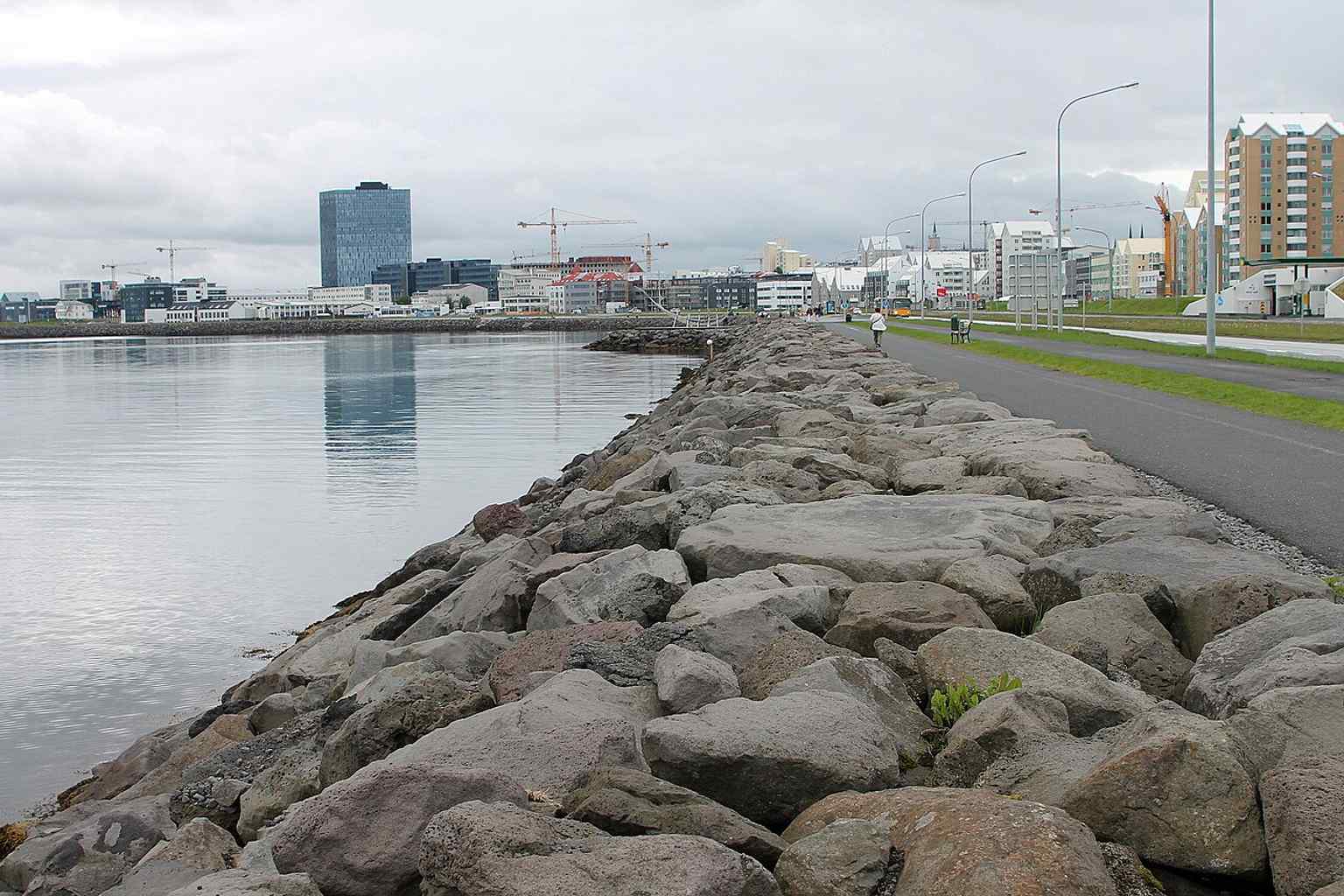
Sun Voyager by the Reykjavík waterfront, beside the sea-facing promenade — the sculpture was unveiled here in 1990 as a dreamboat for hope and freedom.Photo: Jakec, Wikimedia Commons, CC BY-SA 3.0. Cropped & resized. Its location caused a little debate. Some people complained that the sculpture should face west, toward the setting sun, to match the idea behind it. Árnason had considered other sites too, including Landakot hill and the central harbor. In the end, with his blessing, it came here to this small headland on Sæbraut, which he jokingly called Jónsnes, or “Jón’s Peninsula,” even though the prow points north. He decided that detail mattered less than the feeling.
This stop is open all day, every day, which suits a sculpture about open horizons. Let the Sun Voyager be what Árnason wanted: a starting point for your own imagination. When you’re ready, carry that thought with you and continue to the next stop.
Look for a light-colored, rectangular government building with tidy rows of windows and a formal doorway marked by Iceland’s coat of arms. This is Iceland’s Ministry for Foreign…Read moreShow less
Open dedicated page →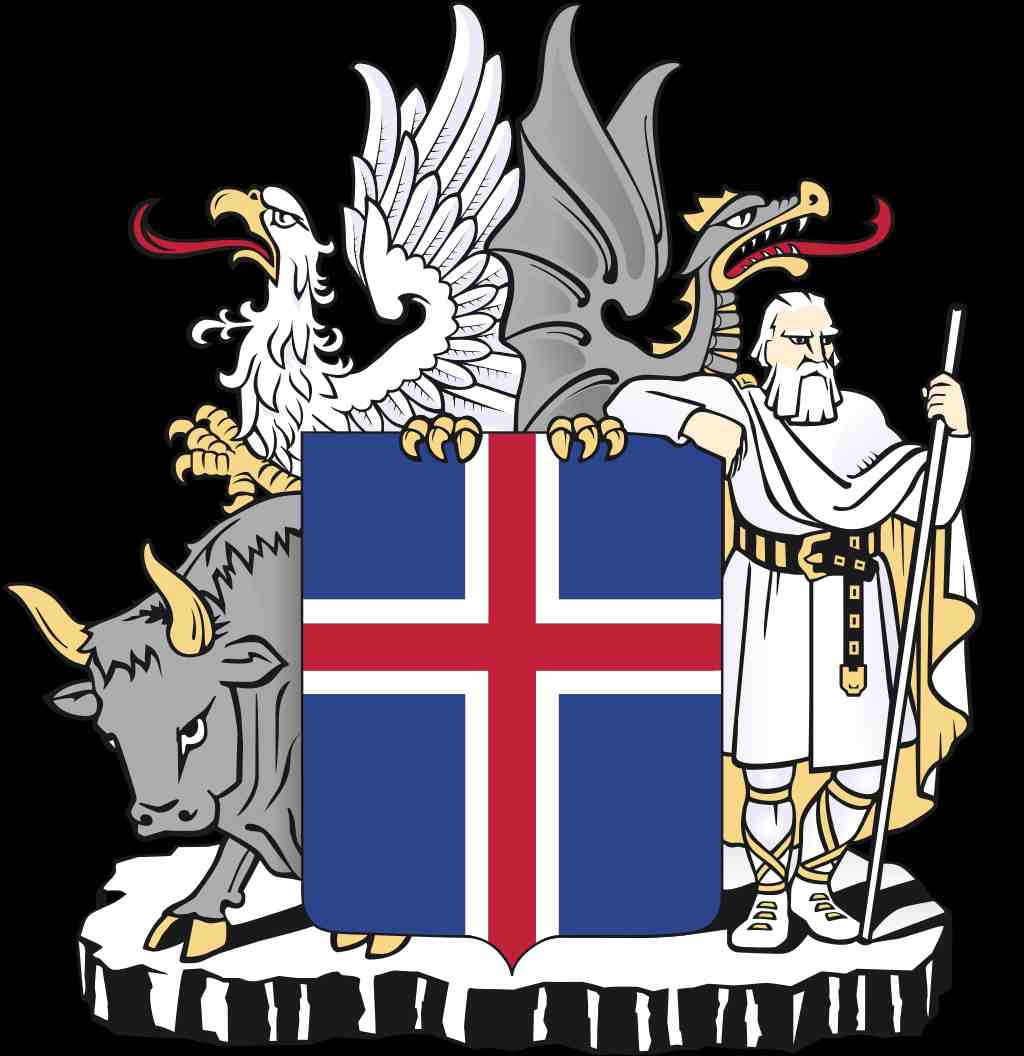
Ministry for Foreign AffairsPhoto: Rkt2312, Wikimedia Commons, Public domain. Cropped & resized. Look for a light-colored, rectangular government building with tidy rows of windows and a formal doorway marked by Iceland’s coat of arms.
This is Iceland’s Ministry for Foreign Affairs, one of the country’s top cabinet departments, and it has carried that job since the eighteenth of November, nineteen forty-one. From here, a surprisingly small nation handles some very large conversations: foreign policy, diplomatic missions, trade, foreign aid, and work with international organizations. In plain English... this is where Iceland introduces itself to the world, shakes hands, and sometimes argues politely over the dinner table.
It also oversees national security and defense policy, which gives the building a bit more weight than its calm exterior suggests. Today, the minister is Thorgerdur Katrin Gunnarsdottir, part of a long line of foreign ministers from Iceland’s major political parties. Not bad for an office that looks more understated than dramatic... very Icelandic, really.
This is where Iceland turns a small island’s voice into global reach, and the offices generally keep weekday hours from eight thirty A M to four P M. When you’re ready, continue on toward Hallgrimskirkja.
Look to your right for a pale concrete church with ribbed, basalt-like walls, a soaring central tower, and a rounded end like a helmet-shaped drum. Even from the back,…Read moreShow less
Open dedicated page →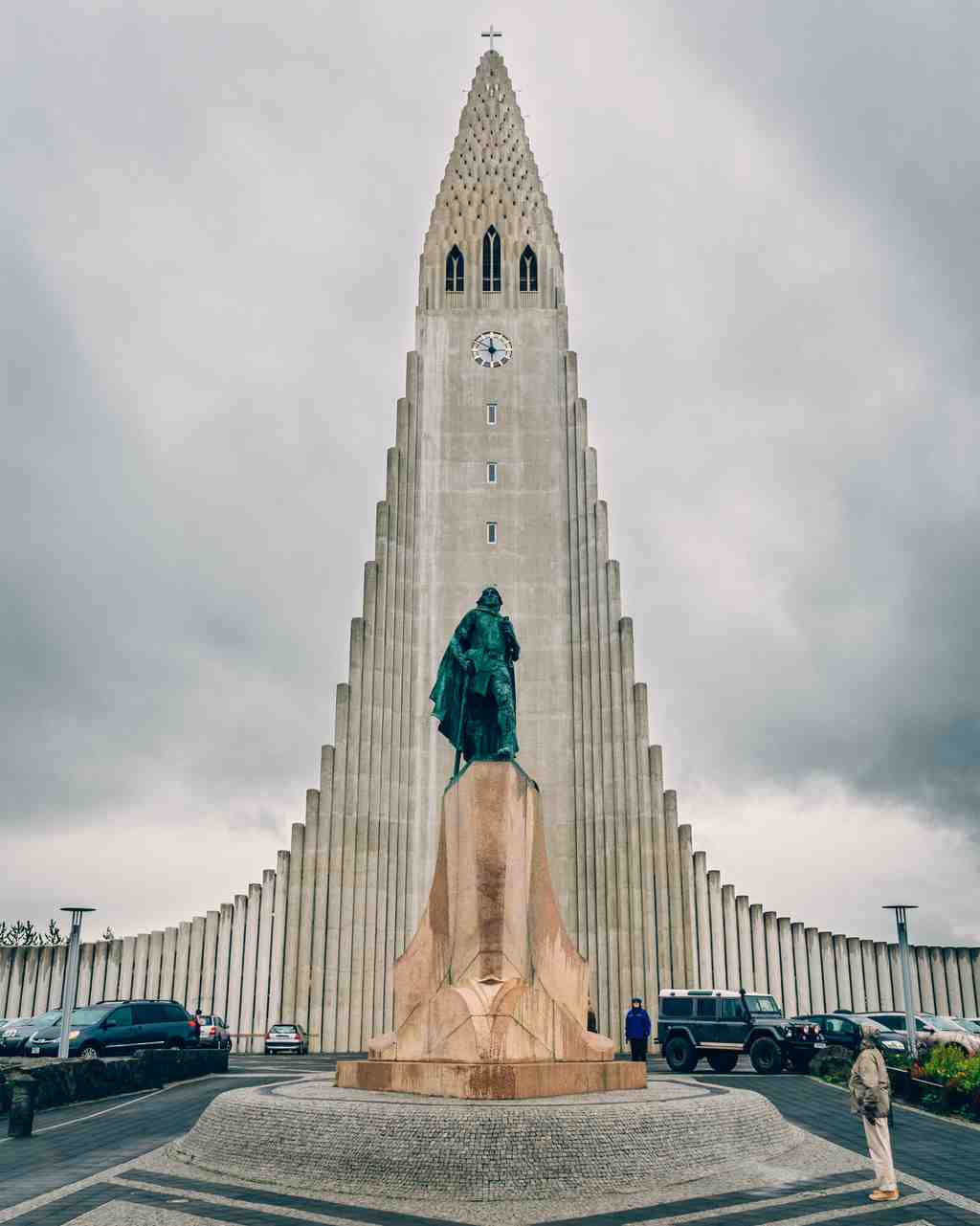
HallgrímskirkjaPhoto: Steinninn, Wikimedia Commons, CC BY 4.0. Cropped & resized. Look to your right for a pale concrete church with ribbed, basalt-like walls, a soaring central tower, and a rounded end like a helmet-shaped drum.
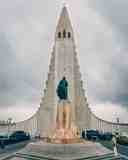
Even from the back, Hallgrímskirkja has a way of introducing itself. The long side wall stretches out like a cliff face that somebody taught to pray, and the tower still steals the show at seventy-four point five meters, making this the largest church in Iceland and the second tallest building in the country.
State architect Guðjón Samúelsson took on this design in nineteen thirty-seven, and he did not reach for the usual church recipe. He looked instead to Iceland itself: trap rock, glaciers, mountains, and especially those columnar basalt formations that rise in neat vertical lines, almost like organ pipes. That is why the tower looks both natural and a little otherworldly. Architects call this expressionism, meaning the building pushes emotion and bold shape ahead of strict tradition.
The church honors Hallgrímur Pétursson, the seventeenth-century poet and cleric who wrote the Passion Hymns, but the building came much later... and very slowly. Workers started in nineteen forty-five and kept going for forty-one years. They consecrated the crypt beneath the choir in nineteen forty-eight, finished the steeple and side wings in nineteen seventy-four, and finally consecrated the nave in nineteen eighty-six. The nave, by the way, is the main central hall where the congregation gathers. If you want a quick sense of that long transformation, take a peek at the before-and-after image from nineteen seventy-seven to the completed landmark.
Not everyone loved it at first. Some people complained it looked too old-fashioned, while others thought it mixed too many styles. In other words, it had the standard qualifications for becoming a national symbol. Church leaders even pushed for a taller spire so it would outshine Landakotskirkja, the Catholic cathedral across town. Reykjavík has its polite rivalries.
Inside, the church opens into a space of one thousand six hundred seventy-six square meters, and it holds some serious musical hardware. If you glance at the organ image on your screen, you can see the great instrument inside: fifteen meters tall, weighing twenty-five metric tons, with five thousand two hundred seventy-five pipes. Up in the tower, a carillon of twenty-nine bells hangs like a keyboard-powered choir, and the three largest bells carry the names Hallgrímur, Guðríður, and Steinunn, after Hallgrímur, his wife, and their daughter.
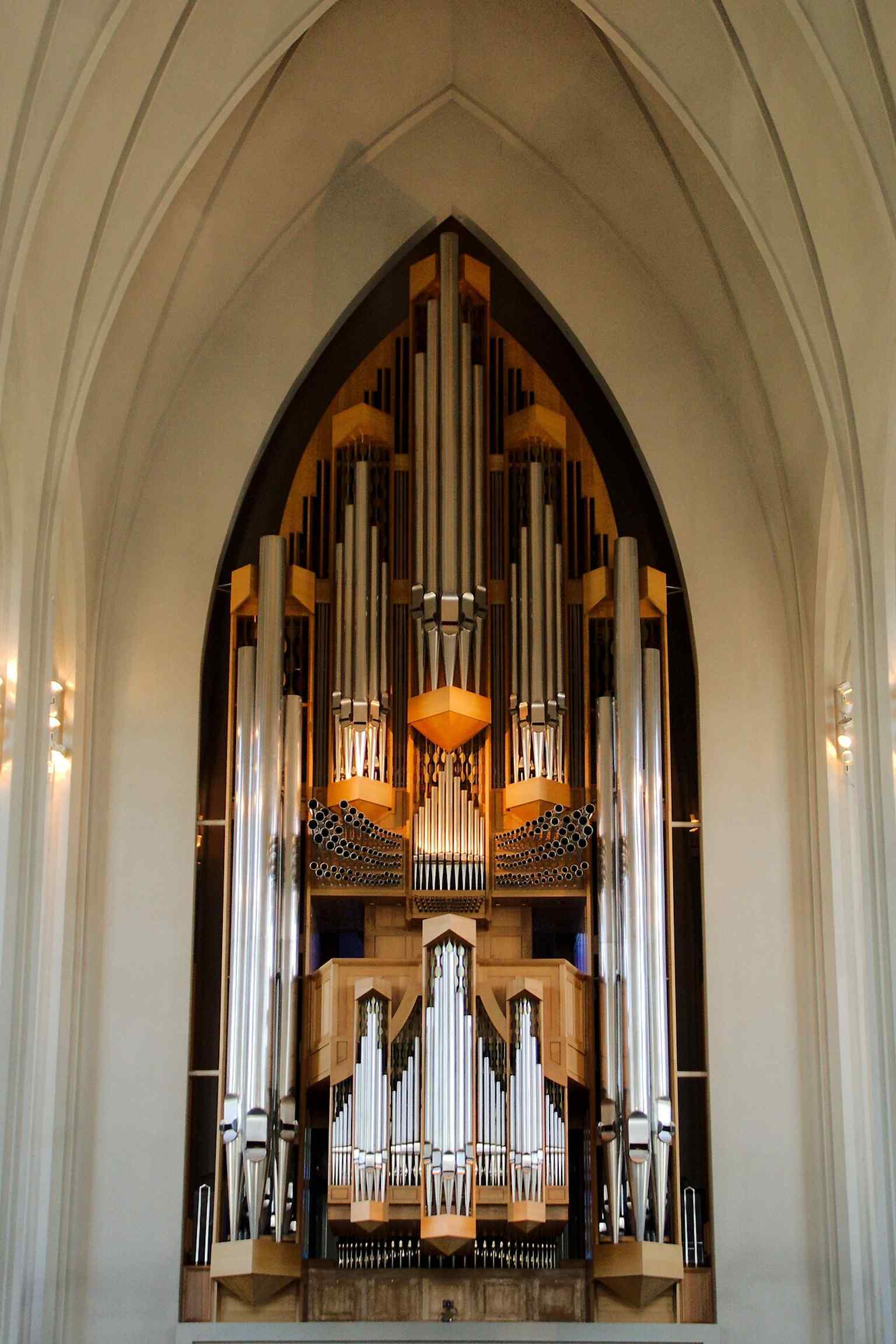
The main pipe organ inside the church, one of Hallgrímskirkja’s major musical instruments.Photo: Balise42, Wikimedia Commons, CC BY-SA 4.0. Cropped & resized. Out front, Leif Erikson actually predates the church, and inside you can light a memorial candle for one hundred Icelandic króna or take the lift up to the viewing deck. The church is generally open daily from nine in the morning to eight in the evening.
Hallgrímskirkja feels less like a building and more like Icelandic stone turned into a hymn.
When you are ready, make your way toward Leif Erikson out front for the next story.
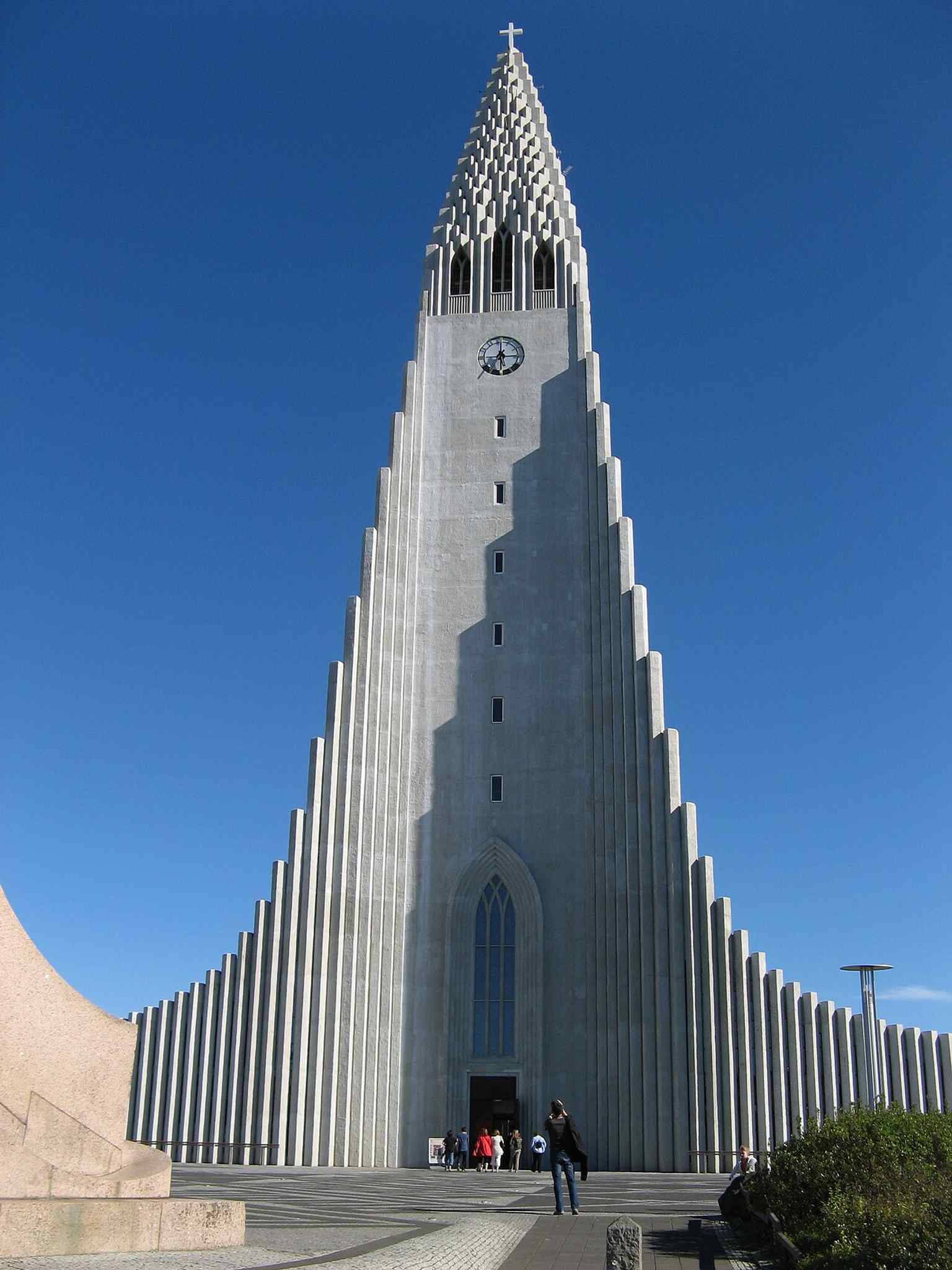
The tower’s dramatic white basalt-like ribs make Hallgrímskirkja one of Reykjavík’s most recognizable landmarks.Photo: Someone35, Wikimedia Commons, CC BY-SA 3.0. Cropped & resized. 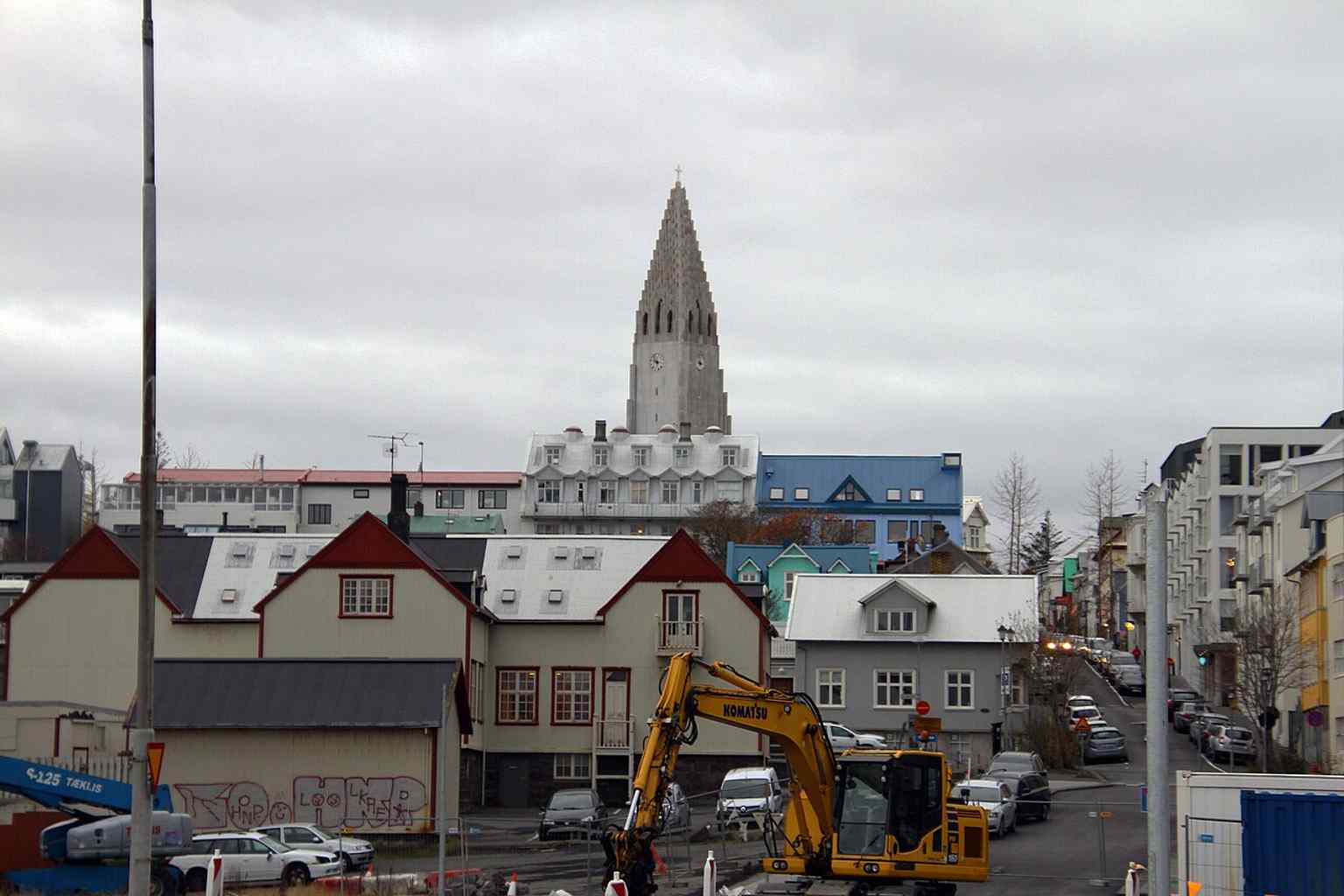
A wider city view shows Hallgrímskirkja rising above Reykjavík, just as it dominates the skyline from across town.Photo: Hyppolyte de Saint-Rambert, Wikimedia Commons, CC BY-SA 4.0. Cropped & resized. 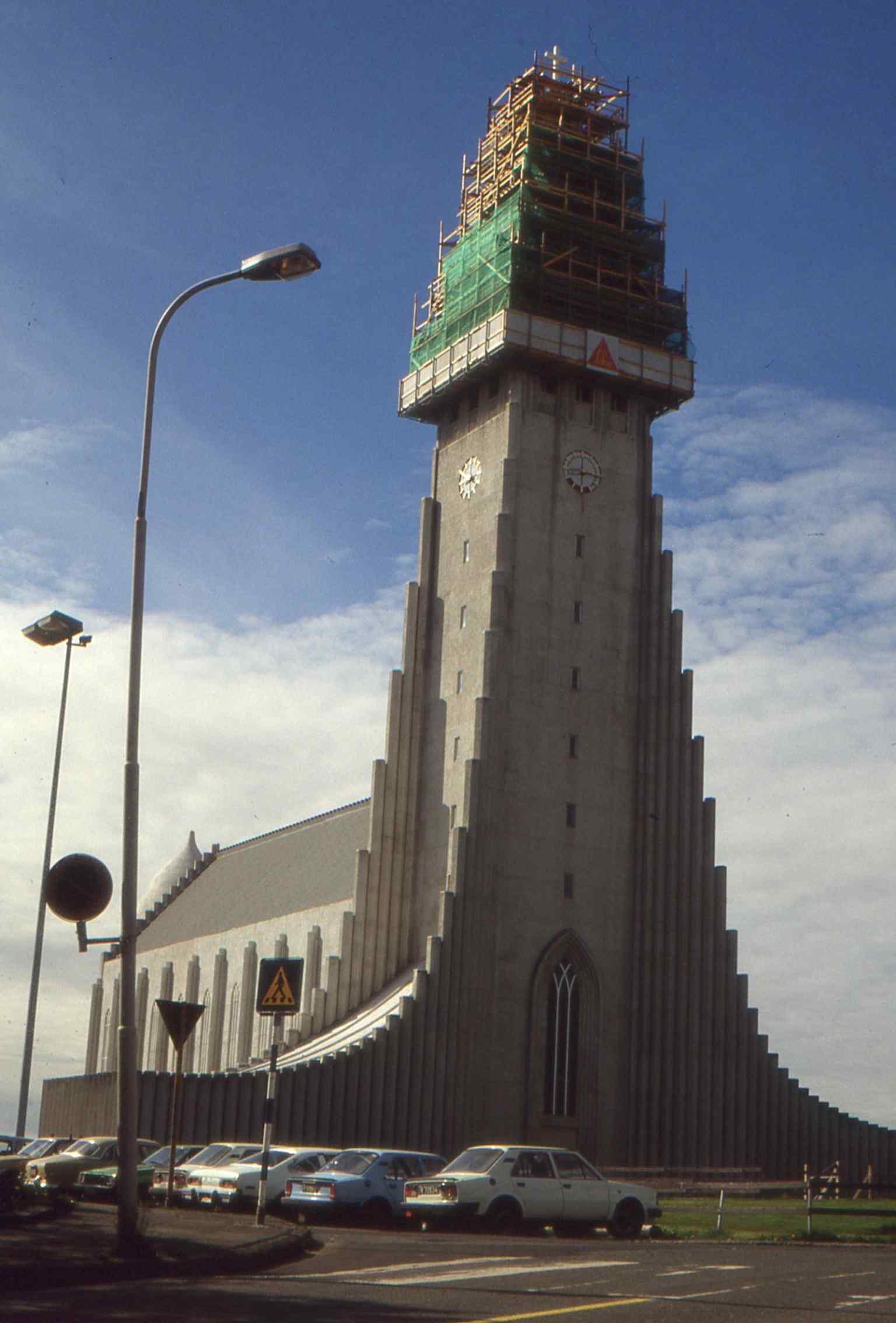
Hallgrímskirkja under construction in 1988, showing the long 41-year build that ended with completion in 1986.Photo: Ian Watson, Wikimedia Commons, CC0. Cropped & resized. 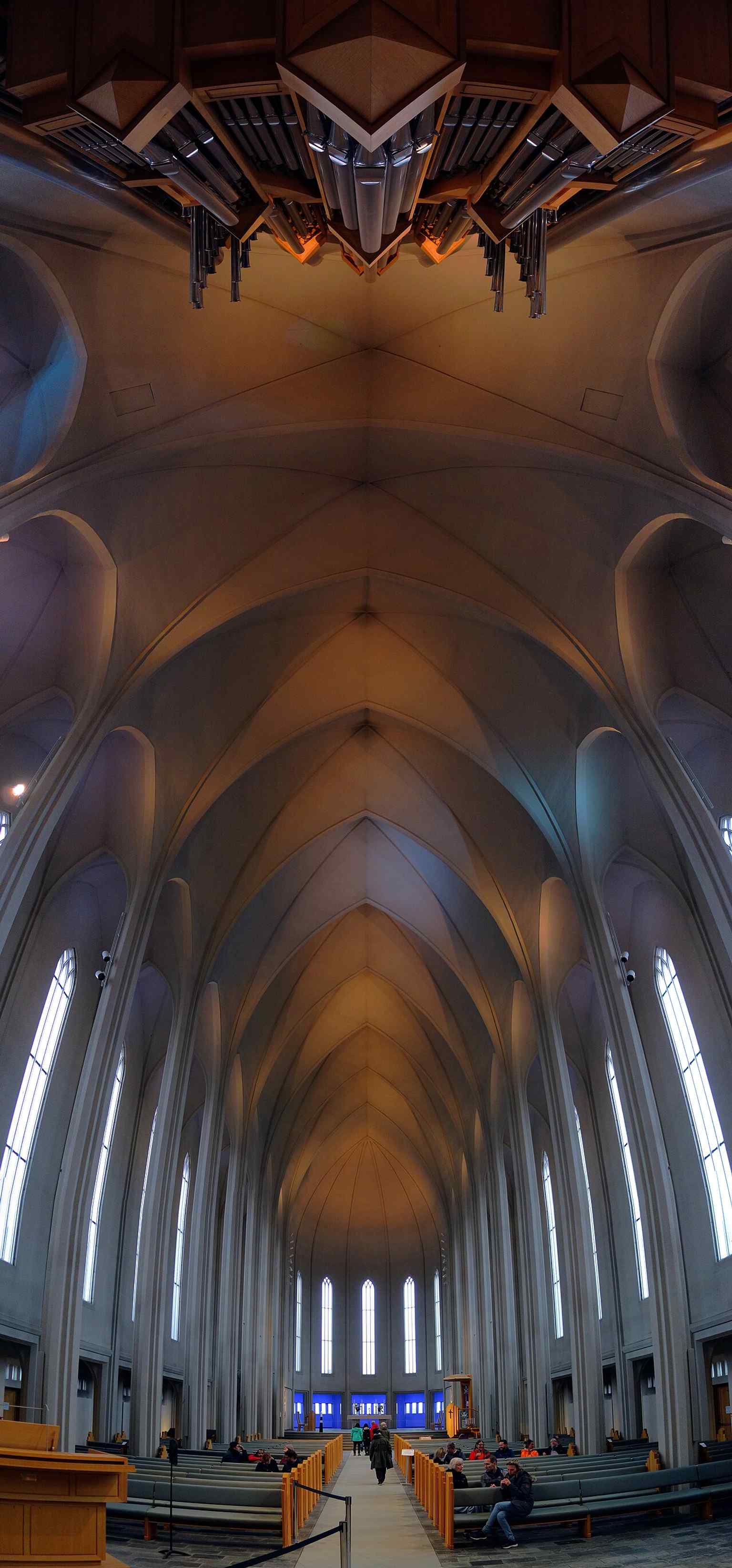
The spacious nave interior, part of the church’s 1,676 m² inside and home to its main worship space.Photo: Spike, Wikimedia Commons, CC BY-SA 4.0. Cropped & resized. 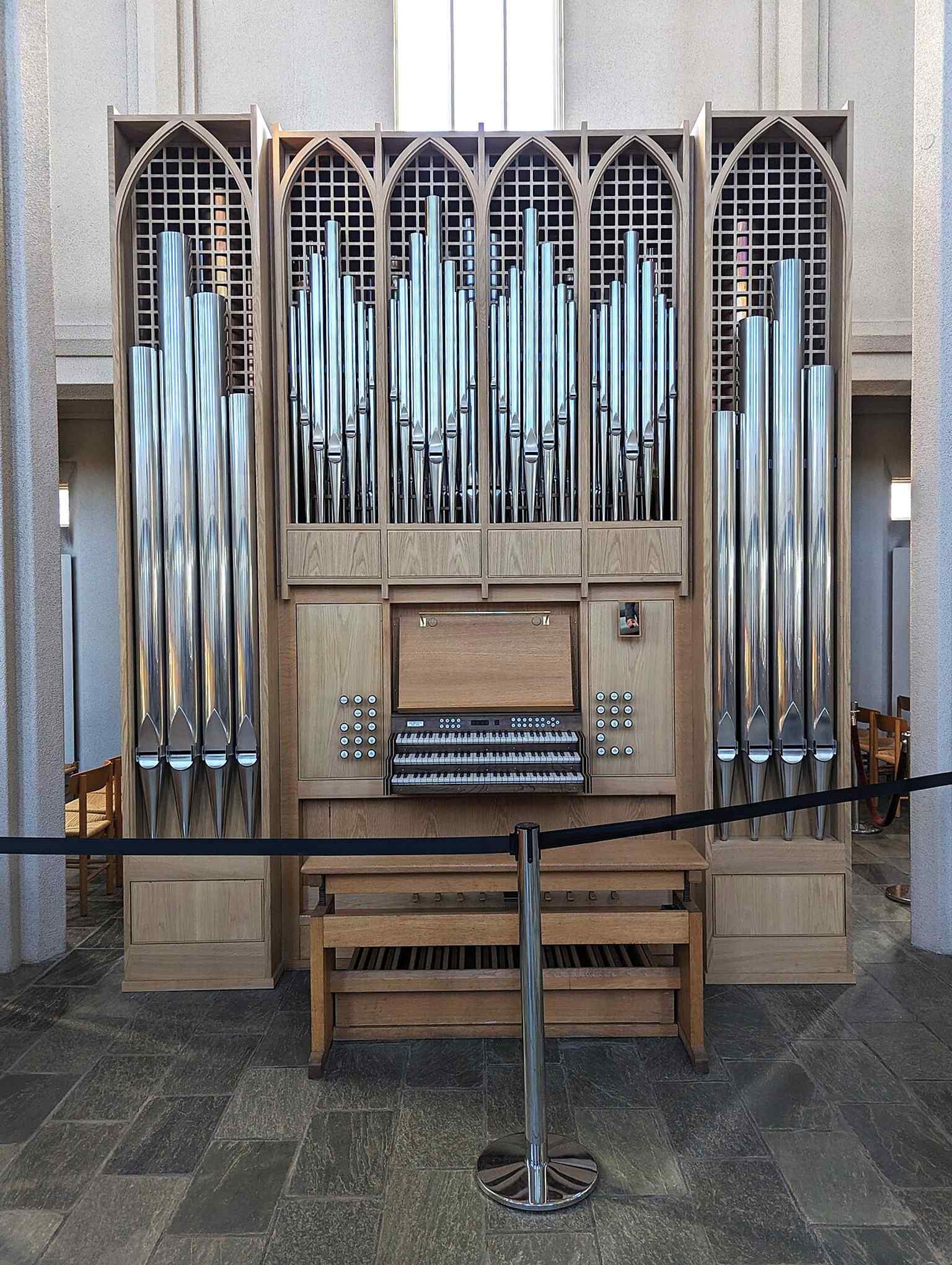
A closer look at the Frobenius choir organ, part of the church’s impressive organ tradition.Photo: Concord, Wikimedia Commons, CC BY 4.0. Cropped & resized. 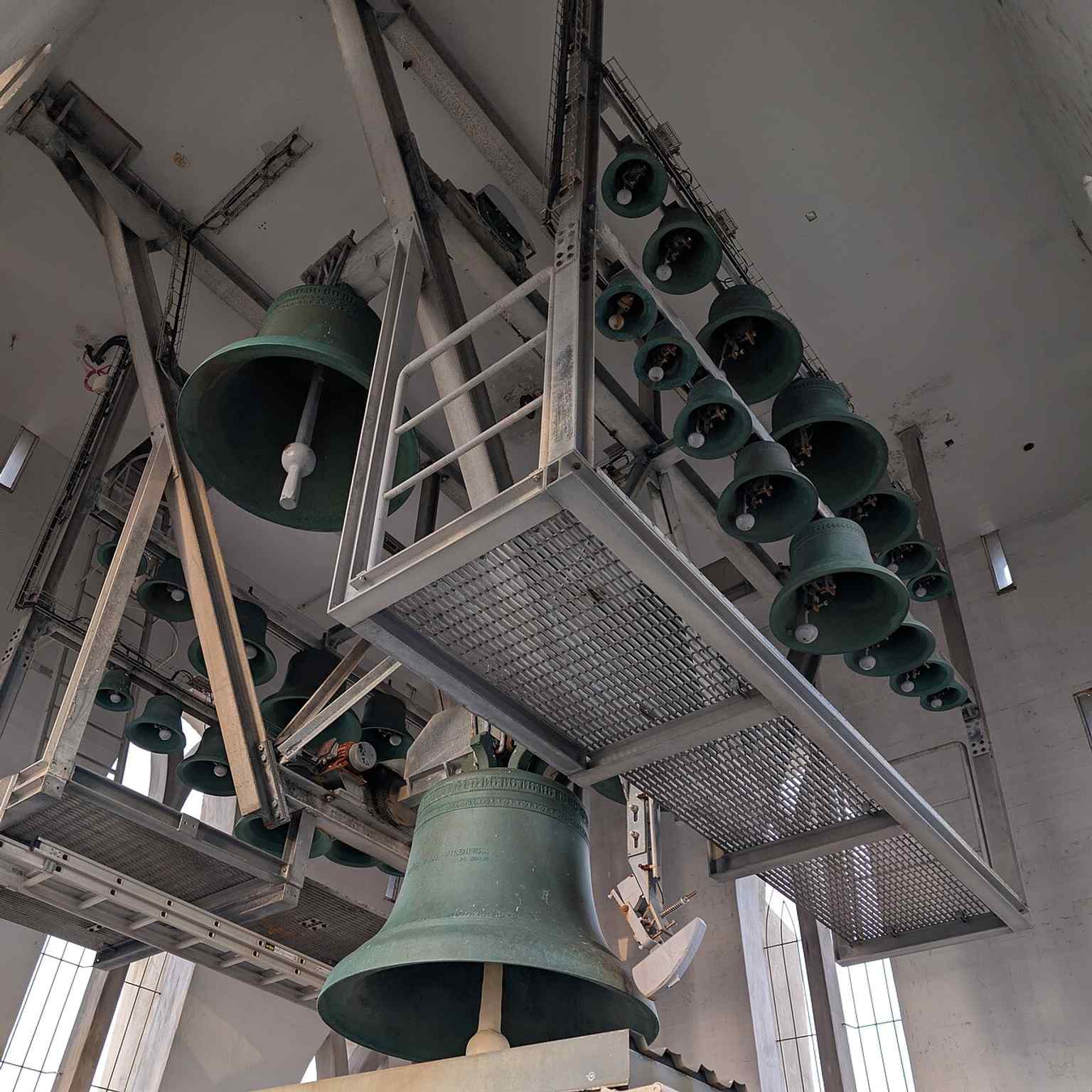
The tower bells of Hallgrímskirkja — the carillon includes 29 bells, with the largest named Hallgrímur.Photo: G. Edward Johnson, Wikimedia Commons, CC BY 4.0. Cropped & resized.
Show 10 more stopsShow fewer stopsexpand_moreexpand_less
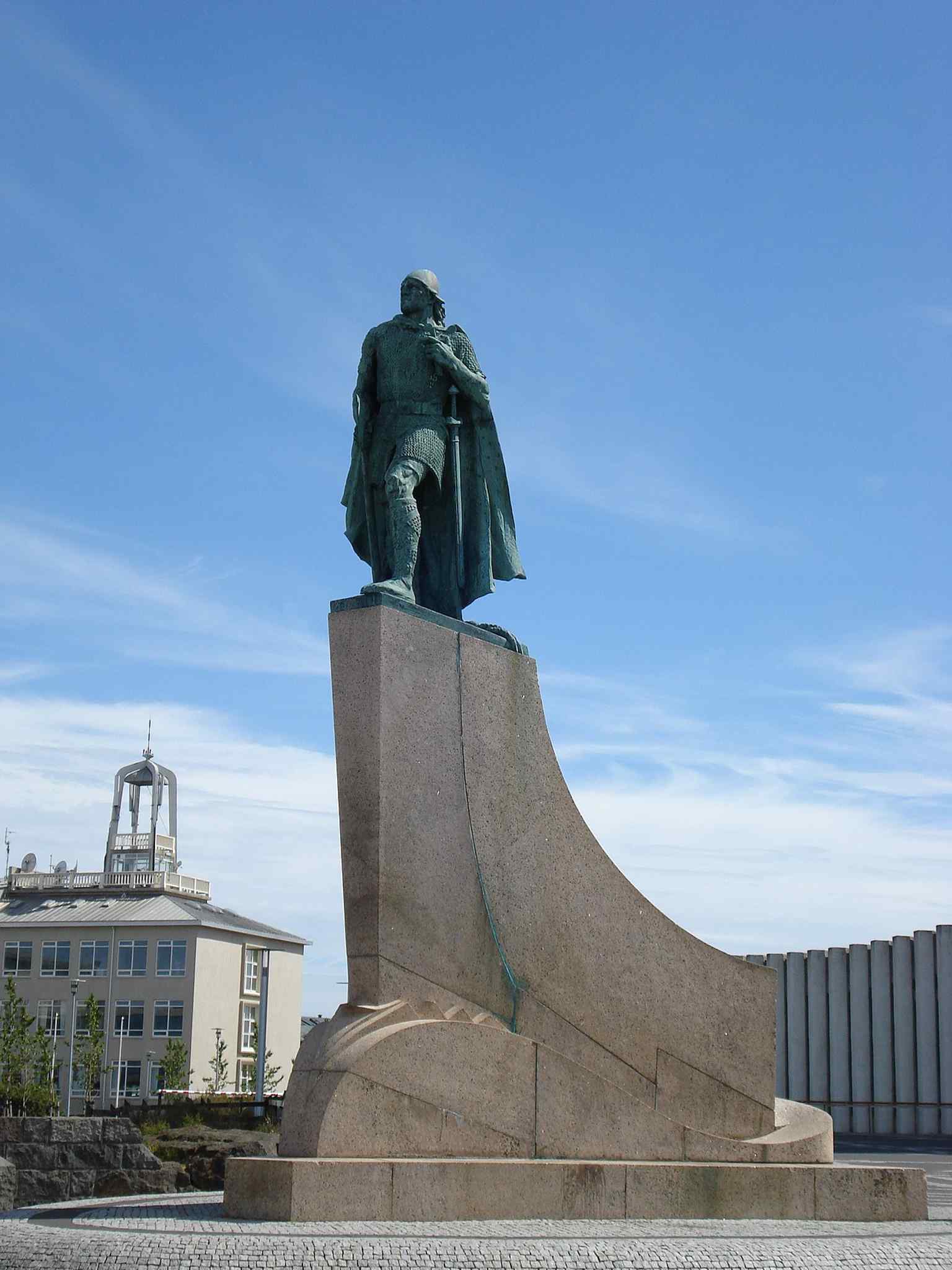
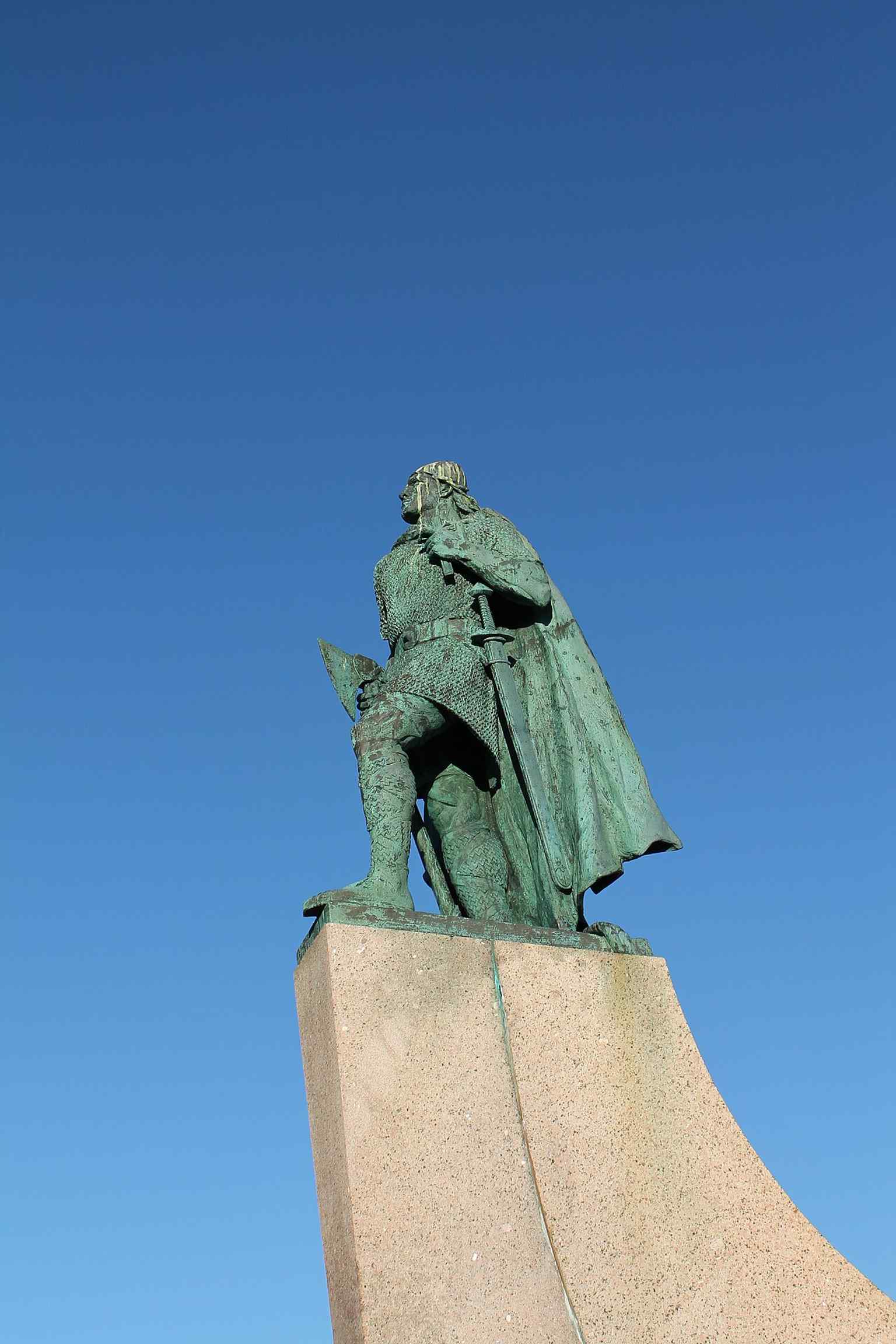
Look for the dark bronze explorer standing high on a red granite pedestal shaped like a Viking ship’s prow, with a long cloak and forward-leaning stance that make him easy to…Read moreShow less
Open dedicated page →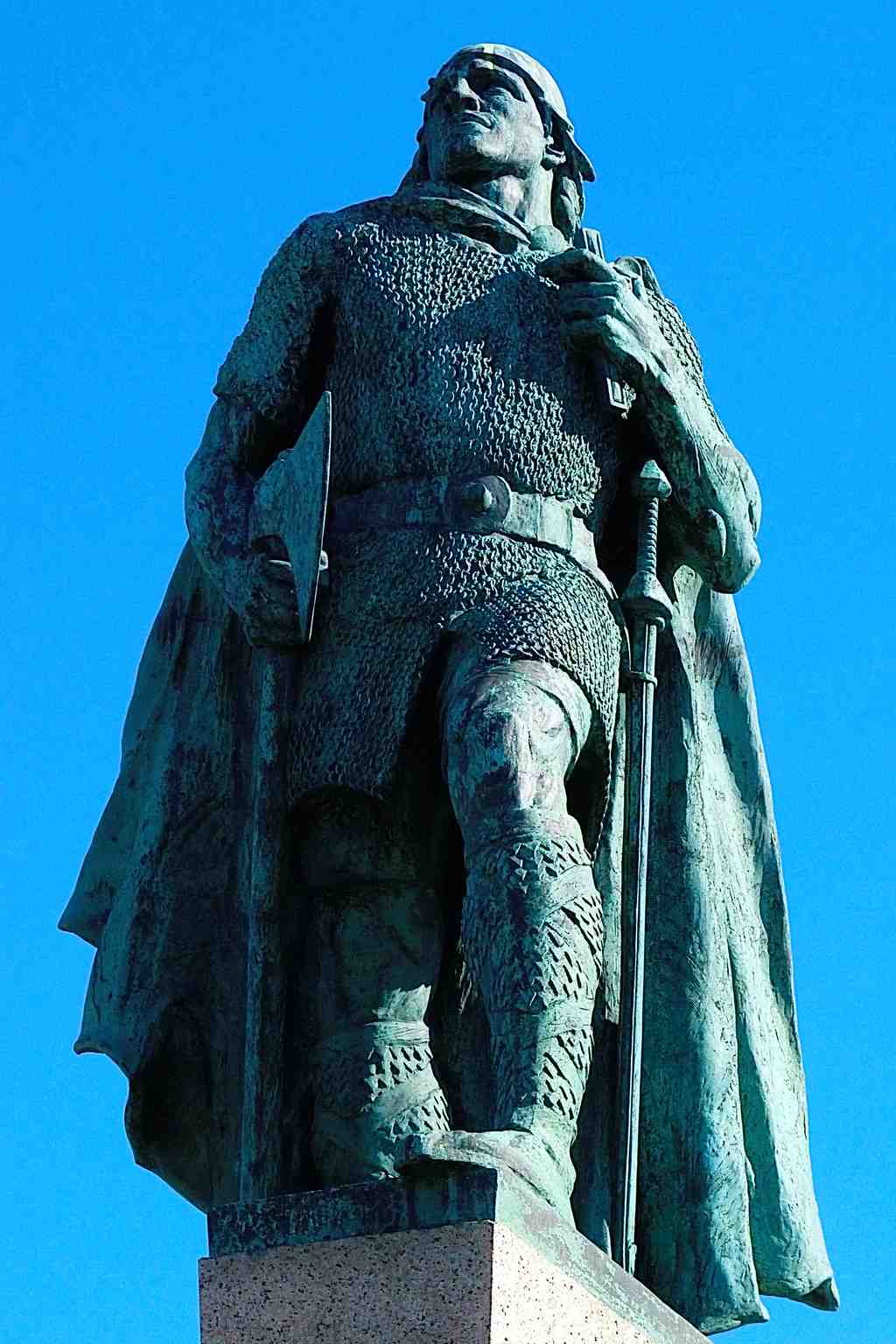
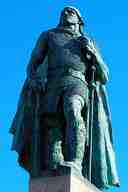
Statue of Leif EriksonPhoto: AwOiSoAk KaOsIoWa, Wikimedia Commons, CC BY-SA 3.0. Cropped & resized. Look for the dark bronze explorer standing high on a red granite pedestal shaped like a Viking ship’s prow, with a long cloak and forward-leaning stance that make him easy to spot.
This is Leifr Eiricsson... Iceland’s bronze answer to the question, “How do you make a Viking look properly legendary?” The sculptor, Alexander Stirling Calder, gave him a heroic stride and set him on this hill so he could overlook Reykjavík like a man still scanning the horizon for the next coastline.
The statue came here as a diplomatic gift. In nineteen thirty, Iceland celebrated one thousand years of Alþingi, the national parliament. To mark that anniversary, the United States Congress passed a resolution on the twenty-first of June, nineteen twenty-nine, ordering a suitable memorial to Leif and presenting it, in effect, from the American people to the people of Iceland. That is a pretty grand birthday card... bronze, ocean-minded, and impossible to misplace.
A federal arts panel in the United States picked the sculptor, and Calder won the job after officials reviewed photographs of proposed designs. He worked through three preliminary sketches and studies before the final statue won approval in January of nineteen thirty-two. Then the whole thing crossed the Atlantic, which feels fitting for a monument to a man famous for crossing the Atlantic.
The pedestal matters too. It is not just a block of stone. Calder’s Leif stands on a base shaped like the prow, the pointed front, of a Viking ship. That pedestal rises fifteen feet high and came from Texas red granite, prepared by a company in Brattleboro, Vermont, before it reached Iceland in the fall of nineteen thirty-one. The statue itself went into place on the second of May, nineteen thirty-two, and officials unveiled it here on the seventeenth of July, with Prime Minister Ásgeir Ásgeirsson presiding, alongside speeches from the mayor of Reykjavík, Knud Ziemsen, and the American envoy, Frederick W. B. Coleman.
If you glance at the app, the close-up of the pedestal inscription shows one of the monument’s surprisingly lively little debates: how exactly to spell Leif’s name in a modern form. Different Nordic countries favored different versions, and after consulting an Icelandic-born law professor named Sveinbjörn Johnson, they settled on “Leifr Eiricsson.”
A close view of the pedestal inscription, including the wording used for the 1,000th anniversary gift from the United States to Iceland.Photo: TommyBee, Wikimedia Commons, Public domain. Cropped & resized. That spelling carried real pride. Many Norwegians, especially Norwegian Americans, claimed Leif as their own. Icelanders read this gift as a friendly American nod that said, no, this explorer belongs in Iceland’s story too. History can be a family reunion with very strong opinions.
And the image stuck. Calder’s Leif became the iconic face of the explorer, turning up on stamps, souvenirs, and even a silver Icelandic coin. Another casting later traveled to the nineteen thirty-nine New York World’s Fair and eventually found a home in Newport News, Virginia, while Calder’s plaster model ended up in the Smithsonian Institution. If you check the bronze close-up on your screen, you can see why the design traveled so well.
So this monument is not just about discovery; it is about memory, ownership, and the way nations introduce themselves with gifts.
When you are ready, continue on at your own pace; Leif keeps watch here day and night.
Leif Erikson’s statue in Reykjavík, shown with Hallgrímskirkja behind it — the city’s best-known monument to the Norse explorer.Photo: Ivan Sabljak, Wikimedia Commons, CC BY-SA 3.0. Cropped & resized. On your right, look for a pale stone theater with a broad, blocky facade, rough basalt-like surfaces, and a tall central tower rising above the entrance. This is the National…Read moreShow less
Open dedicated page →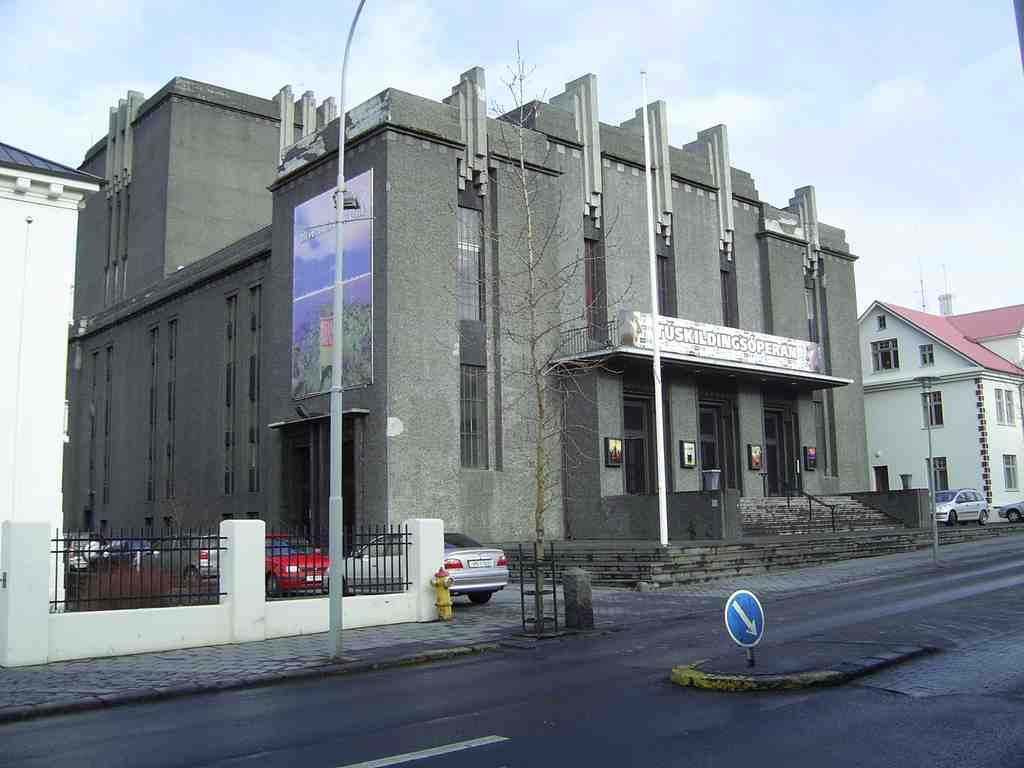
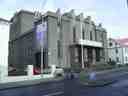
The National Theatre of IcelandPhoto: Guðmundur D. Haraldsson, Wikimedia Commons, CC BY-SA 3.0. Cropped & resized. On your right, look for a pale stone theater with a broad, blocky facade, rough basalt-like surfaces, and a tall central tower rising above the entrance.
This is the National Theatre of Iceland, and like a lot of good Icelandic stories, it took grit, stubbornness, and a little theatrical drama before anyone ever stepped onstage. The dream started way back in eighteen seventy-three, when the writer Indriði Einarsson sent a telegram proposing a national theater. He kept pushing for it for decades, and by nineteen oh five he laid out the idea publicly in print. That is patience on a heroic scale... the kind that deserves its own curtain call.
The building you see came from architect Guðjón Samúelsson, the same man who designed Hallgrímskirkja. Here, though, he aimed for something different. He looked to Iceland’s basalt cliffs, those natural rock columns, and imagined an elf rock opening into a hidden world. That is why the exterior feels heavy, rugged, and a little mysterious, as if the stone might part and let a saga walk out.
Funding the place became its own national argument. In nineteen twenty-two, Jónas Jónsson from Hrifla backed an unusual solution: an entertainment tax. The law passed a year later, and the basic idea was delightfully cheeky. Cinema tickets and dance halls, what some sniffed at as “lower culture,” would help pay for “higher culture” here at the theater. You can imagine how movie owners felt about that.
Workers laid the foundation in nineteen twenty-nine, and the outer walls rose over the next two years. Then the money stopped in nineteen thirty-two, and construction stalled. In nineteen forty-one, before the unfinished building could become a theater, British forces took it over and used it as a military storehouse. Not costumes and painted scenery... ammunition and explosives. That made plenty of Reykjavík residents nervous, because one bad blast could have devastated the city center. After the British left, Icelandic ministries even used parts of the building for document storage. The place spent years serving paper and gunpowder before it ever served art.
At last, after cleanup, repairs, and a final push, the theater officially opened on the twentieth of April, nineteen fifty. Indriði Einarsson had died in nineteen thirty-nine, so he never saw the completed dream, but the opening performance honored him with his own play, Nýársnóttin. And then came one of those bittersweet turns history likes to slip in: Guðjón Samúelsson died just five days after the opening. He lived long enough to see the doors open... and only just.
Inside, the main stage still uses a revolving platform from that era. Its iron frame came from the old Ölfusá bridge after the bridge collapsed in nineteen forty-four. Reykjavíkers like to joke that the actors here still perform on an old bridge. Fair enough. In Iceland, even the scenery gets a second life.
And because no great theater should be entirely sensible, staff still tell ghost stories. One tale says a British soldier lingers in the catwalks above the main stage, where technicians handle the lights. Others speak of a resident spirit named Jón, who enjoys meddling with lights and hiding things. A theater without a ghost is just office space with better acoustics.
So this building stands as a national stage, an elf rock, a war storehouse, and a very Icelandic triumph of persistence. When you’re ready, continue on toward the Ministry of Finance.
Look for the pale stone building with a heavy rectangular shape, rows of narrow windows, and a stern, fortress-like façade. This is Arnarhvoll, home of Iceland’s Ministry of…Read moreShow less
Open dedicated page →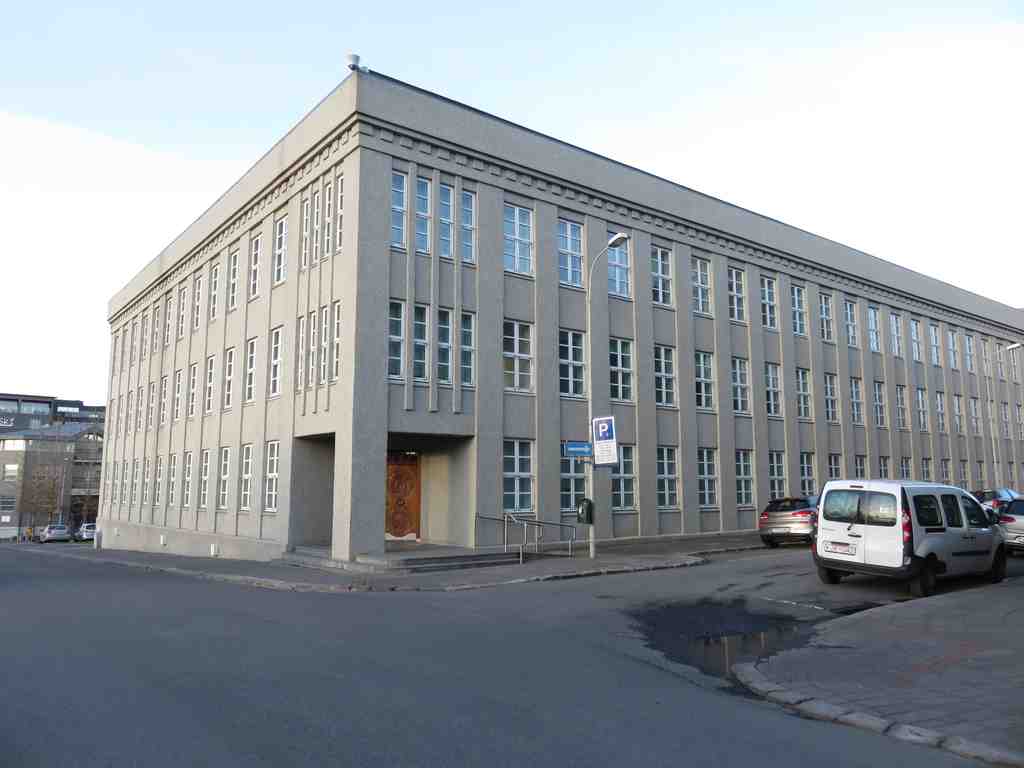
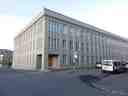
Ministry of FinancePhoto: Antony-22, Wikimedia Commons, CC BY-SA 4.0. Cropped & resized. Look for the pale stone building with a heavy rectangular shape, rows of narrow windows, and a stern, fortress-like façade.
This is Arnarhvoll, home of Iceland’s Ministry of Finance and Economic Affairs... and it looks exactly how a finance ministry might look if you asked a gifted architect to design “responsibility” in stone. The man behind it was Guðjón Samúelsson, the State Architect who also gave Reykjavík the National Theatre and Hallgrímskirkja, so by now you’ve met his work more than once. He finished this building in nineteen thirty, and he gave it real authority: thick-looking walls, disciplined lines, and the kind of presence that says, “Please bring your budget figures and no funny business.”
Inside, the ministry oversees the government’s money. In plain English, that means taxes, budgets, state assets, economic forecasts, and the rules that keep public spending from wandering off like an untied goat. Around eighty specialists work through that machinery. One department prepares the national budget, another studies the economy, another handles taxation and legal affairs, and others manage administration, staffing, and the state’s finances day to day. The minister today is Daði Már Kristófersson, but much of the daily running falls to senior civil servants.
This building has seen calm paperwork... and moments when the whole country seemed to lean on these walls. During the financial collapse of two thousand and eight, Finance Minister Árni M. Mathiesen and officials here became central to Iceland’s survival strategy. They drafted the Emergency Act overnight. That law gave priority to domestic deposits, meaning ordinary savings inside Iceland came first, and it let the state take over failing banks. It was a drastic move, but drastic was the order of the day. The shock rippled outward into the Icesave dispute with the U-K and the Netherlands, and Steingrímur J. Sigfússon inherited that political headache afterward.
And then came the Kitchenware Revolution. Protesters gathered outside government buildings and banged pots and pans in fury over the crash. Imagine the sound carrying up here, sharp and relentless, while officials inside tried to hold together a collapsing financial system. That’s Reykjavík history at full volume.
Arnarhvoll also carries the weight of scandal. Baldur Guðlaugsson, the ministry’s Permanent Secretary - that’s the top career official, the person who runs the place day to day - ended his tenure in disgrace. In two thousand and twelve, Iceland’s Supreme Court sentenced him to two years in prison for insider trading. The court found that he used information from a government financial stability committee to sell his shares in Landsbanki, worth nearly two hundred million Icelandic krónur, just days before the bank collapsed. It marked the first time Iceland jailed such a senior civil servant for actions tied to the crash.
Even long after that, the ministry stayed in the headlines. In October of two thousand and twenty-three, Finance Minister Bjarni Benediktsson resigned after the Parliamentary Ombudsman ruled he should not have overseen the state’s sale of shares in Íslandsbanki because his father’s company bought a stake. He left the finance post... then swapped jobs with the foreign minister and stayed in cabinet. Government, like fishing, sometimes uses a very tangled net.
If you ever want to step inside, the ministry keeps weekday office hours from about eight thirty in the morning to four in the afternoon and closes on weekends.
For all the noise around it, this building still stands for the hard, unglamorous work of keeping a country solvent.
When you’re ready, continue toward Ingólfur Arnarson, where Reykjavík’s story shifts from ledgers and law to the city’s first great arrival.
On your left, look for a sober stone-faced block in a low rectangular shape, with the bank’s name set by the main entrance. A central bank likes to project calm authority... no…Read moreShow less
Open dedicated page →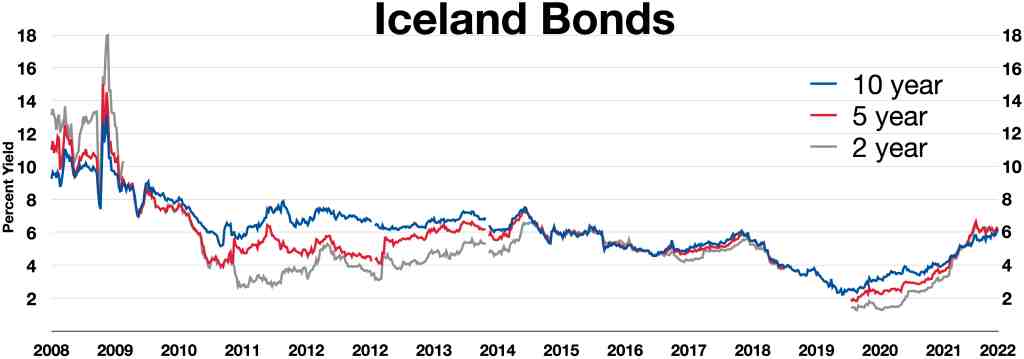
Central Bank of IcelandPhoto: Wikideas1, Wikimedia Commons, CC0. Cropped & resized. On your left, look for a sober stone-faced block in a low rectangular shape, with the bank’s name set by the main entrance.
A central bank likes to project calm authority... no trumpets, no drawbridge, just the quiet message that serious decisions happen inside. And that instinct is much older than modern finance, which is why strong civic buildings so often borrow the language of fortresses. Here, the Central Bank of Iceland does the same quieter work through money, inflation, and financial stability.
The Normans raised Durham Castle in the eleventh century as part of their push to control the north after the conquest. They chose a hill above the River Wear, which loops around the site on three sides, and they used a motte-and-bailey plan. That means a fortified stronghold on top of a raised mound, with an enclosed yard below for workers, stores, and the everyday machinery of power. Practical, blunt, and very hard to ignore.
The king placed the Bishop of Durham there as a prince-bishop, which meant he ruled with royal authority. So this was not just a home. It was a command post. The great hall still tells that story. Bishop Anthony Bek enlarged it in the early fourteen hundreds, and for a time it ranked as the largest hall of its kind in Britain. Even after Bishop Richard Fox shortened it in the late fifteen hundreds, it remained enormous: about fourteen meters high and more than thirty meters long. That is less living room, more stone megaphone.
Then the place changed character without losing its backbone. In eighteen thirty-seven, people donated the castle to Durham University, and by eighteen forty it reopened as University College. More than one hundred students still live there. The old hall became a dining room, the former basement rooms became student common rooms, and two chapels stayed in use. One Norman chapel dates to about ten seventy-eight, making it the oldest accessible part of the castle. During World War Two, the Royal Air Force even turned it into a command and observation post. Not bad for a chapel.
In nineteen eighty-six, the United Nations Educational, Scientific and Cultural Organization, UNESCO, named the castle and neighboring cathedral a World Heritage Site.
For the practical note, this is a working bank rather than a sightseeing stop, so admire it from outside and continue when you’re ready. Power changes its costume, but it still loves a strong front. When you’re ready, continue toward Harpa for a very different kind of monument.
On your right, Harpa looks like a giant glass hive: a steel-framed block wrapped in colored geometric panels, with a shimmering honeycomb façade as its unmistakable…Read moreShow less
Open dedicated page →On your right, Harpa looks like a giant glass hive: a steel-framed block wrapped in colored geometric panels, with a shimmering honeycomb façade as its unmistakable signature.
This is Reykjavík’s concert hall and conference center, but Harpa is more than a handsome music box. It’s also a comeback story. Construction began in two thousand and seven as part of an ambitious redevelopment of this harbor district, with plans for a hotel, apartments, shops, restaurants, parking, even a new headquarters for Landsbankinn. Then Iceland’s financial crisis hit in two thousand and eight, and the whole dream slammed on the brakes. Work stopped. For a while, nobody knew whether this half-built shell would end up as a monument to overconfidence.
Instead, the Icelandic government stepped in and funded the rest of the concert hall. That decision turned Harpa into something almost symbolic: for several years, it was the only construction project going on in the entire country. Not exactly a small vote of confidence.
The building finally opened with its first concert on the fourth of May, two thousand and eleven. The Iceland Symphony Orchestra played under conductor Vladimir Ashkenazy, with pianist Víkingur Ólafsson as soloist, and R-U-V, the Icelandic National Broadcasting Service, carried it live across the country. That mattered because this was Reykjavík’s first purpose-built concert hall, designed from the ground up for sound, not borrowed from some older building trying its best.
The architects at Henning Larsen worked with the Danish-Icelandic artist Olafur Eliasson, and you can see that partnership all over the exterior. Those glass cells echo Iceland’s basalt landscape, the kind of rock that forms in crisp, column-like patterns after lava cools. So Harpa doesn’t just sit in Iceland... it sort of translates Iceland into glass and steel. Pretty neat trick.
If you glance at the app, you can see the concert space in use, packed with musicians and audience, which gives you a sense of what this place was built to do. But music is only half the story. Harpa also became one of Reykjavík’s major meeting places for the world. Summits gather here, including the Council of Europe summit in two thousand and twenty-three, and the Arctic Circle assembly has filled these halls with policymakers, scientists, and diplomats. Take a look at the conference image on your screen and you’ll see that second life clearly.
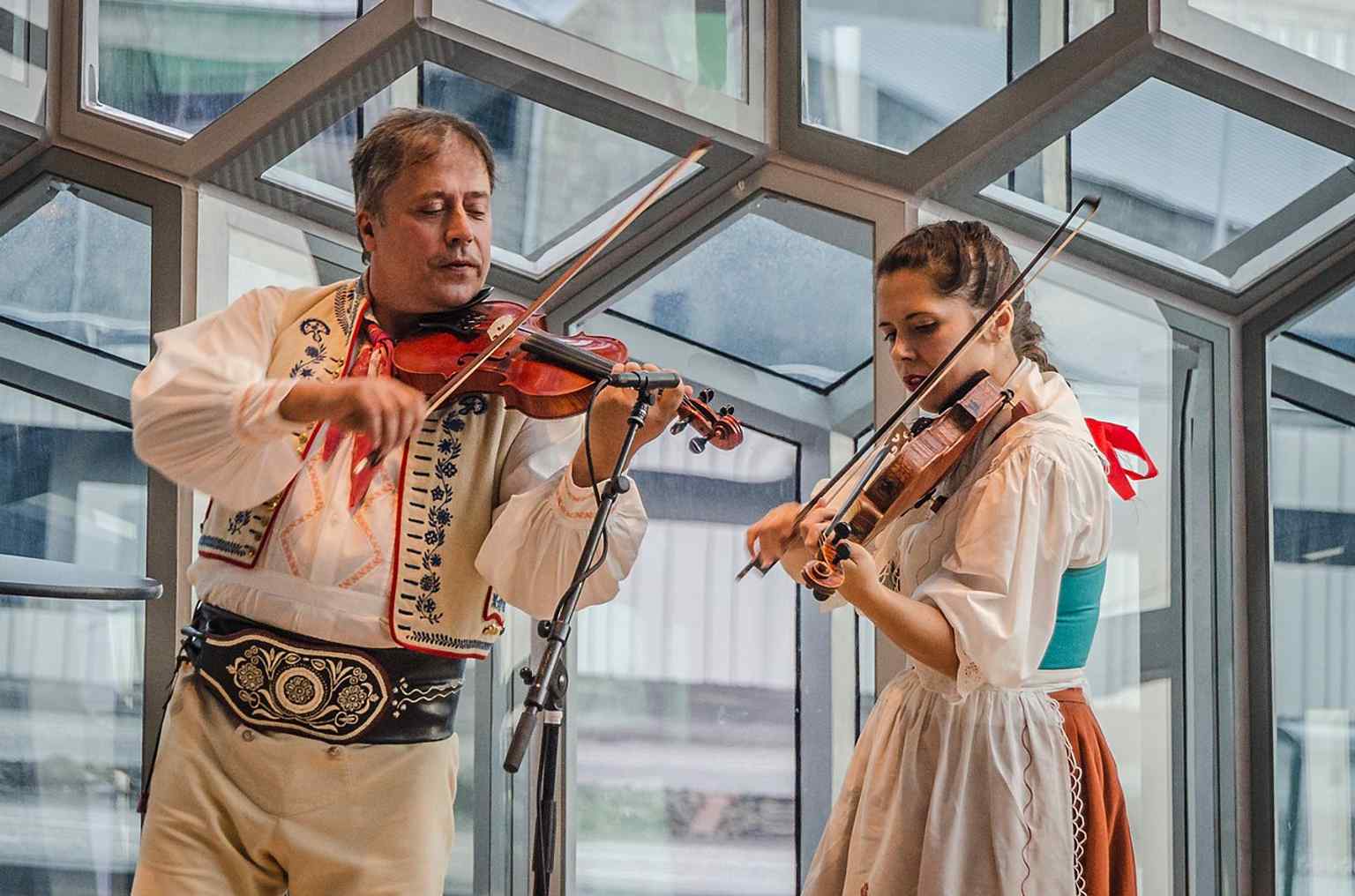
Live music in Harpa’s concert space — fitting for Reykjavík’s first purpose-built concert hall, home to the Iceland Symphony Orchestra.Photo: James Poulson, Wikimedia Commons, CC BY-SA 4.0. Cropped & resized. Harpa keeps expanding its personality, too. Its glass façade holds seven hundred fourteen L-E-D lights, displaying video works by Olafur Eliasson and, later, other artists. In one playful twist, artists even turned the façade into a giant version of Pong, the old arcade game. Not every concert hall can say it has doubled as a city-sized toy.
Inside, Harpa houses the Iceland Symphony Orchestra, and starting in two thousand and twenty-six, it becomes the home of the Icelandic National Opera as well. It has hosted the European Film Awards, Iceland Airwaves, Reykjavík Arts Festival, a world yo-yo contest, and even appeared on screen in Sense8, Black Mirror, and The Bachelor, which is a sentence no nineteenth-century architect ever expected to inspire.
Harpa proves that a building can survive a crash and still sing.
When you’re ready, continue on and let Reykjavík show you its next surprise.

The Arctic Circle Assembly taking place inside Harpa — a reminder that this concert hall also serves as a major conference venue.Photo: United States Senate - Office of Lisa Murkowski, Wikimedia Commons, Public domain. Cropped & resized. 
A packed conference session at Harpa, showing the building’s role as an international summit venue in Reykjavík.Photo: United States Senate - Office of Lisa Murkowski, Wikimedia Commons, Public domain. Cropped & resized. 
Another Arctic Circle Assembly panel inside Harpa, matching the hall’s use for high-profile policy and climate gatherings.Photo: United States Senate - Office of Lisa Murkowski, Wikimedia Commons, Public domain. Cropped & resized. 
A close look at Harpa’s interior fixtures, reflecting the building’s contemporary design and public-use spaces.Photo: Jonathan Platteau, Wikimedia Commons, CC BY-SA 4.0. Cropped & resized. 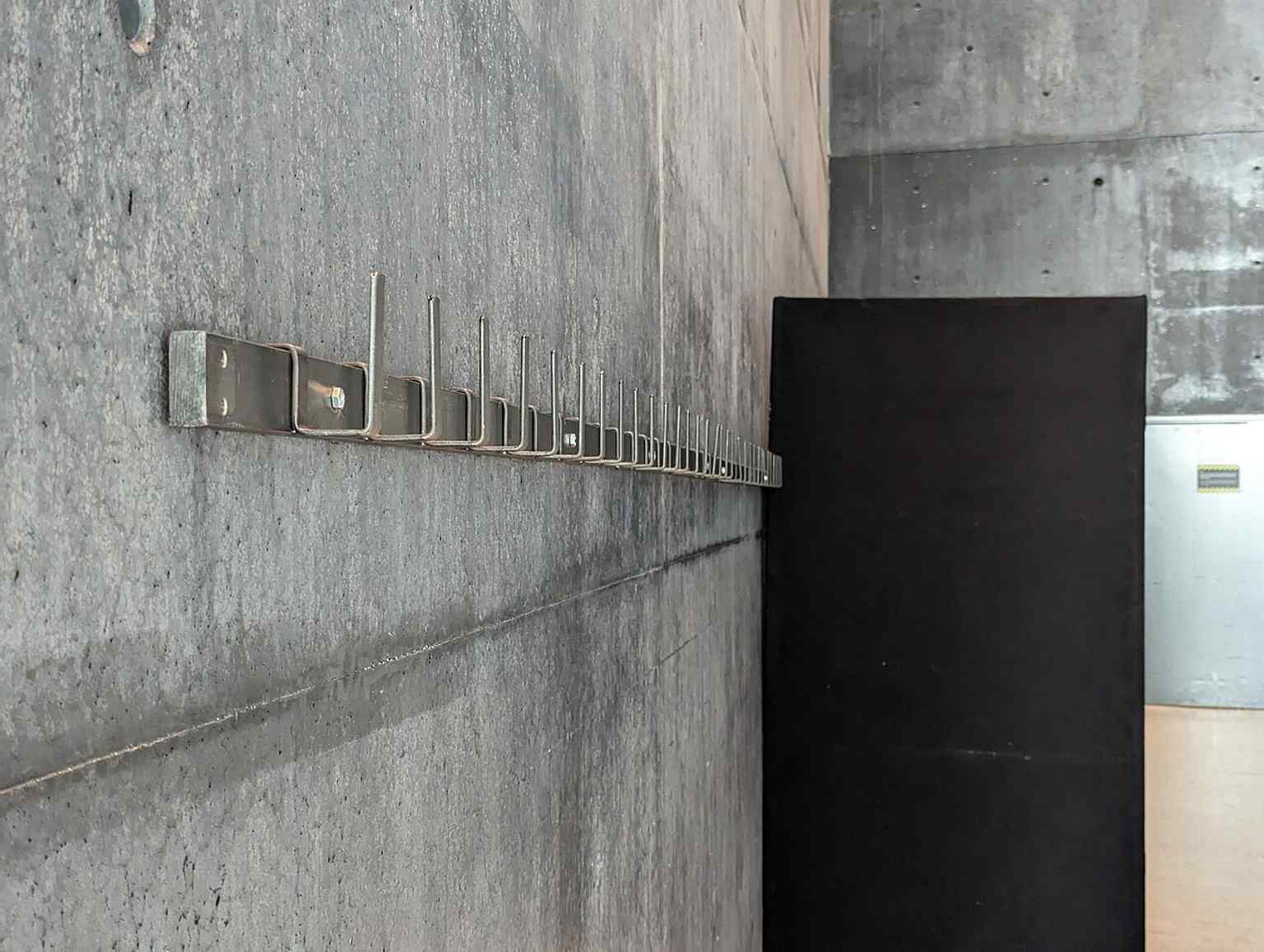
Interior fittings at Harpa, a small detail from the concert hall and conference centre that opened in 2011.Photo: Jonathan Platteau, Wikimedia Commons, CC BY-SA 4.0. Cropped & resized. In front of you stands a compact two-story stone building with a pale yellow rectangular façade, a dark sloping roof, and a formal central entrance set beneath neat rows of…Read moreShow less
Open dedicated page →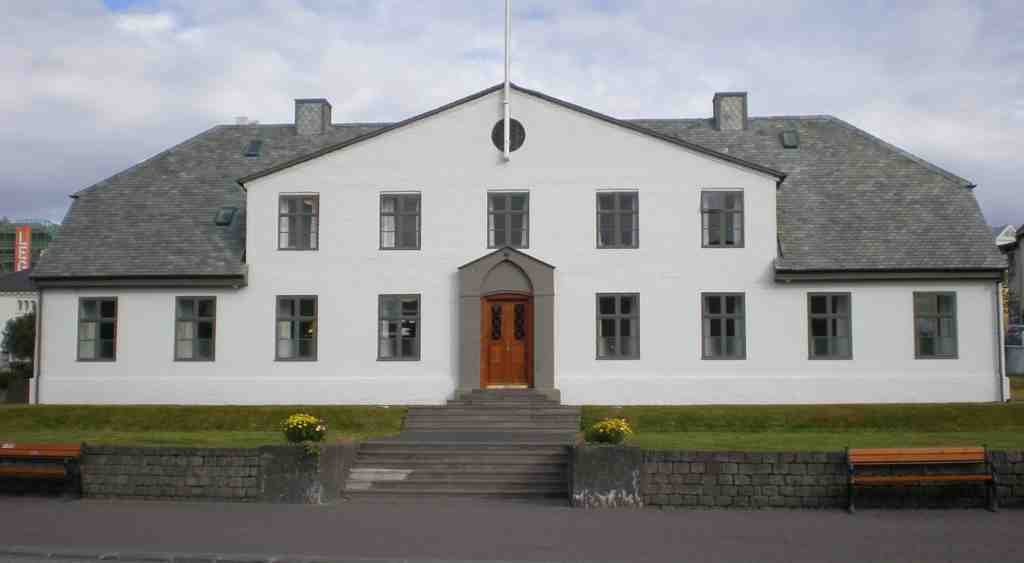
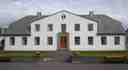
Cabinet of IcelandPhoto: Guðmundur D. Haraldsson, Wikimedia Commons, CC BY-SA 3.0. Cropped & resized. In front of you stands a compact two-story stone building with a pale yellow rectangular façade, a dark sloping roof, and a formal central entrance set beneath neat rows of white-trimmed windows.
This is Stjórnarráðshúsið, Government House, where Iceland’s Cabinet meets... the Prime Minister and ministers together, making the country’s big decisions as a group rather than as a one-person show. It looks dignified now, almost politely self-contained. But this place began with a much harder story.
Between the seventeen sixties and seventeen seventies, Danish authorities ordered Iceland’s first stone building to rise here as a prison. Crime and vagrancy had increased, and local officials actually asked King Frederick the Fifth for permission to execute offenders because it would cost less. The king refused and ordered a penitentiary instead. In a grim twist, the convicts themselves built it. The prison held people here until eighteen thirteen, when the Napoleonic Wars disrupted food supplies so badly that authorities released every prisoner. After that, the building served as the governor’s residence... and eventually the center of government. That is one heck of a career change.
If you glance at the image in the app, you can see how modest the building still feels for such a powerful address. Iceland often does power in a smaller key.
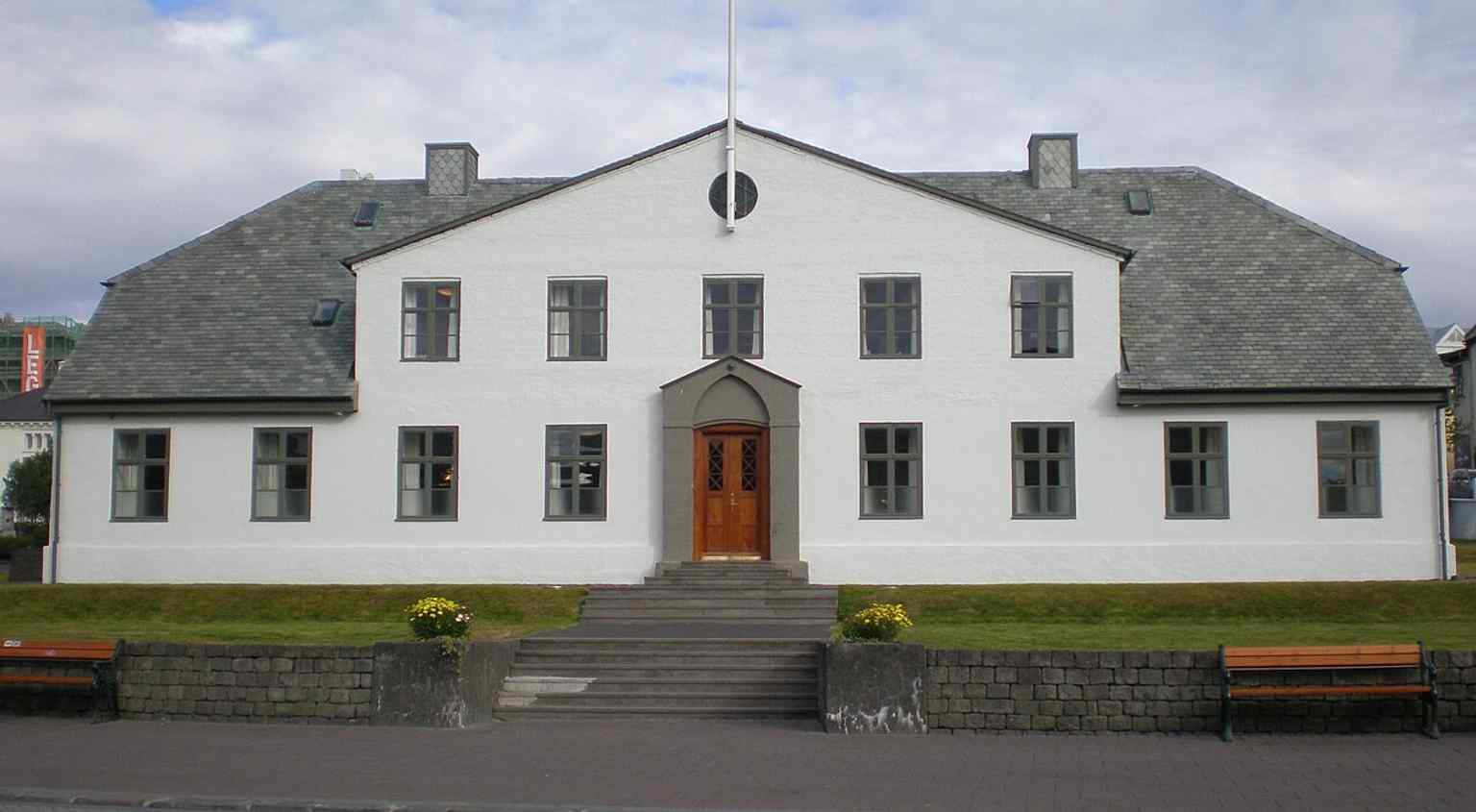
Stjórnarráðshúsið, the Government House in Reykjavík, was once Iceland’s first stone building and originally served as a prison before becoming the Cabinet’s home.Photo: Guðmundur D. Haraldsson, Wikimedia Commons, CC BY-SA 3.0. Cropped & resized. The modern Cabinet really began on the first of February, nineteen oh four, when home rule expanded and Hannes Hafstein became the first Icelander to serve as Minister for Iceland. A constitutional amendment had just required that minister to live in Reykjavík and read and write Icelandic. That mattered, because executive power, the part of government that actually carries out laws, shifted into Icelandic hands. At first there were no ministries as we know them now, just three offices handling justice, schools and church matters... transport, work and post... and finance.
History did not tiptoe past this doorway. In nineteen eleven, the first big Cabinet scandal erupted when Minister Björn Jónsson fired the director of the National Bank, splitting opinion across the young government. Then, on the first of December, nineteen eighteen, this building became a national stage. The Danish flag came down, the Icelandic flag went up on the roof, and sovereignty was declared from these front steps.
And Icelanders still come here when they want to be heard. During the financial crisis, protesters banged pots and pans outside here, and the building learned what public pressure sounds like at street level. In twenty sixteen, after the Panama Papers, crowds returned and hurled eggs and skyr at the walls, helping force another resignation. These days, the Cabinet is led by a coalition nicknamed the Valkyrie Government, because all three party leaders are women.
If you ever hope to go inside on official business, office hours are generally weekdays from eight thirty in the morning until four in the afternoon, and it is closed on weekends.
So here, in one small house, Iceland turned punishment into power and protest into pressure. When you are ready, continue on to the Settlement Exhibition, where Reykjavík’s story drops down another layer into the ground itself.
On your right is a low corner building with pale stone walls, broad glass panels, and the Settlement Exhibition name set plainly on the facade. This modest building protects one…Read moreShow less
Open dedicated page →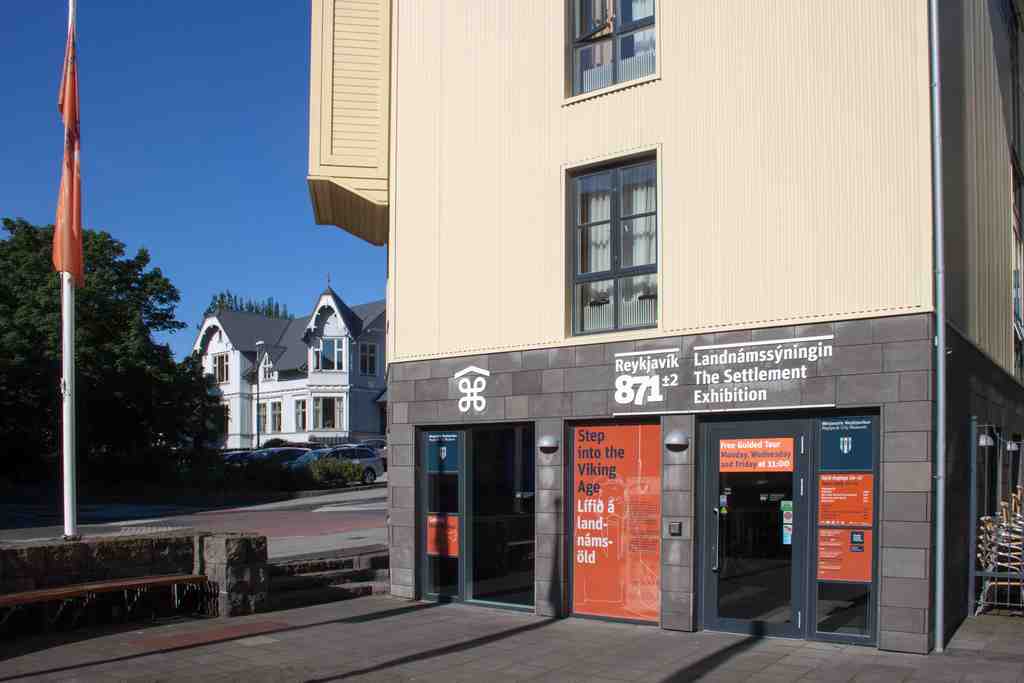
The Settlement ExhibitionPhoto: Szilas, Wikimedia Commons, Public domain. Cropped & resized. On your right is a low corner building with pale stone walls, broad glass panels, and the Settlement Exhibition name set plainly on the facade.
This modest building protects one of Reykjavík’s biggest origin stories... and beneath it sits one of the oldest human-made structures yet found in Iceland. In two thousand and one, archaeologists opened this site before a hotel project could move ahead. They expected traces of early settlement. Instead, they uncovered a Viking Age hall - a longhouse - inhabited from about nine hundred thirty to one thousand, along with fragments of an even older turf wall just to the north.
That older wall gave the museum its unusual name: Reykjavík, eight hundred seventy-one plus or minus two. Here’s the trick. A volcano in the Torfajökull area spread tephra - that means a layer of volcanic ash - across Iceland. Scientists matched that ash with layers in Greenland ice and dated it to about eight hundred seventy-one, with an error margin of two years either way. So if a wall sits underneath that ash, it has to be older. Archaeologists don’t often get a timestamp that tidy.
And that is the heart of this place: not just age, but location. The ruins remain in situ, meaning in their original spot. No one boxed them up and moved them into a nicer room down the street. This is the actual ground where early people lived in Reykjavík. Back at Ingólfur Arnarson’s statue, we were standing with tradition. Here, tradition and evidence finally sit at the same table.
Inside, the longhouse stays exactly where the archaeologists found it. Its outer walls used cut turf blocks called strengur, basically sturdy slices of earth and grass stacked like building bricks, with some stone at the base. The roof was turf too. In the center lay a hearth, or indoor fire pit, and this one ranks among the largest found in Iceland from that period. Most of the floor was trampled earth, but one section at the western end had a timber platform, probably the householders’ sleeping area. Under that wall, archaeologists even found the spine of a horse or cow and other bones... a quiet little mystery tucked into the structure.
If you glance at the interior photo on your screen, you can see the broad hearth and the preserved wall lines for yourself. The city decided to preserve the find, and designers had to turn a basement space into something more memorable than, well, a basement. So they wrapped the hall with a dark-blue oval wall, added a glowing strip to mark the ground level where the ash layer fell, and shaped the floor with sea-washed shingle and gentle rises to echo the old gravel ridge between the lake and the sea. If you’re curious, take a quick peek at the before-and-after comparison in the app to see how the raw excavation became a full museum space.
The exhibition also shows Viking Age objects found around central Reykjavík and on Viðey, and it uses models, touchscreens, and multimedia to explain daily work, trade, and building without making the past feel like homework. That’s a fine ending for Reykjavík, really... the city introduces itself by lifting the floorboards.
If you’d like to go in, the exhibition is open every day from ten in the morning until five in the afternoon.

Frequently asked questions
How do I start the tour?
After purchase, download the AudaTours app and enter your redemption code. The tour will be ready to start immediately - just tap play and follow the GPS-guided route.
Do I need internet during the tour?
No! Download the tour before you start and enjoy it fully offline. Only the chat feature requires internet. We recommend downloading on WiFi to save mobile data.
Is this a guided group tour?
No - this is a self-guided audio tour. You explore independently at your own pace, with audio narration playing through your phone. No tour guide, no group, no schedule.
How long does the tour take?
Most tours take 60–90 minutes to complete, but you control the pace entirely. Pause, skip stops, or take breaks whenever you want.
What if I can't finish the tour today?
No problem! Tours have lifetime access. Pause and resume whenever you like - tomorrow, next week, or next year. Your progress is saved.
What languages are available?
All tours are available in 50+ languages. Select your preferred language when redeeming your code. Note: language cannot be changed after tour generation.
Where do I access the tour after purchase?
Download the free AudaTours app from the App Store or Google Play. Enter your redemption code (sent via email) and the tour will appear in your library, ready to download and start.
If you don't enjoy the tour, we'll refund your purchase. Contact us at help@audatours.com
Checkout securely with