In front of you is a gleaming stainless-steel ship form, all curved ribs and a sharp prow, set on a round base of granite slabs.
This is the Sun Voyager, by Jón Gunnar Árnason... though “ship” only gets you halfway there. Árnason called it a dreamboat, an ode to the sun, and he meant it to carry bigger cargo than people: hope, progress, freedom, and the promise of undiscovered territory. Not bad for a vessel that never leaves the dock.
The story starts in nineteen eighty-six, when a district association in western Reykjavík funded a competition for a new outdoor sculpture to mark the city’s two hundredth anniversary. Árnason won with a small aluminum model, and the city enlarged it into the full-size work you see here. Reykjavík unveiled it on the city’s birthday, the eighteenth of August, nineteen ninety.
Look closely at those flowing lines. They are not neat, mechanical symmetry; they follow Árnason’s own hand-drawn full-scale plan, so the sculpture feels alive, almost as if it is stretching forward. If you check your phone for a moment, the image on your screen shows how this “dreamboat” claims its place beside the water and open sky.
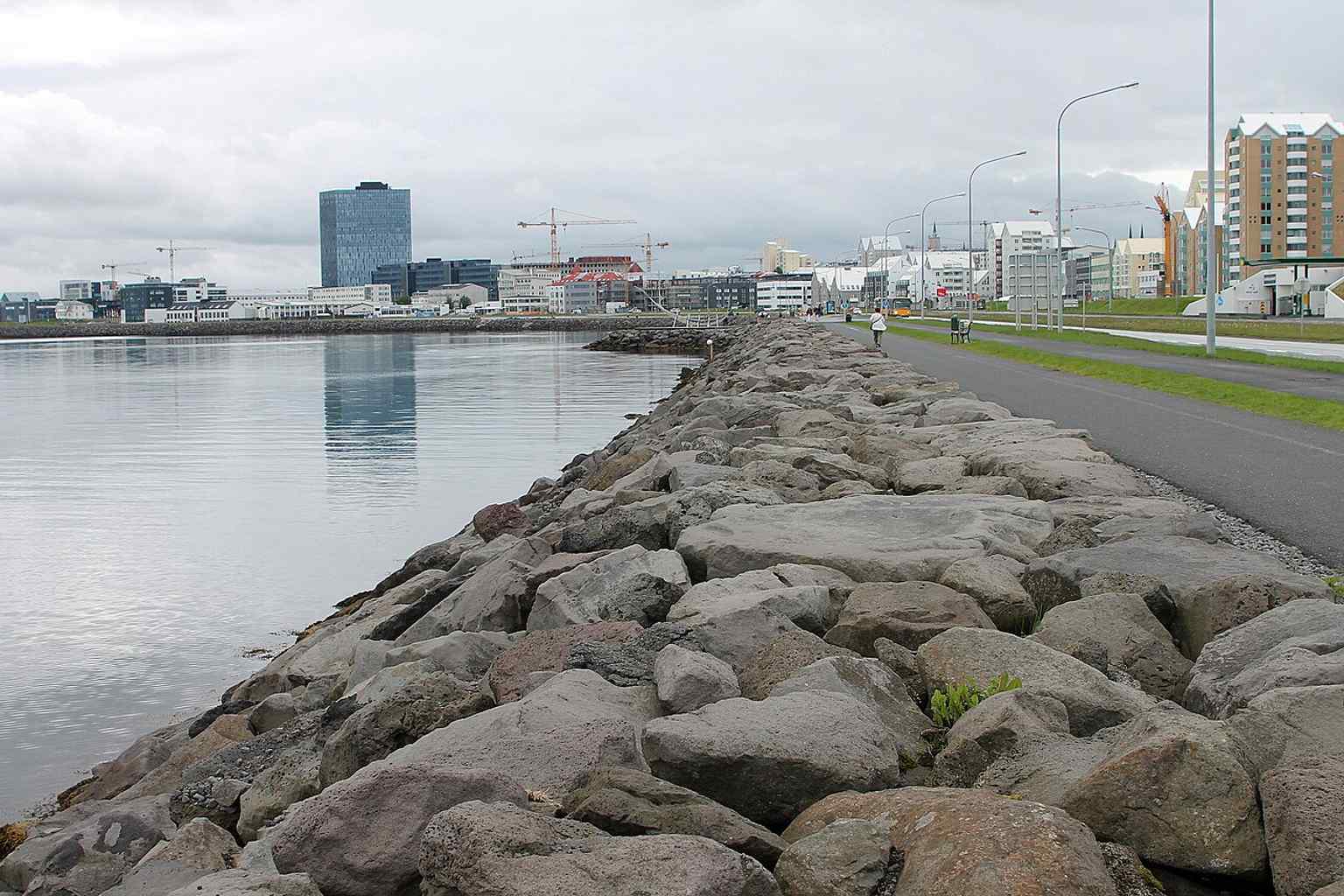
Its location caused a little debate. Some people complained that the sculpture should face west, toward the setting sun, to match the idea behind it. Árnason had considered other sites too, including Landakot hill and the central harbor. In the end, with his blessing, it came here to this small headland on Sæbraut, which he jokingly called Jónsnes, or “Jón’s Peninsula,” even though the prow points north. He decided that detail mattered less than the feeling.
This stop is open all day, every day, which suits a sculpture about open horizons. Let the Sun Voyager be what Árnason wanted: a starting point for your own imagination. When you’re ready, carry that thought with you and continue to the next stop.