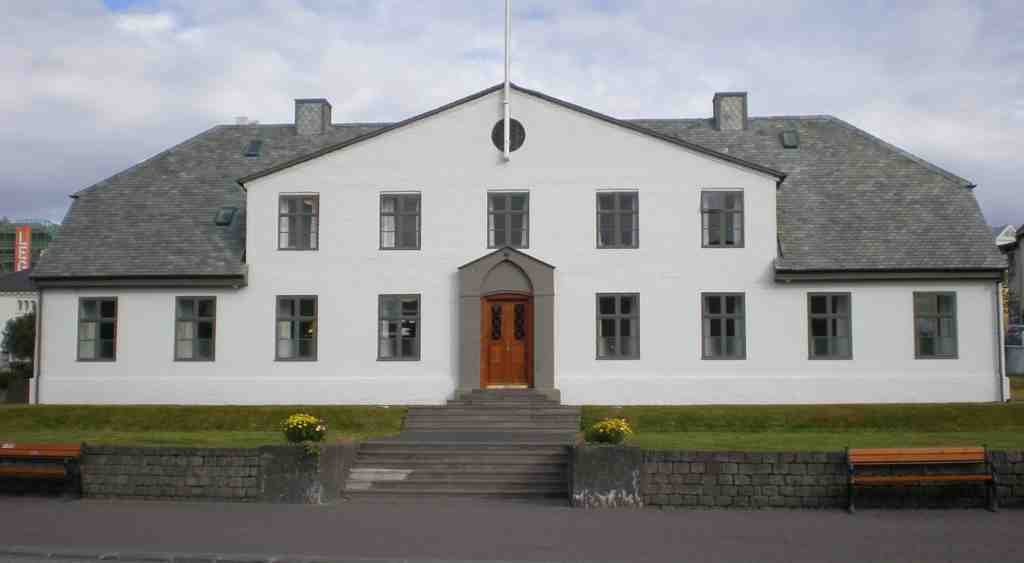
In front of you stands a compact two-story stone building with a pale yellow rectangular façade, a dark sloping roof, and a formal central entrance set beneath neat rows of white-trimmed windows.
This is Stjórnarráðshúsið, Government House, where Iceland’s Cabinet meets... the Prime Minister and ministers together, making the country’s big decisions as a group rather than as a one-person show. It looks dignified now, almost politely self-contained. But this place began with a much harder story.
Between the seventeen sixties and seventeen seventies, Danish authorities ordered Iceland’s first stone building to rise here as a prison. Crime and vagrancy had increased, and local officials actually asked King Frederick the Fifth for permission to execute offenders because it would cost less. The king refused and ordered a penitentiary instead. In a grim twist, the convicts themselves built it. The prison held people here until eighteen thirteen, when the Napoleonic Wars disrupted food supplies so badly that authorities released every prisoner. After that, the building served as the governor’s residence... and eventually the center of government. That is one heck of a career change.
If you glance at the image in the app, you can see how modest the building still feels for such a powerful address. Iceland often does power in a smaller key.
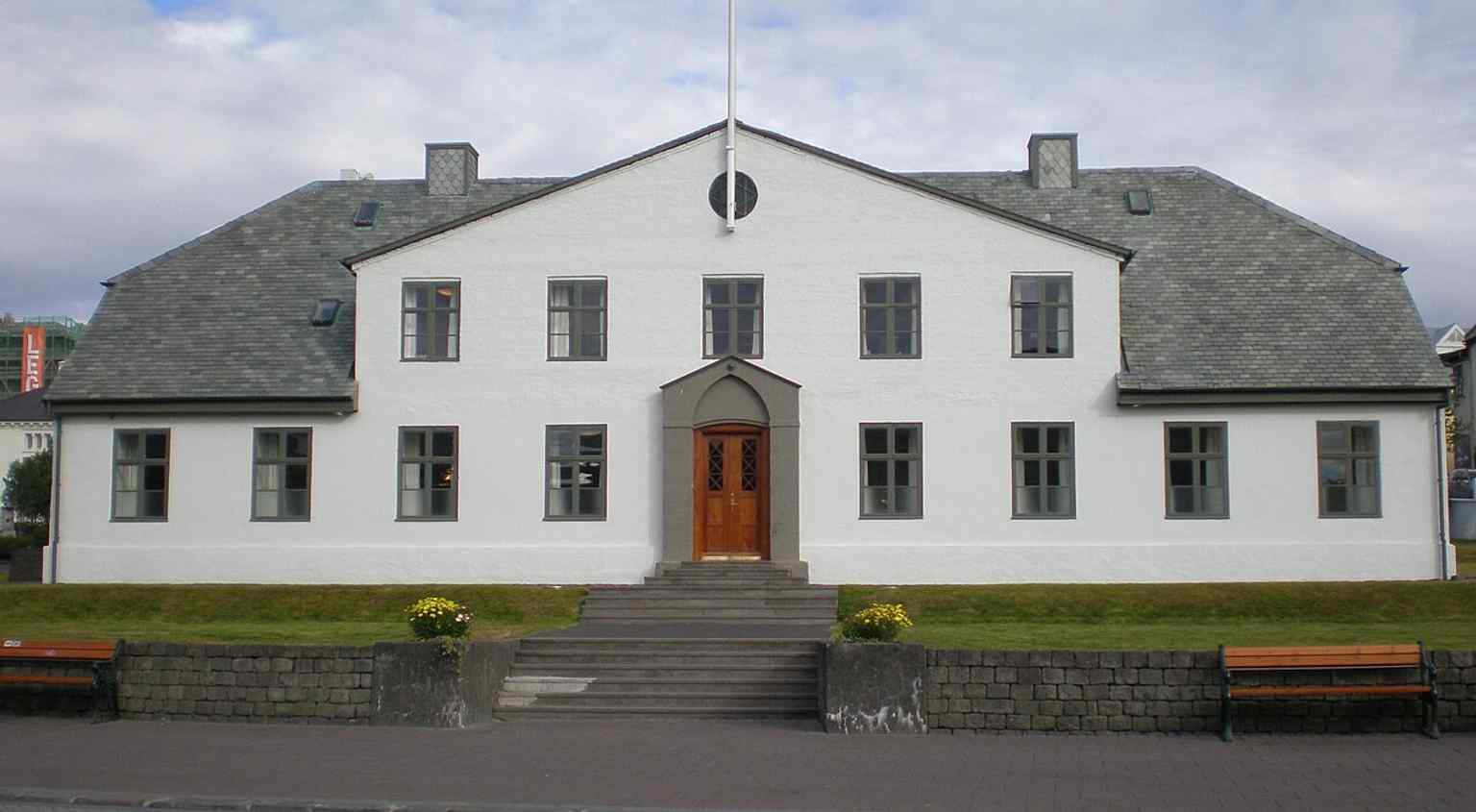
The modern Cabinet really began on the first of February, nineteen oh four, when home rule expanded and Hannes Hafstein became the first Icelander to serve as Minister for Iceland. A constitutional amendment had just required that minister to live in Reykjavík and read and write Icelandic. That mattered, because executive power, the part of government that actually carries out laws, shifted into Icelandic hands. At first there were no ministries as we know them now, just three offices handling justice, schools and church matters... transport, work and post... and finance.
History did not tiptoe past this doorway. In nineteen eleven, the first big Cabinet scandal erupted when Minister Björn Jónsson fired the director of the National Bank, splitting opinion across the young government. Then, on the first of December, nineteen eighteen, this building became a national stage. The Danish flag came down, the Icelandic flag went up on the roof, and sovereignty was declared from these front steps.
And Icelanders still come here when they want to be heard. During the financial crisis, protesters banged pots and pans outside here, and the building learned what public pressure sounds like at street level. In twenty sixteen, after the Panama Papers, crowds returned and hurled eggs and skyr at the walls, helping force another resignation. These days, the Cabinet is led by a coalition nicknamed the Valkyrie Government, because all three party leaders are women.
If you ever hope to go inside on official business, office hours are generally weekdays from eight thirty in the morning until four in the afternoon, and it is closed on weekends.
So here, in one small house, Iceland turned punishment into power and protest into pressure. When you are ready, continue on to the Settlement Exhibition, where Reykjavík’s story drops down another layer into the ground itself.