
50+ languages

 Beirut · Lebanon
 Beirut Audio Tours
Discover Beirut with self-guided audio walking tours
headphones
2 tours
pin_drop
20 landmarks
translate
Beirut tours
Pick a Beirut worth walking.
Self-guided audio tours written by people who actually live there.
2 tours

Beirut Highlights Audio Tour: Historic Landmarks
Beirut stands as a city built on the bones of empires, where bullet holes in limestone tell louder stories than any textbook. Beneath the polished marble of modern facades lie the secrets of a capital that has died and been reborn seven times over. This self-guided audio tour navigates the fractures of history, leading you through silent ruins and vibrant sanctuaries that most visitors walk past in ignorance. Why did the Roman baths survive while entire neighborhoods were erased by political upheaval? What unfinished business haunts the shadow of the minarets? Is it true that a hidden tunnel connects the cathedral to a forgotten vault of gold? Move through streets that pulse with the rhythm of rebellion and resilience. You will peel back the layers of time, shifting your perspective from a casual observer to a witness of profound transformation. Your journey through the resilient heart of Beirut starts here.
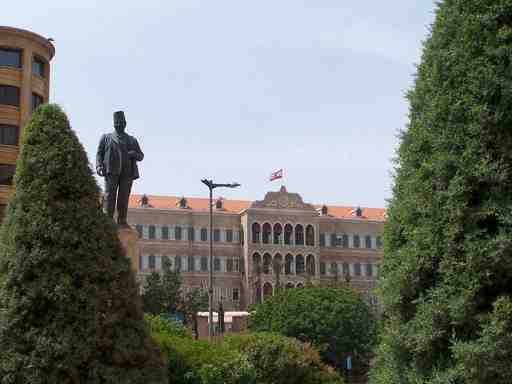
Beirut Audio Tour: Voices of Faith and Power through Time
In Beirut, every stone whispers secrets—some echo with revolution, others with prayers lost to time. Down these streets, centuries-old power struggles and whispered betrayals still linger in the air. This self-guided audio tour invites discovery far beyond the postcard views. Follow hidden alleyways and enter the stories pulsing beneath Parliament’s grandeur, synagogue silence, and the sparkle of Beirut Souks. Hear what most visitors miss. Why did a dramatic vote here send shockwaves across the Middle East overnight? What vanished relic is rumored to hide beneath the Maghen Abraham Synagogue’s restored walls? And why did a single merchant’s folly nearly change the fate of Beirut Souks forever? Move through a city that never truly sleeps. Each step promises another revelation—the weight of history, the shimmer of defiance, the thrill of unfolding secrets. Beirut’s most dramatic transformations wait just ahead. Listen now and unlock the true heartbeat behind Beirut’s hidden doors.
Top landmarks
The Beirut everyone knows.
The landmarks in every guidebook — and the tours that tell you what guidebooks don't.
A few words on Beirut
Rebuilt so many times it forgot how to stop.
Beirut has been destroyed and rebuilt at least seven times over its three-thousand-year history as a Phoenician port, a Roman city, and a medieval trading hub. The 15-year civil war that ended in 1990 was only the most recent destruction, and the city that rebuilt from it had the restaurants, the nightlife, and the creative energy that earned it the title Paris of the Middle East before the war, only amplified. Then the port explosion of August 4, 2020, one of the largest non-nuclear explosions in history, devastated the Gemmayzeh and Mar Mikhael neighborhoods that had become the center of the city's post-war cultural renaissance.
Walking Beirut now means walking several cities at once.
The rebuilt downtown Solidere district is polished limestone and restored Ottoman architecture, beautiful and slightly unreal. Gemmayzeh and Mar Mikhael, still partially in ruins two years after the explosion, have galleries and bars operating out of damaged buildings as residents refuse to leave. Hamra in West Beirut has the intellectual cafes and bookshops that survived everything. Gemmayze's Rue Gouraud, a single street of 19th-century stone houses, is one of the most architecturally rich streets in the Arab world. Lebanese food is among the best in the world, a fact that Beirutis mention as a point of pride but rarely need to argue.
Beirut
Beirut FAQ
Before you walk.
April, May, October, and November offer the most pleasant walking conditions with temperatures of 18-25C and low rain. Summer is hot at 30-35C but with low humidity and a Mediterranean sea breeze, and many events happen in July and August. January and February bring cold rain and occasional snow visible on Mount Sannine above the city.
Taxis and ride-hailing apps including Uber operate in Beirut and are cheap by Western standards. The walking distances between main areas like Hamra, Gemmayzeh, and the downtown Solidere district are significant, so taxis are useful for transit. Service taxis, shared taxis that follow fixed routes, are very cheap and used by locals.
Kibbeh nayyeh, a raw minced lamb dish spiced with cinnamon and onion, is one of the world's great raw meat preparations and is not for the nervous. Hummus and baba ghanouj here are in a different category from the supermarket versions most visitors know. Fattoush salad with sumac and fried bread is the right accompaniment. A meze spread at any sit-down restaurant will cover more dishes than a table of four can finish.
The port itself remains a restricted industrial zone, but the damage to the surrounding neighborhoods of Gemmayzeh and Mar Mikhael is visible while walking Rue Gouraud and the streets around it. Many buildings are still partially destroyed. The impact on the surrounding residential areas is visible and walking it is a sobering and important part of understanding contemporary Beirut.
Every Beirut tour, in your language.
All 50+ languages, included with every booking.
🇬🇧 English🇫🇷 Français🇪🇸 Español🇩🇪 Deutsch🇮🇹 Italiano🇯🇵 日本語🇨🇳 中文🇰🇷 한국어+ 41 more
star AudaTours Unlimited
Visiting more than one city? Subscribe.
Unlock every Beirut tour — plus thousands more worldwide. Cancel any time.
$4.99/week · Cancel anytime

More in Lebanon
Explore Lebanon arrow_forwardOther cities to walk in Lebanon.

Loved by travellersThousands of tours started.
Thousands of tours started.
Plenty of opinions.
4.8 across the App Store and Google Play. Here's a few we keep coming back to.
starstarstarstarstar
This tour was such a great way to see the city. The stories were interesting without feeling too scripted, and I loved being able to explore at my own pace.

Jess
Tbilisi Tourstarstarstarstarstar
This was a solid way to get to know Brighton without feeling like a tourist. The narration had depth and context, but didn't overdo it.

Christoph
Brighton Tourstarstarstarstarstar
Started this tour with a croissant in one hand and zero expectations. The app just vibes with you, no pressure, just you, your headphones, and some cool stories.

John
Marseille Tourdownload Get the app Pop your headphones in.


Pop your headphones in.
Step outside.
Free to download. Tours in every city. Start in 60 seconds — no account, no card.

headphones
~ 4 min until your first tour starts
public
1,000+ cities worldwide
all_inclusive
AudaTours
Unlimited
Every tour. Every city. One subscription.
3097 tours2273 cities138 countries50+ languages
$39 /year
all_inclusive Explore Unlimited