
50+ languages

 Arequipa · Peru
 Arequipa Audio Tours
Discover Arequipa with self-guided audio walking tours
headphones
1 tours
pin_drop
20 landmarks
translate
Arequipa tours
Pick a Arequipa worth walking.
Self-guided audio tours written by people who actually live there.
1 tours
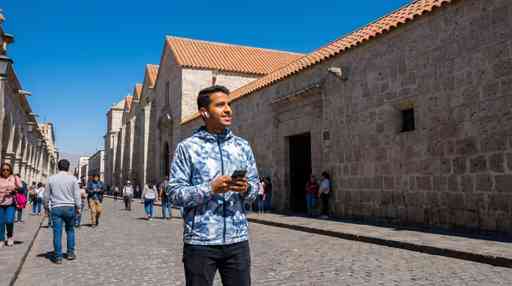
Top landmarks
The Arequipa everyone knows.
The landmarks in every guidebook — and the tours that tell you what guidebooks don't.
A few words on Arequipa
A white volcanic city under three volcanoes.
Arequipa earns the name Ciudad Blanca not for any purity of character but for sillar, the white volcanic stone quarried from the three volcanoes that frame the city: El Misti, Chachani, and Pichu Pichu. Nearly everything in the historic centre was built from it, giving the streets a luminous quality in the afternoon light that photographers return to repeatedly. The Plaza de Armas here is one of the finest in South America, with a cathedral that stretches the full width of one side, carved from the same white stone as everything else and looking, from the right angle, like something from a fever dream of colonial architecture.
Arequipa sits at 2,335 metres in a highland valley, high enough to require a day of acclimatization for visitors arriving from sea level but not as brutal as Cusco or La Paz.
The city has a fierce regional identity, a streak of independence that has produced more than its share of Peruvian presidents and intellectuals, and a cuisine built around rocoto peppers and dried potato techniques that developed in the Andean highlands over centuries. The Santa Catalina Monastery, a walled city within the city covering two entire city blocks, is the single most extraordinary building in the country.
Arequipa
Arequipa FAQ
Before you walk.
Arequipa is at 2,335 metres, which is significant but not as extreme as Cusco at 3,400 metres. Many visitors feel mild symptoms including slight headaches and reduced stamina for the first day or two. Take it easy on arrival, drink plenty of water, avoid alcohol the first evening, and consider a day of rest before doing a long walking tour.
The historic centre is compact and walkable from most hotels in central Arequipa. Taxis are inexpensive and the central area is easily navigated on foot. The Plaza de Armas is the logical starting point for any tour of the historic centre.
Rocoto relleno, a stuffed spicy pepper filled with ground meat and cheese, is the city's signature dish. Adobo arequipeno, a pork stew marinated in chicha beer and spices, is traditionally eaten for breakfast on weekends. Chupe de camarones, a shrimp chowder made with river prawns from the Colca Valley, is one of the great Peruvian soups. The picanterias, traditional restaurants serving these dishes, are scattered throughout the city.
Absolutely. Santa Catalina is a walled convent covering two city blocks that was closed to the public until 1970, and which functioned as essentially a separate town for cloistered nuns for four centuries. The ochre, blue, and white painted streets inside are genuinely surreal, and the complex is large enough to spend two to three hours exploring. Entry costs around 45 soles.
Every Arequipa tour, in your language.
All 50+ languages, included with every booking.
🇬🇧 English🇫🇷 Français🇪🇸 Español🇩🇪 Deutsch🇮🇹 Italiano🇯🇵 日本語🇨🇳 中文🇰🇷 한국어+ 41 more
star AudaTours Unlimited
Visiting more than one city? Subscribe.
Unlock every Arequipa tour — plus thousands more worldwide. Cancel any time.
$4.99/week · Cancel anytime

More in Peru
Explore Peru arrow_forwardOther cities to walk in Peru.
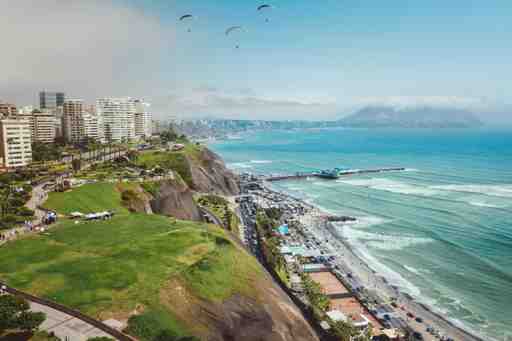

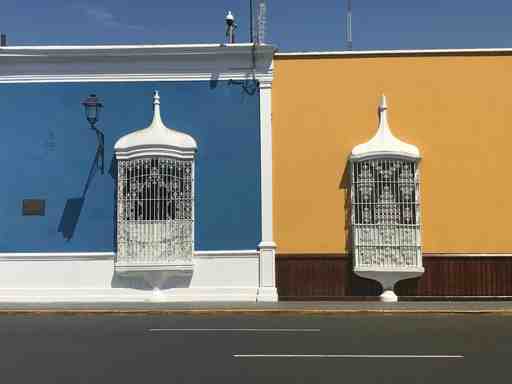


Loved by travellersThousands of tours started.
Thousands of tours started.
Plenty of opinions.
4.8 across the App Store and Google Play. Here's a few we keep coming back to.
starstarstarstarstar
This tour was such a great way to see the city. The stories were interesting without feeling too scripted, and I loved being able to explore at my own pace.

Jess
Tbilisi Tourstarstarstarstarstar
This was a solid way to get to know Brighton without feeling like a tourist. The narration had depth and context, but didn't overdo it.

Christoph
Brighton Tourstarstarstarstarstar
Started this tour with a croissant in one hand and zero expectations. The app just vibes with you, no pressure, just you, your headphones, and some cool stories.

John
Marseille Tourdownload Get the app Pop your headphones in.


Pop your headphones in.
Step outside.
Free to download. Tours in every city. Start in 60 seconds — no account, no card.

headphones
~ 4 min until your first tour starts
public
1,000+ cities worldwide
all_inclusive
AudaTours
Unlimited
Every tour. Every city. One subscription.
3097 tours2273 cities138 countries50+ languages
$39 /year
all_inclusive Explore Unlimited