
50+ languages

 Trujillo · Peru
 Trujillo Audio Tours
Discover Trujillo with self-guided audio walking tours
headphones
1 tours
pin_drop
19 landmarks
translate
Trujillo tours
Pick a Trujillo worth walking.
Self-guided audio tours written by people who actually live there.
1 tours
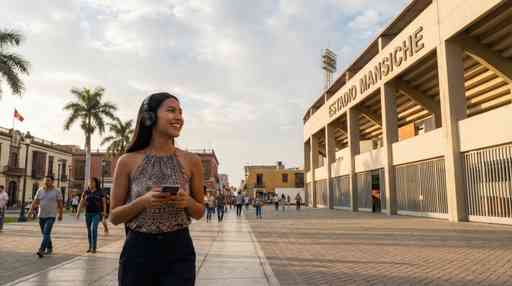
Top landmarks
The Trujillo everyone knows.
The landmarks in every guidebook — and the tours that tell you what guidebooks don't.
A few words on Trujillo
City of eternal spring, ancient empires, and the marinera.
Trujillo was the first city in Peru to declare independence from Spain, doing so on December 29, 1820 -- seven years before Lima finally followed. That assertiveness feels appropriate for a city that sits in the Moche Valley surrounded by some of the most significant archaeological sites in the Americas. Chan Chan, the largest pre-Columbian city ever built in adobe, sprawls just west of town: at its peak in the 15th century it housed over 50,000 people across ten royal citadels, and the Chimu kings who ruled from it controlled a coastal empire stretching 1,000 kilometers.
The city's historic center, ringed by remnants of its original Spanish walls, preserves 72 colonial and republican-era blocks in shades of yellow, blue, and rose.
The Plaza de Armas holds the cathedral begun in 1647, and the mansions on Jiron Independencia display the iron window grilles that became Trujillo's signature architectural detail -- elaborate wrought-iron screens that filtered the desert light and kept interiors cool. Simon Bolivar governed Peru temporarily from a house on this square in 1824.
Trujillo
Trujillo FAQ
Before you walk.
Trujillo has its own international airport (TRU) with direct flights from Lima taking about 1 hour. By bus from Lima it is approximately 8-9 hours -- Trujillo is around 560 kilometers north. Several comfortable overnight bus services operate on this route. From the city center, Chan Chan is about 5 kilometers west and the Temples of the Sun and Moon are about 8 kilometers south, best reached by taxi or organized tour.
The Spanish colonial center is compact and very walkable -- the main plaza, cathedral, Casa Urquiaga, and the city's colonial mansions are all within a few blocks of each other. The streets are fairly flat and the grid layout is easy to navigate. Taxis are inexpensive and necessary for reaching Chan Chan and the Moche archaeological sites outside the center.
Mobile coverage in Trujillo's city center is reliable with Peruvian networks (Claro, Movistar). Purchasing a local SIM at the airport or a shop near the Plaza de Armas is the most economical option for multi-day stays. Download your tour before heading to the archaeological sites, as coverage is thin outside the city.
Trujillo has one of Peru's most distinctive regional food cultures. Ceviche here uses rocoto chile for heat and local white bass from the Pacific. Cabrito a la norteña -- goat stewed in chicha de jora (fermented corn beer) with coriander -- is the signature dish. Shambar is a thick bean-and-pork soup eaten on Mondays throughout the city. The mercado central has excellent cevicherias and lunch spots where locals eat from mid-morning.
Every Trujillo tour, in your language.
All 50+ languages, included with every booking.
🇬🇧 English🇫🇷 Français🇪🇸 Español🇩🇪 Deutsch🇮🇹 Italiano🇯🇵 日本語🇨🇳 中文🇰🇷 한국어+ 41 more
star AudaTours Unlimited
Visiting more than one city? Subscribe.
Unlock every Trujillo tour — plus thousands more worldwide. Cancel any time.
$4.99/week · Cancel anytime

More in Peru
Explore Peru arrow_forwardOther cities to walk in Peru.





Loved by travellersThousands of tours started.
Thousands of tours started.
Plenty of opinions.
4.8 across the App Store and Google Play. Here's a few we keep coming back to.
starstarstarstarstar
This tour was such a great way to see the city. The stories were interesting without feeling too scripted, and I loved being able to explore at my own pace.

Jess
Tbilisi Tourstarstarstarstarstar
This was a solid way to get to know Brighton without feeling like a tourist. The narration had depth and context, but didn't overdo it.

Christoph
Brighton Tourstarstarstarstarstar
Started this tour with a croissant in one hand and zero expectations. The app just vibes with you, no pressure, just you, your headphones, and some cool stories.

John
Marseille Tourdownload Get the app Pop your headphones in.


Pop your headphones in.
Step outside.
Free to download. Tours in every city. Start in 60 seconds — no account, no card.
headphones
~ 4 min until your first tour starts
public
1,000+ cities worldwide
all_inclusive
AudaTours
Unlimited
Every tour. Every city. One subscription.
3097 tours2273 cities138 countries50+ languages
$39 /year
all_inclusive Explore Unlimited