
50+ languages

 Torun · Poland
 Torun Audio Tours
Discover Torun with self-guided audio walking tours
headphones
2 tours
pin_drop
20 landmarks
translate
Torun tours
Pick a Torun worth walking.
Self-guided audio tours written by people who actually live there.
2 tours
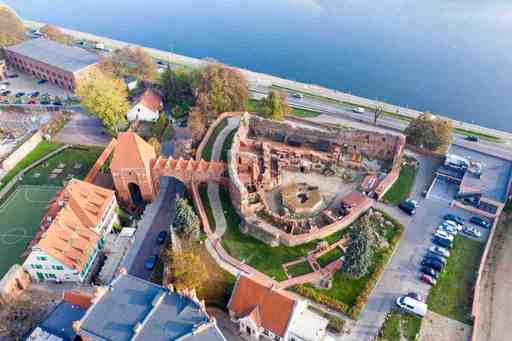
Toruń Highlights Audio Tour: Medieval Heritage and Gothic Wonders
Beneath the crimson bricks of Toruń, secrets pulse through cobblestones that have survived centuries of sieges and celestial wonders. This city is not merely a collection of medieval landmarks but a stage for political betrayals and quiet revolutions that remain hidden in plain sight. Embark on this self-guided audio tour to navigate the shadows beyond the tourist map. You will uncover the forgotten layers of the Church of the Assumption, the echoing halls of Artus Manor, and the cosmic curiosity of the Planetarium. Why did a local uprising nearly erase the city from the map? What strange ritual was performed behind closed doors at the Manor? Does the original blueprint of the church contain a hidden star chart? Traverse through time as the past converges with the present. Each stop reveals a pulse of drama that transforms how you perceive these streets. Start your journey here and reclaim the history waiting to be unmasked.
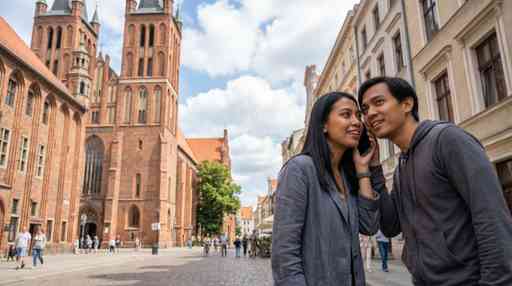
Toruń Audio Tour: Gingerbread Legends & Medieval Echoes
A medieval comet blazed over Toruń just as Nicolaus Copernicus was born—hinting that the city’s history would always reach for the stars. Beneath these red-brick spires and cobblestone alleys, secret alliances, forbidden loves, and sudden uprisings have all shaped the heart of Old Town. Explore at your own pace with this self-guided audio tour and unlock stories buried in shadows that many visitors hurry right past. Hidden meanings, quiet revolutions, and astonishing oddities await at every turn. Why did the Cathedral’s bells ring all night during a single stormy evening? Whose daring stand in Market Square changed city law forever? What unforgettable smell haunted the Old Town Complex for centuries? Stride from gilded cathedrals to echoing courtyards. Trace the footsteps of rebels, astronomers, and tradesmen as Toruń’s secrets burst into the light. See the city as it truly is—vibrant, storied, alive. Begin now and let Toruń reveal its celestial secrets to you.
Top landmarks
The Torun everyone knows.
The landmarks in every guidebook — and the tours that tell you what guidebooks don't.
A few words on Torun
Copernicus was born here. The gingerbread is still excellent.
Torun produced Nicolaus Copernicus in 1473, the astronomer who proposed that the Earth orbits the sun and permanently repositioned humanity within the cosmos. The house where he was born still stands on Kopernika Street in the Gothic old town, now a museum, and the city has never been shy about claiming the association. The old town itself is a UNESCO World Heritage Site, one of the best-preserved Gothic urban ensembles in Central Europe, with the Ratusz (town hall) complex dating to the 14th century serving as the regional museum and the centerpiece of the Rynek Staromiejski (Old Town Market Square).
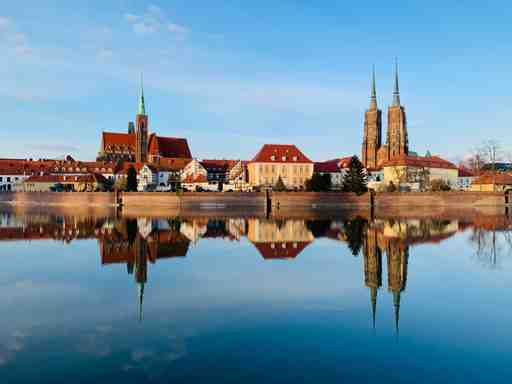
Torun lies on the Vistula River at the point where it widens before its final run to the Baltic, and the river view from the old city walls is one of the more understated pleasures in Poland.
The city has been a gingerbread-making center since medieval times -- Piernik Torunski are spiced gingerbread figures still sold from dedicated shops and the Gingerbread Museum on Rabianska Street where visitors can make their own. The leaning tower on the old city walls (Krzywa Wieza) leans more than Pisa's, technically speaking, though it is considerably shorter and considerably less famous.
Torun
Torun FAQ
Before you walk.
Torun pierniki are traditional gingerbread figures made with honey, spices, and a recipe tradition going back to the 14th century. They are sold in specialized shops throughout the old town, with the Sklep Kopernik (Kopernik brand) on the market square and along Szeroka Street being the most prominent. The Gingerbread Museum on Rabianska Street offers baking workshops where visitors can make and decorate their own.
From Warsaw Centralna, InterCity and regional trains reach Torun in about 2.5-3 hours, with several departures daily. From Gdansk, the journey is about 2.5 hours by train via Bydgoszcz. By car, Torun is about 200 kilometers northwest of Warsaw on the A1 motorway.
Yes. Torun's old town is one of the most walkable and tourist-friendly in Poland, compact enough to cover in a half-day on foot. The main walking circuit connects the Rynek Staromiejski, the Cathedral of Saints John the Baptist and John the Evangelist, the ruins of the Teutonic Castle, and the riverside promenade along the Vistula. The area is well-lit and active in the evenings.
The ruins of the Teutonic Knights' castle on the southern edge of the old town date to the 13th century. The Teutonic Order controlled Torun for about 150 years before the city revolted and signed the Second Peace of Torun in 1466, which transferred much of Prussia to Poland. The citizens destroyed much of the castle in retaliation, and the surviving ruins make an atmospheric walk.
Every Torun tour, in your language.
All 50+ languages, included with every booking.
🇬🇧 English🇫🇷 Français🇪🇸 Español🇩🇪 Deutsch🇮🇹 Italiano🇯🇵 日本語🇨🇳 中文🇰🇷 한국어+ 41 more
star AudaTours Unlimited
Visiting more than one city? Subscribe.
Unlock every Torun tour — plus thousands more worldwide. Cancel any time.
$4.99/week · Cancel anytime

More in Poland
Explore Poland arrow_forwardOther cities to walk in Poland.

Loved by travellersThousands of tours started.
Thousands of tours started.
Plenty of opinions.
4.8 across the App Store and Google Play. Here's a few we keep coming back to.
starstarstarstarstar
This tour was such a great way to see the city. The stories were interesting without feeling too scripted, and I loved being able to explore at my own pace.

Jess
Tbilisi Tourstarstarstarstarstar
This was a solid way to get to know Brighton without feeling like a tourist. The narration had depth and context, but didn't overdo it.

Christoph
Brighton Tourstarstarstarstarstar
Started this tour with a croissant in one hand and zero expectations. The app just vibes with you, no pressure, just you, your headphones, and some cool stories.

John
Marseille Tourdownload Get the app Pop your headphones in.


Pop your headphones in.
Step outside.
Free to download. Tours in every city. Start in 60 seconds — no account, no card.

headphones
~ 4 min until your first tour starts
public
1,000+ cities worldwide
all_inclusive
AudaTours
Unlimited
Every tour. Every city. One subscription.
3097 tours2273 cities138 countries50+ languages
$39 /year
all_inclusive Explore Unlimited