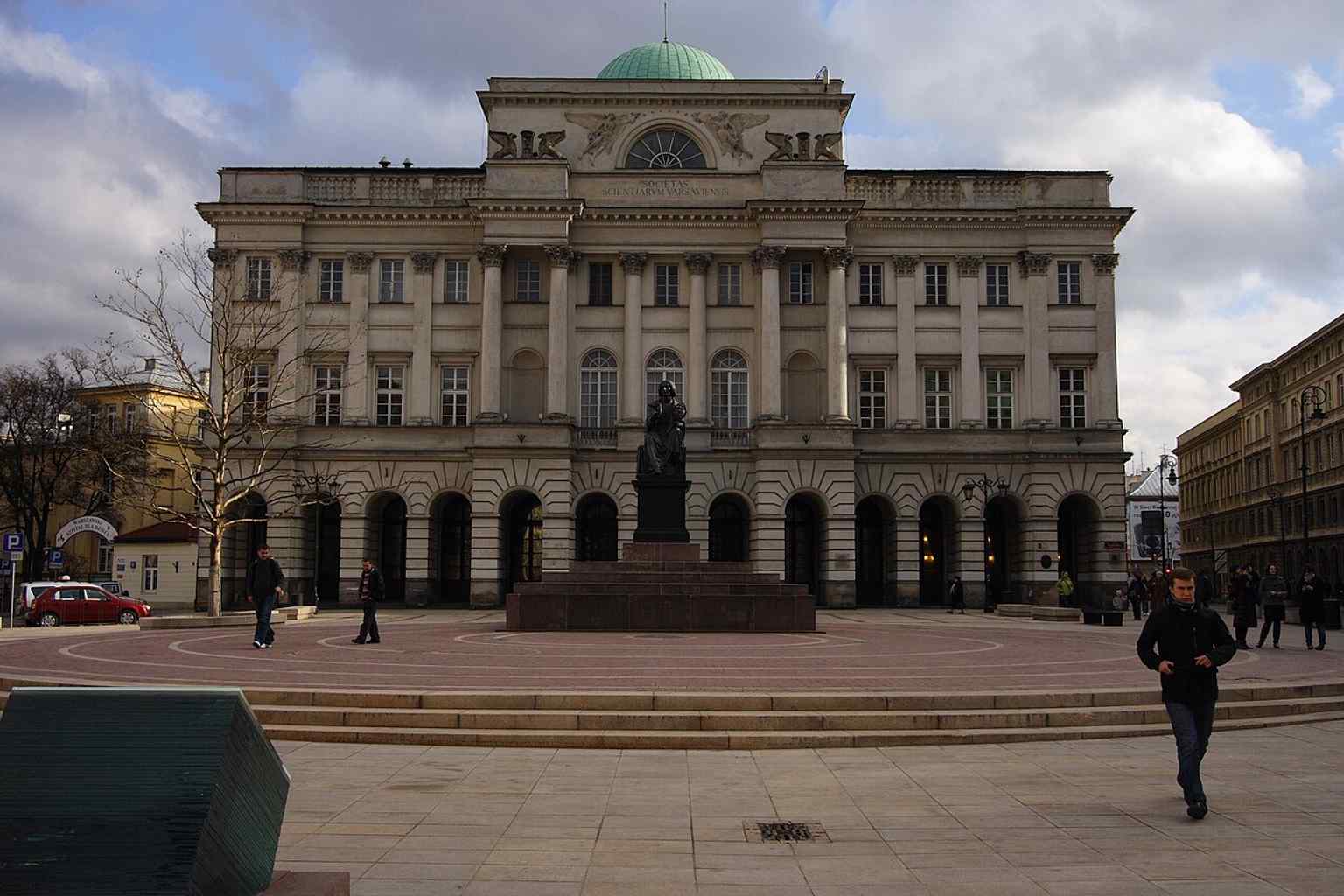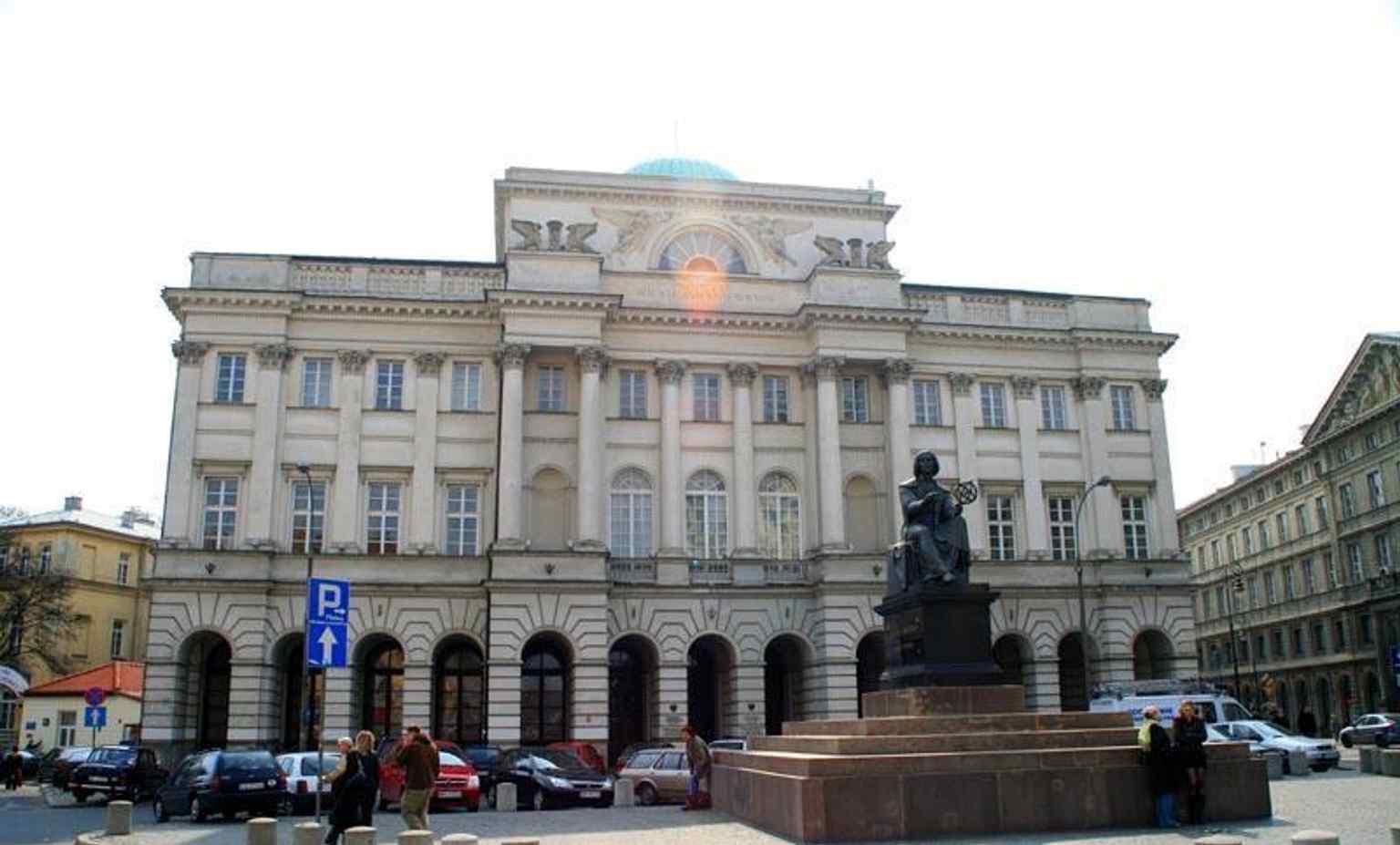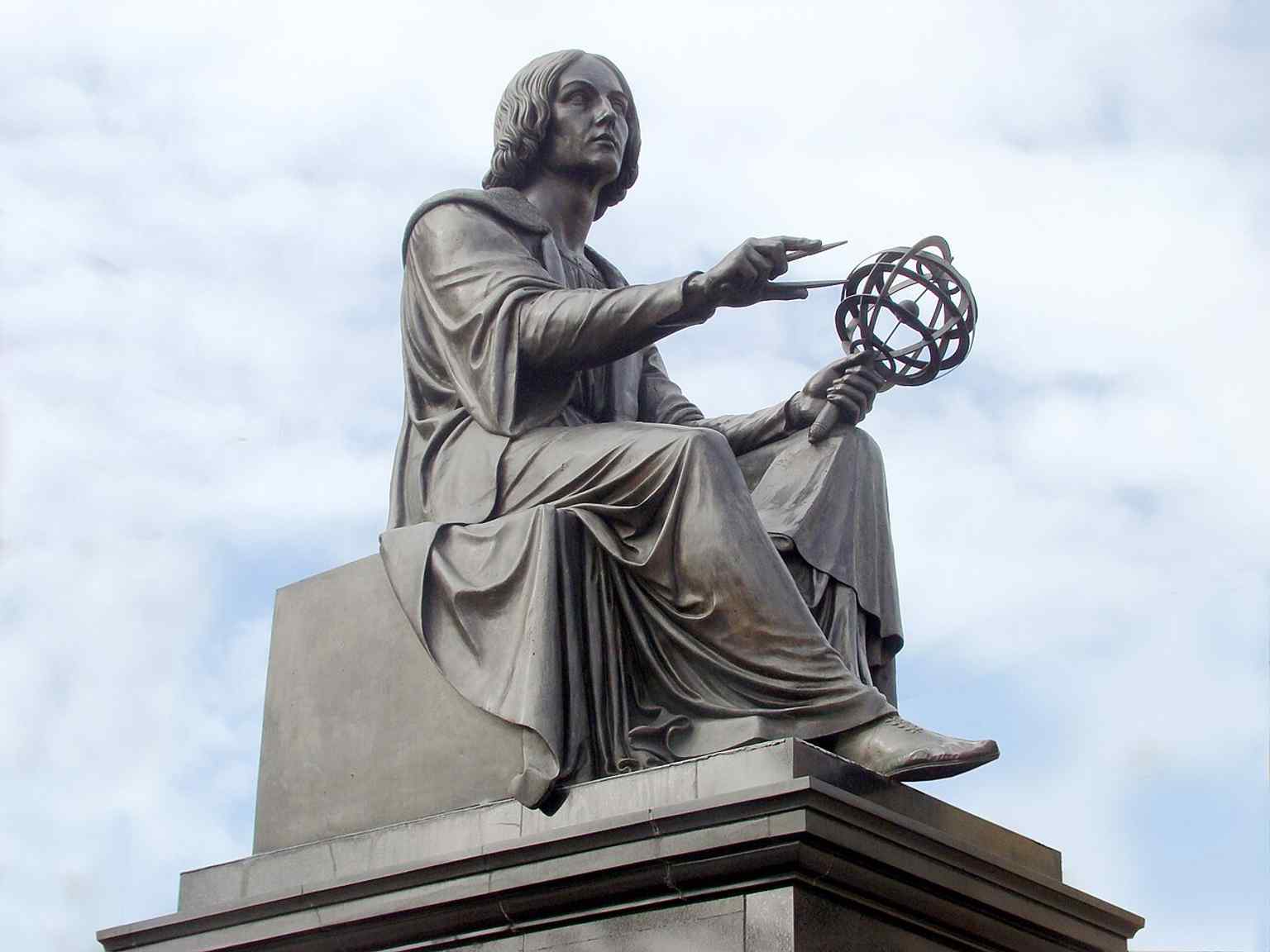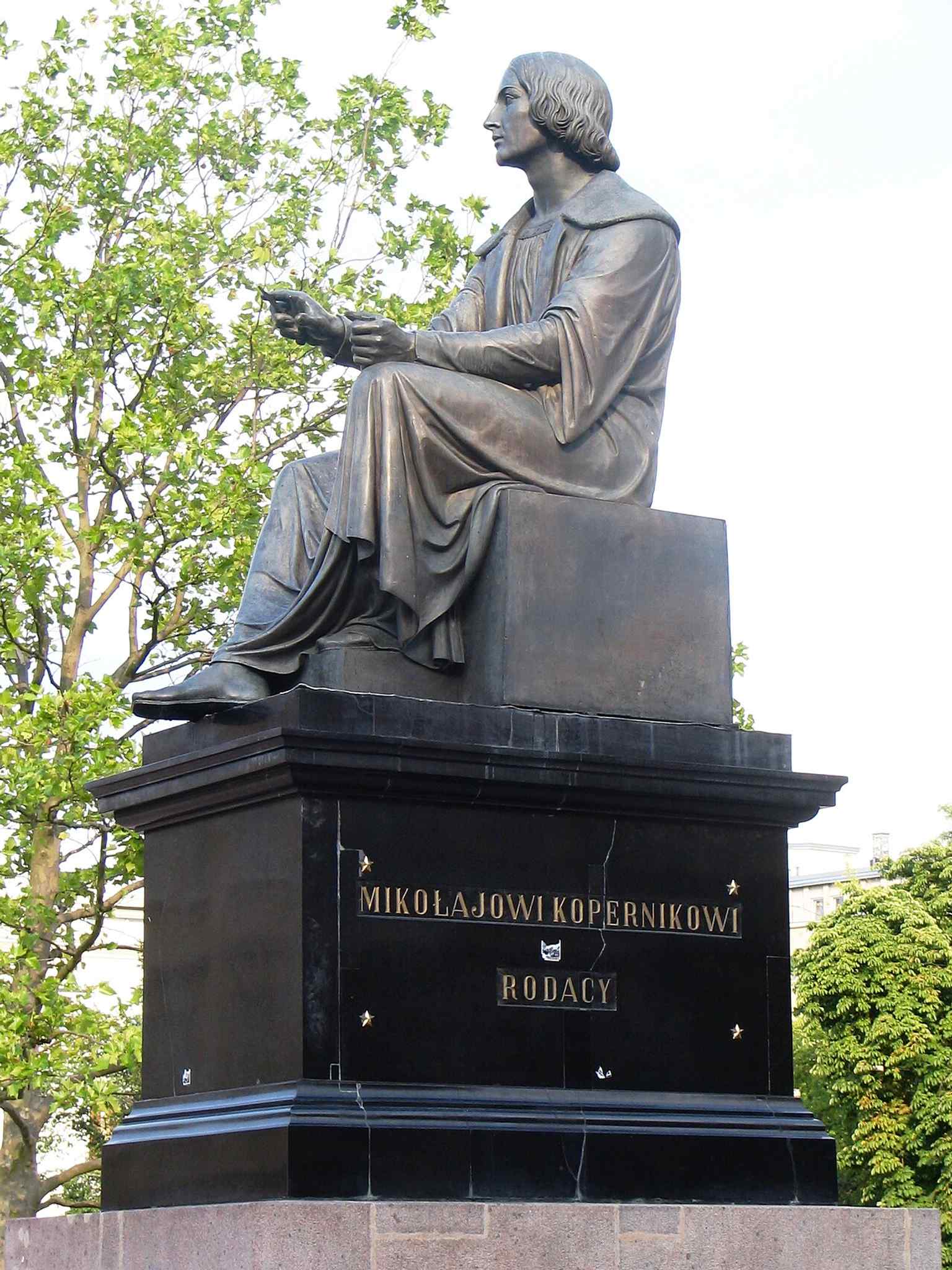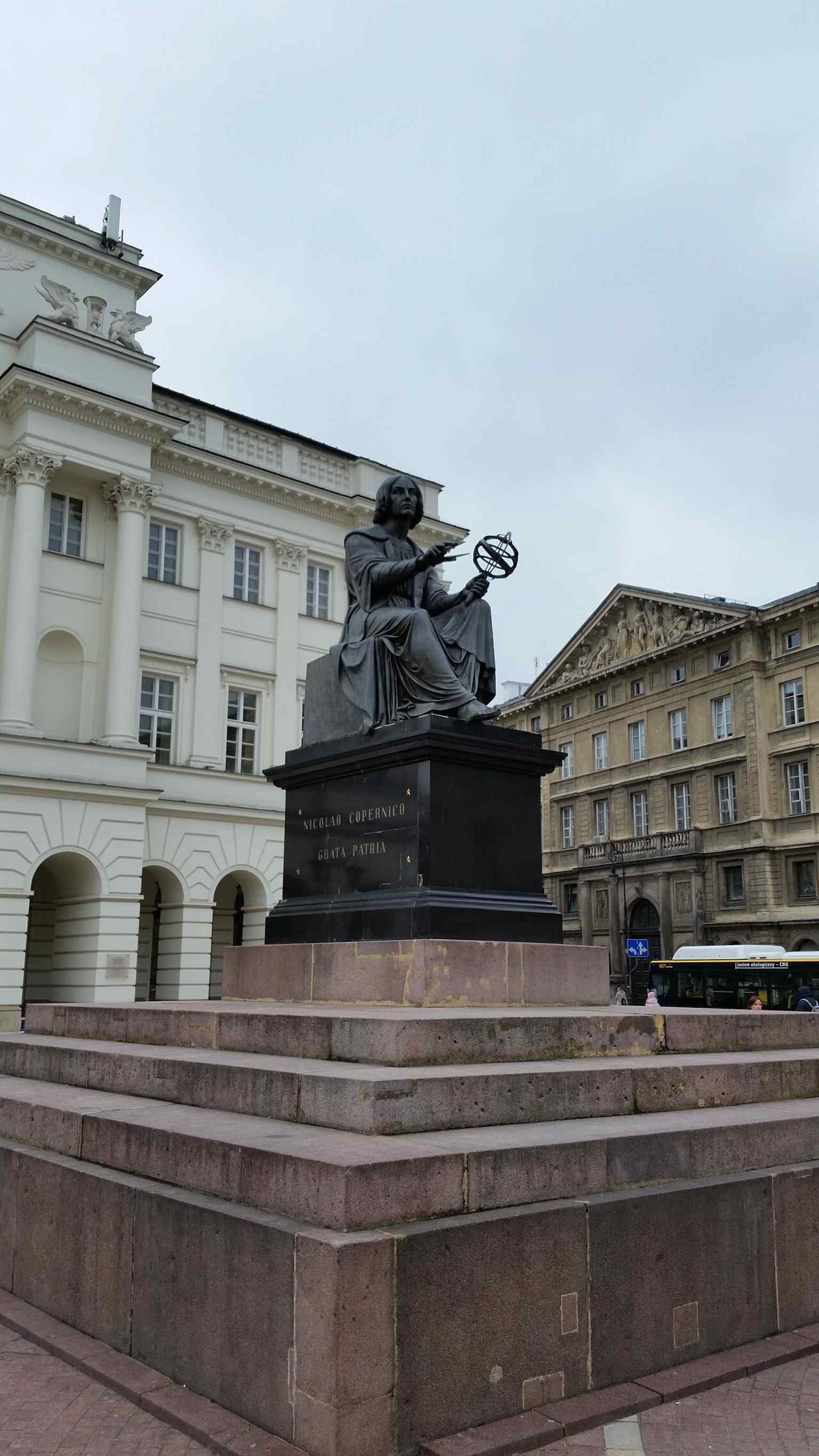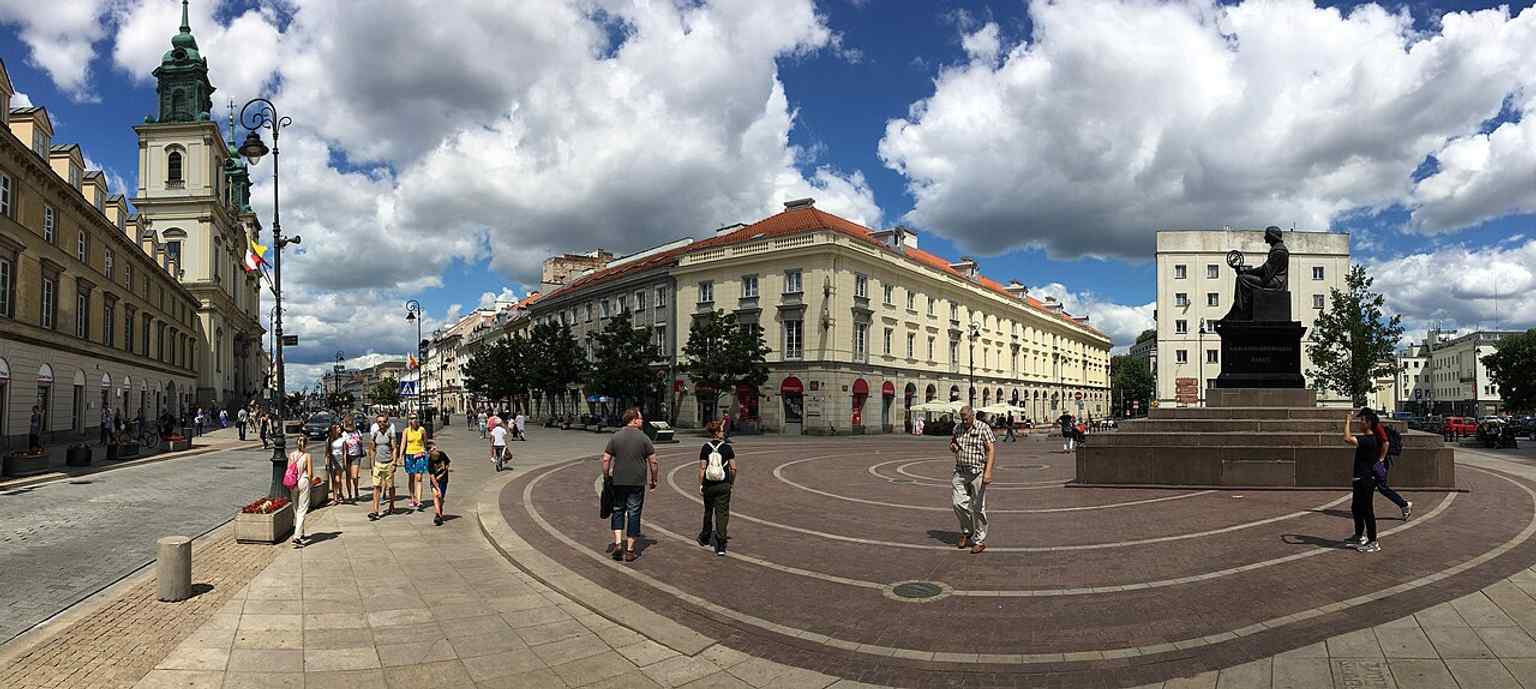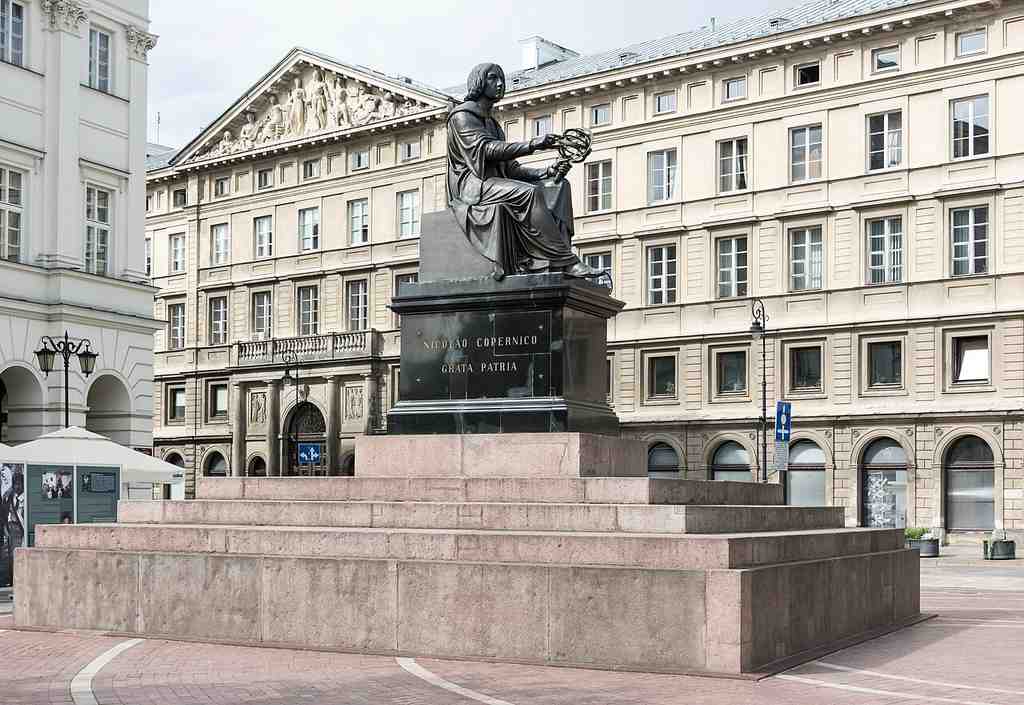
On your left stands a bronze seated scholar on a dark pedestal, with a compass in one hand and a ringed celestial globe in the other.
This is Nicolaus Copernicus... not just the astronomer who rearranged the universe, but in Warsaw, a public badge of intellect turned into patriotism. That shift matters. A scientist in a book is one thing; a scientist in bronze, planted on a main ceremonial street, becomes a statement about who a nation believes it is.
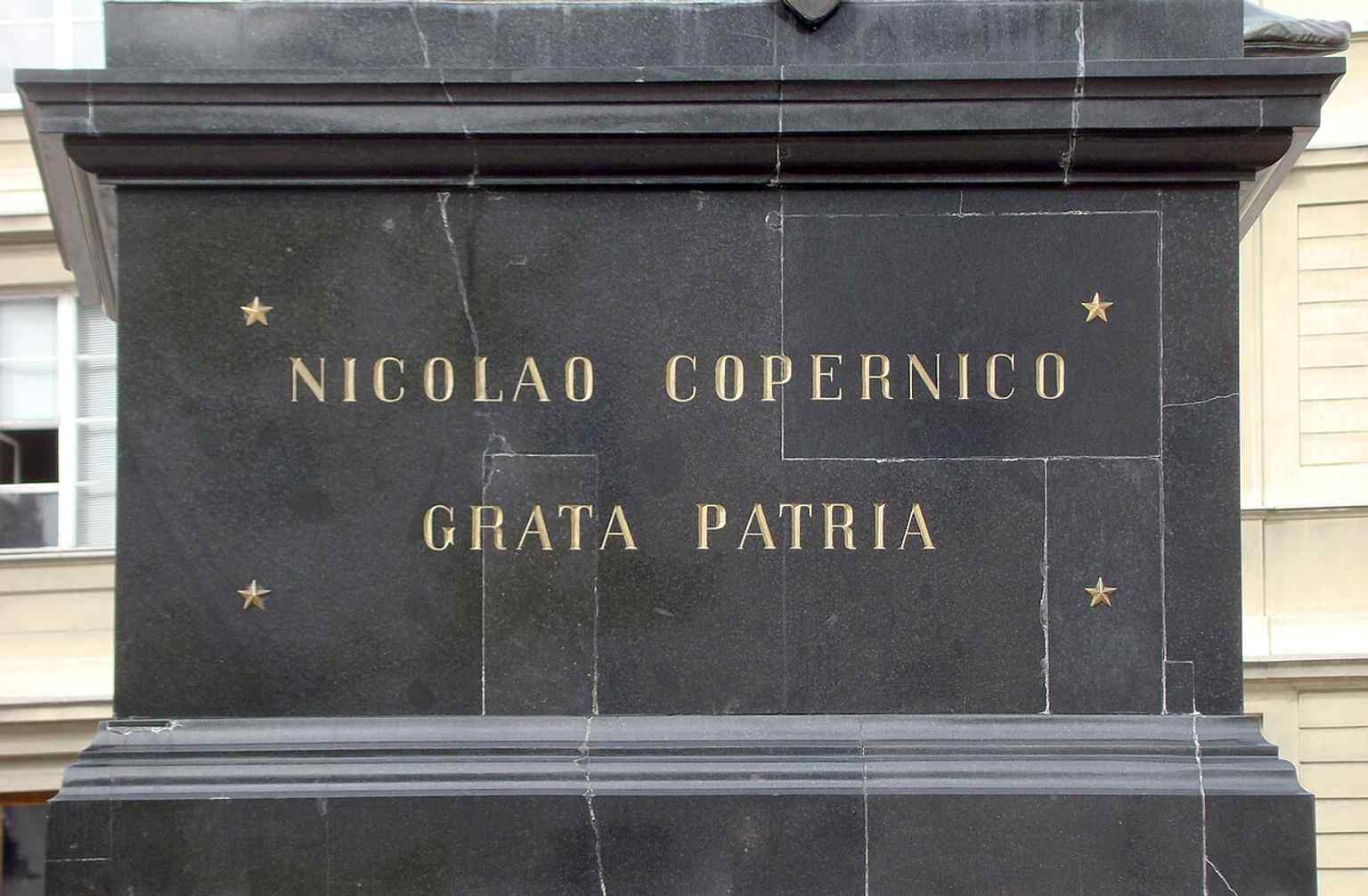
The sculptor, Bertel Thorvaldsen from Denmark, gave Copernicus a calm, seated pose, almost like an ancient sage. In his right hand he holds a compass for measurement; in his left, an armillary sphere, a model of the heavens made of metal rings. And underneath him, the pedestal speaks in two voices. One side says in Latin, Nicolao Copernico Grata Patria, “To Nicolaus Copernicus, a grateful fatherland.” The other says in Polish, “To Nicolaus Copernicus, from his compatriots.” If you want a closer look at that Latin side, there’s a pedestal detail in the app.
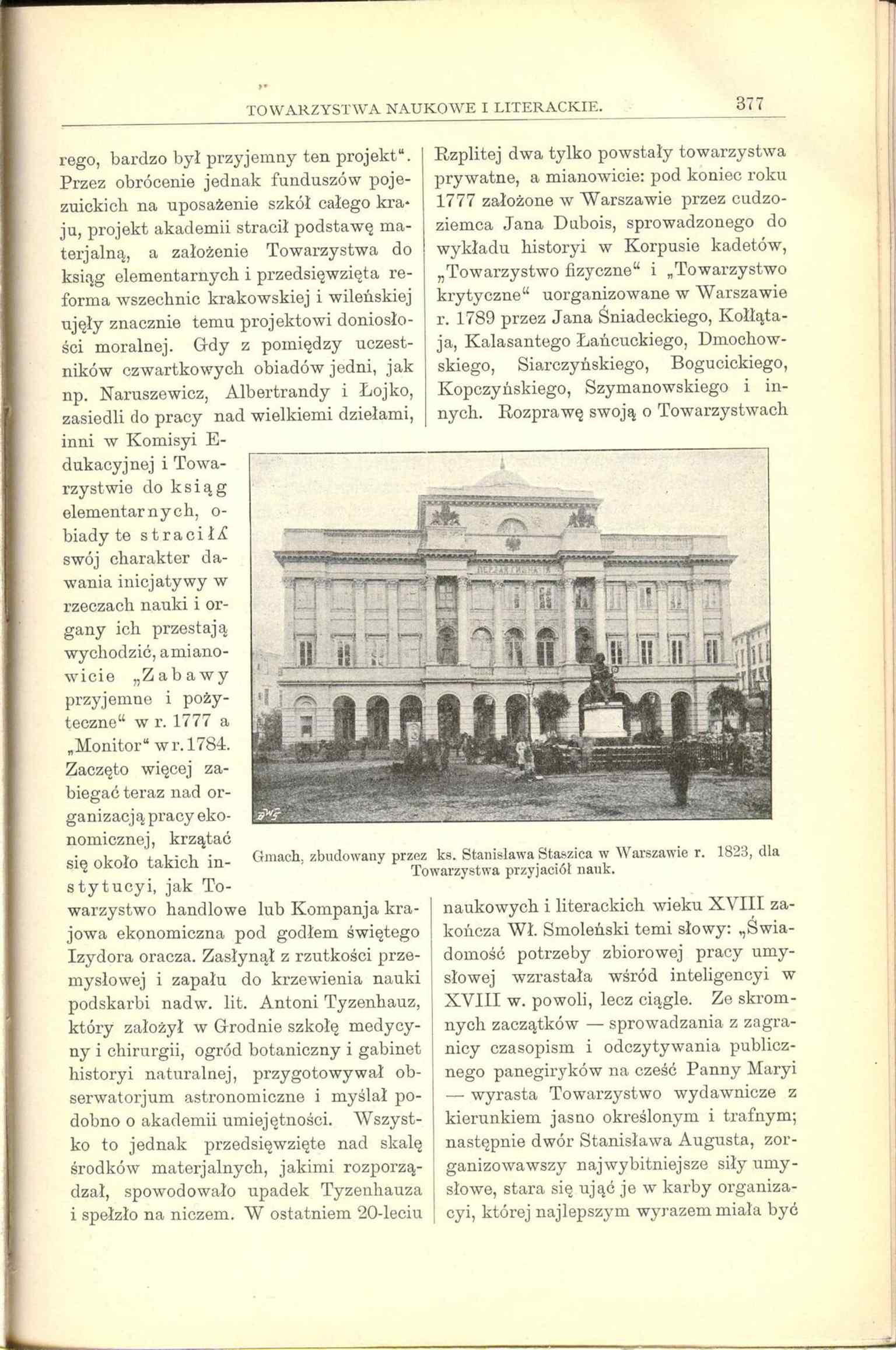
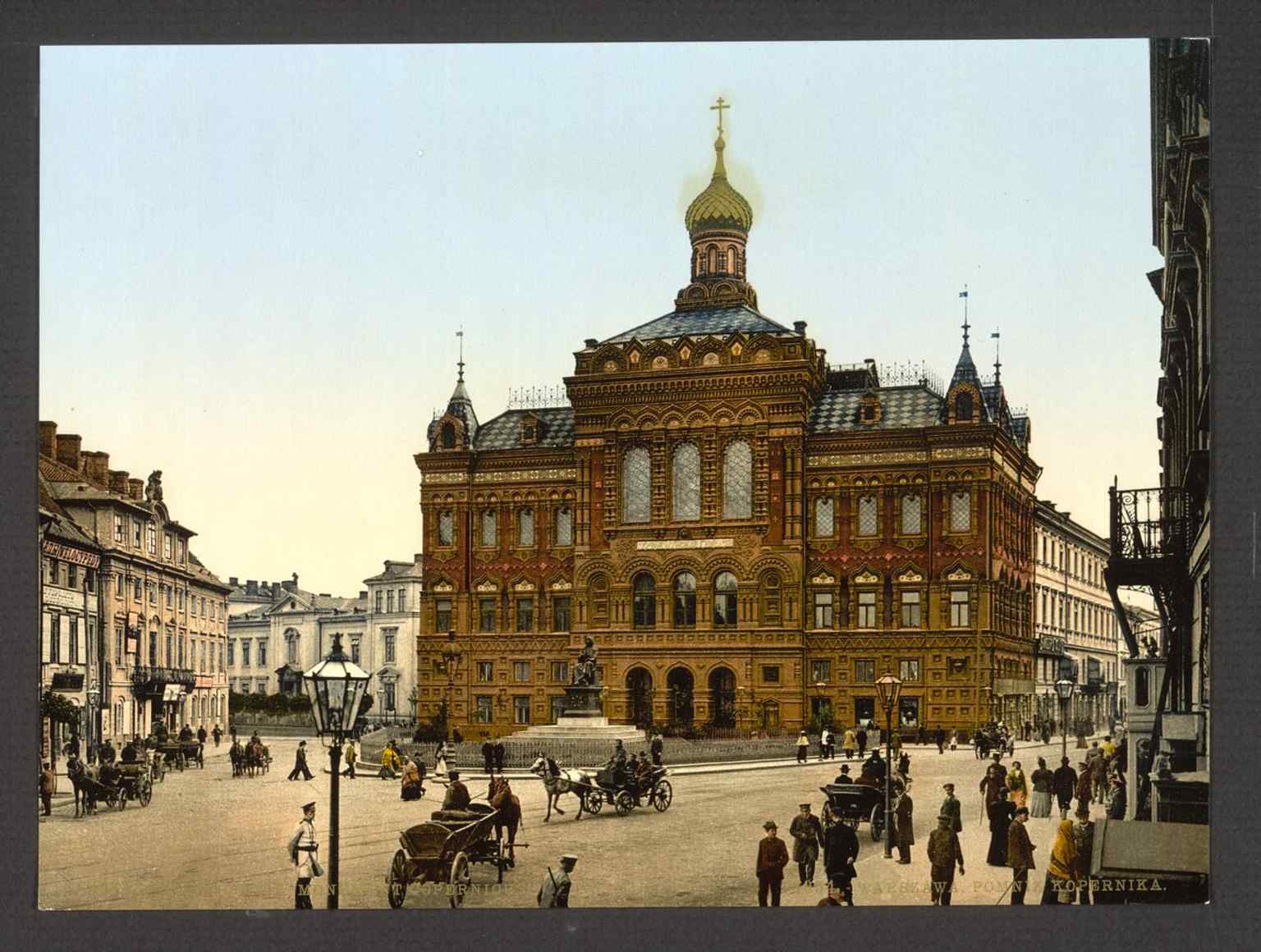
Stanisław Staszic pushed this monument into existence. He paid for half of it from his own fortune and helped raise the rest by public subscription, then had it cast here in Warsaw in Jan Gregoire’s workshop. The statue stood ready by eighteen twenty-two, but officials interfered even with the pedestal height, and the unveiling dragged on until the eleventh of May, eighteen thirty. Julian Ursyn Niemcewicz finally unveiled it in front of Staszic Palace, then home to the Warsaw Society of Friends of Science. Even learning, here, gets a grand stage.
But the real surprise is what happened later. During the German occupation in nineteen forty, the occupiers covered the original inscriptions with their own plaques. One city employee, the sculptor Maksymilian Potrawiak, quietly smeared the screws with grease so they could be undone more easily. Then, on the eleventh of February, nineteen forty-two, Maciej Aleksy Dawidowski, known as Alek, came here and removed the German plaque himself. He hid it in a nearby snowbank. That is a very Warsaw kind of gesture: a monument to astronomy becoming a battlefield over language, ownership, and nerve.
The statue kept gathering history. In nineteen forty-three, three young underground poets honored Copernicus here with a wreath from “Underground Poland” on the four hundredth anniversary of his death. German patrols opened fire. Wacław Bojarski died of his wounds, Zdzisław Stroiński was arrested, and Tadeusz Gajcy escaped. So this quiet seated figure marks something larger than scholarship. People risked their lives here simply to say that knowledge, in Polish hands, belonged to the nation.
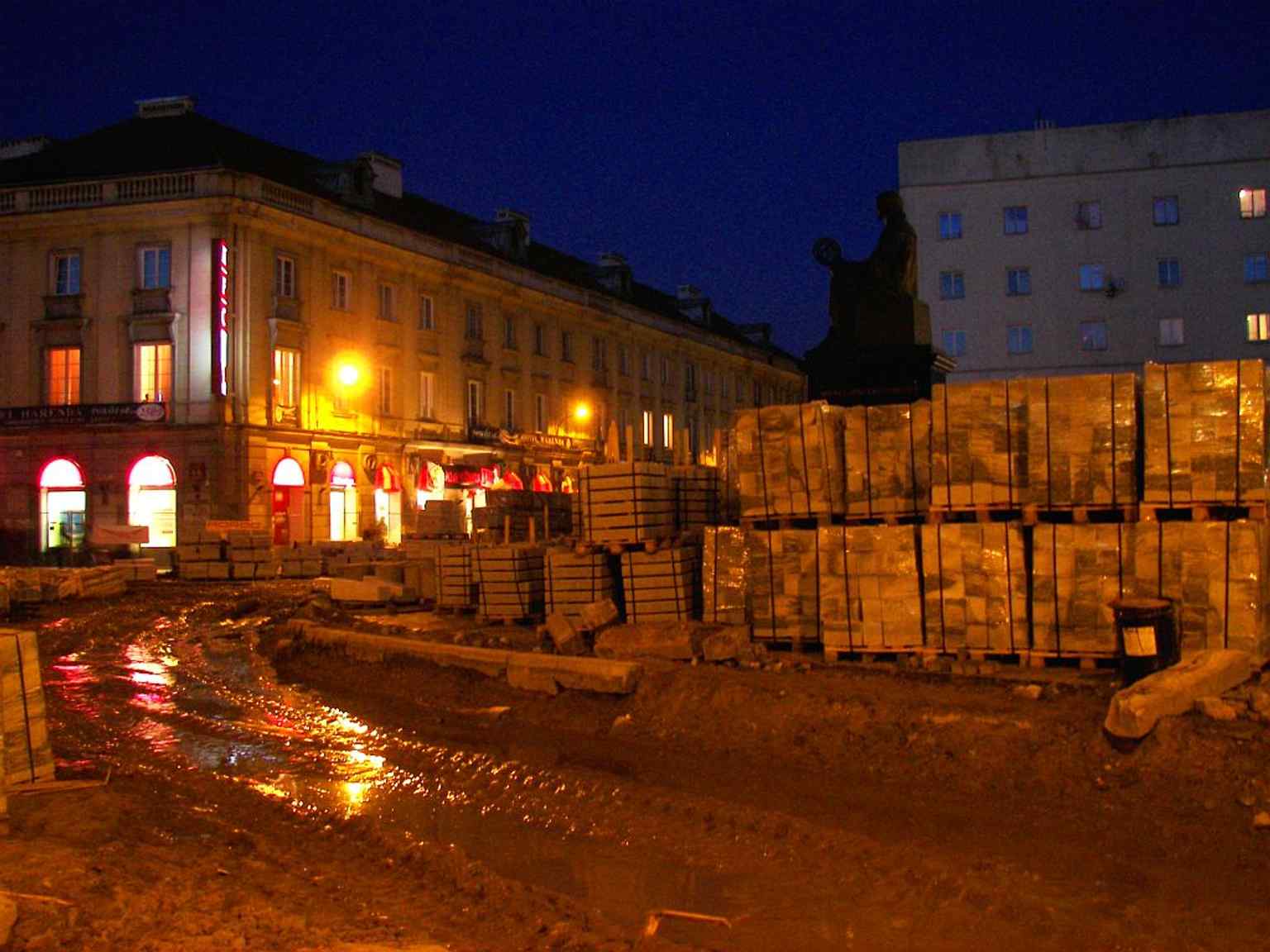
After the war, the monument itself had to return from the brink. German forces damaged it after the Warsaw Uprising and sent it away, likely for scrap. Workers found it later in Hajduki Nyskie and brought it back, then restored it again in nineteen forty-nine. Even in recent years, the story kept going: in two thousand and eight, thieves tore off the armillary sphere, and conservators recovered and reattached it. If you compare the old photo with the current view in the app, you can spot that strange moment when Copernicus was left with an empty hand.
Locals sometimes point out that this statue has distant cousins in Montreal and Chicago. So the symbol standing here does not end in Warsaw; it travels, carrying Polish memory and scientific pride across oceans like a well-packed family story.
Keep following this route and the mood shifts from the authority of ideas to the authority of office... the Presidential Palace waits farther along the same grand urban spine. And since this monument stands in open public space, you can pay your respects here at any hour.