
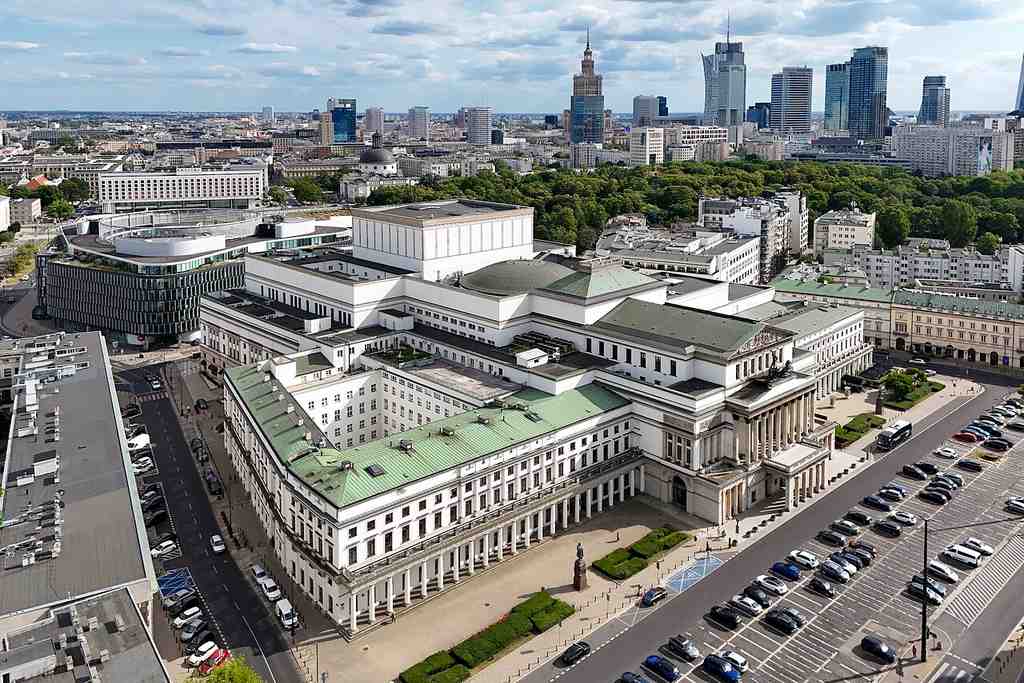
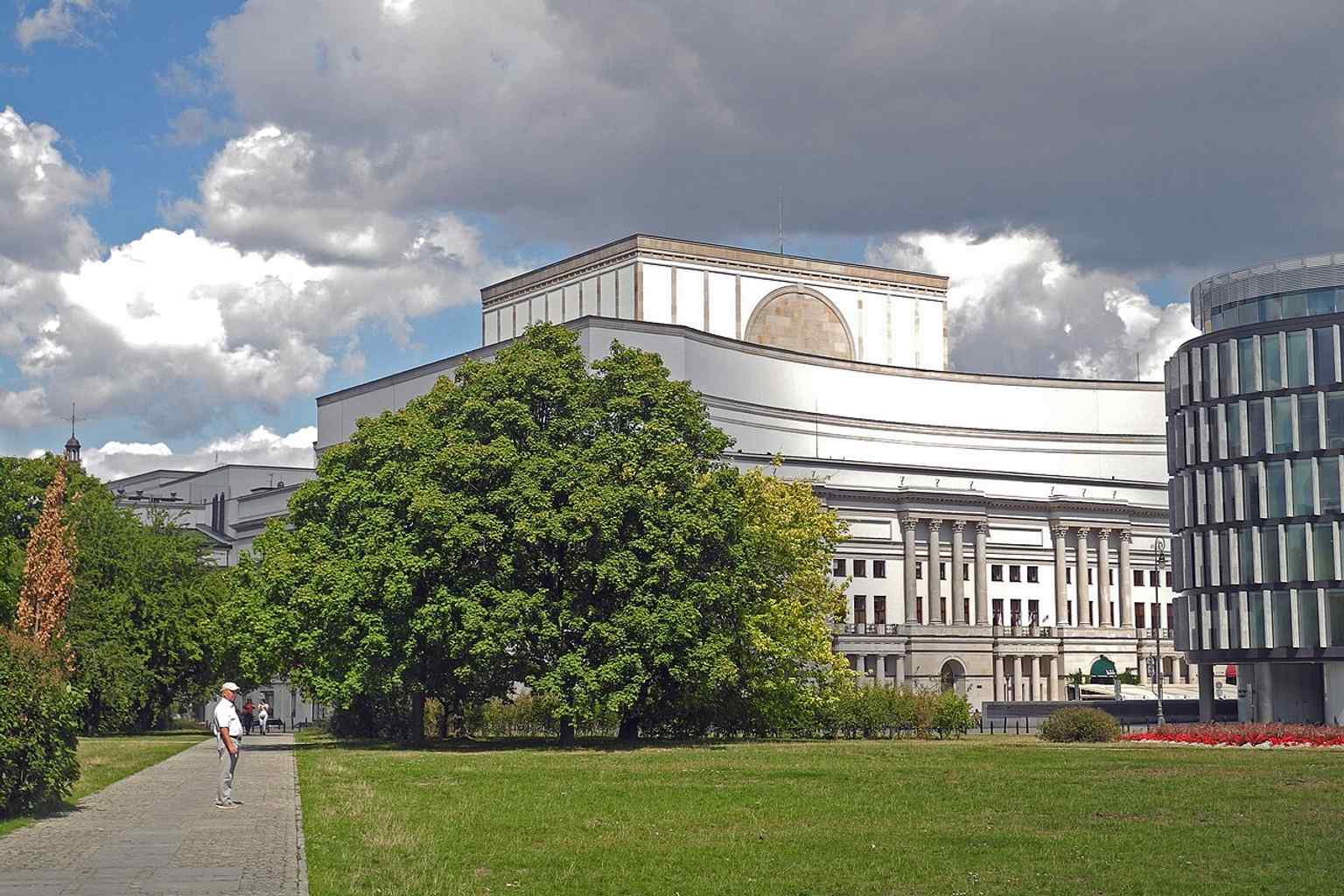
On your left, look for the long pale-stone front with its row of tall columns and the bronze quadriga of Apollo, a four-horse chariot sculpture perched above the roofline.
Here Warsaw turns itself into a public stage. In this square, culture did not stay politely indoors; it spilled into civic life, into speeches, ceremonies, grief, and pride. Opera and ballet mattered here not just as entertainment, but as proof that a pressured city could still speak in its own voice.
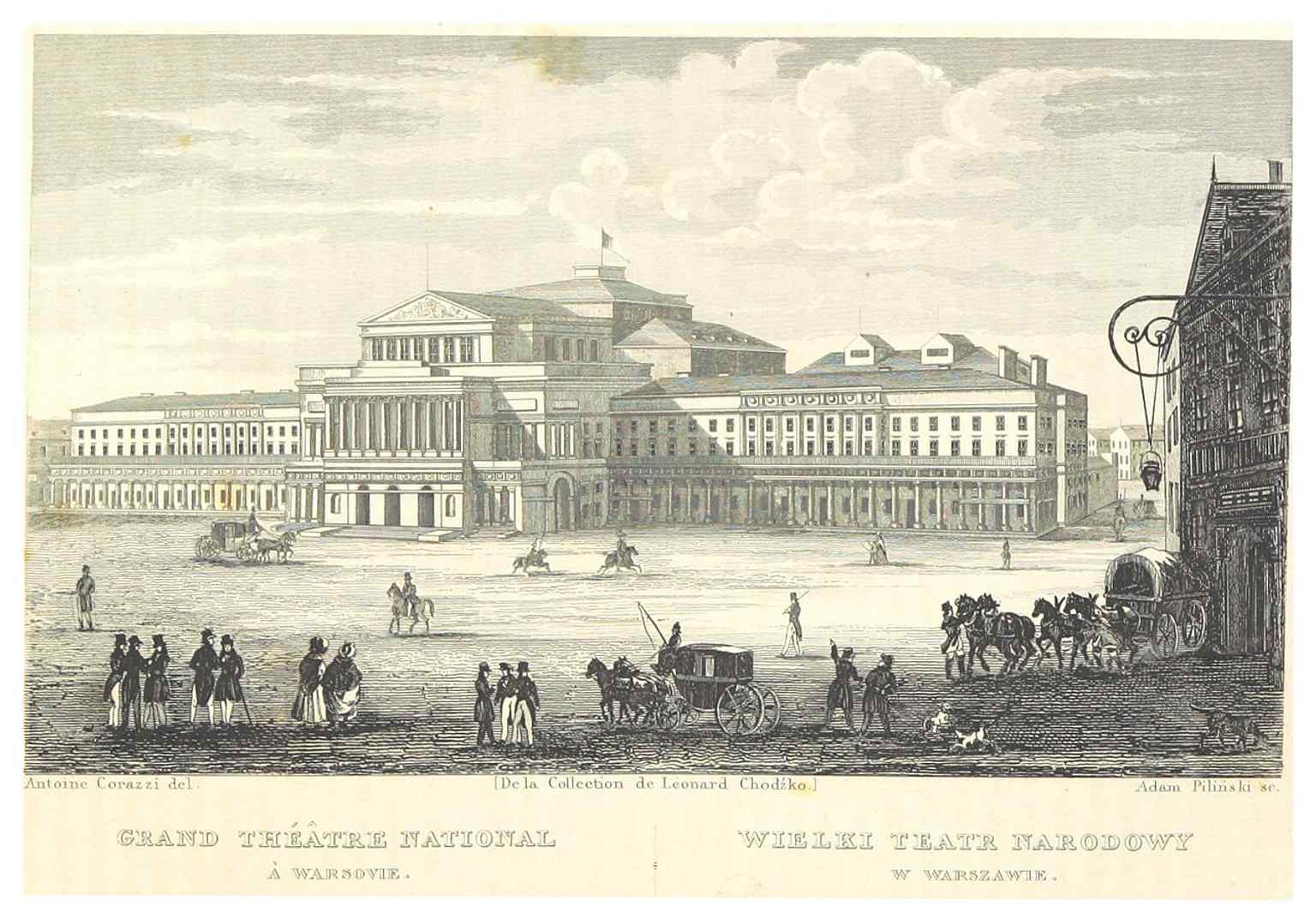
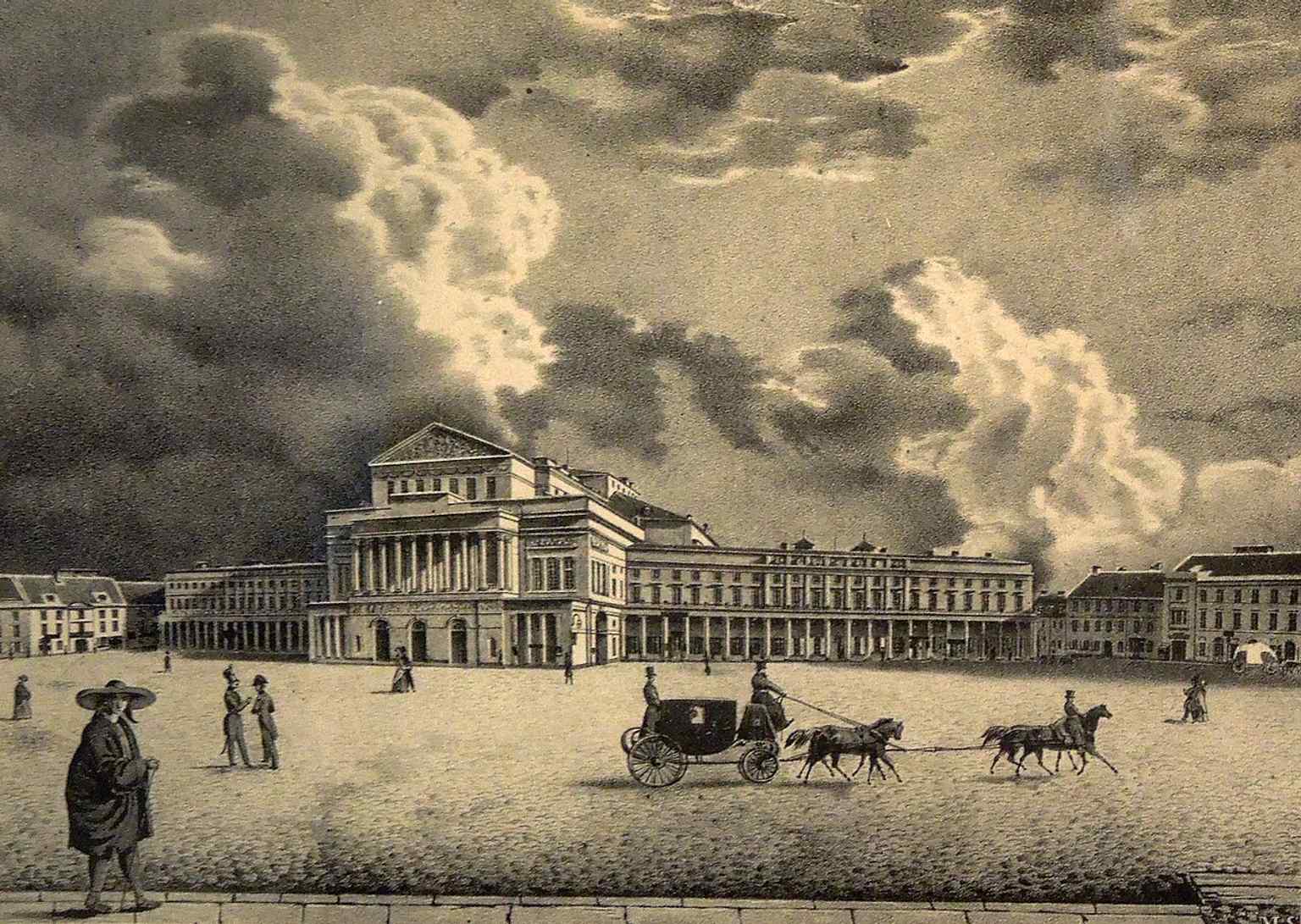
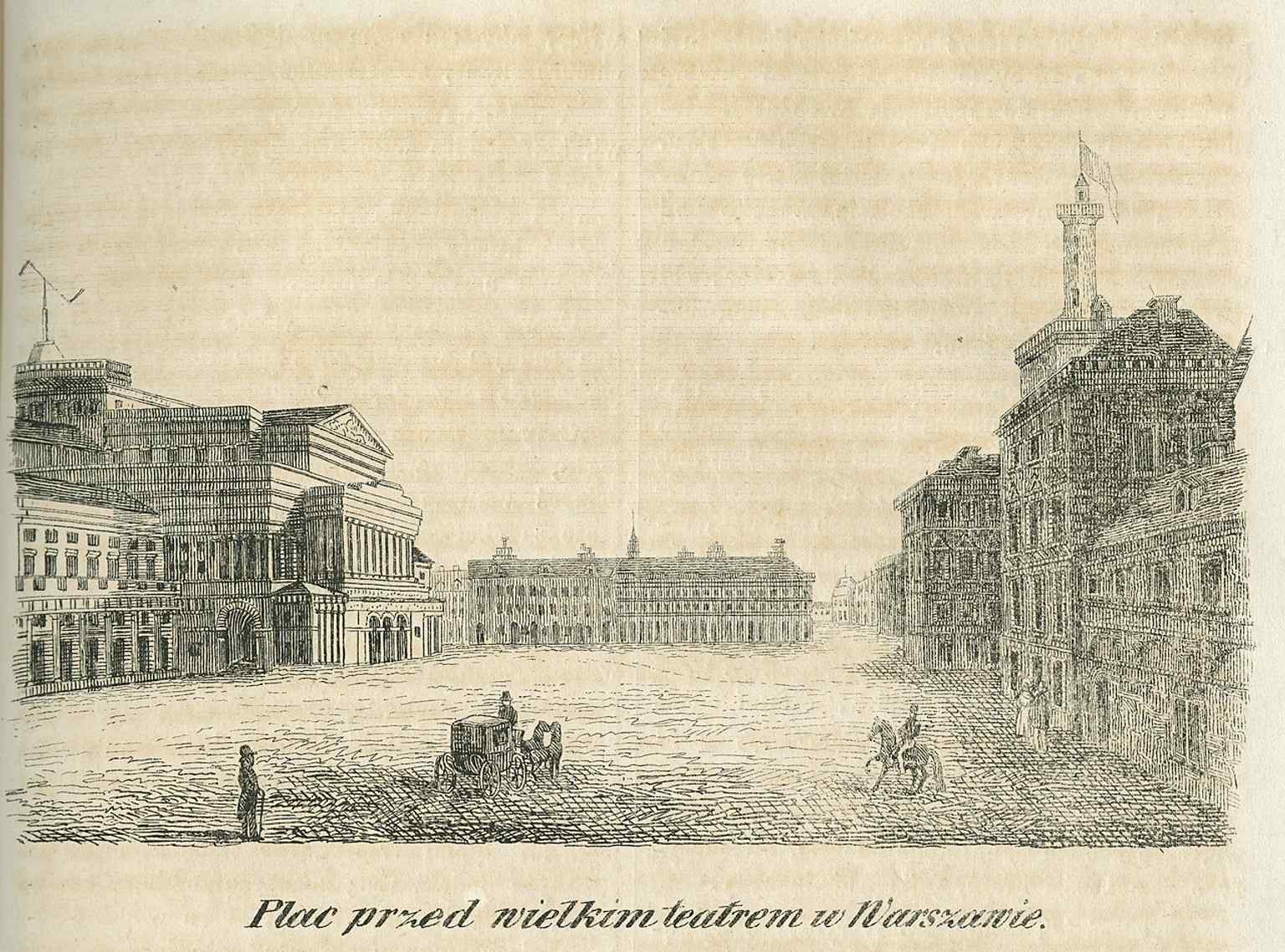
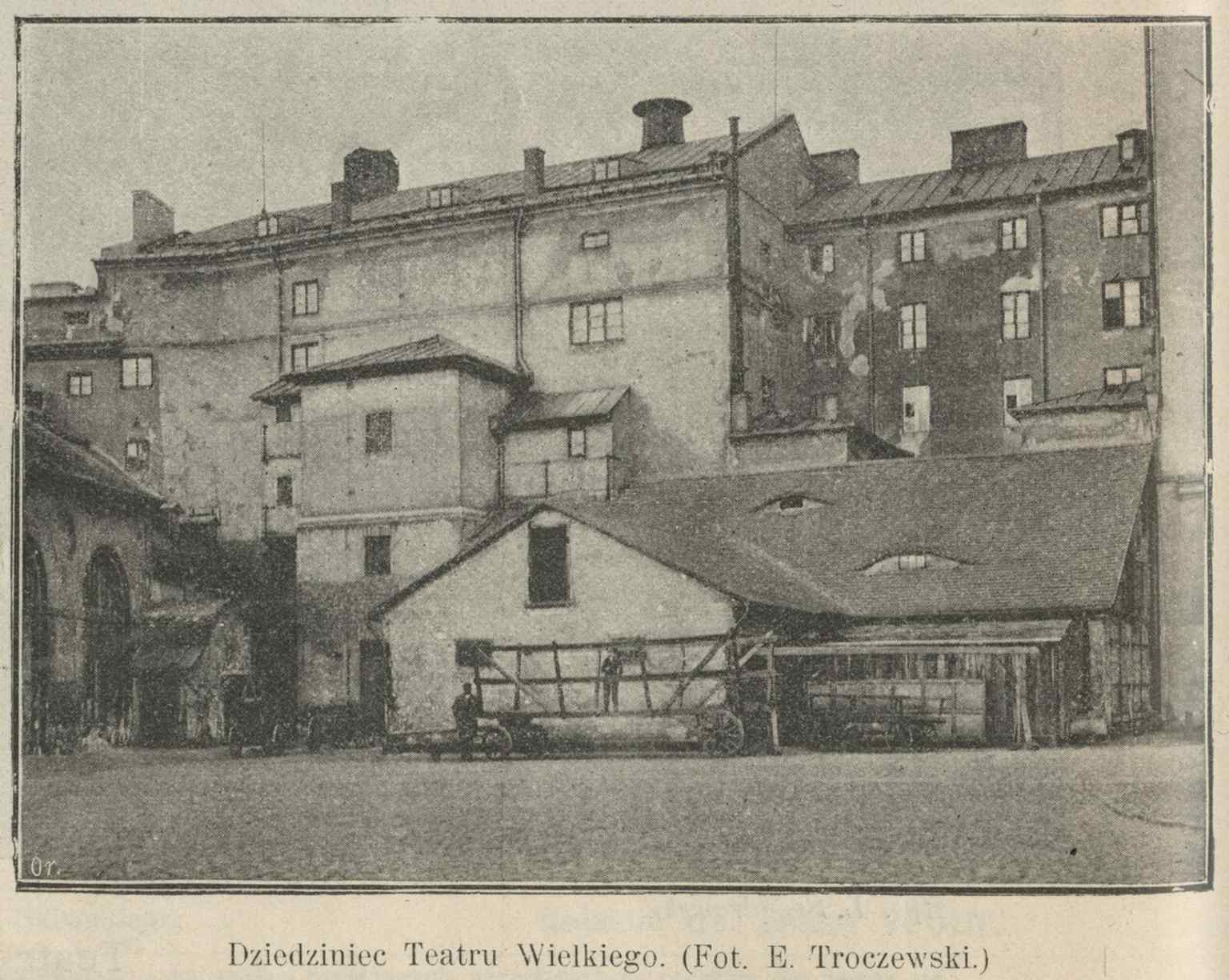
Italian architect Antonio Corazzi designed this theater between eighteen twenty-five and eighteen thirty-three, on the site of the old Marywil commercial complex. He chose a neoclassical style, meaning the balanced, columned look borrowed from ancient Greece and Rome. His model stood in Naples, at the San Carlo theater, because Warsaw’s leaders wanted something grand enough to announce ambition... though politics soon started cutting the cloth a little shorter.
After the November Uprising, officials reduced Corazzi’s plan from two thousand seats to one thousand two hundred forty-eight, and they removed the great royal box facing the stage. Still, the opening night arrived in style on the twenty-fourth of February, eighteen thirty-three: Rossini’s Barber of Seville and a ballet by Karol Kurpiński. You can almost hear the city straightening its gloves.
This building taught Warsaw how to perform itself in public. Funeral processions for famous actors stopped outside while the opera orchestra played from the terrace. In eighteen sixty-two, Ludwik Jaroszyński tried to assassinate Grand Duke Konstanty here and failed, which tells you this square was never just decoration with good manners.
And it was never only about grand opera. Inside a set of assembly rooms later known as the Redutowe halls, Juliusz Osterwa and Mieczysław Limanowski opened Reduta in nineteen nineteen, Poland’s first experimental studio theater, a smaller stage built for artistic risk rather than spectacle. Even the side rooms, in other words, were aiming high.
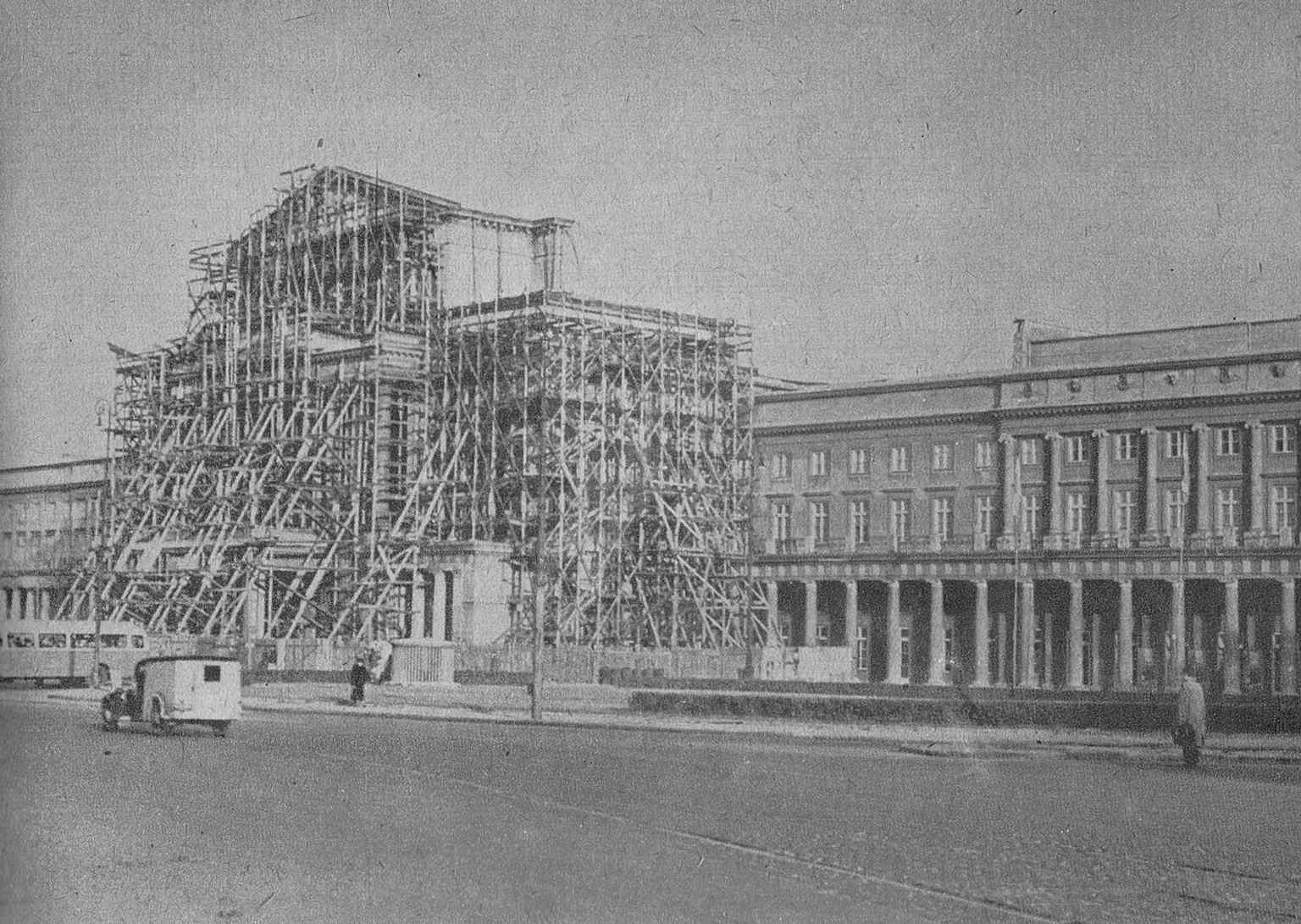
Then war smashed the scene apart. Bombing hit the theater in nineteen thirty-nine. During the Warsaw Uprising, fighting damaged what remained, and German forces later blew up the surviving sections. Between the sixth and eighth of August, nineteen forty-four, the ruins became a murder site for about three hundred fifty Polish civilians. If you glance at the before-and-after image in the app, you can see this grand front as a broken shell in nineteen forty-nine, then standing whole again.
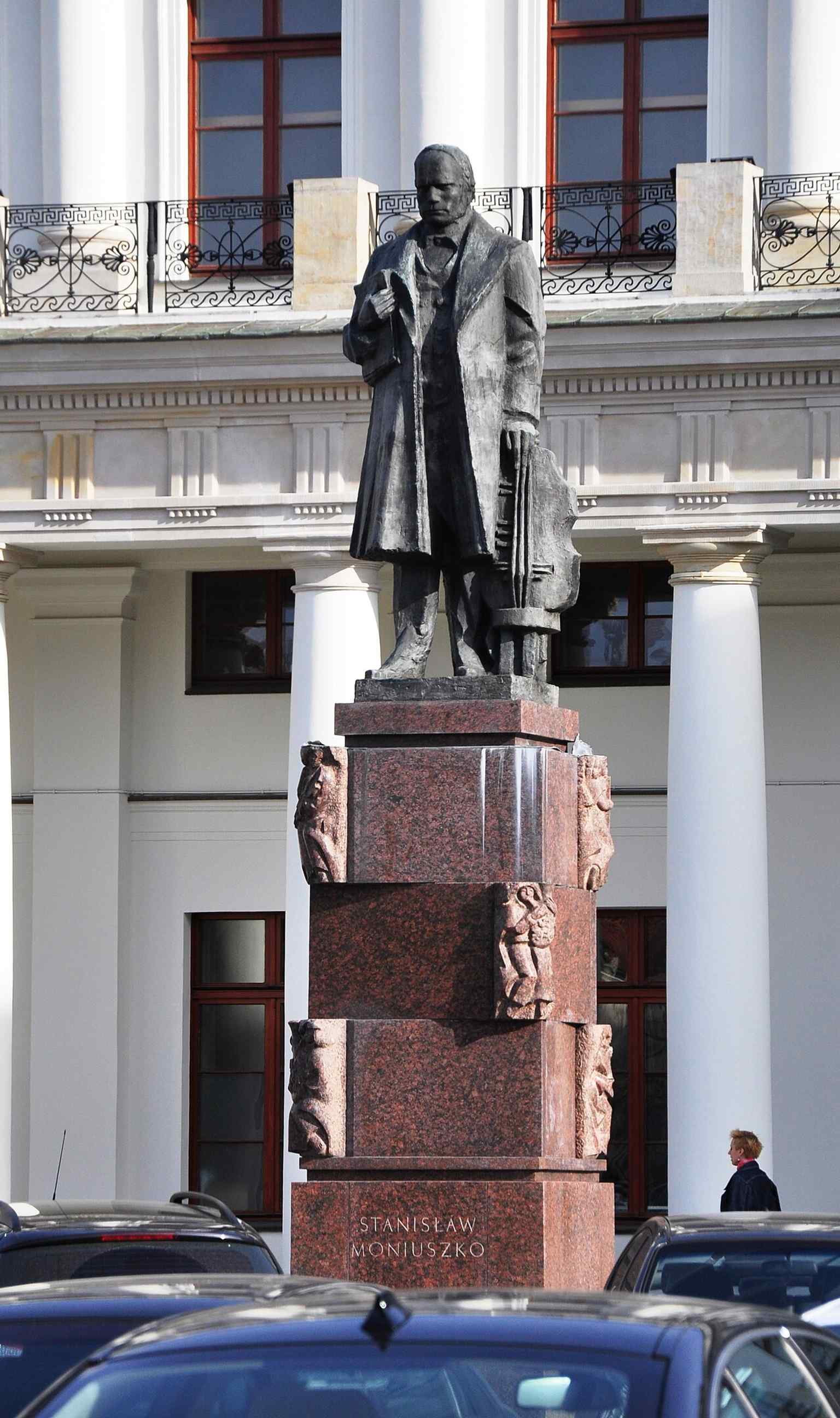
What rose afterward was not a simple copy. Rebuilders preserved the original front and the Wierzbowa Street side, then between nineteen forty-seven and nineteen sixty-five they enlarged and reinvented the rest. The result included one of the world’s largest opera stages, with a revolving platform, trapdoors, lighting bridges, and deep technical spaces hidden behind all this calm stone. By the final push, veteran theater organizer Arnold Szyfman carried much of the burden almost alone after political reshuffling left him isolated, yet the house reopened on the nineteenth of November, nineteen sixty-five, with Moniuszko’s The Haunted Manor. Today the rebuilt giant houses the National Opera, the Polish National Ballet, and the Theatre Museum.
And that bronze quadriga above you? It finally arrived in two thousand and two. Corazzi had wanted it from the start, but imperial authorities blocked the idea after the uprising. Warsaw took its time... then finished the sentence.
Just beyond this square, power speaks in a different language: clipped paths, open lawns, and designed calm. Saxon Garden is about a seven-minute walk away, and it shows how this city staged authority not only in music, but in landscape too.





%20p349%20GRAND%20THEATRE%20NATIONAL%2C%20A%20WARSOVIE.jpg)

.jpg)
.jpg)


