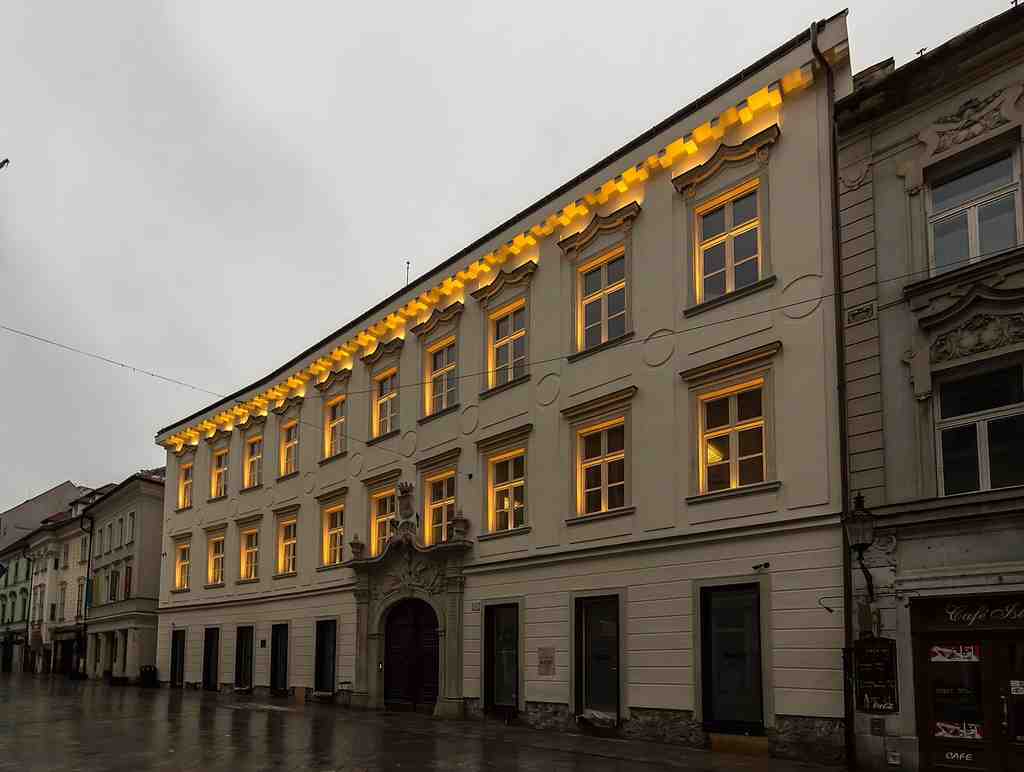
On your right, look for a pale stone Baroque façade with tall rectangular windows and an ornate portal carved with military reliefs.
Count Leopold Pálffy commissioned this palace in seventeen forty-seven, and he made sure the doorway advertised exactly who he was: a general serving Empress Maria Theresa. But here is the local secret... this noble house is really several older cities wearing one elegant coat.
During restoration, researchers found Gothic walls tucked inside the later palace, and in the basement they uncovered Roman and Celtic remains. They also found hard proof that this site once held a mint: dozens of melting pots and silver-dosing plates, the working tools of coin production in the old oppidum, a fortified Celtic town. So yes, underneath the aristocratic polish, this address once rang with industry.
In the nineteenth century, Ján Pálffy Senior turned the place into a grand display case for himself, filling it with historical furniture, silver, and paintings by Italian and Dutch masters. Some locals still like to claim that six-year-old Mozart played here in seventeen sixty-two. Historians are not fully sold, but Bratislava does enjoy a good guest list.
Then came the rough years. In eighteen seventy, the city paid one hundred and fifty thousand guldens, roughly a large sum by modern standards, and turned it into artillery barracks. After that came warehouse use, an orphanage, a student dormitory, and even storage for road grit. If you check the image in the app, you can enjoy the happy ending written on the façade itself.
Now lift your eyes toward the hill... the castle is next, about a sixteen-minute walk away.