
Look for a long stone-and-paved riverside promenade laid out in broad straight walks, framed by formal gardens and fountains, with the unmistakable pair of the Arriaga Theatre and San Nicolás marking its edges.
This is the Arenal, or Areatza in Basque, and for Bilbao it is much more than a pleasant public walk. It is the front porch of the Old Town, the emotional threshold to the Seven Streets, the city’s earliest core. Stand here and you are not quite inside the Casco Viejo yet... but you are at the point where Bilbao begins introducing itself.
The river beside you, the Nervión estuary, has seen the whole performance. It watched this place when it was not a promenade at all, but an inner sandy shore, almost a little beach, where boats landed and shipyards worked. It watched the town push outward in the late fifteenth century, opening new streets toward this edge. And it kept watching as a rough working margin turned into a civic living room.
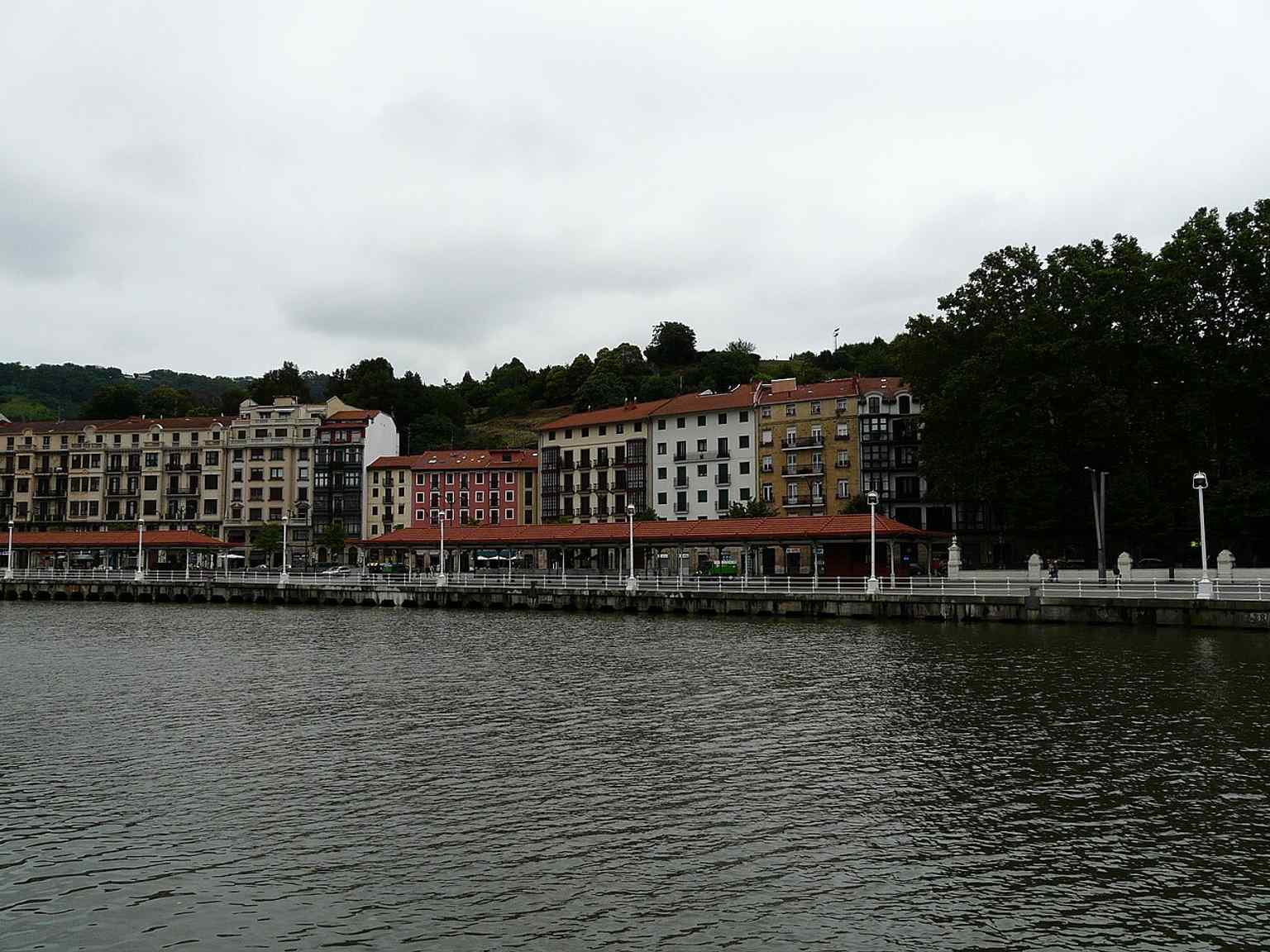
If you glance at the image on your screen, you can see that long riverside face clearly. That view explains why the Arenal matters. It is Bilbao showing itself to the water.
By the eighteenth century, local leaders raised the ground with sand, built a low wall, and added benches. In eighteen fifty-seven, they organized the interior with gardens, fountains, and ornamental pools. Even now, the layout still carries a bit of that orderly civic pride. From the City Hall end, three walks once began together, each with a social nickname: the priests’ path on the left, the young gentlemen’s in the center, and the espadrille path on the right... which is a pretty sharp little class joke, if you think about it. Bilbao has always known how to sort a crowd with a smile.
And yet beneath that calm, this ground holds a harder memory. In eighteen oh four, during the Zamacolada revolt, people gathered here to protest military conscription and a proposed new port in Abando. The army crushed the uprising and executed several of its leaders. During the First Carlist War, this open promenade became a fortified zone under siege. General Baldomero Espartero, one of the liberal commanders defending Bilbao, used the Arenal as a base of operations. Imagine that for a second: if a city learned to know its main public square through cannon fire instead of strolling, how differently would it understand itself?
That is the twist of the Arenal. The city’s real stage was never only inside the theater nearby. It was here, in the open, where people protested, fought, celebrated Basque festivals, rallied during the Civil War, and returned again after the terrible floods of nineteen eighty-three left the whole space underwater. Bilbao did not erase those shocks. It paved over them, planted through them, and kept meeting here anyway.
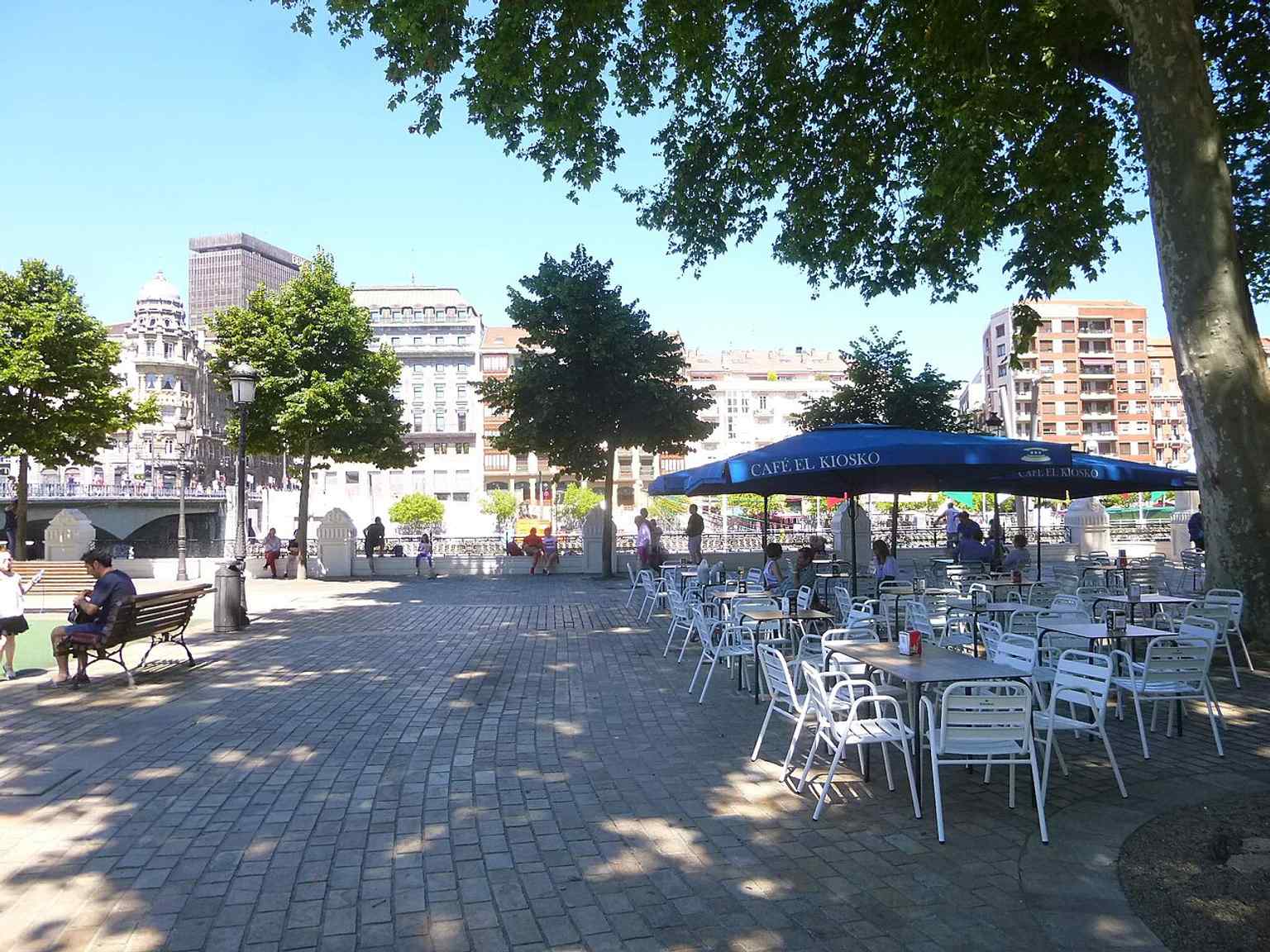
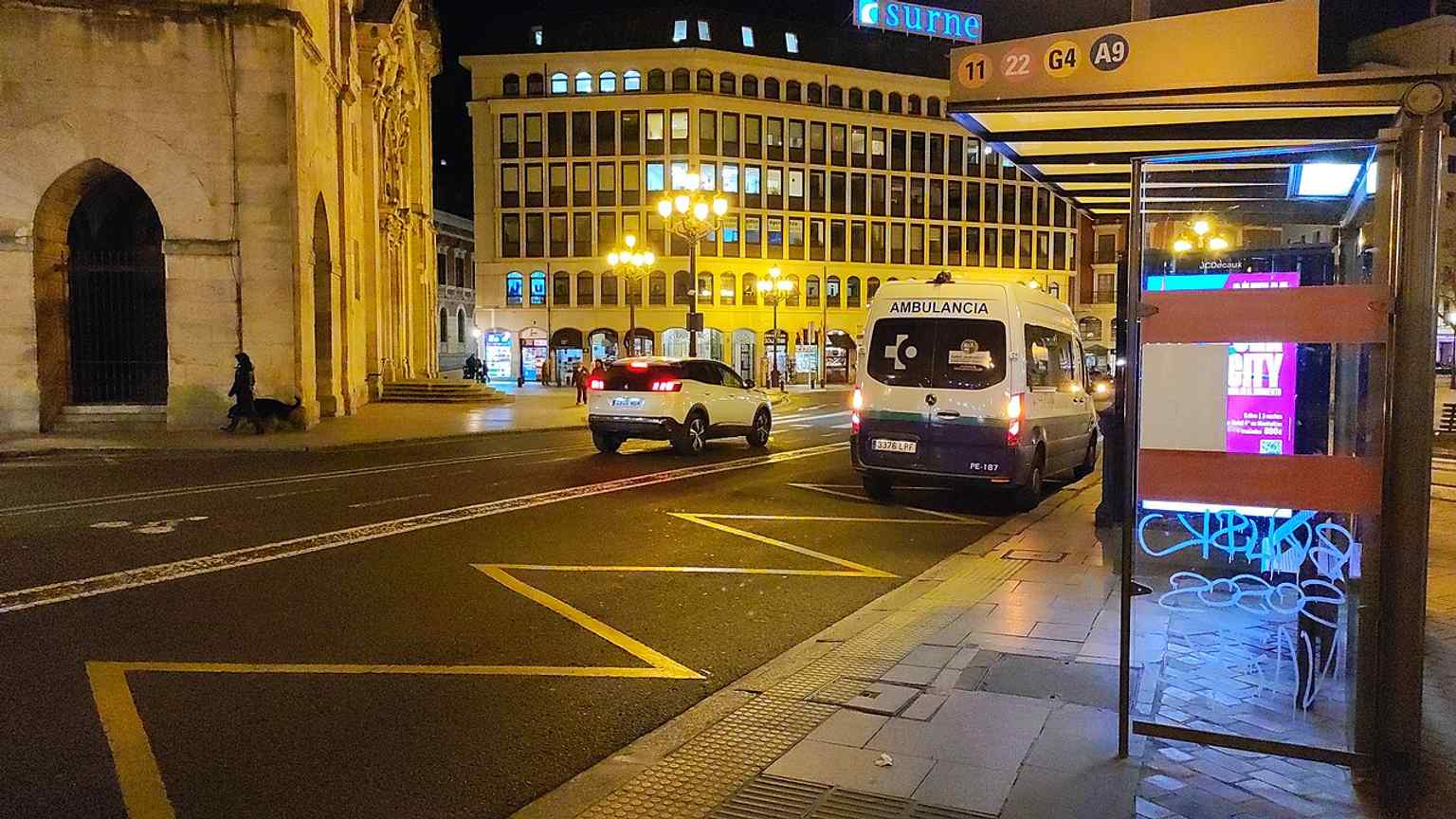
If you check the street-level photo in the app, you’ll catch that gateway feeling again. This is still where daily life gathers, not a frozen monument.
Look for the details if you can: the symmetrical pools, the bronze little mermaids holding fish, the green iron frogs spitting water, and farther along, the music kiosk and the sculpture of the bertsolari, the improvised verse singer, Balendin Enbeita. Leisure here sits right on top of argument, memory, and reinvention.
Next, we leave this broad civic stage and step toward a more intimate kind of refuge: the Church of San Nicolás, born from a neighborhood tied to sailors and fishermen, about a seven-minute walk from here.







%20(2576).jpg)