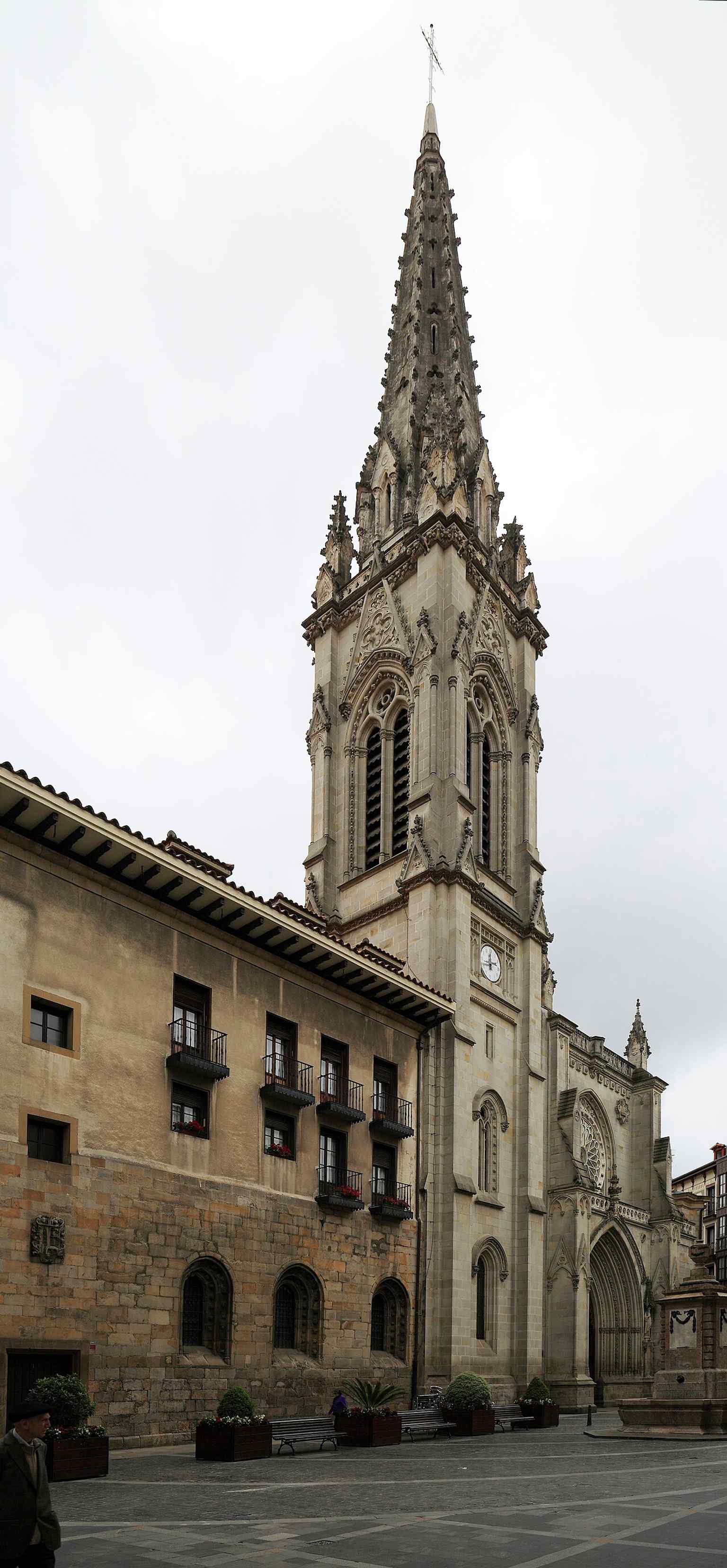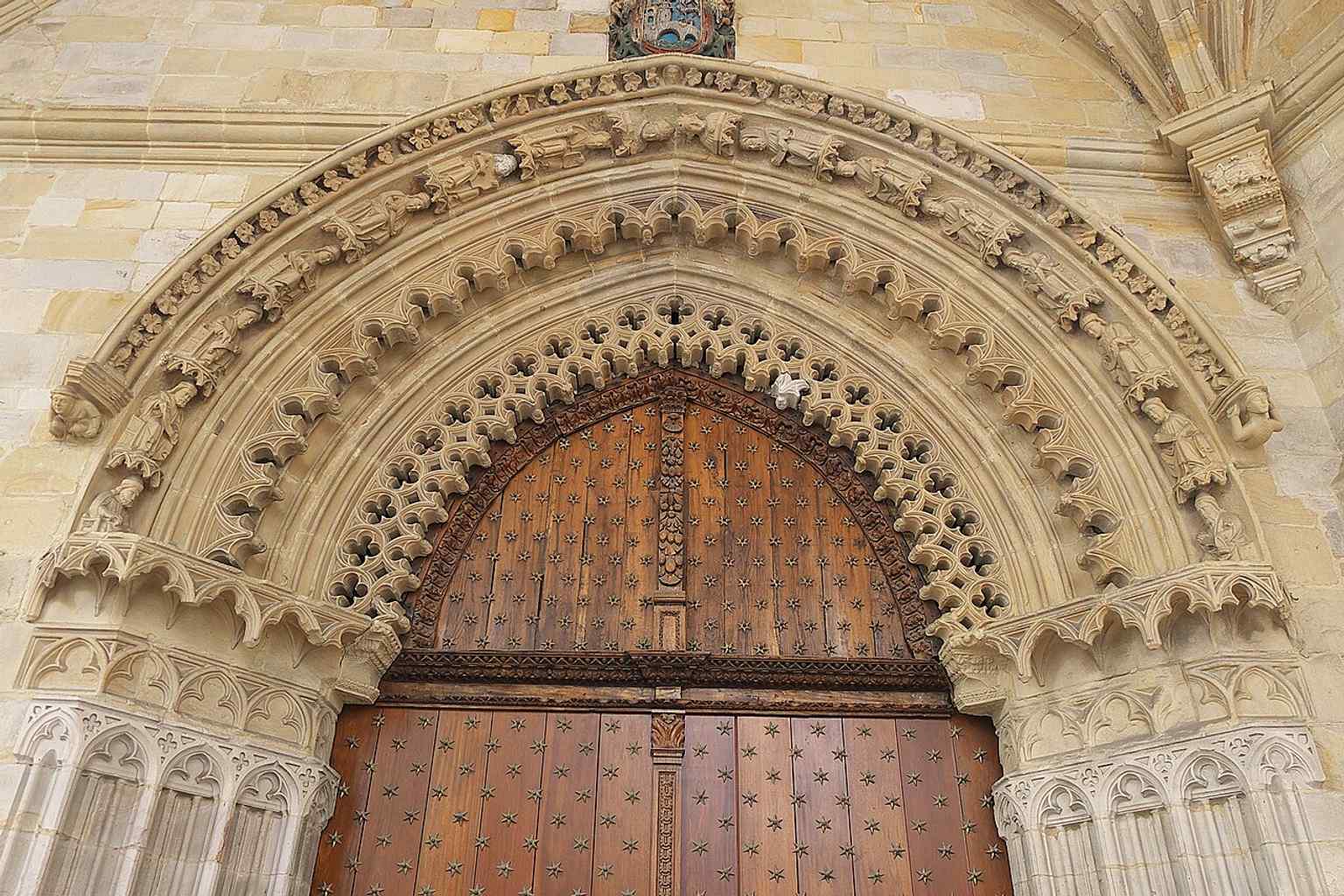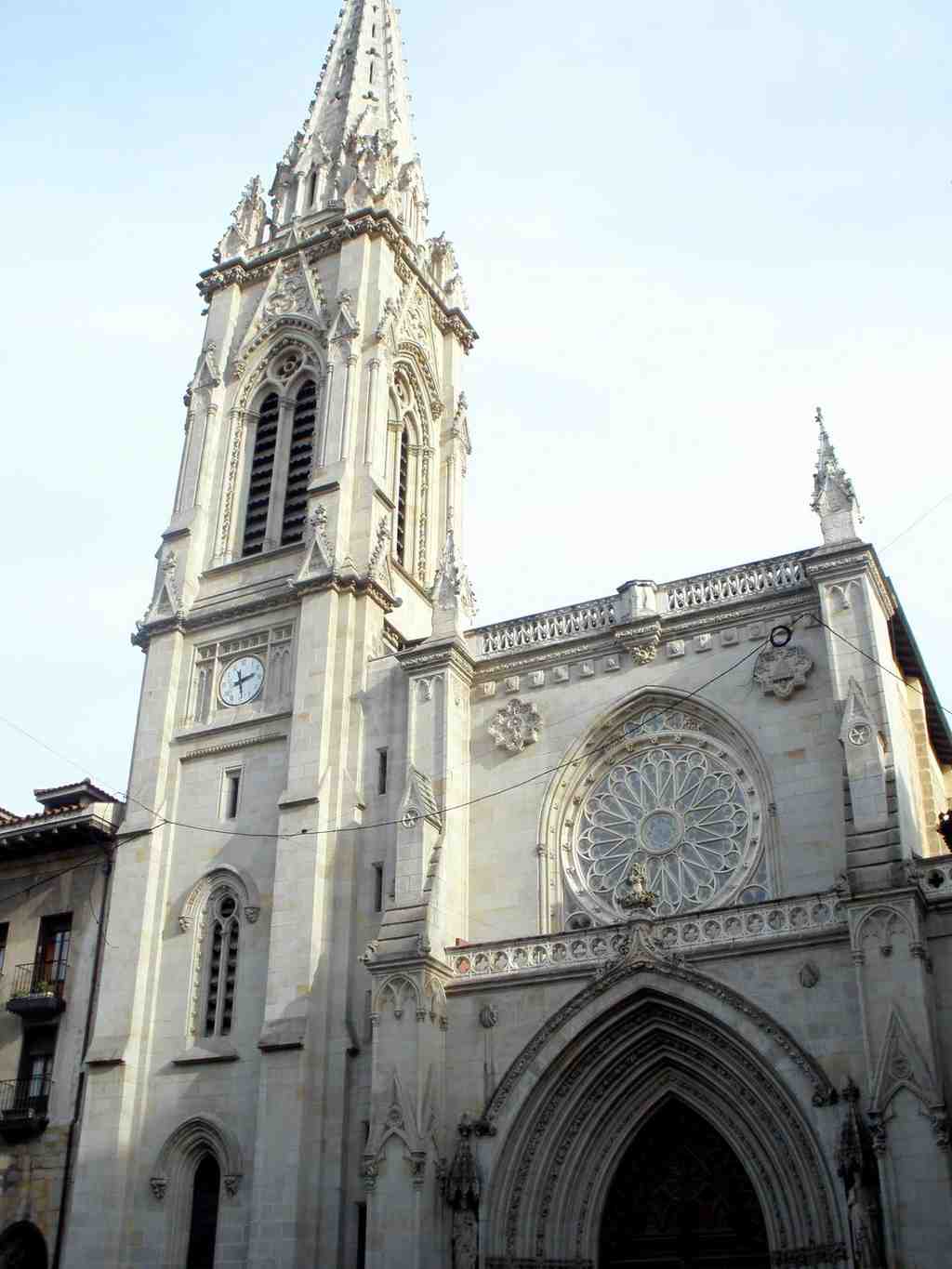
On your right, Santiago Cathedral stands in pale sandstone with a pointed Gothic portal, a round rose window, and a slender spired tower rising above the close-packed streets.
For a cathedral, Santiago feels almost modest... not small, exactly, just compact, like Bilbao packed its memory into one sturdy stone box. That fits the place. This is the Old Town at its deepest historical register, and this site held sacred use even before Bilbao received its town charter in thirteen hundred from Diego López the Fifth de Haro.
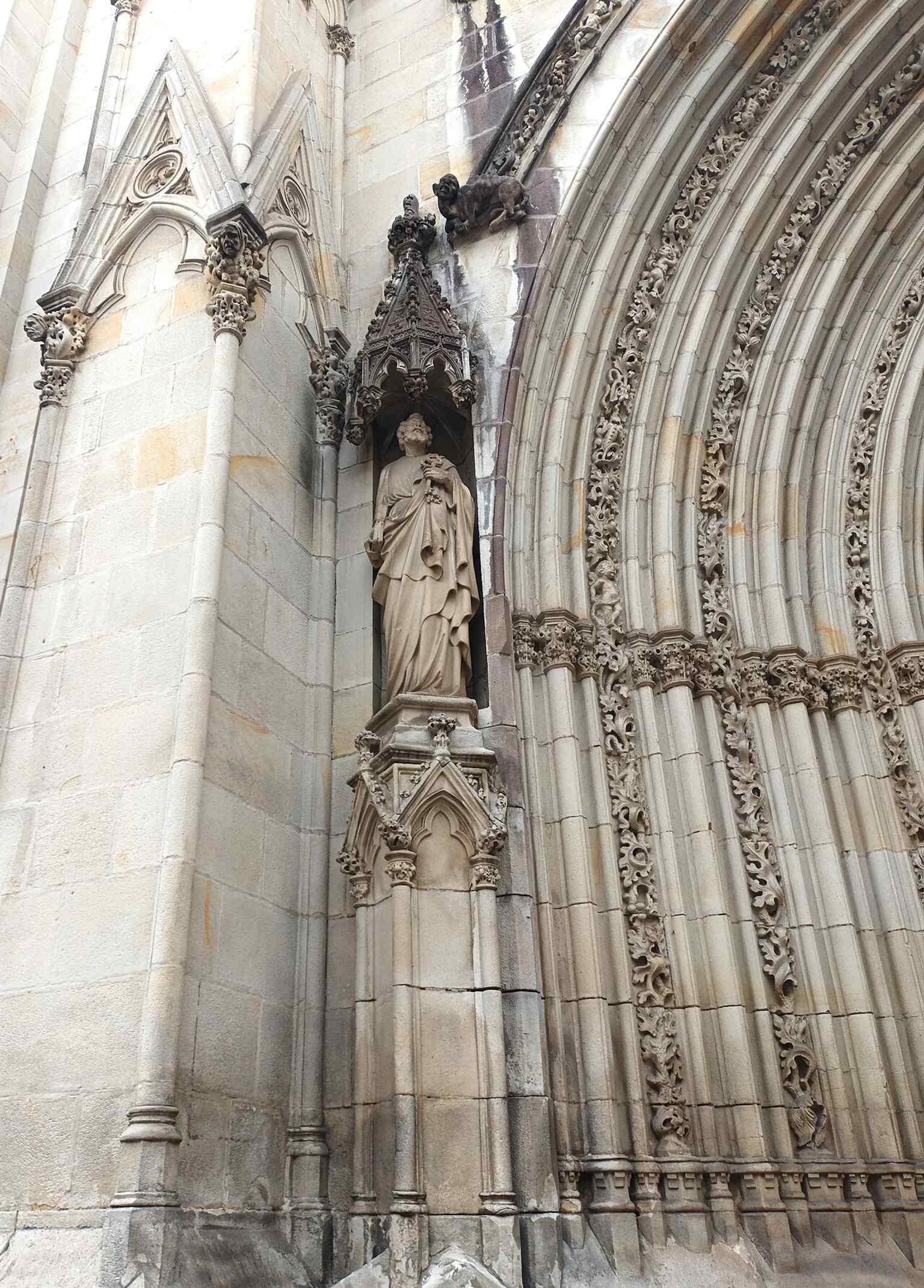
The church takes its name from Saint James, Santiago in Spanish, Bilbao’s patron saint. That dedication mattered here because a coastal branch of the Camino de Santiago, the pilgrimage route to Compostela, passed through the town. On the north side, the Puerta del Ángel, also called the Pilgrims’ Gate, still carries the shell symbol of Saint James. If you check the image in the app, you can see that shell and the delicate late Gothic carving around the doorway.
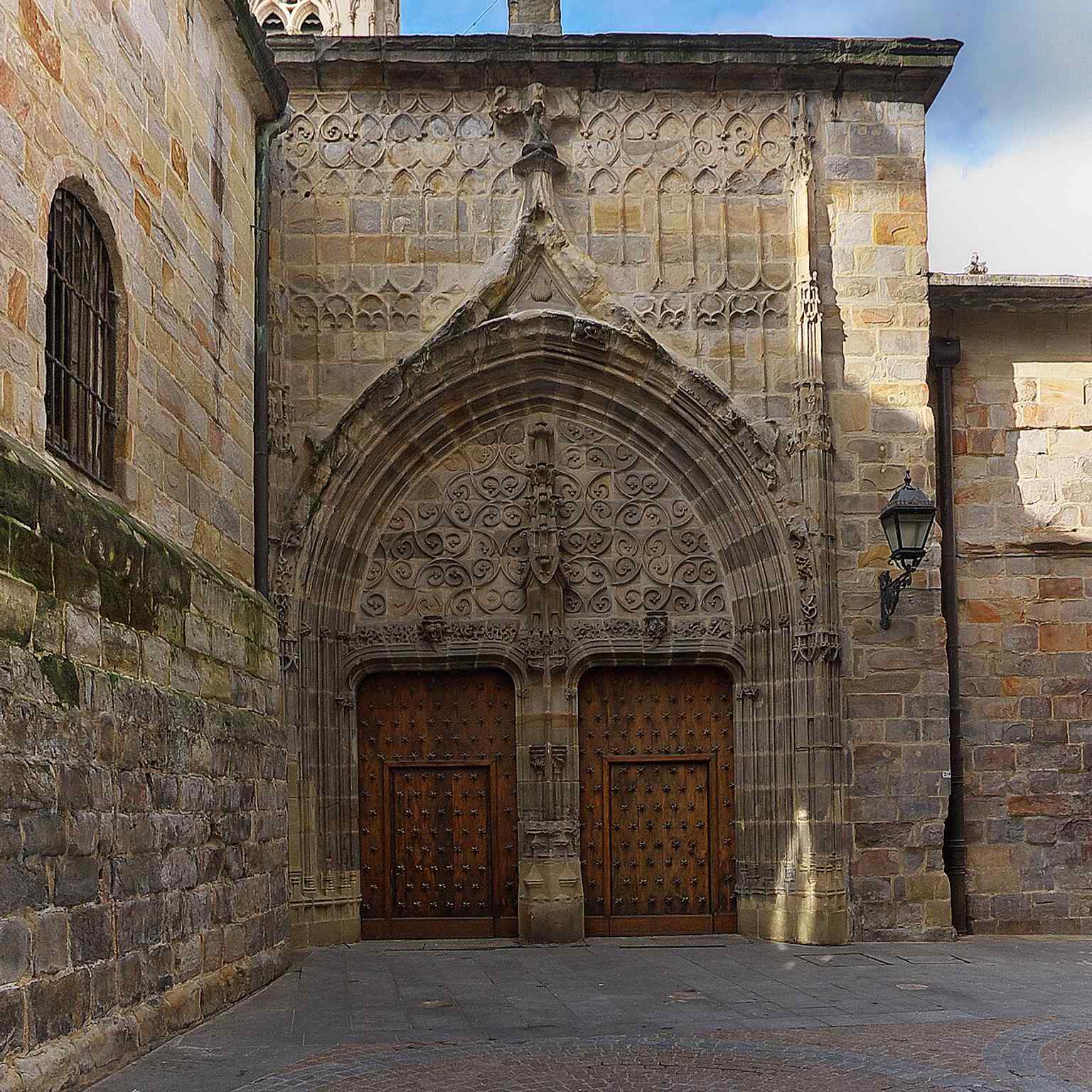
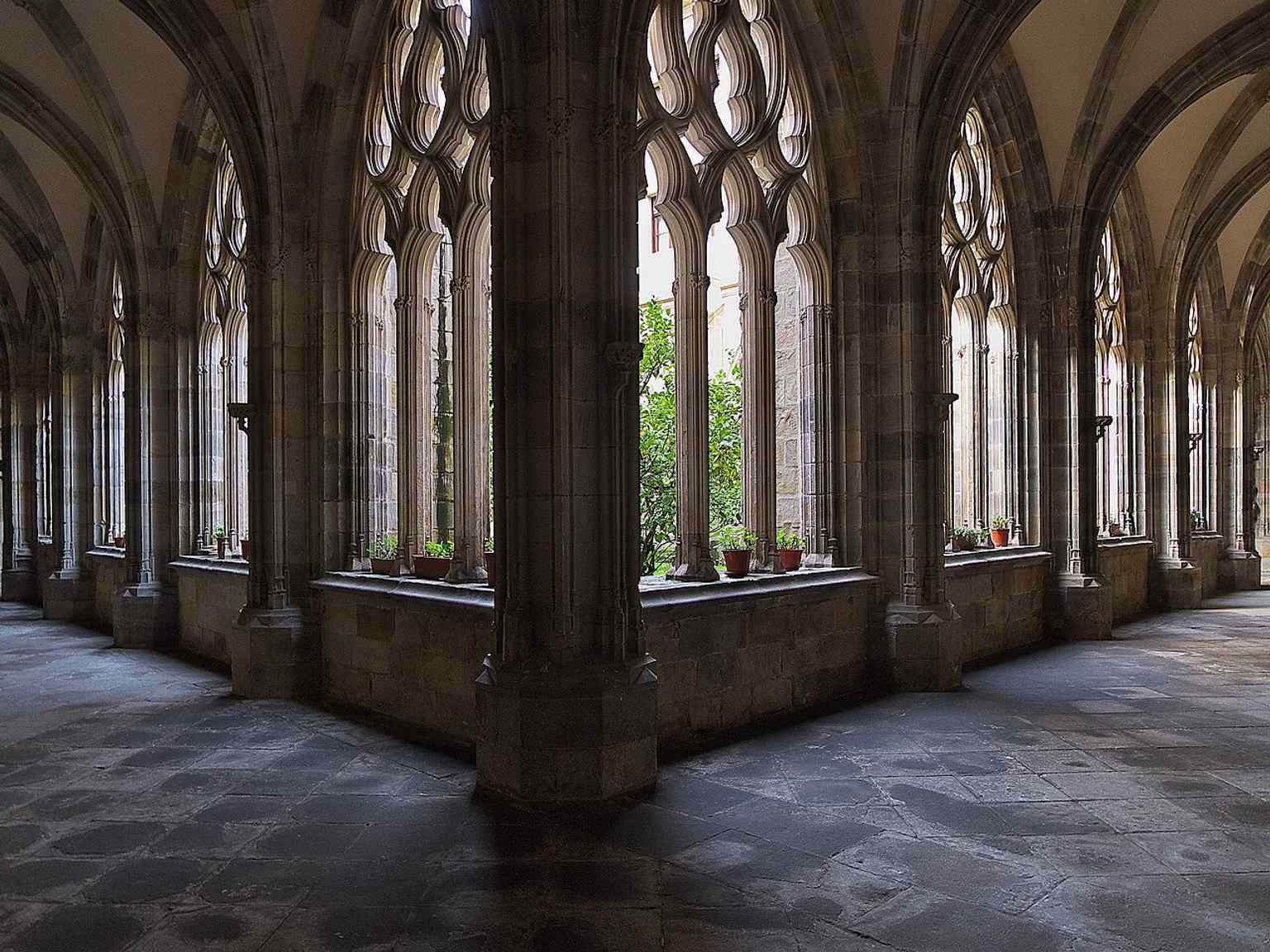
Two earlier churches stood here before the present one. The first rose before the formal founding of Bilbao. The second expanded as the settlement grew, then fire destroyed it in thirteen seventy-four. Pope Gregory the Eleventh answered in a very medieval fashion: he offered indulgences, spiritual favors from the Church, to anyone who gave alms for rebuilding. Out of disaster came ambition. Builders began the present Gothic church around thirteen ninety-seven and kept adding to it for more than a century... chapels, cloister, porch, sacristy, each generation laying down another sentence in stone.
What you see from outside, though, belongs to a later chapter. In the eighteen eighties, architect Severino de Achúcarro tore down the older classical front and gave Santiago the neo-Gothic façade you see now, completing it in eighteen ninety-one. Take a quick look at the west front on your screen and you’ll spot how that later skin frames the older heart behind it. The tower rises about sixty-four meters, built partly with white stone from Mount Oiz and topped with stone brought from Angoulême in France. Even the bells arrived in stages, cast between eighteen ninety and nineteen sixteen. Bilbao has a habit of rebuilding without erasing, and this cathedral may be the clearest example yet.
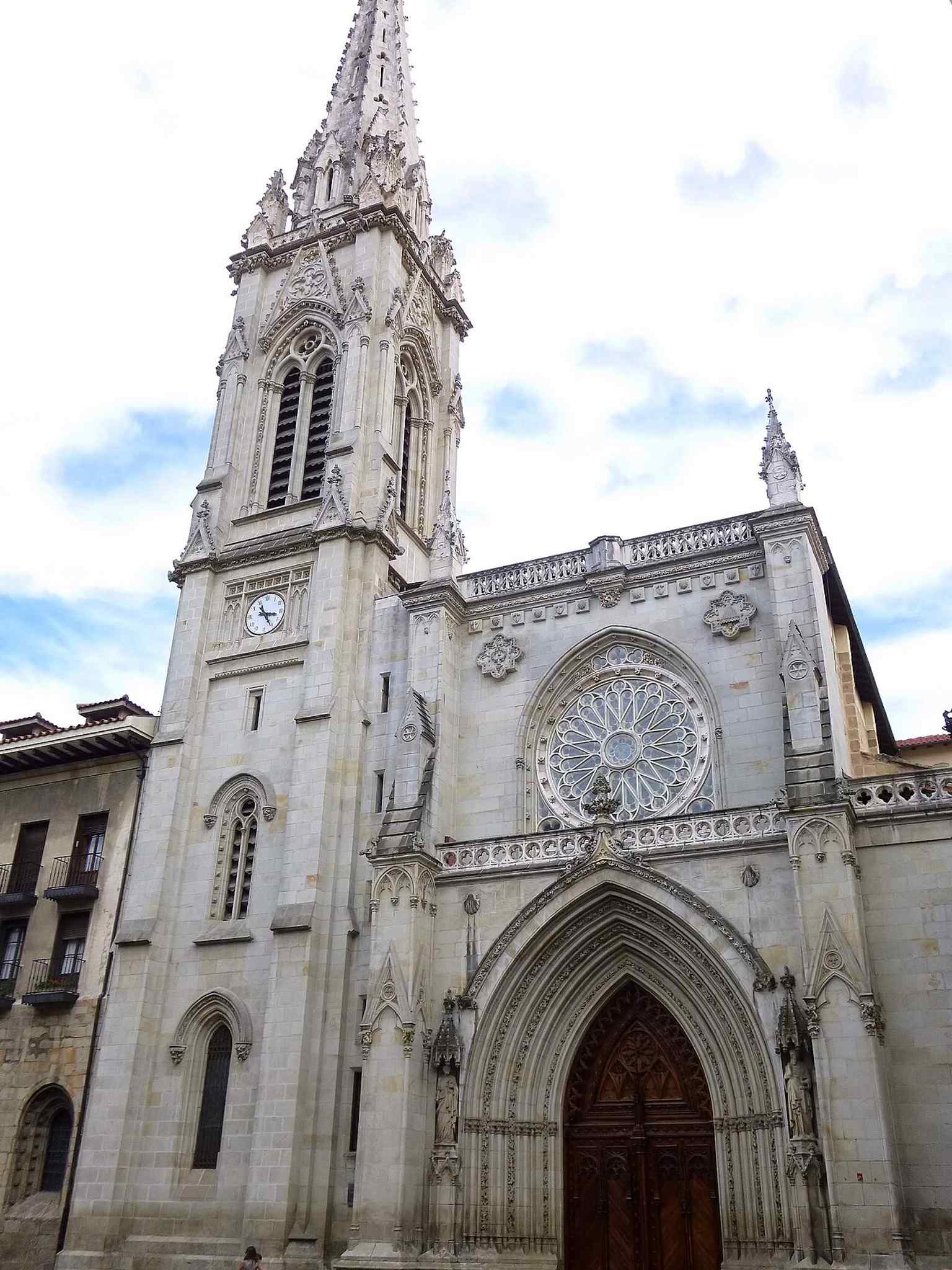
Rome granted the church the rank of minor basilica in eighteen nineteen, a special mark of honor, making it the first in the Basque Country to receive that title. Then, in nineteen forty-nine, it became Bilbao’s cathedral when the new diocese was created. Bishop Casimiro Morcillo González took possession the next year and consecrated the cathedral in nineteen fifty-five, sealing its place as the spiritual center of the city.
Most visitors study the tower and miss the real secret below the altar. In the crypt, locals sometimes speak of an old city wall, but what survives there is even better: very early masonry from the first church on this site, proof that this ground belonged to Bilbao’s story before Bilbao had fully become Bilbao.
Then came the flood of nineteen eighty-three. River water filled the Old Town and reached inside here too. Restorers worked for years, cleaning, repairing, and even lowering the floor to recover an older level. So the calm face of this cathedral is not fragile serenity... it is survival.
From here, the story moves outward toward San Antón, where riverbank, church, bridge, and city emblem lock together. When you’re ready, continue to the Church of Saint Anthony the Great. It’s about a four-minute walk.