
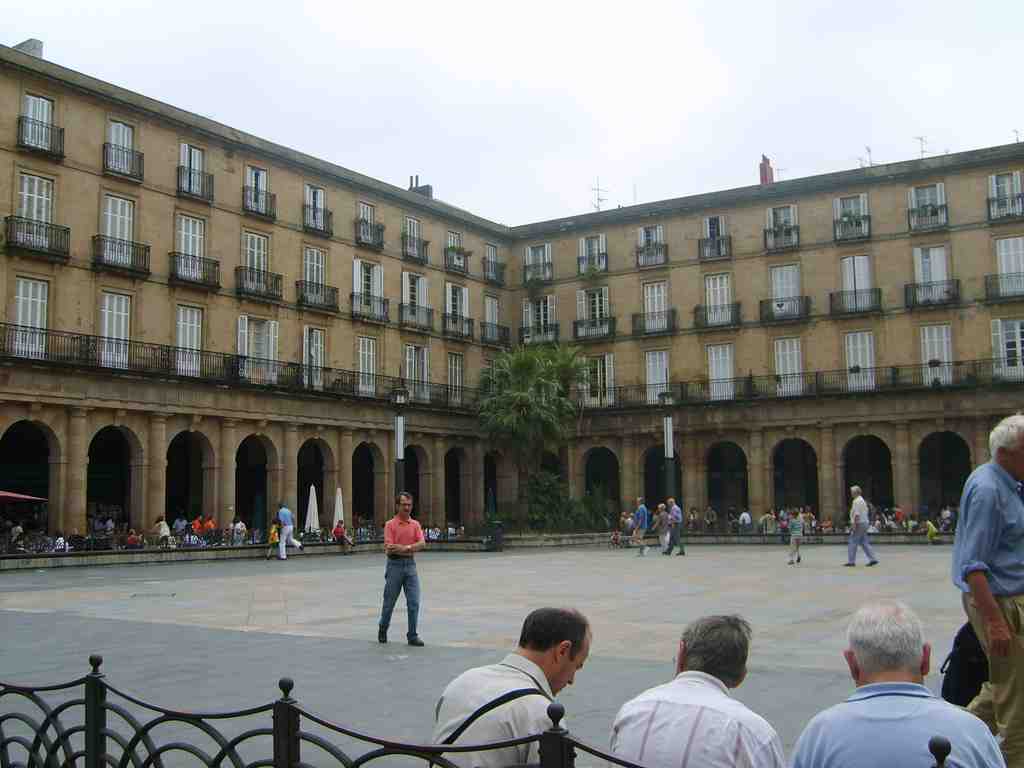
On your left, Plaza Nueva appears as a large neoclassical stone square wrapped in even arcades, with repeated round arches and a dignified central façade marked by balconies.
This place looks calm now... almost stern. That was the point. In the early eighteen hundreds, Bilbao’s old medieval core, the Seven Streets, had begun to strain at the seams, so city planners picked this site to pull the center of gravity toward the Arenal and give the growing town a cleaner, more orderly civic heart. If you glance at the image on your screen, you can see that disciplined geometry in full. No crooked improvisation here... every side lines up like a well-rehearsed choir.
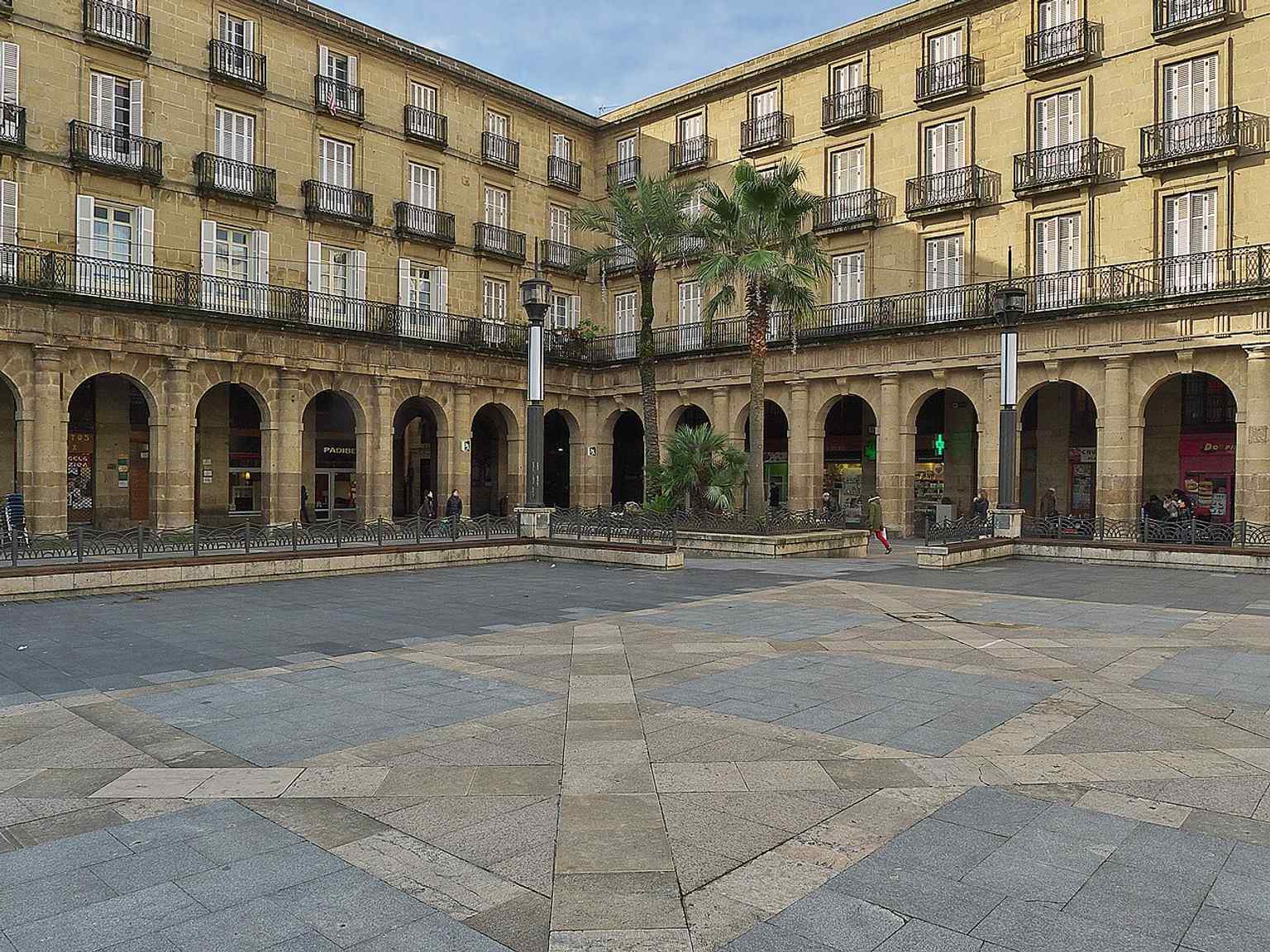
The design took shape in eighteen twenty-one, but the square did not hurry. Silvestre Pérez began the project, and Antonio Echevarría and Avelino Goikoetxea carried the work forward. Bilbao finally inaugurated it on the thirty-first of December, eighteen fifty-one. Cities, like good stews, sometimes take longer than planned.
Those arches around the edge are called cuevas, or “caves,” and they turned a formal government square into everyday Bilbao. Under them, taverns and shops settled in, while the main building served first as the Biscay government, later as Banco de Bilbao, and now as Euskaltzaindia, the Royal Academy of the Basque Language. If you look at the façade image, you are seeing that long civic handoff in one view.
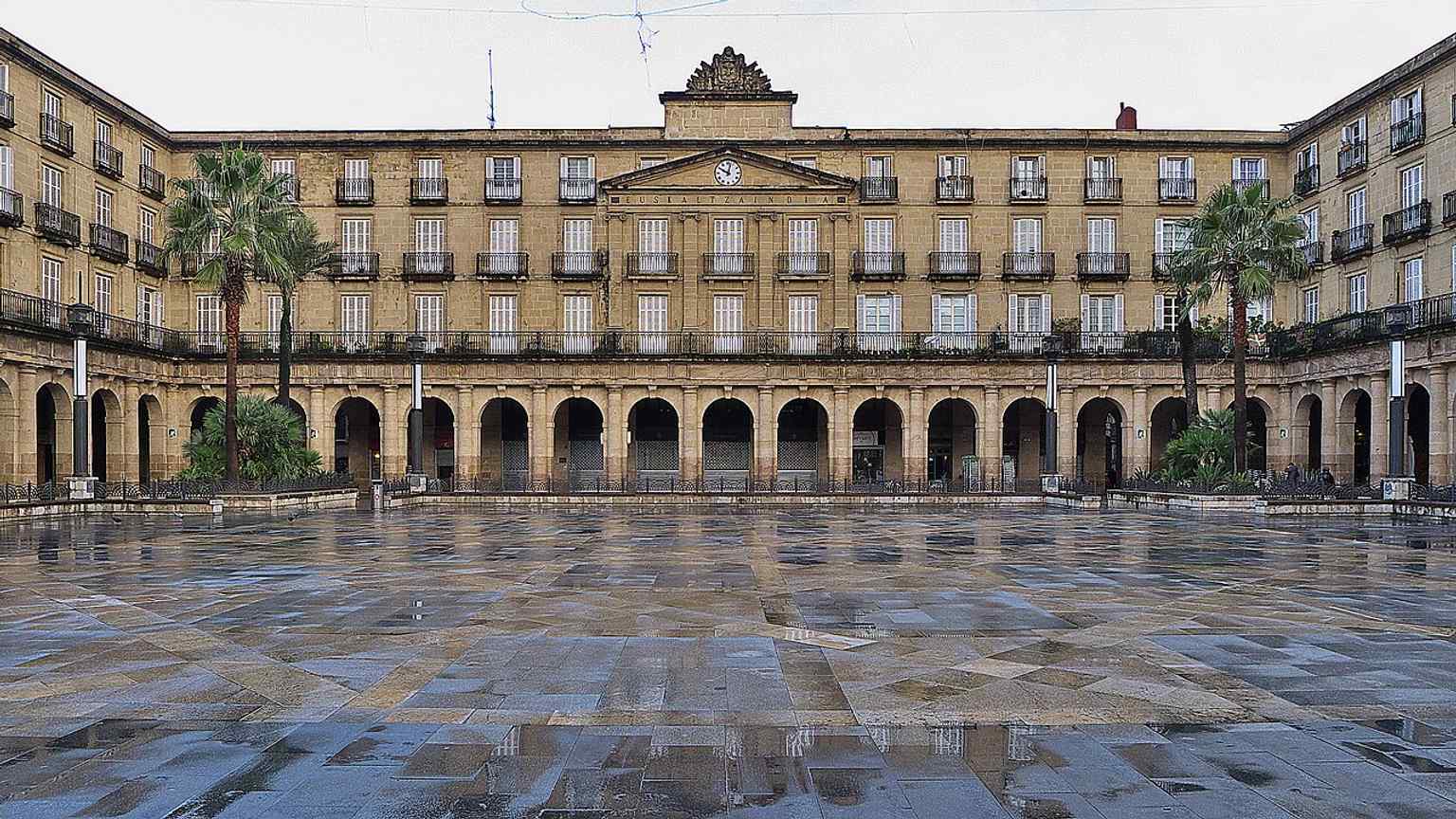
And there was theater here too, just the official kind. On the thirty-first of July, nineteen hundred, the provincial government left this square in a formal procession for its new palace on Gran Vía. Imagine the ceremony: authority literally walking out under those arches. Even the square’s center kept changing, from Mariano Benlliure’s statue of founder Diego López de Haro to a music kiosk, then a fountain.
That is Bilbao in miniature: government, business, language, memory... all taking turns in the same frame. In a moment, we’ll head to the Basque Museum, where that question sharpens: not just who ruled here, but how a people chose to remember themselves.






.jpg)