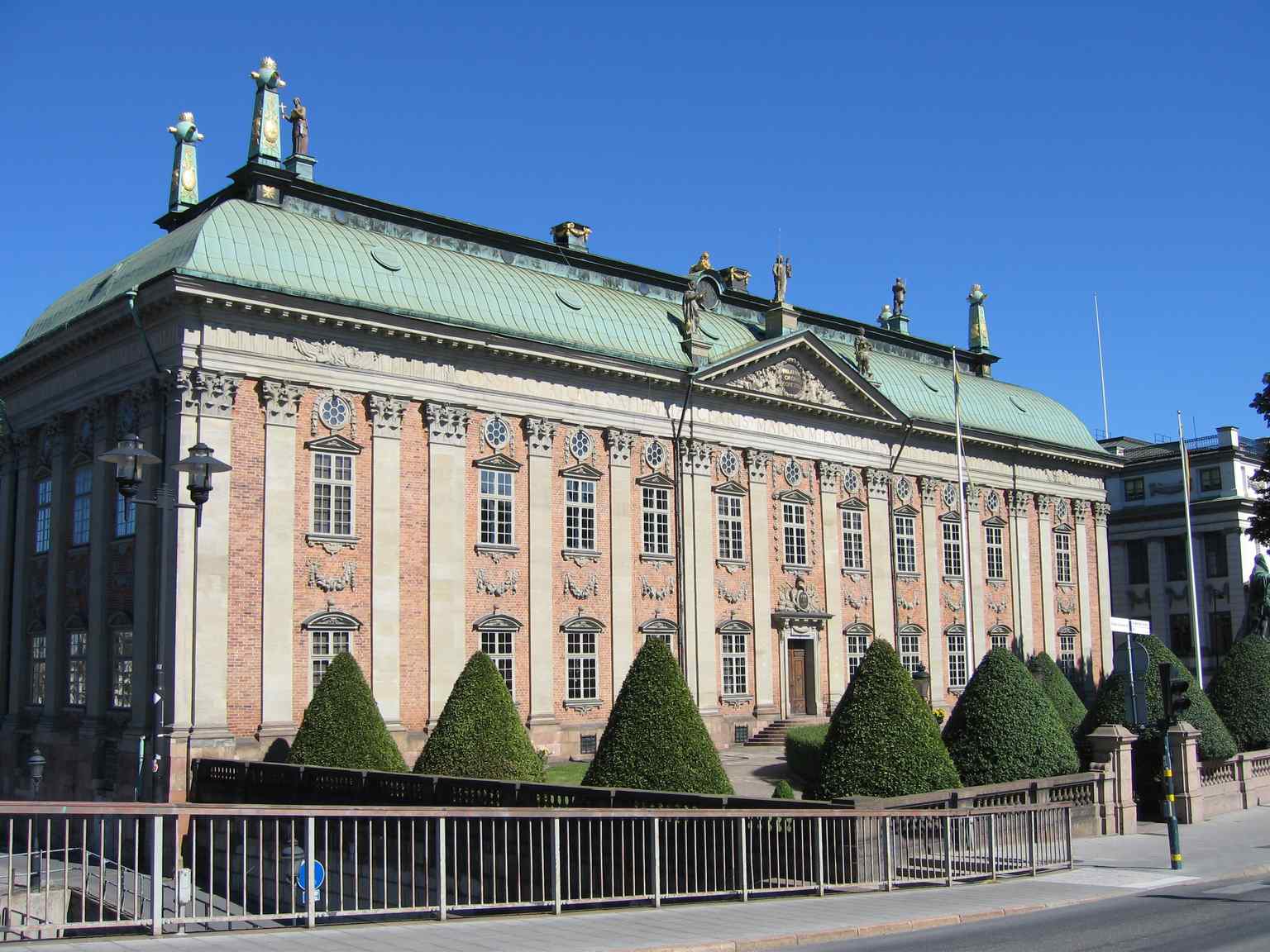
On your right, look for the long red-brick and pale sandstone palace with a tall central gable and a curved double roof marked by slender obelisk-like chimneys.
This is Riddarhuset, the House of Nobility... not a royal residence, but something in its own way just as powerful: the headquarters of Sweden’s organized nobility. From the sixteen seventies until the reform of eighteen sixty-six, the noble estate met here as a political body. The crown had its palace, the church had its cathedral, parliament had its chambers, and the aristocracy gave itself this.
That ambition began with Axel Oxenstierna. He first bought this plot for his own palace, then changed course and sold it in sixteen forty-one for three thousand riksdaler, a substantial sum at the time, when he saw how perfectly the site suited a house for the whole noble order. Most visitors never realize how unstable that choice was. The ground lay so close to the water that workers digging the foundations carted the earth straight out into the lake to build up the shoreline. Even the land under privilege had to be manufactured.
The first architect, Simon de la Vallée, came from France and brought a new language of grandeur with him. He started work here in July of sixteen forty-one. Then, in November of sixteen forty-two, on Stortorget, Colonel Erik Oxenstierna stabbed him during a quarrel. De la Vallée lingered for eight days, then died. At that point, only the foundations stood. The project nearly froze for five years, slowed further by war with Denmark. So this elegant facade carries a memory of mud, argument, and blood from its very beginning.
Others took over: the German master stonemason Heinrich Wilhelm, then the Dutch architect Justus Vingboons, who gave the building much of its final shape before he quarreled so badly with the directors that they dismissed him and sent him home. At last, Simon’s son, Jean de la Vallée, completed the palace and designed that distinctive two-part roof, the curved lower section that later helped define the Swedish manor-house roofline.
If you glance at the image on your screen, you can peek inside the grand hall where the nobility still gathers beneath a forest of heraldry. Inside hang two thousand three hundred thirty-four coats of arms, though only six hundred fifty-six noble families are still considered living lines. That tells you what this place really is: not just a beautiful building, but an institution that keeps records, rituals, property, memory... almost like a private state within the state.
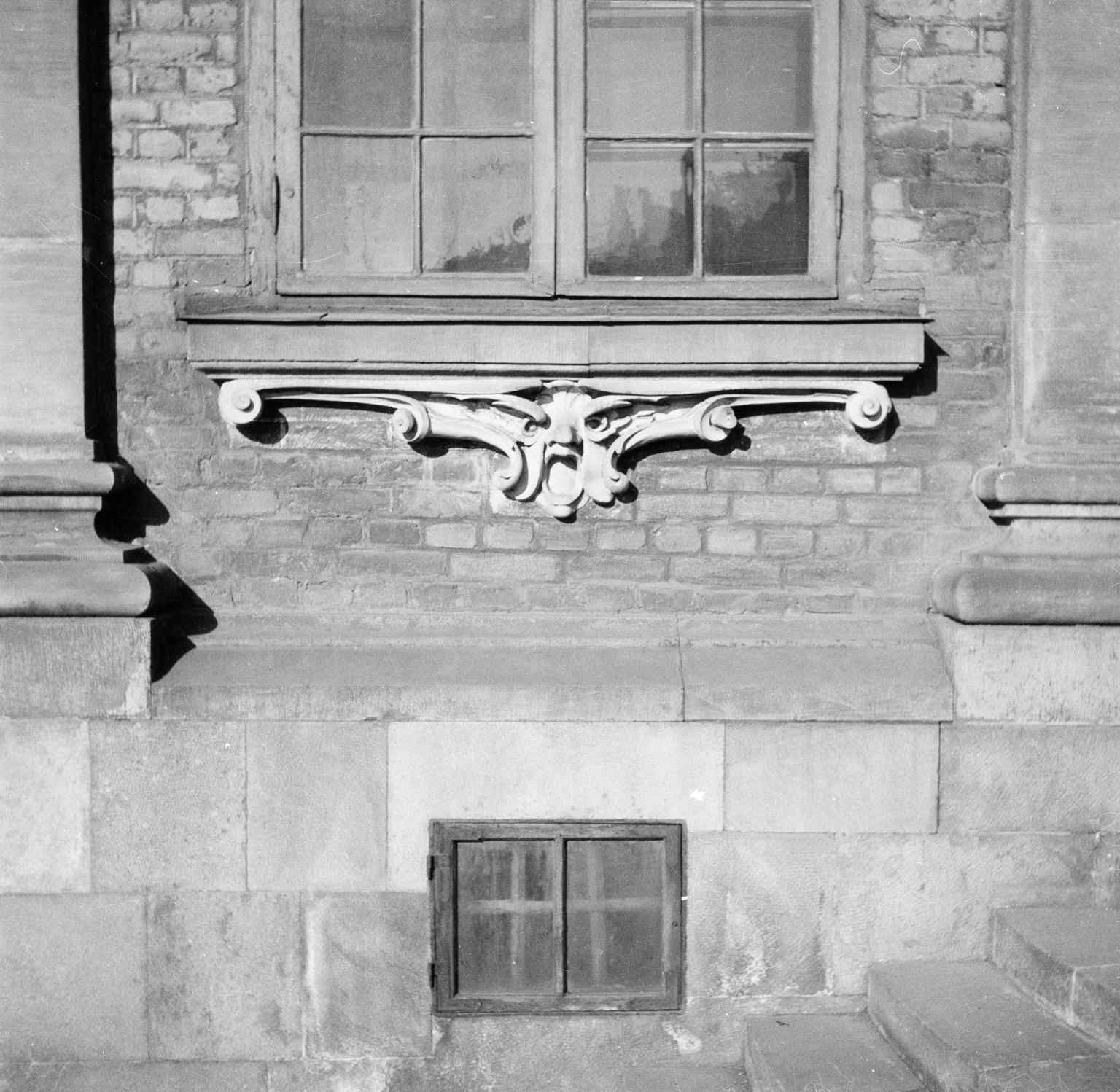
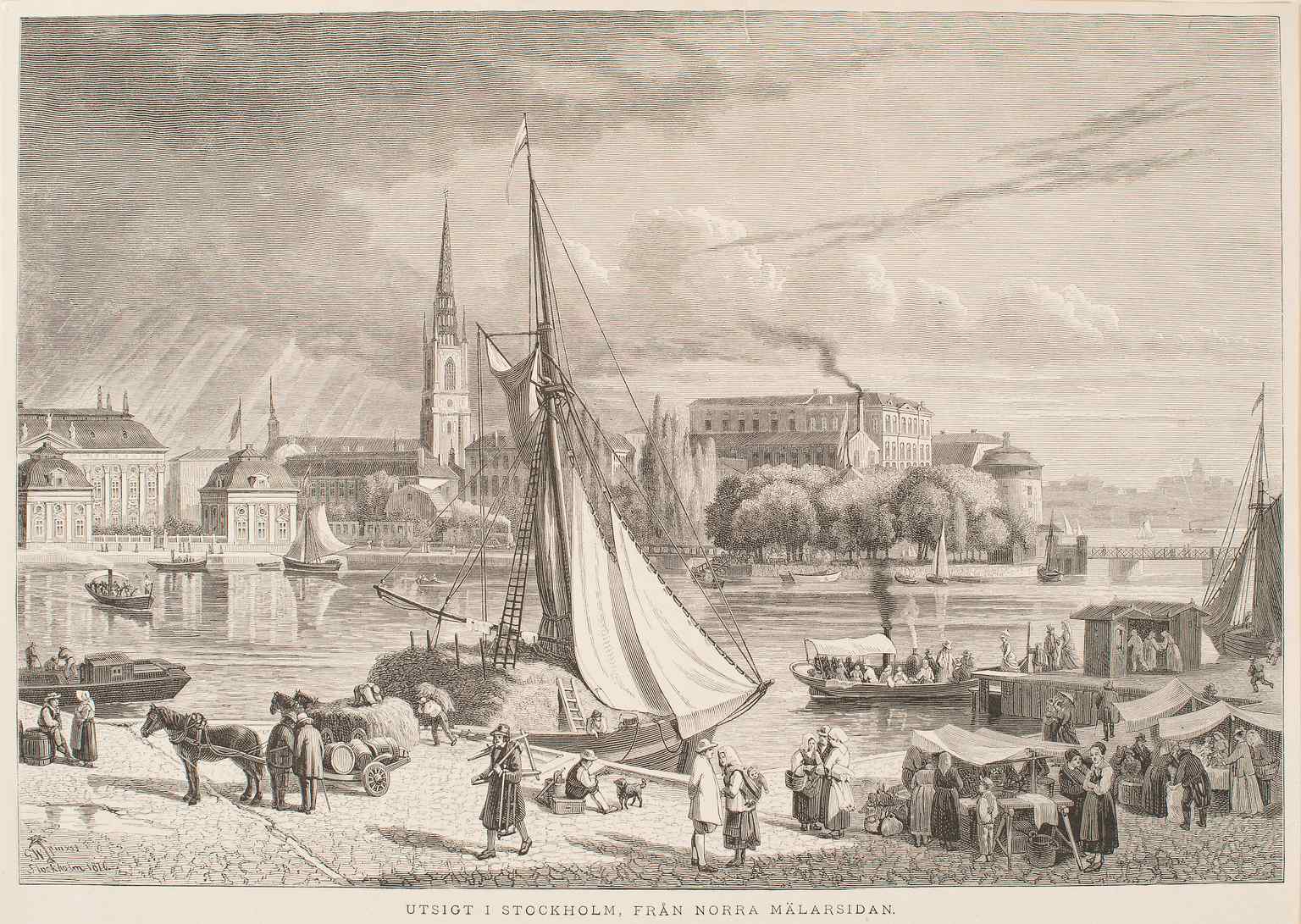
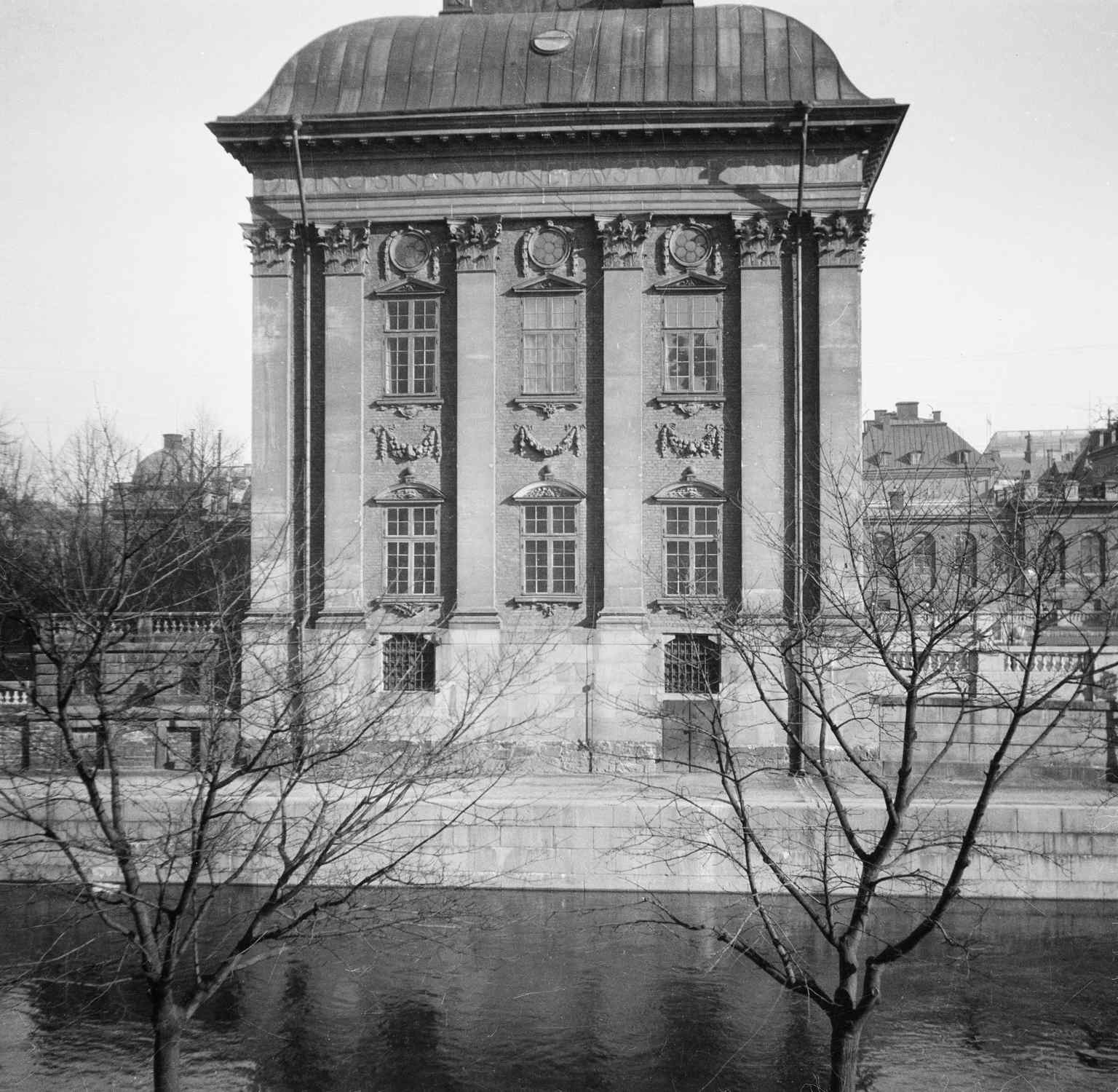
Take a look at the before-and-after image in the app; a century changes the street outside, but the facade barely yields an inch.
And this frontage has seen violence in public too. Before the forecourt garden softened the approach in the nineteen tens, the palace stood directly against Riddarhustorget. That is where the mob killed Axel von Fersen in eighteen ten, right in front of noble power made stone.
Ahead on Riddarholmen, power changes its costume again. There, kings do not meet... they are buried. Walk on to Riddarholmskyrkan, about two minutes away.
If you want to come back inside later, Riddarhuset is generally open on weekdays from eleven in the morning to noon, and closed on weekends.