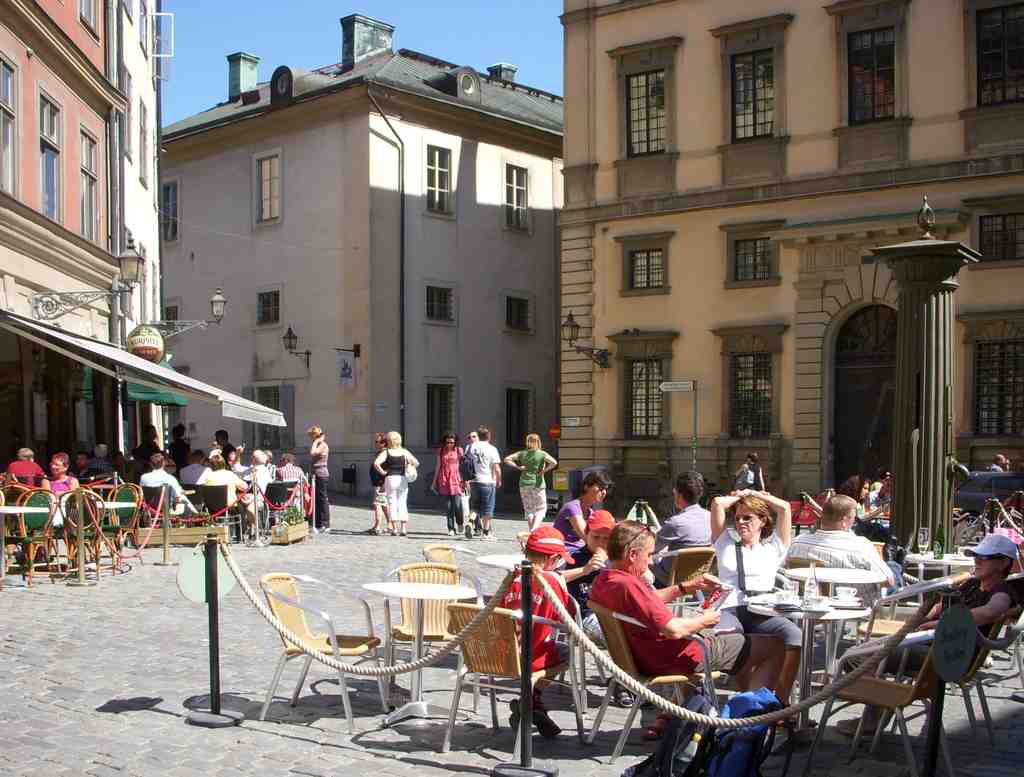
Look for a compact stone-paved square framed by tall ocher and cream façades, with a cast-iron well at its center and the stern Renaissance bank building holding the eastern side.
Järntorget is a small square... but Stockholm has hidden an astonishing amount of itself here. Beneath your feet lies part of an old post-glacial ridge, the spine of land that helped form this island. Long before these façades rose, water cut much farther into Gamla stan. The shoreline once crossed what is now the eastern side of the square, so this was not simply a plaza in a town. It began as an edge... a working margin between land and water.
That is why trade took hold here so early. By around the year thirteen hundred, this had become Stockholm’s second oldest square, and for centuries it served as one of the city’s busiest transfer points. Goods came in from Lake Mälaren and the Baltic, passed over this ground, and moved out again through the streets that still meet here: Västerlånggatan, Österlånggatan, and the lanes running toward the waterfront. Grain, iron, copper, hides, butter, wine, salt, spices, ceramics... the whole city’s appetite and ambition crossed this patch of stone.
Most visitors never notice that the square’s name preserves a turning point in Stockholm’s economy. It began as Korntorget, Grain Square. Then iron overtook barley, and by the late fifteenth century people increasingly called it Järntorget, Iron Square. It sounds like a simple renaming. It is really a record of power shifting through trade.
If you glance at the image in the app, you can see how compact the square feels today. In the Middle Ages it was larger, rougher, louder, pressed against the harbor’s life. The city’s official scales stood here by the southern square, because weighing goods meant taxing them, and taxing them meant revenue for both city and crown. Market, monarchy, and administration were never separate worlds. They leaned on one another here every day.
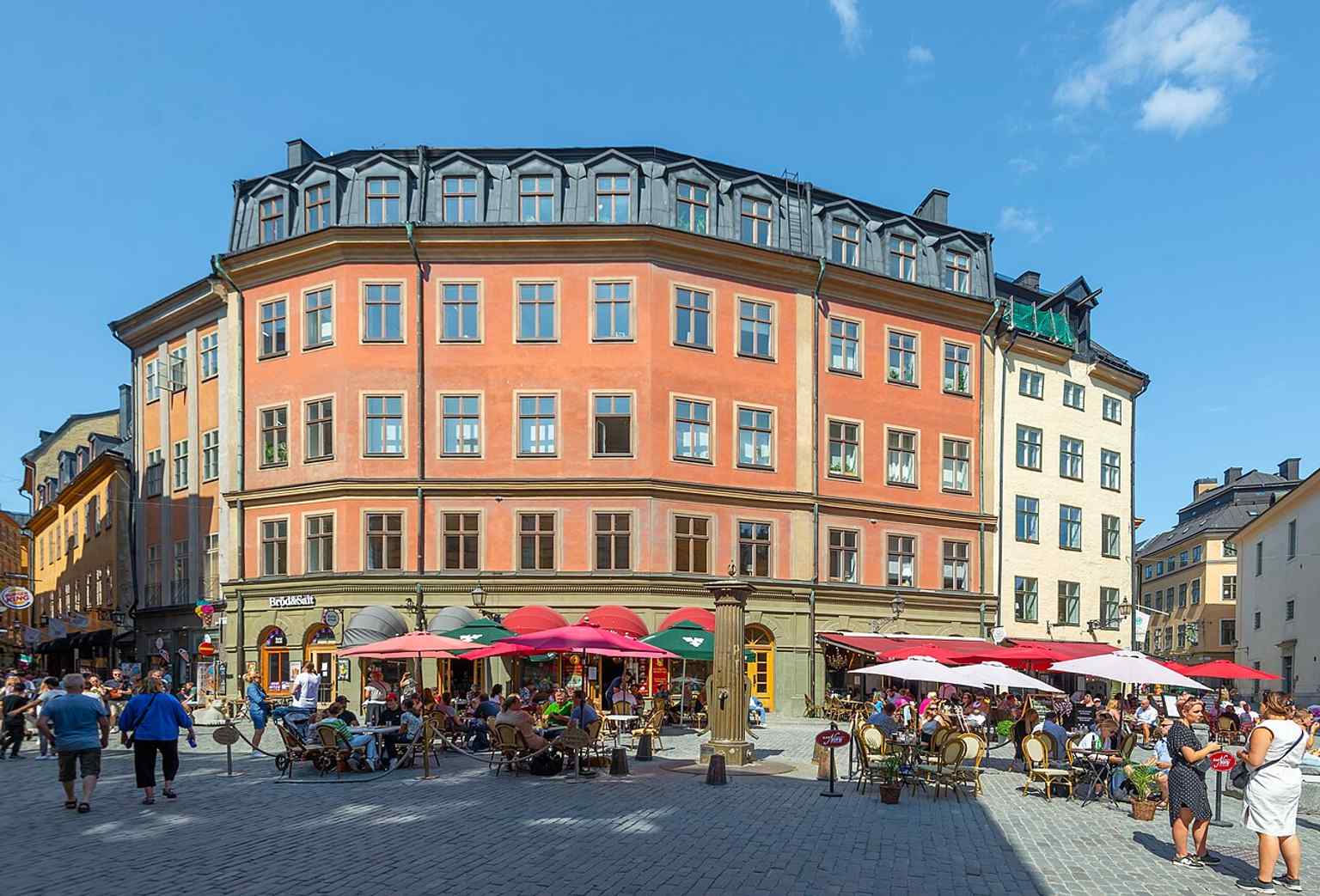
Look toward number eighty-four, Södra Bankohuset. Nicodemus Tessin the Elder gave that façade its controlled, Italian Renaissance gravity in the late seventeenth century. It announced what banks always want to announce: trust, order, permanence. Yet right beside that official face, the square kept its ordinary pulse. Johan Edvard Sundberg opened a shop and ladies’ café here in eighteen sixty-nine, offering women something rare for the time: a respectable public room of their own. But even that small freedom came with risk, because female servers still worked under the liberties men often assumed they could take. Progress, here as elsewhere in the city, arrived mixed with pressure.
And then there are the details locals still look for: the old crane perched atop number eighty-five, still hinting at hoisted cargo... the well donated in eighteen twenty-nine by the National Bank... the memory of packers once sealing iron and fish into casks nearby... and the fact that one of Stockholm’s oldest confectioners, Sundbergs, kept serving this square long after carts and manual labor still rattled through it.
If you have followed this walk from parliament to palace, from church to noble house, from execution ground to archive, this is a fitting place to end. Järntorget belongs to ordinary exchange, yet almost every larger force in Stockholm touched it: stone, water, money, labor, faith, rank, memory. In that sense, this square is not merely a final stop. It is Stockholm in miniature.