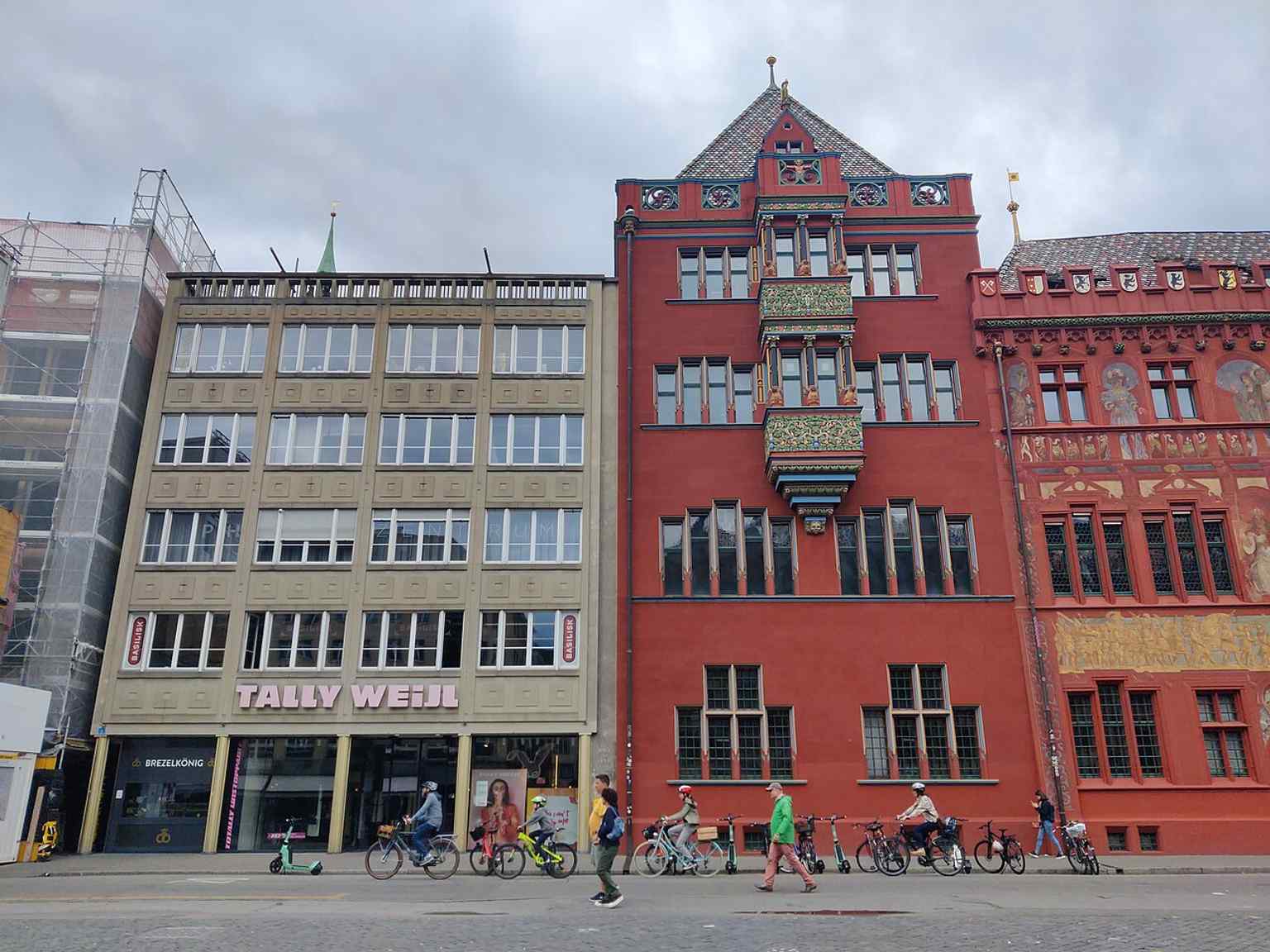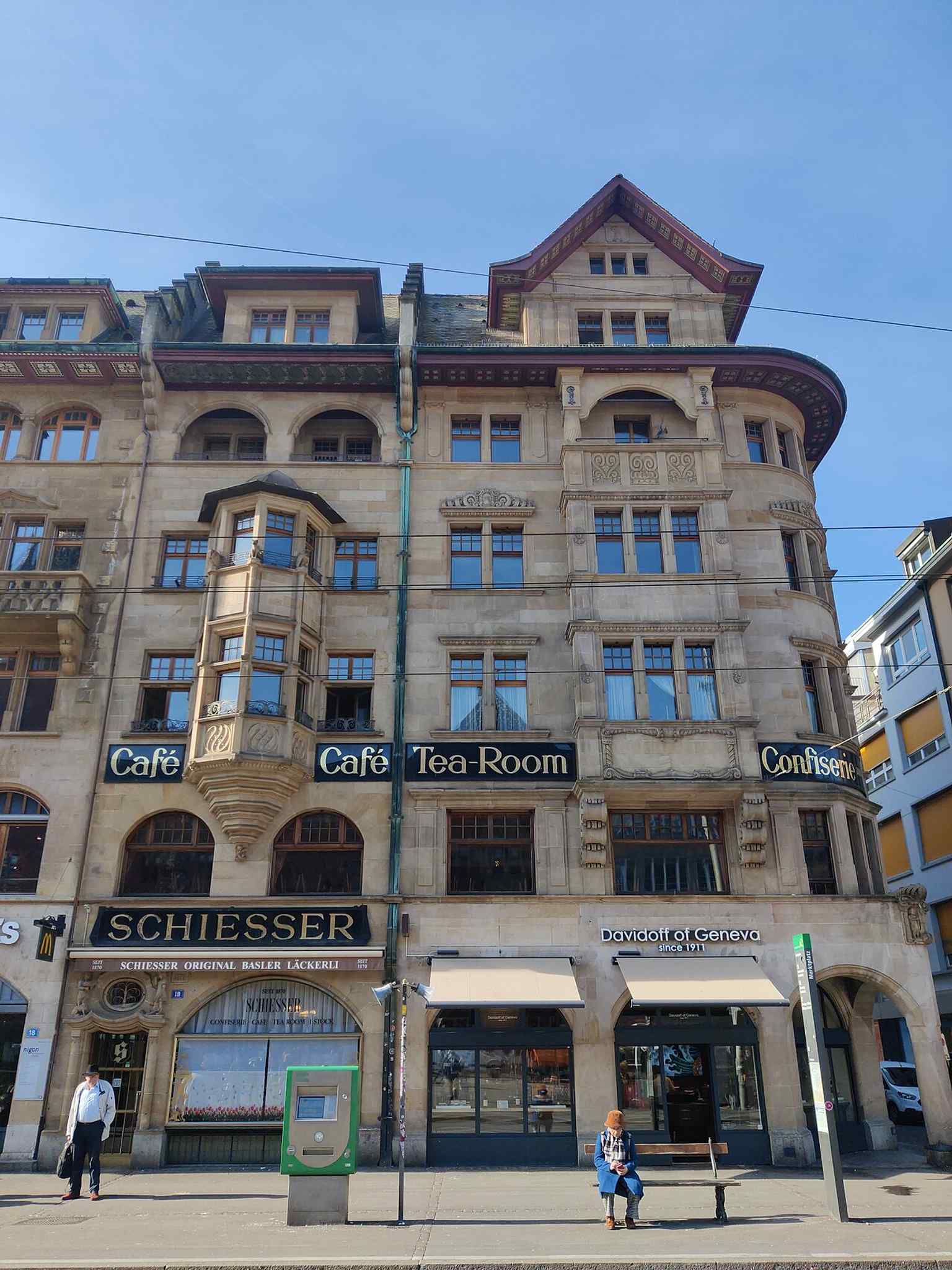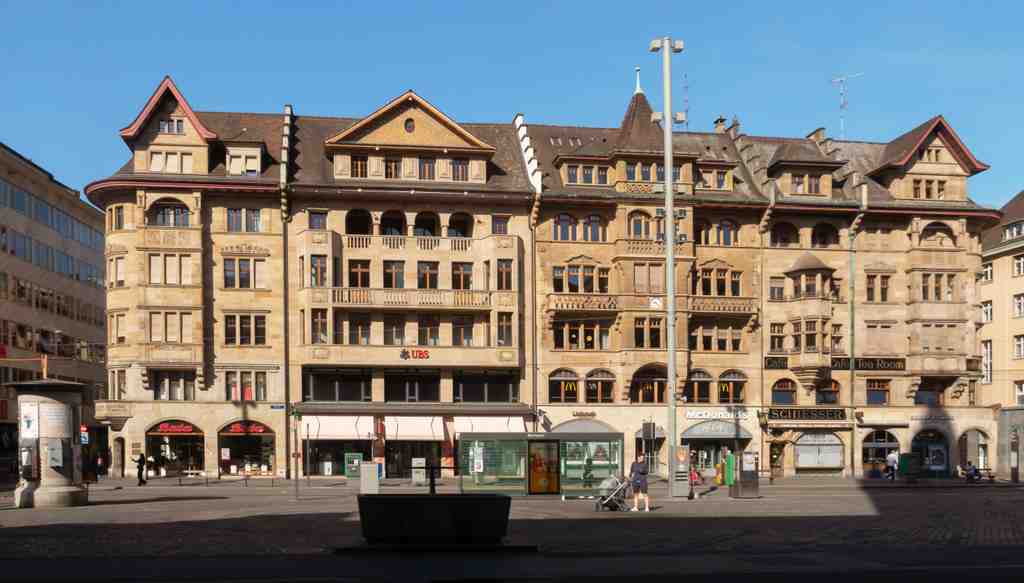
On your right, Market Square opens as a long stone-paved rectangle, its broad surface patterned with rosette paving and tightly framed by old town façades.
This is Basel’s working heart... not a ceremonial stage that happened to attract people, but a place shaped by people who needed the city to function. Under your feet lies reclaimed ground. In the late twelfth century, this area at the lower end of Freie Strasse was partly marshy land on both sides of the Birsig stream. Basel filled it, dried it, and turned it into the Kornmarkt, the grain market. The first written trace comes in eleven ninety-three, in the name of a man called Chunradus de Chornmergit. That little scrap of Latin tells you something useful: once a place earns a name, it has started doing real work.
A stream used to cut across this square. In twelve thirty, builders put up a new stone bridge here on what records called the forum frumenti, the grain market. Later, after a fire in thirteen seventy-seven, the city likely enlarged the space and eventually vaulted the stream over, tucking the water out of sight so the market could breathe. Basel has a habit of doing that: not erasing the old layer, just teaching it to carry a new one.
Look around at the lanes feeding in. Eisengasse, Marktgasse, Martinsgässlein, Freie Strasse, Gerbergasse... they all pour into this space like spokes into a hub. Goods came from the Rhine valley, the Birs valley, the Jura passes, and the roads toward Alsace. If Münsterplatz carried older prestige uphill, this square handled the heavy lifting downhill.
And it kept changing when the city changed. In the eighteen eighties, Basel tore down the block along the lower side. Then came the very Swiss part: a public vote decided not to rebuild on that land, but to fold it into the square. So the old near-square doubled in size and stretched into the long rectangle you see now. In eighteen ninety-one they leveled it, raising the west side; in eighteen ninety-five electric trams began crossing; by nineteen oh three the open space had its paving, including those decorative rosettes that still survive. If you want a quick picture of how this place works today, have a glance at your screen. The tram stop image catches the square doing what it does best: moving people efficiently without losing its old bones.
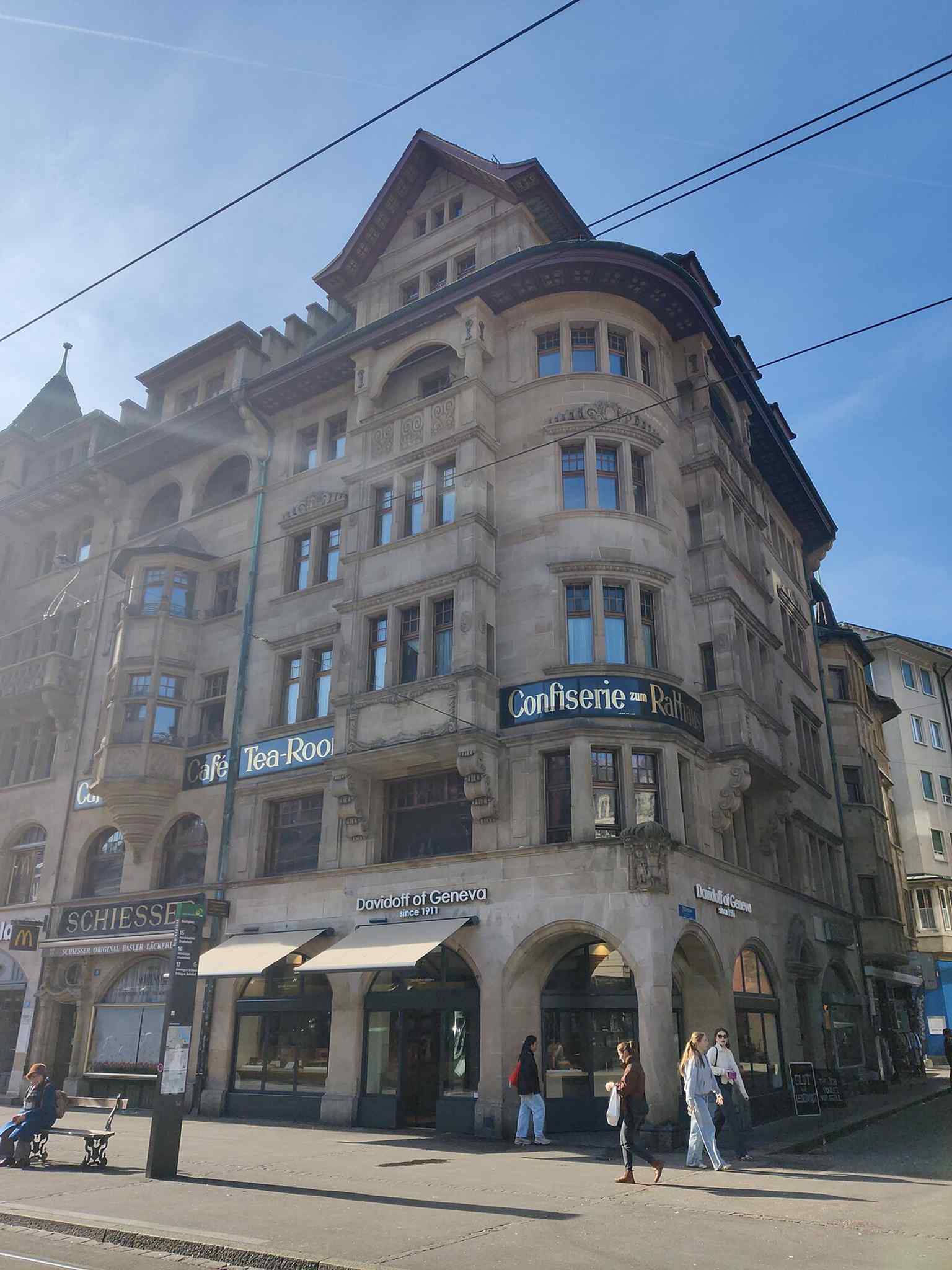
This square also turned public power into public theater. In fifteen oh one, citizens gathered here while Basel’s pact with the Swiss Confederation was read aloud and sworn before armed townsmen. In danger, men assembled here and drew weapons from the Rathaus. Justice happened here too, sometimes grimly, with the pillory and public executions right in view of the crowd.
Then came Paracelsus. In fifteen twenty-seven, Basel’s city physician and lecturer reportedly staged a book burning here, tossing the authority of Galen and Avicenna into the fire to declare that medicine should trust observation over inherited doctrine. In other words, he picked the busiest square in town and said, very publicly, “I’ve got notes.”
If you peek at the app again, the view toward Martinsgässlein shows how the square opens straight into the city’s older routes and institutions. That is the point of Marktplatz: trade, government, argument, and daily life all sharing one stone floor.
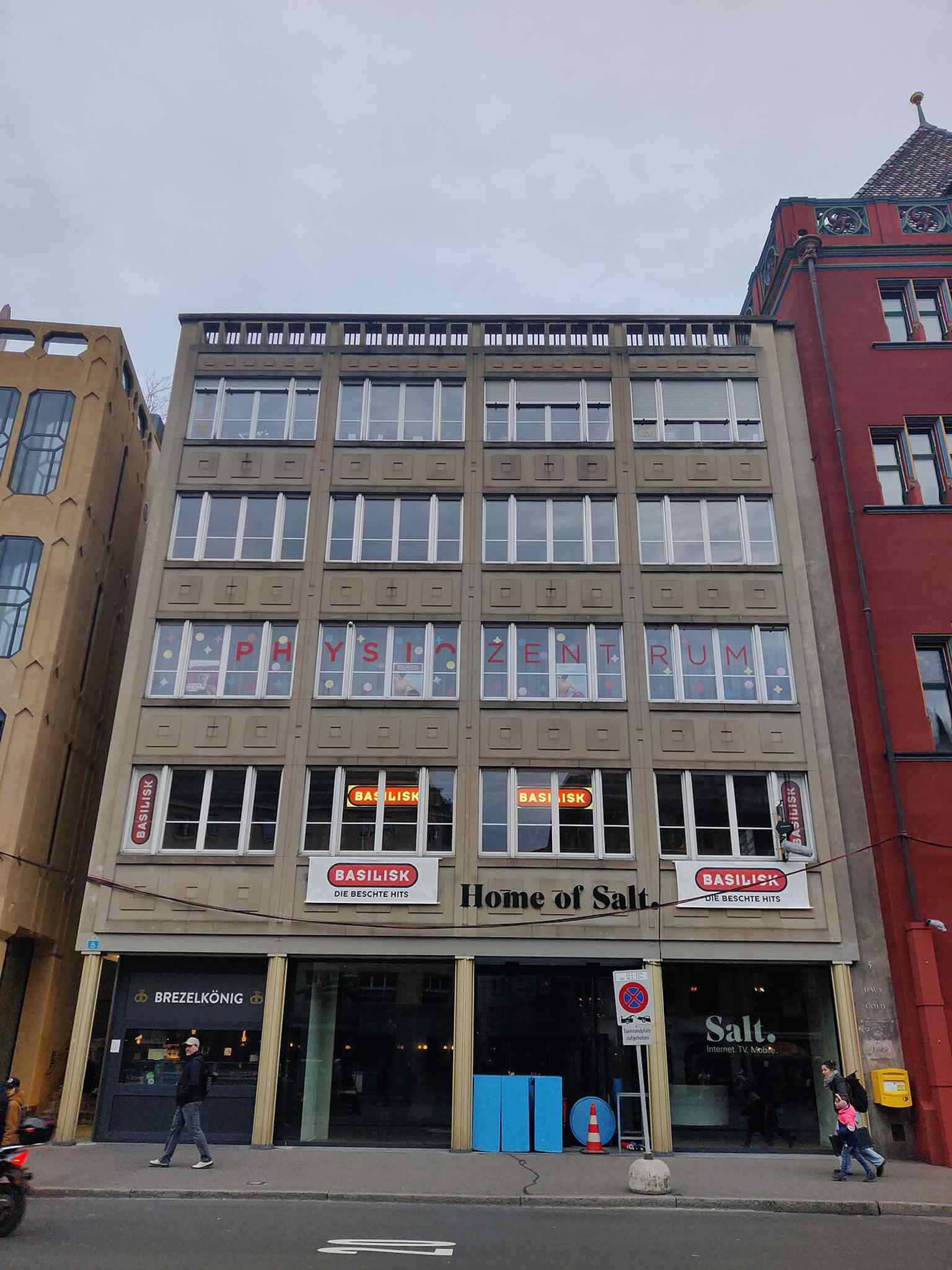
Now let your eyes follow the lanes toward the books, jars, and learned remedies waiting ahead. The Pharmacy Museum is about a two-minute walk away. And if you ever want the square at its most practical, the daily market usually runs Monday through Thursday from eight to two, Friday and Saturday until five, and rests on Sunday.