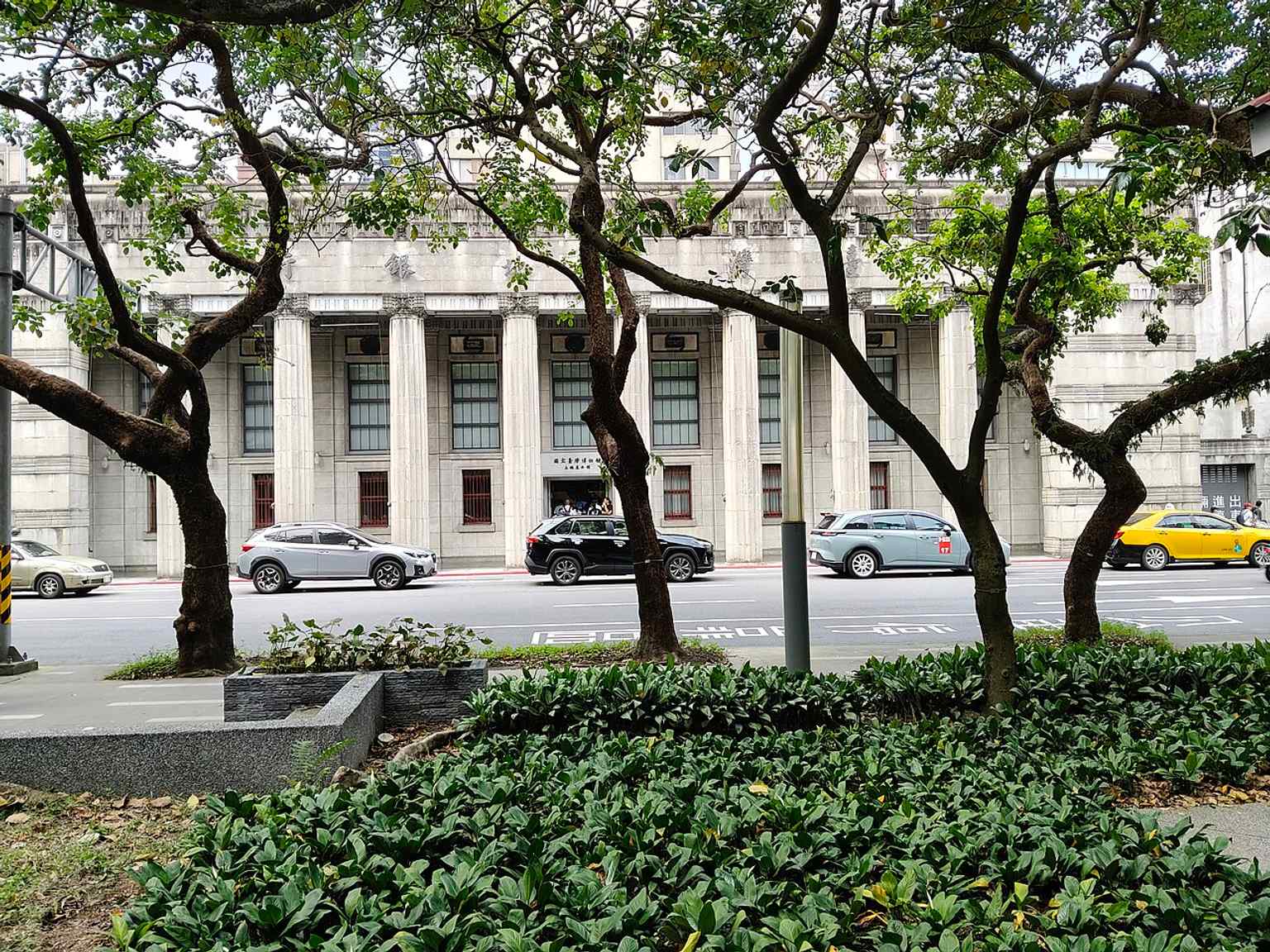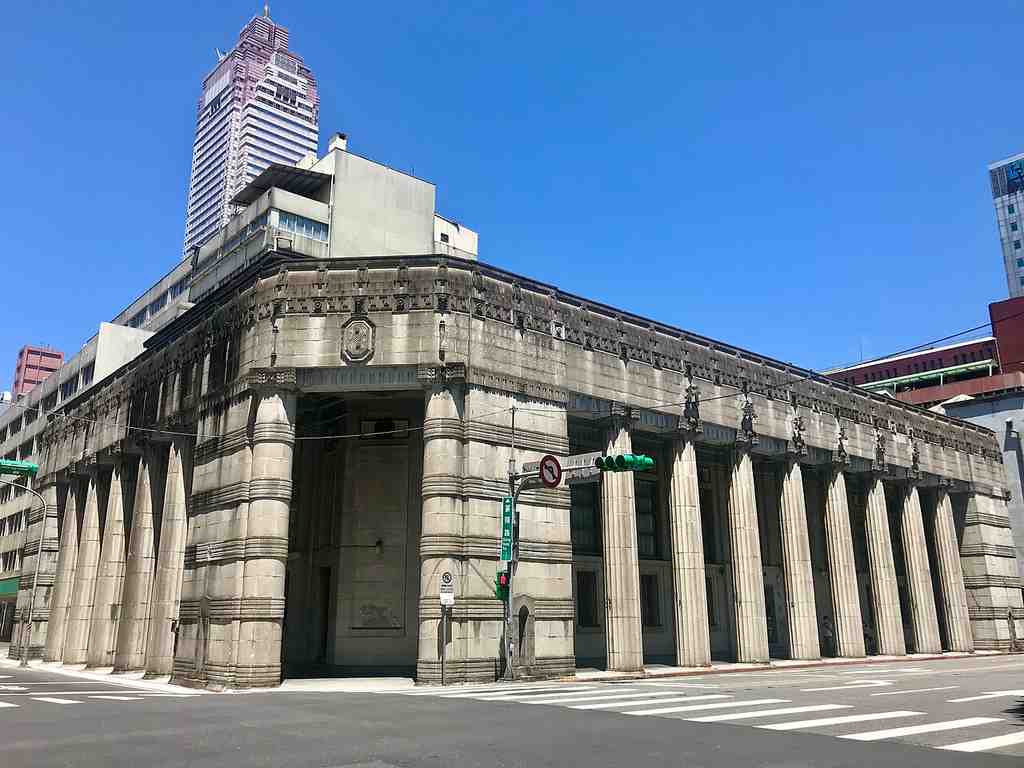
On your right, look for a gray-white stone facade with a broad, blocky front, tall classical columns, and carved lion faces set high near the roofline.
At first glance, it looks less like a bank than a place built to make ordinary people feel very small... which, to be fair, was part of the design brief.
This building opened in nineteen thirty-three as the Taipei branch of Japan’s Kangyo Bank. In colonial Taiwan, a bank like this did far more than hold deposits and issue loans. From the nineteen twenties onward, it handled real estate, land development, forestry, and irrigation works, so money here helped decide who could cultivate land, who could improve it, and who could profit from it. That is the first twist in this part of Taipei: power did not only sit in government offices. Sometimes it wore a suit, carried a ledger, and approved a canal.
The architecture sold that authority hard. The builders used new engineering for the time: a long-span steel truss, reinforced concrete roof slabs, and earthquake-conscious plaster work, lessons learned after the Great Kanto earthquake in Japan. The style mixed heavy classical columns with what scholars call Maya Revival, meaning geometric reliefs inspired by ancient American forms rather than delicate Greek leaves. If you look at the upper details, the decoration feels blunt and muscular, not fussy. Banks have never relied on modesty.
Inside, the original hall stretched about forty meters long, sixteen meters wide, and ten meters high. No low intermediate floor cut across it, because the whole point was to create awe. Air conditioning already ran through the building in nineteen thirty-three, with return vents under the floor and outlets in the walls. The vault sat in the core with a single entrance, a copper security door, thickened walls, and forced ventilation. Efficient, impressive, and faintly menacing... a good summary of modern bureaucracy.
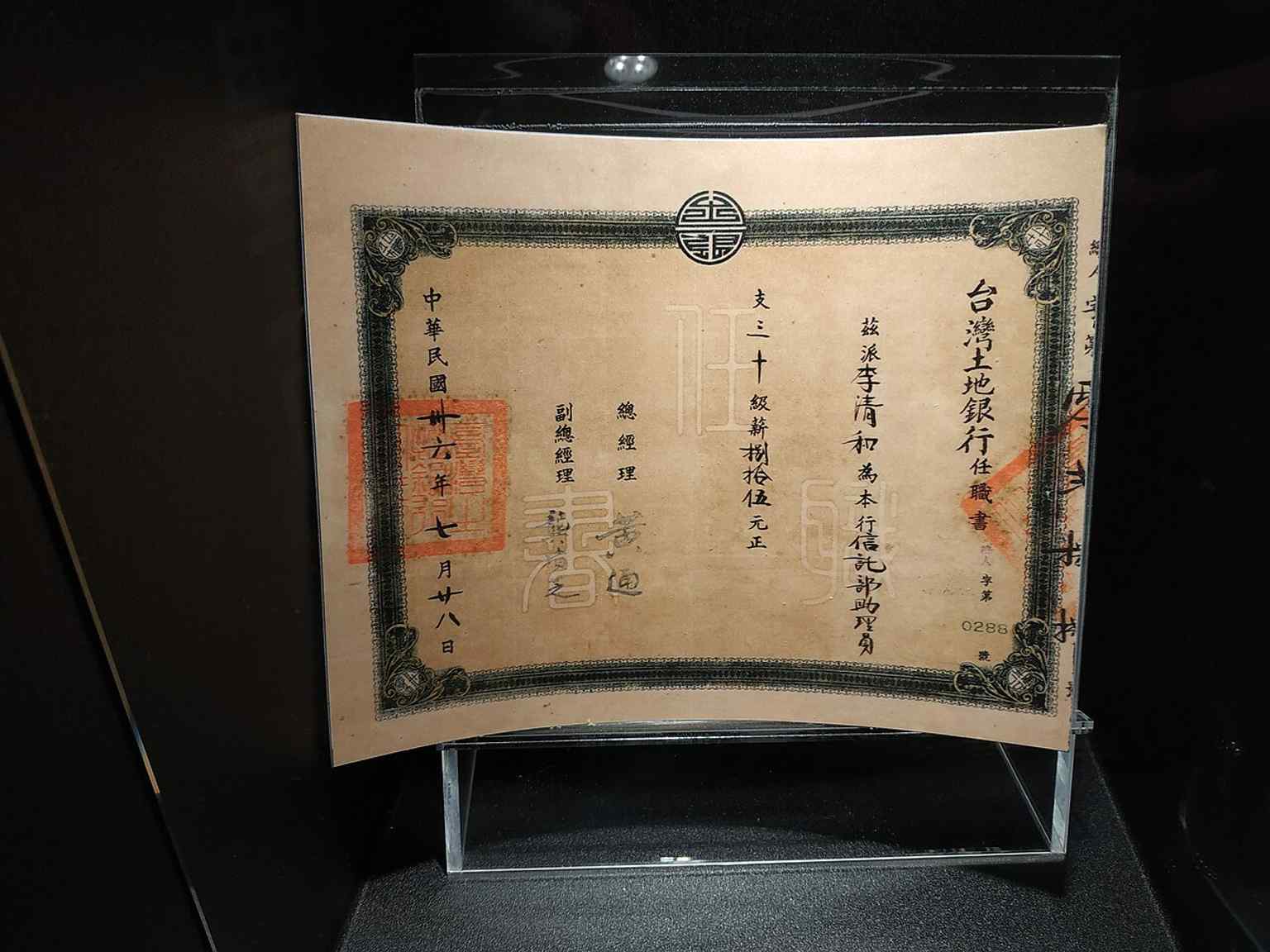
After the war, the Land Bank of Taiwan took over and turned this into its headquarters until nineteen sixty-five. That shift mattered. The same building that had served colonial finance became part of postwar land reform, including the “land-to-the-tiller” program. If you check the image on your screen, that nineteen forty-seven appointment letter on display here is a small but telling survivor from that era. Later exhibits added land bonds, public land manuals, and measuring tools, linking finance directly to reshaping the countryside.
Then came another twist. In the nineteen eighties, the bank wanted to demolish this old place and replace it with a new financial tower. Scholars pushed back. In two thousand ten, it reopened under the National Taiwan Museum as the Paleontology Hall. So now a building designed to intimidate depositors invites children to admire fossils. That is a pretty satisfying reversal.
One person captures the human side of that change. In two thousand ten, National Taiwan University anthropologist Hsieh Shih-chung visited and said his father had worked here since the Kangyo Bank days, yet the museum barely mentioned that working life. It was a useful complaint. A monument is not only style and policy; it is also the memory of clerks, managers, and families who spent years inside its routines.
If you want a closer look at the facade’s old authority, the exterior image in the app helps pick out that preserved nineteen thirties frontage. From here, Taipei City North Gate is about an eleven-minute walk away, and this exterior remains accessible twenty-four hours a day if you want to circle back later.