
Taipei Audio Tour: Historical Paths
Beneath the neon glow of Taipei lie bullet-scarred walls and the echoes of empires that refused to fall. This city is a battlefield of memory where every shadow guards a secret. Unlock the hidden narrative of Taiwan with this self-guided audio tour. Navigate beyond the polished tourist path to uncover the scandals and rebellions that shaped a modern nation. Why does the Presidential Office loom like a silent fortress over the city? What ghostly presence haunts the red brick corridors of Bopiliao? How did a singular afternoon at the Chiang Kai-shek Memorial Hall ignite a decades-long political firestorm? Stroll through history as the past breathes through your headphones. Feel the pulse of an island forged in conflict and resilient hope. Watch as the familiar streets transform into a theater of forgotten legends. Ready to confront the history that remains hidden in plain sight? Start your journey now.
Tour preview
About this tour
- scheduleDuration 120–140 minsGo at your own pace
- straighten5.6 km walking routeFollow the guided path
- location_on
- wifi_offWorks offlineDownload once, use anywhere
- all_inclusiveLifetime accessReplay anytime, forever
- location_onStarts at Presidential Office (Taiwan)
Stops on this tour
lock_open 3 free previews · 10 unlock with purchase
In front of you stands a long red-brick facade on a gray stone base, laid out in strict symmetry and pinned at the center by a tall square tower. This is where our walk really…Read moreShow less
Open dedicated page →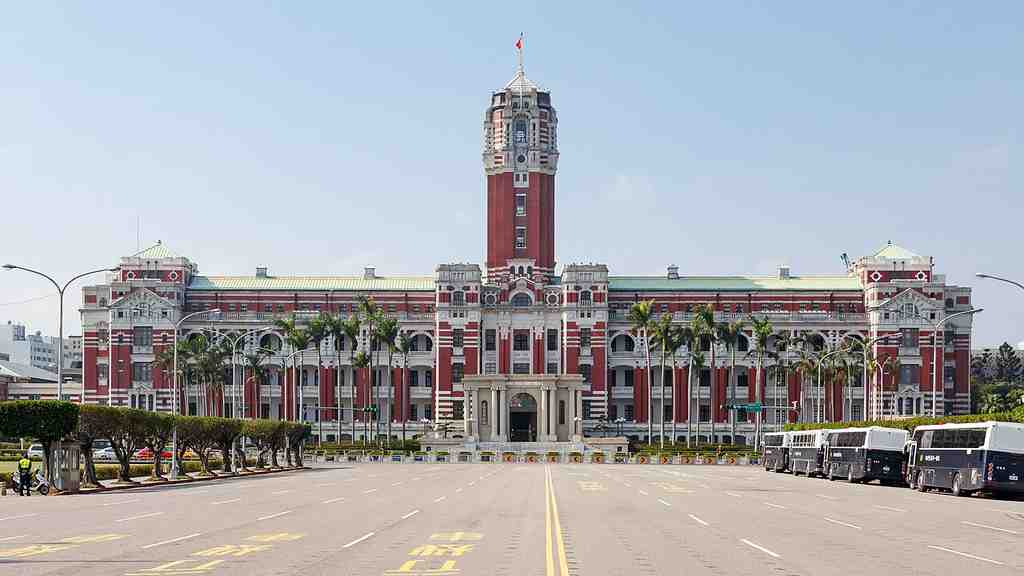
Presidential Office (Taiwan)Photo: CEphoto, Uwe Aranas, Wikimedia Commons, CC BY-SA 3.0. Cropped & resized. In front of you stands a long red-brick facade on a gray stone base, laid out in strict symmetry and pinned at the center by a tall square tower.
This is where our walk really begins, because this building tells you what central Taipei has been doing for more than a century: keeping power in the same monumental shell while the people inside, the flags above, and the language of authority all change. What you’re looking at is layered power in stone. One regime raised it to command the colony; another took it over and kept using the same walls to command the state.
The building began as the Taiwan Governor-General’s Office under Japanese rule. In nineteen oh seven, officials launched a design competition. The first-place scheme looked suspiciously like the Peace Palace in The Hague, which is an elegant way of saying someone may have borrowed a little too enthusiastically. So the judges turned instead to the runner-up by Nagano Uheiji, a student of Tatsuno Kingo, the architect tied to Tokyo Station. Then another architect, Moriyama Matsunosuke, or 森山松之助, reworked that plan into the version you see now: broader, sterner, and crowned with that commanding tower.
Take a moment and study the facade... the tower in the middle, the wings spreading out, the almost military rhythm of the whole front. Does it feel like a mere office building? Not exactly. It was designed to be read from a distance, like a sentence that only says one thing: obey.
Construction started in nineteen twelve and finished in nineteen nineteen. At the time, this was the tallest building in Taiwan, and it sat at the center of a remade capital. The main front faces east, aligned with the city’s new planning and the old East Gate axis, so the district around it became part of the performance. This was never just one building. It was the hub of an administrative machine.
Most visitors miss a local little correction here: people often assume the address is Ketagalan Boulevard number one because the ceremonial front sits there. It isn’t. The official address is on Chongqing South Road, and Ketagalan Boulevard number one actually belongs to Taipei Guest House. Taipei likes to keep its formalities slightly mischievous.
War hit this place hard. In nineteen forty-five, U-S air raids damaged the front section. After the war, local donors helped fund repairs, and by the late nineteen forties the building returned under a new name, Jieshou Hall. Then in nineteen forty-nine, when the Republic of China government moved to Taiwan, the same structure became the Presidential Office. Different state, same commanding address.
If you glance at the image on your screen, you can see how that old colonial shell still hosts modern ceremonies inside. And another image shows something even more telling: performances and public events in front of the building. By the nineteen nineties, Lee Teng-hui opened it more directly to the public and even encouraged concerts here, as if music might soften stone. It helps... a little.
Since nineteen nineteen, apart from its repair years, this building has almost continuously served as Taiwan’s highest political center. That continuity is impressive, and a little unsettling.
Ahead, the district keeps unfolding that same story in different accents. We’ll head next toward the National History Museum, about a six-minute walk away. If you ever want to go inside here, public visits are usually limited to weekday mornings from nine to eleven-thirty.
On your left stands a place where government turns into memory. Not memory in the warm family-photo sense... more in the “please file that for the nation” sense. This is Academia…Read moreShow less
Open dedicated page →On your left stands a place where government turns into memory. Not memory in the warm family-photo sense... more in the “please file that for the nation” sense.
This is Academia Historica, the top state history institution under the Presidential Office. Its job is to compile national history, sort and preserve records, collect historical objects, and care for the papers and belongings of former presidents and vice presidents. That impulse matters. Every state wants an archive - a storehouse of records treated as evidence - because ruling is one thing, but proving your story belongs in the future is another.
If you glance at the image on your screen, you can see the building’s formal exterior. Like the Presidential Office, it uses stone and symmetry to project authority. But this place adds another layer: it does not just govern legitimacy, it catalogs it.
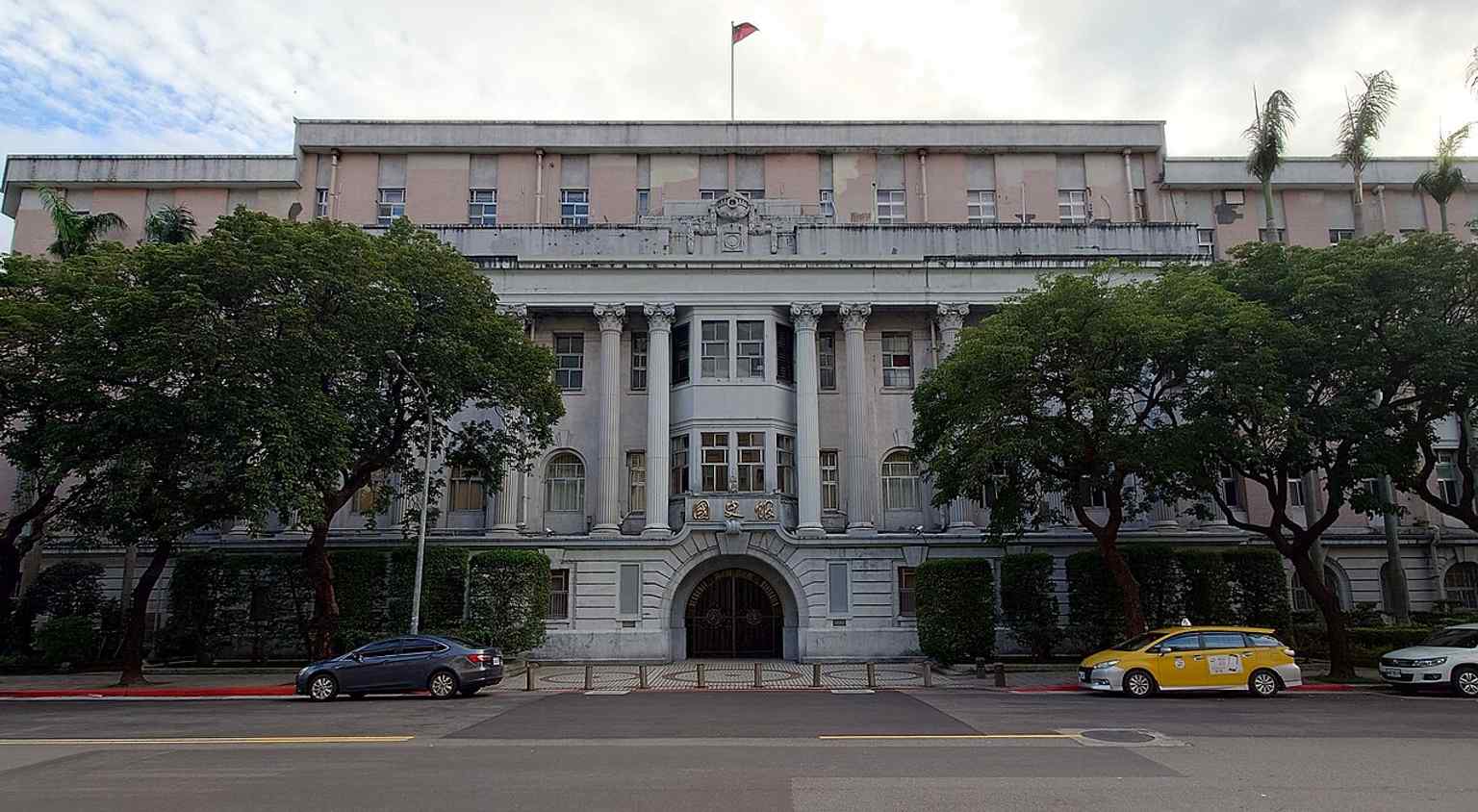
The Taipei headquarters of Academia Historica, the government archive that was restored in Taiwan in 1957 and later moved into this historic building in 2010.Photo: Yu tptw, Wikimedia Commons, CC BY-SA 4.0. Cropped & resized. The urge goes back to nineteen twelve. After the Republic of China formed in Nanjing, Hu Hanmin, Huang Xing, and ninety-seven others asked Sun Yat-sen to create a national history office. Sun agreed. He thought a new republic needed an official record, or else its founding might slip into rumor and argument. Sensible... and also very political.
The institution officially opened in Nanjing in nineteen forty-seven under Zhang Ji. Then the civil war tore the map apart. Staff rushed out three hundred sixty boxes of key archives, eighty-six boxes of important books, and twenty boxes of draft histories to Shanghai. Later, they moved a total of four hundred sixty-four boxes through Guangzhou, Guilin, and Chongqing. The retreat outran the paperwork only so far. When Communist forces took Nanjing, the remaining archives there passed into new hands and later helped form what is now China’s Second Historical Archives. Same past, different custodians.
When the Republic of China government moved to Taiwan, the institution went dormant for a while and reopened here in nineteen fifty-seven. Its early years were not glamorous. Records piled into basements, staff dorms, even kitchens and bathrooms. Nothing says national dignity quite like constitutional history next to a washroom. Only in nineteen eighty-eight did separate archive and library buildings finally relieve the crush.
This headquarters moved into this building in two thousand ten. The building itself dates to nineteen twenty-four, when Japanese colonial authorities used it as the Communications Bureau’s postal office. So even the container of history carries an earlier regime inside it. If you check the second image, you’ll see that the institution still works as a research center, not just a trophy case.

A conference inside Academia Historica, showing the living research role of the institution that preserves and studies ROC history and presidential archives.Photo: Tyng-Ruey Chuang, Wikimedia Commons, CC BY-SA 4.0. Cropped & resized. Inside, one major collection holds more than ten thousand gifts presented to presidents and vice presidents. Another treasure is the first paper copy of the nineteen forty-seven Constitution. Since two thousand sixteen, the institution has also pushed millions of digitized pages online, even while debates continue over who gets access and who gets to define the national story.
That is the quiet power here: papers, artifacts, and approved narratives can shape a country as firmly as gates, courts, and guardrooms. From here, head toward the Judicial Building, about six minutes away, where memory turns back into law. If you want to return, it’s open Tuesday through Sunday from ten to six, and closed on Mondays.
On your right is a long, pale green brick building with a symmetrical facade, a deep arched entrance, and a tall central octagonal roof that rises like a very stern crown. This…Read moreShow less
Open dedicated page →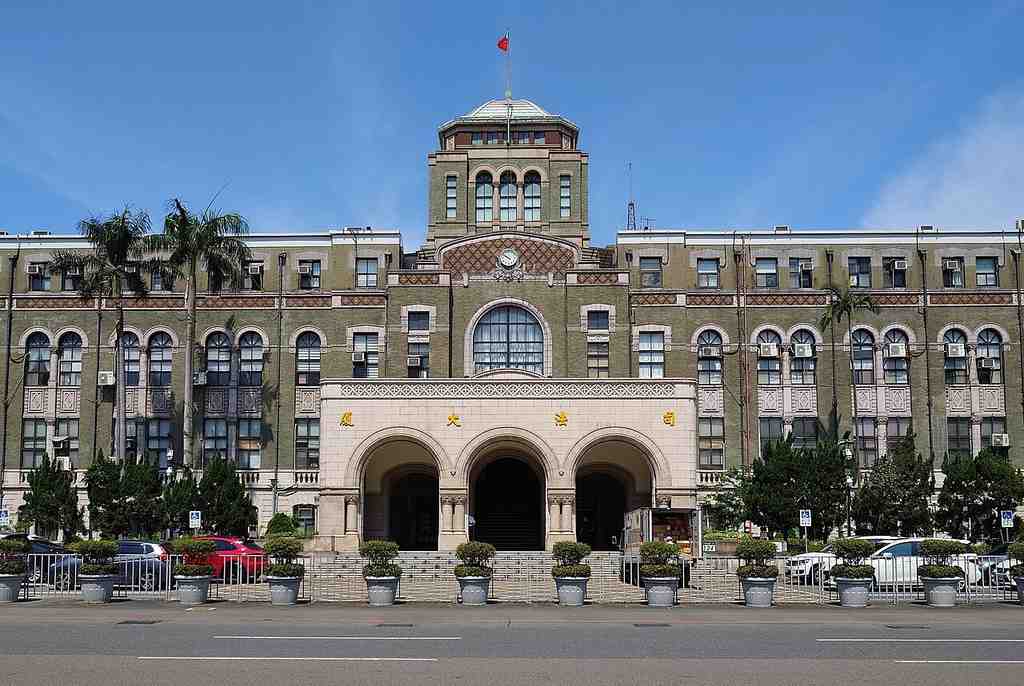
Judicial BuildingPhoto: Yu tptw, Wikimedia Commons, CC BY-SA 4.0. Cropped & resized. On your right is a long, pale green brick building with a symmetrical facade, a deep arched entrance, and a tall central octagonal roof that rises like a very stern crown.
This is the Judicial Building, first called the Taipei High Court and now the home of Taiwan’s Judicial Yuan. It opened in nineteen thirty-four after five years of construction, and it was designed by Ide Kaoru, one of the major hands shaping official Taipei. He spent more than three decades in Taiwan and pushed for reinforced concrete and local adaptation, arguing that public buildings here should suit the island rather than copy Europe like a bad costume drama.
You can see that thinking in the details. The structure uses reinforced concrete, but the outer walls wear rough, light green tiles that helped reduce glare and even served air-raid concerns. The entrance porch uses broad three-centered arches - a curve borrowed from Islamic architecture - while the facade mixes Romanesque weight, a hint of Renaissance order, and Japanese imperial taste. If you check the image on your screen, that central tower really says it all... formal, elegant, and just a little intimidating, which, to be fair, is not the worst quality for a courthouse.
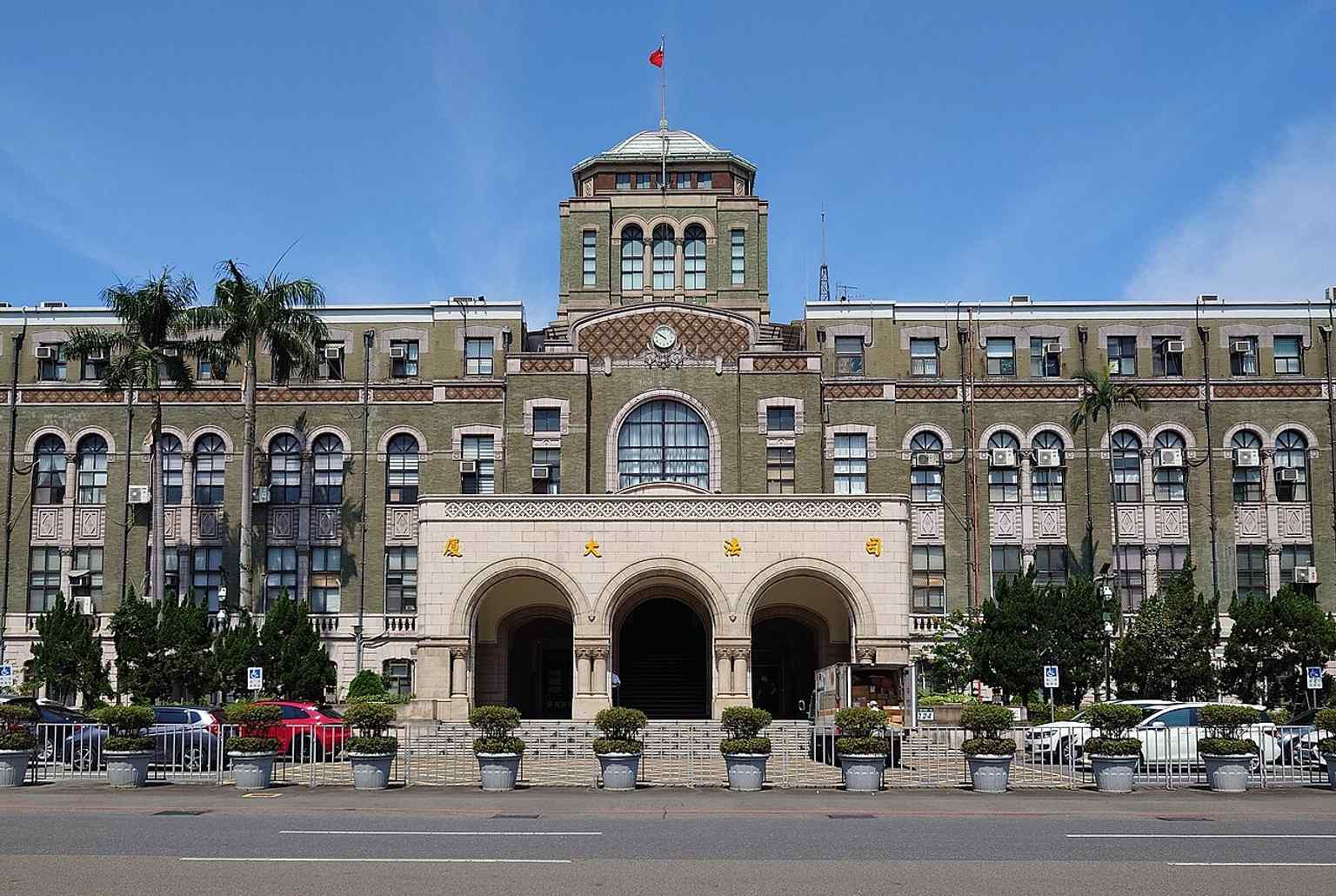
The central tower and wings show the building’s distinctive 31.8-meter roofline, a hallmark of its 1934 design by architect Kawai Kiyoshi (Ide Kahn).Photo: Yu tptw, Wikimedia Commons, CC BY-SA 4.0. Cropped & resized. But the deeper story is the ground it stands on. Before judges and clerks took over, this site held a Wu Temple, dedicated to Guan Yu, the martial deity. Across the way stood a civil temple near today’s First Girls High School site. Together they formed a kind of spiritual pairing for the old city: civil and martial, learning and force. Then the colonial government cleared the temple in nineteen twenty-nine and planted a court here instead. That shift matters. A place where people once sought moral protection from a god became a place where the state declared what justice meant.
That idea of repurposed ground is going to follow us through Taipei. Again and again, land keeps its old memory even after the building changes uniforms.
Ide Kaoru is the human thread here. He did not just draw a courthouse; he helped turn authority into architecture. This building originally housed the high court, prosecutor’s office, and Taipei district court under Japanese rule. After nineteen forty-five, the Republic of China government took it over, renamed it in the nineteen fifties, and kept using it for the judiciary. One regime leaves, another arrives, and the building simply keeps judging everyone.
There is even a local ghost story about the tall chimney inside the courtyard, but the court later clarified it only burned waste paper and heated water. Slightly less dramatic than rumor, though probably better for everyone involved.
If a temple becomes a courthouse, should that feel like progress, erasure, or both? Hold onto that question as we head to Taipei Guest House, about an eight-minute walk away. If you want to come back inside another time, the building is generally open daily from nine to five.
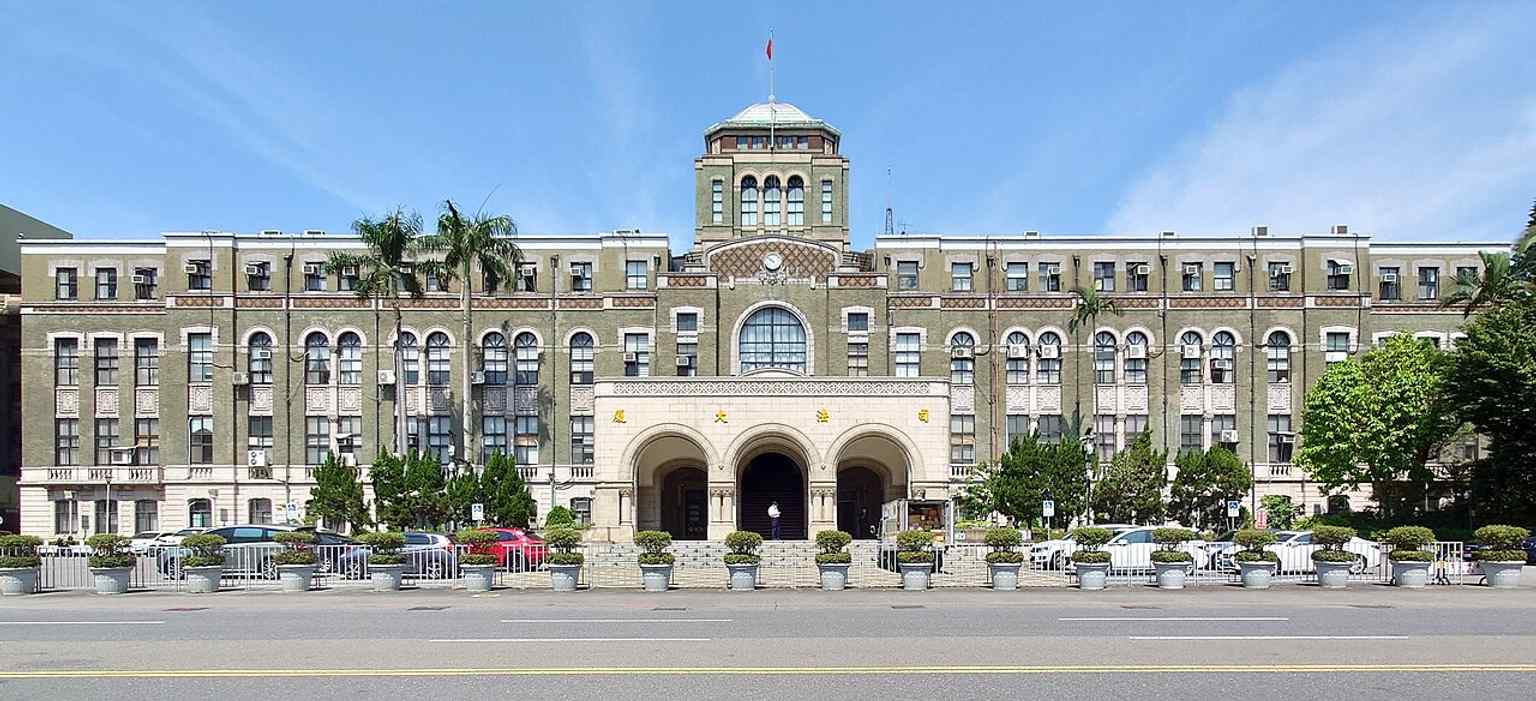
Full frontal view of the Judicial Building, the former Taipei High Court and now the seat of Taiwan’s Judicial Yuan.Photo: Yu tptw, Wikimedia Commons, CC BY-SA 4.0. Cropped & resized. 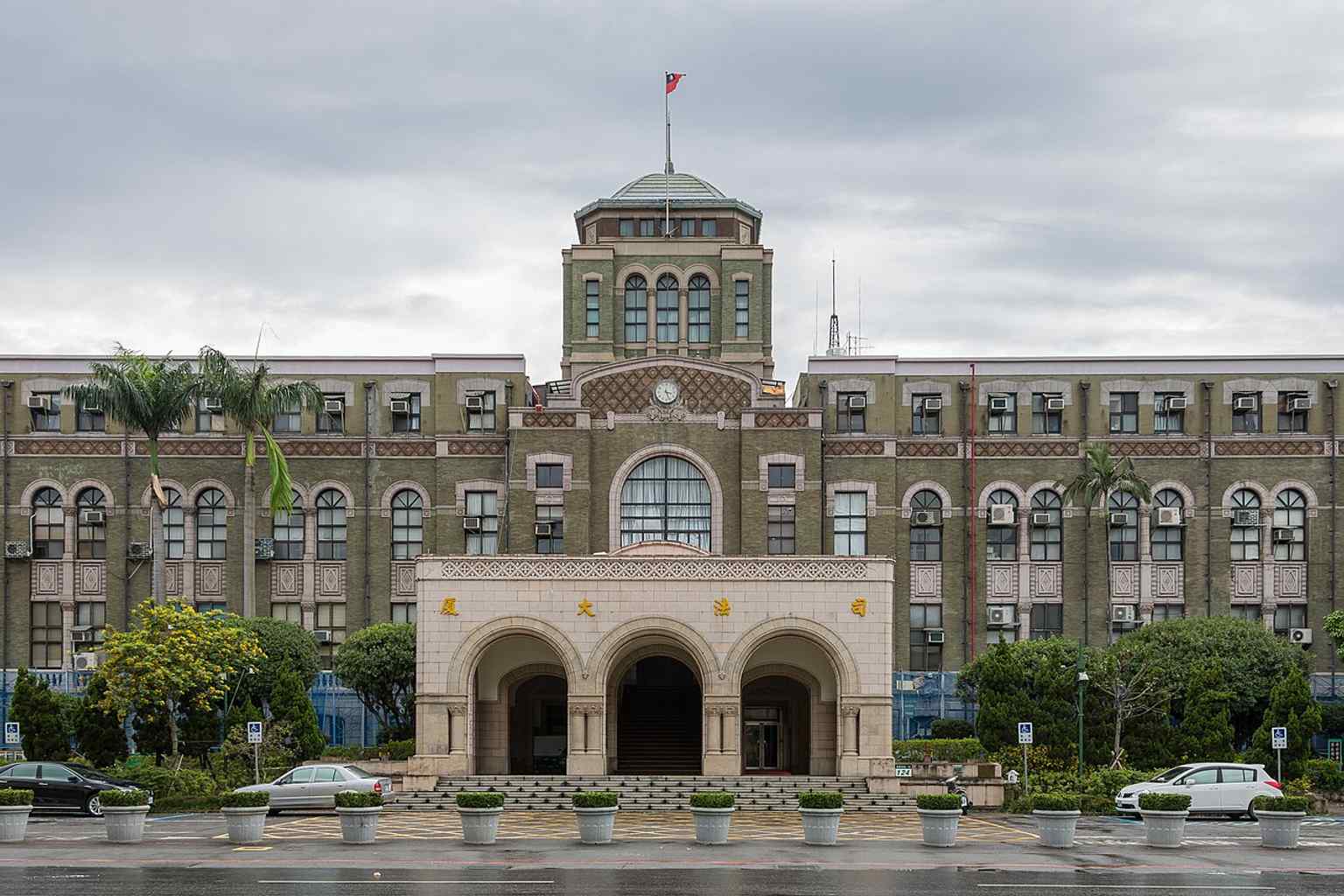
A closer look at the Judicial Yuan’s façade and clock tower, reflecting the monumentality of this 1930s reinforced-concrete court building.Photo: CEphoto, Uwe Aranas, Wikimedia Commons, CC BY-SA 3.0. Cropped & resized.
Show 10 more stopsShow fewer stopsexpand_moreexpand_less
On your right, look for the pale stone-and-brick mansion with its dark curved mansard roof, broad arched windows, and the grand columned entrance porch that announces itself like…Read moreShow less
Open dedicated page →On your right, look for the pale stone-and-brick mansion with its dark curved mansard roof, broad arched windows, and the grand columned entrance porch that announces itself like a carriage still expects to roll up.
This is Taipei Guest House, the former Governor-General’s residence, and it served as the intimate counterpart to official administrative power. If the Presidential Office projected command, this place handled the softer business of rule: residence, ceremony, hospitality, and the careful art of making power look gracious.
And yes... this is the real Ketagalan Boulevard Number One. A lot of people casually pin that address on the Presidential Office, but locals who care about these things will tell you the honor belongs here.
The story starts after Japan took Taipei in eighteen ninety-five. Governors first bounced through a series of temporary residences, but the fourth Governor-General, Kodama Gentaro, wanted something far more deliberate. He ordered a proper mansion in eighteen ninety-nine, and he wanted it grand enough to display authority without needing to shout. Architects Fukuda Togo and Nomura Ichiro finished it in nineteen oh-one as a Renaissance-style residence: a brick-and-stone structure, two stories high, with parquet wood floors, imported British tiles, a Western-style front garden, and, behind it, Taiwan’s first Japanese strolling garden.
Then even that proved not quite grand enough. By nineteen eleven, the house felt too small, and the old timber roof had been chewed up by termites... nature, apparently, was unimpressed by empire. Architect Moriyama Matsunosuke led a major rebuild, completed in nineteen thirteen. He turned the place into a more theatrical Neo-Baroque mansion, borrowing the look of a French court palace from the Second Empire period. Think paired Roman columns, steel roof framing, imported fireplaces, crystal chandeliers, plush carpets, silk curtains, and layers of decorative plaster. It stopped being simply a home and became a machine for receiving important people.
If you glance at the before-and-after image in the app, you can see how that Meiji-era residence became the formal ceremonial forecourt in front of you now.
One of its most telling moments came in nineteen twenty-three, when Crown Prince Hirohito, the future Showa Emperor, visited Taiwan. This house staged banquets and performances for local elites, turning hospitality into politics. Upstairs, there was even a single Japanese tatami room set inside an otherwise European world of display, a small reminder that identity here was curated as carefully as the guest list.
After nineteen forty-five, the building slid almost seamlessly into a new state. First it served briefly as the residence of the Taiwan Provincial Government chairman. In nineteen fifty, authorities renamed it Taipei Guest House. In nineteen fifty-two, Foreign Minister Ye Gongchao signed the Treaty of Taipei here with Japan’s representative, Retsu Kawada. Later, the Ministry of Foreign Affairs took it over for state banquets and foreign guests. If you want a peek inside that role, have a look at the formal dining setup in the app.
Long neglect nearly undid the place, but a major restoration from two thousand and two to two thousand and six brought it back. Now it still hosts diplomacy, receptions, and national ceremonies. So this elegant mansion teaches a useful lesson: private comfort and public welcome can serve power every bit as effectively as offices and courtrooms.
In about three minutes, we’ll head to Two Two Eight Peace Memorial Park, where the city’s carefully managed public face gives way to a far more painful memory.
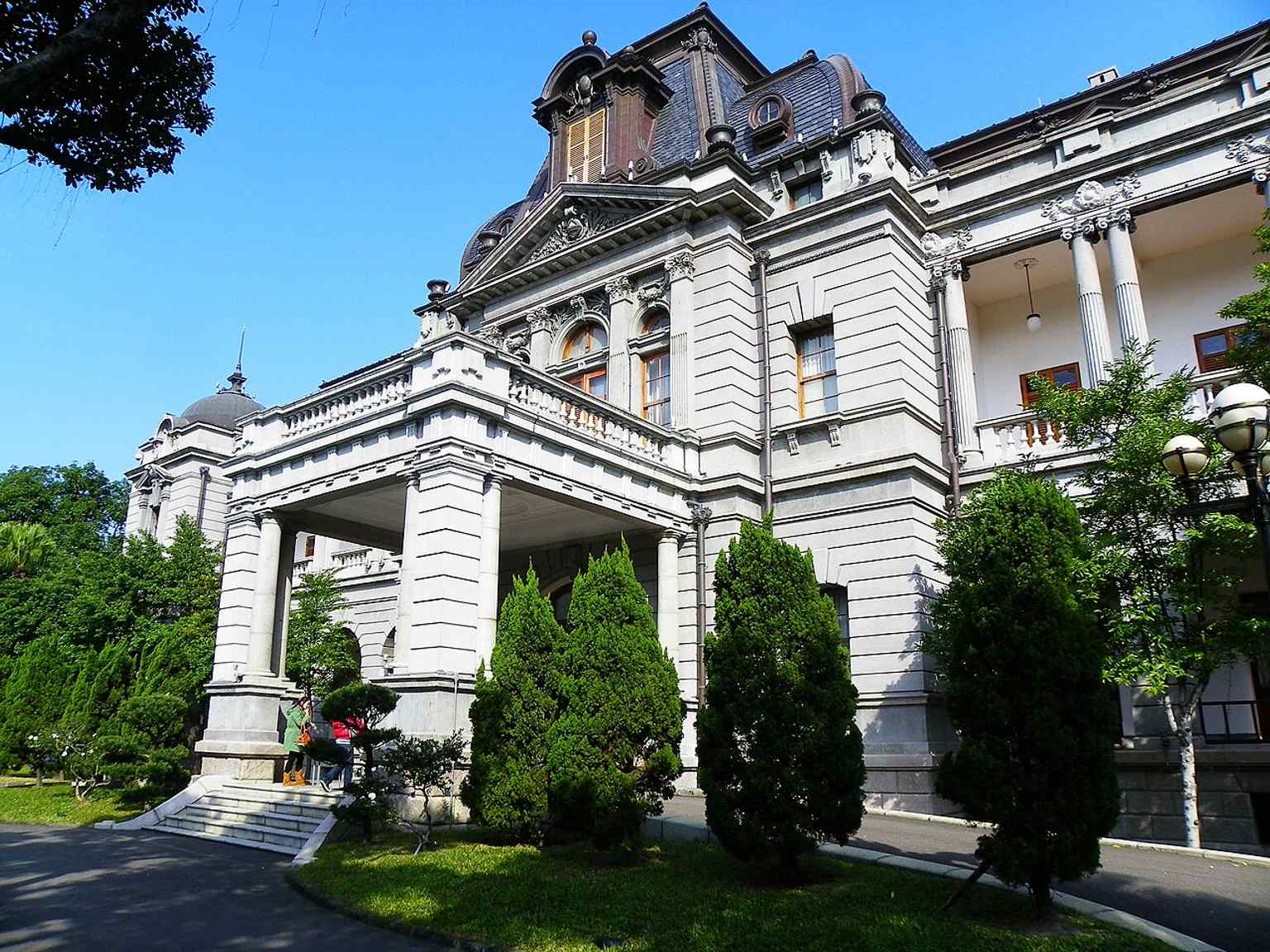
The southeast corner of the main pavilion — a good look at the grand entrance area that greeted governors and foreign guests.Photo: 玄史生, Wikimedia Commons, CC BY-SA 3.0. Cropped & resized. Look for the fenced park with broad stone paths, heavy tree cover, and a tall pale memorial shaft rising from the lawns near its center. This ground began as Taipei Park, later…Read moreShow less
Open dedicated page →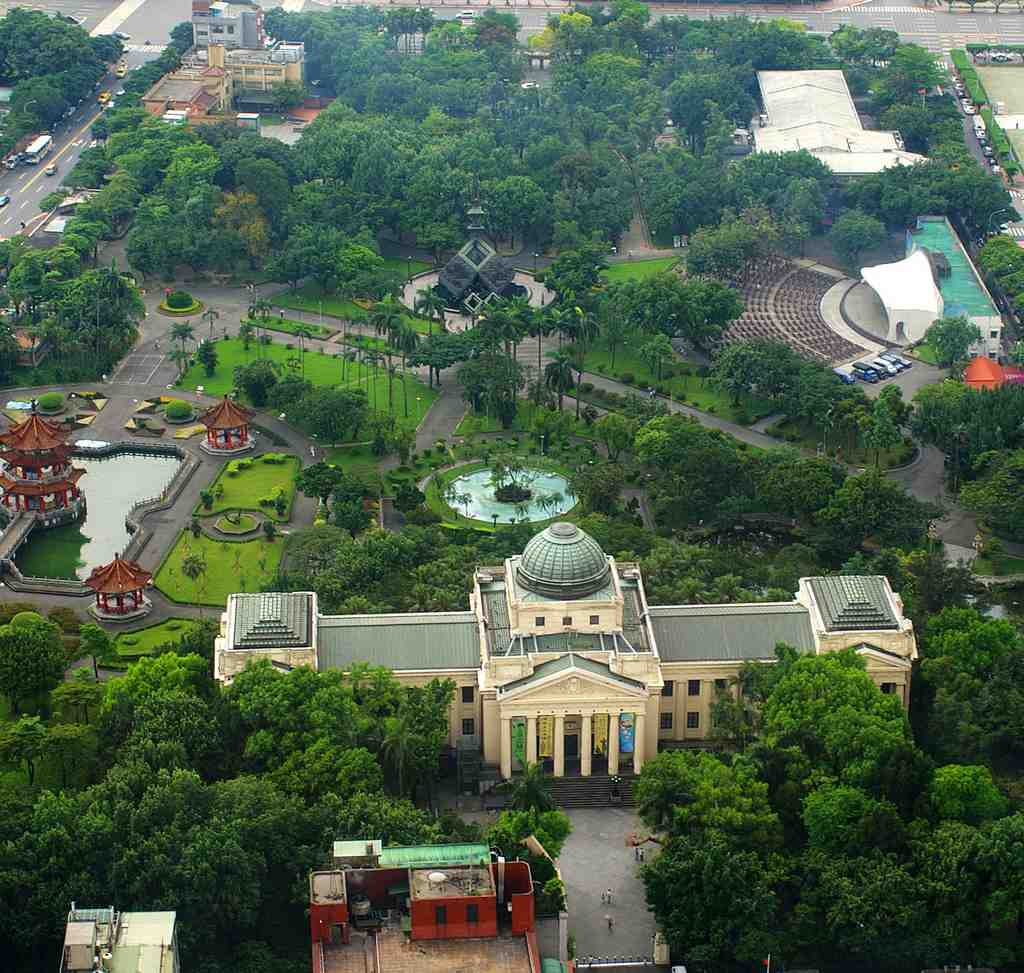
228 Peace Memorial ParkPhoto: Peellden, Wikimedia Commons, CC BY-SA 3.0. Cropped & resized. Look for the fenced park with broad stone paths, heavy tree cover, and a tall pale memorial shaft rising from the lawns near its center.
This ground began as Taipei Park, later New Park, planned in the early nineteen hundreds as a modern colonial park in mixed Western and Japanese styles, with Chinese garden features added later. It sat right in the middle of official Taipei, close to government offices, residences, and institutions, so it was never just a patch of greenery. Public parks like to pretend they’re neutral. This one never really had that luxury.
Before the lawns and memorials, Qing official Liu Mingchuan had a Mazu temple, the Taipei Tianhou Temple, established here in eighteen eighty-eight. Japanese planners later cleared it, expanded the park northward, and fixed the layout that still shapes the space now. Some of the temple’s stone remnants still survive in the park, which is history’s way of refusing a clean edit.
One early figure here was the museum’s first director, a trained botanist and plant disease specialist. He arrived in nineteen hundred and three, worked himself into exhaustion preparing the museum and its research, and died the day after it opened. Even before this park became a place of political mourning, it already carried a very human kind of loss.
Pause for a second and take in the calm paths, the trees, the open lawns behind the railings... then ask yourself how much a landscape can hold without spelling any of it out.
In late February of nineteen forty-seven, anger against the new Nationalist administration boiled over into what we now call the Two-Two-Eight Incident. Crowds stormed the park’s radio station and broadcast their accusations to the island; that building later became the Taipei Two-Two-Eight Memorial Museum. If you want a visual, the old broadcast station is in the app image on your screen. What followed was a violent crackdown, and this carefully landscaped civic park took on a second life as ground for grief.
If you like, have a quick look at the before-and-after image in the app; it makes the park’s change of purpose very plain.
In nineteen ninety-six, Mayor Chen Shui-bian officially renamed New Park as Two-Two-Eight Peace Memorial Park, and the memorial museum followed soon after. But even the name is contested. For some, “peace” offers healing; for others, it smooths over bloodshed with language a little too polite. That tension matters, because memory here does not always line up neatly with the state’s preferred wording.
The park also holds older memorial arches, relics, a music pavilion, and scattered monuments from different regimes, all sharing the same ground like awkward dinner guests who can’t leave the table. Beauty and trauma sit here together, without settling the argument.
When you’re ready, continue to the National Taiwan Museum, about a four-minute walk from here. And fittingly for a place that never quite stops speaking, the park stays open twenty-four hours.
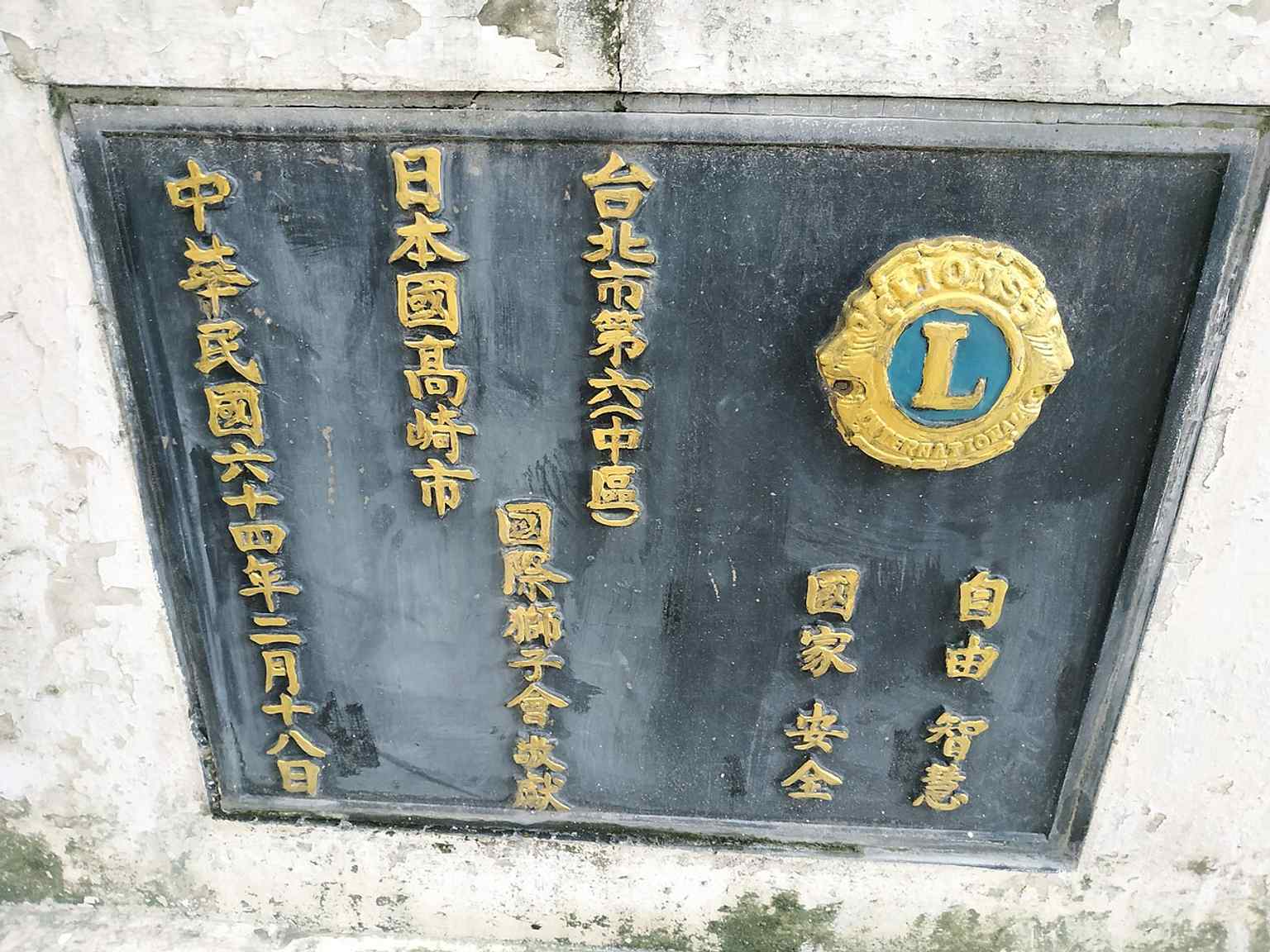
The inscription stone beside the Confucius statue, part of the park’s layered historical displays.Photo: 弟魯, Wikimedia Commons, CC BY-SA 4.0. Cropped & resized. 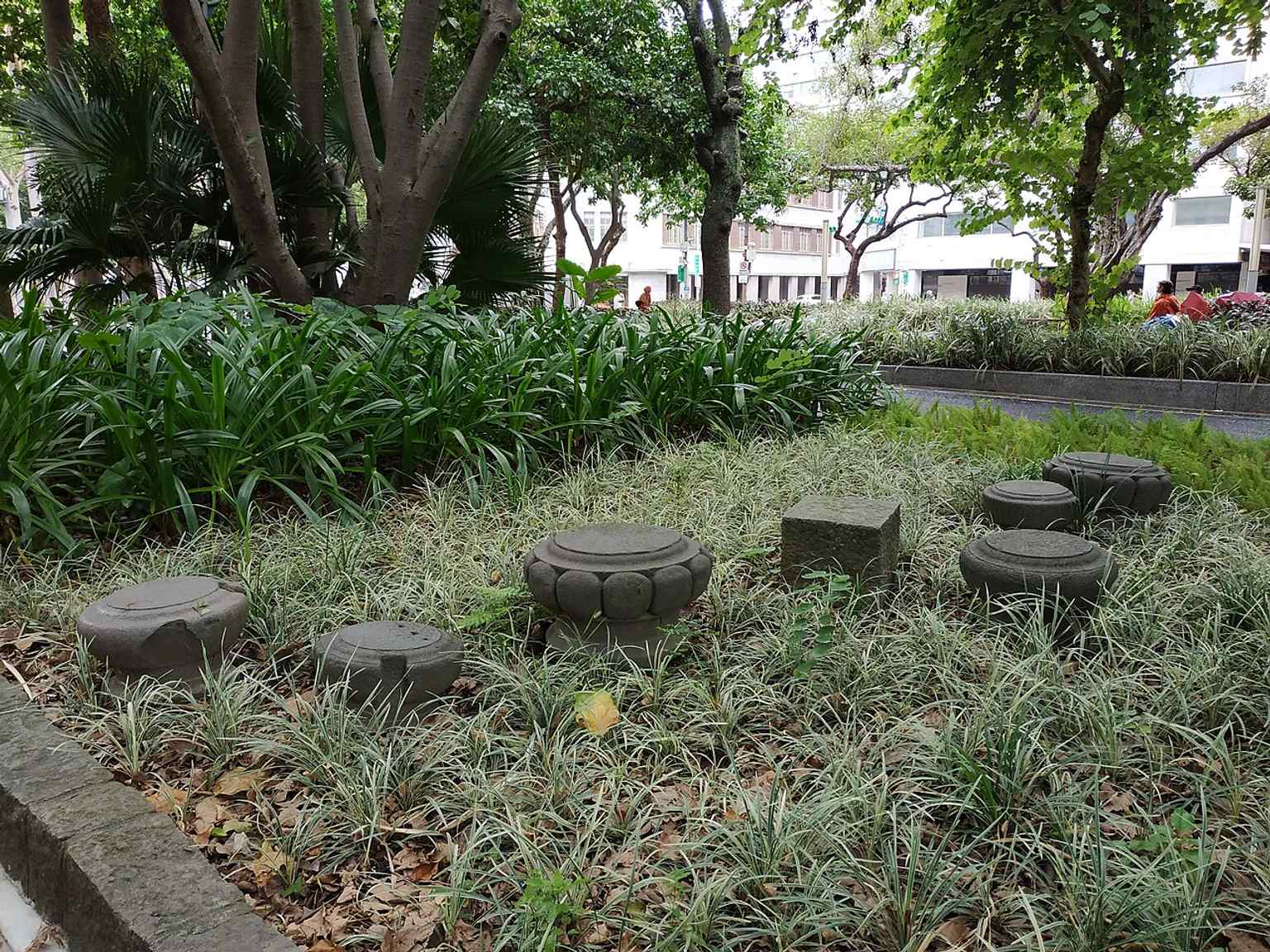
Remains from the former Taipei Tianhou Temple, preserved in the park as scattered relics of an older city landscape.Photo: 弟魯, Wikimedia Commons, CC BY-SA 4.0. Cropped & resized. On your left stands a pale stone museum with a triangular pediment, a row of sturdy classical columns, and a round central dome rising over the entrance. If the Presidential…Read moreShow less
Open dedicated page →
National Taiwan MuseumPhoto: Adece033090, Wikimedia Commons, CC BY-SA 4.0. Cropped & resized. On your left stands a pale stone museum with a triangular pediment, a row of sturdy classical columns, and a round central dome rising over the entrance.
If the Presidential Office organized authority and the court organized law, this place organized knowledge. And in a capital like Taipei, that was never a neutral hobby.
Taiwan’s oldest museum began in eighteen ninety-nine under Japanese rule, first as a display hall for products and resources. By nineteen oh eight, it had already turned into a full museum with more than ten thousand objects sorted into twelve categories: geology, plants, animals, anthropology - the study of human cultures - plus agriculture, forestry, fisheries, mining, crafts, trade, and more. In other words, it gathered Taiwan into cabinets, labels, and specimens... a whole island translated into something officials could inspect.
The building in front of you came later, opening in nineteen fifteen. Officials wanted a memorial hall for Governor-General Kodama Gentaro and civil administrator Goto Shinpei, and they placed it on the former site of Taipei’s old Tianhou Temple after storm damage led to the temple’s demolition. There was even an argument over whether public money should pay for it, so local elites and business leaders raised private donations instead. Nothing says public memory quite like a carefully funded monument.
Architect Nomura Ichiro gave it this Western classical face: symmetry, Doric columns, and that dome at the center. But the architecture did more than impress. It announced that collecting, classifying, and displaying Taiwan formed part of governing it.
One person makes that story feel painfully human: Kawakami Takiya, the museum’s first director. He was a botanist deeply devoted to Taiwan’s mountain plants, and he helped turn this place into a genuine research center, not just a showcase. By nineteen ten, the Taiwan Natural History Society centered itself here; its meetings and journal grew out of this museum’s orbit. But the detail locals sometimes pass along in a quieter voice is this: Kawakami died the day after the new museum opened. So the institution’s grand beginning came wrapped in personal loss almost immediately.
Inside, the central hall once held bronze statues of Kodama and Goto in wall niches, making the building’s political loyalties impossible to miss. After nineteen forty-five, staff moved those statues into storage. That silence matters too. A museum keeps things, yes, but it also decides what stays in front of the public and what disappears into the back room.
The building itself kept changing. A controversial renovation in the nineteen nineties replaced the original wooden roof structure with steel and added a third floor. Then an earthquake in two thousand and two damaged the roof again, leading to repairs and a reopening in two thousand and five. If you want, take a quick look at the before-and-after image in the app; the broad steps still anchor the scene, but the forecourt has shifted from a softer park edge to a more formal plaza.
So this museum preserves Taiwan, but it also frames Taiwan - deciding what a society is meant to see, study, and remember. In about two minutes, we’ll pick up that thread at the former bank building, where power starts speaking in the language of money. If you plan to go inside later, it opens Tuesday through Sunday from nine thirty to five and closes on Monday.
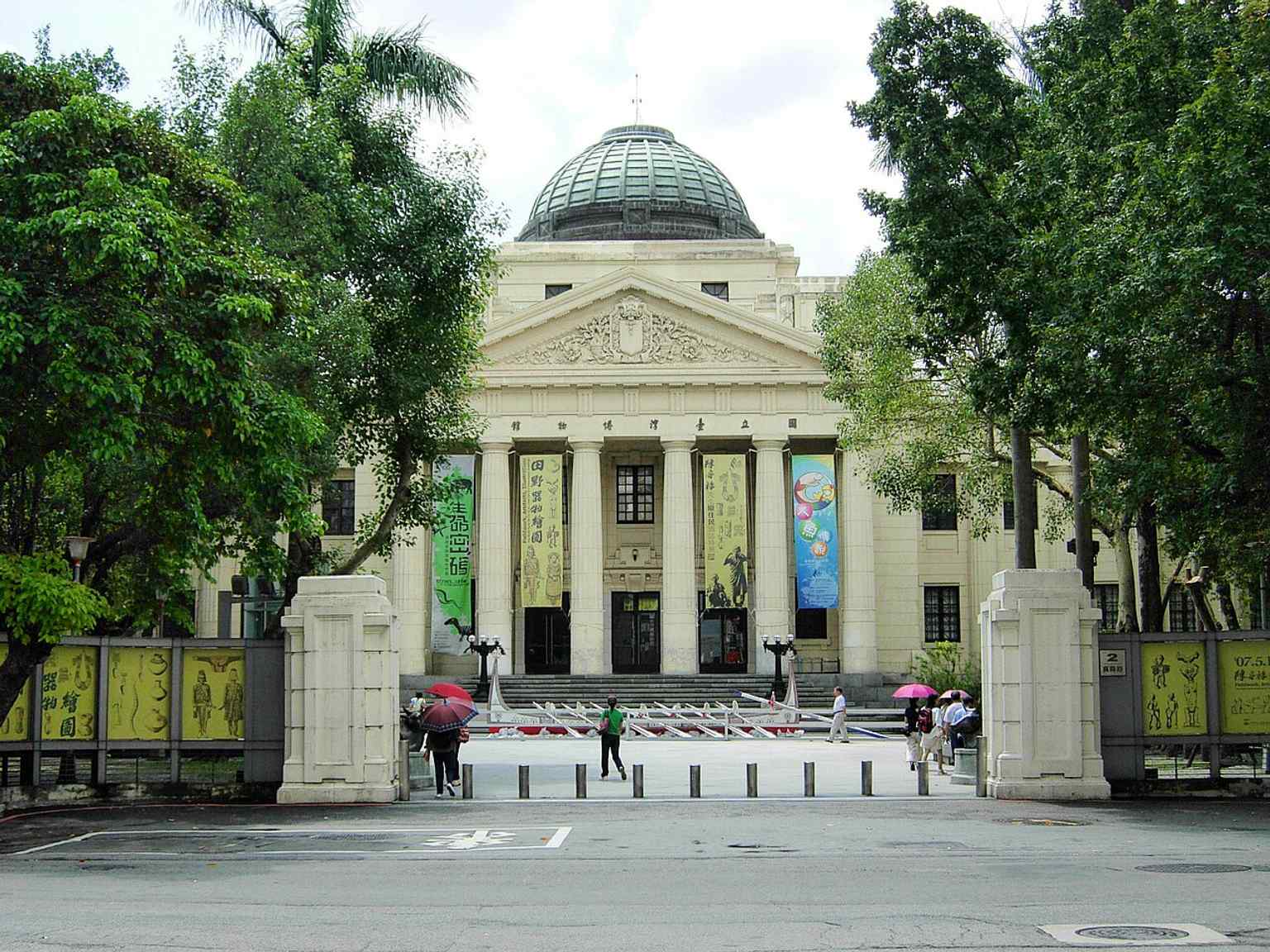
The National Taiwan Museum’s neoclassical front facade, where the original 1915 memorial building still stands beside 228 Peace Memorial Park.Photo: Taiwan Junior, Wikimedia Commons, CC BY 3.0. Cropped & resized. On your right, look for a gray-white stone facade with a broad, blocky front, tall classical columns, and carved lion faces set high near the roofline. At first glance, it looks…Read moreShow less
Open dedicated page →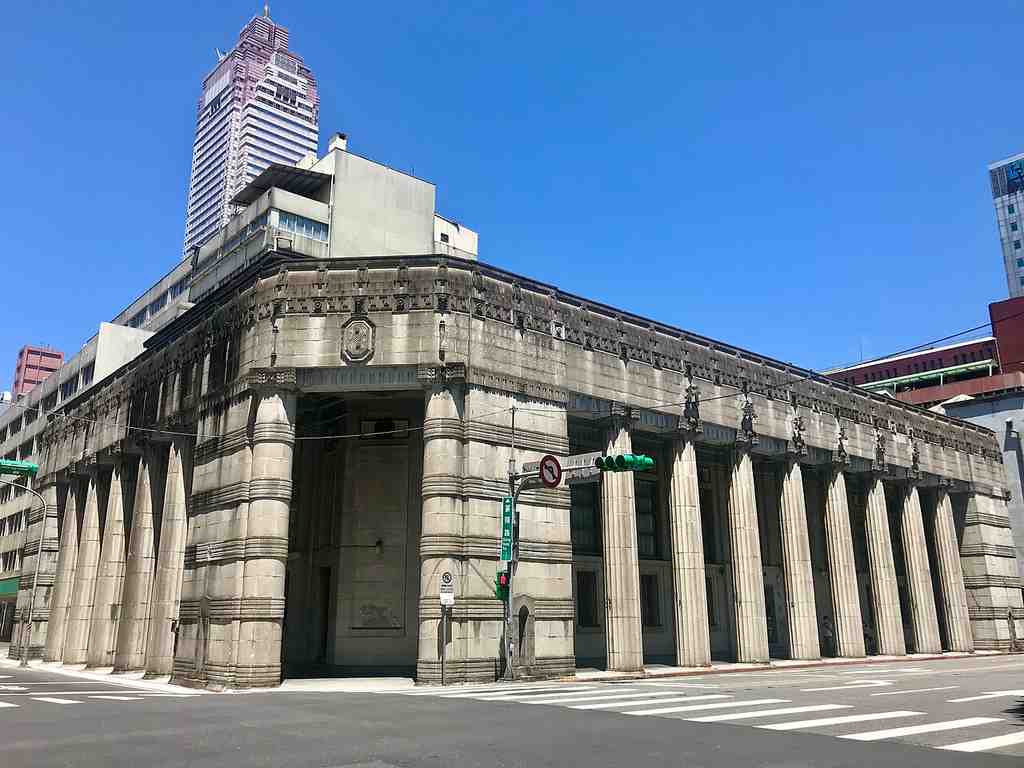
The old building of the Bank of ChinaPhoto: Outlookxp, Wikimedia Commons, CC BY-SA 4.0. Cropped & resized. On your right, look for a gray-white stone facade with a broad, blocky front, tall classical columns, and carved lion faces set high near the roofline.
At first glance, it looks less like a bank than a place built to make ordinary people feel very small... which, to be fair, was part of the design brief.
This building opened in nineteen thirty-three as the Taipei branch of Japan’s Kangyo Bank. In colonial Taiwan, a bank like this did far more than hold deposits and issue loans. From the nineteen twenties onward, it handled real estate, land development, forestry, and irrigation works, so money here helped decide who could cultivate land, who could improve it, and who could profit from it. That is the first twist in this part of Taipei: power did not only sit in government offices. Sometimes it wore a suit, carried a ledger, and approved a canal.
The architecture sold that authority hard. The builders used new engineering for the time: a long-span steel truss, reinforced concrete roof slabs, and earthquake-conscious plaster work, lessons learned after the Great Kanto earthquake in Japan. The style mixed heavy classical columns with what scholars call Maya Revival, meaning geometric reliefs inspired by ancient American forms rather than delicate Greek leaves. If you look at the upper details, the decoration feels blunt and muscular, not fussy. Banks have never relied on modesty.
Inside, the original hall stretched about forty meters long, sixteen meters wide, and ten meters high. No low intermediate floor cut across it, because the whole point was to create awe. Air conditioning already ran through the building in nineteen thirty-three, with return vents under the floor and outlets in the walls. The vault sat in the core with a single entrance, a copper security door, thickened walls, and forced ventilation. Efficient, impressive, and faintly menacing... a good summary of modern bureaucracy.
After the war, the Land Bank of Taiwan took over and turned this into its headquarters until nineteen sixty-five. That shift mattered. The same building that had served colonial finance became part of postwar land reform, including the “land-to-the-tiller” program. If you check the image on your screen, that nineteen forty-seven appointment letter on display here is a small but telling survivor from that era. Later exhibits added land bonds, public land manuals, and measuring tools, linking finance directly to reshaping the countryside.
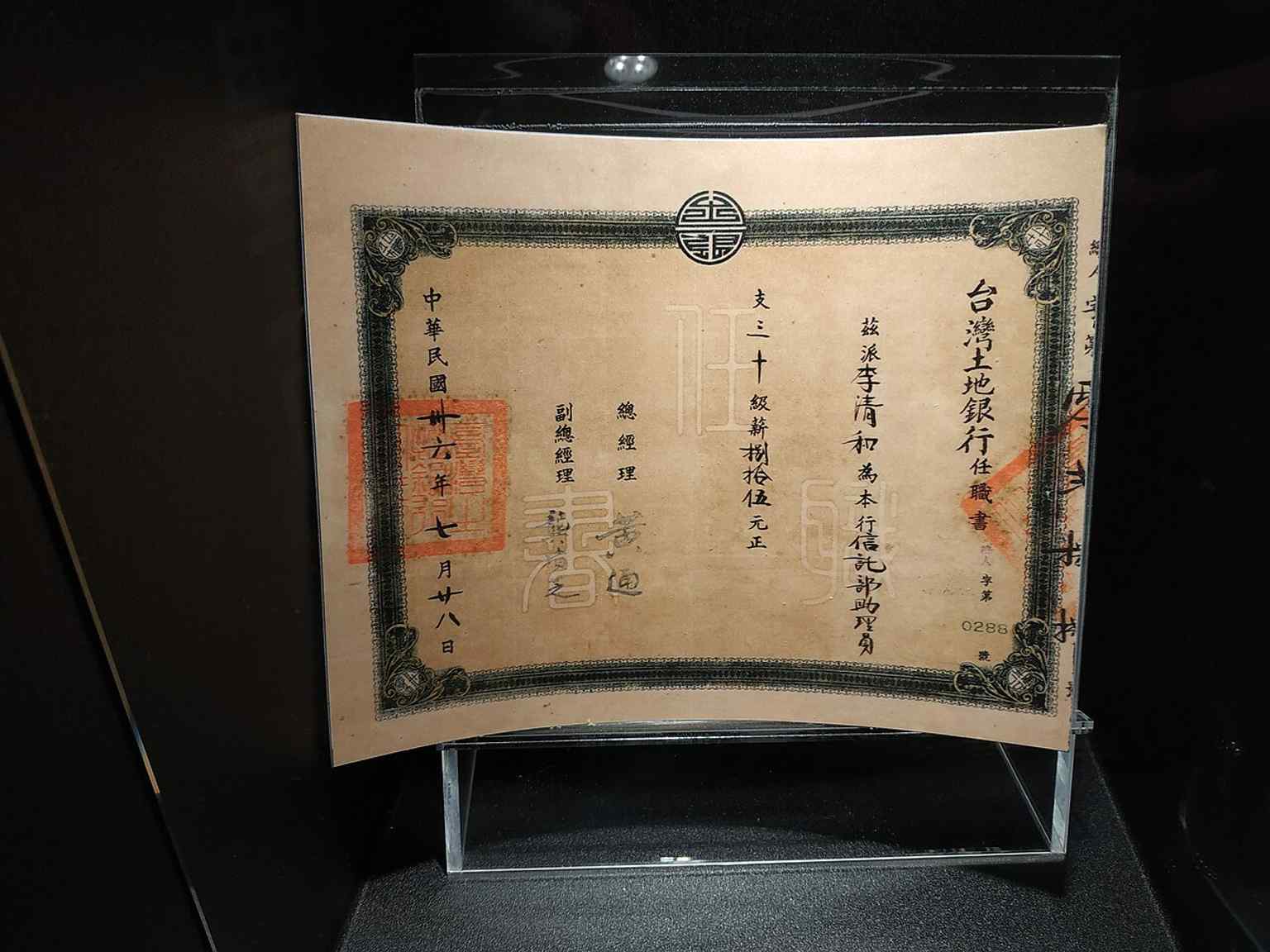
A 1947 Land Bank appointment letter on display here connects the building’s bank era to the land-reform story the museum now tells.Photo: 弟魯, Wikimedia Commons, CC BY-SA 4.0. Cropped & resized. Then came another twist. In the nineteen eighties, the bank wanted to demolish this old place and replace it with a new financial tower. Scholars pushed back. In two thousand ten, it reopened under the National Taiwan Museum as the Paleontology Hall. So now a building designed to intimidate depositors invites children to admire fossils. That is a pretty satisfying reversal.
One person captures the human side of that change. In two thousand ten, National Taiwan University anthropologist Hsieh Shih-chung visited and said his father had worked here since the Kangyo Bank days, yet the museum barely mentioned that working life. It was a useful complaint. A monument is not only style and policy; it is also the memory of clerks, managers, and families who spent years inside its routines.
If you want a closer look at the facade’s old authority, the exterior image in the app helps pick out that preserved nineteen thirties frontage. From here, Taipei City North Gate is about an eleven-minute walk away, and this exterior remains accessible twenty-four hours a day if you want to circle back later.
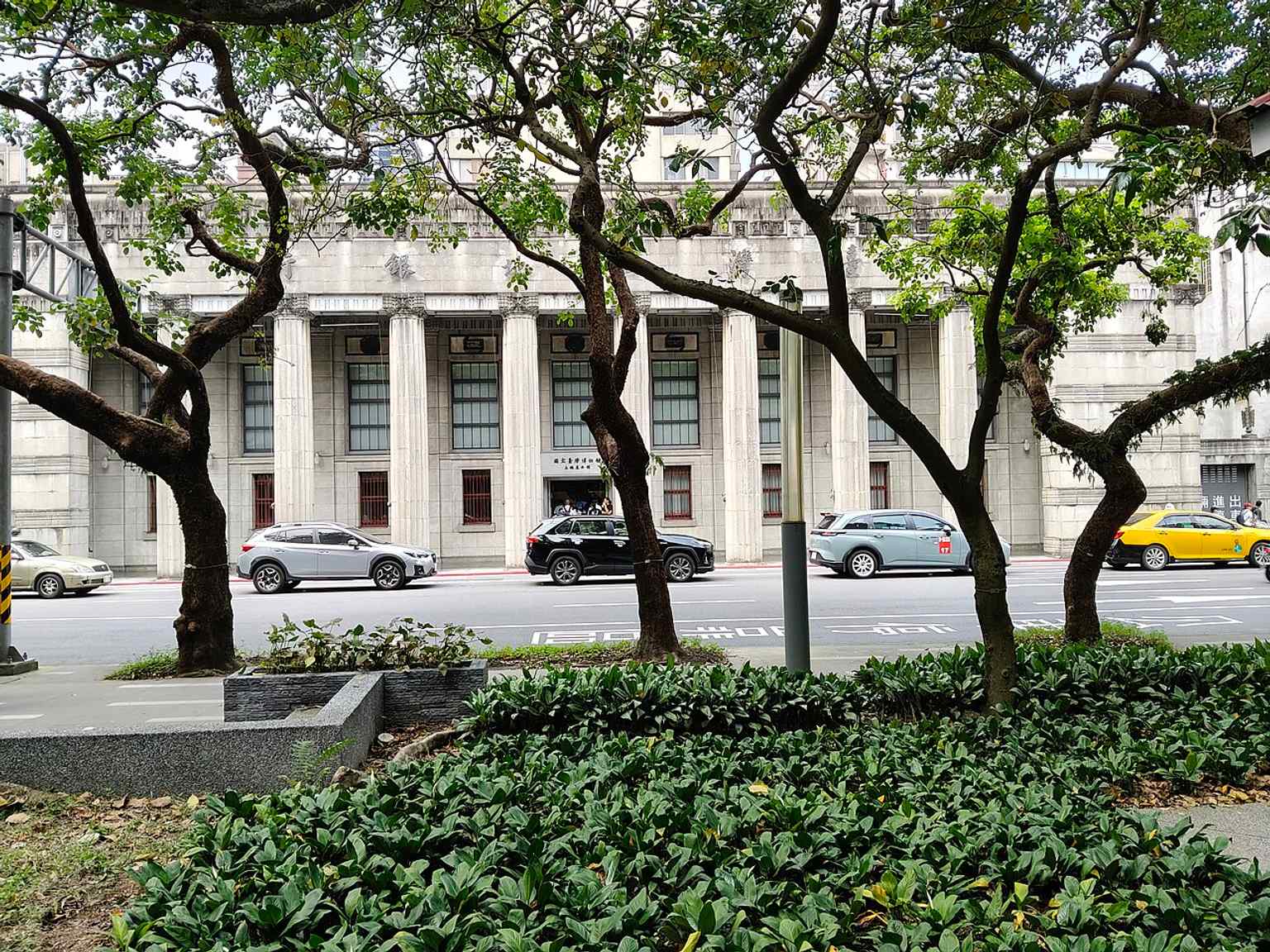
The former Bank of China-style bank hall turned museum, now part of the National Taiwan Museum, preserves the building’s imposing 1930s façade and historic presence in Taipei’s station district.Photo: Allervous, Wikimedia Commons, CC BY-SA 4.0. Cropped & resized. In front of you is a squat andesite stone base carrying a red-brick gatehouse with a broad arched opening, topped by a dark tiled roof and marked by the plaque reading Cheng'en…Read moreShow less
Open dedicated page →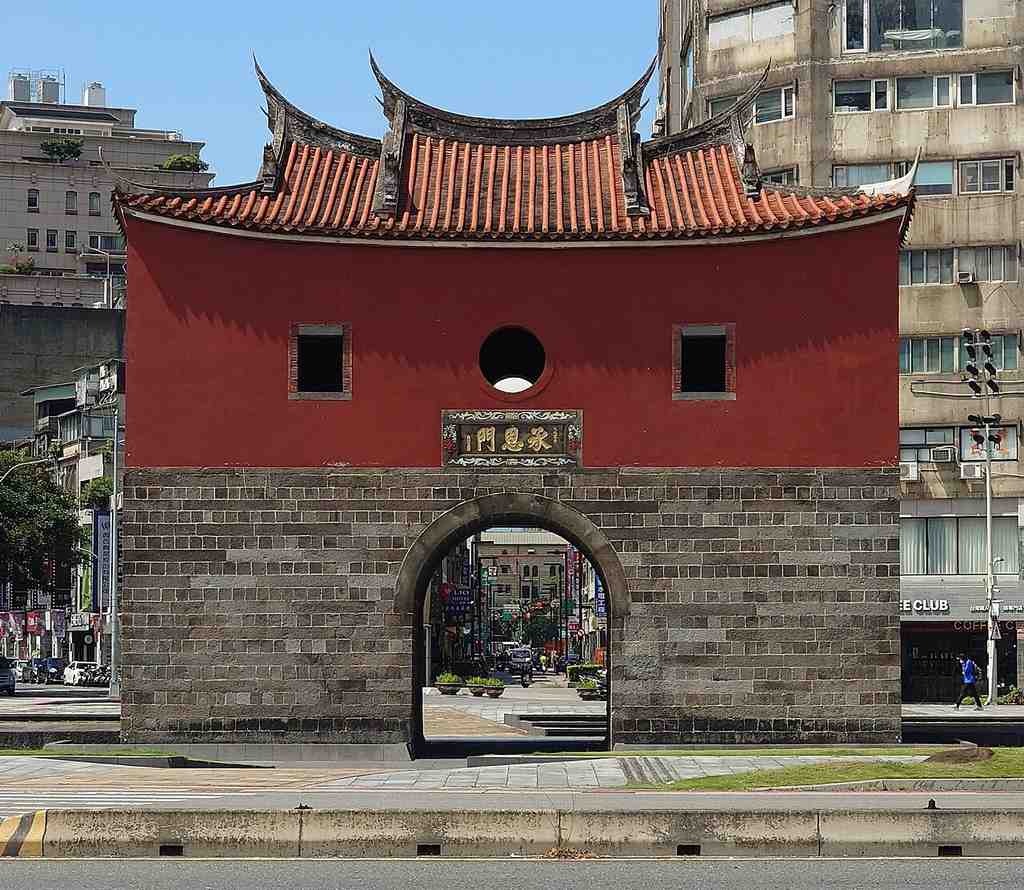
Taipei City North GatePhoto: Yu tptw, Wikimedia Commons, CC BY-SA 4.0. Cropped & resized. In front of you is a squat andesite stone base carrying a red-brick gatehouse with a broad arched opening, topped by a dark tiled roof and marked by the plaque reading Cheng'en Gate.
This is Taipei City North Gate, formally Cheng'en Gate, finished in eighteen eighty-four as the main gate of the Qing walled city. More than that, it is the old city threshold: one of the rare surviving anchors of Qing Taipei, and the only one of the five major gates that still keeps its original form. That alone makes it a small miracle... and a slightly stubborn one.
The gate faced the Tamsui River approach, so it was never just decorative. Qing officials often arrived by boat, landed not far from here, and entered through this opening on their way to the governor's offices. The name Cheng'en means something like “receiving imperial grace,” which tells you the gate was doing politics as well as traffic control. Ordinary movement had its own rules; official arrival had ceremony.
Before I go on, give the building a proper look. Notice the rough dark stone below and the red brick wrapped tightly around the upper chamber. Unlike so much around it, this gate still lets you read Taipei before boulevards, ministries, and impatient road engineers started rearranging the script.
It also had sharper teeth than it first appears. North of the gate once stood an outer defensive enclosure, a kind of smaller fort that half-wrapped the entrance, with its own arch deliberately offset from this one so attackers could not charge straight through. Inside, the gatehouse uses a double-wall plan, almost like a box within a box, protecting the central space. Even the small window openings mattered: two square and one round, sized for watching and defense, not for romance.
Then came the pivot. In June of eighteen ninety-five, as Qing rule collapsed and Japanese forces approached Taipei, local notable Gu Xianrong helped negotiate their entry. A city legend adds an unnamed old woman outside this very gate, guiding the soldiers forward when they hesitated. Either way, the result was the same: the Japanese entered through North Gate without a battle here, and a Qing threshold became the doorway to colonial rule. One regime built it to stage authority; another walked through it and kept the stage.
And then, modern progress nearly finished the job. The Japanese removed most of the city wall. Later, planners under the Republic of China nearly demolished this gate too. Scholars pushed back, and North Gate survived, only to spend decades visually smothered by an elevated road pressed right beside it. Taipei did not exactly forget the gate... it just hid it in plain sight with concrete. If you want, check the before-and-after image in the app; the difference is pretty blunt.
When the flyover finally came down in twenty sixteen, and the plaza opened in twenty seventeen, the city could see this landmark again as more than a traffic obstacle. In the app, the aerial image helps show how the redesigned square finally gave the gate some breathing room.
Even now, repairs continue because age never takes the day off. But the important thing is this: the gate still stands as a doorway between different Taipeis - the walled Qing city, the Japanese colonial capital, and the contemporary metropolis flowing around it. From here, we head toward Ximen Red House, about a seventeen-minute walk away, and deeper into the parts of Taipei that never fit neatly inside official walls.
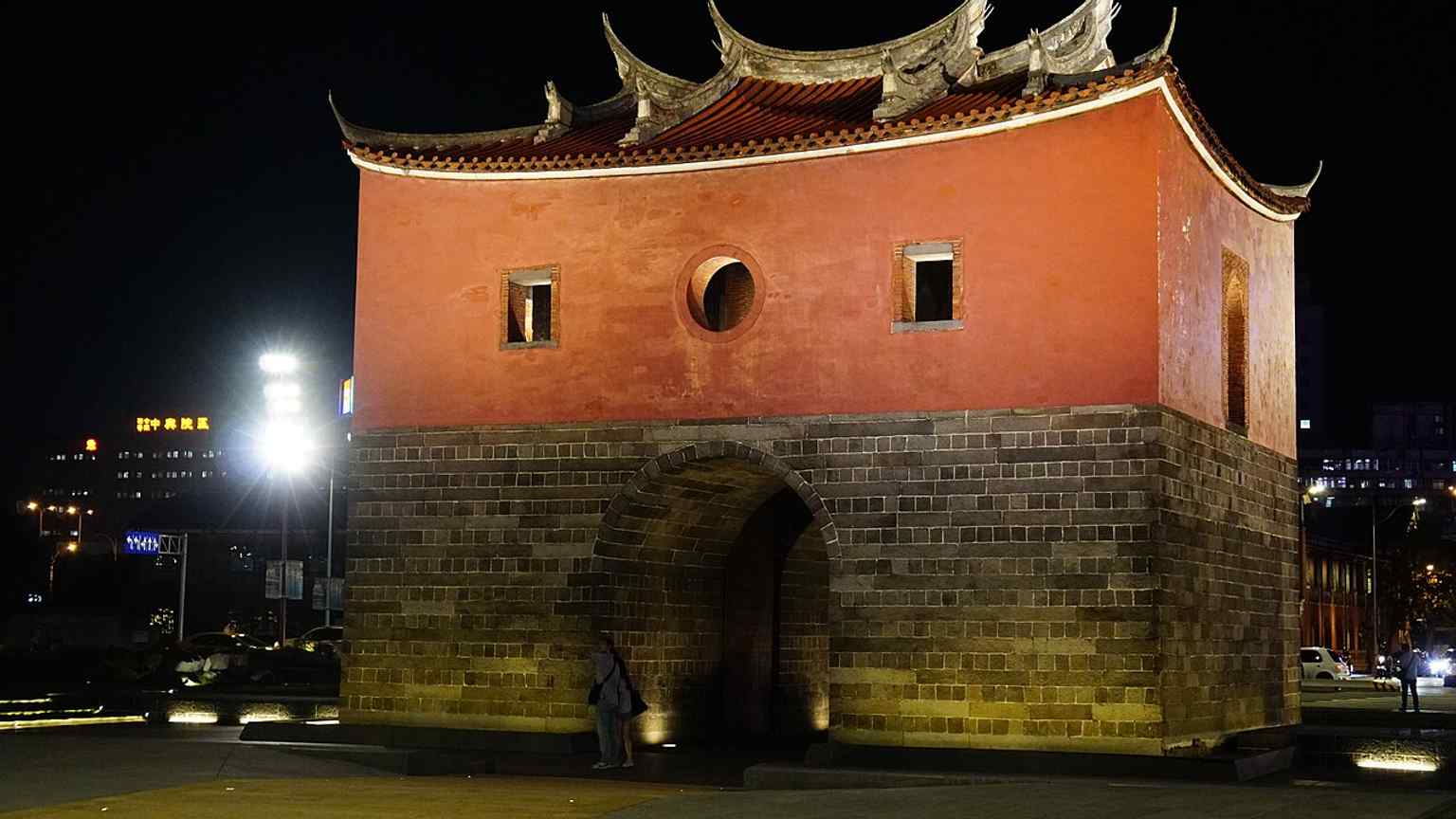
Night view of Taipei City North Gate, showing the preserved Qing-era city gate standing as the old west side landmark of Taipei.Photo: 偉倫, Wikimedia Commons, CC BY-SA 4.0. Cropped & resized. 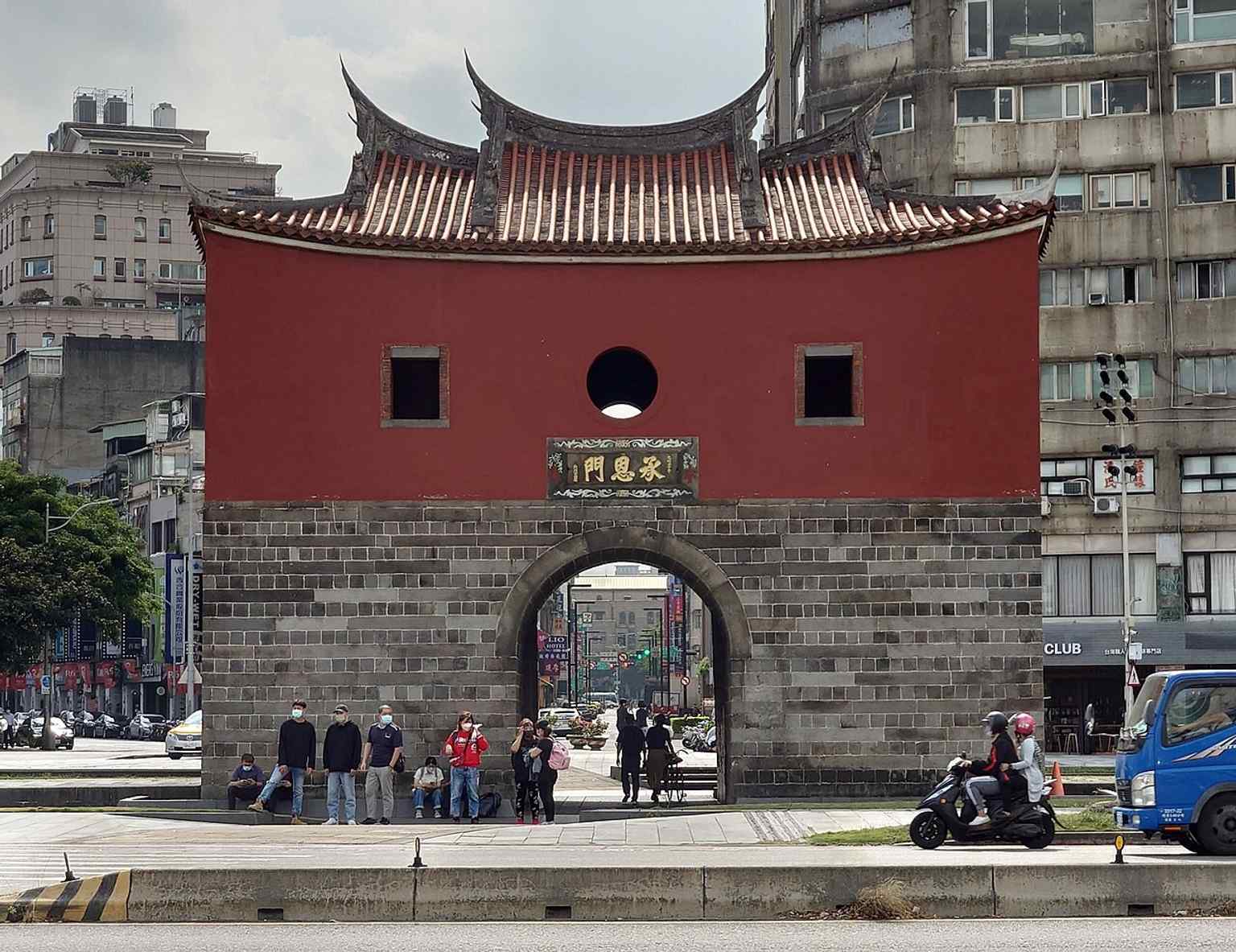
The north side of the gate in daylight, a clear look at the original brick-and-stone fortress-style structure that survived when most Taipei city walls were demolished.Photo: Yu tptw, Wikimedia Commons, CC BY-SA 4.0. Cropped & resized. On your right, look for the red-brick octagonal building with a steep dark roof and a tall arched entrance set like a formal centerpiece in the façade. From across the plaza, the…Read moreShow less
Open dedicated page →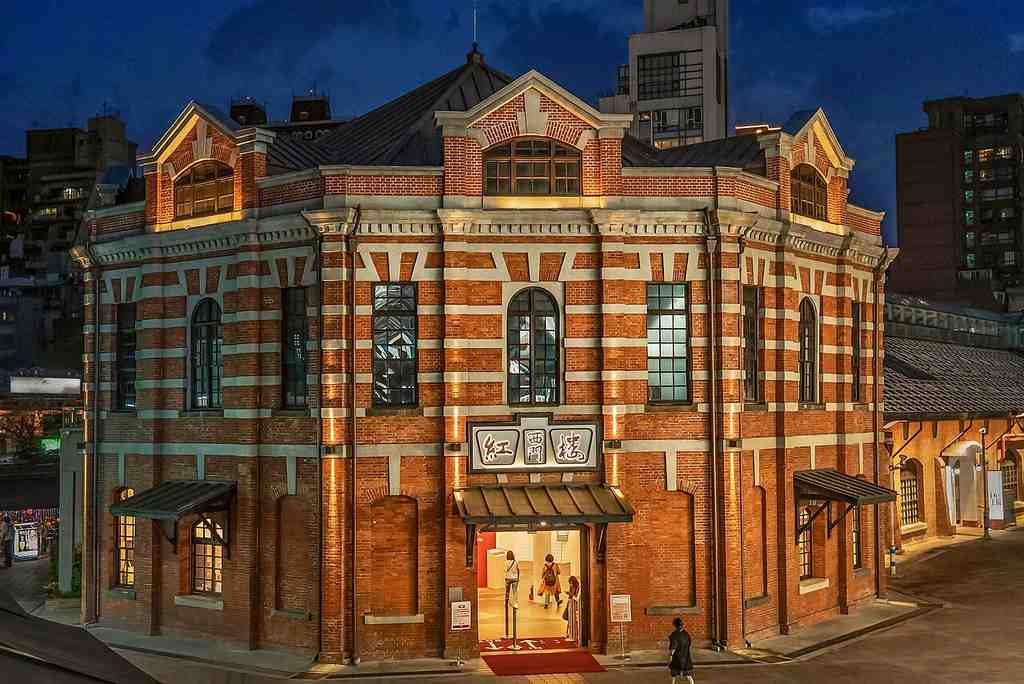
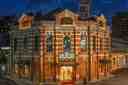
Ximen Red HousePhoto: Art PH Chen, Wikimedia Commons, CC BY-SA 4.0. Cropped & resized. On your right, look for the red-brick octagonal building with a steep dark roof and a tall arched entrance set like a formal centerpiece in the façade.
From across the plaza, the Red House looks almost too theatrical to be just a market... which is exactly the point. In nineteen oh seven, architect Kondo Juro designed this place as the new indoor Ximen Market, and in nineteen oh eight it opened as an officially built public market. Not a casual shed for vegetables, then. An official market. Government money, modern materials, and a district planned for consumption.
That setting matters. Early Japanese colonial planners shaped Ximending into a leisure quarter modeled on Tokyo’s Asakusa, full of shops and amusements. If the old gates of Taipei controlled who came in, this district worked on a different question: what would people do once they were free to spend?
But here’s the twist under your feet. Before all that, this area held graves and sandy sweet potato fields. To clear the land, officials ordered families to report and move the dead. Between the seventeenth of March and the fourth of April in nineteen oh eight, workers removed nine hundred and five claimed graves and more than two thousand unclaimed ones. That is one brisk urban makeover.
People later told a wonderfully spooky story that the octagon and cross-shaped plan acted like protective symbols, calming restless spirits. It is a good story... and historians say there is no firm document proving Kondo intended that. Still, you can see why the rumor stuck. The building itself invites myth. If you glance at your screen, the octagonal front is especially clear here.
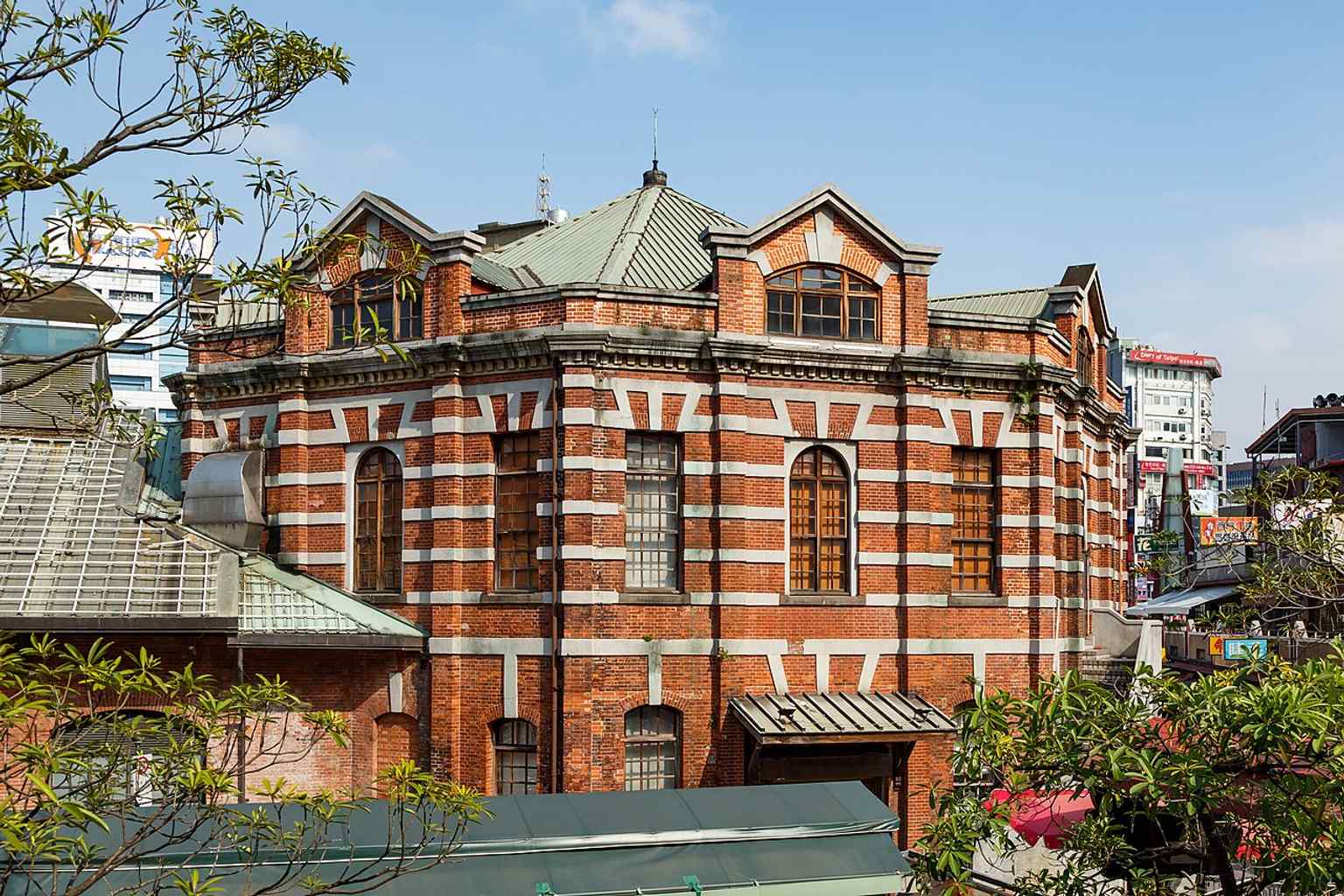
A clear daytime view of the Red House’s octagonal brick façade — the landmark began in 1908 as Taiwan’s first officially built public market.Photo: CEphoto, Uwe Aranas, Wikimedia Commons, CC BY-SA 3.0. Cropped & resized. Originally, the octagon sold higher-end Japanese groceries, while the cross-shaped wing behind handled fresh food. The engineering was advanced for its day: reinforced concrete, thick brick walls, and a steel roof frame that spread out like umbrella ribs above the hall. So yes, even the ceiling had a little ambition.
Then the building kept changing masks. After the war, the octagon turned into a teahouse, then a performance venue, then a theater. One of the people who remembered that life was manager Yang Ronghua. He recalled storytellers, traditional opera, comic acts, magic shows, and later a bustling book house where audiences bought tea as their ticket. A retired general named Liu Zhi came so often that when he found no seats, he reportedly swept tea cups off a table with his cane and told the staff, in effect, problem solved. Not subtle, but memorable.
By the nineteen fifties, Shanghai merchants had also helped give Ximending a “Little Shanghai” flavor, and the Red House joined that world of opera, song halls, and cinema. Later it declined, nearly got demolished, survived a fire in the cross wing, and returned again as a creative and performance venue. Another image in the app shows that later life nicely.
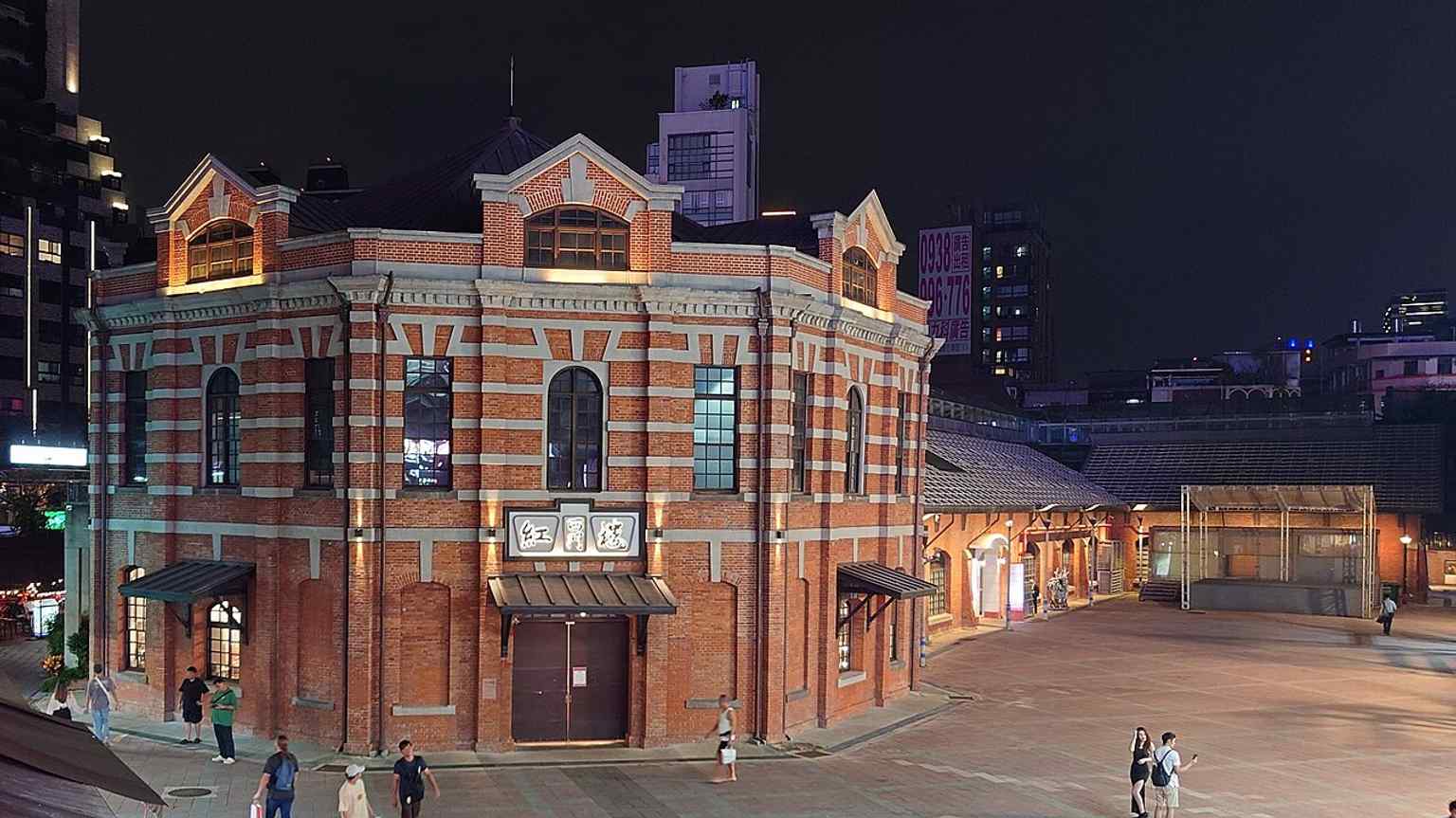
Night view of Ximen Red House, now a cultural and performance venue — a vivid reminder of how the site evolved from market to theater and creative hub.Photo: Yu tptw, Wikimedia Commons, CC BY-SA 4.0. Cropped & resized. That long journey, from cemetery to market to theater to cultural hub, is what makes this place feel a little uncanny and very Taipei. Reinvention here does not only happen through ministries and monuments; sometimes the city rewrites itself through shopping, performance, gossip, and a good seat near the stage.
When you’re ready, head toward Qingshui Rock in Mengjia, about a nine-minute walk away. If you want to come back inside later, the Red House is usually open from eleven A-M to nine P-M, Tuesday through Sunday, and closed on Monday.
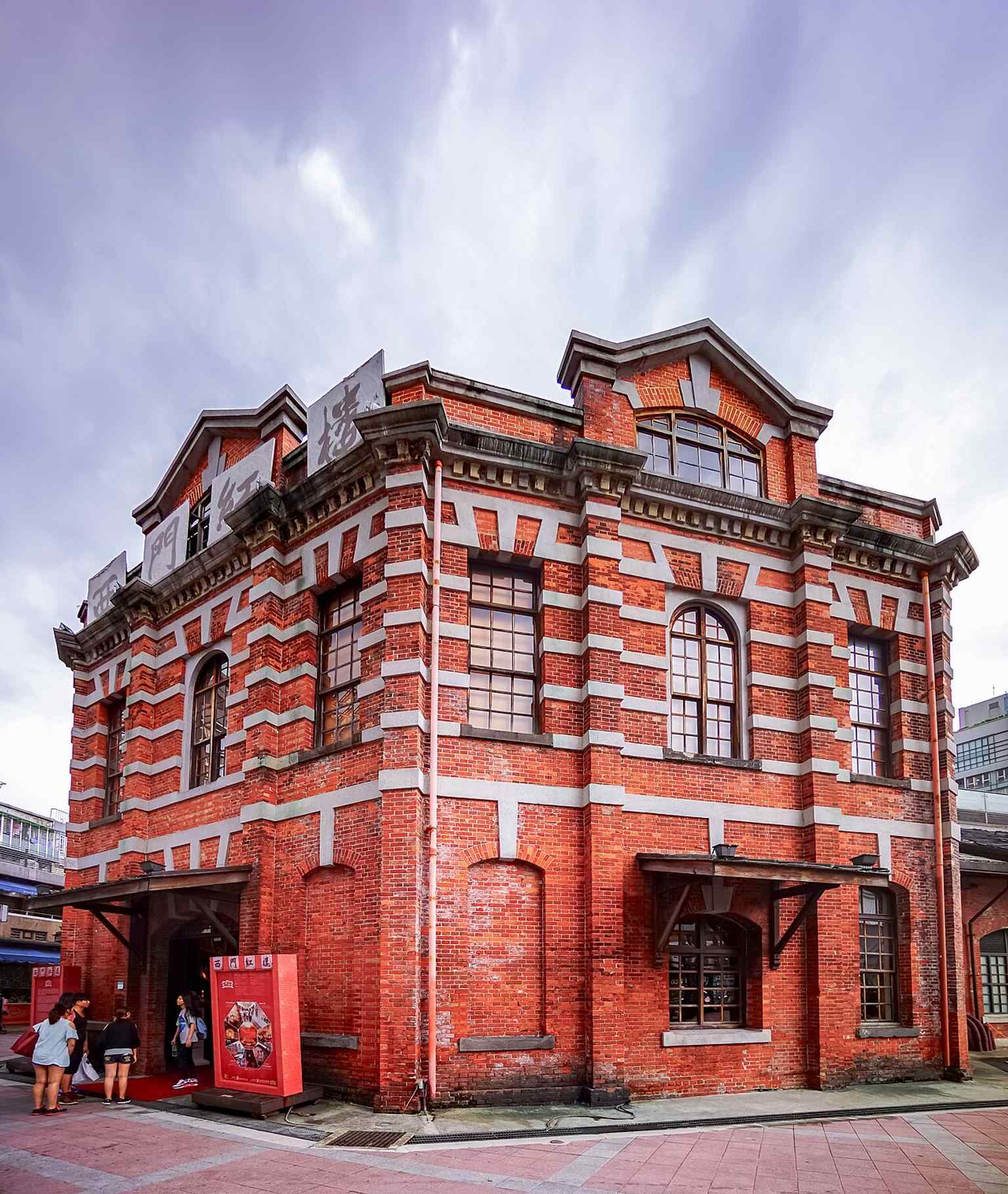
The Red House from a different angle, showing the building’s distinctive octagonal form and its role as a historic monument in Ximending.Photo: Daniel P. C. Shen, Wikimedia Commons, CC BY-SA 4.0. Cropped & resized. 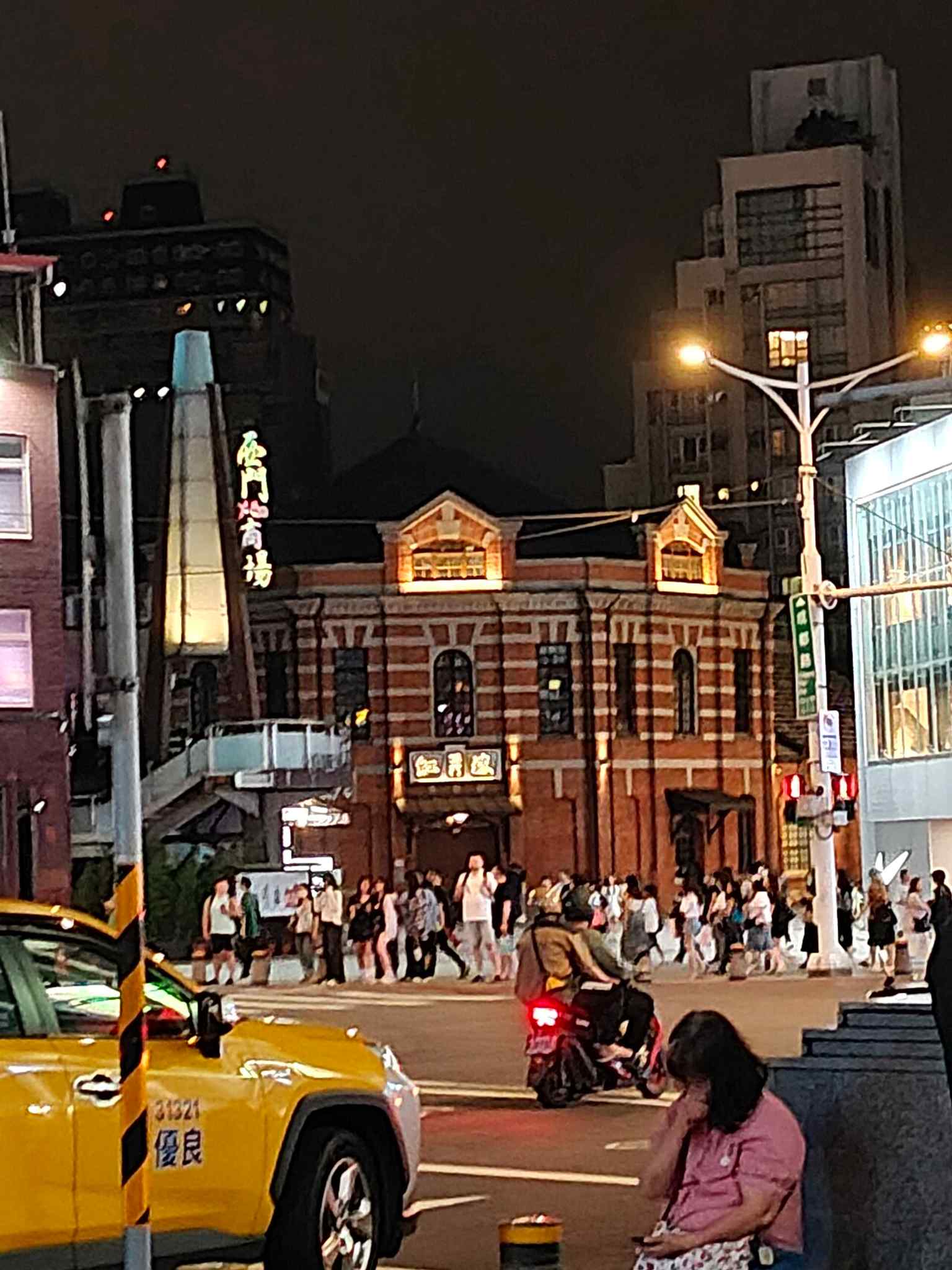
A recent view of the monument, useful for showing the restored Red House as it stands today in the heart of Ximending.Photo: Allervous, Wikimedia Commons, CC BY-SA 4.0. Cropped & resized. On your left is a broad stone-and-brick temple front with three shadowed doorways, squat dragon-carved columns, and roof ridges crowded with ceramic immortals that seem to be…Read moreShow less
Open dedicated page →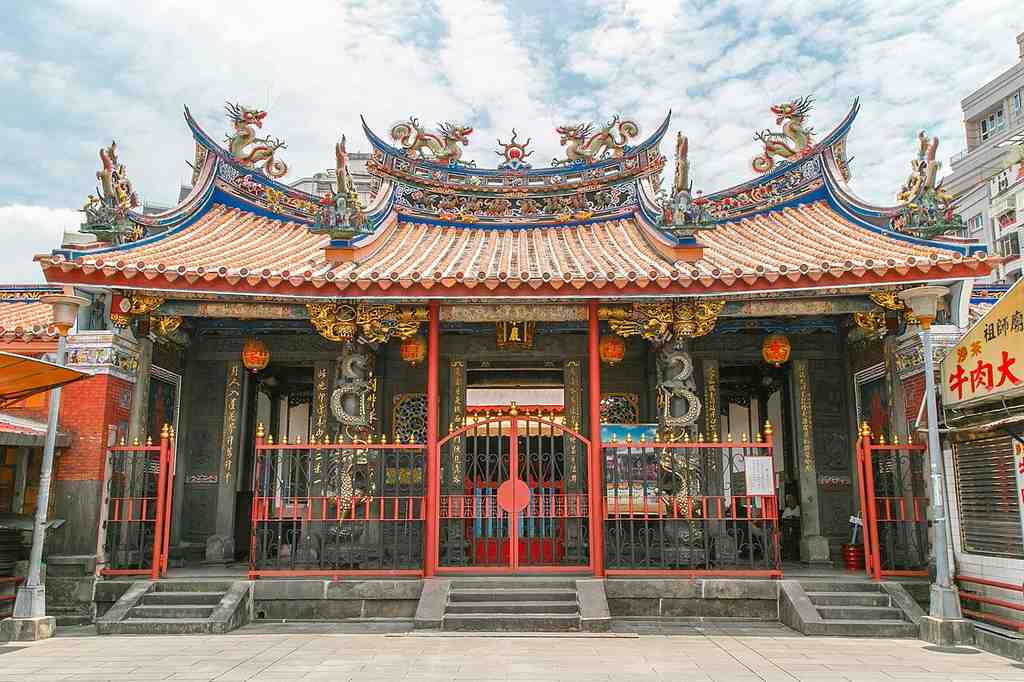
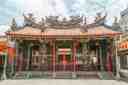
Qingshui Rock, MengjiaPhoto: 張雅倫, Wikimedia Commons, CC BY-SA 4.0. Cropped & resized. On your left is a broad stone-and-brick temple front with three shadowed doorways, squat dragon-carved columns, and roof ridges crowded with ceramic immortals that seem to be holding a meeting above the street.
This is Mengjia Qingshui Rock, better known as the Ancestor Temple, and from where you’re standing it looks solid, almost stubborn. That fits the story. In seventeen eighty-seven, Quanzhou migrant communities from Anxi in Fujian chose a man named Weng Youlai to organize a temple here. He brought incense lineage from the mother temple in Anxi, and settlers in Bangka pooled their money and labor to establish this place. For those migrants, a temple was never just a religious stop. It was a neighborhood headquarters, a mutual-aid office, a place to settle trust, status, and belonging without waiting for some distant official to notice them.
The main deity, Qingshui Zushi, was a monk from the Song dynasty, but this temple never kept a tidy one-god arrangement. Inside, people also venerate Mazu, the sea goddess, Guan Gong for loyalty and war, Wenchang for learning, the Earth God, and others. That mix tells you how Wanhua grew: merchants, families, sailors, scholars, and craftsmen building one social world together.
Locals speak most warmly about the Penglai Ancestor, the most revered of the temple’s seven Qingshui images. This is the detail many passersby never hear. He is also called the black-faced ancestor, because legend says ghosts scorched him with fire during meditation. And he is the falling-nose ancestor: when danger approaches, his nose is said to drop off as a warning. Government offices issue notices; old neighborhood gods, apparently, prefer stronger visual communication.
This temple also sat inside very real conflict. In eighteen fifty-three came the Dingxiaojiao conflict, a violent struggle between different Fujian merchant groups in Bangka. The Quanzhou San-yi side wanted to strike rivals from Tong’an and needed a route across swampy ground. They pressured the Anxi community to let this temple burn so troops could pass, promising they would rebuild it afterward. They did not exactly honor that promise. They donated only a pair of dragon columns. Which is a bold interpretation of “we’ll take care of it.” So the Anxi community raised funds again and rebuilt the temple between eighteen sixty-seven and eighteen seventy-five. Much of what you see still carries that mid-Qing rebuilding, which makes this one of Taipei’s rare places where the old structure still speaks for itself.
Take a glance at the app and you’ll see the imperial plaque reading “Meritorious in Rescue.” The Qing court awarded it after the Sino-French War, when believers said the Penglai Ancestor helped protect Tamsui and, by extension, Taipei. Official history gave the temple a plaque. Local memory gave it miracles, lawsuits over who owned the statue, and eventually a shared rotation between Mengjia and Tamsui. Even the gods here ended up with a commuting schedule.
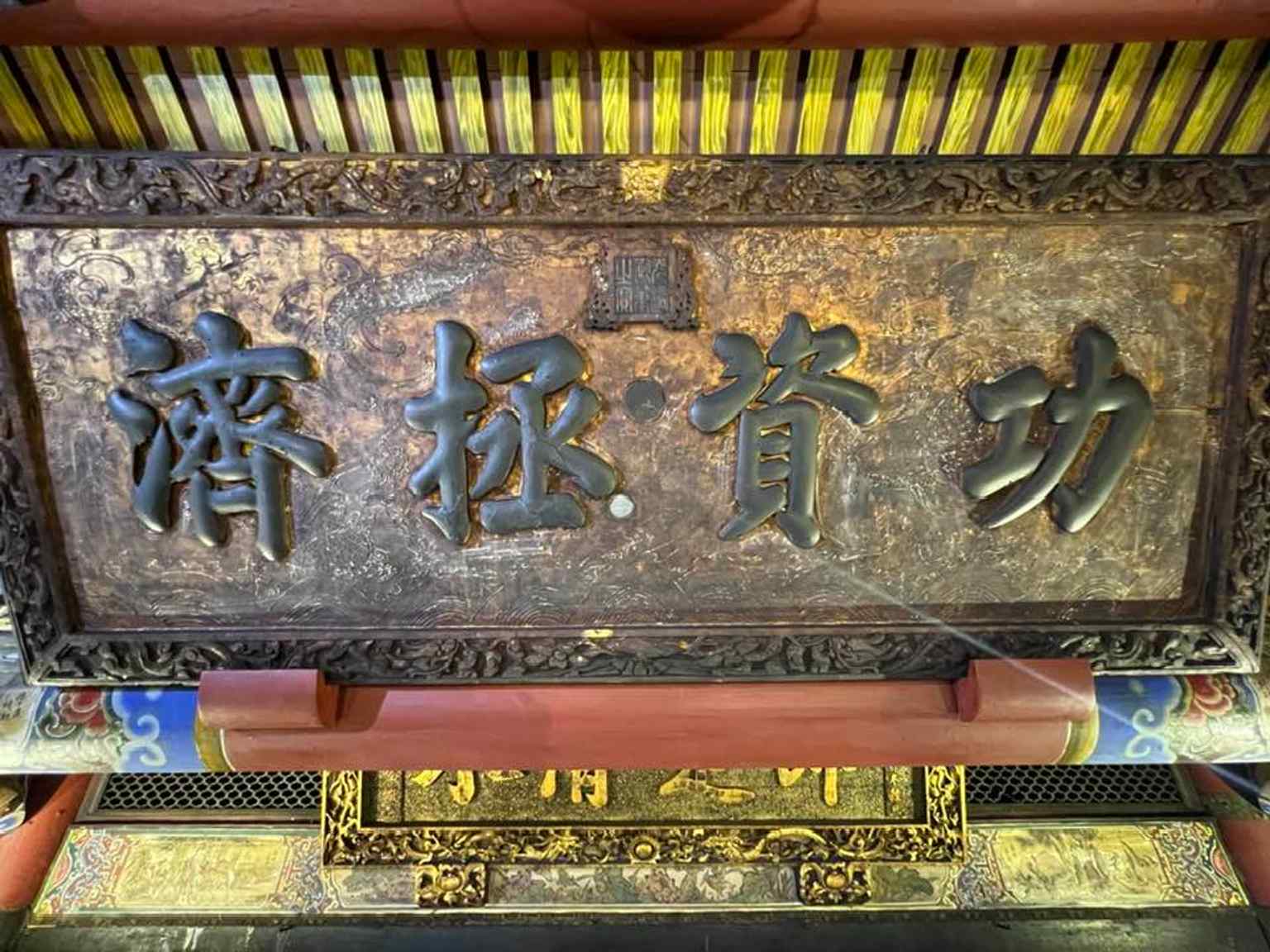
The Qing Emperor’s “Meritorious in Rescue” plaque, awarded after the Sino-French War, one of Qingshui Rock’s most politically significant relics.Photo: 艋舺阿鬼, Wikimedia Commons, CC BY-SA 4.0. Cropped & resized. Then, under Japanese rule, officials turned the temple into a language-school annex. Later it also served as an early campus site for schools that became Chenggong High School. So buildings kept getting repurposed from above. But here, the deeper claim stayed with the neighborhood below: ritual, donations, argument, rebuilding, and memory.
In about five minutes, Monga Green Mountain Temple shows you another face of that local power. If you want to come back inside later, Qingshui Rock is generally open daily from six in the morning to six in the evening.
On your right is a narrow, deep temple with a granite-and-green-stone facade, a layered roof with upturned eaves, and a pair of distinctly Japanese-style stone lions guarding the…Read moreShow less
Open dedicated page →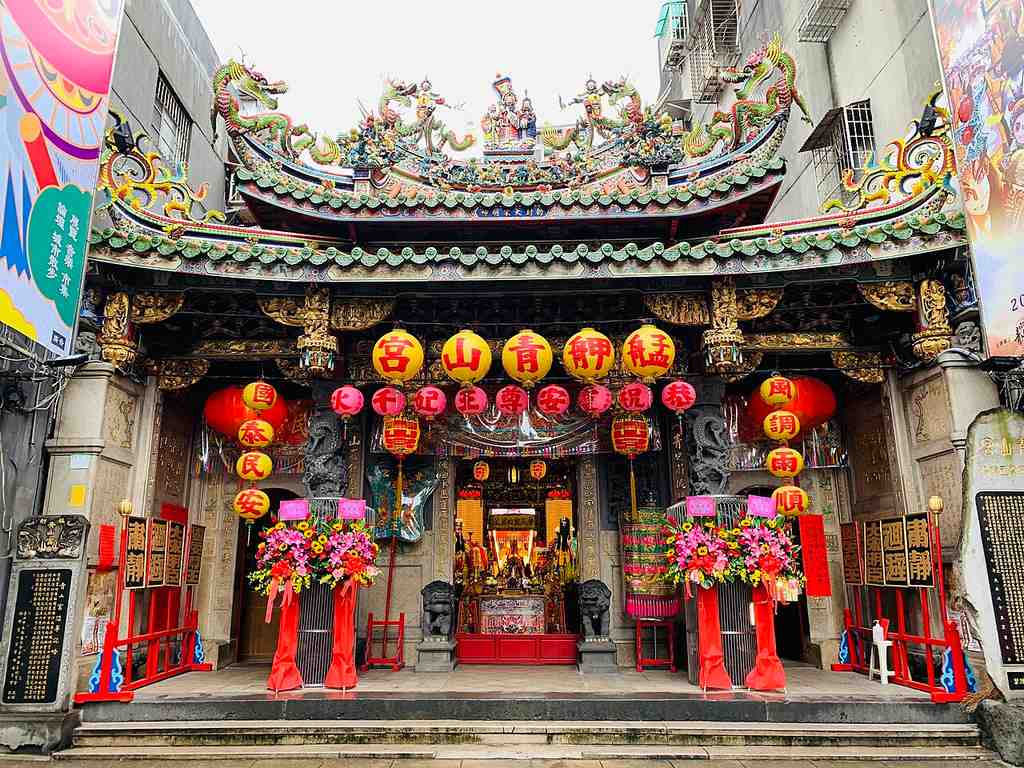
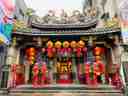
Monga Green Mountain TemplePhoto: Chien-Ping KAO, Wikimedia Commons, CC BY-SA 4.0. Cropped & resized. On your right is a narrow, deep temple with a granite-and-green-stone facade, a layered roof with upturned eaves, and a pair of distinctly Japanese-style stone lions guarding the entrance.
This is Monga Green Mountain Temple, founded in the eighteen fifties after epidemic fear hit Bangka. Fishermen and migrants from Huian in Quanzhou brought here their home protector, Qingshan Ling’an Zunwang - locals usually just say Qingshan Wang, the Green Mountain King. First they set up a small shrine on the old street. Then, as stories of answered prayers spread and the crowd of believers grew, they built this temple in eighteen fifty-six, finishing it a few years later near the trading street. In other words, when disease and instability arrived, the neighborhood did what neighborhoods often do best... it organized.
That matters here in Wanhua. We’ve already seen how official power left offices, gates, and courtrooms. This place shows the other system: ordinary people building security from below, with incense, processions, and a god who was expected to patrol trouble the way a magistrate might patrol crime.
The building carries that layered history in stone. The front you see today took shape in nineteen thirty-eight, during Japanese rule, when craftsmen added carved granite and green stone. Some of the stone columns and bases reportedly came from dismantled material linked to Taiwan Shrine. Taipei has never wasted a good block of stone when it could also recycle a political message. If you want a closer look, check the facade photo in the app.
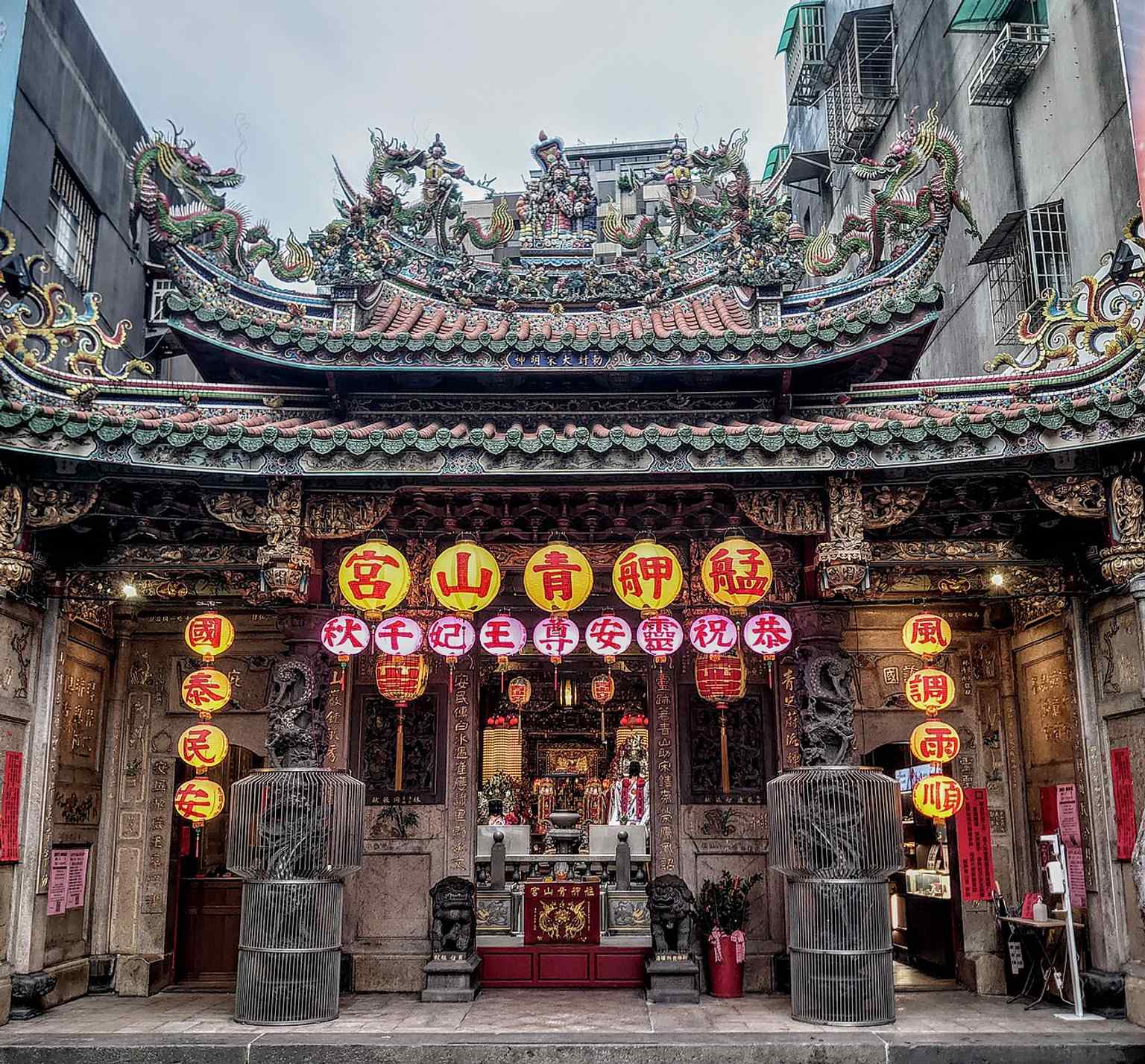
The temple’s Sanchuan Hall facade in Wanhua, matching the historic front court where the stonework and entrance were rebuilt in the Japanese era.Photo: Yu tptw, Wikimedia Commons, CC BY-SA 4.0. Cropped & resized. Even the painted guardians were designed to feel alert. The artist Liu Jiazheng painted Qin Shubao and Yuchi Gong on the main doors - warrior door gods meant to protect the threshold. Liu said the trick was to make them seem to watch you from any angle, so no one felt entirely unwatched. Very effective. A little unsettling. Exactly the point.
Inside, the temple stretches back in the classic street-house plan: three bays wide, three sections deep, with a richly carved ceiling and a main hall dense with plaques from Qing officials and later political figures. Reverence here did not cancel authority; it negotiated with it.
And this is no frozen relic. In twenty thirteen, an electrical fire badly damaged the front hall and more than seventy percent of the temple suffered some harm. Yet the main long-venerated Qingshan Wang image in the rear escaped the blaze. The city funded emergency repair, devotees donated more, and the temple recovered. That rhythm - damage, repair, return - is very Wanhua.
Its biggest public heartbeat is the four-day Qingshan King festival, one of Taipei’s major temple celebrations. The famous “dark patrol” procession - a ritual night inspection through the neighborhood, searching out misfortune and disorder - still pulls the district together with old seriousness and a lot of noise. Take a look at the festival image if you like.
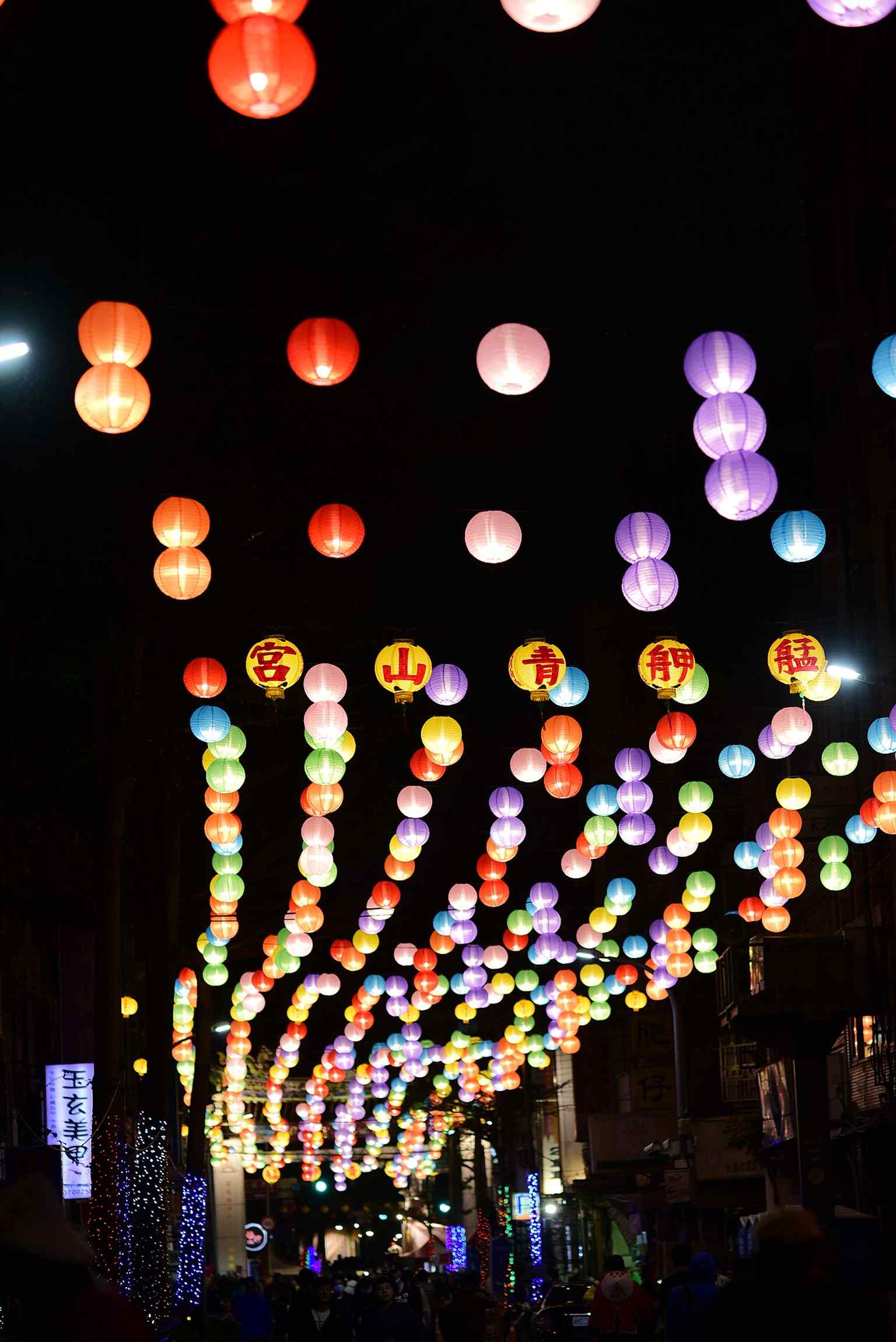
A festival scene from the 2020 Qingshan King Festival, the temple’s famous four-day procession and one of Taipei’s major temple festivals.Photo: Taiwankengo, Wikimedia Commons, CC BY-SA 4.0. Cropped & resized. When you’re ready, Bopiliao Historic Block is about a nine-minute walk from here. And if you want to come back later, the temple is open daily from six in the morning to ten at night.
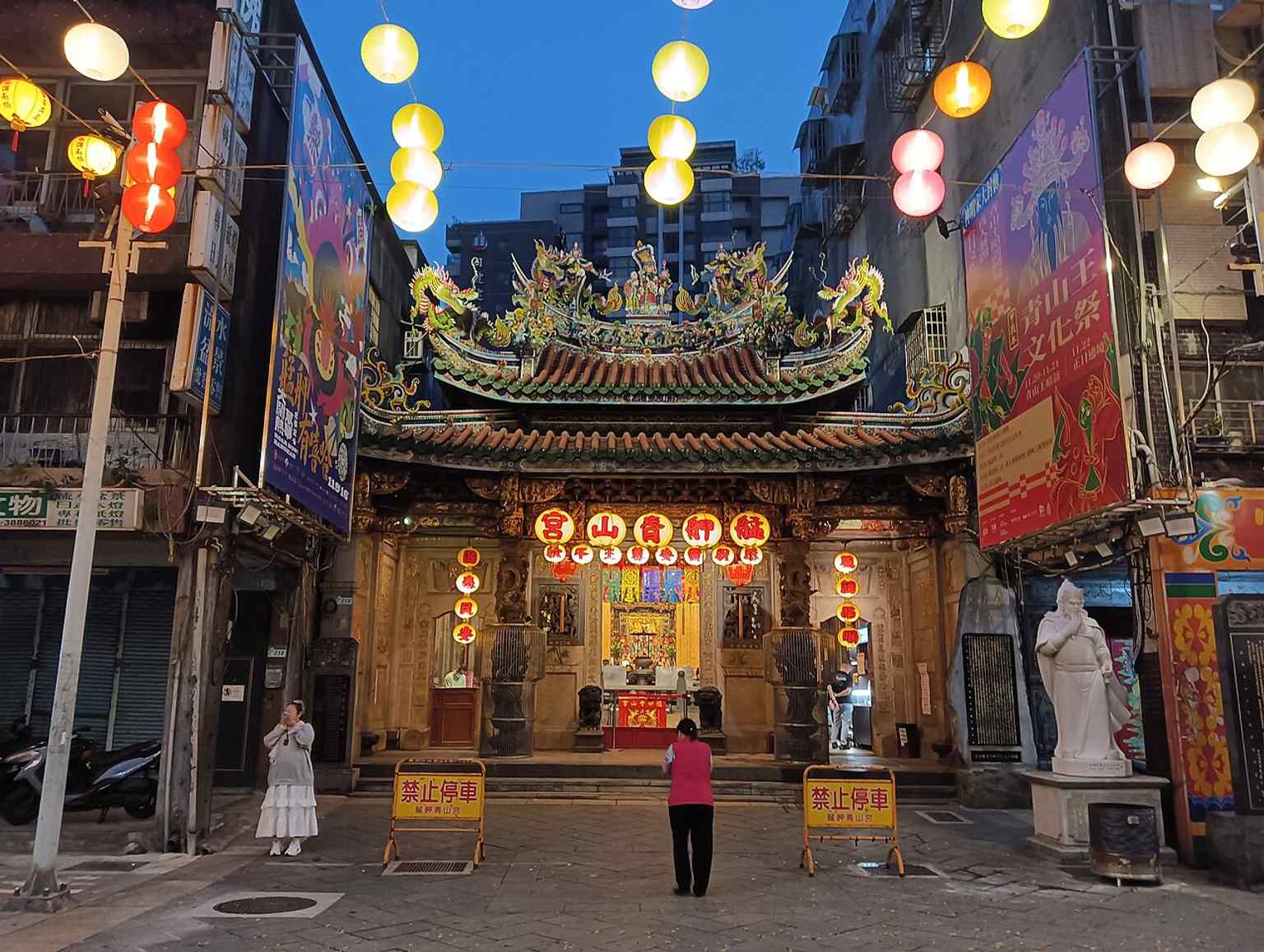
Devotees praying at the temple entrance — a fitting view of Monga Green Mountain Temple as a living local worship center, not just a monument.Photo: Allervous, Wikimedia Commons, CC BY-SA 4.0. Cropped & resized. 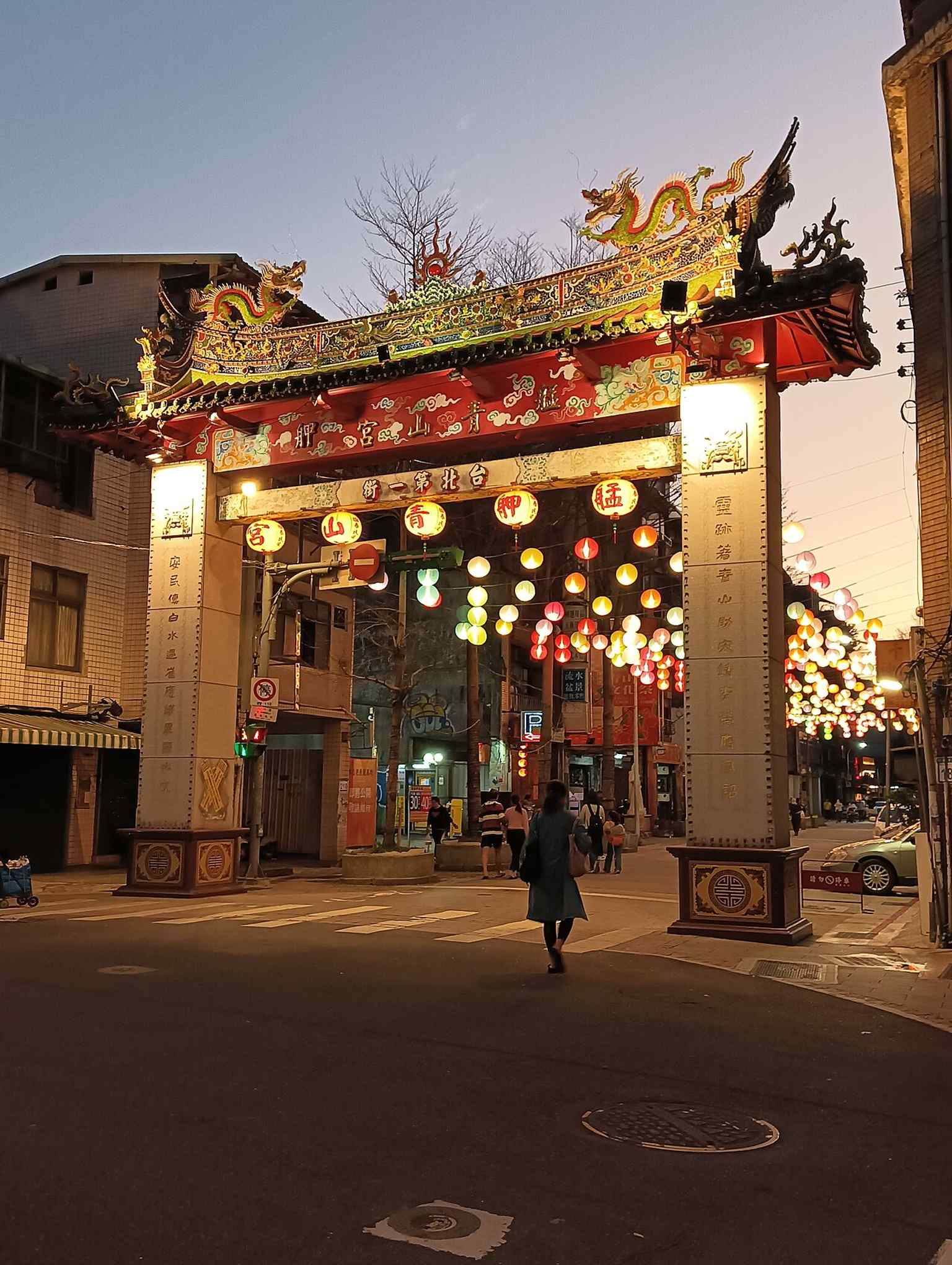
The colorful gate lanterns at the temple entrance add a festive layer to the shrine’s front facade, especially during temple celebration seasons.Photo: Allervous, Wikimedia Commons, CC BY-SA 4.0. Cropped & resized. Look for a row of brick-and-plaster shophouses with narrow rectangular fronts, deep covered arcades, and weathered wooden doors stretching along the lane. This is Bopiliao, one…Read moreShow less
Open dedicated page →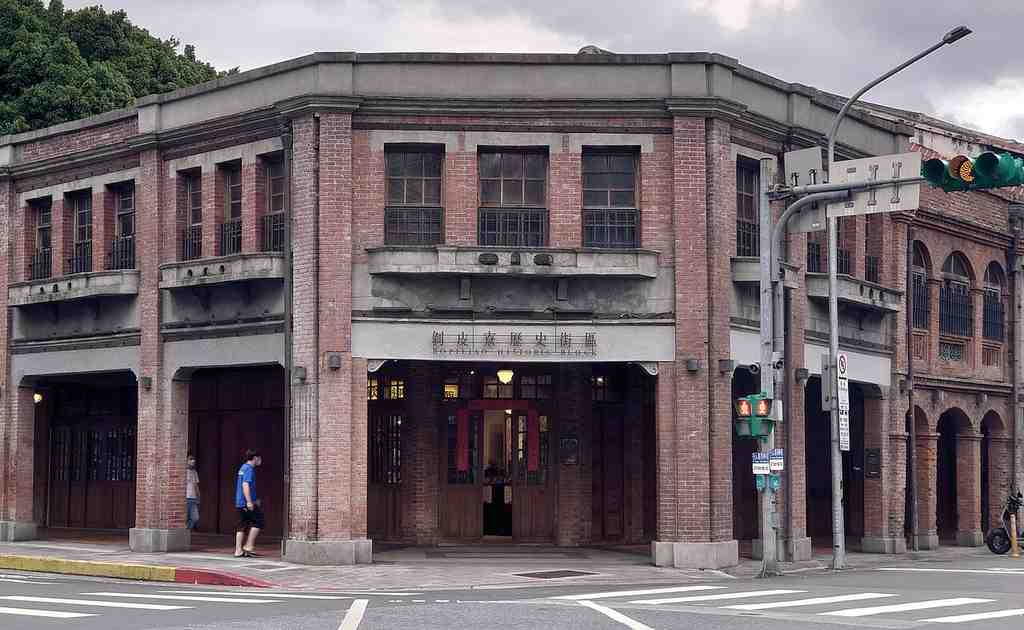
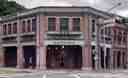
Peeling LiaoPhoto: Yu tptw, Wikimedia Commons, CC BY-SA 4.0. Cropped & resized. Look for a row of brick-and-plaster shophouses with narrow rectangular fronts, deep covered arcades, and weathered wooden doors stretching along the lane.
This is Bopiliao, one of the last surviving Qing-era street blocks in Taipei, and it has lasted here for more than two centuries. The name shows up in land deeds as early as seventeen sixty-three. Even the name itself is slippery. Some people said it came from stripping bark off timber, some from stripping animal hides, and some think it simply drifted in sound from older names like Fupi-liao or Fudi-liao. Very Taipei, really... even the place-name refuses to sit still.
What did stay steady was daily work. This was not a grand boulevard for speeches. It was a living street of shop-houses, meaning homes in back or upstairs and business out front. Under these arcades, traders sold coal, charcoal, and earth coal at the junction near Kangding Road and Guangzhou Street. Families bought fuel here to cook rice, boil water, and heat bathwater. You can almost picture the bargaining: one more scoop, one less coin, everybody certain they were being cheated by history itself.
If you glance at the image on your screen, you can see how the old covered walkway stitched the street together, storefront by storefront. That pattern survived because of a bureaucratic twist. In nineteen forty-one, the Japanese colonial government marked this whole strip as future land for the nearby school. Because owners could not freely rebuild or enlarge, the street missed later waves of redevelopment. So the old mix stayed: southern Fujian-style shopfronts beside Western-influenced facades, a little uneven, a little patched together, and all the more honest for it.
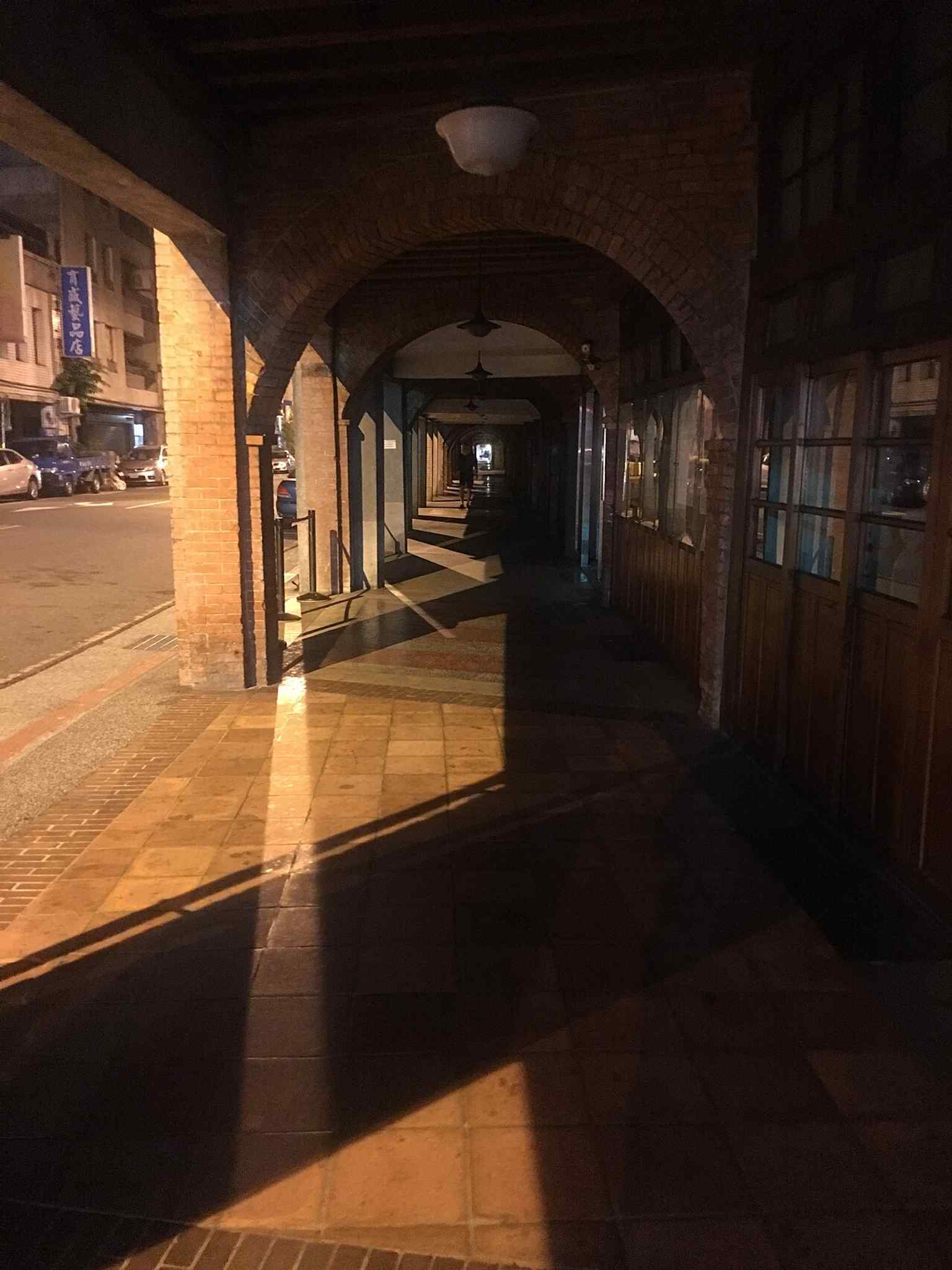
A narrow Bopiliao lane with covered arcades — the old street pattern that survived urban redevelopment and later became a film location.Photo: XimenZangief, Wikimedia Commons, CC BY-SA 4.0. Cropped & resized. Bopiliao also sat inside wider trade routes. In nineteen ten, a merchants’ group called Yongxinghang set up on Kangding Road to handle building-material shipping between Taiwan and Fujian. At its busiest, it ran around thirty ships. Later, when no one took over the business, the founder’s son turned that commercial hall into the Taiwan Economic Daily. Same walls, new cargo: first lumber and materials, then news. Cities do that when they mean to survive.
And survival here was never automatic. In the late nineteen nineties, the city moved to clear the area for school expansion. Residents and supporters formed a self-help group, put up house-by-house guide signs, invited local performers in, and argued that this street still carried the shape of old Mengjia life. Before demolition crews arrived in nineteen ninety-nine, residents walked the lane holding ancestral tablets, keeping vigil and saying goodbye. Part of the block did come down, but public outrage stopped the rest. Restoration began in the two thousands, and the full district reopened in two thousand and nine.
If you look at the longer exterior view in the app, notice how modest the whole street feels. That modesty is the point. Empires, city plans, schools, newspapers, film crews, even public health emergencies have all passed through here. What lasted is the grain of ordinary life: fuel, trade, worship, gossip, repairs, and the stubborn habit of making a living in whatever space remains.
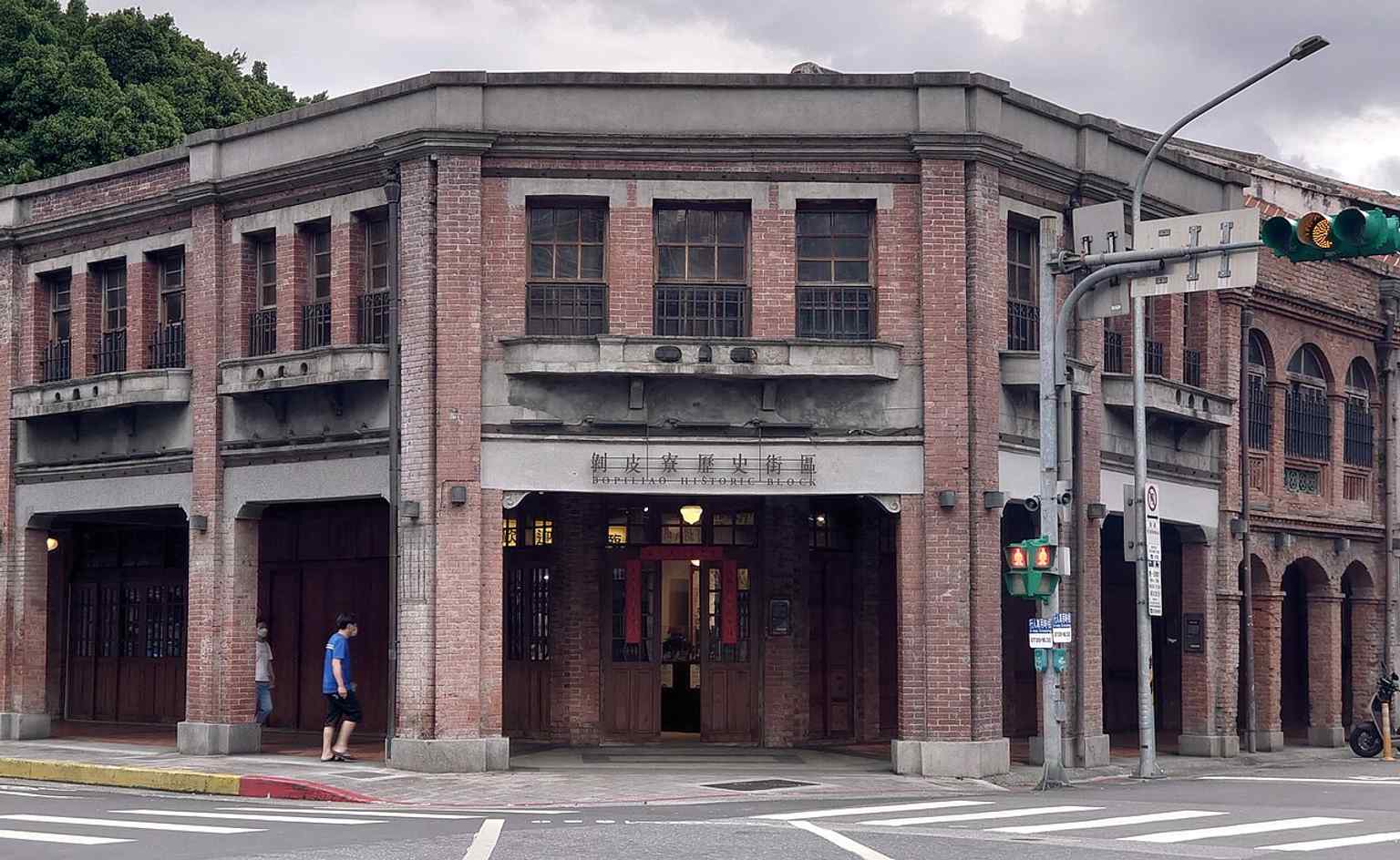
The preserved Bopiliao shophouses on Kangding Road — one of Taipei’s last surviving Qing-era street blocks.Photo: Yu tptw, Wikimedia Commons, CC BY-SA 4.0. Cropped & resized. From here, Longshan Temple is about a three-minute walk away, where this everyday world rises into something more ceremonial. If you want to come back later, the site generally opens Monday, Thursday, and Friday from twelve thirty P-M to nine P-M, Tuesday from two P-M to nine P-M, Saturday from ten A-M to six P-M, and closes on Wednesday and Sunday.
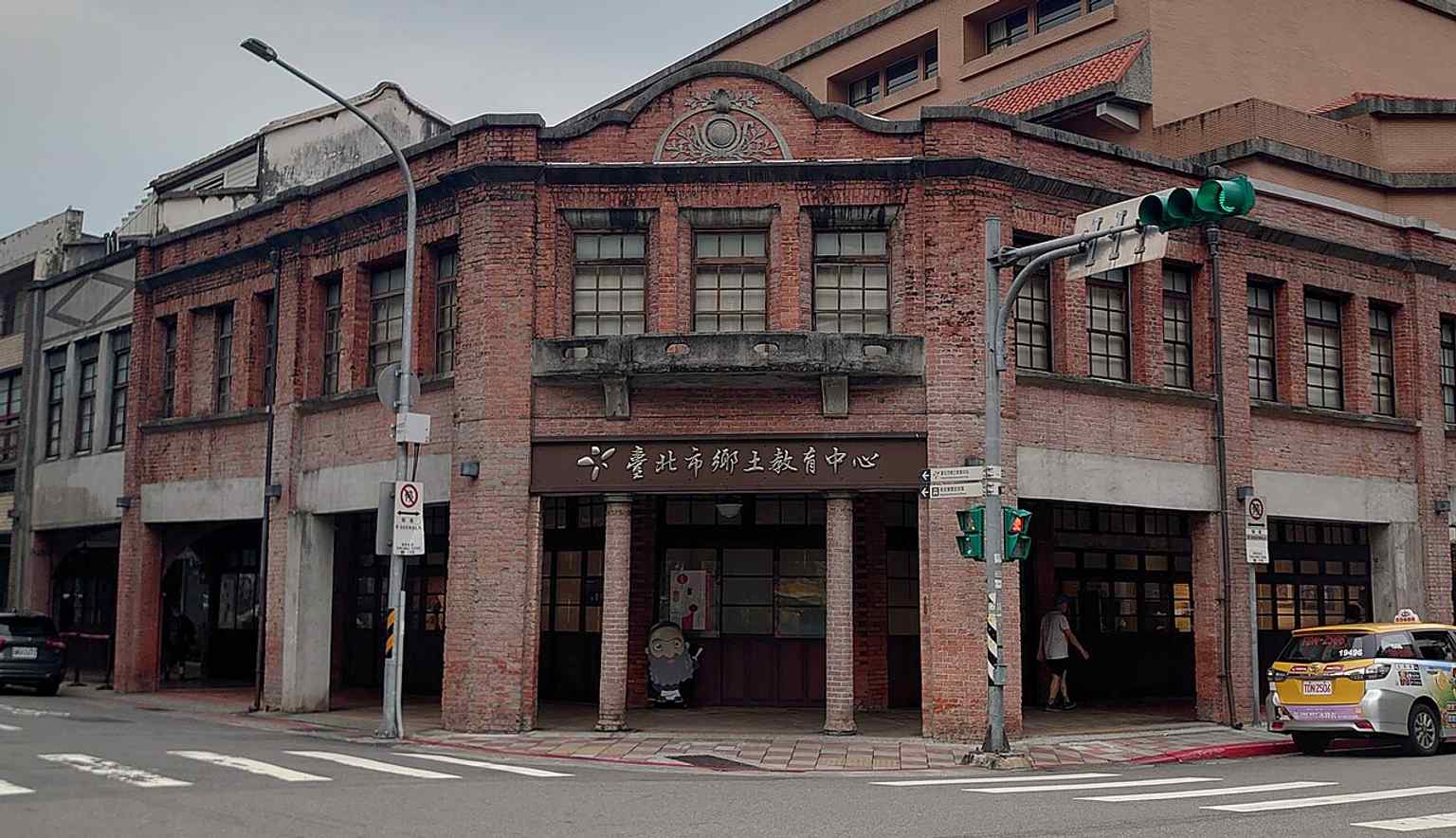
Taipei’s Heritage and Culture Education Center in Bopiliao, the east-side hub used for local history exhibitions and school learning.Photo: Yu tptw, Wikimedia Commons, CC BY-SA 4.0. Cropped & resized. On your right, Longshan Temple rises from a gray stone base into layered dark-timber roofs, with sweeping upturned ridgelines and a richly carved gate crowded with dragon…Read moreShow less
Open dedicated page →On your right, Longshan Temple rises from a gray stone base into layered dark-timber roofs, with sweeping upturned ridgelines and a richly carved gate crowded with dragon figures.
This is where old Mengjia gave itself a heart. In seventeen thirty-eight, migrants from Quanzhou’s three districts began building a temple to Guanyin, the bodhisattva of compassion, after local lore said a rattan merchant accidentally left behind an incense pouch from his hometown’s Longshan Temple and people treated it as a sign. Merchant Huang Dianmo organized the effort, and by seventeen forty, the temple stood.
But this place never worked as only a temple. Traders gathered here, local leaders settled disputes here, and merchants paid fees through the temple if they wanted business to run smoothly. So yes... part sanctuary, part boardroom, part unofficial city government. Taipei has always been efficient about multitasking.
That local authority could get very real. In eighteen eighty-four, when French forces threatened Taiwan, local accounts say governor Liu Mingchuan was preparing to withdraw with soldiers, valuables, and supplies. Mengjia’s merchants thought he was fleeing. They surrounded him, dragged him from his sedan chair, cursed him as a coward, and held him inside this temple until he promised to stay and defend Taipei. Not exactly constitutional procedure, but the neighborhood was not in a patient mood.
The temple also remembers violence within the community. During the eighteen fifty-three fighting between Quanzhou settlers and people from Tong’an, Longshan Temple became a base. The dead were folded into ritual memory, and that memory still lives in Wanhua’s Ghost Festival ceremonies, now recognized as intangible cultural heritage.
What you see today is a survival story in layers. In nineteen nineteen, Abbot Fuzhi gave his life savings to rescue a termite-damaged temple, bringing in the master builder Wang Yishun and craftsmen from Quanzhou. They created the lush architectural language people still admire here: intricate roof brackets, bold stonework, and dragon columns in cast copper. Then the great air raid of nineteen forty-five destroyed the main hall. In the nineteen fifties, local patrons rebuilt it, and Wang Shinan followed Wang Yishun’s earlier design closely, so the temple could recover without erasing the wound. If you want to compare the damage and rebuilding at a glance, the app image makes that long repair easy to see.
And that may be the clearest ending for our walk. We’ve stood before offices, courts, gates, banks, and museums... the official grammar of power. Here, power feels older and more stubborn. It came from migrants pooling money, neighbors enforcing promises, craftsmen rebuilding loss, and worshippers returning generation after generation. After everything you’ve seen, which place seems to hold authority more deeply: the one protected by the state, or the one ordinary people keep alive with their own hands?
Longshan Temple stands here with its answer.
If you want to linger, the temple is open daily from six in the morning to ten at night.
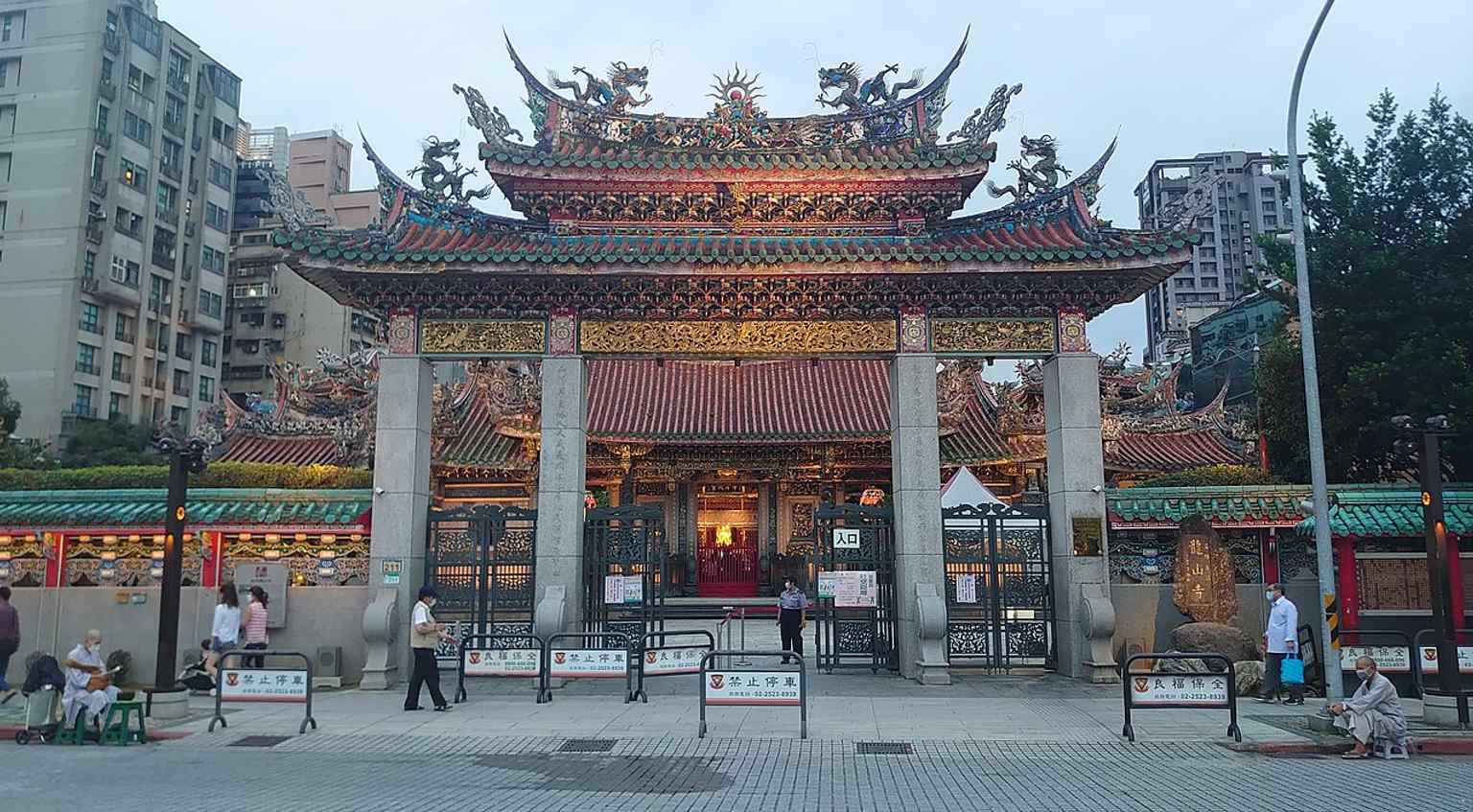
The ornate paifang at the temple entrance — a classic gateway into the complex that introduced Longshan Temple’s ceremonial front.Photo: Yu tptw, Wikimedia Commons, CC BY-SA 4.0. Cropped & resized. 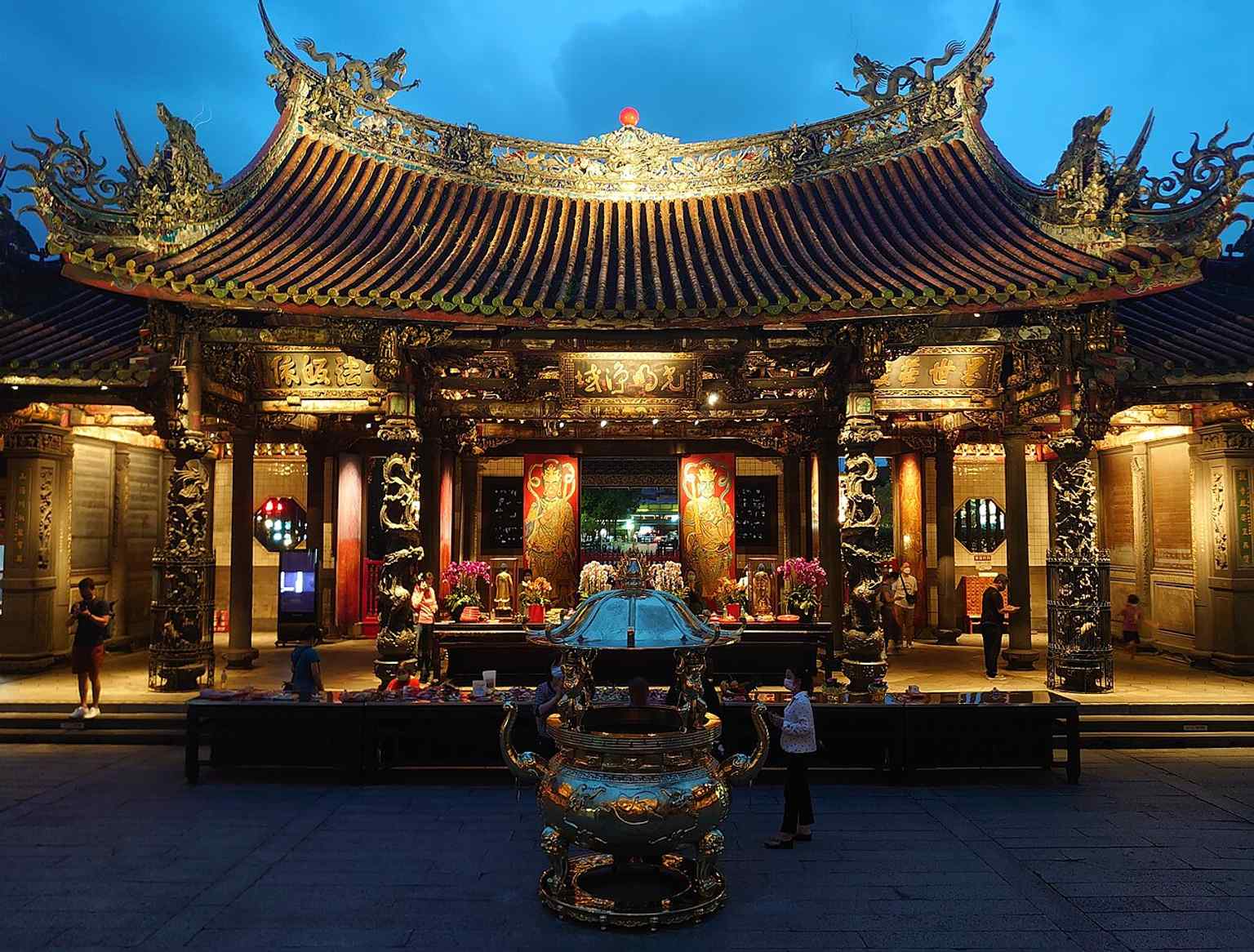
The Sanchuanmen at night, where layered roofs and glowing details show the temple’s dramatic frontage and restored craftsmanship.Photo: Yu tptw, Wikimedia Commons, CC BY-SA 4.0. Cropped & resized. 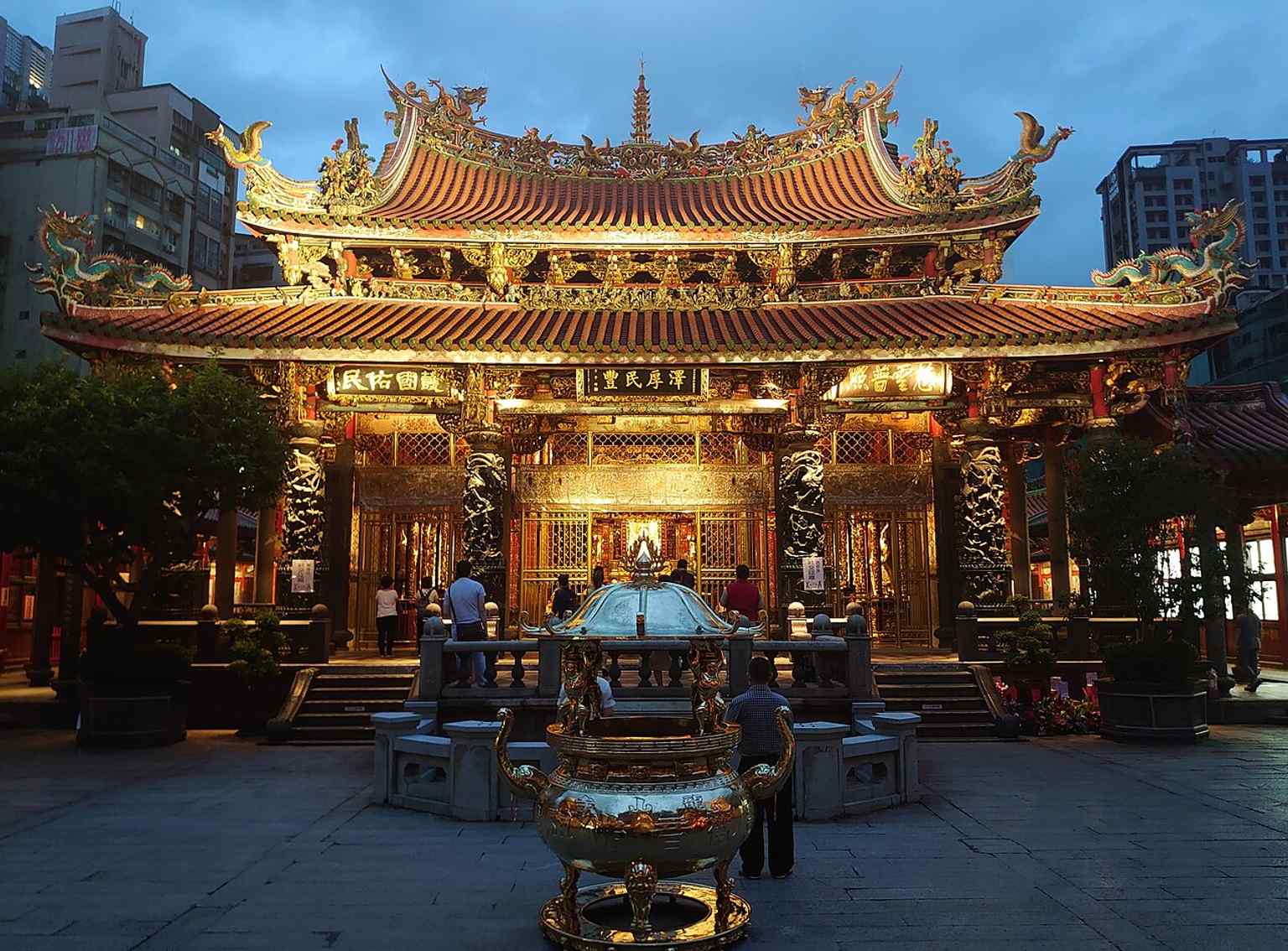
The main hall lit at night — this is the heart of the temple, where Guanyin is worshipped and the building’s rich ornamentation stands out.Photo: Yu tptw, Wikimedia Commons, CC BY-SA 4.0. Cropped & resized. 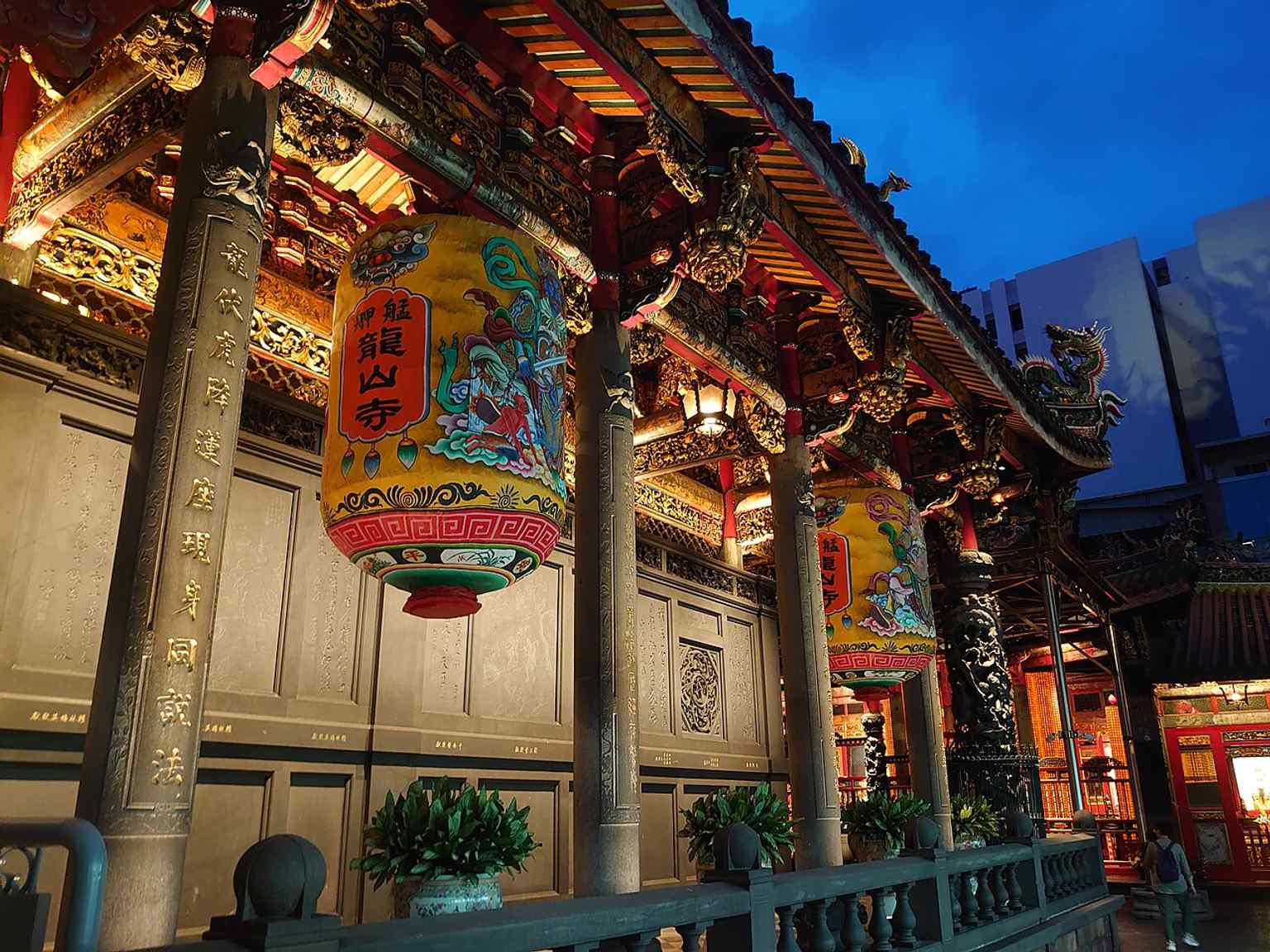
The gallery above the main hall, showing the open circulation around the core sanctuary and the temple’s multi-bay layout.Photo: Yu tptw, Wikimedia Commons, CC BY-SA 4.0. Cropped & resized. 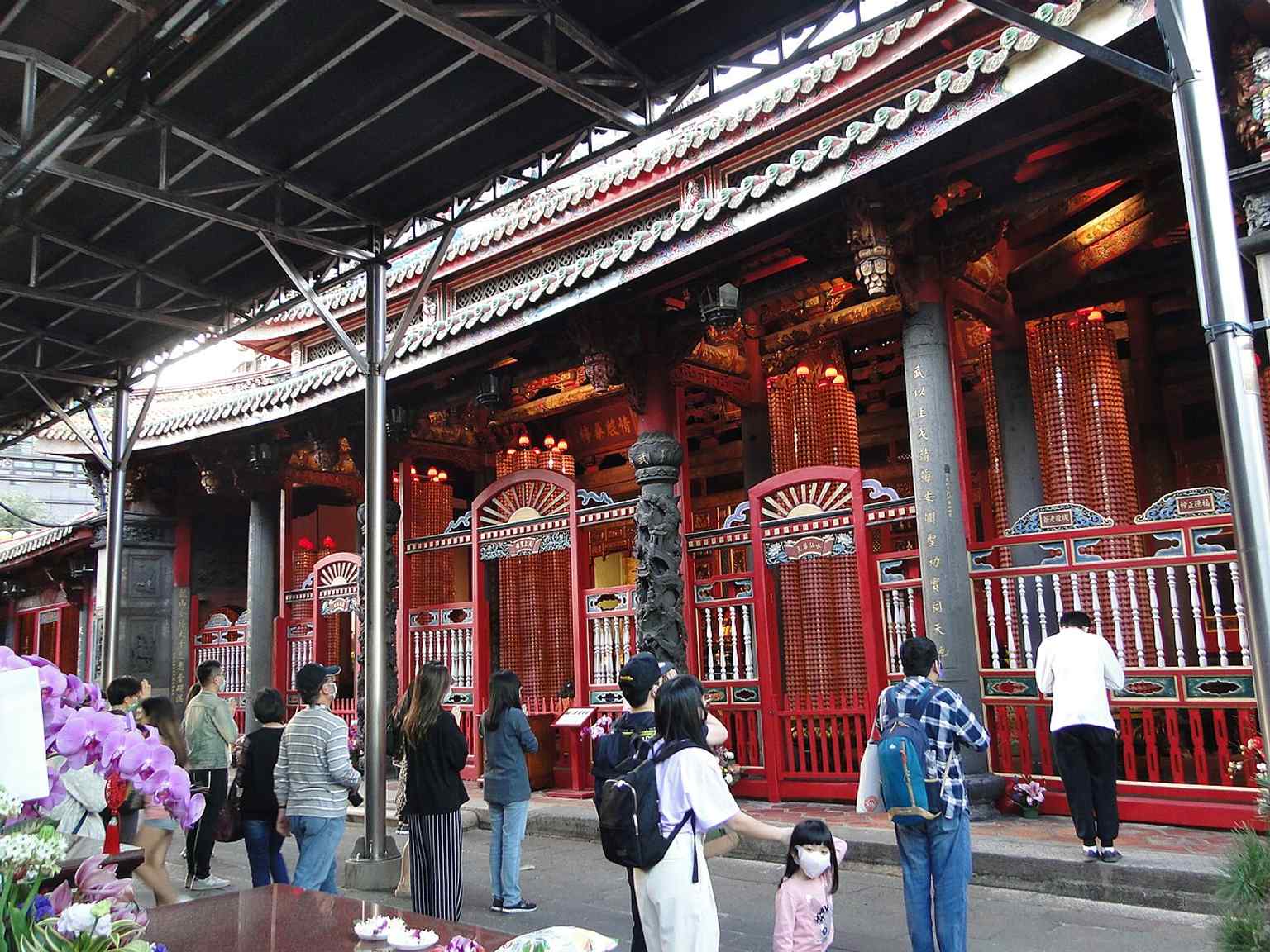
The rear hall of Longshan Temple — useful for telling the story of the temple’s expanded triple-hall structure and later additions.Photo: 弟魯, Wikimedia Commons, CC BY-SA 4.0. Cropped & resized. 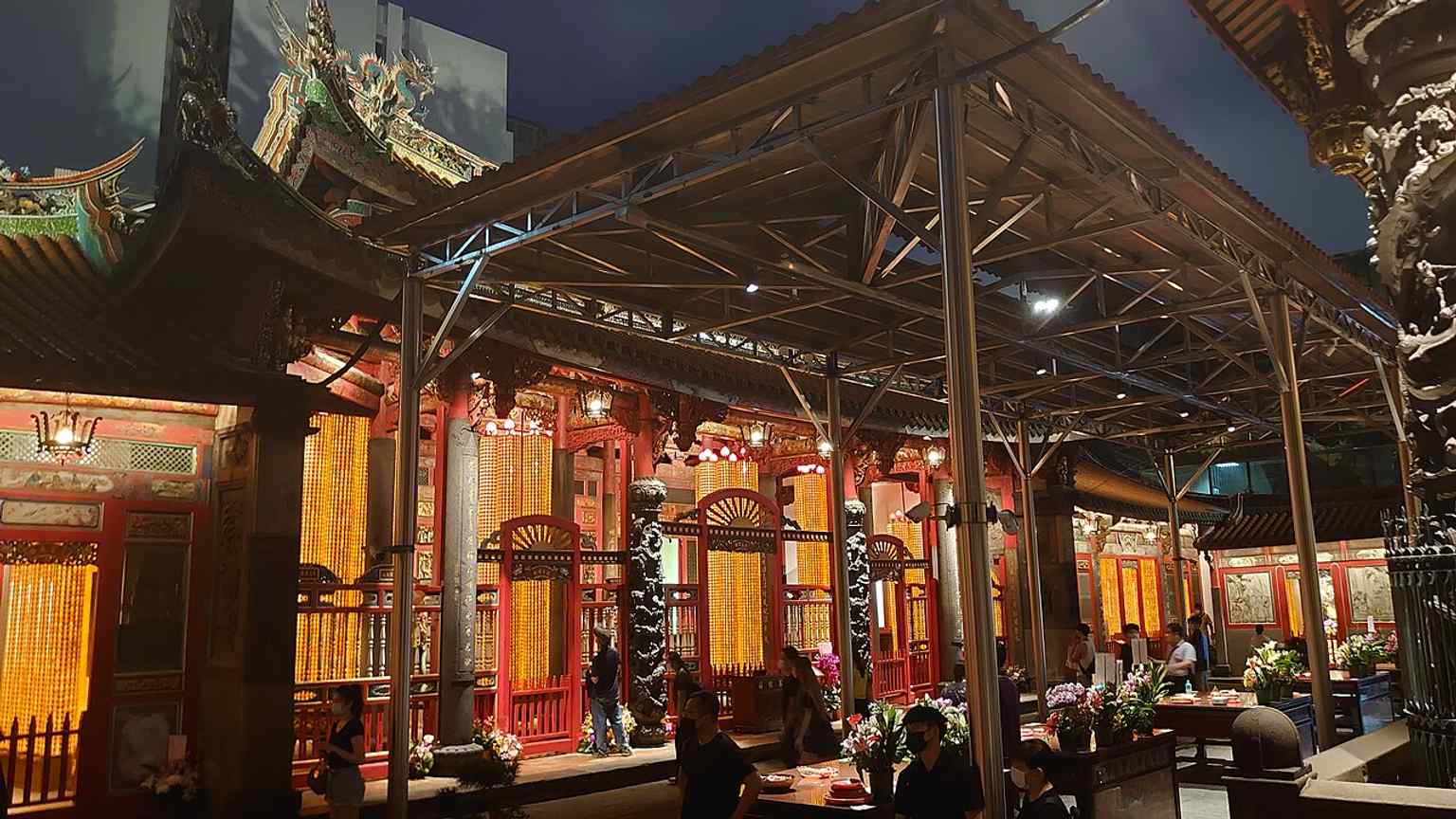
A night view of the apse and rear hall, highlighting how the temple complex glows after dark and emphasizing its layered architecture.Photo: Yu tptw, Wikimedia Commons, CC BY-SA 4.0. Cropped & resized. 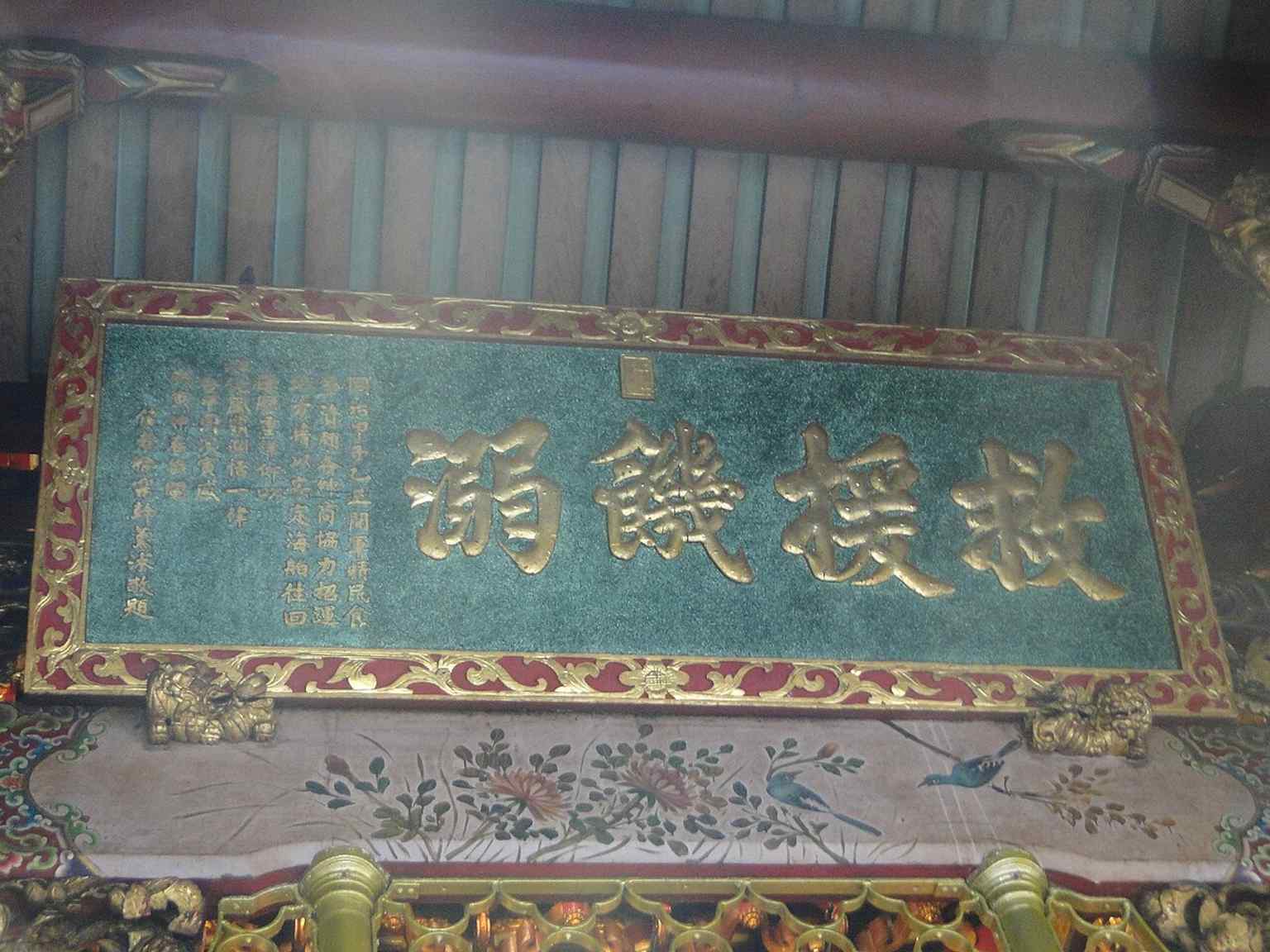
The ‘Rescue the Hungry and the Drowning’ plaque from 1866 — a reminder of the temple’s long history of patronage and public goodwill.Photo: 弟魯, Wikimedia Commons, CC BY-SA 4.0. Cropped & resized. 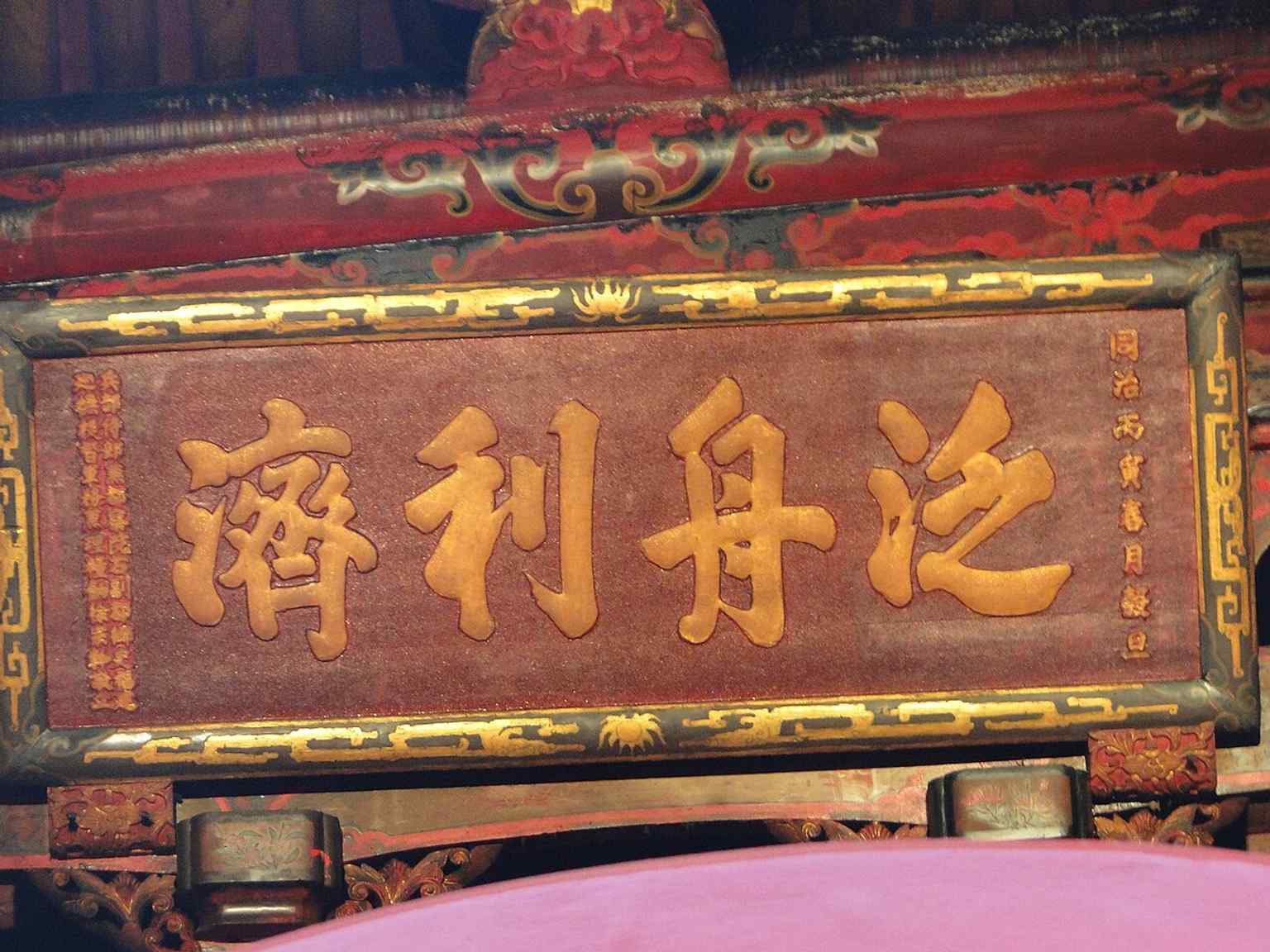
Another 1866 plaque, ‘Helping Boats and Benefiting the People,’ linking the temple to maritime trade and the commercial life of old Bangka.Photo: 弟魯, Wikimedia Commons, CC BY-SA 4.0. Cropped & resized. 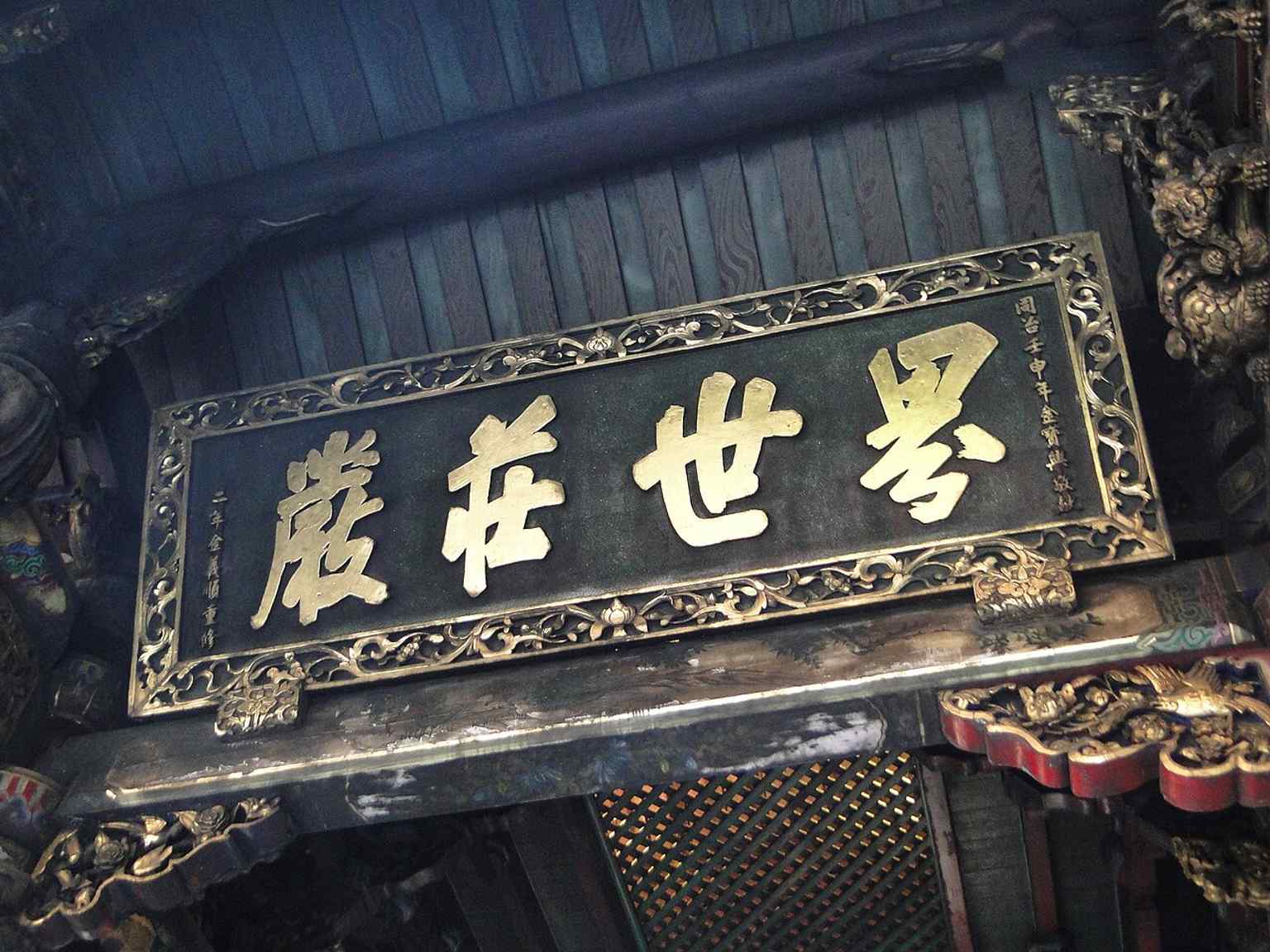
The ‘Worldly Purity’ plaque, one of the temple’s historic inscriptions that reflects its prestige among donors and worshippers.Photo: 弟魯, Wikimedia Commons, CC BY-SA 4.0. Cropped & resized. 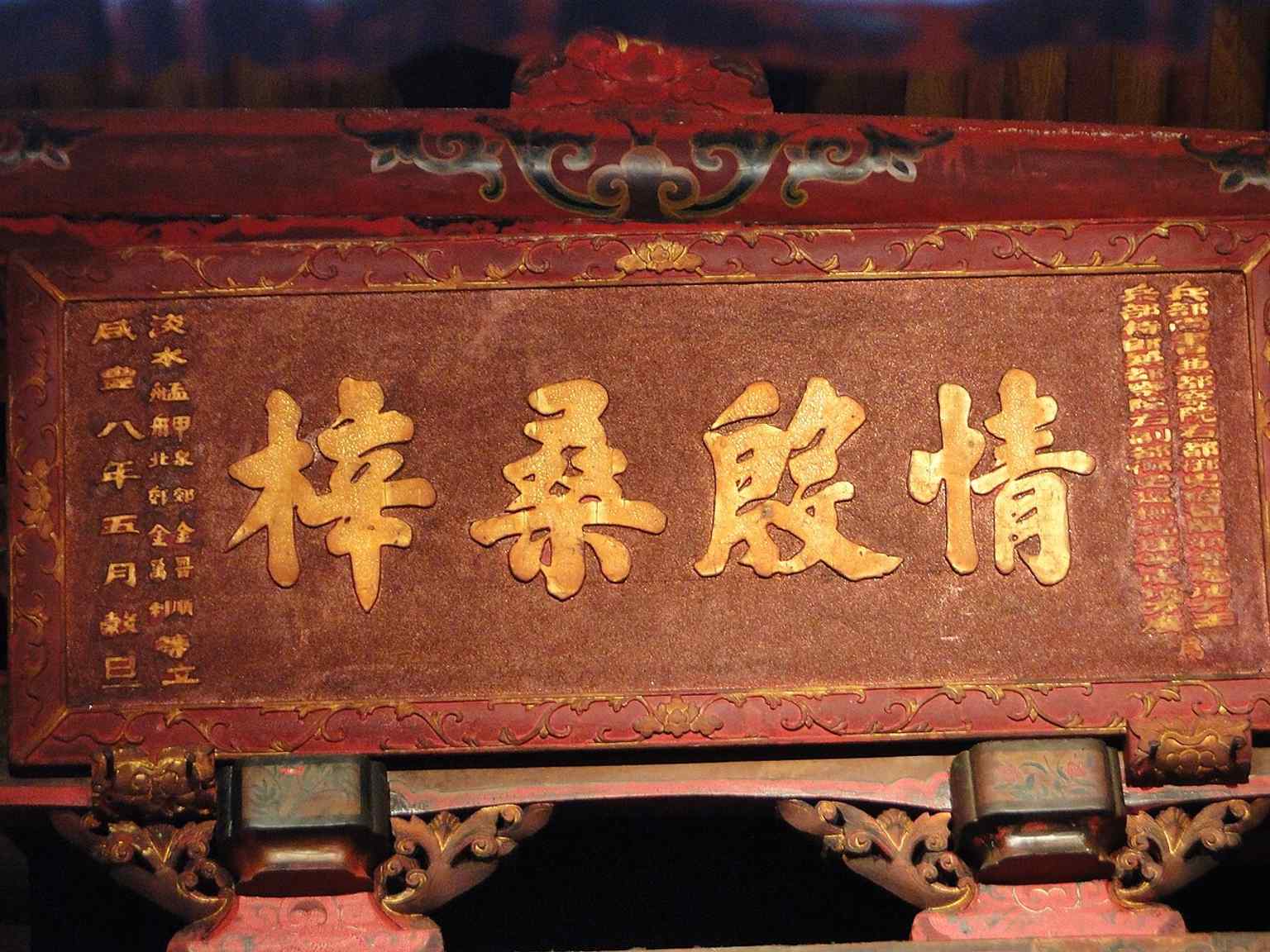
The ‘Deep Affection for the Native Place’ plaque — a glimpse into the local merchant and migrant communities that sustained the temple.Photo: 弟魯, Wikimedia Commons, CC BY-SA 4.0. Cropped & resized. 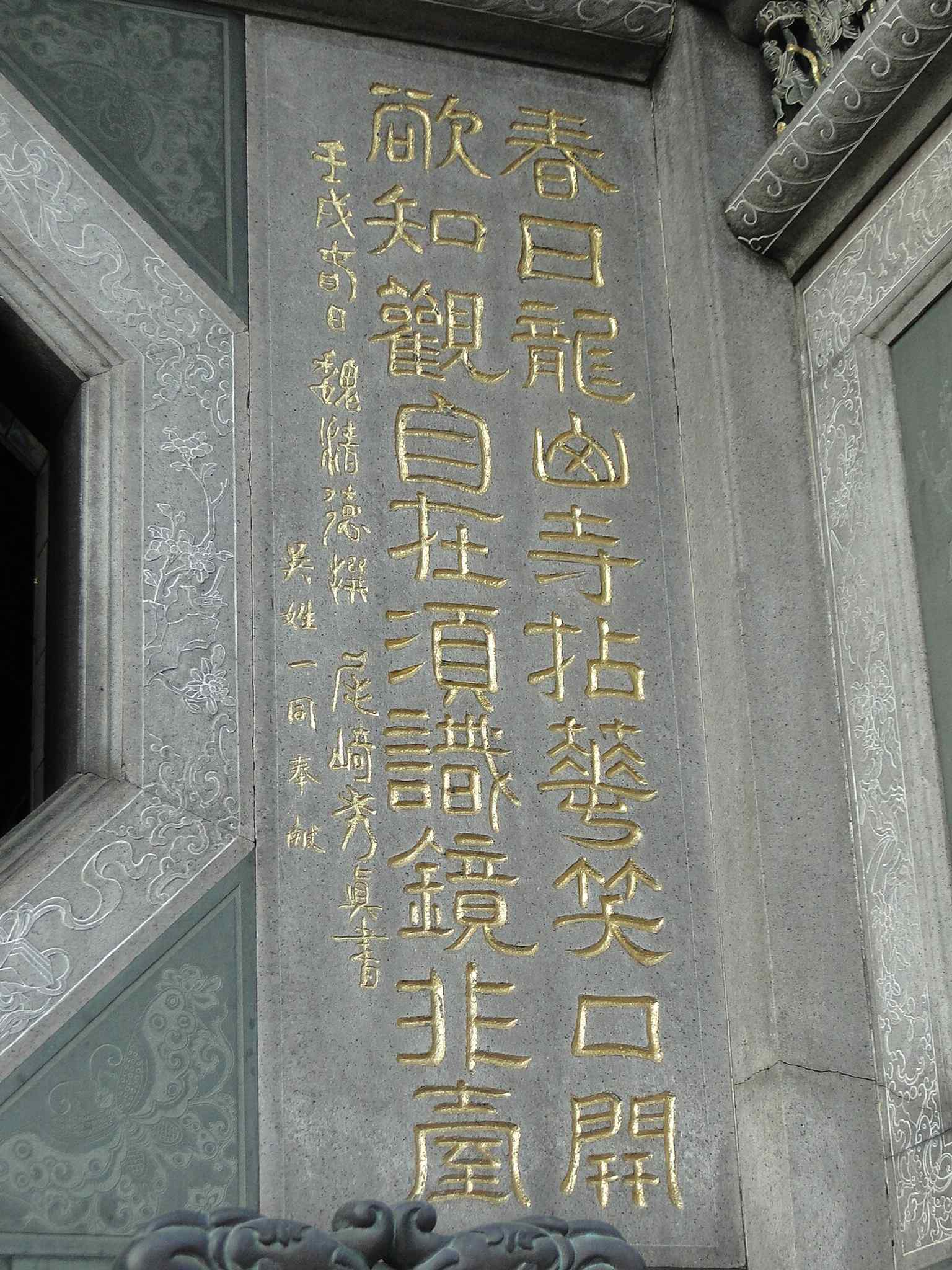
Calligraphy by Ozaki Hozuma preserved at the temple, showing how Longshan Temple also became a home for modern inscriptions and cultural layers.Photo: 弟魯, Wikimedia Commons, CC BY-SA 4.0. Cropped & resized. 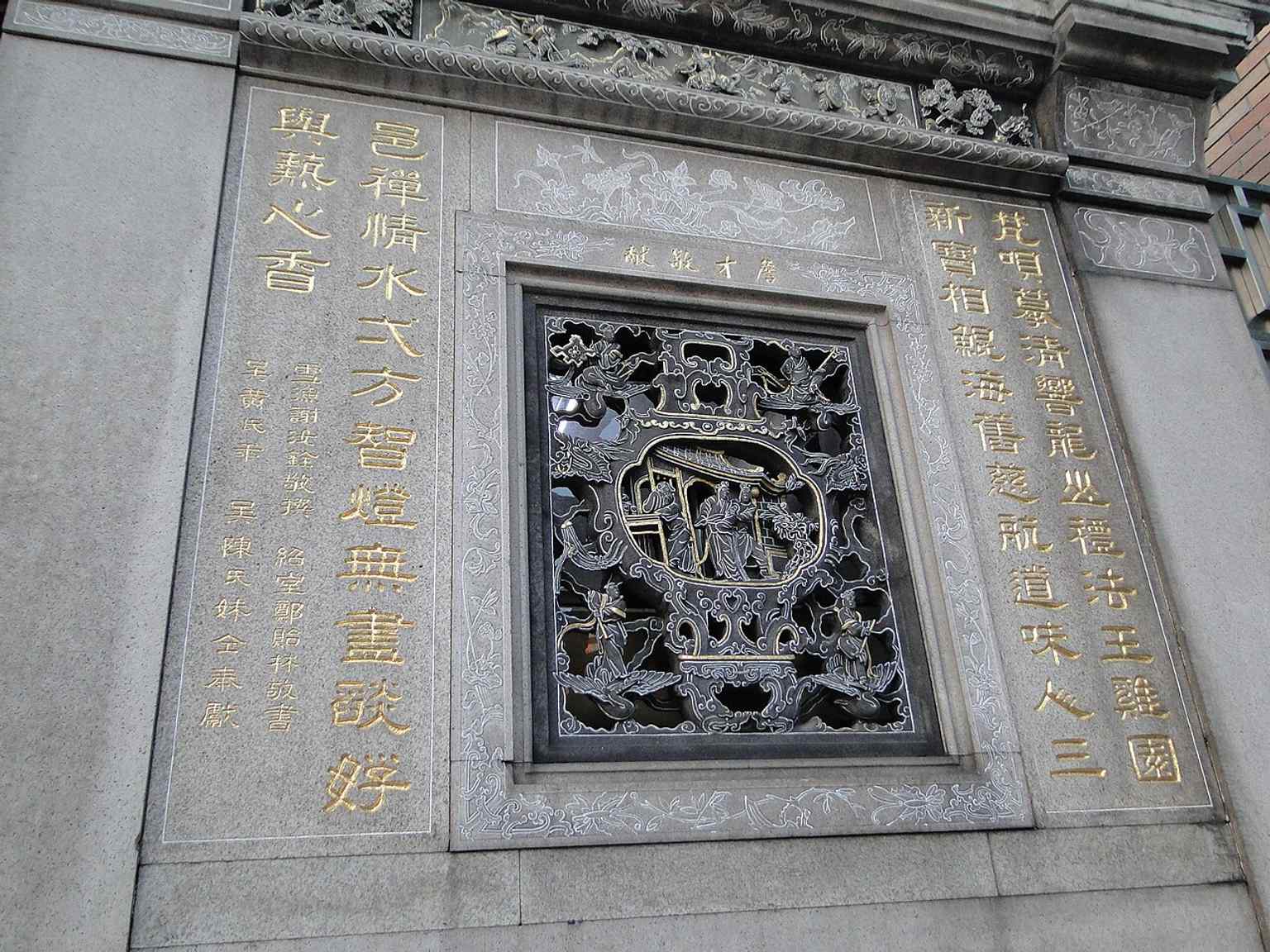
A calligraphic panel by Zheng Yilin in the cloister — a fine example of the temple’s side galleries holding artworks beyond the main sanctuaries.Photo: 弟魯, Wikimedia Commons, CC BY-SA 4.0. Cropped & resized. 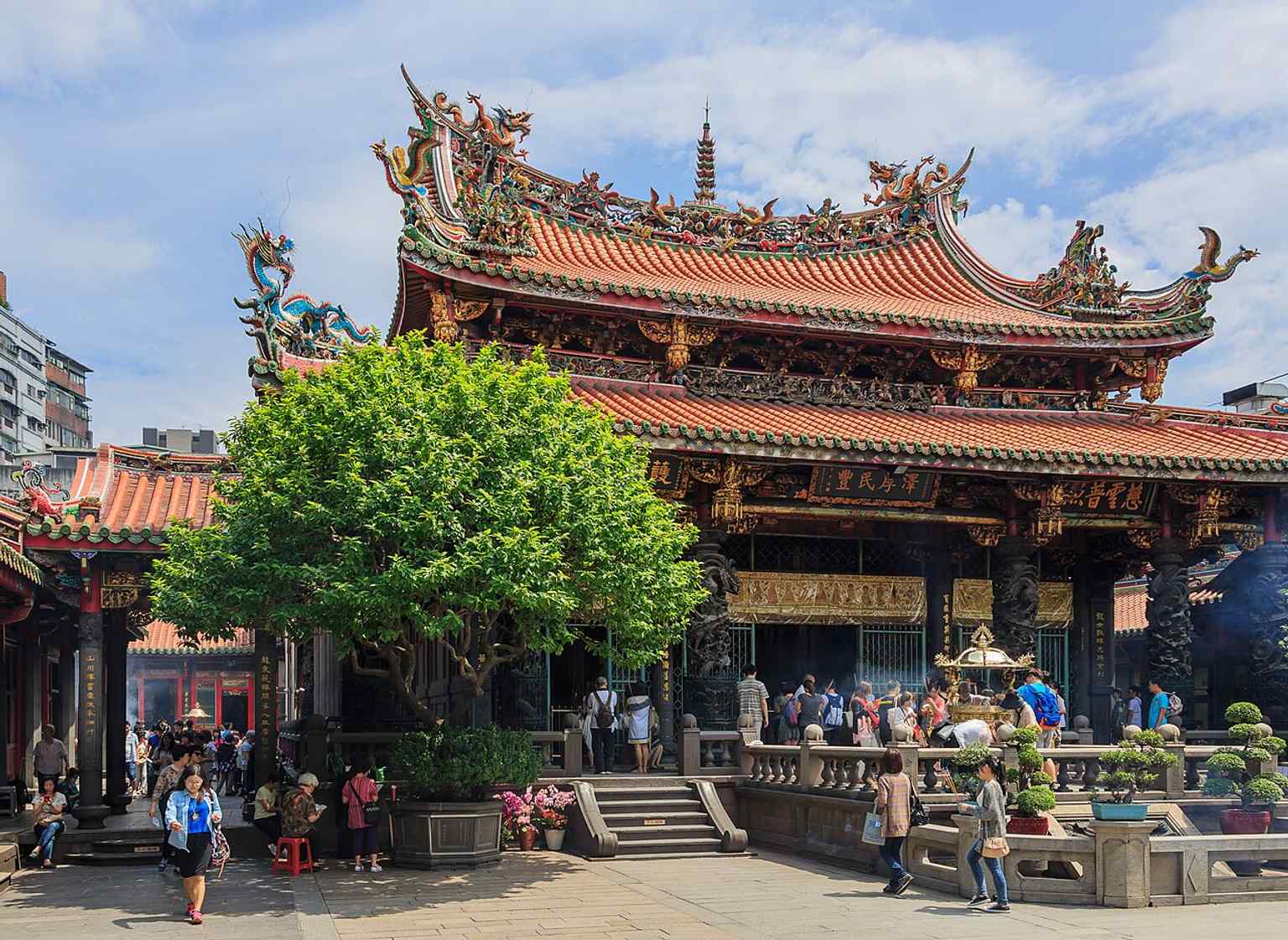
An interior view inside Mengjia Longshan Temple, ideal for showing visitors the lived devotional space rather than just the façade.Photo: CEphoto, Uwe Aranas, Wikimedia Commons, CC BY-SA 3.0. Cropped & resized. 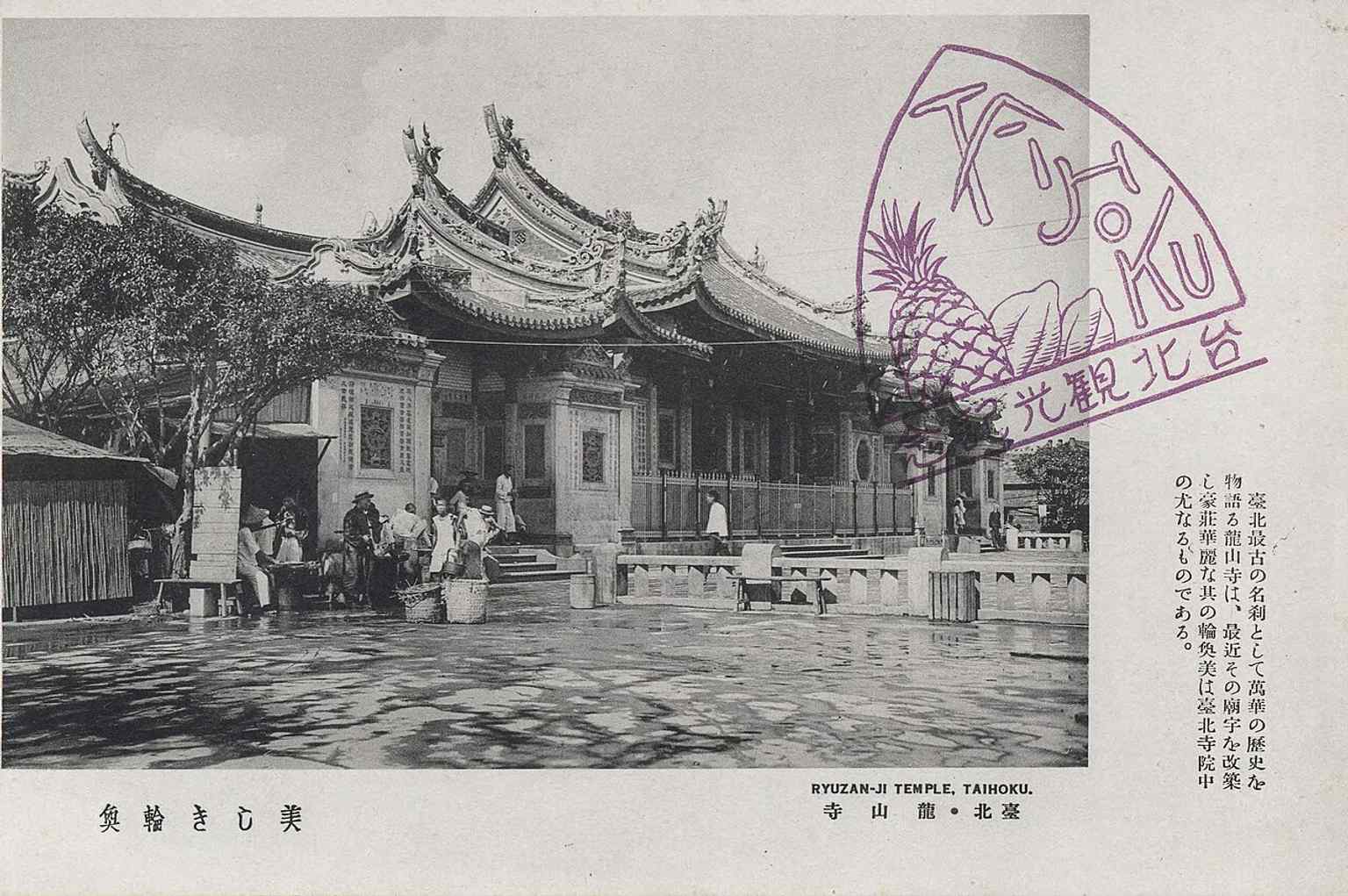
A vintage illustration of Longshan Temple in Taipei — useful for connecting the temple to its 19th-century fame, war history, and repeated rebuilding.Photo: Unknown authorUnknown author, Wikimedia Commons, Public domain. Cropped & resized.

Frequently asked questions
How do I start the tour?
After purchase, download the AudaTours app and enter your redemption code. The tour will be ready to start immediately - just tap play and follow the GPS-guided route.
Do I need internet during the tour?
No! Download the tour before you start and enjoy it fully offline. Only the chat feature requires internet. We recommend downloading on WiFi to save mobile data.
Is this a guided group tour?
No - this is a self-guided audio tour. You explore independently at your own pace, with audio narration playing through your phone. No tour guide, no group, no schedule.
How long does the tour take?
Most tours take 60–90 minutes to complete, but you control the pace entirely. Pause, skip stops, or take breaks whenever you want.
What if I can't finish the tour today?
No problem! Tours have lifetime access. Pause and resume whenever you like - tomorrow, next week, or next year. Your progress is saved.
What languages are available?
All tours are available in 50+ languages. Select your preferred language when redeeming your code. Note: language cannot be changed after tour generation.
Where do I access the tour after purchase?
Download the free AudaTours app from the App Store or Google Play. Enter your redemption code (sent via email) and the tour will appear in your library, ready to download and start.
If you don't enjoy the tour, we'll refund your purchase. Contact us at help@audatours.com
Checkout securely with 












.jpg)
.jpg)


