
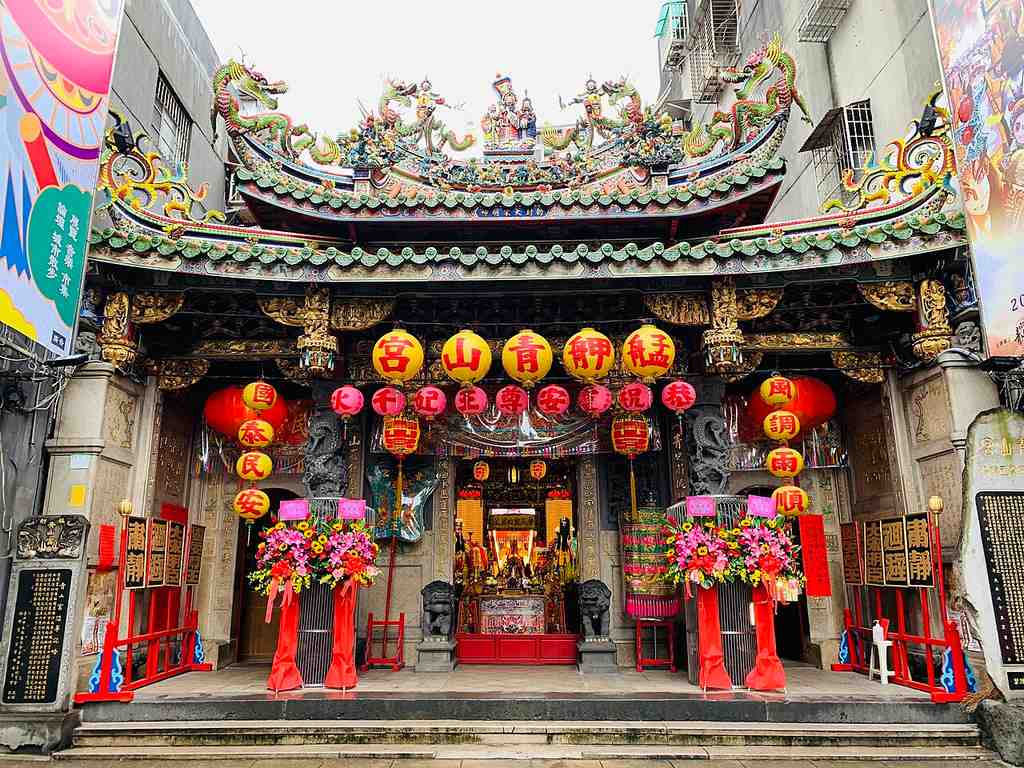
On your right is a narrow, deep temple with a granite-and-green-stone facade, a layered roof with upturned eaves, and a pair of distinctly Japanese-style stone lions guarding the entrance.
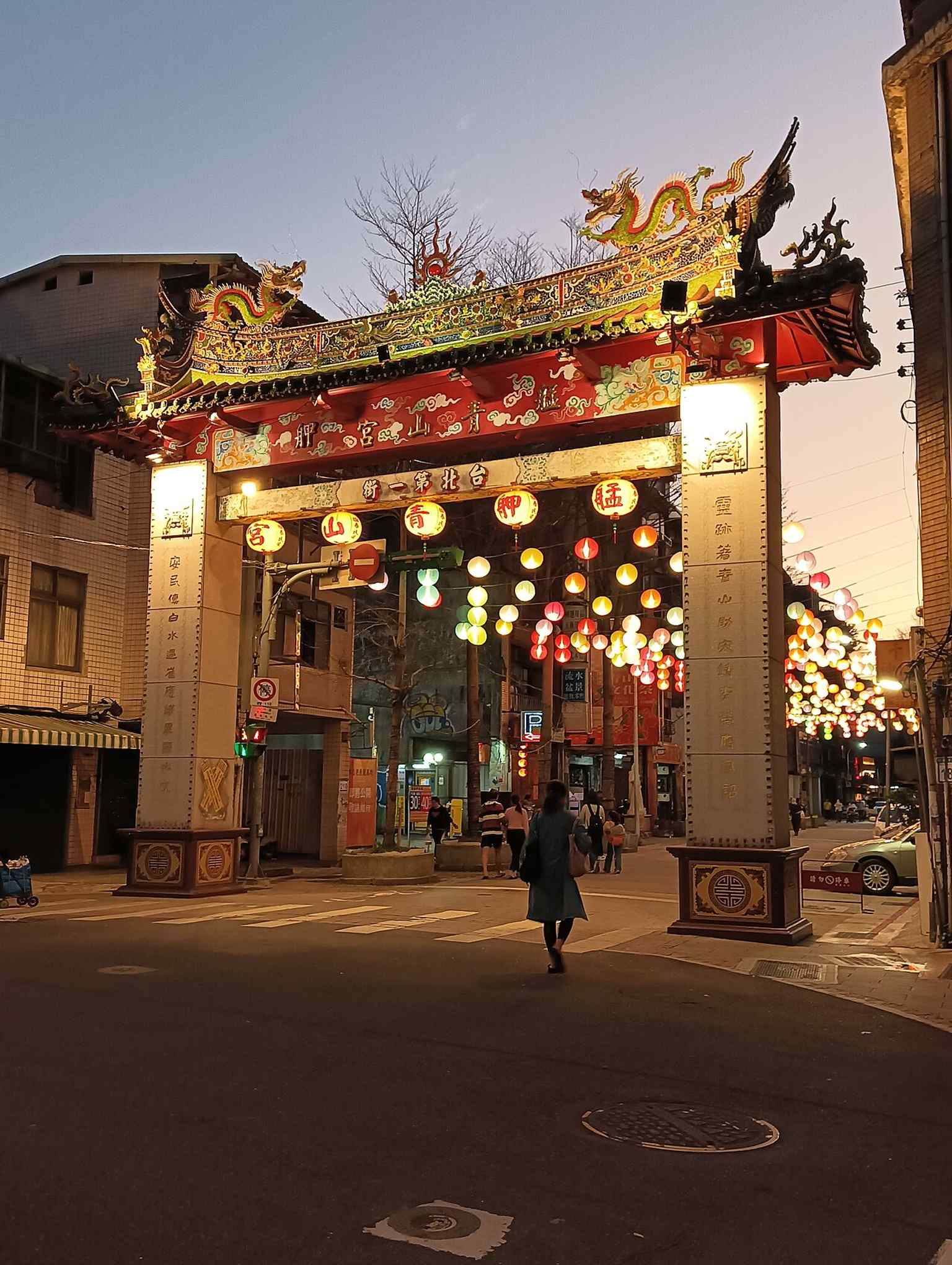
This is Monga Green Mountain Temple, founded in the eighteen fifties after epidemic fear hit Bangka. Fishermen and migrants from Huian in Quanzhou brought here their home protector, Qingshan Ling’an Zunwang - locals usually just say Qingshan Wang, the Green Mountain King. First they set up a small shrine on the old street. Then, as stories of answered prayers spread and the crowd of believers grew, they built this temple in eighteen fifty-six, finishing it a few years later near the trading street. In other words, when disease and instability arrived, the neighborhood did what neighborhoods often do best... it organized.
That matters here in Wanhua. We’ve already seen how official power left offices, gates, and courtrooms. This place shows the other system: ordinary people building security from below, with incense, processions, and a god who was expected to patrol trouble the way a magistrate might patrol crime.
The building carries that layered history in stone. The front you see today took shape in nineteen thirty-eight, during Japanese rule, when craftsmen added carved granite and green stone. Some of the stone columns and bases reportedly came from dismantled material linked to Taiwan Shrine. Taipei has never wasted a good block of stone when it could also recycle a political message. If you want a closer look, check the facade photo in the app.
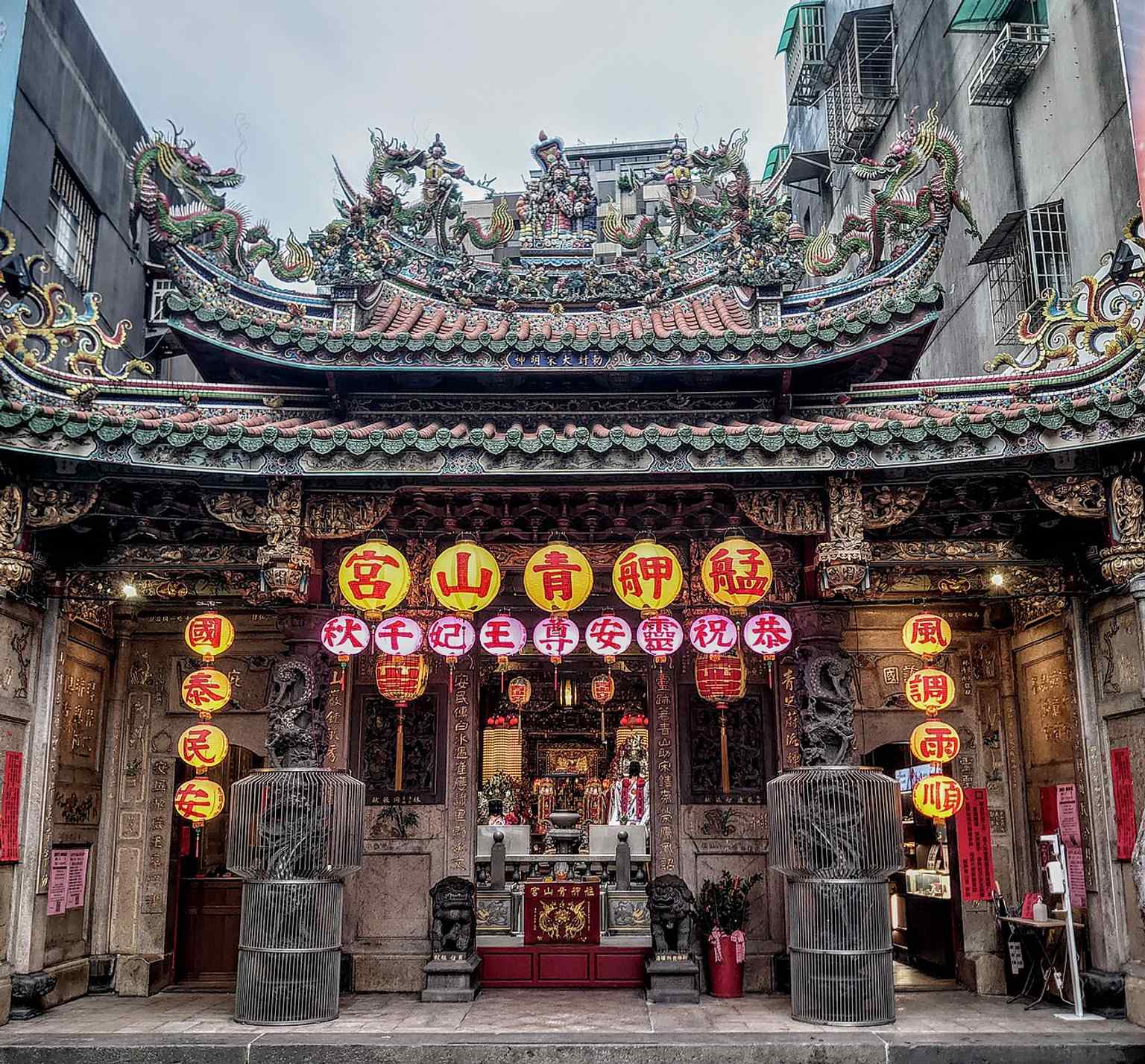
Even the painted guardians were designed to feel alert. The artist Liu Jiazheng painted Qin Shubao and Yuchi Gong on the main doors - warrior door gods meant to protect the threshold. Liu said the trick was to make them seem to watch you from any angle, so no one felt entirely unwatched. Very effective. A little unsettling. Exactly the point.
Inside, the temple stretches back in the classic street-house plan: three bays wide, three sections deep, with a richly carved ceiling and a main hall dense with plaques from Qing officials and later political figures. Reverence here did not cancel authority; it negotiated with it.
And this is no frozen relic. In twenty thirteen, an electrical fire badly damaged the front hall and more than seventy percent of the temple suffered some harm. Yet the main long-venerated Qingshan Wang image in the rear escaped the blaze. The city funded emergency repair, devotees donated more, and the temple recovered. That rhythm - damage, repair, return - is very Wanhua.
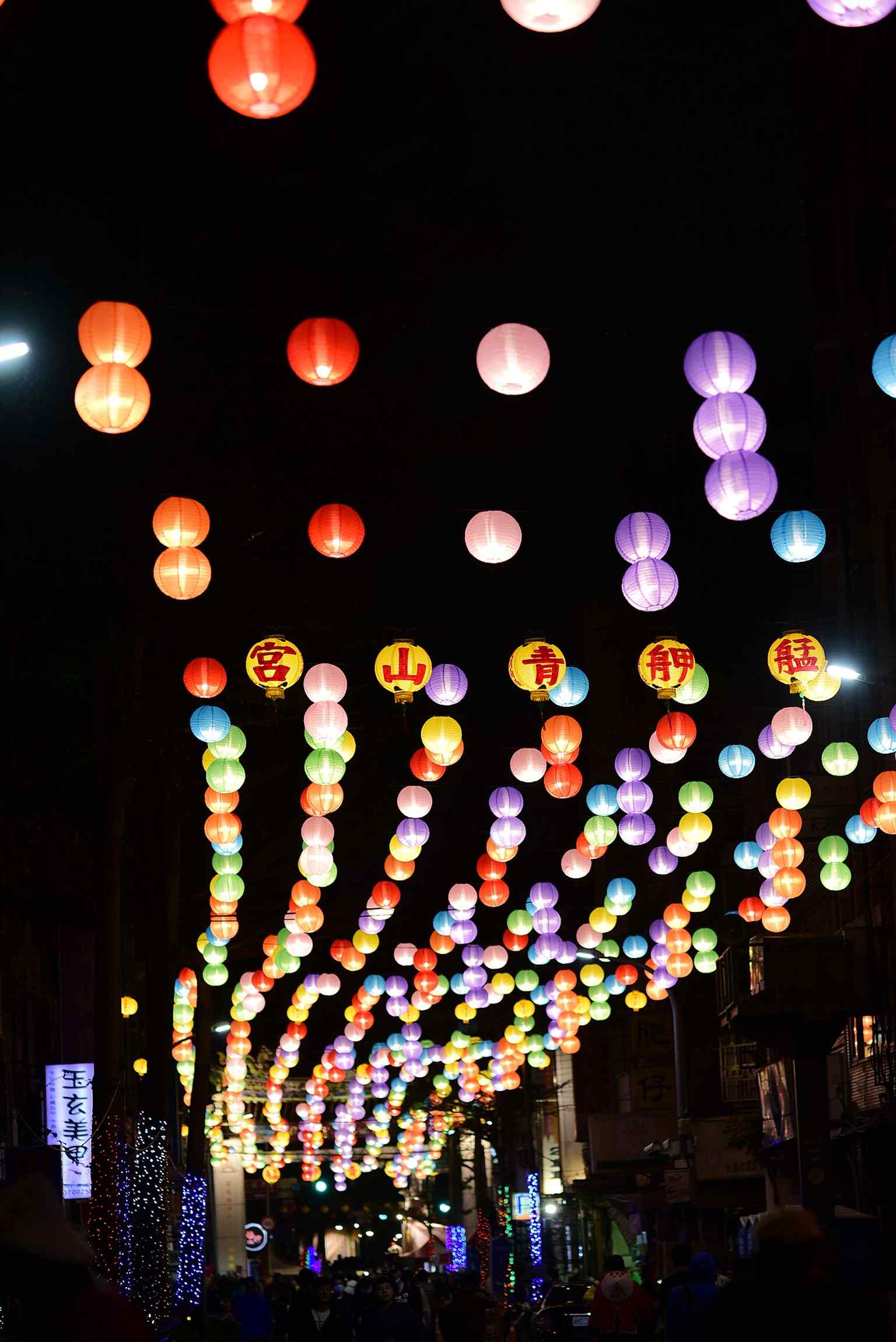
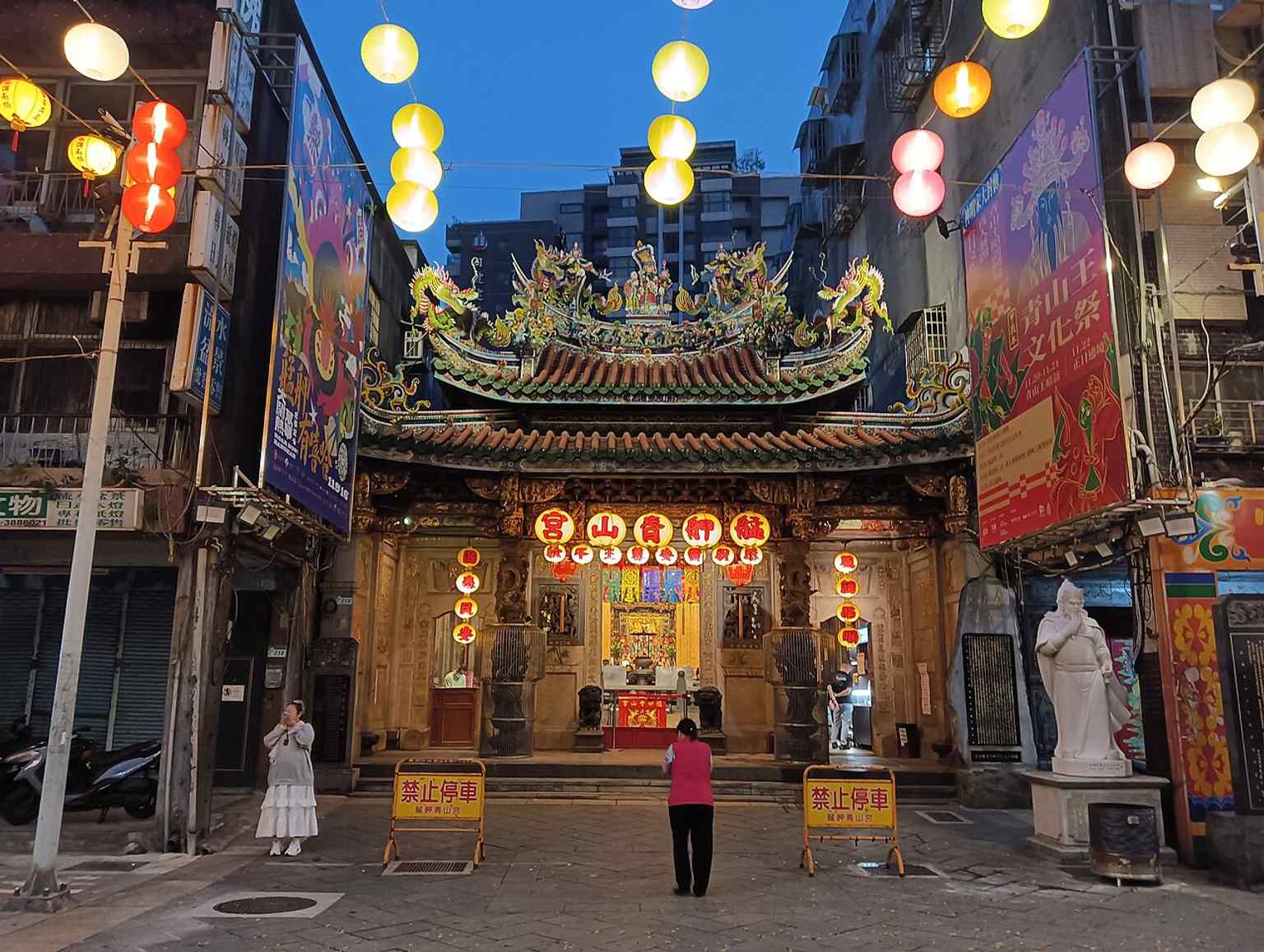
Its biggest public heartbeat is the four-day Qingshan King festival, one of Taipei’s major temple celebrations. The famous “dark patrol” procession - a ritual night inspection through the neighborhood, searching out misfortune and disorder - still pulls the district together with old seriousness and a lot of noise. Take a look at the festival image if you like.
When you’re ready, Bopiliao Historic Block is about a nine-minute walk from here. And if you want to come back later, the temple is open daily from six in the morning to ten at night.







.jpg)
.jpg)