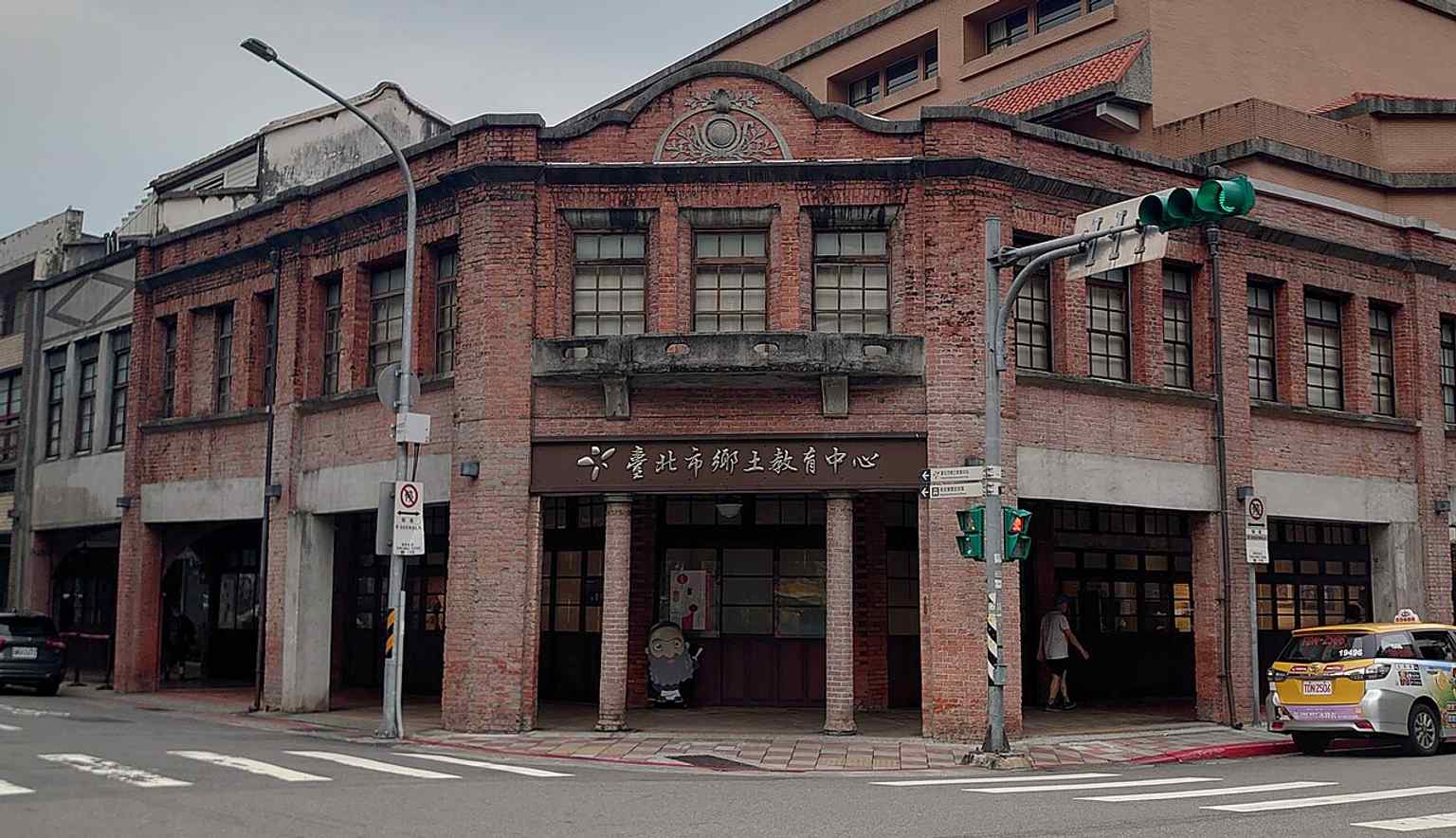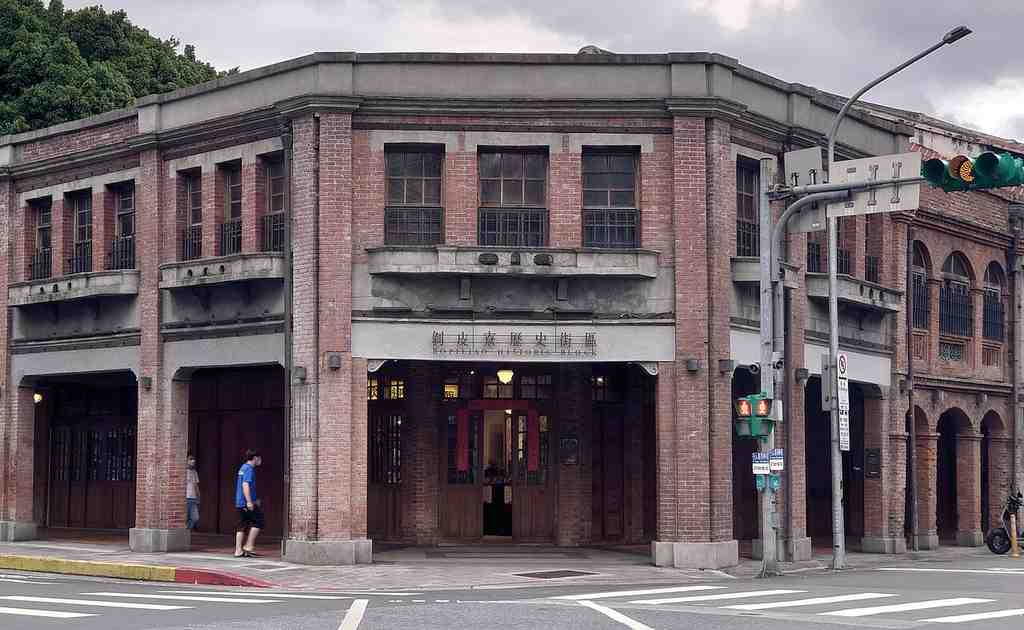
Look for a row of brick-and-plaster shophouses with narrow rectangular fronts, deep covered arcades, and weathered wooden doors stretching along the lane.
This is Bopiliao, one of the last surviving Qing-era street blocks in Taipei, and it has lasted here for more than two centuries. The name shows up in land deeds as early as seventeen sixty-three. Even the name itself is slippery. Some people said it came from stripping bark off timber, some from stripping animal hides, and some think it simply drifted in sound from older names like Fupi-liao or Fudi-liao. Very Taipei, really... even the place-name refuses to sit still.
What did stay steady was daily work. This was not a grand boulevard for speeches. It was a living street of shop-houses, meaning homes in back or upstairs and business out front. Under these arcades, traders sold coal, charcoal, and earth coal at the junction near Kangding Road and Guangzhou Street. Families bought fuel here to cook rice, boil water, and heat bathwater. You can almost picture the bargaining: one more scoop, one less coin, everybody certain they were being cheated by history itself.
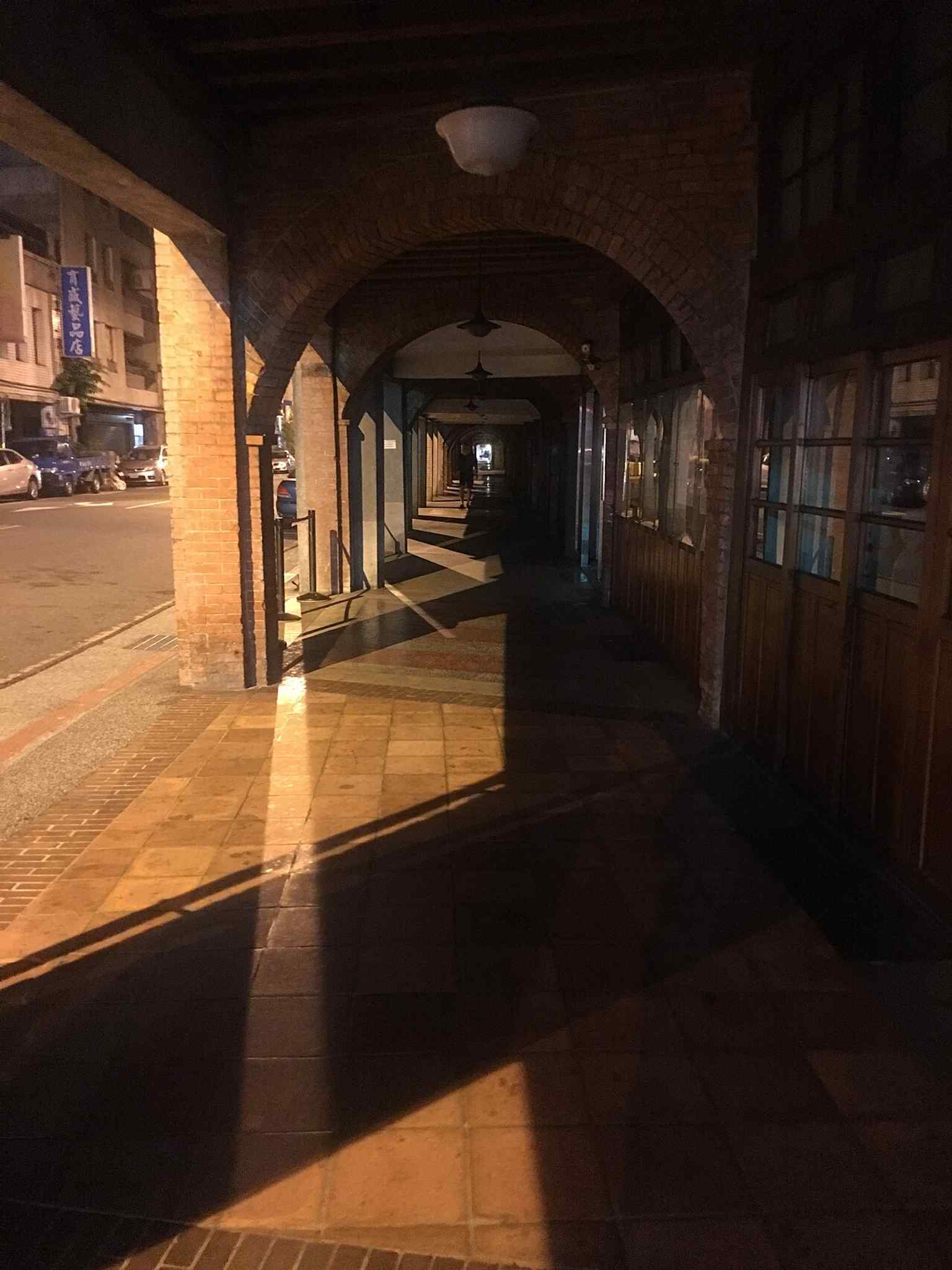
If you glance at the image on your screen, you can see how the old covered walkway stitched the street together, storefront by storefront. That pattern survived because of a bureaucratic twist. In nineteen forty-one, the Japanese colonial government marked this whole strip as future land for the nearby school. Because owners could not freely rebuild or enlarge, the street missed later waves of redevelopment. So the old mix stayed: southern Fujian-style shopfronts beside Western-influenced facades, a little uneven, a little patched together, and all the more honest for it.
Bopiliao also sat inside wider trade routes. In nineteen ten, a merchants’ group called Yongxinghang set up on Kangding Road to handle building-material shipping between Taiwan and Fujian. At its busiest, it ran around thirty ships. Later, when no one took over the business, the founder’s son turned that commercial hall into the Taiwan Economic Daily. Same walls, new cargo: first lumber and materials, then news. Cities do that when they mean to survive.
And survival here was never automatic. In the late nineteen nineties, the city moved to clear the area for school expansion. Residents and supporters formed a self-help group, put up house-by-house guide signs, invited local performers in, and argued that this street still carried the shape of old Mengjia life. Before demolition crews arrived in nineteen ninety-nine, residents walked the lane holding ancestral tablets, keeping vigil and saying goodbye. Part of the block did come down, but public outrage stopped the rest. Restoration began in the two thousands, and the full district reopened in two thousand and nine.
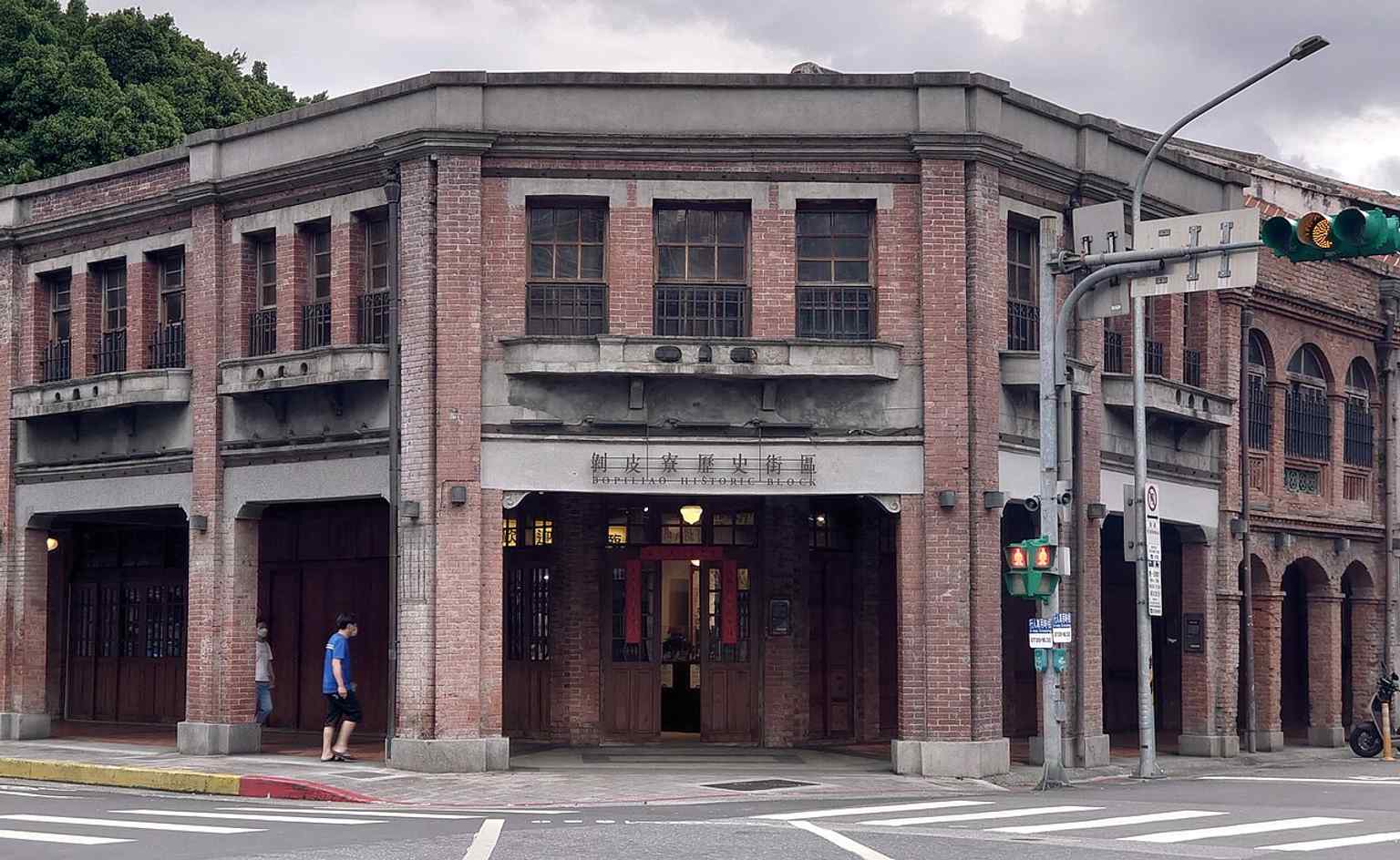
If you look at the longer exterior view in the app, notice how modest the whole street feels. That modesty is the point. Empires, city plans, schools, newspapers, film crews, even public health emergencies have all passed through here. What lasted is the grain of ordinary life: fuel, trade, worship, gossip, repairs, and the stubborn habit of making a living in whatever space remains.
From here, Longshan Temple is about a three-minute walk away, where this everyday world rises into something more ceremonial. If you want to come back later, the site generally opens Monday, Thursday, and Friday from twelve thirty P-M to nine P-M, Tuesday from two P-M to nine P-M, Saturday from ten A-M to six P-M, and closes on Wednesday and Sunday.