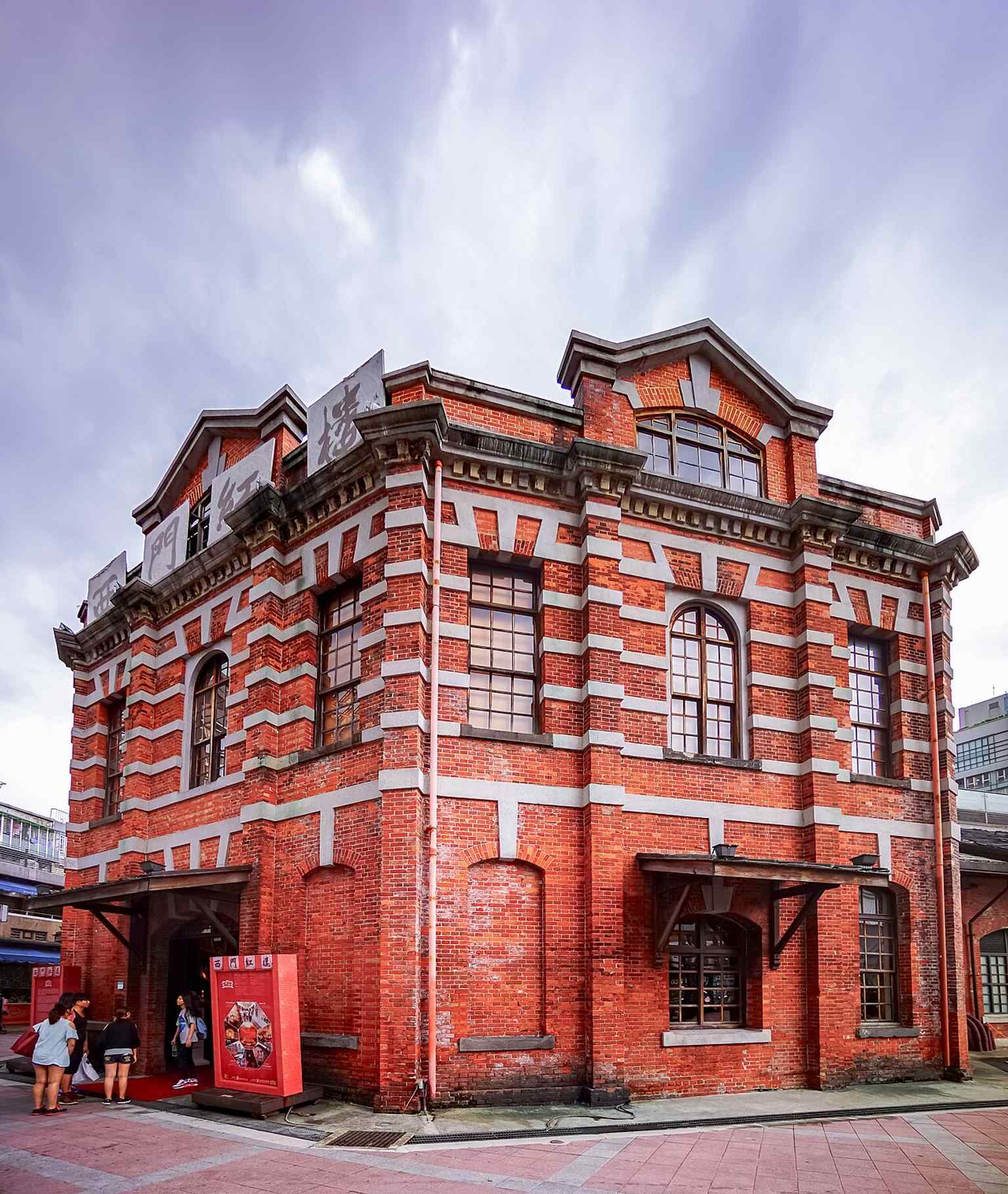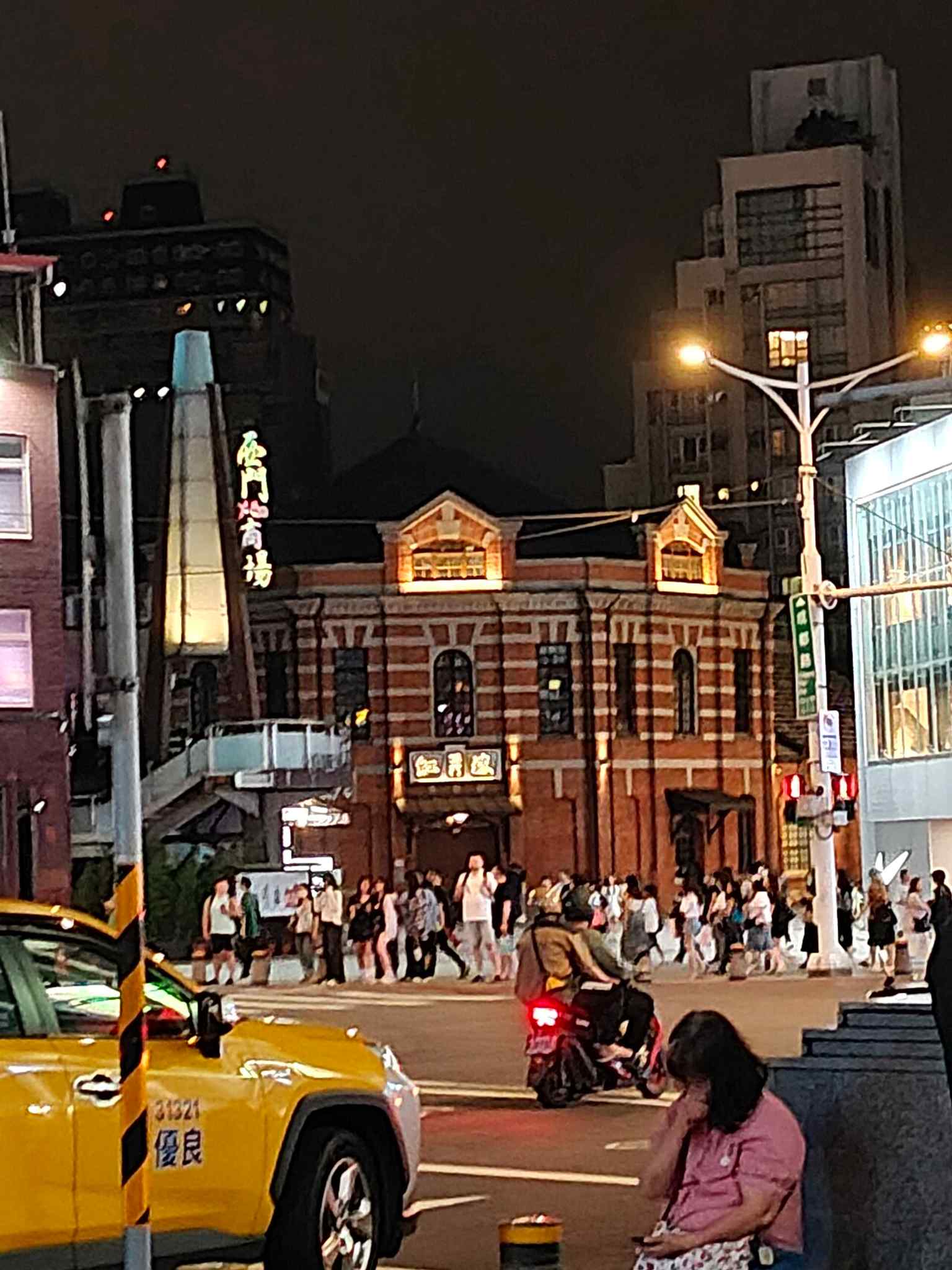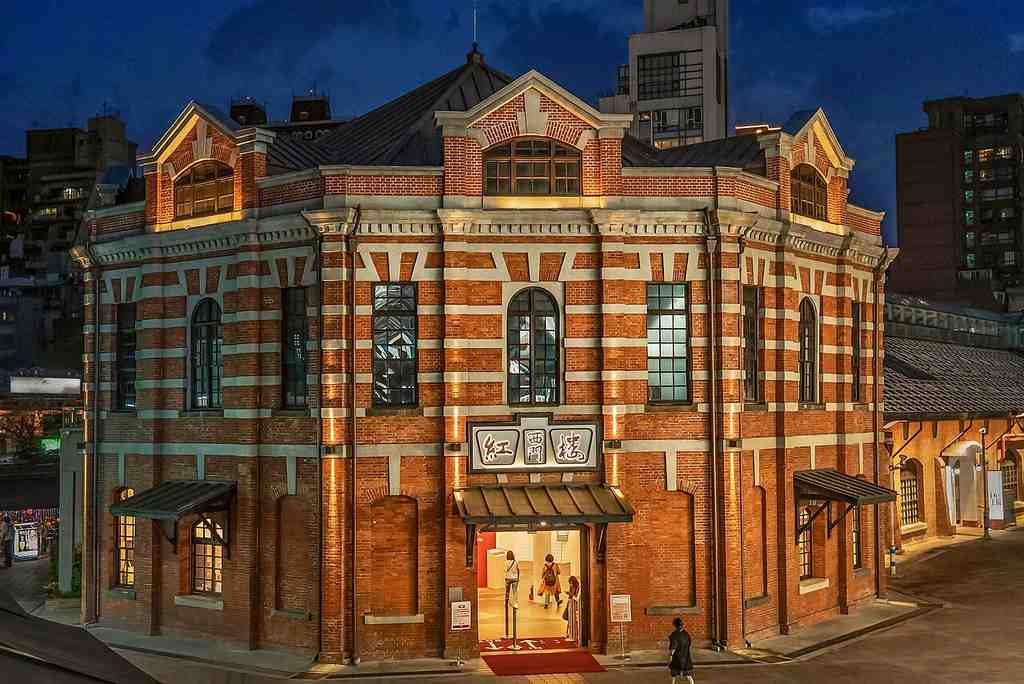
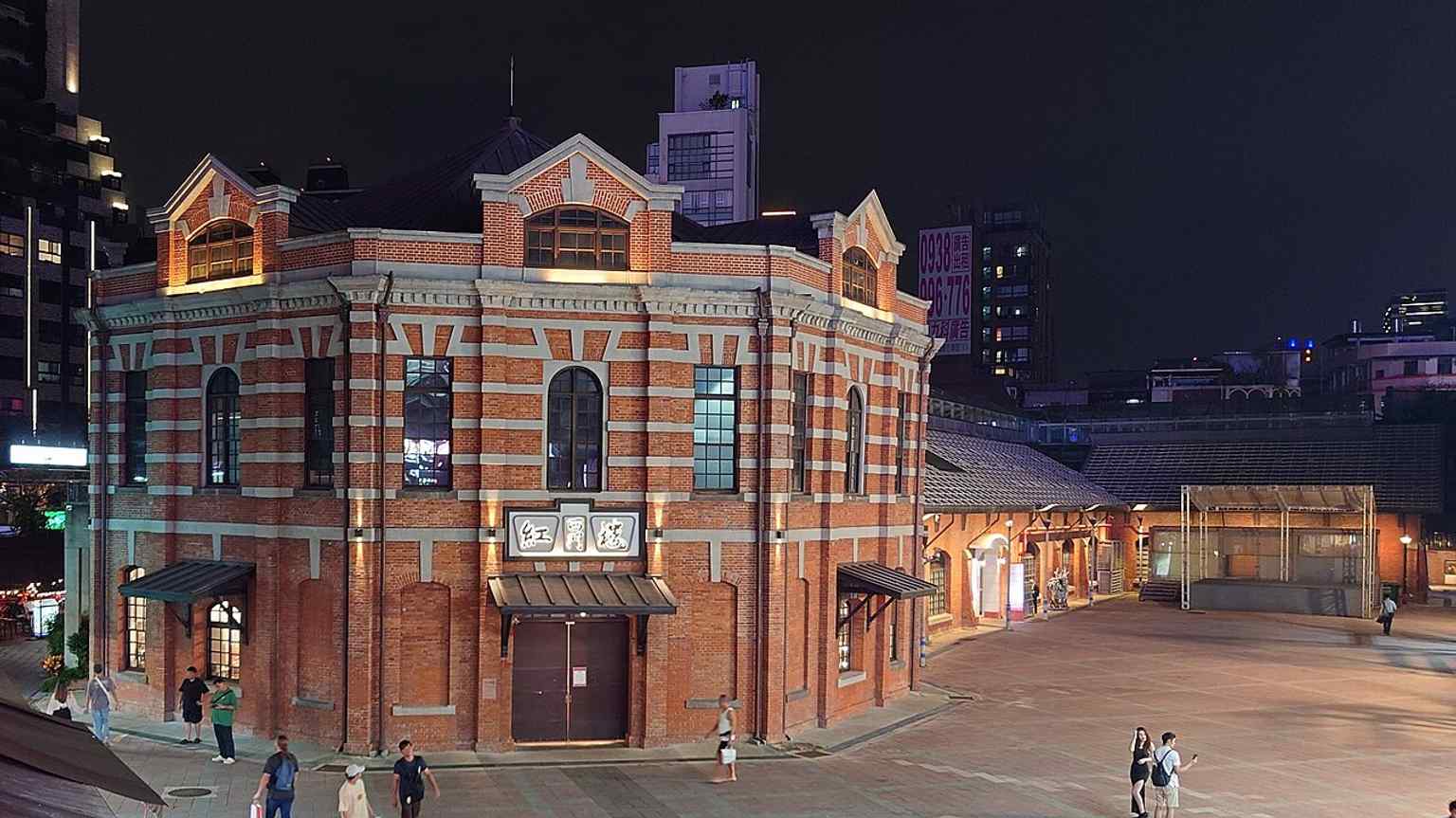
On your right, look for the red-brick octagonal building with a steep dark roof and a tall arched entrance set like a formal centerpiece in the façade.
From across the plaza, the Red House looks almost too theatrical to be just a market... which is exactly the point. In nineteen oh seven, architect Kondo Juro designed this place as the new indoor Ximen Market, and in nineteen oh eight it opened as an officially built public market. Not a casual shed for vegetables, then. An official market. Government money, modern materials, and a district planned for consumption.
That setting matters. Early Japanese colonial planners shaped Ximending into a leisure quarter modeled on Tokyo’s Asakusa, full of shops and amusements. If the old gates of Taipei controlled who came in, this district worked on a different question: what would people do once they were free to spend?
But here’s the twist under your feet. Before all that, this area held graves and sandy sweet potato fields. To clear the land, officials ordered families to report and move the dead. Between the seventeenth of March and the fourth of April in nineteen oh eight, workers removed nine hundred and five claimed graves and more than two thousand unclaimed ones. That is one brisk urban makeover.
People later told a wonderfully spooky story that the octagon and cross-shaped plan acted like protective symbols, calming restless spirits. It is a good story... and historians say there is no firm document proving Kondo intended that. Still, you can see why the rumor stuck. The building itself invites myth. If you glance at your screen, the octagonal front is especially clear here.
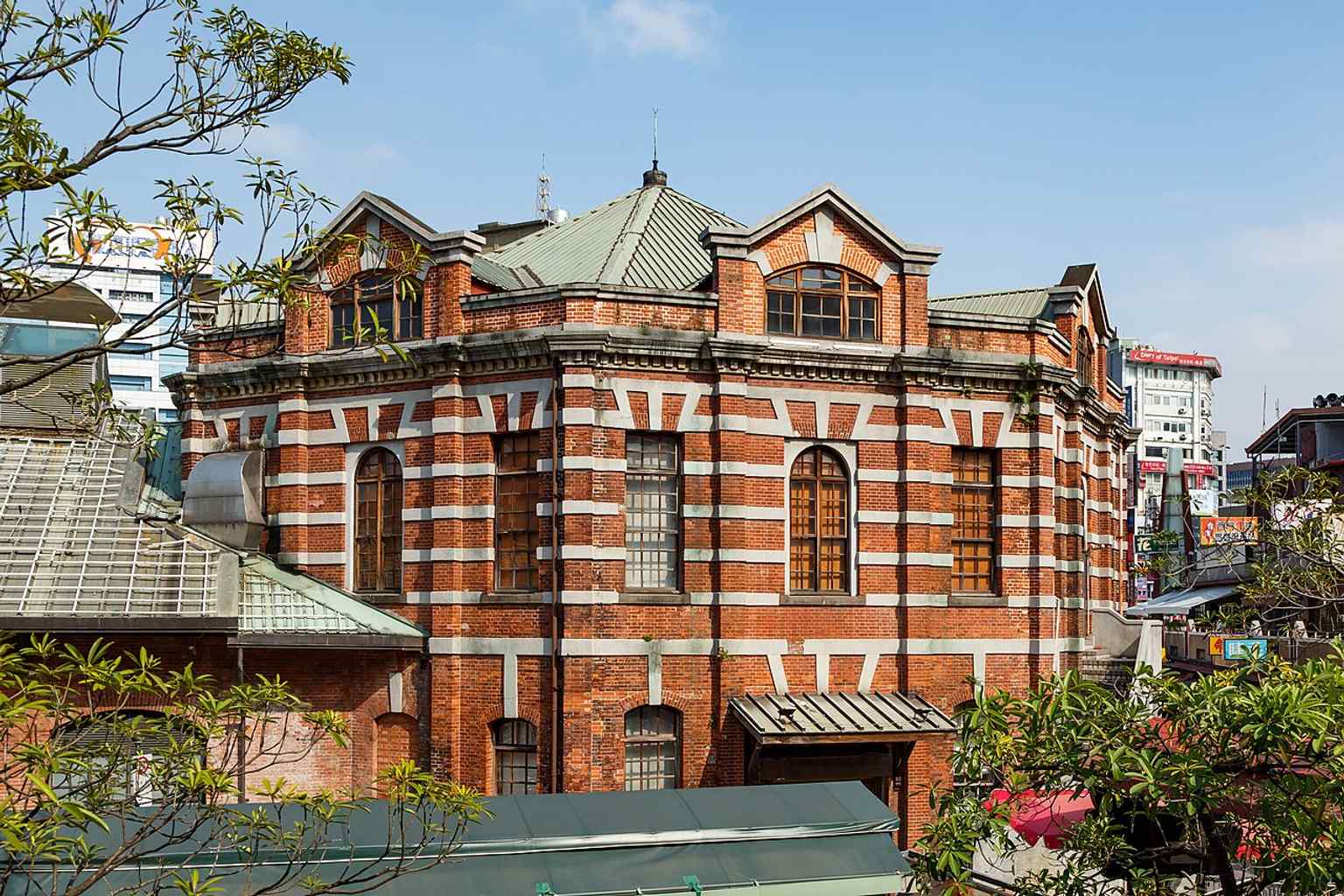
Originally, the octagon sold higher-end Japanese groceries, while the cross-shaped wing behind handled fresh food. The engineering was advanced for its day: reinforced concrete, thick brick walls, and a steel roof frame that spread out like umbrella ribs above the hall. So yes, even the ceiling had a little ambition.
Then the building kept changing masks. After the war, the octagon turned into a teahouse, then a performance venue, then a theater. One of the people who remembered that life was manager Yang Ronghua. He recalled storytellers, traditional opera, comic acts, magic shows, and later a bustling book house where audiences bought tea as their ticket. A retired general named Liu Zhi came so often that when he found no seats, he reportedly swept tea cups off a table with his cane and told the staff, in effect, problem solved. Not subtle, but memorable.
By the nineteen fifties, Shanghai merchants had also helped give Ximending a “Little Shanghai” flavor, and the Red House joined that world of opera, song halls, and cinema. Later it declined, nearly got demolished, survived a fire in the cross wing, and returned again as a creative and performance venue. Another image in the app shows that later life nicely.
That long journey, from cemetery to market to theater to cultural hub, is what makes this place feel a little uncanny and very Taipei. Reinvention here does not only happen through ministries and monuments; sometimes the city rewrites itself through shopping, performance, gossip, and a good seat near the stage.
When you’re ready, head toward Qingshui Rock in Mengjia, about a nine-minute walk away. If you want to come back inside later, the Red House is usually open from eleven A-M to nine P-M, Tuesday through Sunday, and closed on Monday.