
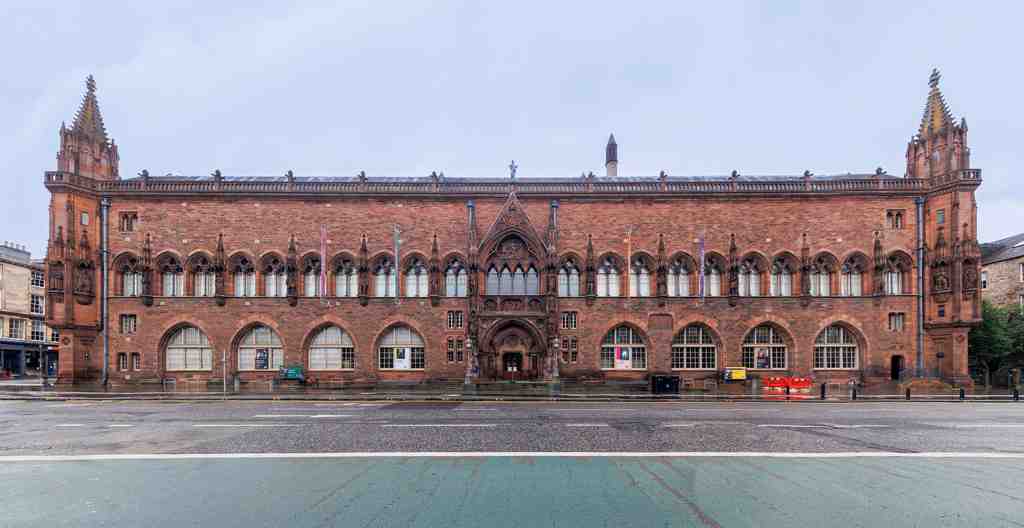
On your right rises a long red sandstone façade, pierced by pointed-arch windows and crowned by twin spired towers that make it look rather like a Gothic palace dropped into the New Town.
A portrait gallery does something more than display art. It turns private faces into public memory, and in doing so it helps a country decide who counts as its visible self.
This building opened in eighteen eighty-nine, designed by Robert Rowand Anderson in a striking Gothic Revival style that borrowed something from Venice and Spain, quite unlike the neat Georgian classicism around it. The stone came from Corsehill Quarry near Annan, and the result was deliberate: not modest, not neutral, but a national statement. In fact, Edinburgh claimed a world first here. London had a national portrait gallery earlier, but this was the first purpose-built portrait gallery anywhere.
That ambition depended on one man in particular: John Ritchie Findlay, owner of The Scotsman. He began with an anonymous gift of ten thousand pounds, worth well over a million pounds today, and by the end of the eighteen nineties he had quietly poured in more than sixty thousand pounds in total, many millions in modern terms. Findlay did not simply fund a museum. He helped build a stage on which Scotland could present its chosen ancestors.
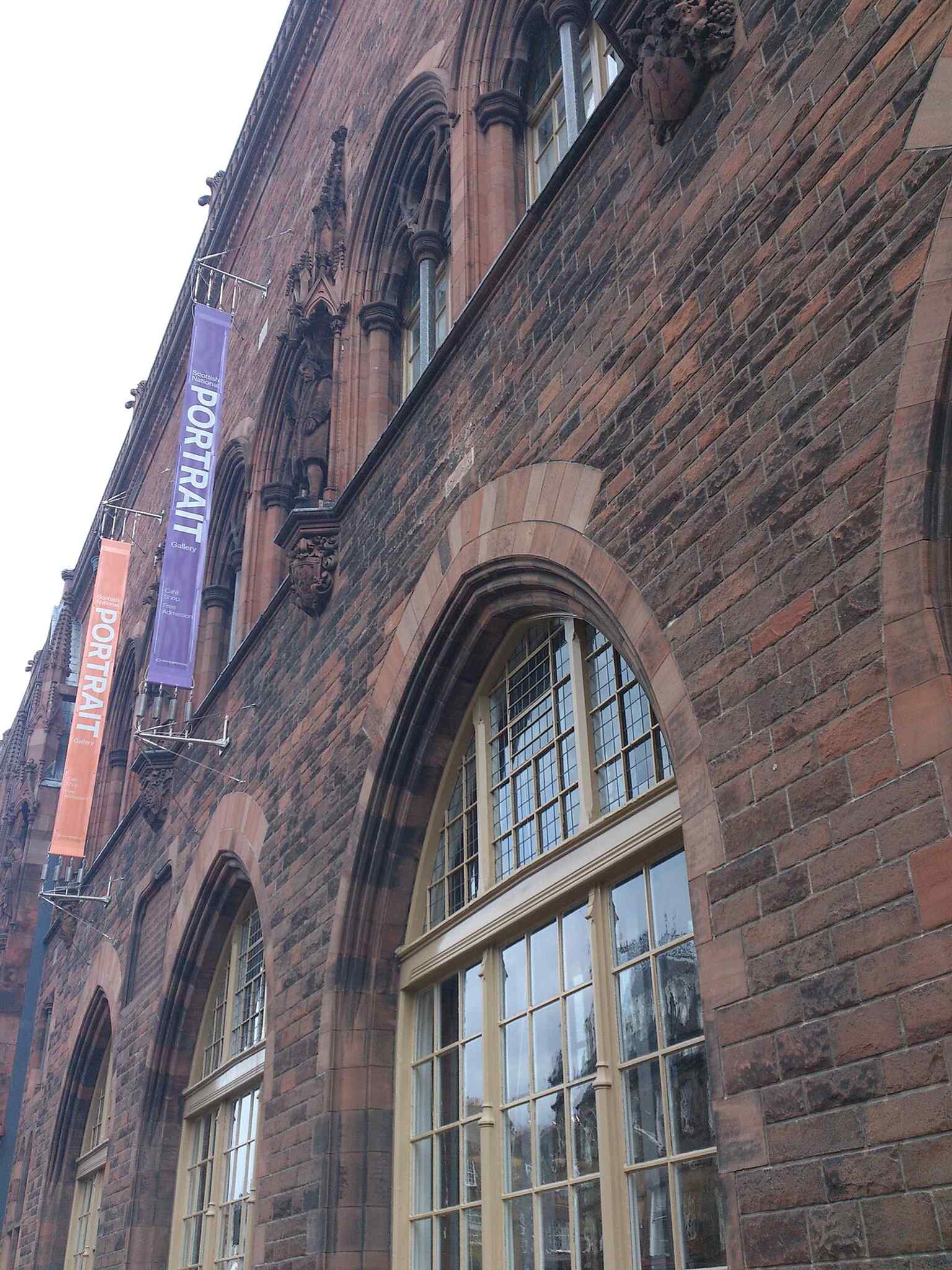
And yet, the surprise is this: even the stone front in front of you was never a settled verdict. When the gallery opened, many of those sculpted niches stood empty on purpose. The idea was that patriotic donors would pay for individual figures over time, so the façade itself became an argument about who deserved a place. The Faculty of Actuaries sponsored John Napier. A committee led by the women’s rights campaigner Sarah Mair paid for the group of Mary, Queen of Scots. Then the campaign faltered, and Findlay had to cover many of the remaining costs himself. The last exterior statue, John Hunter, arrived only in nineteen oh six.
If you glance at the detail on your screen, you can see David Hume and Adam Smith high on the tower. Thinkers become stone ancestors here, just as surely as kings once did.
So consider this: if you had to choose the faces that stand for a nation, whom would you refuse to leave out, and who has already been trimmed away by taste, class, politics, or simple neglect?
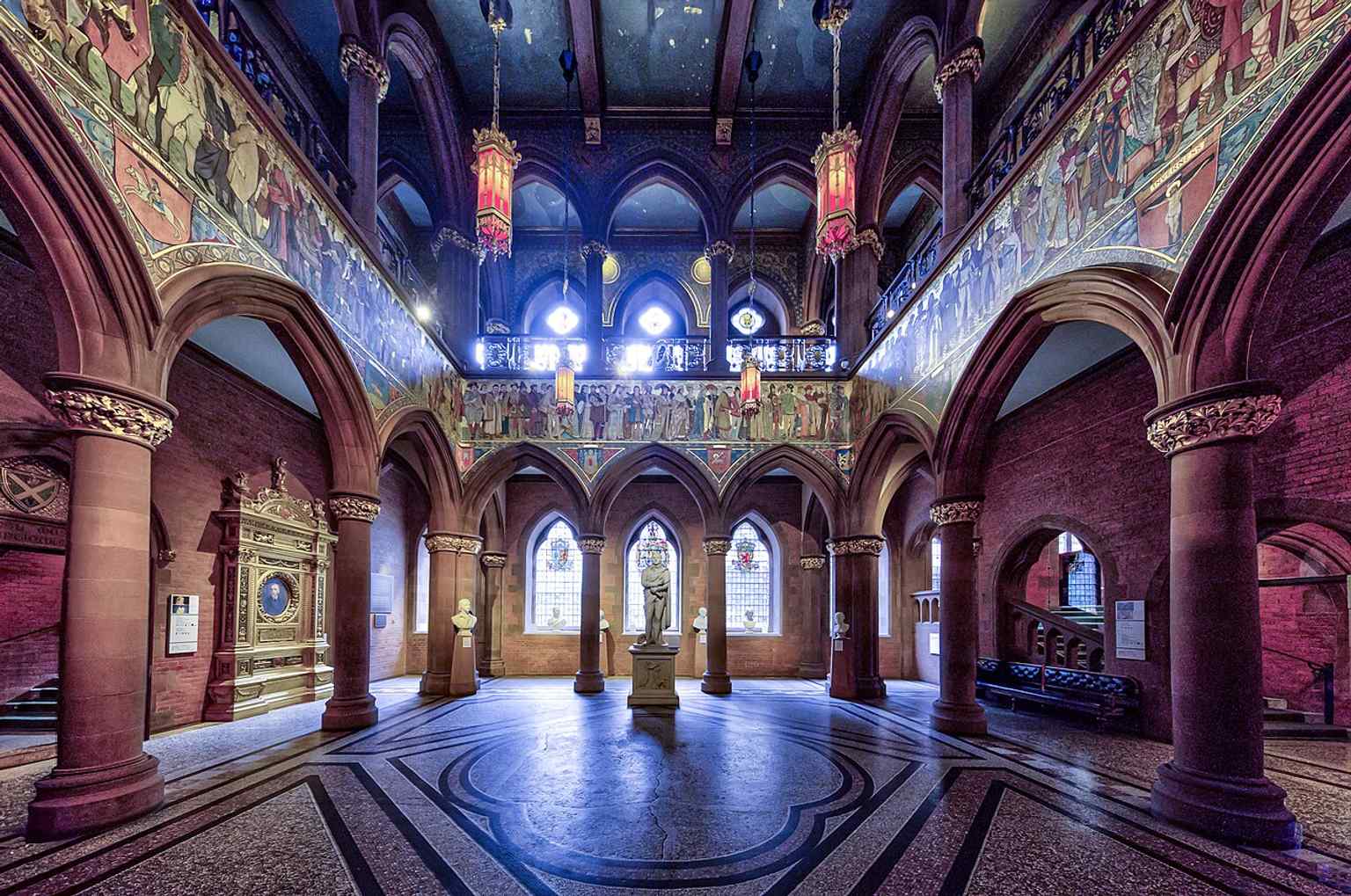
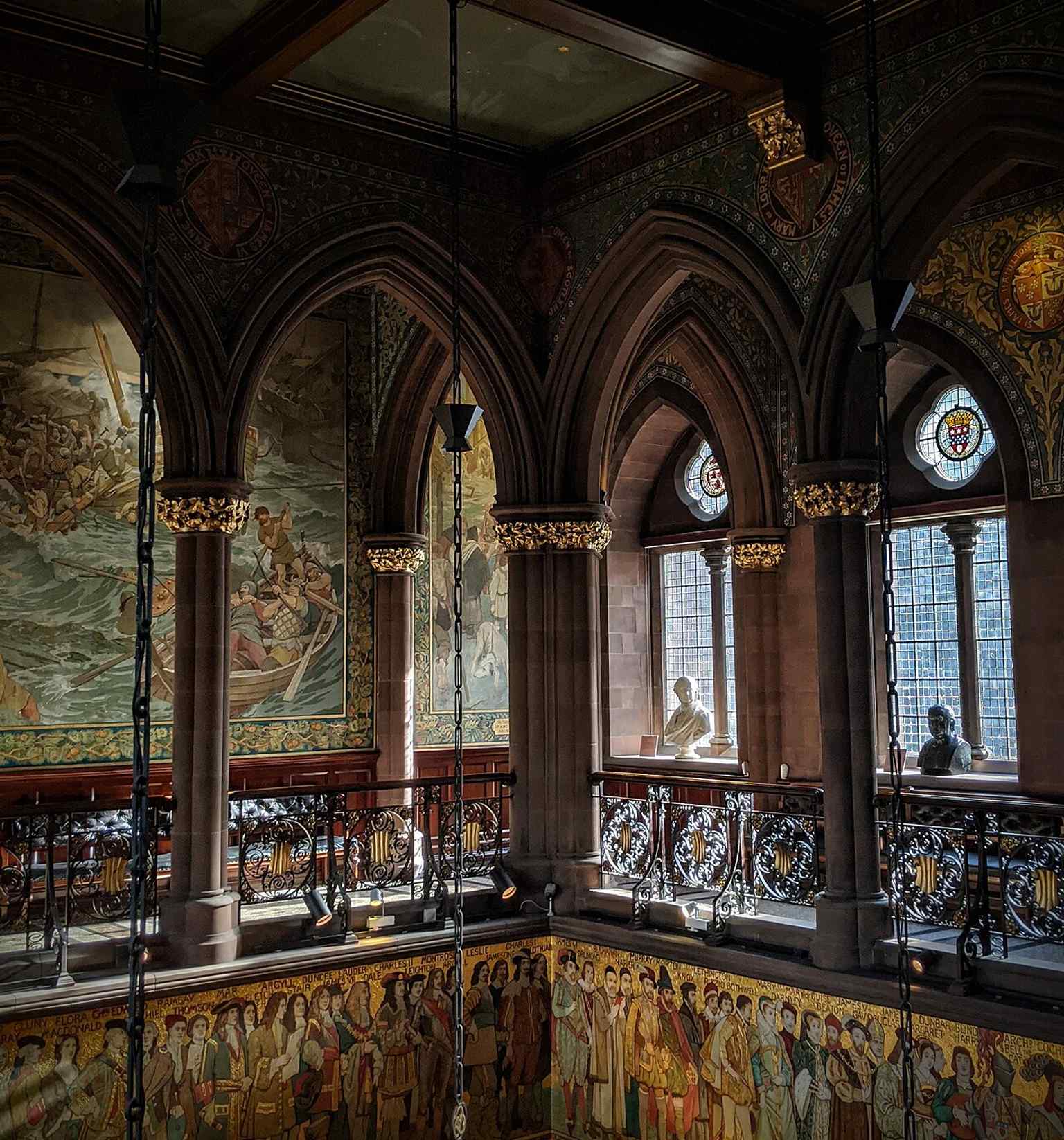
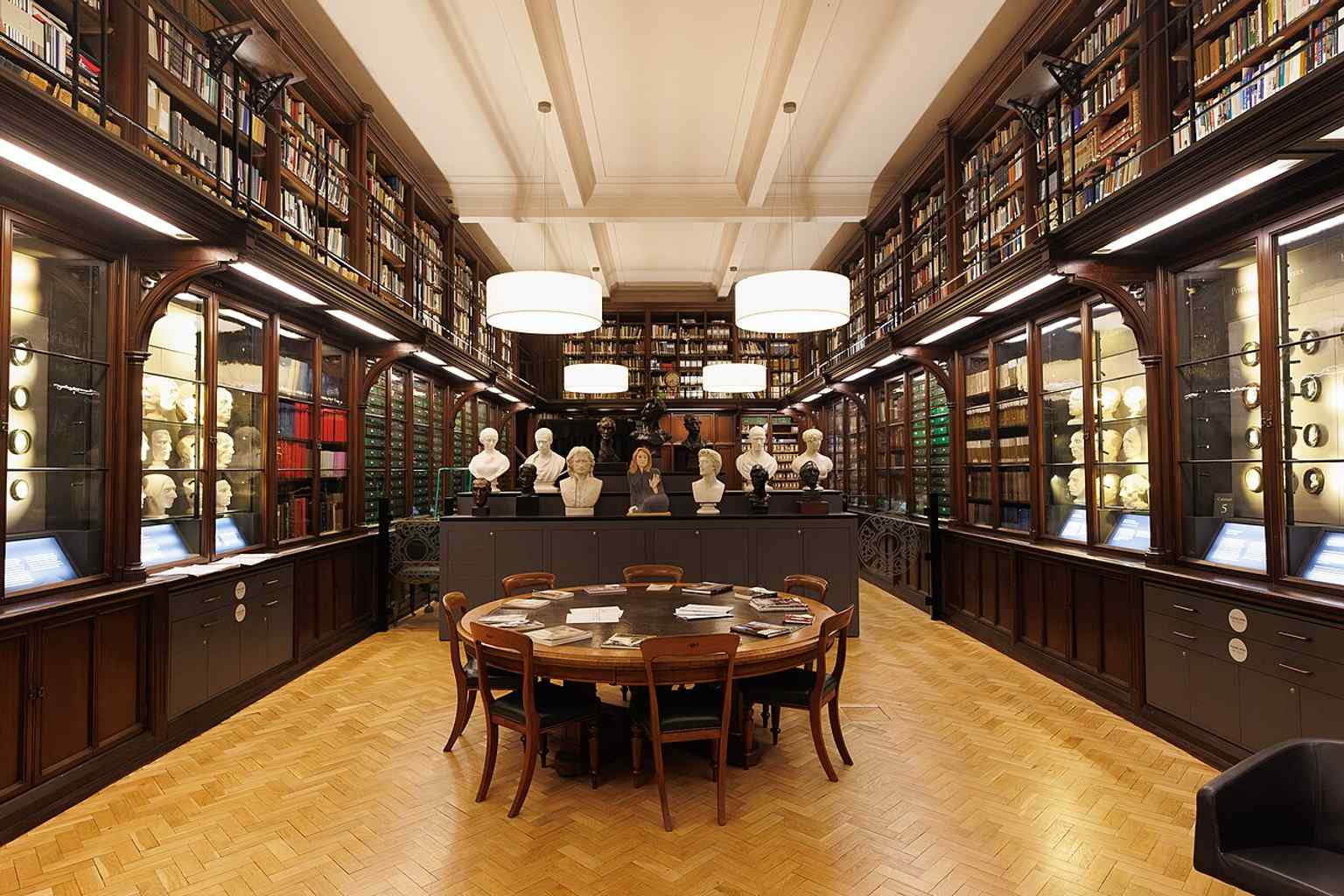
Inside, the argument continues. The Grand Hall, shown in the app image, wraps one hundred and fifty-five figures around its balustrade in a painted procession by William Hole, beginning with Thomas Carlyle and moving back through earlier centuries. After the refurbishment from two thousand and nine to two thousand and eleven, Page Park reopened blocked windows, removed false walls, and restored much of the original plan. The relaunch also widened the story: not only monarchs and philosophers, but photography, ordinary lives, and Thomas Annan’s hard images of Glasgow poverty. Like the archives we visited earlier, this place preserves the past; only here, memory stares back.
Now, as you head toward St Andrew Square, ask what happens when an entire urban space becomes another portrait, this time of status, order, and prosperity. If you want to return and go inside, the gallery is open daily from ten in the morning until five in the afternoon.






.jpg)


