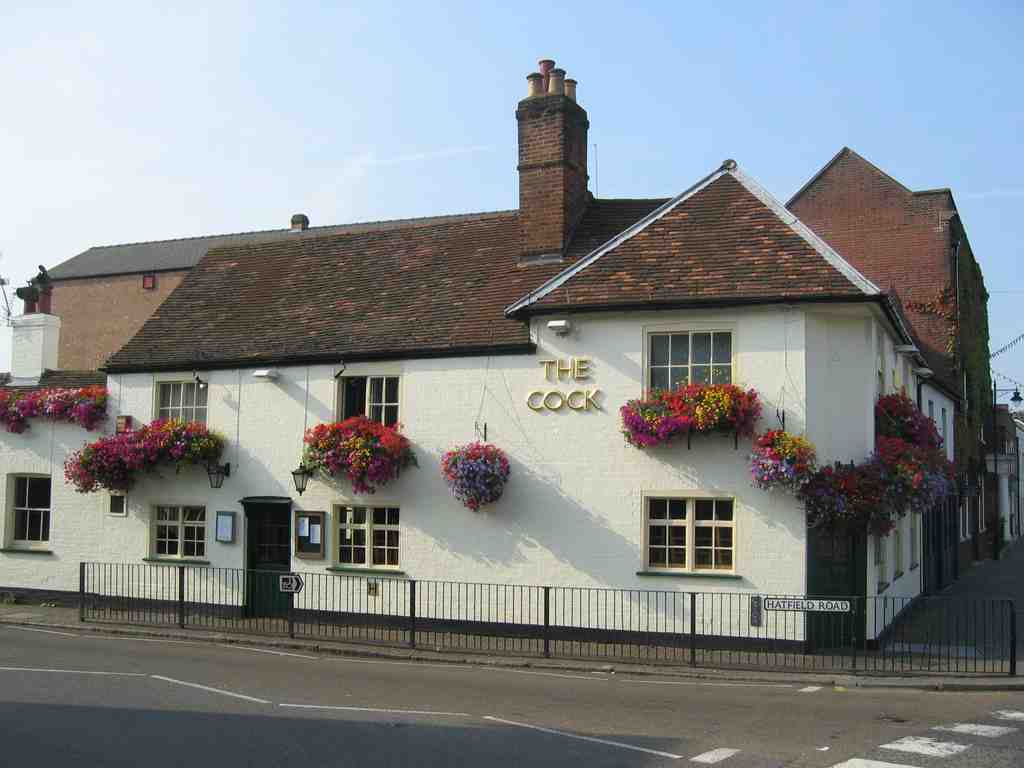
On your right stands a low, white-plastered corner house with exposed dark timber framing, a sloping tiled roof, and the projecting Cock inn sign.
The Cock keeps its secrets with rather good manners. Before any pub stood here, local museum records say this ground served as a field hospital during the Second Battle of St Albans. Centuries later, workers found bones in the cellar and briefly imagined they had uncovered battle casualties. The truth proved less dramatic, though no less human: they were animal bones, discarded from the kitchen.
The house itself reaches back to around sixteen hundred, and its original timber frame still shows through the later skin of the building. The image on your screen shows how stubbornly the old shape has held on at this street corner. The first innkeeper we can name with confidence is George Barnes, recorded here in sixteen sixty-three. That single name pins the place down beautifully, turning guesswork into documented life.
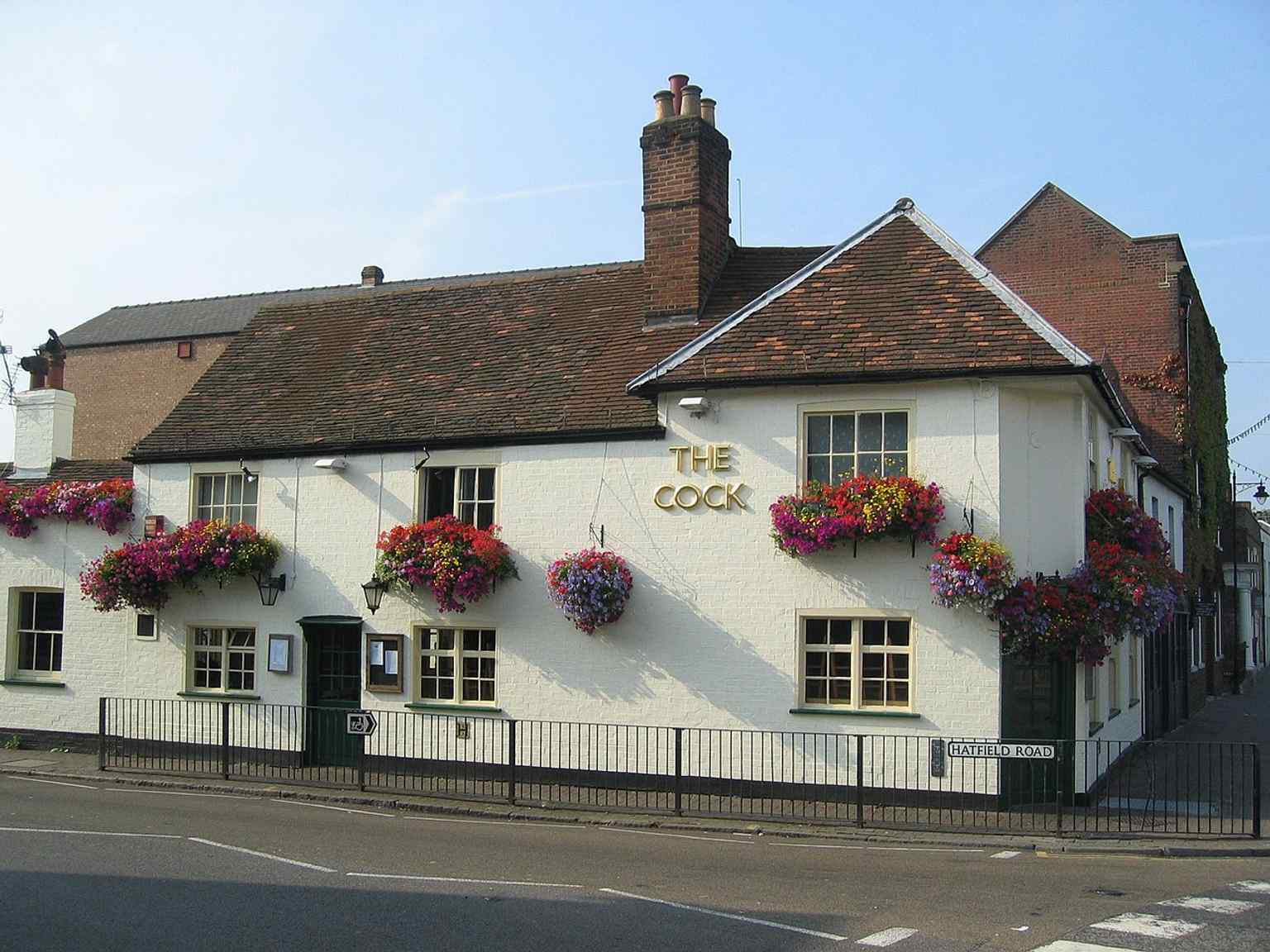
It mattered enough to lend its name to the neighbourhood. Hatfield Road began as Cock Lane, and there was even a nearby Cock pond on the green. This was never merely a roadside tavern. It served people at the northern edge of town and traders coming in for market day, which helps explain its long reputation. Later brewers came and went, but the house kept doing what it does now: welcoming people in. Another image shows that continuity rather nicely. Today, the Campaign for Real Ale notes two bars, a restaurant, a heated courtyard garden, and cask ales.
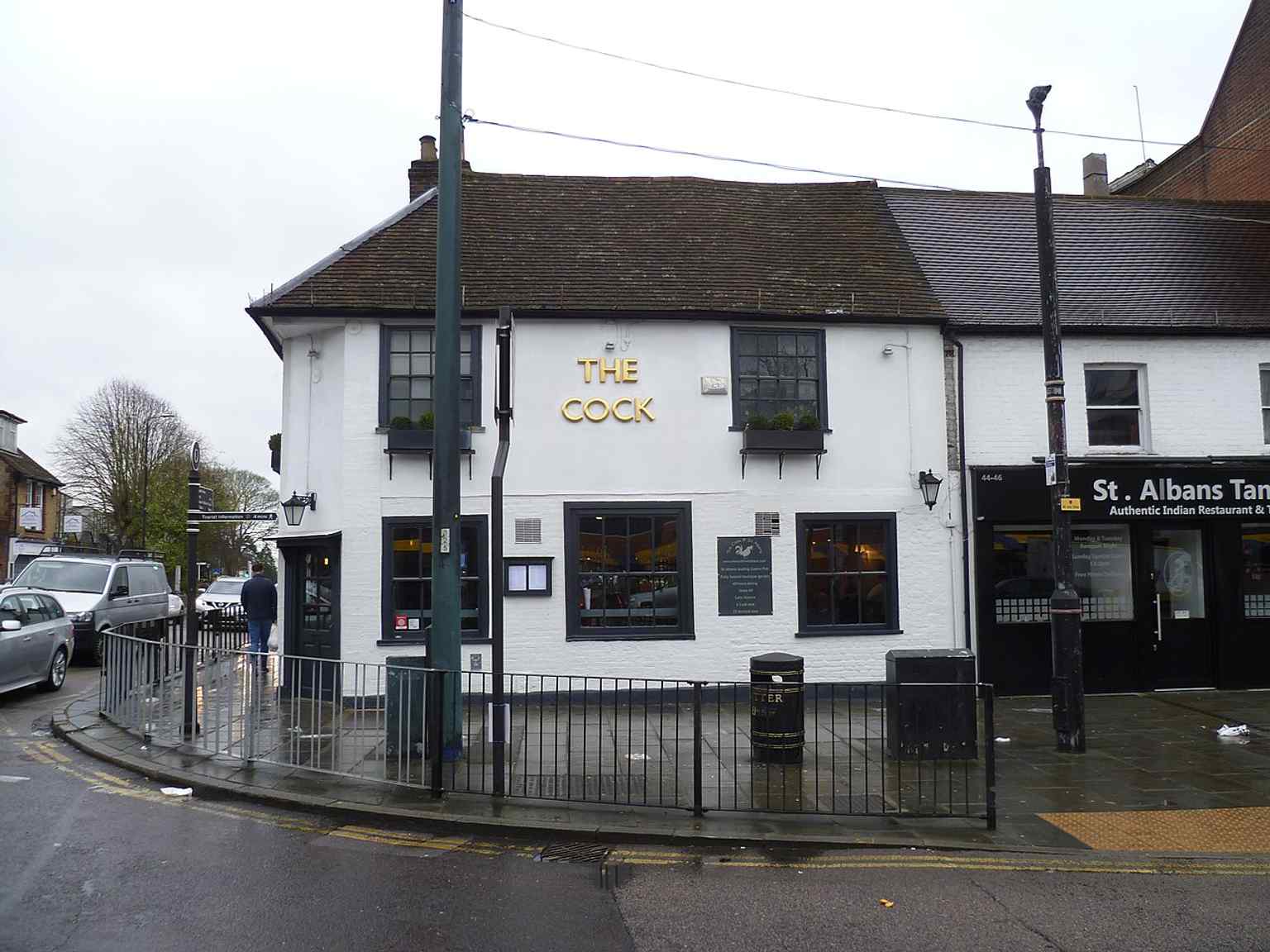
If you fancy ending here, it keeps moderate prices and usually opens from eleven in the morning until midnight, with later closing on Fridays and Saturdays.