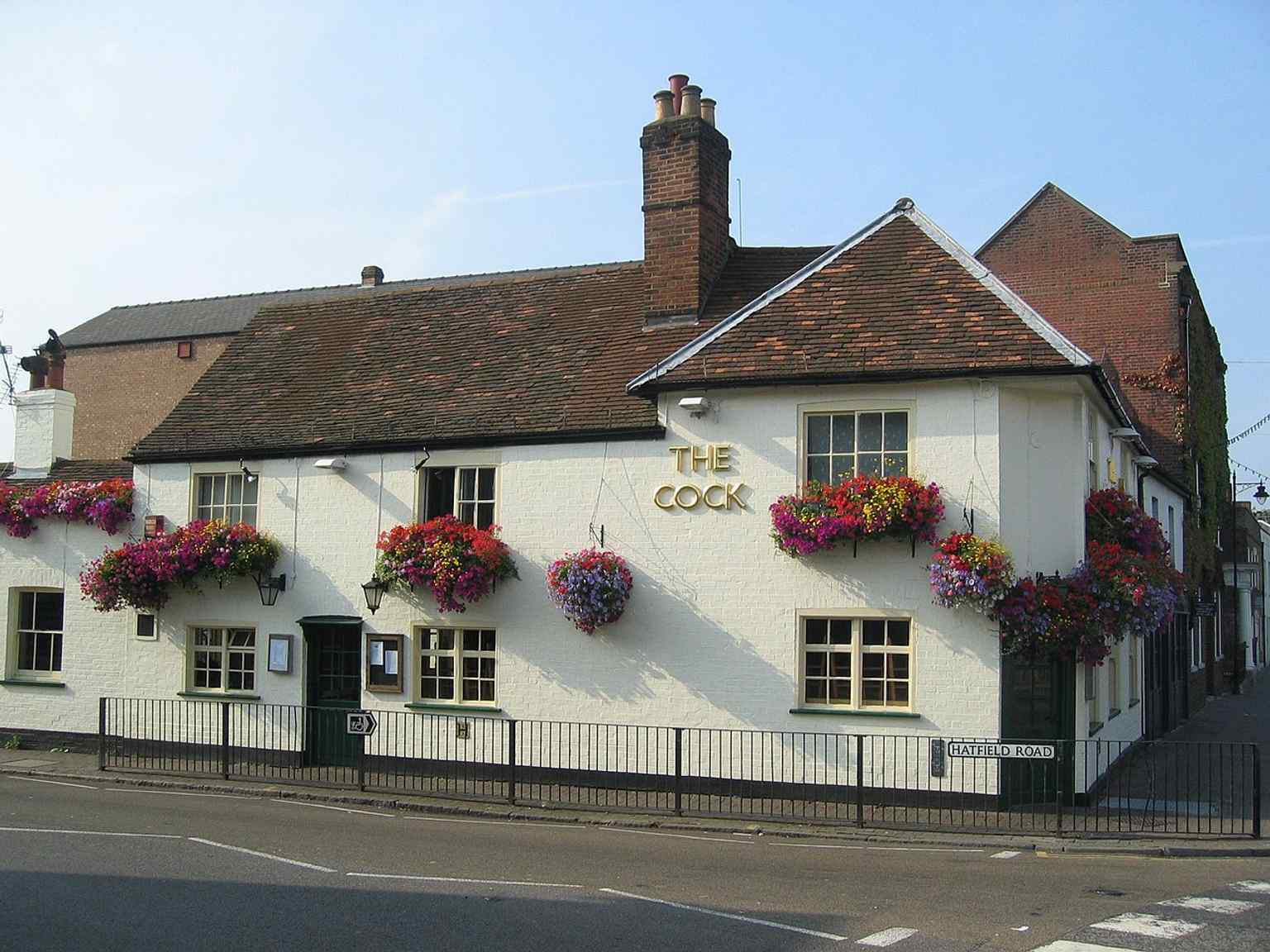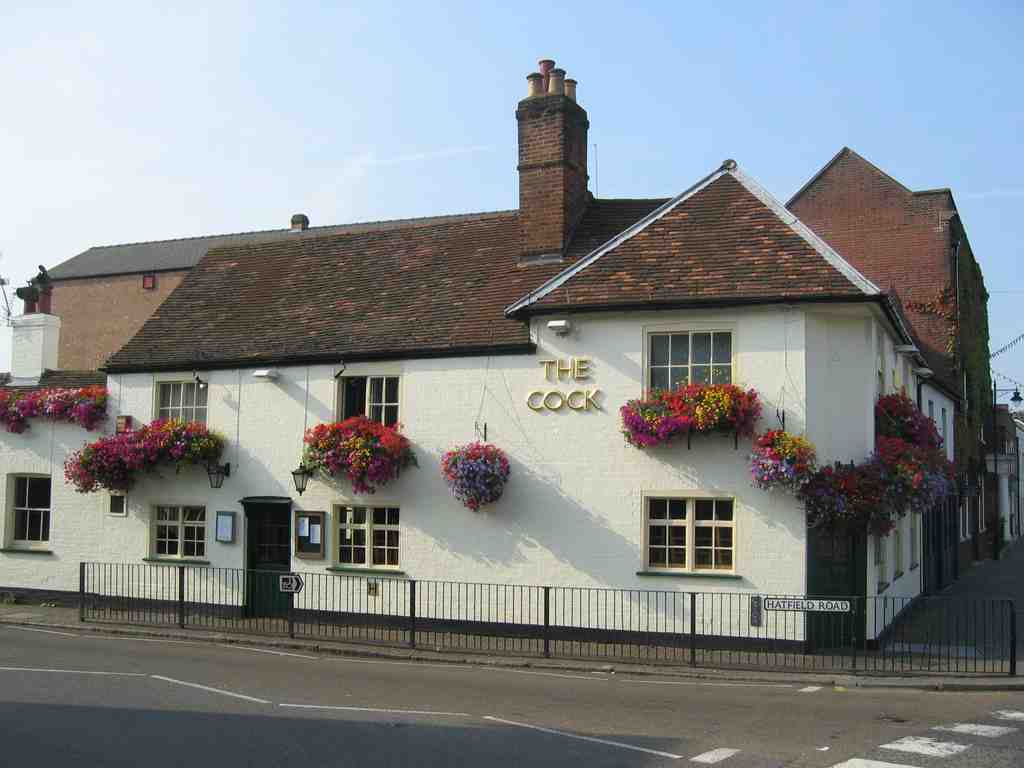
On your right stands a low, white-plastered corner pub with dark timber framing and a long, sloping tiled roof.
The Cock feels like a final key turning in the lock of this city. This Grade II listed building, meaning it is legally protected for its special historic character, dates from around sixteen hundred. Yet even that is not the beginning. Before any inn stood here, this ground served as a field hospital during the Second Battle of St Albans, a place of makeshift care amid violence. Later, bones found in the cellar caused a stir; for a moment, people imagined battle casualties, until the museum identified them as animal bones discarded from the kitchen.
The first innkeeper we can actually name is George Barnes, recorded here in sixteen sixty-three. That small fact matters. With him, The Cock steps out of rumour and into the record. Over the years it passed through several brewers, but the house changed surprisingly little, and the old timber frame still shows itself. If you glance at the image in the app, you can see that continuity for yourself: not a museum piece, but a pub still doing its work on the street.
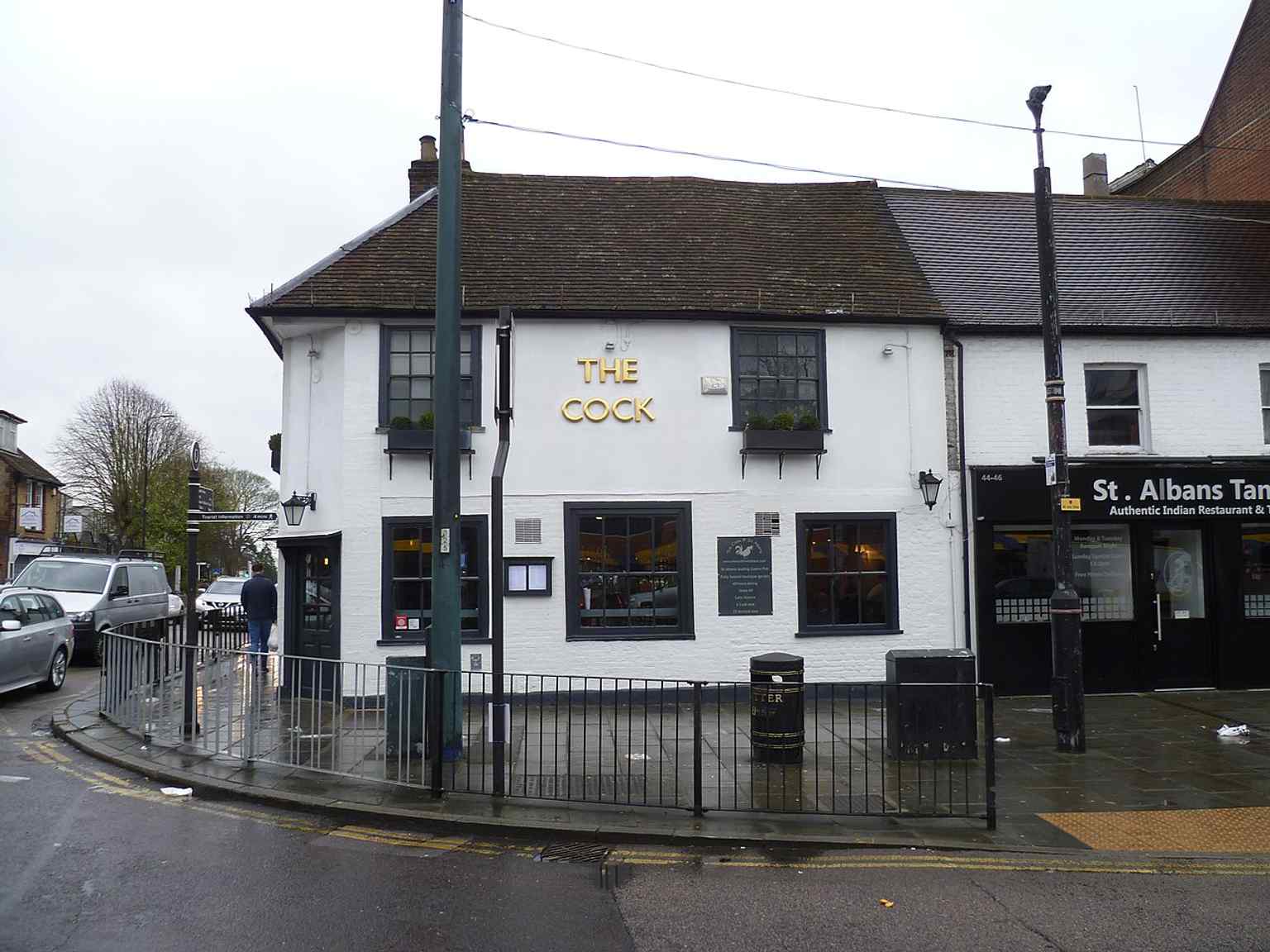
And what work it did. This house served locals at the northern end of town and traders coming to market, and it lent its name to the landscape itself: Hatfield Road began as Cock Lane, and a nearby green once held Cock Pond. So before you leave, look along the road and imagine a whole district taking its bearings from one doorway. All over St Albans, ordinary names may be the last small shelter of vanished lives. If you fancy ending here, it usually opens from eleven until midnight, later on Fridays and Saturdays, and prices are moderate.