St Albans Audio Tour: Historic Pubs
Beneath the charming facade of St Albans lies a landscape scarred by two bloody battles and stained by the secrets of centuries. Most pedestrians walk past these historic walls unaware that they are treading over the ghosts of rebels and forgotten kings. This self-guided audio tour peels back the layers of time to reveal the scandals that history books omitted. Follow the path from The Boot to The White Lion and The Old Kings Arms to uncover the city that hides in plain sight. What dark secret was whispered in the shadows of the tavern before the uprising began? Why does the silence in this alleyway feel like a warning? Did the local innkeeper actually betray the crown for a pocket of gold? Navigate through the winding streets to trade surface-level sightseeing for deep, visceral discovery. Transform your walk into an encounter with the past. Unlock the city. Start your descent into history now.
Tour preview
About this tour
- scheduleDuration 40–60 minsGo at your own pace
- straighten1.4 km walking routeFollow the guided path
- location_onLocationSaint Albans, United Kingdom
- wifi_offWorks offlineDownload once, use anywhere
- all_inclusiveLifetime accessReplay anytime, forever
- location_onStarts at The White Lion, St Albans
Stops on this tour
lock_open 3 free previews · 3 unlock with purchase
On your right, look for a low timber-framed pub with a pale plastered front, a long sloping roofline, and a stout central brick chimney. The Hare and Hounds looks settled, almost…Read moreShow less
Open dedicated page →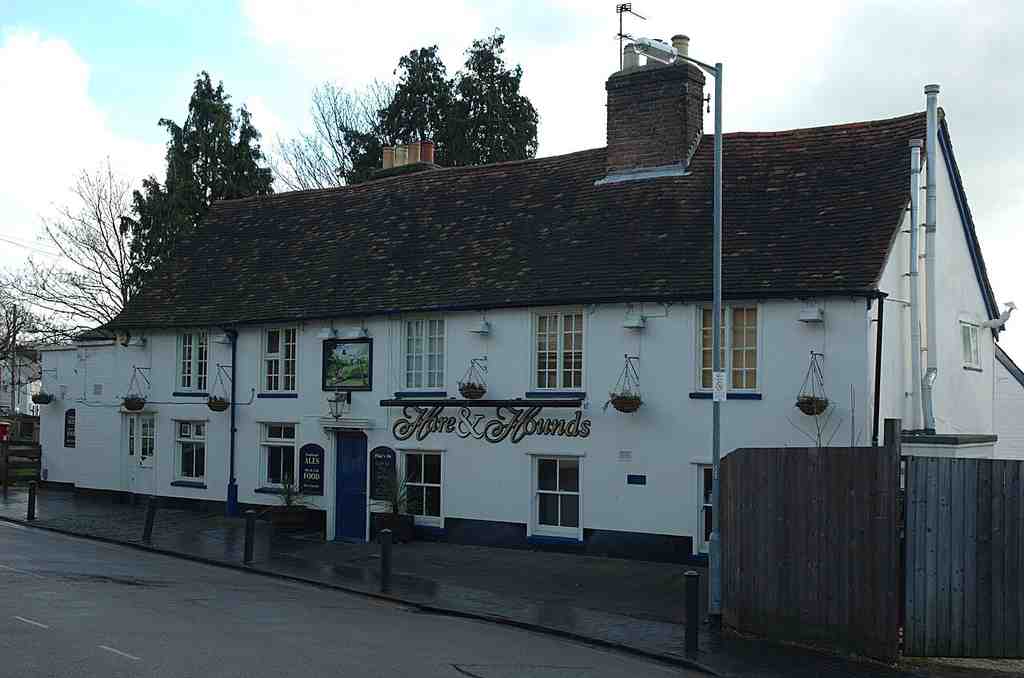
Hare and Hounds, St AlbansPhoto: Gary Houston, Wikimedia Commons, CC0. Cropped & resized. On your right, look for a low timber-framed pub with a pale plastered front, a long sloping roofline, and a stout central brick chimney.
The Hare and Hounds looks settled, almost modest, yet it is a far more complicated creature than its face suggests. It is Grade Two listed, meaning legally protected for its historic character, and the official description says seventeenth century or earlier. But Roderick Douglas, drawing on Wessex Archaeology’s survey from two thousand and seventeen, noticed something most passers-by never suspect: the oldest surviving roof timbers may be earlier in feel than the basic listing lets on. That queen-strut roof, a timber frame with upright posts bracing the span, belongs to the seventeenth to early eighteenth century, and the great brick chimney in the western three bays, the building’s structural sections, probably belongs to the first house here.
And it did not stay that first house for long. Two bays joined the east side in the late eighteenth or early nineteenth century, a south extension followed in the late nineteenth, and another single-storey piece arrived between nineteen twenty-four and nineteen thirty-seven. Each addition kept the place useful, but each one also altered what later generations think they are seeing.
Its beginning is slightly disputed too: some say it appears on maps by sixteen fifty, while archaeology only confirms it by seventeen twenty-one. Either way, by the early eighteenth century this was already an old, altered building, standing detached at the edge of Sopwell Lane, where coaches entered St Albans and travellers paused before the city properly began. If you glance at the image in the app, you can see that roadside poise for yourself.
Even now, the work continues: a major reinvention revived it in twenty twenty-three, and repair plans followed in twenty twenty-four. Places like this carried horses, goods, rumours, and weary people through the city’s thresholds; our next threshold, The Old Kings Arms, is about an eleven-minute walk away. If you return later, it is a moderately priced pub, generally open from noon until late every day.
Look for the dark timber frame with pale plaster panels, a slightly overhanging upper storey, and a long red-tiled roof pressed above the narrow frontage. The Old Kings Arms…Read moreShow less
Open dedicated page →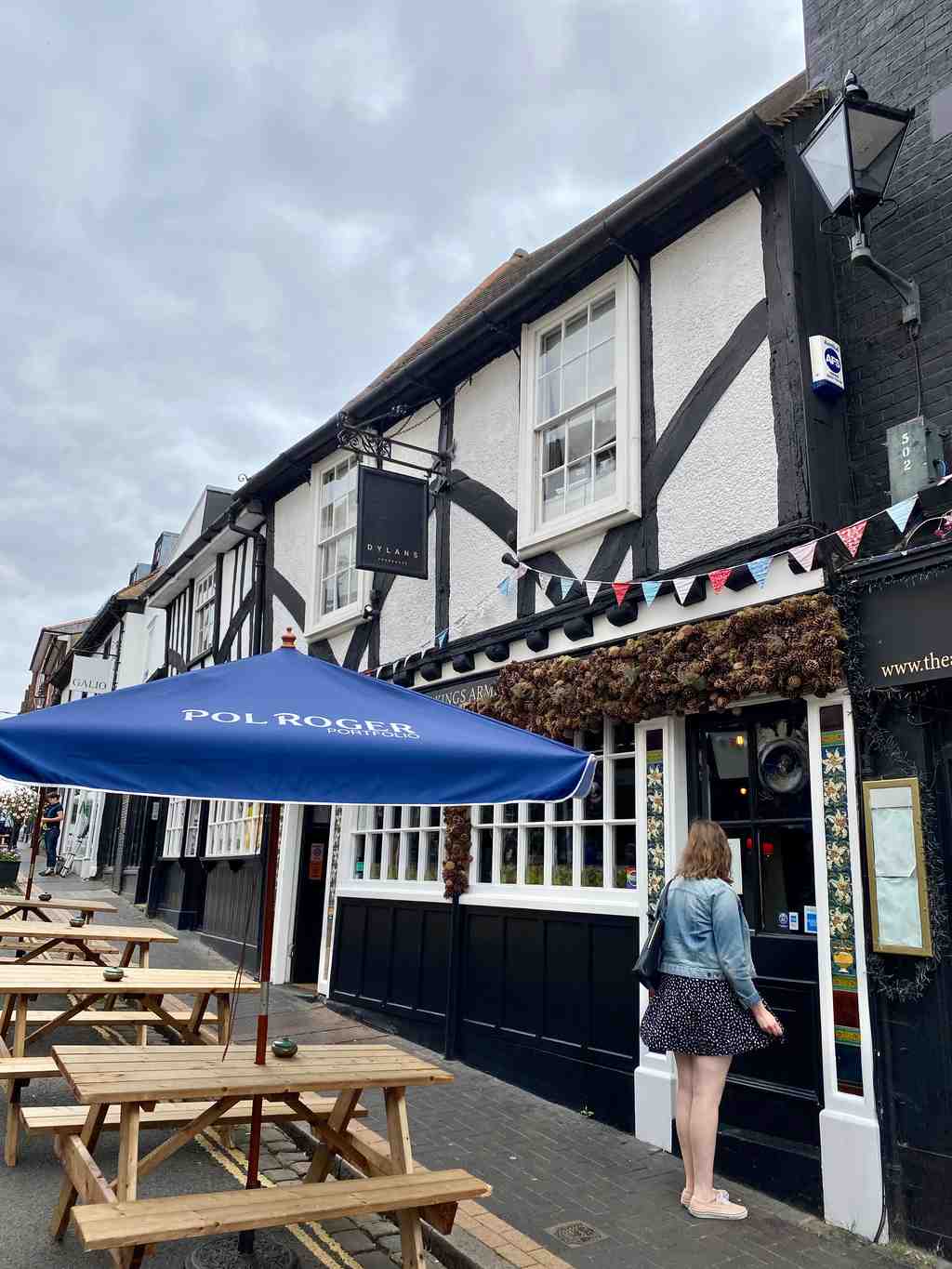
The Old Kings ArmsPhoto: No Swan So Fine, Wikimedia Commons, CC BY-SA 4.0. Cropped & resized. Look for the dark timber frame with pale plaster panels, a slightly overhanging upper storey, and a long red-tiled roof pressed above the narrow frontage.
The Old Kings Arms carries its age rather plainly: a fifteenth-century building, Grade Two listed, which means it has legal protection for its special historic character. Local researchers treated it almost like an unsolved case. The St Albans Society kept plans from nineteen seventy-one and nineteen ninety-six, plus a sketch of the internal framework and photographs taken up in the roof space, all in an effort to record what medieval structure still survived. If you glance at the image on your screen, you can see why.
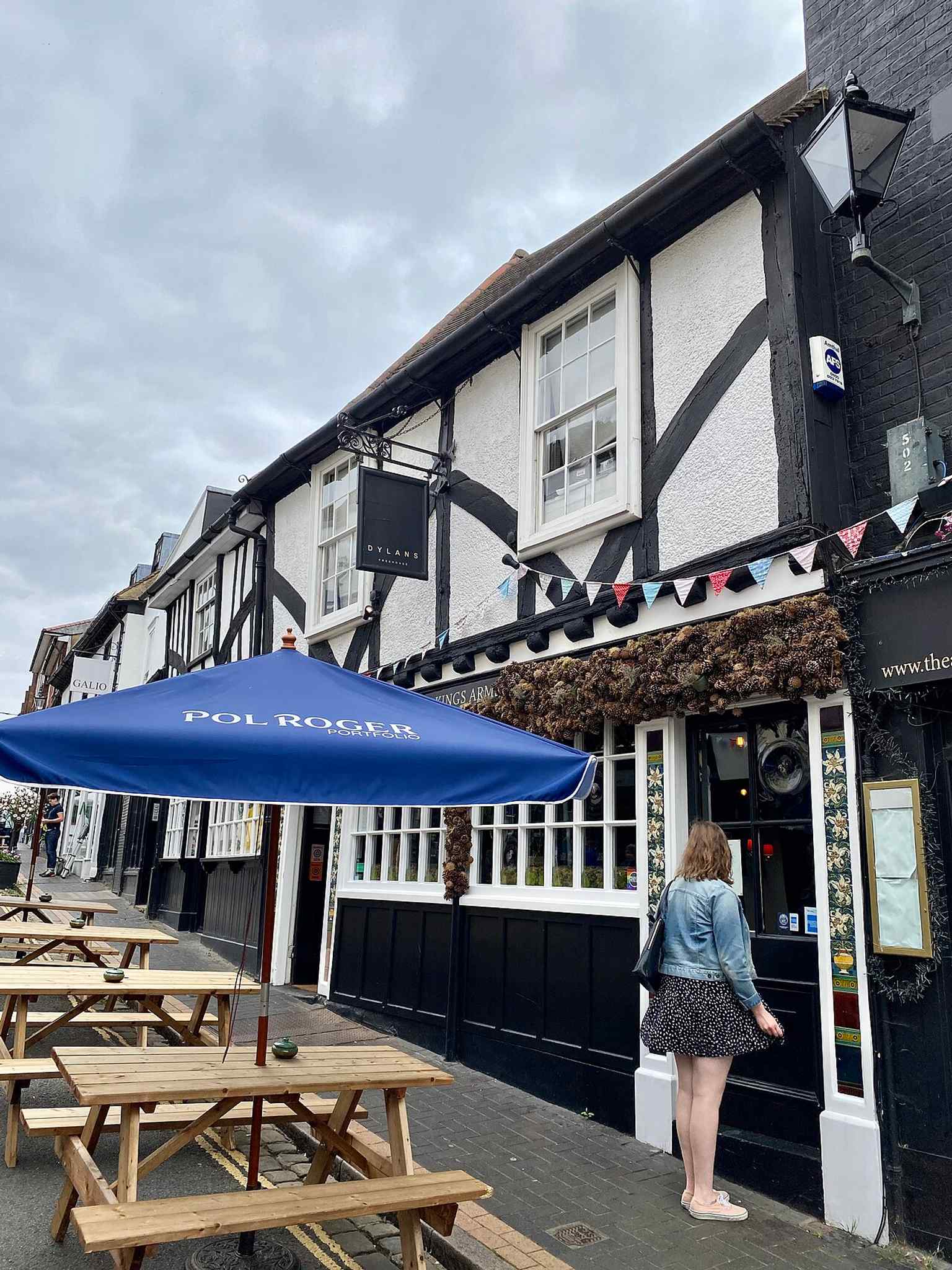
The timber-framed Old Kings Arms on George Street, photographed in 2021 — the historic pub later reopened as Dylans after years of closure.Photo: No Swan So Fine, Wikimedia Commons, CC BY-SA 4.0. Cropped & resized. But admiration was only half the story. Pub names and signs are how a place introduces itself to the street; they hold memory in public view. And here, even that became a civic quarrel. In nineteen ninety-seven, someone complained about unauthorised internal works - changes made without the proper permission for a protected building. The council eventually regularised them through planning permission and listed-building consent, then ordered follow-up rectification. The hanging sign sparked a sharper dispute: two complaints in nineteen ninety-seven, refusals in nineteen ninety-eight, the old sign removed in December nineteen ninety-nine, and a replacement put up in March two thousand. Even in two thousand and three, more unauthorised signage had to be removed.
Then Sean Hughes stepped in. When he and his family reopened the long-shuttered building in twenty fifteen as Dylans at The Kings Arms, after the freehold became available in twenty fourteen, he said he wanted somewhere he would genuinely enjoy within walking distance of home. So tell me: when a historic pub changes its face, who truly gets the final word - owner, council, or the locals who read themselves into it? Keep that question with you as we continue to the Fleur de Lys, about two minutes away. If you return later, note that it keeps fairly limited weekday hours and sits at a moderate price point.
Show 3 more stopsShow fewer stopsexpand_moreexpand_less
On your left, look for a long red-brick frontage with sash windows and a central carriage arch, the old Fleur de Lys concealed behind its later Georgian face. That concealment is…Read moreShow less
Open dedicated page →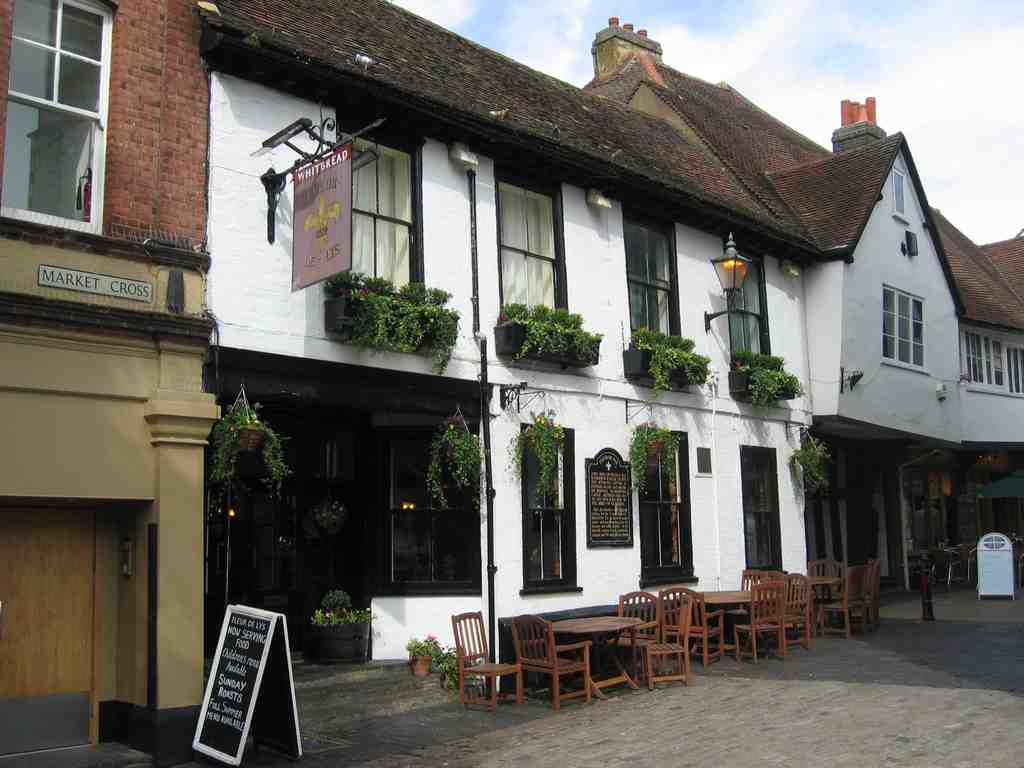
Fleur de Lys, St AlbansPhoto: Gary Houston, Wikimedia Commons, CC0. Cropped & resized. On your left, look for a long red-brick frontage with sash windows and a central carriage arch, the old Fleur de Lys concealed behind its later Georgian face.
That concealment is the real seduction here. Most people see an eighteenth-century pub front and move on. Locals know better: John and Matilda Pikebon left a house on this plot in the fourteenth century, and between the fourteen twenties and fourteen forties the abbot ordered an inn and brewery here, so the story begins long before the brick skin in front of you.
If the name Fleur de Lys seems to have slipped away, that too matters. The building was refurbished and renamed The Snug in two thousand and seven, another small victory for the present over memory. Yet the older place keeps pressing through. After the Reformation, people repaired it, then nearly rebuilt it. When builders demolished the neighbouring Great Red Lion in eighteen ninety-six, they uncovered a cusped window fragment - stone carving with little pointed curves - from this site and sent it to the county museum.
Then there is Thomas Dimsdale, who bought the inn around seventeen forty-five. He championed variolation, an early smallpox protection method using material from a mild case, and in seventeen sixty-eight Catherine the Great summoned him to Russia to treat her, her son Paul, and about one hundred and forty courtiers.
One last twist: the tale that a captured French king stayed here appears late and looks doubtful. Power decides what a building remembers. Here, religion, trade, lodging and medicine all meet at one doorway. And The Boot is right beside you.
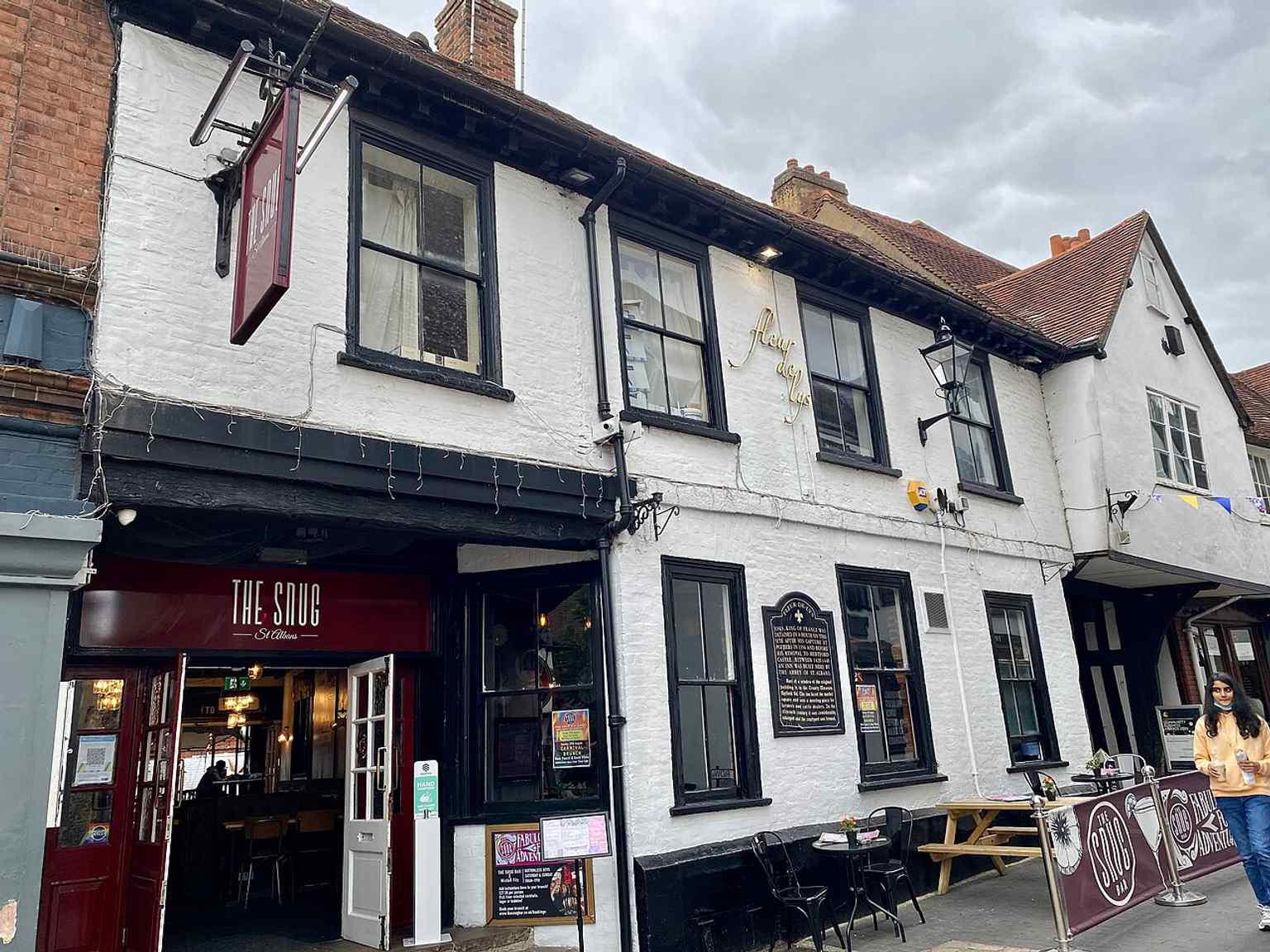
The Fleur de Lys frontage in French Row today, showing the later brick facade on a building with medieval origins and a Grade II listing.Photo: No Swan So Fine, Wikimedia Commons, CC BY-SA 4.0. Cropped & resized. On your right stands a low, white-plastered corner pub with dark timber framing and a long, sloping tiled roof. The Cock feels like a final key turning in the lock of this city.…Read moreShow less
Open dedicated page →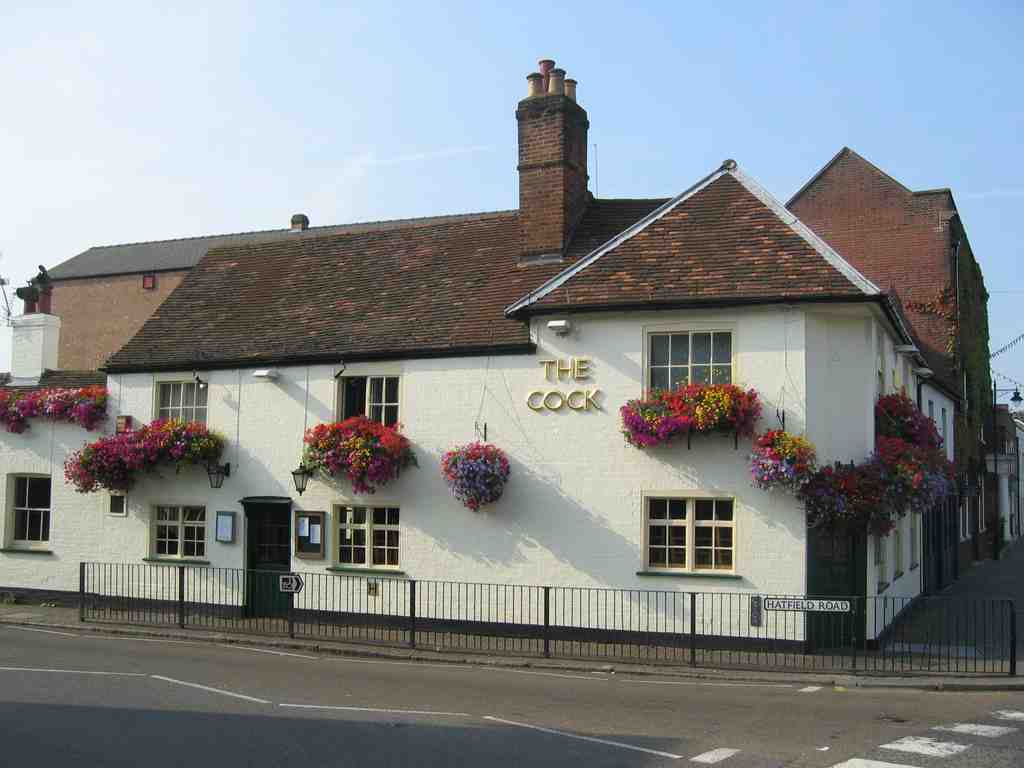
The Cock, St AlbansPhoto: Gary Houston, Wikimedia Commons, CC0. Cropped & resized. On your right stands a low, white-plastered corner pub with dark timber framing and a long, sloping tiled roof.
The Cock feels like a final key turning in the lock of this city. This Grade II listed building, meaning it is legally protected for its special historic character, dates from around sixteen hundred. Yet even that is not the beginning. Before any inn stood here, this ground served as a field hospital during the Second Battle of St Albans, a place of makeshift care amid violence. Later, bones found in the cellar caused a stir; for a moment, people imagined battle casualties, until the museum identified them as animal bones discarded from the kitchen.
The first innkeeper we can actually name is George Barnes, recorded here in sixteen sixty-three. That small fact matters. With him, The Cock steps out of rumour and into the record. Over the years it passed through several brewers, but the house changed surprisingly little, and the old timber frame still shows itself. If you glance at the image in the app, you can see that continuity for yourself: not a museum piece, but a pub still doing its work on the street.
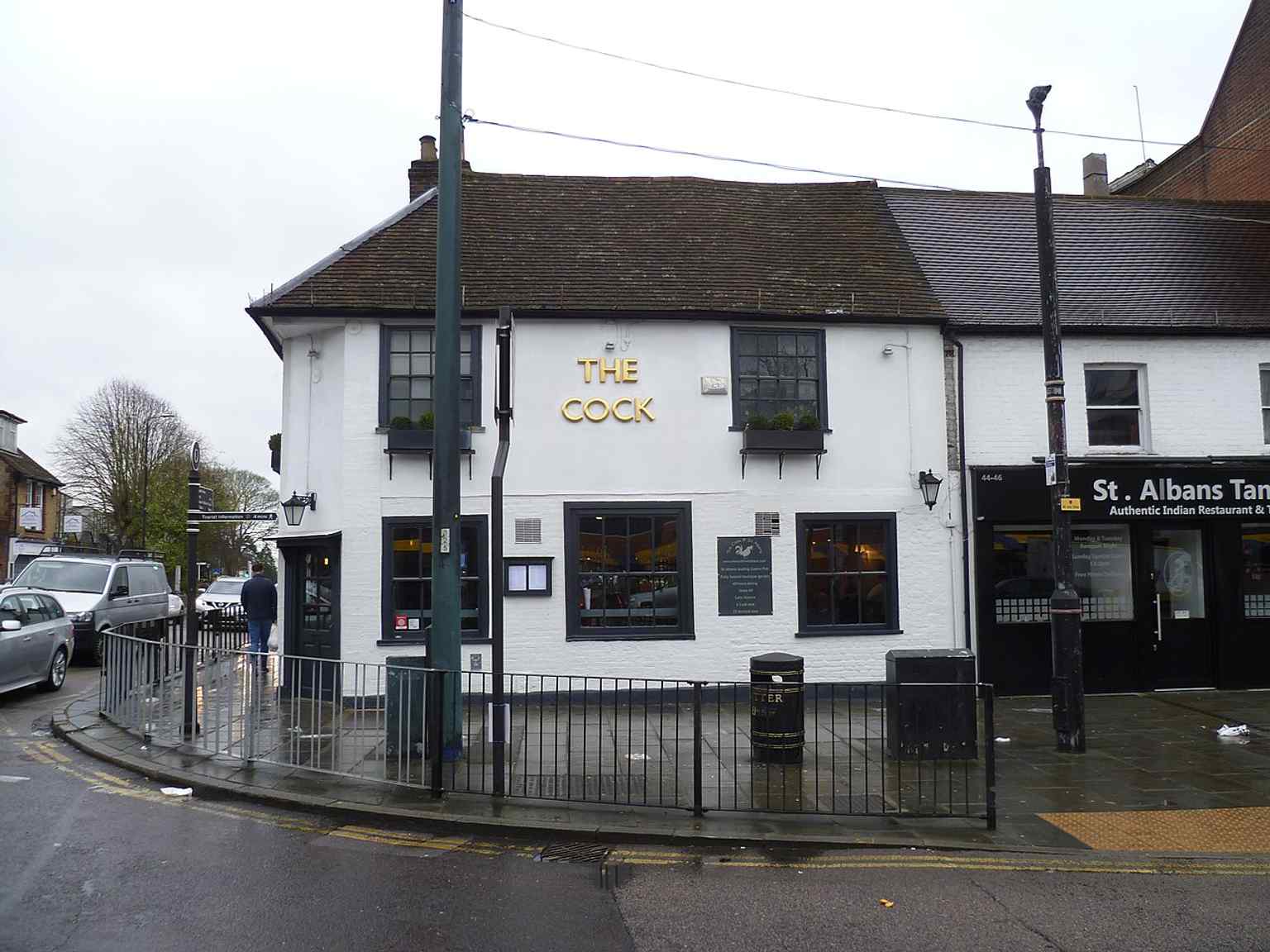
A clearer modern view of The Cock, showing the timbered pub still trading as a busy local house rather than a preserved relic.Photo: Philafrenzy, Wikimedia Commons, CC BY-SA 4.0. Cropped & resized. And what work it did. This house served locals at the northern end of town and traders coming to market, and it lent its name to the landscape itself: Hatfield Road began as Cock Lane, and a nearby green once held Cock Pond. So before you leave, look along the road and imagine a whole district taking its bearings from one doorway. All over St Albans, ordinary names may be the last small shelter of vanished lives. If you fancy ending here, it usually opens from eleven until midnight, later on Fridays and Saturdays, and prices are moderate.
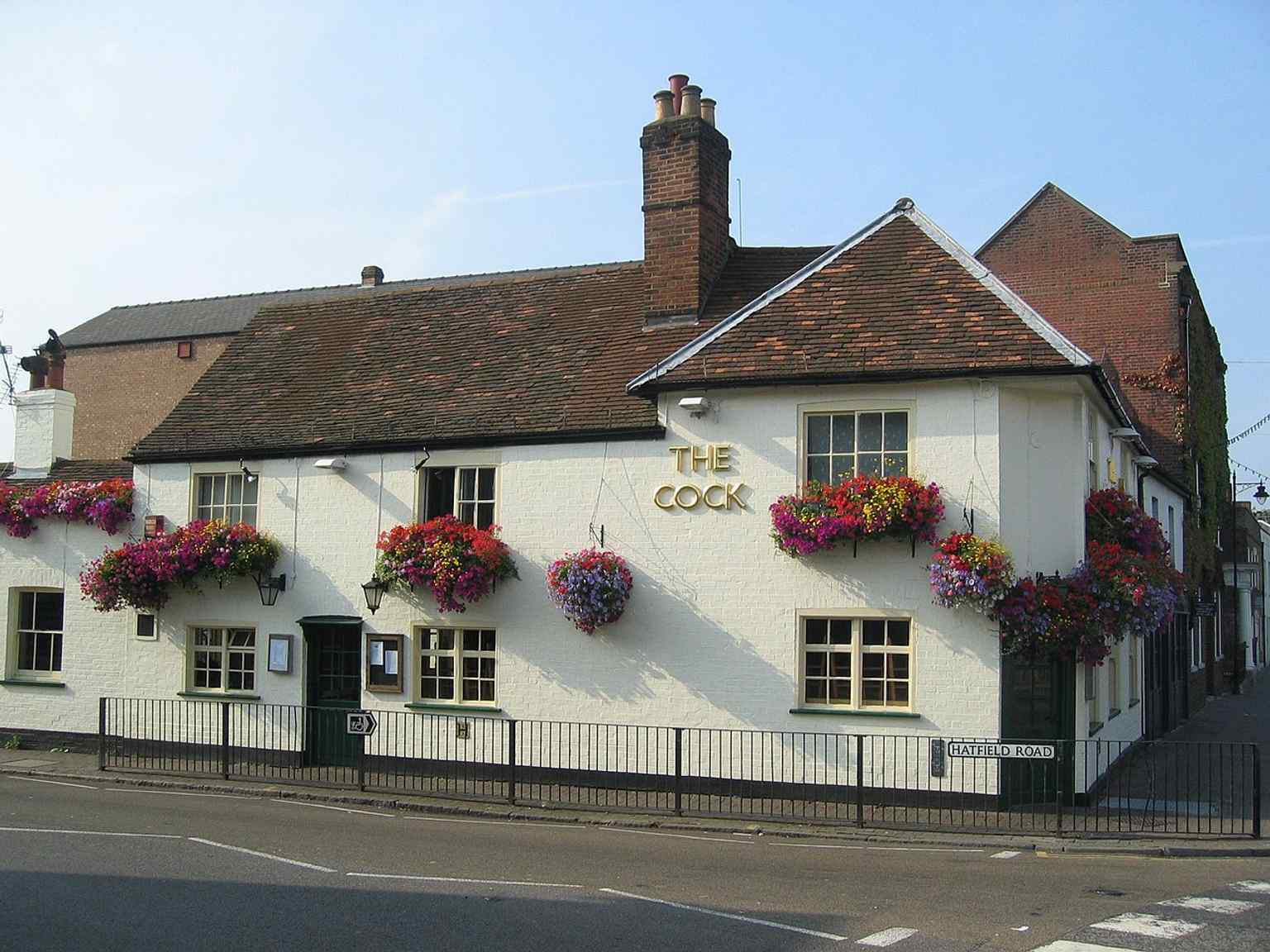
The Cock on the corner of St Peter’s Street and Hatfield Road — the pub that gave Cock Lane its name and has served St Albans for centuries.Photo: Gary Houston, Wikimedia Commons, CC0. Cropped & resized.
Frequently asked questions
How do I start the tour?
After purchase, download the AudaTours app and enter your redemption code. The tour will be ready to start immediately - just tap play and follow the GPS-guided route.
Do I need internet during the tour?
No! Download the tour before you start and enjoy it fully offline. Only the chat feature requires internet. We recommend downloading on WiFi to save mobile data.
Is this a guided group tour?
No - this is a self-guided audio tour. You explore independently at your own pace, with audio narration playing through your phone. No tour guide, no group, no schedule.
How long does the tour take?
Most tours take 60–90 minutes to complete, but you control the pace entirely. Pause, skip stops, or take breaks whenever you want.
What if I can't finish the tour today?
No problem! Tours have lifetime access. Pause and resume whenever you like - tomorrow, next week, or next year. Your progress is saved.
What languages are available?
All tours are available in 50+ languages. Select your preferred language when redeeming your code. Note: language cannot be changed after tour generation.
Where do I access the tour after purchase?
Download the free AudaTours app from the App Store or Google Play. Enter your redemption code (sent via email) and the tour will appear in your library, ready to download and start.
If you don't enjoy the tour, we'll refund your purchase. Contact us at help@audatours.com
Checkout securely with