St Albans Audio Tour: Historic Pubs
Beneath the quiet cobblestones of St Albans lie the scorched remnants of political betrayal and the lingering echoes of bloody rebellions. Centuries of scandal are buried here, waiting for someone to peel back the layers of history. This self-guided audio tour navigates the city’s shadowed past, leading you to historic haunts like The Boot, The White Lion, and The Old Kings Arms. Bypass the tourist crowds to uncover secrets that most visitors walk right over without a second glance. Which tavern served as the secret headquarters for a doomed uprising? What dark secret forced the hasty departure of a royal guest at midnight? Why does the floorboard at The Old Kings Arms still bear the scratch marks of a forgotten prisoner? Traverse through time, feeling the pulse of a city defined by grit and transformation. See St Albans not as a map, but as a living record of rebellion. Start your journey now and reveal the truth hidden in plain sight.
Tour preview
About this tour
- scheduleDuration 40–60 minsGo at your own pace
- straighten1.4 km walking routeFollow the guided path
- location_onLocationSaint Albans, United Kingdom
- wifi_offWorks offlineDownload once, use anywhere
- all_inclusiveLifetime accessReplay anytime, forever
- location_onStarts at The White Lion, St Albans
Stops on this tour
lock_open 3 free previews · 3 unlock with purchase
On your right, look for a low, plaster-faced timber-framed pub with a long, slightly uneven front and a stout central brick chimney rising above the roof. The Hare and Hounds…Read moreShow less
Open dedicated page →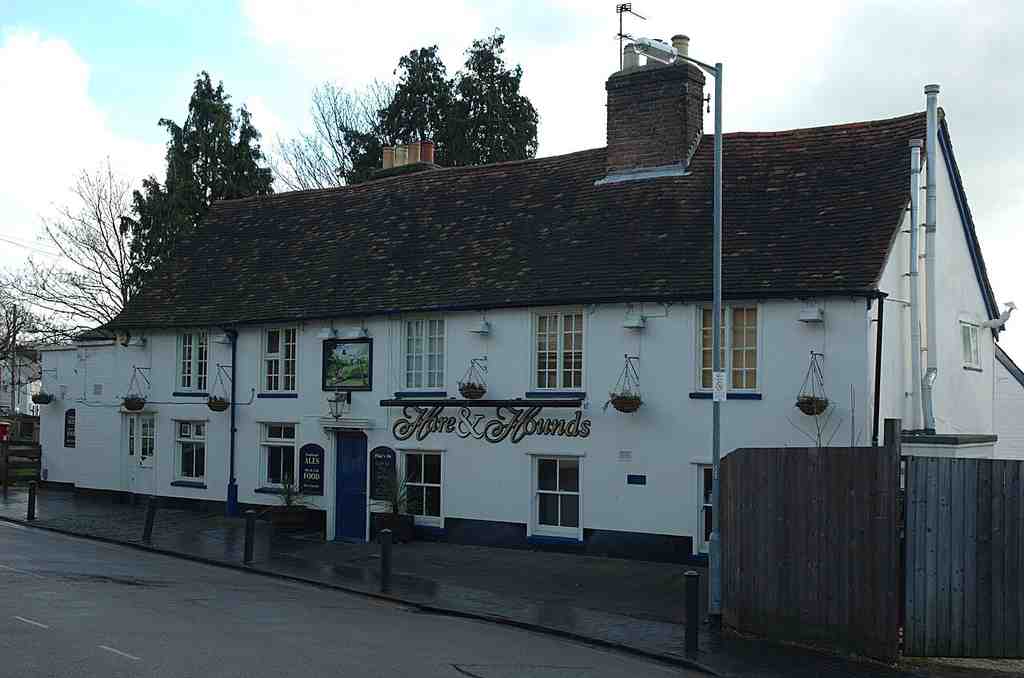
Hare and Hounds, St AlbansPhoto: Gary Houston, Wikimedia Commons, CC0. Cropped & resized. On your right, look for a low, plaster-faced timber-framed pub with a long, slightly uneven front and a stout central brick chimney rising above the roof.
The Hare and Hounds likes to keep a little of its age concealed. Historic England protects it as a Grade Two listed building, meaning the law recognises it as specially important, and the basic listing calls it seventeenth century or earlier. Yet later archaeology whispered something even older through the structure itself. Surveyors found a queen-strut roof frame - a pair of upright braces holding the roof up - typical of the seventeenth to early eighteenth century, and they linked that great central chimney to the earliest core of the house.
After that, the building kept growing as St Albans changed around it. Two bays went on to the east in the late eighteenth or early nineteenth century, a south extension arrived in the late nineteenth, and another single-storey addition followed between nineteen twenty-four and nineteen thirty-seven. The app view lets you trace those layers in the stretched shape of the place.
Its story as a pub carries a small argument. One source places it on maps by sixteen fifty; archaeology can only prove it by seventeen twenty-one. Either way, by the early eighteenth century this was already an old, altered house. More than that, it stood apart on the edge of Sopwell Lane, marking the entrance to St Albans for coach travellers, so it welcomed strangers before it embraced locals.
A six-figure revival in twenty twenty-three restored it as a much-missed community hub, even as repair work in twenty twenty-four reminded everyone that old timber needs constant care. If you feel like coming back later, it keeps generous daily opening hours and the prices are moderate.
The Hare and Hounds still feels like a threshold between arrival and belonging.
From here, carry on to The Old Kings Arms.
On your left, look for the black timber frame, the pale infill panels, and the upper storey that projects slightly forward in that unmistakably medieval way. This house has stood…Read moreShow less
Open dedicated page →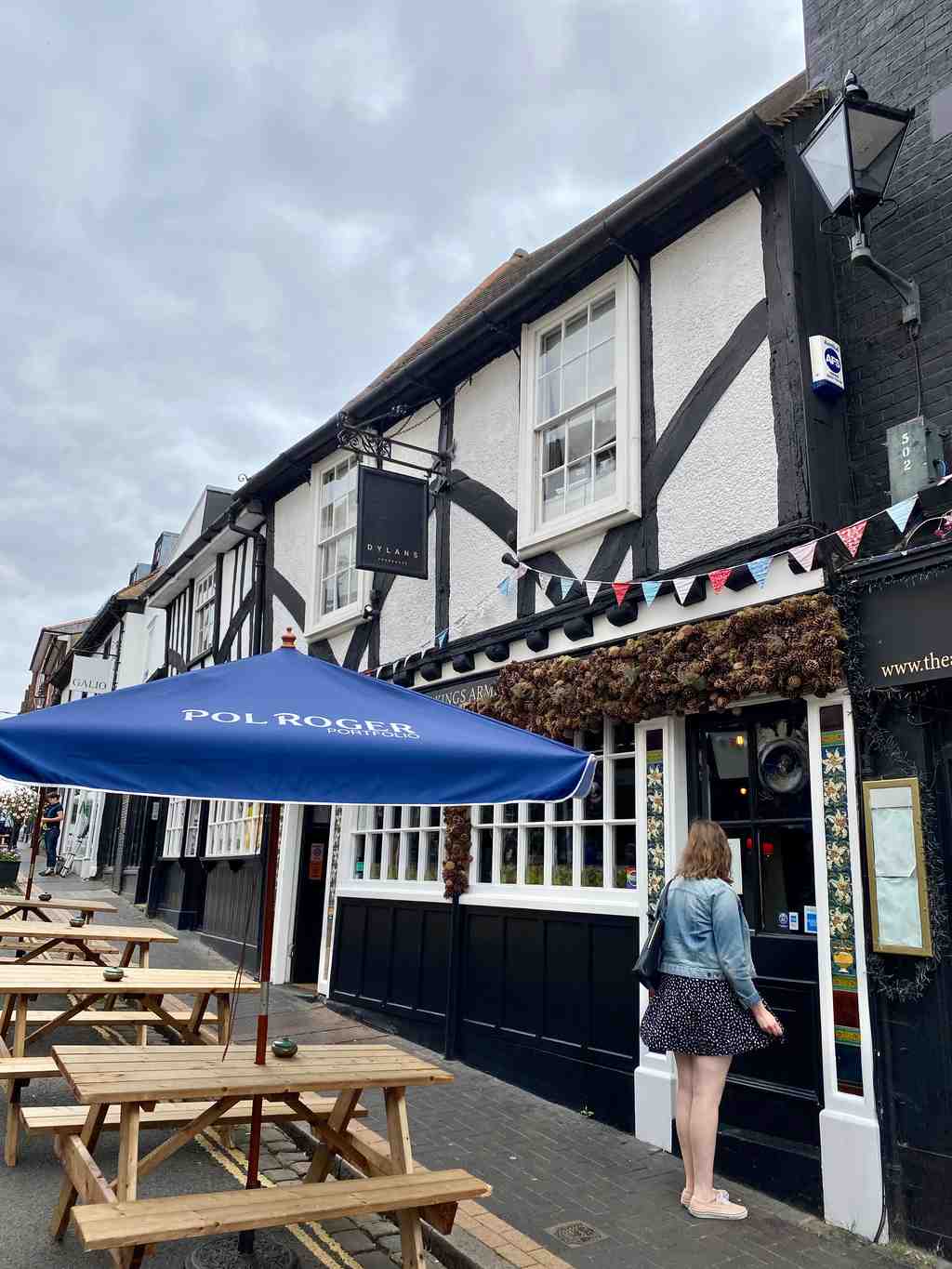
The Old Kings ArmsPhoto: No Swan So Fine, Wikimedia Commons, CC BY-SA 4.0. Cropped & resized. On your left, look for the black timber frame, the pale infill panels, and the upper storey that projects slightly forward in that unmistakably medieval way.
This house has stood on George Street since the fifteenth century, and it wears its age rather beautifully. It holds Grade Two listed status, meaning the building is legally protected for its special historic character. Local researchers kept returning to it, almost as if the place would not stop whispering to them: they drew floor plans in nineteen seventy-one and again in nineteen ninety-six, sketched the timber framework, and even photographed the roof space to record what still survived inside its medieval shell. From the photo, those old timber bones still show through the frontage.
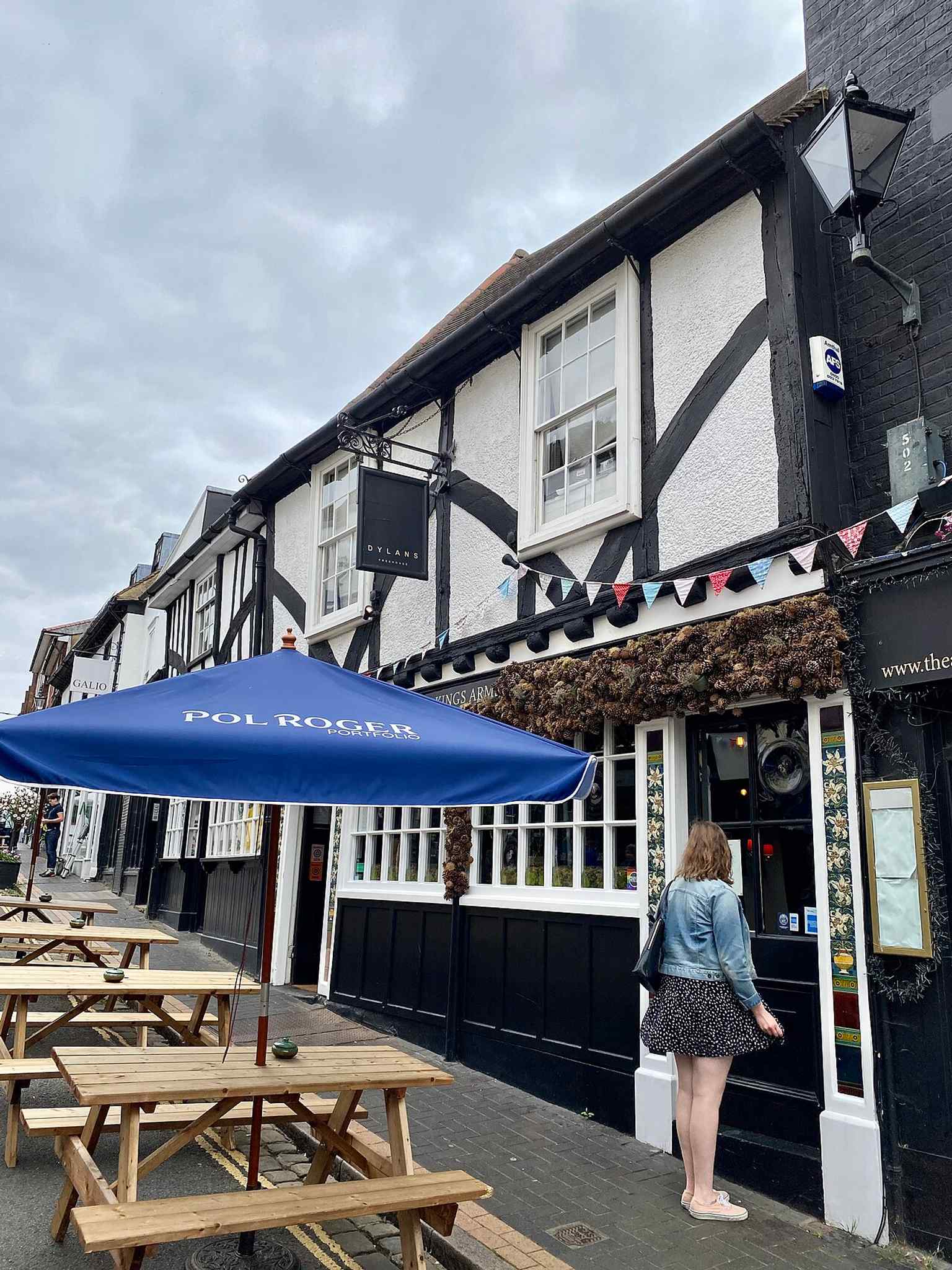
The Old Kings Arms on George Street in its listed-building form — the 15th-century timber-framed pub that was later revived in 2015 after years out of use.Photo: No Swan So Fine, Wikimedia Commons, CC BY-SA 4.0. Cropped & resized. Then came a more combative chapter. In nineteen ninety-seven, someone complained about unauthorised internal works. The council later regularised the changes through planning permission and listed-building consent, which is special approval for altering a protected building, and further rectification followed. Even the hanging sign caused a row: complaints arrived, consent was refused in nineteen ninety-eight, the old sign came down in December nineteen ninety-nine, and a replacement went up in March two thousand. More unauthorised signage surfaced in two thousand and three, and that too had to be removed.
After closing in the late nineteen nineties, the old pub sat dormant for roughly fifteen years, drifting as far as life as a French restaurant, until Sean Hughes and his family rescued it in twenty fifteen as Dylans at The Kings Arms, a revival rooted in neighbourhood pride and later rewarded with real acclaim.
It now lives again as a family-run, moderately priced house, usually open from Wednesday to Sunday and on Tuesday evenings. From here, carry on to the Fleur de Lys.
Show 3 more stopsShow fewer stopsexpand_moreexpand_less
On your left, look for the brick frontage with its neat sash windows and the broad carriage arch cut through the ground floor. This place wears an eighteenth-century face, but…Read moreShow less
Open dedicated page →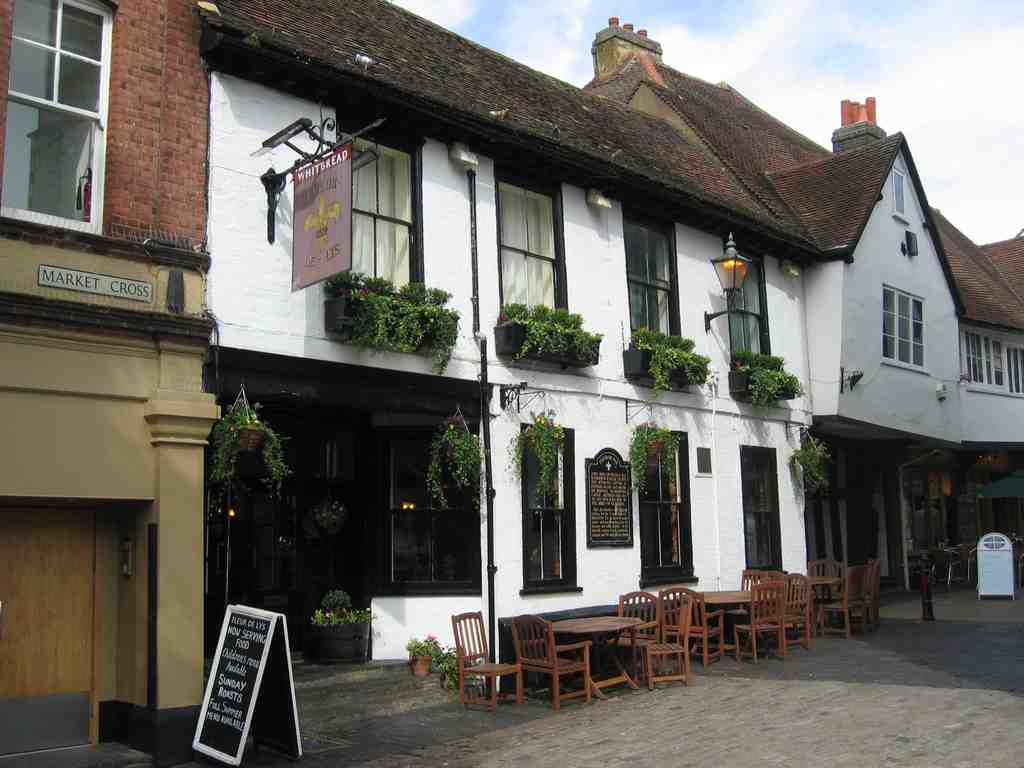
Fleur de Lys, St AlbansPhoto: Gary Houston, Wikimedia Commons, CC0. Cropped & resized. On your left, look for the brick frontage with its neat sash windows and the broad carriage arch cut through the ground floor.
This place wears an eighteenth-century face, but its story begins far earlier. In the fourteenth century, John and Matilda Pikebon left a house on this very site, so we can trace its life back long before the frontage you see now. Then, between about fourteen twenty and fourteen forty, the abbot ordered an inn and brewery here, and by the early sixteenth century the building had settled into something close to its present form. The app image shows a composed outer shell hiding a much older survivor behind it.
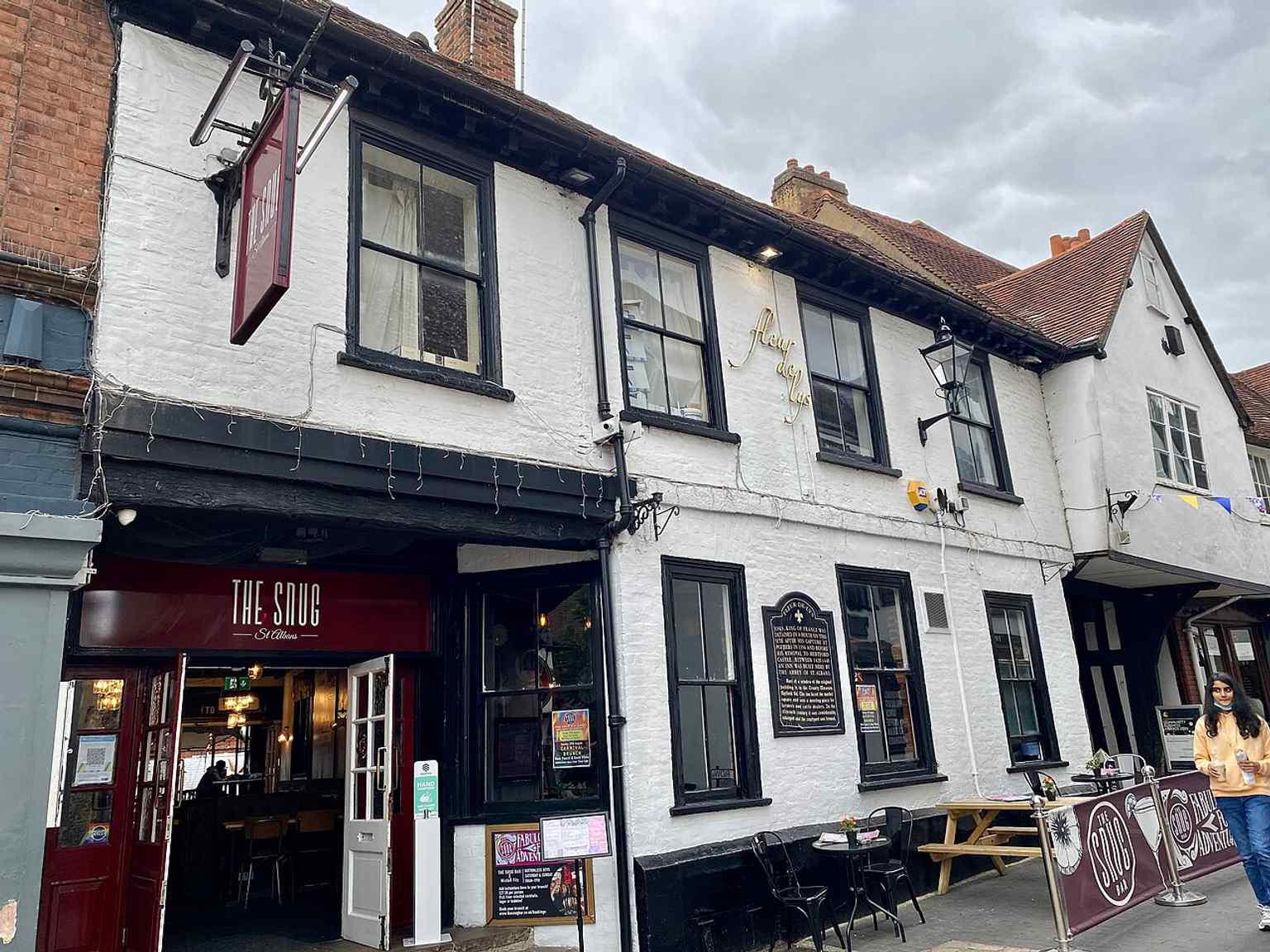
The surviving Fleur de Lys frontage on French Row, a Grade II listed pub with medieval origins behind an 18th-century face.Photo: No Swan So Fine, Wikimedia Commons, CC BY-SA 4.0. Cropped & resized. It did not remain untouched. After the Reformation, people repaired it, altered it, almost rebuilt it, and kept adapting it to the trade of the road. By the nineteenth century, a coach left daily from the Fleur de Lys and the Woolpack for London. Inside, an old kitchen once held a huge inglenook, a fireplace recess large enough to gather around.
Then comes the most delicious twist. Around seventeen forty-five, Thomas Dimsdale bought the inn. He later championed variolation, an early form of smallpox inoculation, and in seventeen sixty-eight Catherine the Great summoned him to Russia. He treated her, her son, and around one hundred and forty courtiers, and came home with a pension and a Russian barony.
A tale later claimed a captive French king slept here, but historians found that story surprisingly late and far less convincing than the legend suggests.
The Fleur de Lys reminds you how easily myth settles onto old brick. Next, make your way to The Boot.
On your right, look for a low cream-plastered corner pub with a red-tiled roof and dark timber framing stitched across its upper walls. The Cock carries itself rather modestly,…Read moreShow less
Open dedicated page →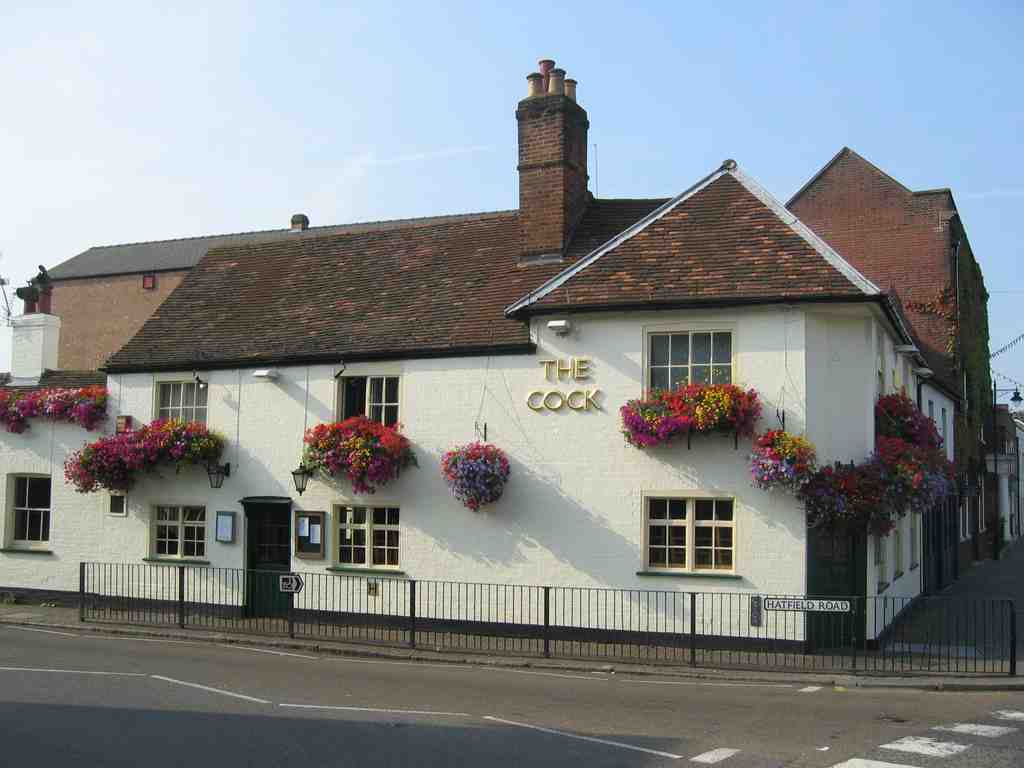
The Cock, St AlbansPhoto: Gary Houston, Wikimedia Commons, CC0. Cropped & resized. On your right, look for a low cream-plastered corner pub with a red-tiled roof and dark timber framing stitched across its upper walls.
The Cock carries itself rather modestly, but this site has a surprisingly dramatic backstory. Before the inn stood here, the ground served as a field hospital during the Second Battle of St Albans. Much later, bones turned up in the cellar, and for a moment people wondered whether they had found the battle’s dead. The museum spoiled the mystery neatly: they were animal bones, left behind by the kitchen.
Around sixteen hundred, local builders raised the timber-framed house you see now, and enough of that original frame still shows for the building to keep its early character. Then, in sixteen sixty-three, the records finally give us a name: George Barnes, the first innkeeper the museum could trace. That small fact matters. It pulls The Cock out of rumour and places it firmly in documented life as an inn.
It shaped the neighbourhood too. Hatfield Road began as Cock Lane, named for this very house, and there was even a nearby Cock pond on the green. That tells you how well known it became, serving not only local residents at the northern edge of town but also people arriving for market. The photograph still makes that corner presence feel instantly recognisable.
The Campaign for Real Ale, or C-A-M-R-A, still lists it as a working pub, with two bars, a restaurant, a heated courtyard garden and cask ales, independently run though owned by Greene King. If you’re tempted to end here, it generally opens from eleven in the morning until midnight, later on Fridays and Saturdays, and prices are moderate.
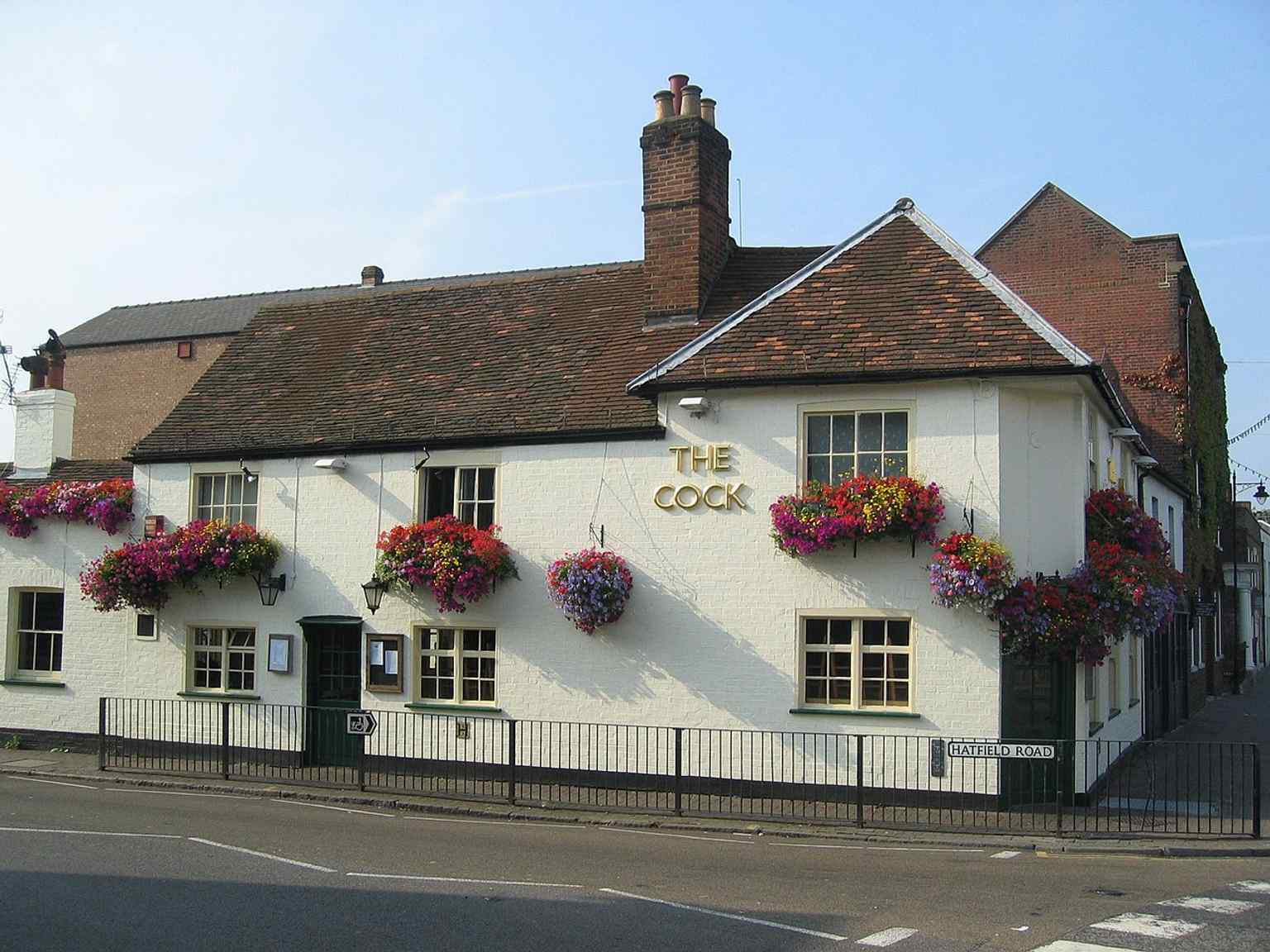
The Cock on the corner of St Peter’s Street and Hatfield Road — the pub that gave Cock Lane its name and became a local landmark.Photo: Gary Houston, Wikimedia Commons, CC0. Cropped & resized. 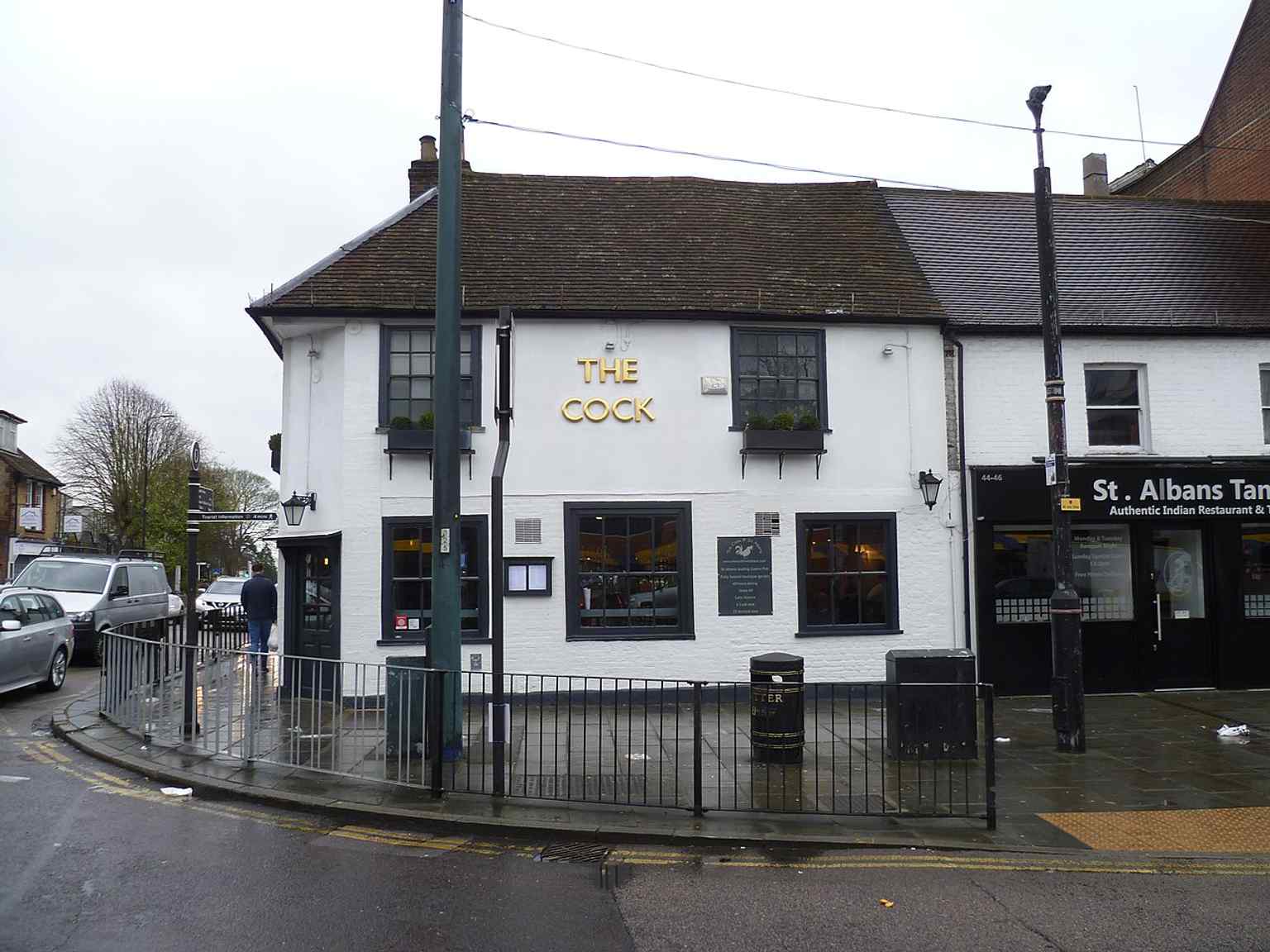
A later view of the same historic pub, still trading in the city centre where locals once came to drink and market-goers stopped by.Photo: Philafrenzy, Wikimedia Commons, CC BY-SA 4.0. Cropped & resized.
Frequently asked questions
How do I start the tour?
After purchase, download the AudaTours app and enter your redemption code. The tour will be ready to start immediately - just tap play and follow the GPS-guided route.
Do I need internet during the tour?
No! Download the tour before you start and enjoy it fully offline. Only the chat feature requires internet. We recommend downloading on WiFi to save mobile data.
Is this a guided group tour?
No - this is a self-guided audio tour. You explore independently at your own pace, with audio narration playing through your phone. No tour guide, no group, no schedule.
How long does the tour take?
Most tours take 60–90 minutes to complete, but you control the pace entirely. Pause, skip stops, or take breaks whenever you want.
What if I can't finish the tour today?
No problem! Tours have lifetime access. Pause and resume whenever you like - tomorrow, next week, or next year. Your progress is saved.
What languages are available?
All tours are available in 50+ languages. Select your preferred language when redeeming your code. Note: language cannot be changed after tour generation.
Where do I access the tour after purchase?
Download the free AudaTours app from the App Store or Google Play. Enter your redemption code (sent via email) and the tour will appear in your library, ready to download and start.
If you don't enjoy the tour, we'll refund your purchase. Contact us at help@audatours.com
Checkout securely with