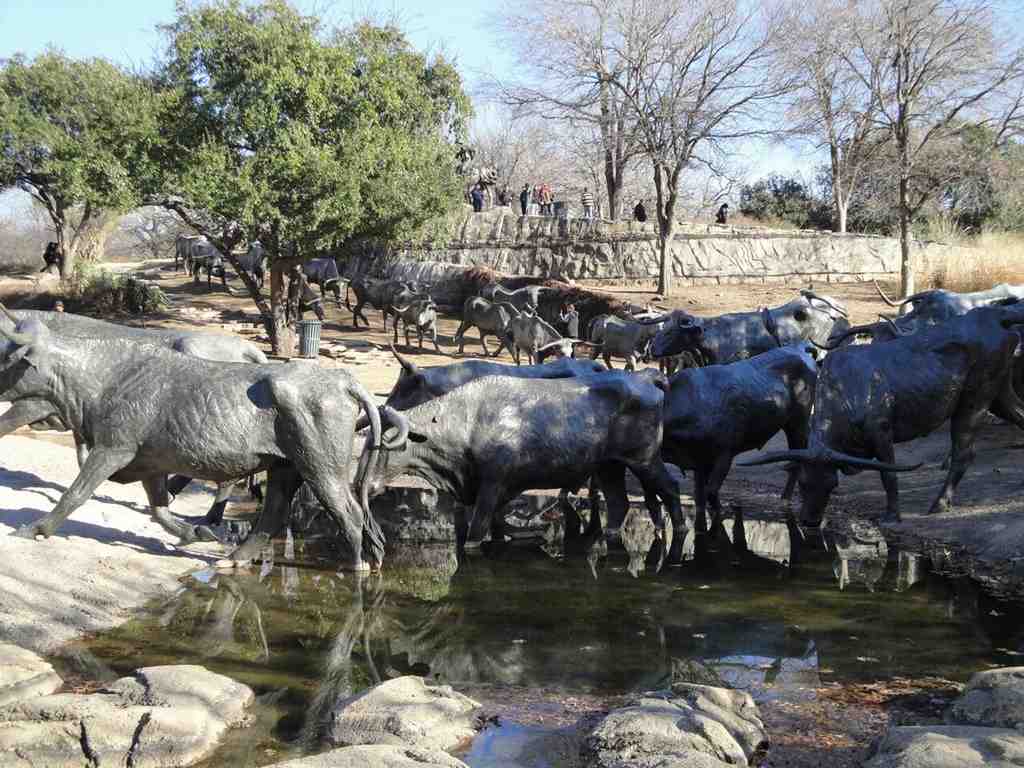
Look for a sweeping bronze herd of longhorns climbing a limestone ridge beside a man-made stream, led by three mounted riders.
This is Dallas introducing itself in cowboy boots and at full volume. Forty-nine bronze steers and three trail riders surge through a re-created landscape to honor the nineteenth-century cattle drives that followed the Shawnee Trail, the earliest route that carried Texas longhorns through Dallas toward northern railheads. Each steer stands about six feet tall, and together they make the largest bronze monument of this kind anywhere in the world.
Developer Trammell Crow wanted an image big enough to feel like a civic signature, and sculptor Robert Summers spent nearly six years giving the herd muscle, motion, and a stubborn sense of accuracy. Summers kept refining castings even while the project moved ahead, so this famous landmark began less like a settled monument and more like a giant workshop with very high ambitions.
Here, memory and progress are practically sharing the same patch of ground. These cattle celebrate an older Dallas, but the land beneath them once held railroad and warehouse property that the city cleared for Griffin Square and a planned nine-hundred-foot Dallas Tower. That tower never rose. So one future disappeared, and Dallas answered by building a grand version of its past instead.
If you want the scale in one glance, check the image on your screen and notice how the herd seems to pour downhill like metal water.
Now take a second and study the scene in front of you... does it feel like history, theater, or a very confident sales pitch?
That last option is not unfair. The fundraising campaign leaned into pure corporate boosterism: early plans offered donors the chance to brand their logos onto the backsides of the bronze cattle. Gail Sachson, a member of the public art committee, called that tacky, which sounds about right. Then the dispute got serious. Several local artists, along with members of the Dallas Public Art Committee, sued to stop the project because they did not think Western realism should define the city’s artistic face. They lost, and Pioneer Plaza opened in nineteen ninety-four as a nine million dollar project funded by the city and private donors.
Even now, the story keeps shifting. An extra steer has occasionally joined the herd, and city officials have flagged several figures for conservation, which is a polite way of saying even bronze legends need maintenance.
If a place this beloved began in argument over art, money, and whose version of history deserved center stage, the rest of downtown may have a few similar tensions tucked behind the skyline. When you are ready, head to Civic Garden Park, about a seven-minute walk away. And Pioneer Plaza stays open twenty-four hours, in case you feel like coming back to count cattle.