
Dallas Highlights Audio Tour: Cultural and Historical Landmarks
Concrete echoes with the ghosts of a fractured American dream, where the grassy knoll hides secrets deeper than the Dallas skyline suggests. History is not just written in books; it is etched into the very pavement beneath your feet. Unlock these hidden narratives through a self guided audio tour designed to bypass the surface and expose the city’s raw, pulsing heart. Uncover the scandals and forgotten rebellions lurking behind every glass facade. Did a single bullet truly change the trajectory of the free world forever? What phantom figures haunt the corridors of the Sixth Floor long after the crowds disperse? Why does a quiet corner near the Perot Museum hold the key to a century of buried political intrigue? Navigate the shifting shadows of Dallas as you trace the jagged lines of its legendary past. Transform your perspective and witness a city reborn through the lens of pure, unfiltered drama. Start your journey now and confront the ghosts of Dealey Plaza.
Tour preview
About this tour
- scheduleDuration 110–130 minsGo at your own pace
- straighten4.6 km walking routeFollow the guided path
- location_onLocationDallas, United States
- wifi_offWorks offlineDownload once, use anywhere
- all_inclusiveLifetime accessReplay anytime, forever
- location_onStarts at Pioneer Plaza
Stops on this tour
lock_open 3 free previews · 10 unlock with purchase
Look for a sweeping bronze herd of longhorns climbing a limestone ridge beside a man-made stream, led by three mounted riders. This is Dallas introducing itself in cowboy boots…Read moreShow less
Open dedicated page →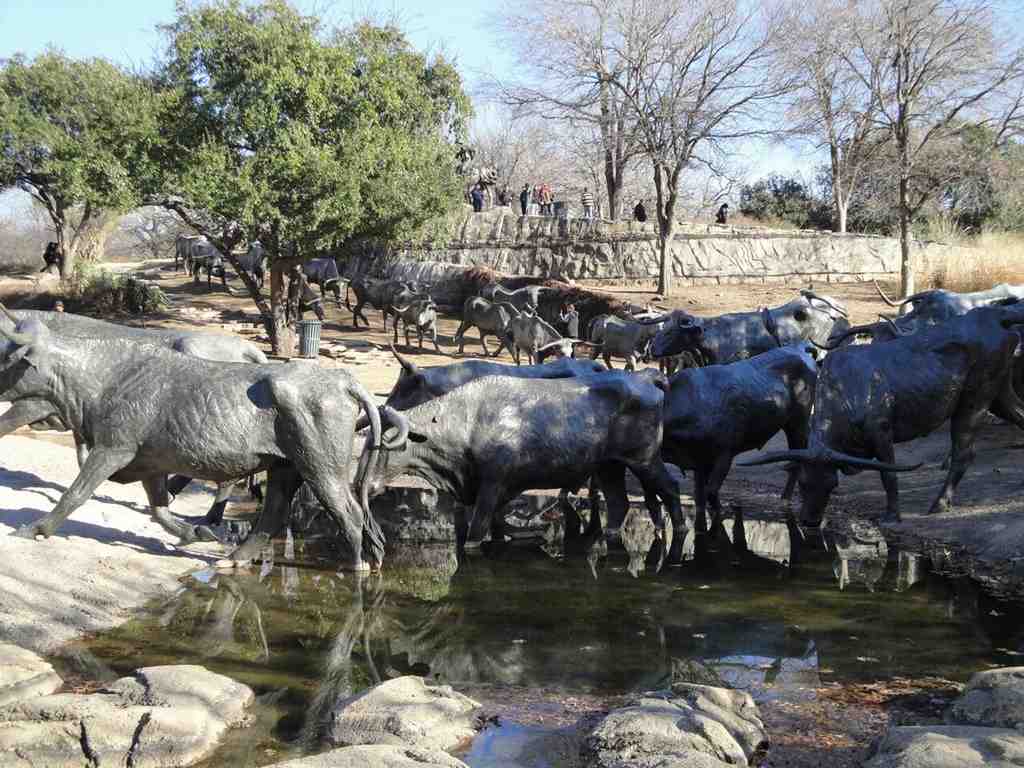
Pioneer PlazaPhoto: Dfwcre8tive, Wikimedia Commons, CC BY 3.0. Cropped & resized. Look for a sweeping bronze herd of longhorns climbing a limestone ridge beside a man-made stream, led by three mounted riders.
This is Dallas introducing itself in cowboy boots and at full volume. Forty-nine bronze steers and three trail riders surge through a re-created landscape to honor the nineteenth-century cattle drives that followed the Shawnee Trail, the earliest route that carried Texas longhorns through Dallas toward northern railheads. Each steer stands about six feet tall, and together they make the largest bronze monument of this kind anywhere in the world.
Developer Trammell Crow wanted an image big enough to feel like a civic signature, and sculptor Robert Summers spent nearly six years giving the herd muscle, motion, and a stubborn sense of accuracy. Summers kept refining castings even while the project moved ahead, so this famous landmark began less like a settled monument and more like a giant workshop with very high ambitions.
Here, memory and progress are practically sharing the same patch of ground. These cattle celebrate an older Dallas, but the land beneath them once held railroad and warehouse property that the city cleared for Griffin Square and a planned nine-hundred-foot Dallas Tower. That tower never rose. So one future disappeared, and Dallas answered by building a grand version of its past instead.
If you want the scale in one glance, check the image on your screen and notice how the herd seems to pour downhill like metal water.
Now take a second and study the scene in front of you... does it feel like history, theater, or a very confident sales pitch?
That last option is not unfair. The fundraising campaign leaned into pure corporate boosterism: early plans offered donors the chance to brand their logos onto the backsides of the bronze cattle. Gail Sachson, a member of the public art committee, called that tacky, which sounds about right. Then the dispute got serious. Several local artists, along with members of the Dallas Public Art Committee, sued to stop the project because they did not think Western realism should define the city’s artistic face. They lost, and Pioneer Plaza opened in nineteen ninety-four as a nine million dollar project funded by the city and private donors.
Even now, the story keeps shifting. An extra steer has occasionally joined the herd, and city officials have flagged several figures for conservation, which is a polite way of saying even bronze legends need maintenance.
If a place this beloved began in argument over art, money, and whose version of history deserved center stage, the rest of downtown may have a few similar tensions tucked behind the skyline. When you are ready, head to Civic Garden Park, about a seven-minute walk away. And Pioneer Plaza stays open twenty-four hours, in case you feel like coming back to count cattle.
On your left is the West End Historic District... and this is Dallas in miniature. Not the polished brochure version, either. More like the city compressed into about sixty-seven…Read moreShow less
Open dedicated page →On your left is the West End Historic District... and this is Dallas in miniature. Not the polished brochure version, either. More like the city compressed into about sixty-seven and a half acres: a trading post, a railroad boomtown quarter, a vice district, a preservation fight, and a landscape forever shadowed by national tragedy.
It began with John Neely Bryan, who set up a trading post here before Dallas was much more than ambition with dust on its boots. Then, in July of eighteen seventy-two, the Houston and Texas Central Railroad arrived downtown, and the neighborhood changed fast. Manufacturing companies moved in, warehouses rose, and those heavy brick buildings became the West End’s signature look... practical, sturdy, and not especially interested in charming anyone.
By nineteen fourteen, reformers had this area in their sights. Women connected to some of the district’s regular patrons pushed a cleanup campaign to drive out the vice trade and make the West End respectable. Dallas has long liked reinvention, but it usually comes with an argument about who gets to define “better.”
If you glance at your screen, you can see West End Station, a reminder that this district still works as a hinge between old streets and modern movement. Even the transit stop became part of the story in two thousand sixteen, when a downtown security crisis shut it down during the investigation into the killing of Dallas police officers. Here, tourism, transit, grief, and daily life sit uncomfortably close together.
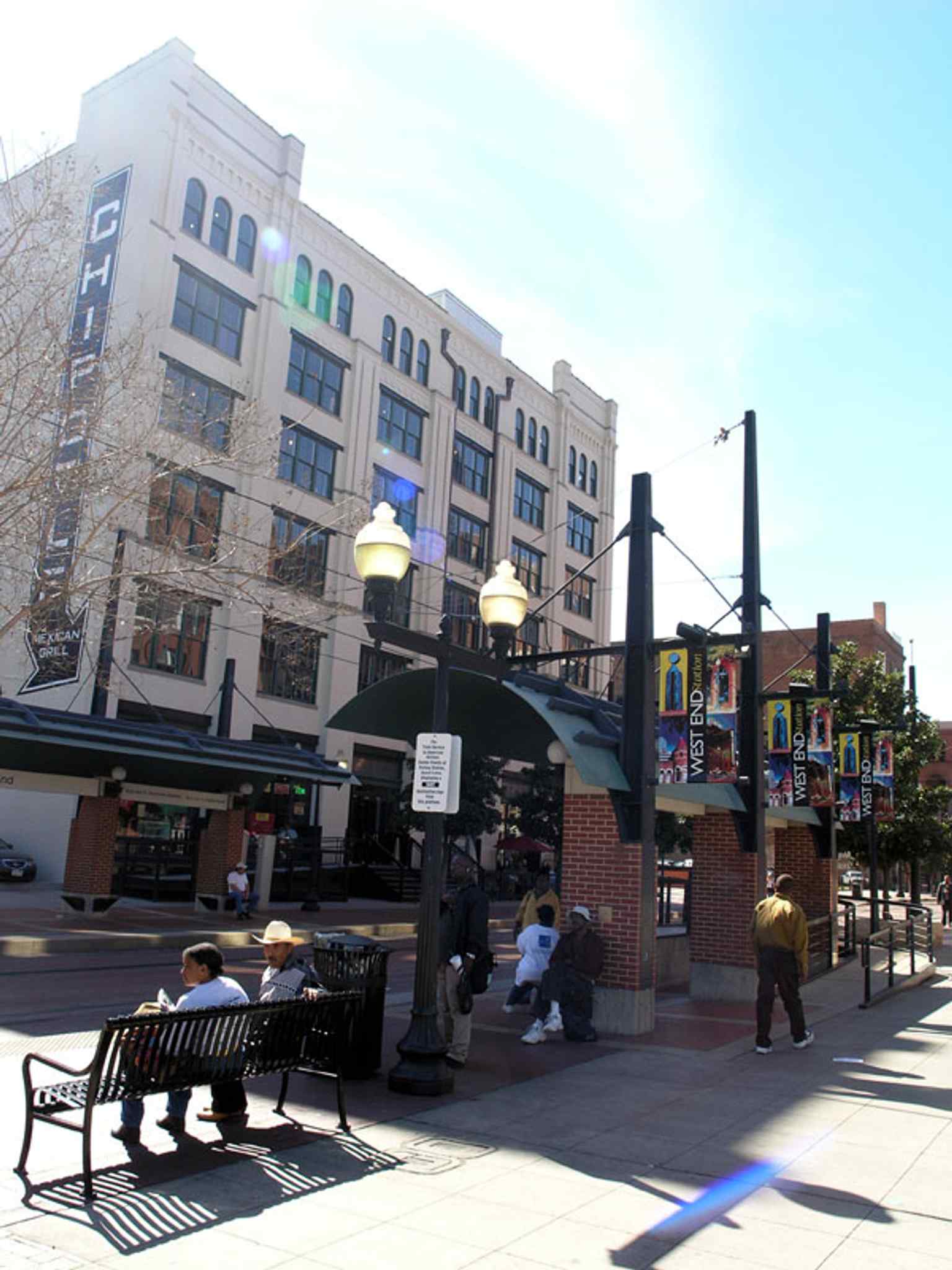
West End Station in downtown Dallas, the transit stop that links today’s tourist district to the historic warehouses and Dealey Plaza area.Photo: Drumguy8800 at en.wikipedia, Wikimedia Commons, CC BY-SA 3.0. Cropped & resized. Then came the nineteen sixties, and the event that changed Dallas’s place in the national imagination: President John Fitzgerald Kennedy’s assassination in nearby Dealey Plaza. The murder didn’t just mark a place; it altered the city’s reputation for decades. Dallas had to figure out how to live with a wound that visitors kept coming to see.
That question shaped this district. In nineteen seventy-five, Mayor Erik Jonsson and merchant Stanley Marcus backed historic protection instead of demolition, making the West End Dallas’s first commercial historic district. A year later, developer Preston Carter Junior started assembling and reviving the old warehouses, turning them into shops and restaurants. He helped save the brick fabric, though critics said one man controlling so much property also drove prices up and slowed projects. Preservation, as it turns out, is not a purely sentimental hobby.
The biggest reinvention arrived in nineteen eighty-six with West End Marketplace, inside the old Brown Cracker and Candy Company building at Market and Munger. It mixed food stalls, shops, the Fudgery, and Dallas Alley nightlife inside a former industrial shell. In nineteen ninety-one, Van Halen played a free outdoor concert here after Sammy Hagar promised Dallas a makeup show, drawing roughly eighty thousand people. Then the boom faded. The marketplace closed in two thousand six, and tenant Sharon Mielke said it felt like the whole place disappeared almost overnight.
So here in the West End, Dallas kept what it could, repackaged what it wanted, and never fully escaped what happened nearby. In a few minutes, we’ll walk toward the John Fitzgerald Kennedy Memorial... where that civic reckoning becomes impossible to dodge.
Show 10 more stopsShow fewer stopsexpand_moreexpand_less
On your left, Dealey Plaza opens as a formal wedge of pale concrete pergolas, long reflecting pools, and a broad railroad underpass, with a red-granite monument punctuating the…Read moreShow less
Open dedicated page →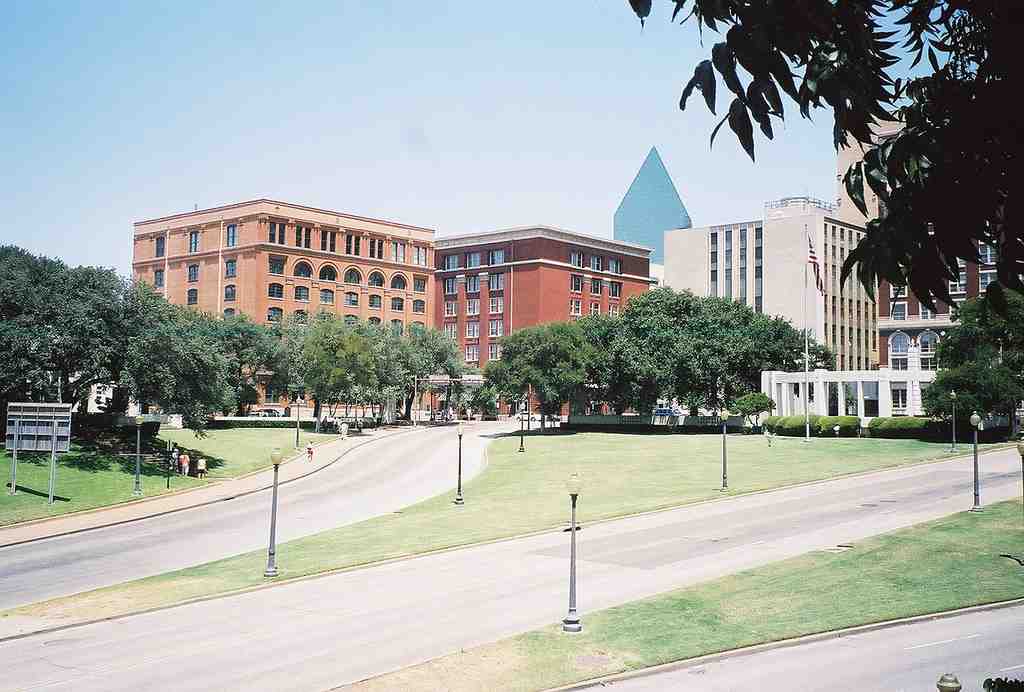
Dealey PlazaPhoto: Brodie319, Wikimedia Commons, Public domain. Cropped & resized. On your left, Dealey Plaza opens as a formal wedge of pale concrete pergolas, long reflecting pools, and a broad railroad underpass, with a red-granite monument punctuating the scene.
This ground began as Dallas’s first foothold. Sarah Horton Cockrell, a formidable businesswoman who controlled huge pieces of early Dallas real estate, helped make this tract available; the town’s first home stood here, and it also served as the first courthouse, post office, store, and fraternal lodge. So before this became a place of mourning, it was where Dallas first tried being Dallas.
In the nineteen thirties, engineers regraded the land, shifted the streets, and built this as a western gateway to downtown, partly to untangle congestion around the rail lines. The Works Progress Administration, or W-P-A, finished the plaza and triple underpass in nineteen forty. George Bannerman Dealey, the newspaper publisher and civic reformer who pushed city planning and river improvements for decades, got the plaza named for him while he was still alive... efficient, if not exactly modest.
Dallas has a habit of preserving places by changing the frame around them. Here, a traffic solution became a civic monument. Later, when history turned unbearable, the city preserved the scene by reinterpreting it rather than erasing it.
And then came the twenty-second of November, nineteen sixty-three. From the former Texas School Book Depository’s sixth-floor southeast corner, both the Warren Commission and the House Select Committee on Assassinations concluded Lee Harvey Oswald fired the shot that killed President Kennedy. On Elm Street, a small white X usually marks the approximate spot. On the rise to the northwest, the grassy knoll entered the national vocabulary within minutes, thanks to reporter Albert Merriman Smith. If you look at the image of the Depository on your screen, its plain warehouse face is almost the point: history does not always announce itself with grandeur.
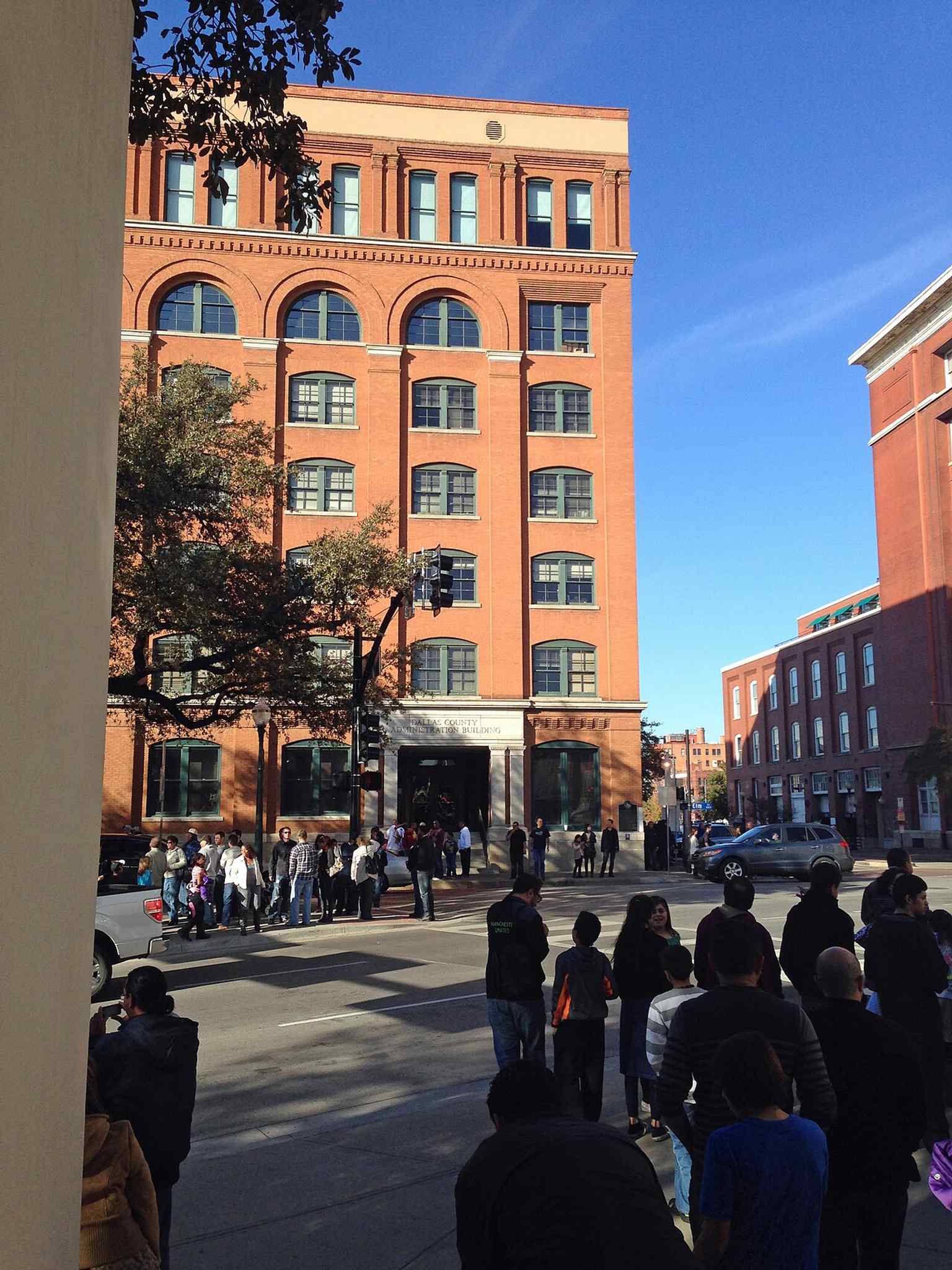
The former Texas School Book Depository, now the Sixth Floor Museum, is the building most tied to the assassination story at Dealey Plaza.Photo: Fredlyfish4, Wikimedia Commons, CC BY-SA 3.0. Cropped & resized. Most tourists focus on the shot, but locals will tell you the district matters because the setting survived. Since nineteen ninety-three, the National Historic Landmark designation has protected not just this park, but the surrounding buildings, streets, and sight lines tied to witness accounts and the assassination itself. That wider frame keeps this from becoming a disconnected relic.
If you want a quick sense of how the place shifted from working streets to carefully interpreted landscape, check the before-and-after image in the app.
Even now, the balance is uneasy. In twenty thirteen, crews removed the white X during repaving, and the backlash was immediate. Around here, even road paint can start a fight about grief, tourism, and conspiracy.
So here’s the hard question this plaza leaves hanging: when a city block becomes world history, can it ever return to being just another part of downtown?
Next, head toward the Dallas County Courthouse, about a four-minute walk away, where the civic machinery around this plaza comes into sharper view. If you want to linger, the plaza is open daily from six in the morning to eleven at night.
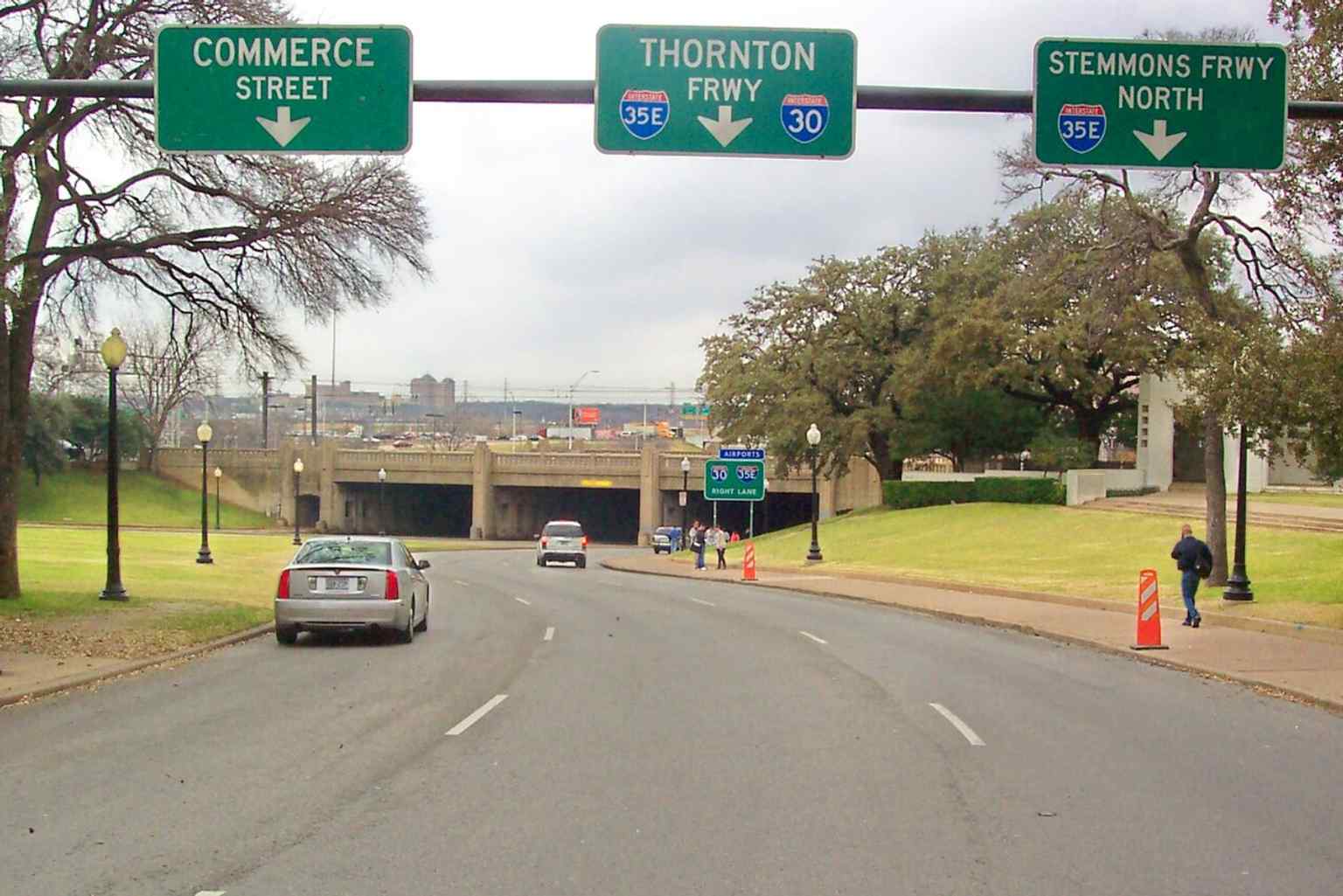
Elm Street’s Triple Underpass and grassy knoll show the key western edge of the plaza where the motorcade passed after the shots.Photo: MarkTSnow, Wikimedia Commons, CC BY-SA 4.0. Cropped & resized. 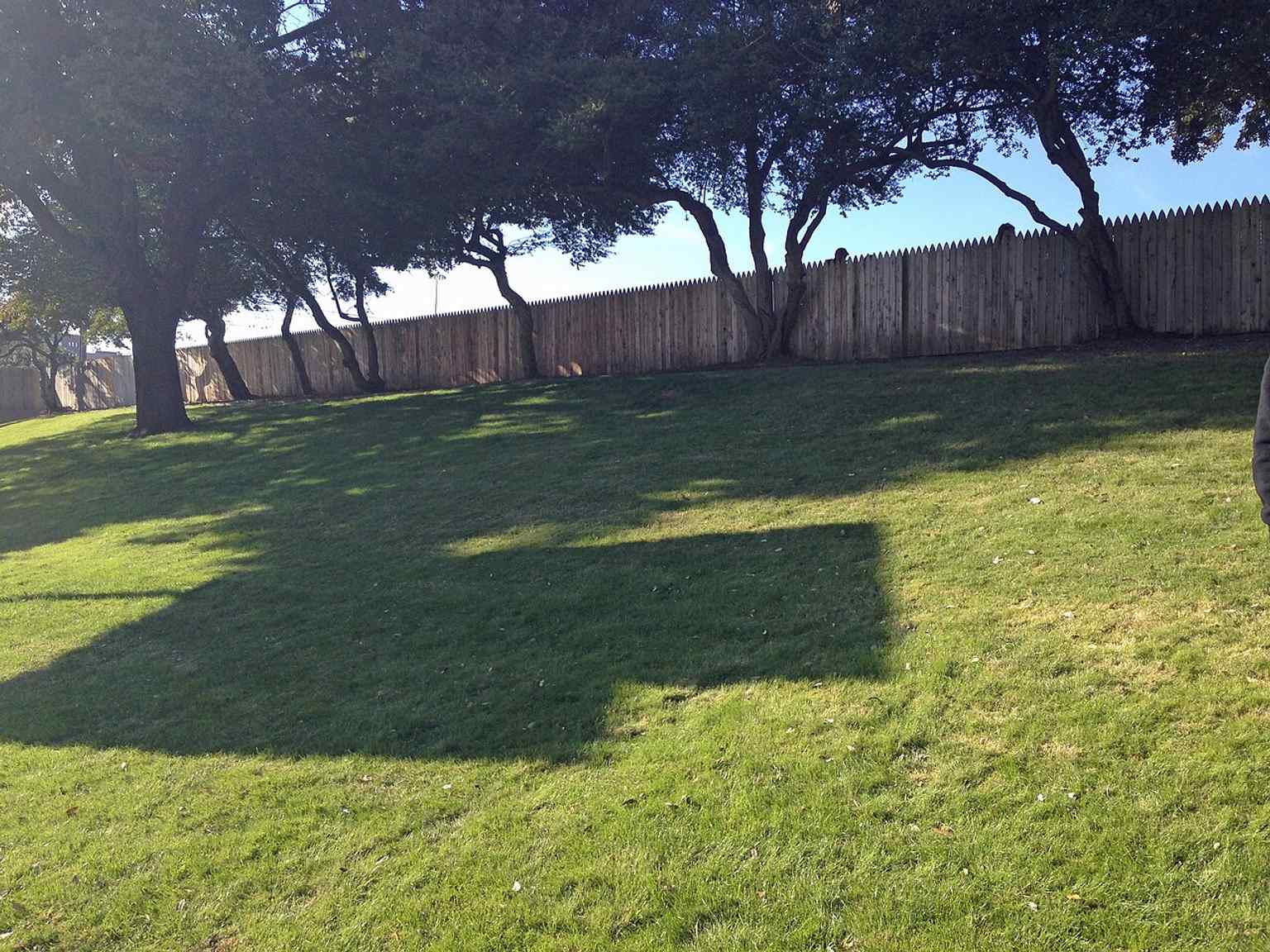
The grassy knoll is one of Dealey Plaza’s most famous features, forever linked to witness accounts and assassination theories.Photo: Fredlyfish4, Wikimedia Commons, CC BY-SA 3.0. Cropped & resized. 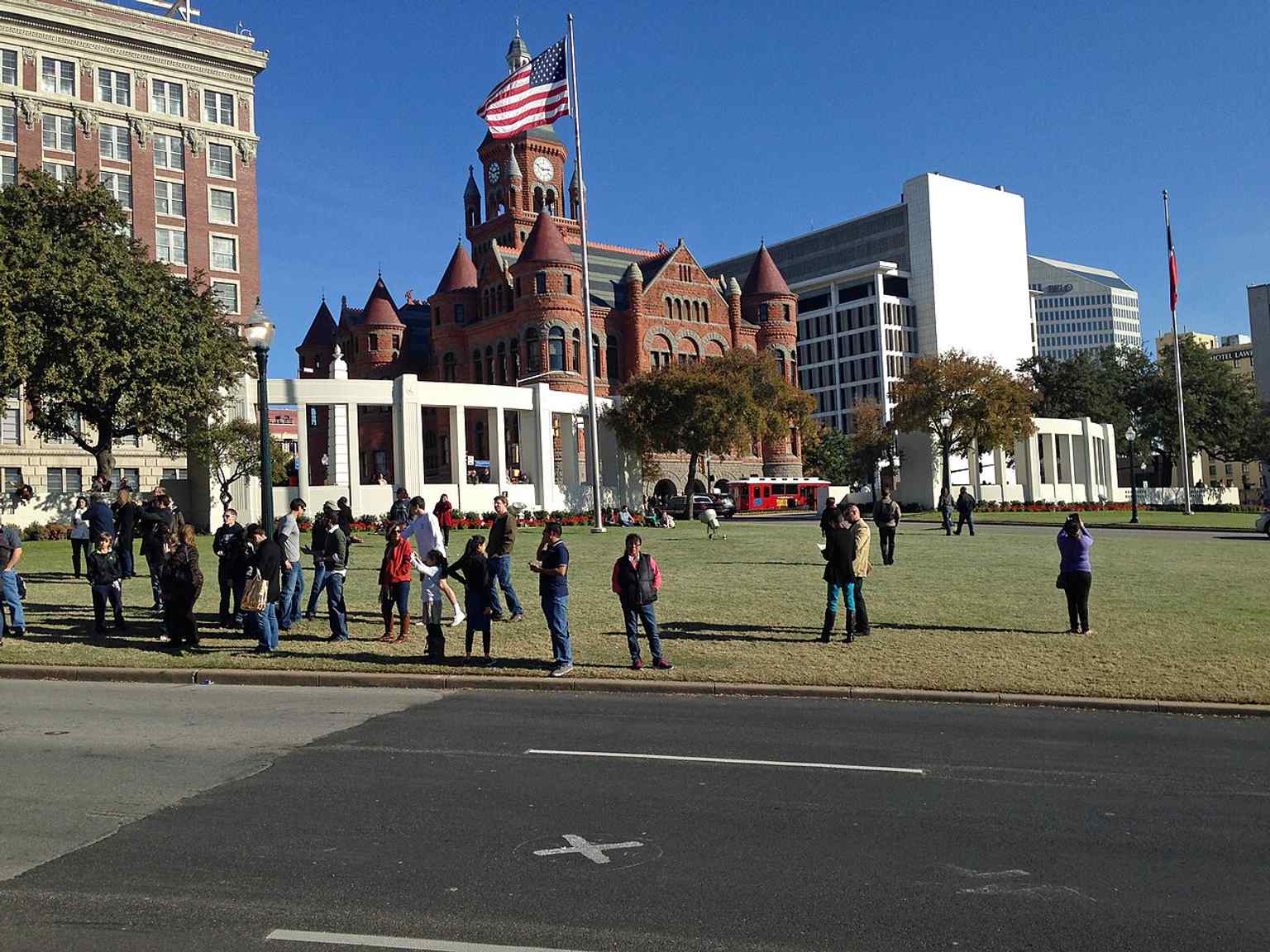
A pavement X marks the approximate spot where President Kennedy was fatally shot on Elm Street.Photo: Fredlyfish4, Wikimedia Commons, CC BY-SA 3.0. Cropped & resized. 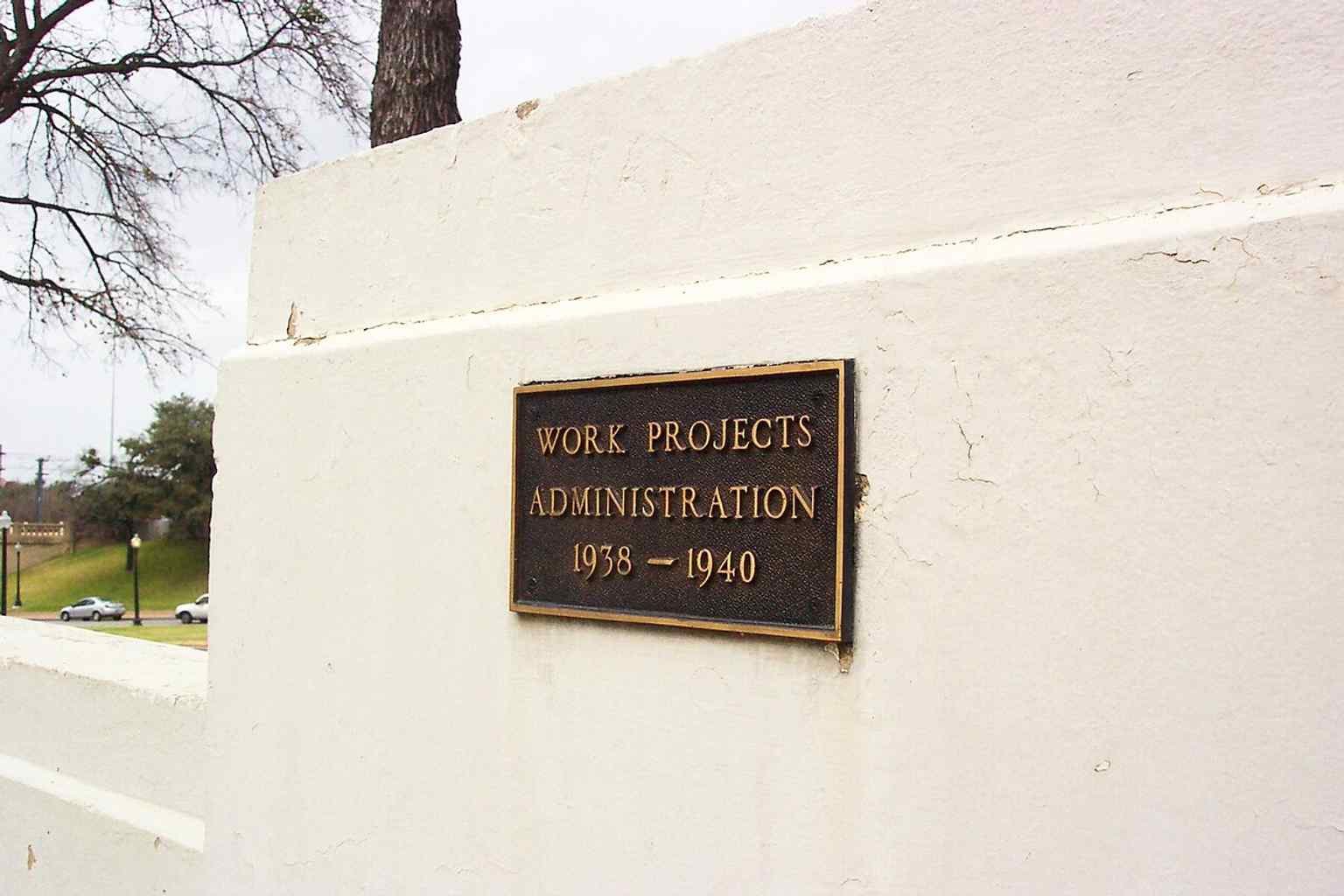
The WPA plaque sits beside the reflecting pool and explains Dealey Plaza’s 1930s public-works origins.Photo: MarkTSnow, Wikimedia Commons, CC BY-SA 4.0. Cropped & resized. 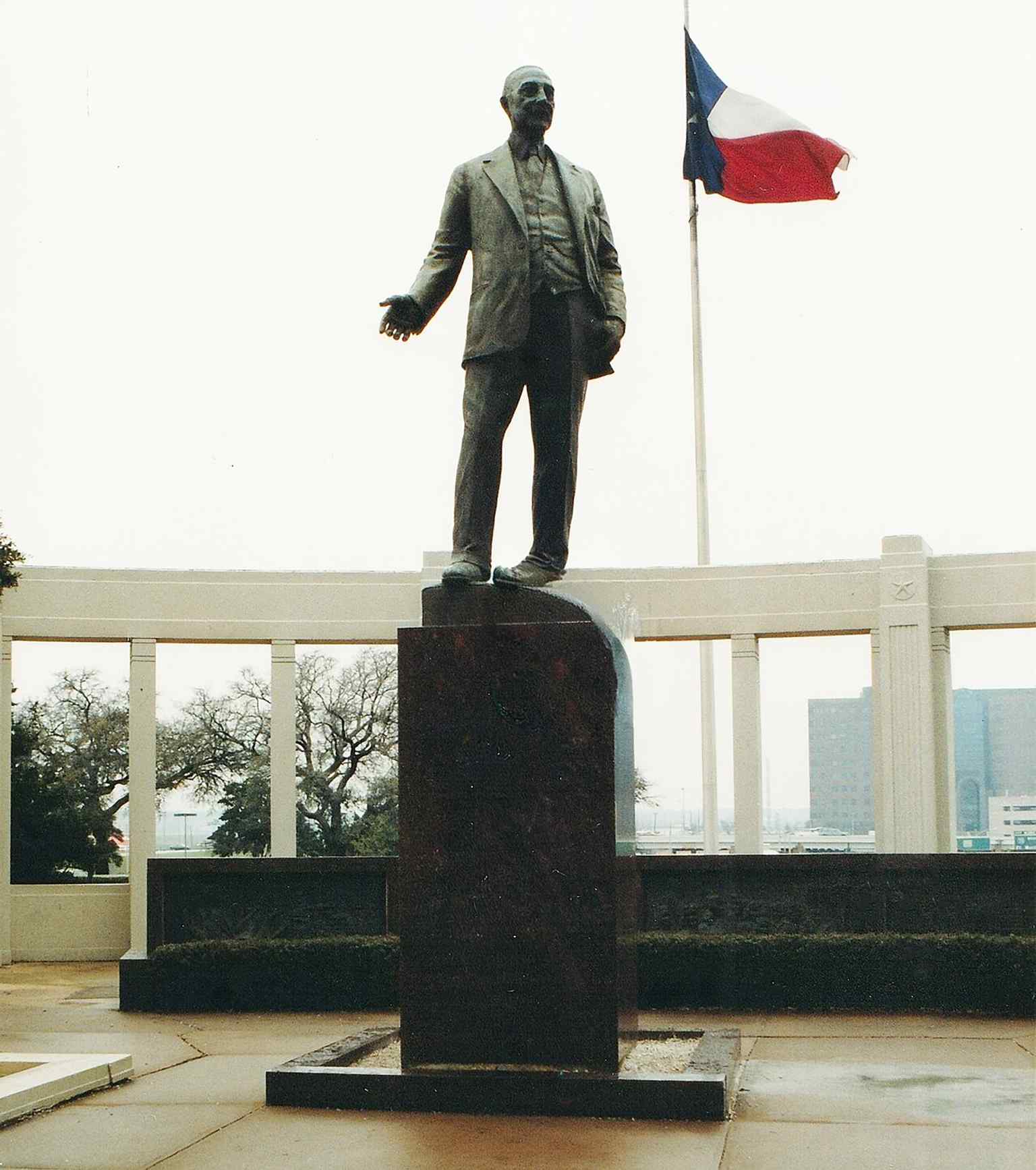
The Kennedy Memorial is the later cenotaph added one block away, showing how the site became a place of remembrance as well as history.Photo: Yolanl, Wikimedia Commons, CC BY 4.0. Cropped & resized. 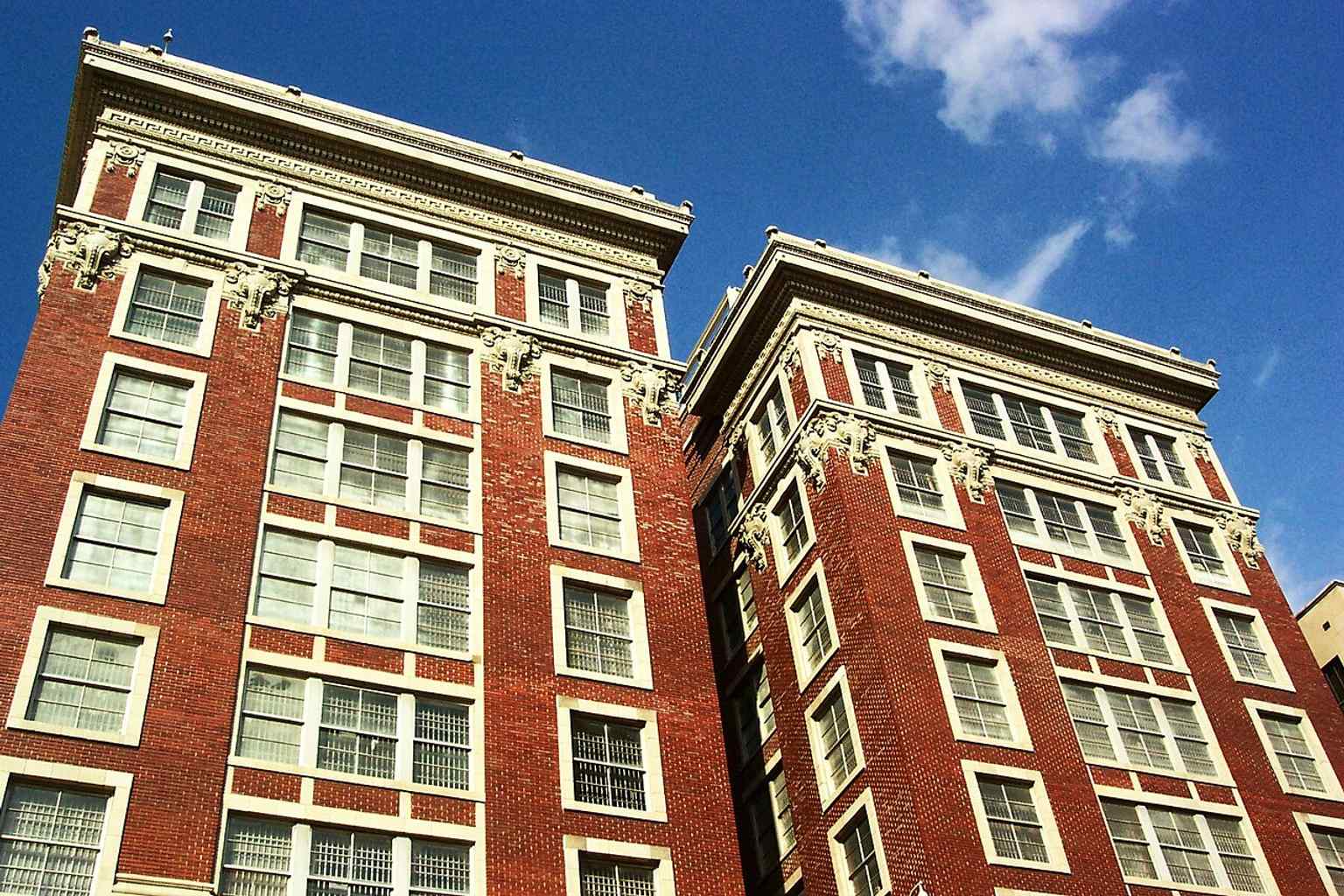
The Dallas County Criminal Courts Building is one of the historic towers that frame Dealey Plaza on the east side.Photo: MarkTSnow, Wikimedia Commons, CC BY-SA 4.0. Cropped & resized. 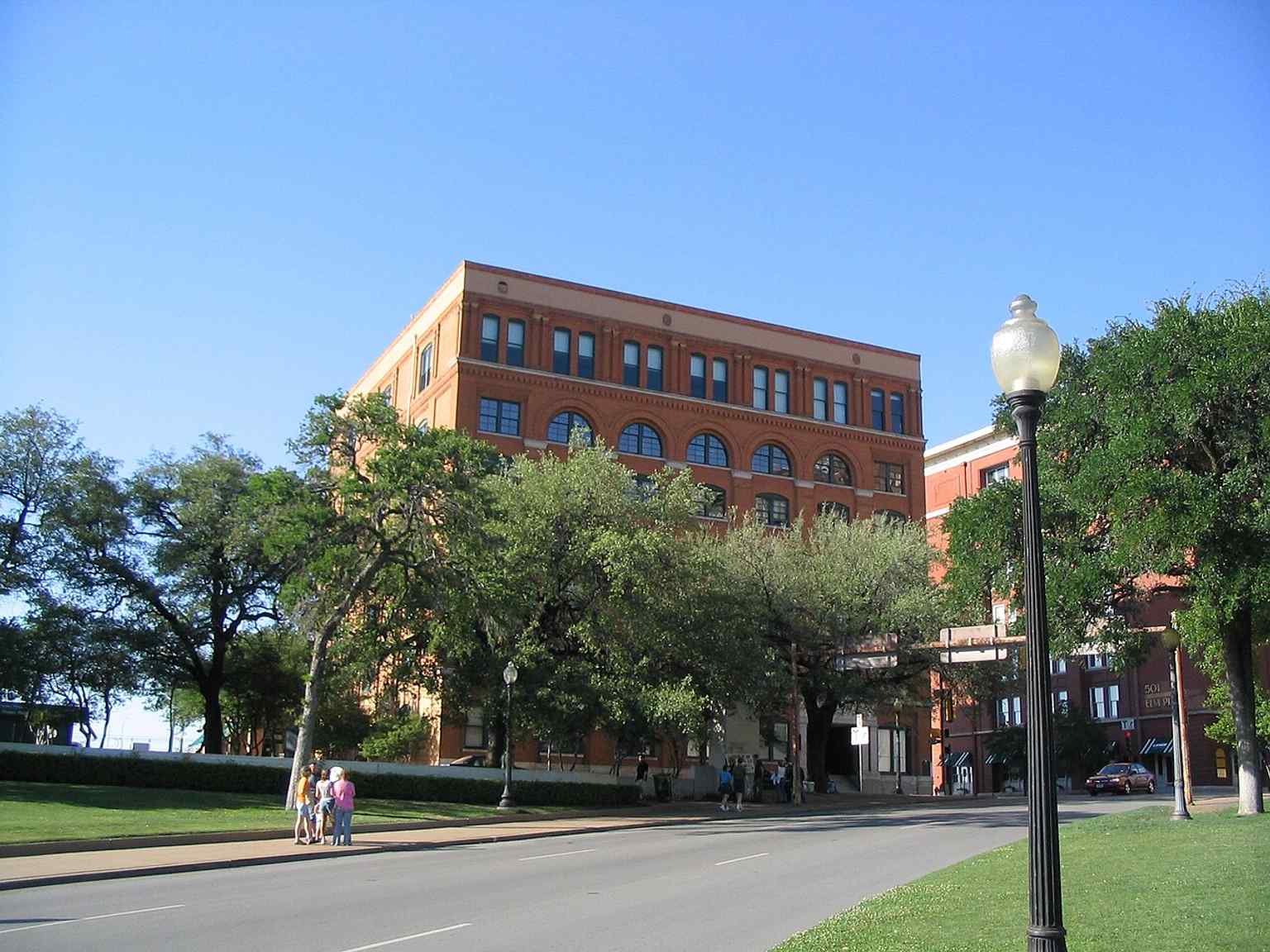
The Texas School Book Depository side of Dealey Plaza appears here with the historic district buildings that remained largely unchanged since 1963.Photo: Ronincmc, Wikimedia Commons, CC BY-SA 3.0. Cropped & resized. 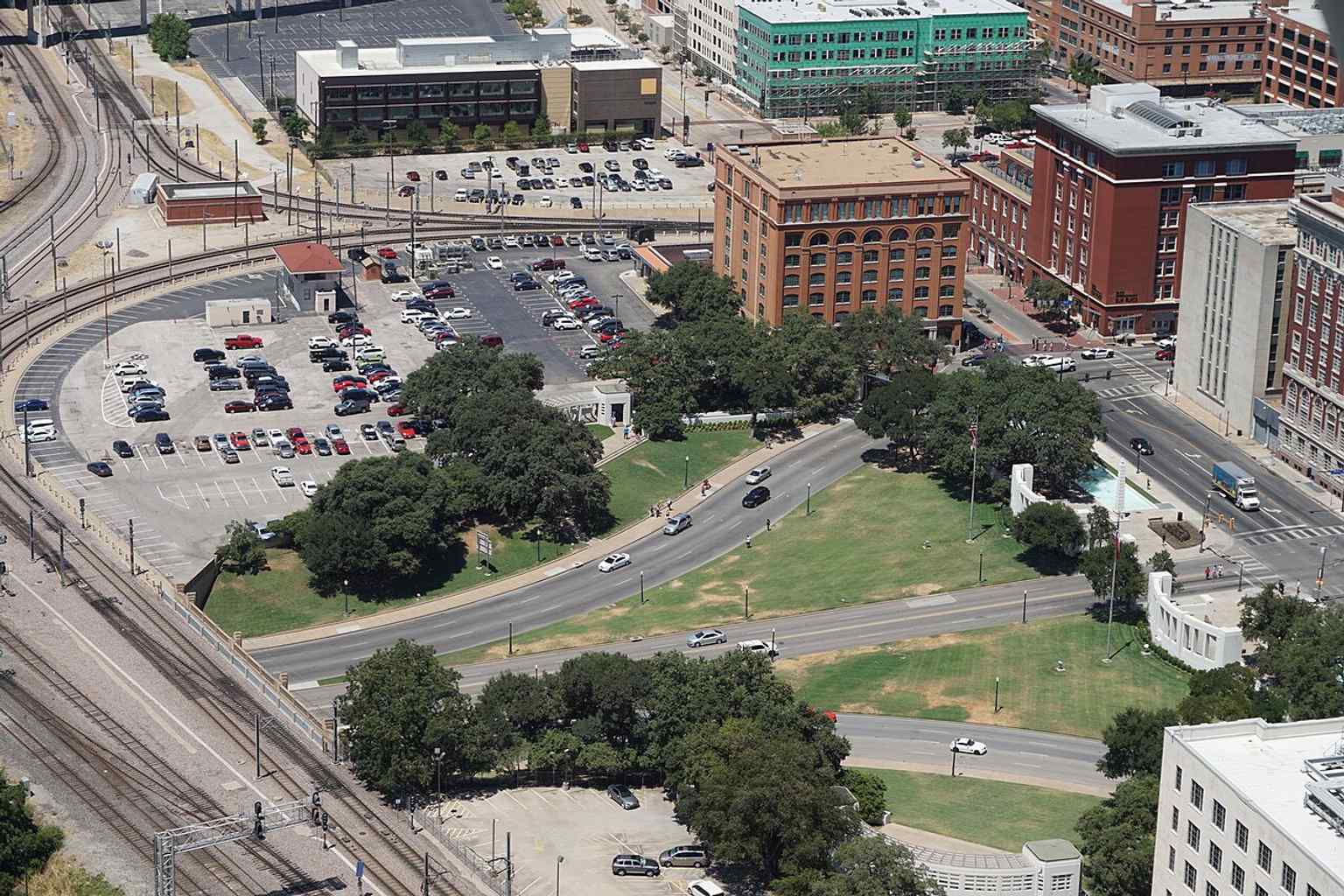
From Reunion Tower, you can see how Dealey Plaza sits beside downtown Dallas and the rail corridor that shaped its design.Photo: Michael Barera, Wikimedia Commons, CC BY-SA 4.0. Cropped & resized. 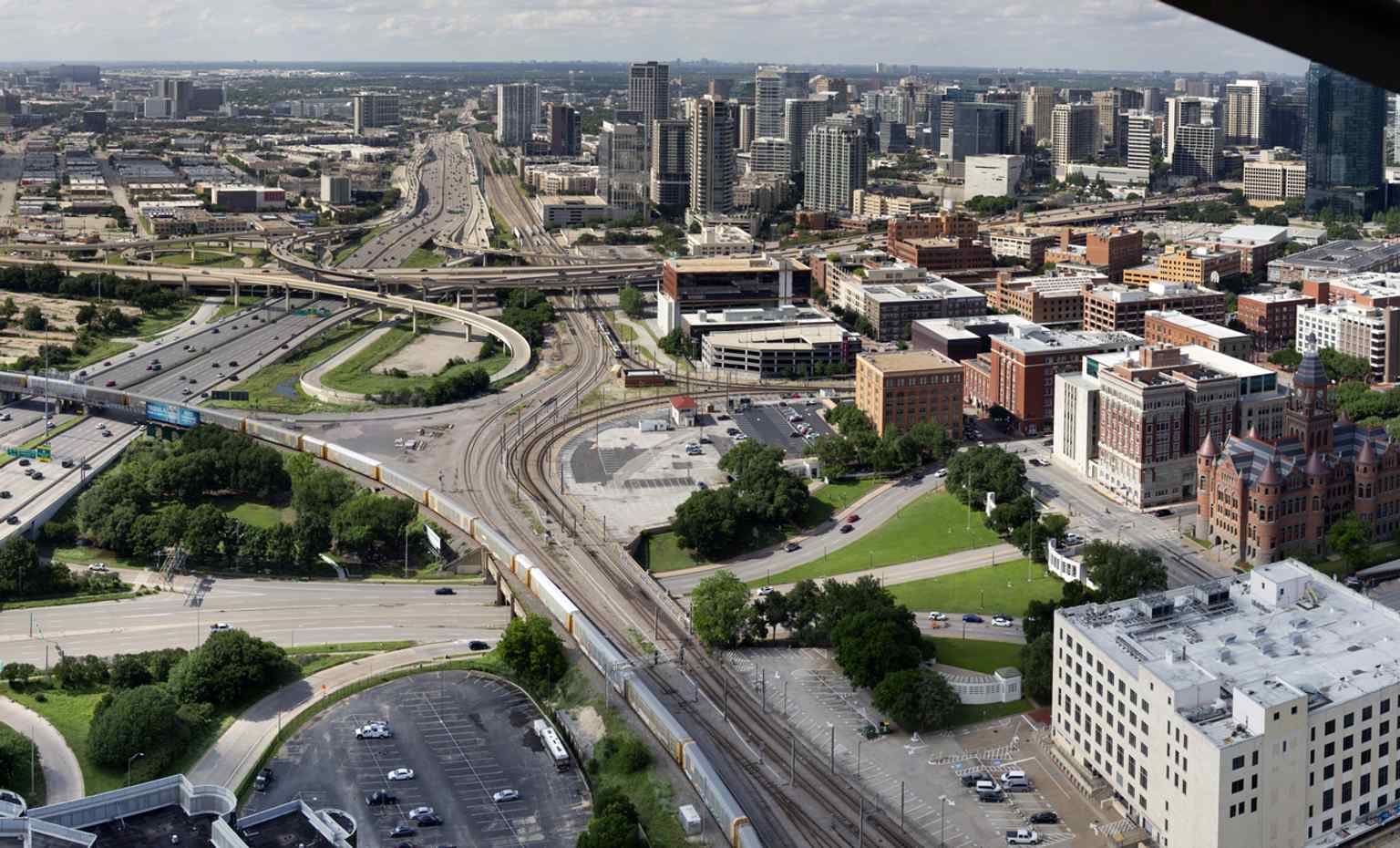
This overhead view places Dealey Plaza in the broader downtown landscape, revealing the plaza’s setting near the Trinity and the city skyline.Photo: IcedCowboyCoffee, Wikimedia Commons, CC0. Cropped & resized. On your right, the Dallas County Courthouse looks like it means business... and, in fairness, it usually has. Built in eighteen ninety-two from red sandstone with rough-cut marble…Read moreShow less
Open dedicated page →On your right, the Dallas County Courthouse looks like it means business... and, in fairness, it usually has. Built in eighteen ninety-two from red sandstone with rough-cut marble accents, it came from architect Max Orlopp Junior in the Richardsonian Romanesque style - that’s the big, heavy, fortress-like look, with deep arches and thick stone that seems designed to outlast both fashion and bad decisions. Dallas had reason to think that way: four of its five earlier courthouses burned.
If you glance at the image on your screen, the close-up shows that tough skin beautifully. This was public morality in stone, and civic shame in stone too. Courthouses are where a city performs its values in public... and sometimes reveals how badly it fails them.
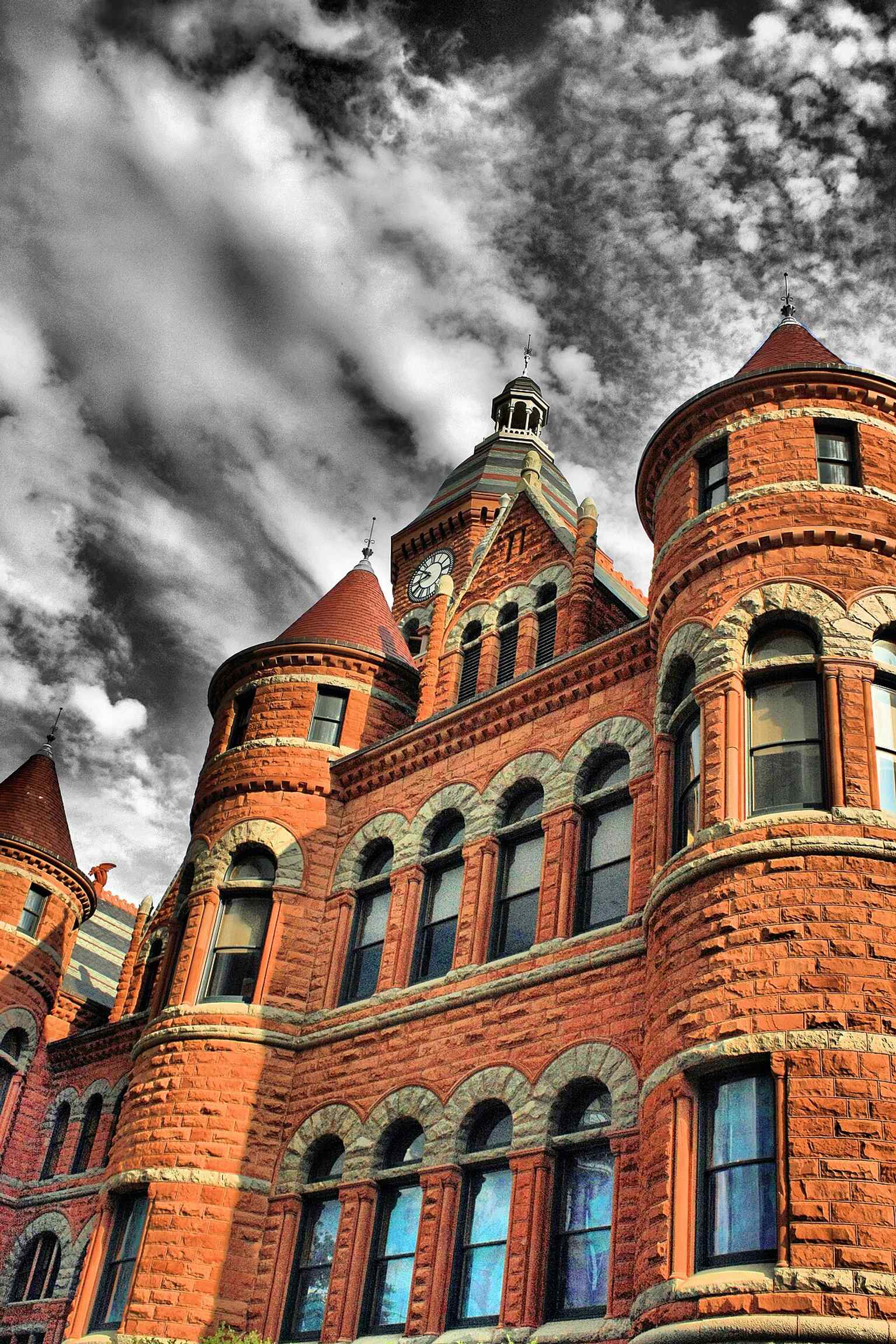
A dramatic close-up of Old Red’s Richardsonian Romanesque stonework, the heavy masonry chosen after four earlier courthouses were lost to fire.Photo: SarahCate Philipson, Wikimedia Commons, CC BY-SA 3.0. Cropped & resized. In nineteen oh four, Carrie Nation, the prohibition crusader with a talent for turning temperance into theater, gave a lecture inside. Locals still remember the detail most tourists miss: so many people showed up that the courtroom overflowed and listeners packed the hallways. The building became a civic stage, part sermon, part spectacle.
Then came one of the darkest moments in Dallas history. On the third of March, nineteen ten, Sheriff Arthur Ledbetter brought Allen Brooks, a Black handyman accused in a rape case, here for proceedings. A mob stormed the courthouse, pulled Brooks from a second-floor window, and lynched him downtown near Main and Akard. Afterward, a grand jury refused to pursue indictments. So this building carries not only the violence, but the official shrug that followed.
Its tower tells a smaller version of the same story. The original clock tower rose one hundred twenty-three feet and held a two-ton bell, but officials removed it in nineteen nineteen because they feared it might collapse into the building. The tower you see now was restored in the two thousand five to two thousand seven renovation. By then Old Red had already become a museum, which is how most visitors know it today. President John Fitzgerald Kennedy’s motorcade passed here minutes before his assassination, brushing this local drama with national catastrophe. Later, in nineteen thirty-five, Sarah T. Hughes took her oath here as the first female judge in Texas - proof that institutions can disgrace themselves and still change.
Take a look at the photo that frames the courthouse from Dealey Plaza, and you can feel how tightly these stories sit together.
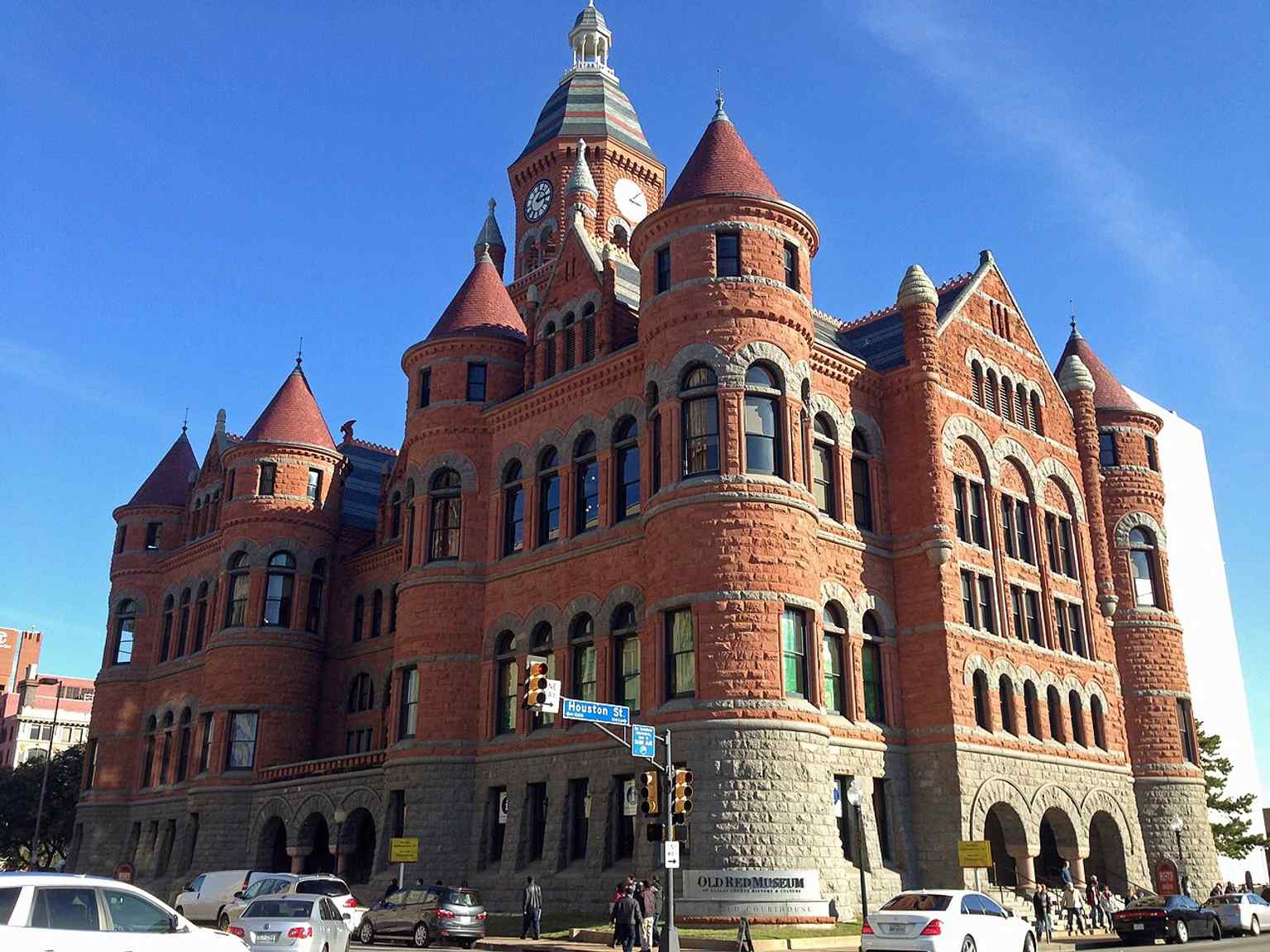
Seen from Dealey Plaza, this angle places the courthouse in downtown Dallas history just minutes from the route JFK’s motorcade passed in 1963.Photo: Fredlyfish4, Wikimedia Commons, CC BY-SA 3.0. Cropped & resized. From here, we leave formal power behind and head into the old warehouse district, where reinvention gets a little stranger and more tropical at the Dallas World Aquarium, about a ten-minute walk away. If you plan to come back inside, the courthouse is generally open weekdays from eight in the morning to four thirty in the afternoon.
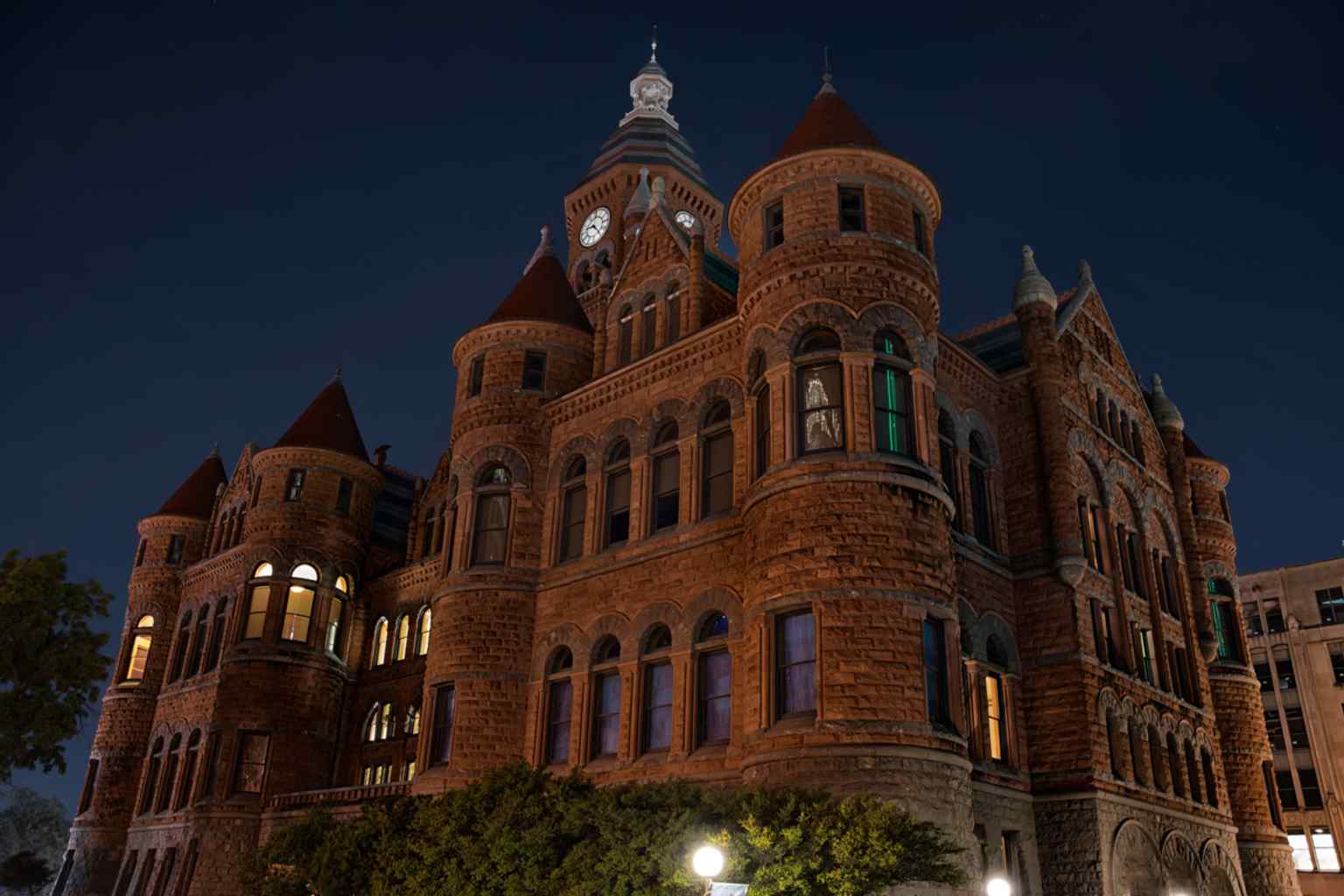
A clear full view of the 1892 Old Red Courthouse, the red sandstone landmark that later became the Old Red Museum and is now returning to justice use.Photo: MichaelMeyers, Wikimedia Commons, CC BY-SA 4.0. Cropped & resized. 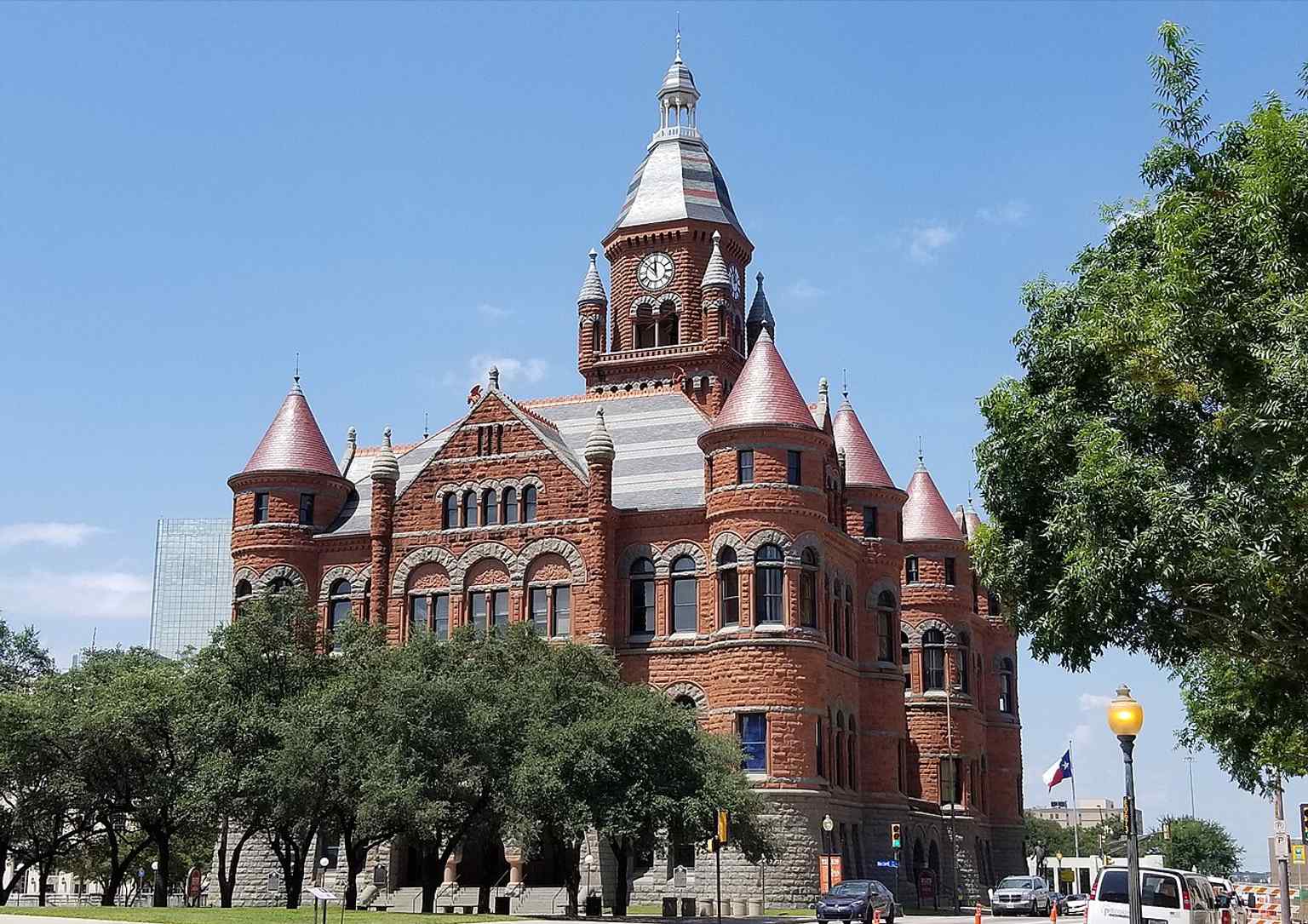
The courthouse crowned with a Texas flag, showing the tower that made Old Red a Dallas icon before the original clock tower was removed in 1919.Photo: Martin Alon, Wikimedia Commons, CC BY-SA 4.0. Cropped & resized. On your left, look for a sturdy red-brick warehouse facade, broad and boxy, with tall industrial window bands and a dark entrance canopy marked for the Dallas World…Read moreShow less
Open dedicated page →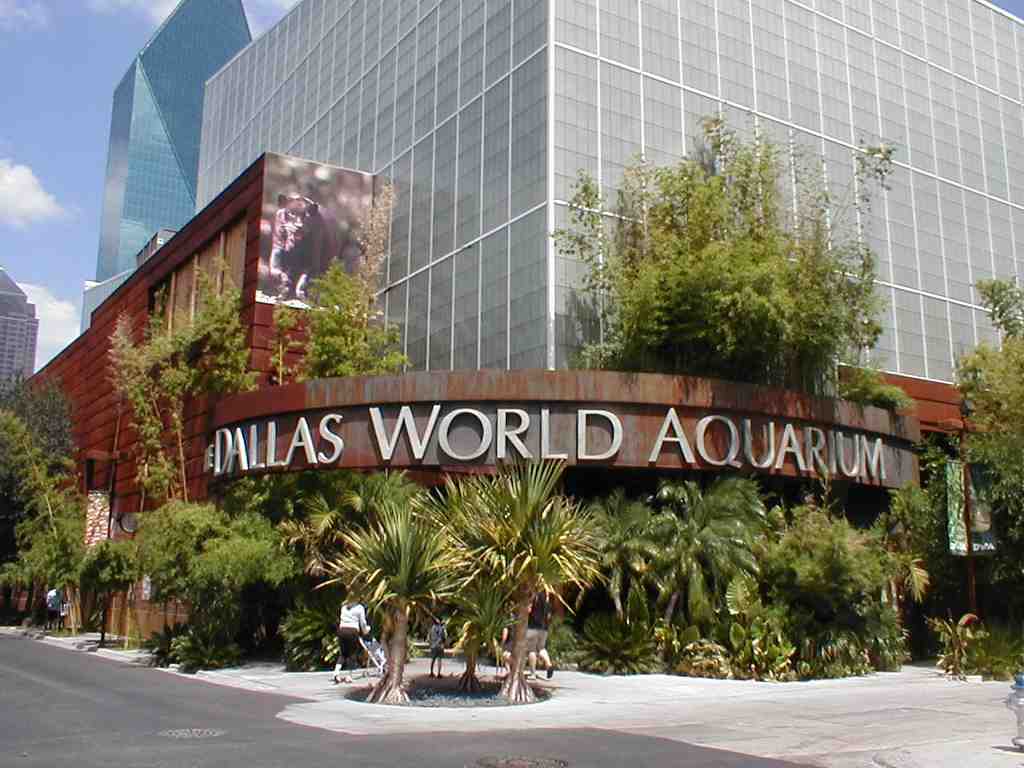
Dallas World AquariumPhoto: Jsimo1, Wikimedia Commons, CC BY-SA 3.0. Cropped & resized. On your left, look for a sturdy red-brick warehouse facade, broad and boxy, with tall industrial window bands and a dark entrance canopy marked for the Dallas World Aquarium.
From out here, it still looks like downtown doing warehouse things. Which is part of the trick. This started as a nineteen twenty-four warehouse, and in October of nineteen ninety-two the interior was gutted and rebuilt as an aquarium. In nineteen ninety-seven, the building next door got the same treatment for Orinoco, Secrets of the River, and the alley between them became the line between freshwater and saltwater exhibits. That is adaptive reuse in Dallas form: keep the shell, reinvent the soul.
If you glance at the image in the app, you can see how plainspoken the exterior still is, even with everything swirling inside.
Inside, the place aims for spectacle. The upper levels recreate a rainforest canopy with aviaries and primates; below that come understory animals, then Amazonian fish and manatees. In two thousand four, Mundo Maya added tropical species from Mexico and Central America, plus a four-hundred-thousand-gallon shark tunnel. And the newer Cloud Forest Trek leans hard into theater, using a giant L-E-D wall to shift the rainforest from day to night while showing three-toed sloths.
The aquarium also presents itself as a conservation player, and it has held accreditation from the Association of Zoos and Aquariums, or A-Z-A, since nineteen ninety-seven. But this is where the story gets less tidy.
In two thousand thirteen, owner Daryl Richardson and conservation biologist Luis Sigler tried to collect eight pygmy three-toed sloths from Isla Escudo in Panama. Protesters and police met them at the airport, and coverage described the scene as a near-riot over pygmy sloths. Richardson said the project supported conservation and pointed to ranger and boat patrol funding. Critics saw something else: a private attraction reaching very far for very rare animals. Later reporting said two of those sloths died shortly after release back on the island.
That episode changed how people looked at this place. Wonder was still here... but now it came with questions. A later exposé by Ben Crair painted a tightly controlled workplace, and even the aquarium’s better stories, like its Amazon Rescue Center work with manatees, started to feel like part rescue mission, part reputation repair. Dallas can be very good at holding both versions at once.
If you want one small reminder of the genuine awe inside, check the stingray photo in the app. Those bright yellow spots look almost hand-painted.
Even a place built for amazement can carry ethical knots, and this city rarely chooses between the grand display and the uncomfortable debate. From here, the Dallas Museum of Art is about a twelve-minute walk away. If you plan to go inside first, the aquarium is open daily from eight-thirty A-M to four-thirty P-M.
On your right, the Dallas Museum of Art presents itself with a kind of civic calm... broad, modern, self-assured, and very much aware that it belongs in the middle of downtown.…Read moreShow less
Open dedicated page →On your right, the Dallas Museum of Art presents itself with a kind of civic calm... broad, modern, self-assured, and very much aware that it belongs in the middle of downtown. Not bad for an institution that began as a library side project.
The story starts in nineteen oh three, when Texas artist Frank Reaugh looked at the Dallas Public Library and saw empty walls doing nothing useful. May Dickson Exall, the library’s first president, pushed that idea into a mission. She wanted exhibitions, lectures, a permanent collection, support for local artists, and public backing for the arts. Early members of the Dallas Art Association paid five dollars a year for access to shows and talks... roughly one hundred and seventy dollars in today’s money. It was grassroots, a little earnest, and exactly how big civic institutions often begin: with a committee, a membership list, and a stubborn belief that culture should count.
This is where Dallas cultural patrons first come into view. Not just wealthy donors with their names on walls, but organizers, members, advocates, and families who kept building the city’s museum culture one meeting, one gift, one campaign at a time.
The association’s first four artworks entered the collection while it still lived inside the library. Then growth forced a move. In nineteen thirty-six, after the museum had taken the name Dallas Museum of Fine Arts, it relocated to an Art Deco building in Fair Park for the Texas Centennial Exposition. That might have been enough for many cities. Dallas, naturally, treated it as a draft.
The turning point came with Jerry Bywaters, an artist and Southern Methodist University professor who took over in nineteen forty-three and stayed for twenty-one years. He bought Impressionist, abstract, and contemporary work, but he also insisted Texas artists belonged in the same conversation. And here’s the wrinkle that keeps this place from becoming too tidy a success story: in the nineteen fifties, local critics tried to purge the museum of so-called communist art, and Pablo Picasso was banned. So yes, even a museum can become a civic argument with better lighting.
By the late nineteen seventies, the collection and exhibition program had outgrown Fair Park. Harry Parker led the move here, to the Arts District, and architect Edward Larrabee Barnes, working with John M-Y Lee Associates, gave Dallas this building. It opened in stages, with staff arriving before the formal opening in January of nineteen eighty-four. That detail matters. The museum did not simply appear fully formed. It assembled itself, piece by piece, the way cities do.
Inside are more than twenty-four thousand objects, stretching from the third millennium B-C to the present. If you glance at your screen, you can see Frederic Edwin Church’s The Icebergs, a painting once considered a lost masterpiece before it landed here. And if you check the gallery image, you get a feel for the museum’s scale as exhibition space, not just storage for treasures.
The Mildred R. and Frederick M. Mayer Library holds more than fifty thousand research volumes, and the education wing grew into hands-on spaces like the Center for Creative Connections, with studios, a theater, a tech lab, and even a nest for very young children. In other words, Dallas didn’t just want a vault of great objects. It wanted a public machine for learning.
From here, we move toward a different kind of art story... less civic campaign, more personal collecting legacy, at the Crow Museum of Asian Art. If you plan to go inside later, the museum is usually open Wednesday through Sunday from eleven to five.
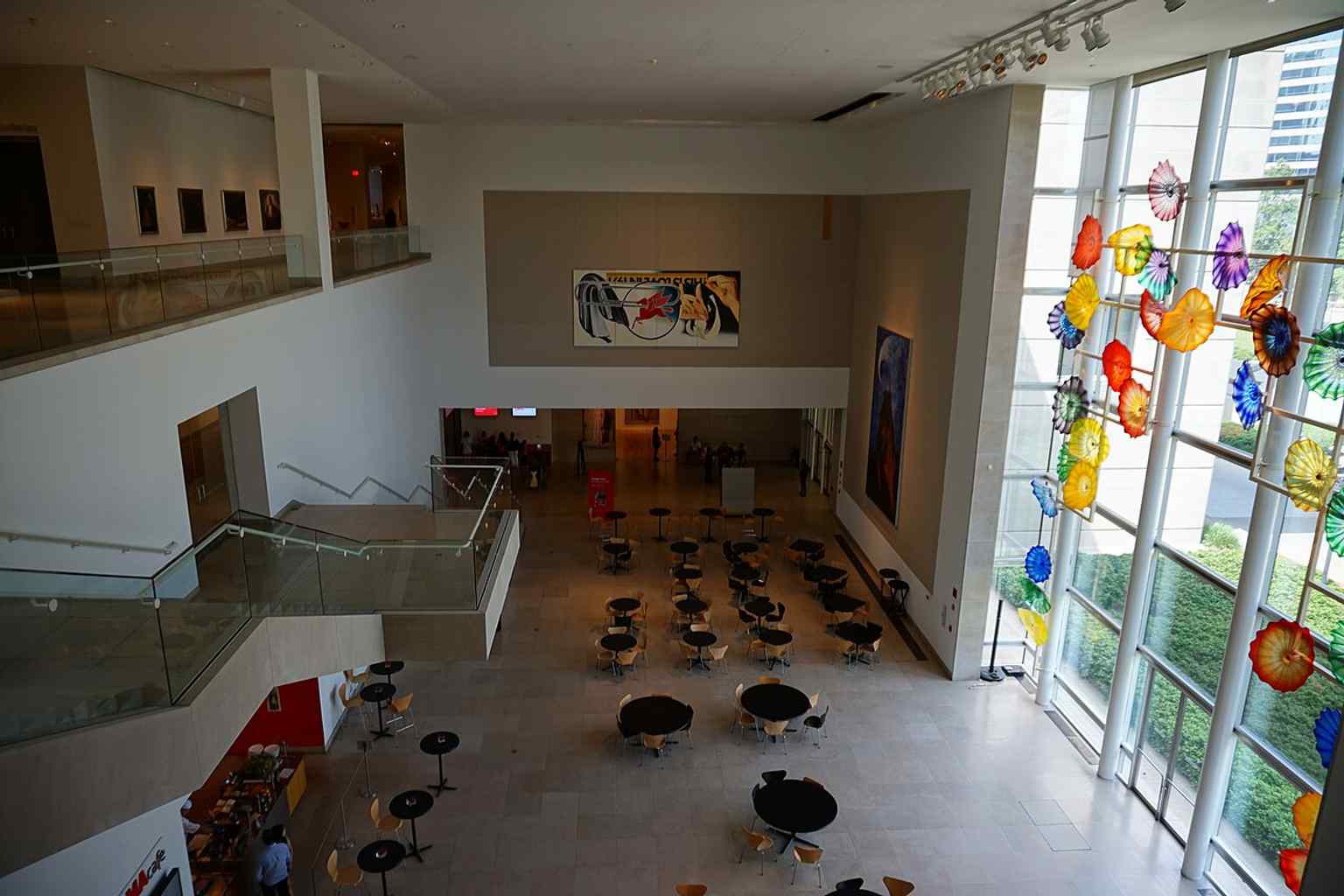
A bright interior view of the museum’s galleries, reflecting the DMA’s role as a major exhibition space with changing shows.Photo: Michael Barera, Wikimedia Commons, CC BY-SA 4.0. Cropped & resized. 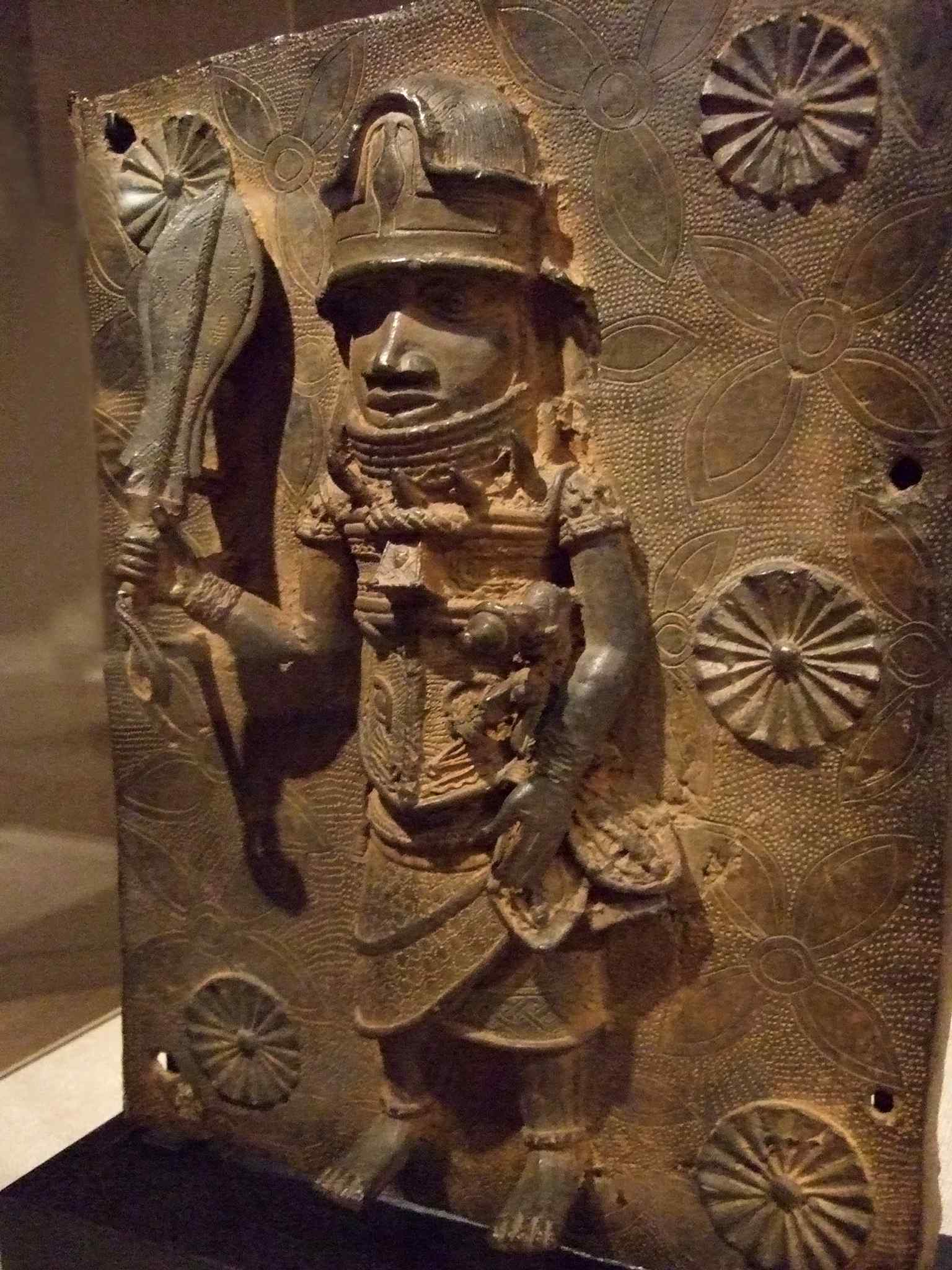
A Benin plaque from Nigeria, one of the DMA’s notable African works and a strong example of court art in the collection.Photo: Mary Harrsch, Wikimedia Commons, CC BY-SA 4.0. Cropped & resized. 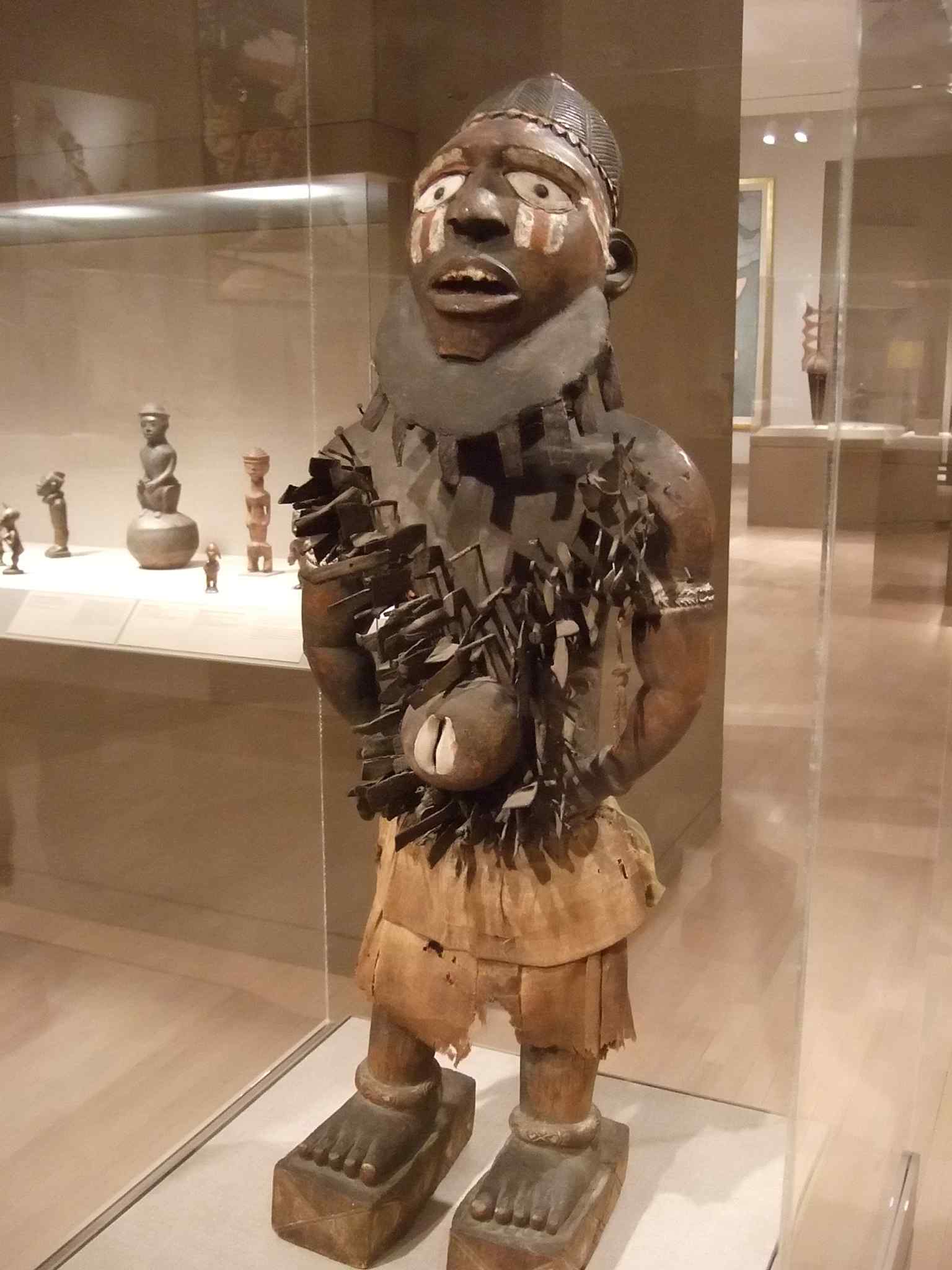
A Kongo power figure studded with nails, matching the museum’s emphasis on objects linked to leadership, ritual, and belief.Photo: Mary Harrsch, Wikimedia Commons, CC BY-SA 4.0. Cropped & resized. 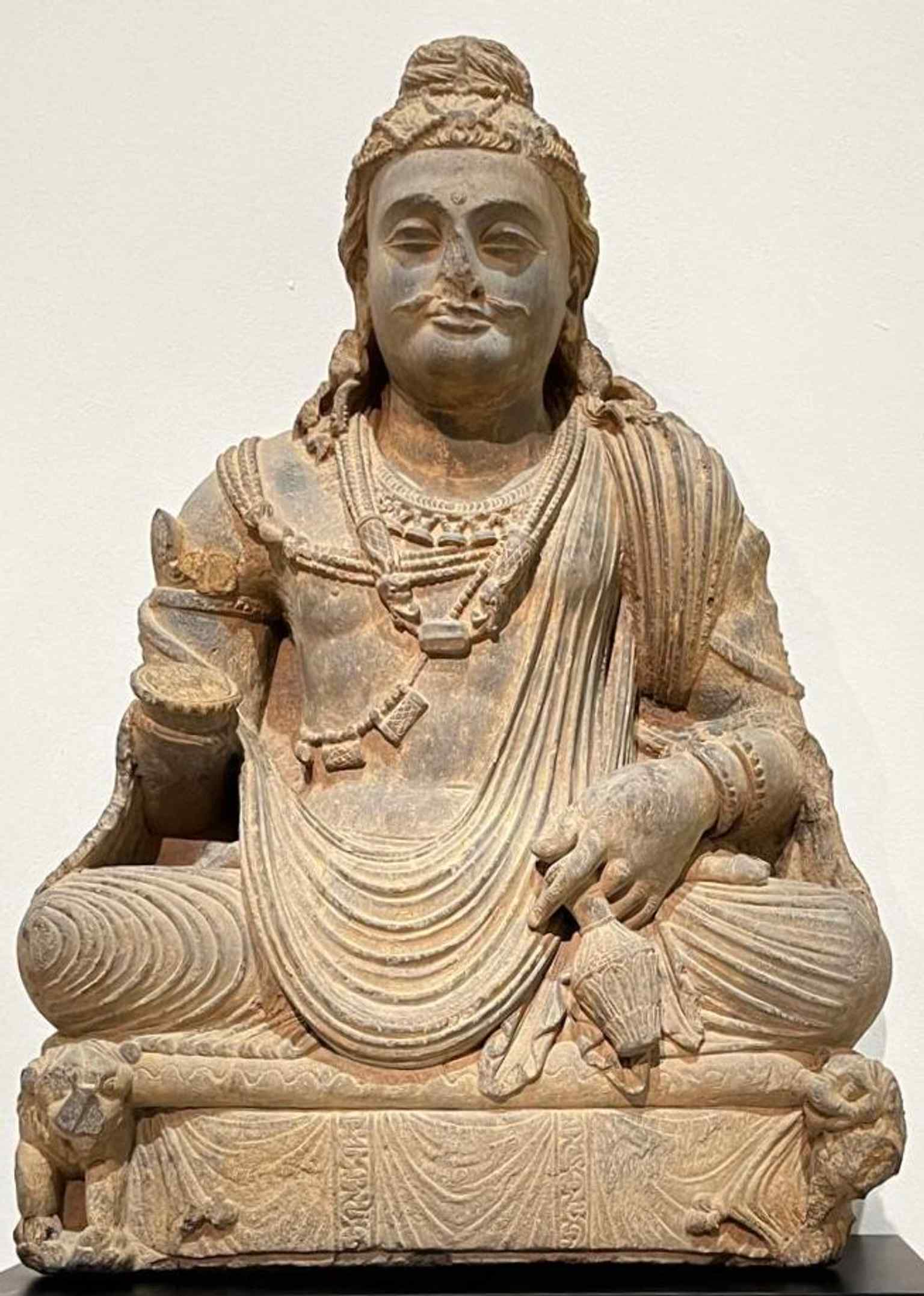
A Gandharan Bodhisattva Maitreya, showing the DMA’s South Asian and Buddhist art holdings.Photo: SpeakingArch, Wikimedia Commons, CC BY-SA 4.0. Cropped & resized. On your left is a low, pale stone museum shaped in clean rectangular volumes, with broad glass sections and a distinctive glass skybridge linking its galleries. The Crow Museum…Read moreShow less
Open dedicated page →
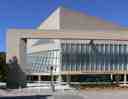
Crow Museum of Asian ArtPhoto: LittleT889, Wikimedia Commons, CC BY-SA 4.0. Cropped & resized. On your left is a low, pale stone museum shaped in clean rectangular volumes, with broad glass sections and a distinctive glass skybridge linking its galleries.
The Crow Museum tells a very Dallas story... how private passion becomes public culture, and how philanthropy and private influence can leave a mark on a city just as surely as steel and concrete. This place began not as a museum plan drawn on an architect’s table, but as a family collection gathered piece by piece, trip by trip, until the collection grew too important to stay tucked into private rooms. In Dallas, donors often do more than write checks. They help decide what the city gets to remember, admire, and pass on.
Trammell and Margaret Crow were patient collectors, not impulse shoppers with very expensive taste. Their collecting life started in the late nineteen sixties and sharpened around a single piece of Chinese jade bought in nineteen seventy-one. Over the next three decades, they made more than twenty trips to Asia, adding works from China, Japan, India, Korea, Nepal, Vietnam, Cambodia, Thailand, Indonesia, Myanmar, and the Philippines.
Margaret Crow gives this story its human twist. She later recalled their trip to China in nineteen seventy-six, just before Chairman Mao died, when foreign access was still tightly controlled. The Crows got in through the Dallas Market Center’s involvement with the Canton Trade Fair... which is such a Dallas detail it almost feels scripted: business connections opening the door to a future art museum.
Before this museum existed, the collection lived a scattered life in lobbies, office reception areas, hotels, and family homes, especially at the Trammell Crow Center. If you check the image on your screen, you can see that earlier home for the collection. Margaret Crow admitted that only when the works were gathered together did the family really understand what they had.
They had more than four thousand objects. Asian art expert Clarence Shangraw studied the holdings and selected five hundred sixty-nine works for the permanent collection. When this museum opened here in downtown Dallas on the fifth of December, nineteen ninety-eight, the Crows gave it to the people of Dallas and to visitors, too. That matters. A private taste became a civic inheritance.
The building kept evolving. In twenty eighteen, Dallas architects Oglesby Greene led a major expansion, adding about five thousand square feet, new gallery space, an art studio, and a gift shop. The institution also changed its name from the Crow Collection to the Crow Museum of Asian Art, a small wording shift with a bigger message: this was no longer just a family holding. It had become part of the city’s cultural identity. In twenty twenty-four, a second location opened on the campus of the University of Texas at Dallas, extending that legacy to a new generation.
If you glance at the app image of the interior skybridge, you’ll catch one of the museum’s best moves: a glass link between galleries that turns looking at art into a conversation with the city outside. And inside, the stories get wonderfully specific... Chinese jade carved with family hopes, Qing Dynasty snuff bottles, a massive Mughal wall suspended from the ceiling because it weighs too much to do anything else, and an Indian garden pavilion, called a baradari, that once stood on the Crow family farm in East Texas. Dallas does enjoy importing its grandeur.
From here, we head to the Nasher Sculpture Center, where collecting spills even more boldly into architecture and urban presence. If you want to come back inside later, the museum is open Tuesday through Sunday from eleven A-M to five P-M, and closed on Monday.
On your left is a low pale-stone-and-glass building with long rectangular lines and a distinctive roof of screened skylight canopies. This place has the manners of a museum and…Read moreShow less
Open dedicated page →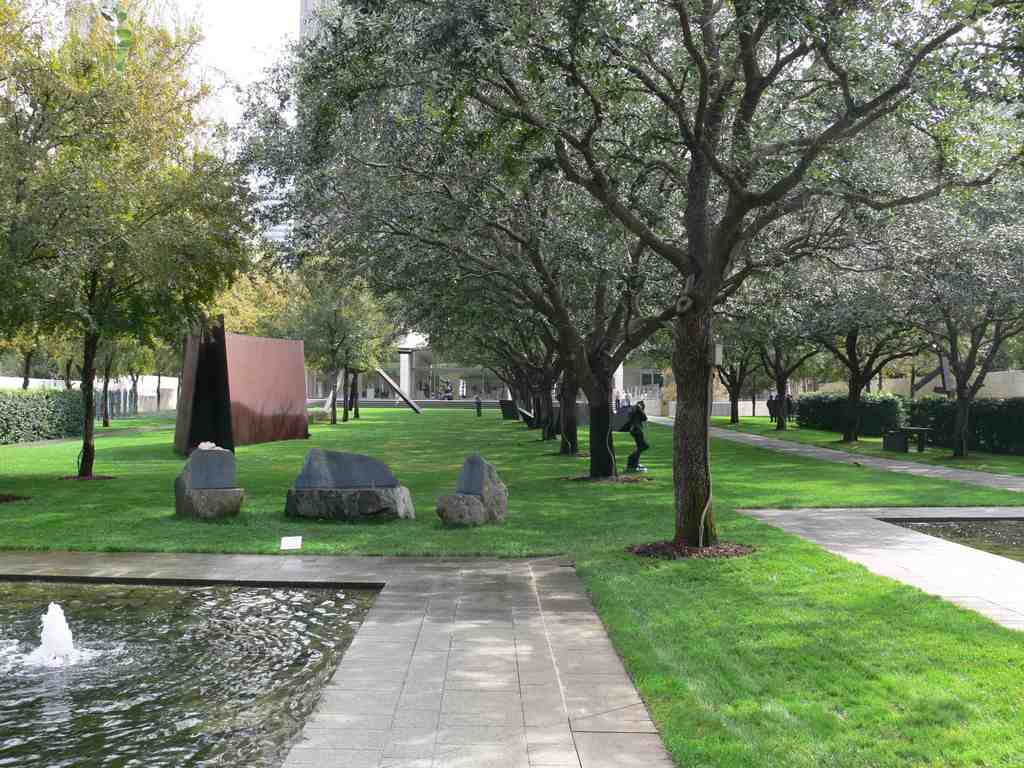
Nasher Sculpture CenterPhoto: Photo: Andreas Praefcke, Wikimedia Commons, CC BY 3.0. Cropped & resized. On your left is a low pale-stone-and-glass building with long rectangular lines and a distinctive roof of screened skylight canopies.
This place has the manners of a museum and the instincts of a very refined living room. The Nasher Sculpture Center opened in two thousand three to house the collection of Patsy and Raymond Nasher, who began buying sculpture in the nineteen fifties. Raymond Nasher liked to say they chose works they wanted to live with, not just own, and that each piece carried its own story. That idea matters here. The collection is serious enough to include Brancusi, Calder, Giacometti, Matisse, Picasso, Rodin, Henry Moore, Richard Serra, and more... but the feeling was never meant to be cold or encyclopedic.
Raymond Nasher bought this downtown site in nineteen ninety-seven, across from the Dallas Museum of Art, and chose Renzo Piano to shape a museum worthy of the collection and the neighborhood growing around it. Piano is one of those architects who treats light almost like a construction material. Here, he designed a fifty-five-thousand-square-foot building on two point four acres, and he worked with landscape architect Peter Walker so the galleries and garden would feel like one composed experience, not a box with a yard attached.
If you look at the image on your screen, you can see how the interior roof filters daylight instead of blasting art with it like an interrogation lamp. That careful control is the whole trick. Sculpture changes as you circle it, so Piano made a place where light changes gently too. Outside, the garden drops toward an auditorium, turning the landscape into a kind of open-air theater. On your phone, the garden view shows that blend beautifully: art, paths, trees, and even seating all working together instead of competing for attention.
And because this is Dallas, refinement did not exempt the place from drama. In two thousand twelve, the neighboring Museum Tower began throwing reflected sunlight into the Nasher’s skylit galleries. That glare threatened parts of the collection, and artist James Turrell asked the museum to close Tending Blue, his skyspace, meaning a chamber designed to frame the sky as part of the artwork, because the tower had effectively broken the piece’s view. So here you get a very Dallas argument in one scene: ambition rising next door, and another ambition already here asking what growth is allowed to damage.
The Nasher Foundation paid the full seventy million dollar cost of building this museum, and you can feel that private patronage made permanent in the cityscape. What started as one family living with art became part of how Dallas presents itself to the public. Not just wealth on display... taste, landscape, engineering, and civic aspiration all folded together.
We’re heading next to the Cathedral Santuario de Guadalupe, where space is shaped by devotion rather than sculpture, and not long after that the city makes another grand cultural claim at the Meyerson, where architecture gets tuned for sound. If you want to come back inside later, the Nasher is generally open Wednesday through Sunday from eleven to five.
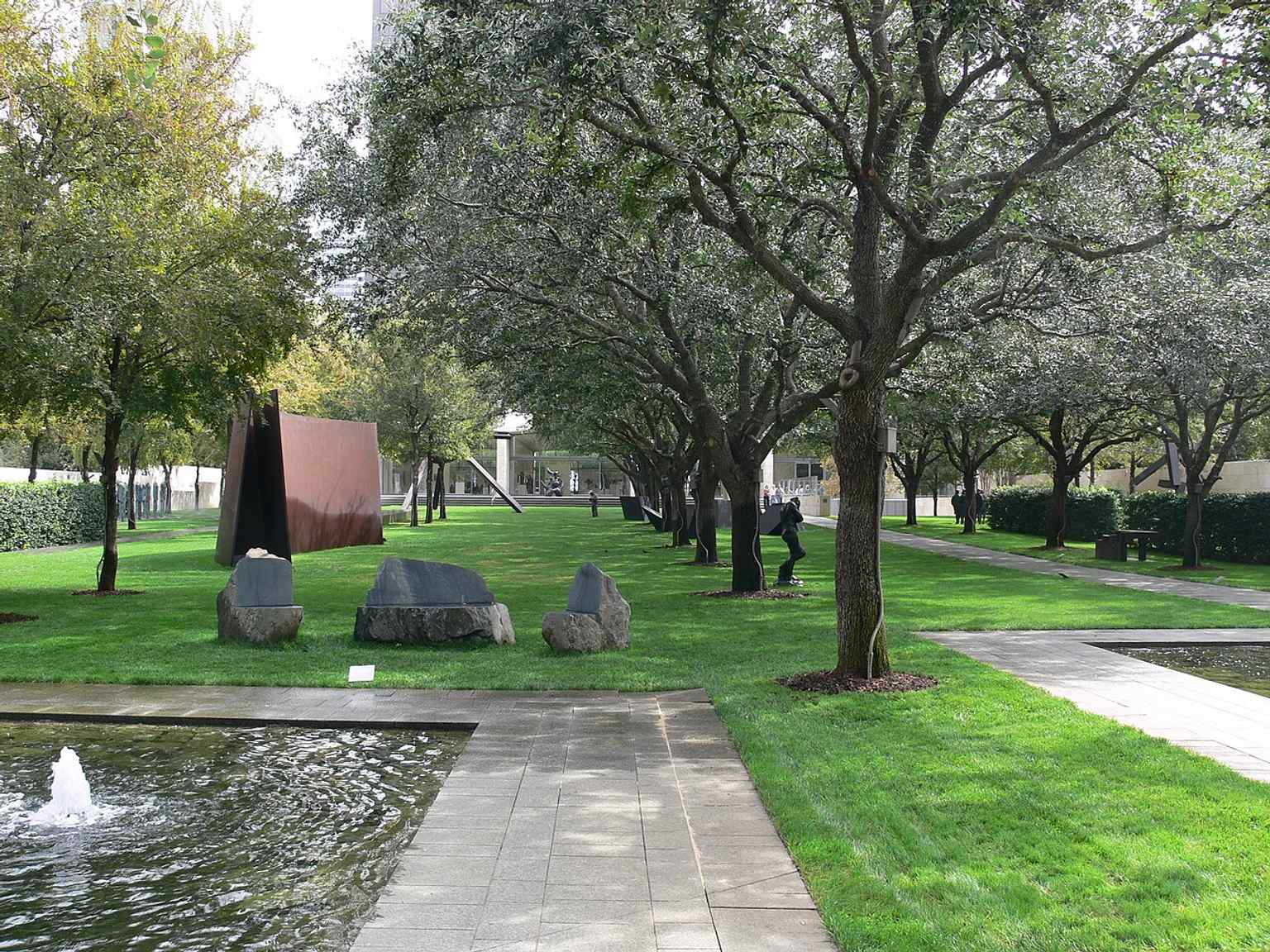
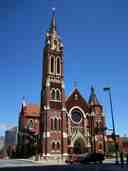
The sculpture garden with Scott Burton seating and a Richard Serra work — a good glimpse of how the Nasher blends art and landscape.Photo: Photo: Andreas Praefcke, Wikimedia Commons, CC BY 3.0. Cropped & resized. On your left, the cathedral stands in pale tan brick with a steep Gothic front, a large round rose window at the center, and a slender steeple rising above the entrance. Faith…Read moreShow less
Open dedicated page →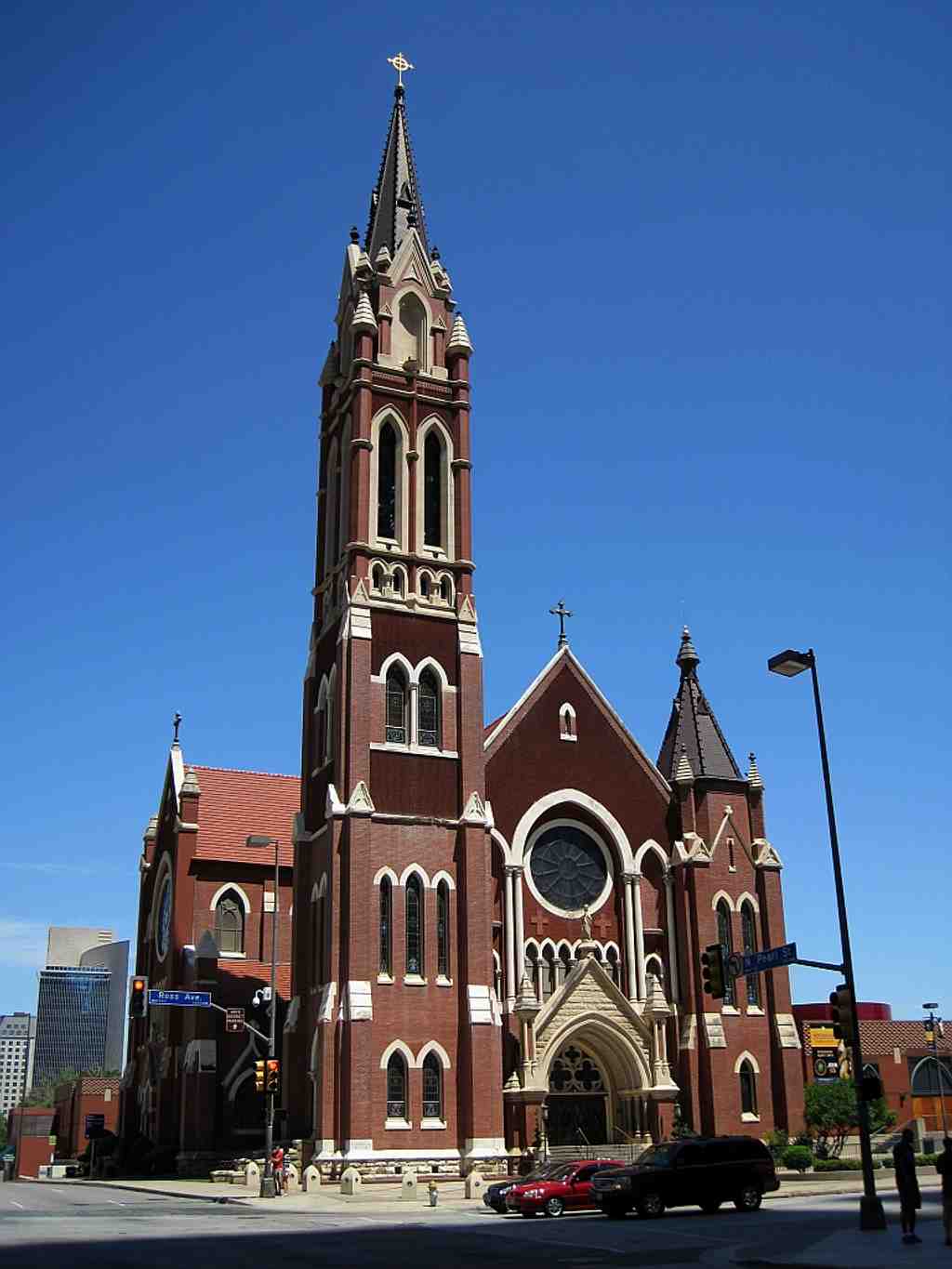
Cathedral Santuario de Guadalupe (Dallas, Texas)Photo: Thomas R Machnitzki (thomasmachnitzki.com), Wikimedia Commons, CC BY 3.0. Cropped & resized. On your left, the cathedral stands in pale tan brick with a steep Gothic front, a large round rose window at the center, and a slender steeple rising above the entrance.
Faith can hide in plain sight in downtown Dallas. Surrounded by the polished confidence of the Arts District, this place reminds you that belonging here has never been built by business alone... it has also been carried by prayer, pilgrimage, and a lot of determined families.
This story started with Dallas’s first Catholic parish, Sacred Heart, founded in eighteen sixty-nine. By eighteen ninety, Dallas had its own diocese, and Bishop Thomas Brennan quickly saw the old church could not keep up with the city’s growth. So the diocese bought this site for thirty thousand dollars, which would be more than seven hundred forty-five thousand today, and laid the cornerstone in eighteen ninety-eight.
If you want, take a quick look at the before-and-after image in the app; it neatly shows how the smaller Sacred Heart church gave way to this larger Gothic revival vision, finally completed with its steeple more than a century later.
The human heart of the story is Father Jeffrey A. Hartnett. He pushed this project forward, then in eighteen ninety-nine he caught smallpox while caring for sick Dallas residents during the epidemic. He died before the cathedral opened in nineteen oh-two. That is a hard kind of legacy to miss: the building behind him, the people before him.
And then Dallas changed again. In nineteen fourteen, a separate Our Lady of Guadalupe parish began serving Mexican immigrants in Little Mexico. By the nineteen sixties, that congregation had outgrown its own church. Sacred Heart, meanwhile, had room to spare. So Bishop Thomas Tschoepe invited the two parishes to merge, and in nineteen seventy-seven this place took the name Cathedral Santuario de Guadalupe. That shift mattered. It said, plainly, that the city’s Catholic center would speak with a stronger Mexican and Latin American voice.
You can still feel that in the life of the place. Masses and programs happen in Spanish and English, and average Sunday attendance reaches about eleven thousand two hundred. In twenty twenty-three, the U-S Conference of Catholic Bishops recognized what worshippers already knew and elevated it to a National Shrine, a church with special meaning for pilgrims, especially from Mexico and Latin America. Tens of thousands still come during the Guadalupe feast days in December.
Dallas, being Dallas, also kept redesigning the place. A nineteen sixty-six renovation stripped away much of the old interior character with almost comic enthusiasm, and later restorers had to play detective to recover architect Nicholas Clayton’s original plan. The bell tower you see now finally rose in two thousand five, with forty-nine bronze bells... one weighing seven thousand five hundred pounds, because subtlety is not always this town’s first instinct.
If you glance at your screen, image seven shows the restored interior and how carefully the cathedral tried to recover its memory.
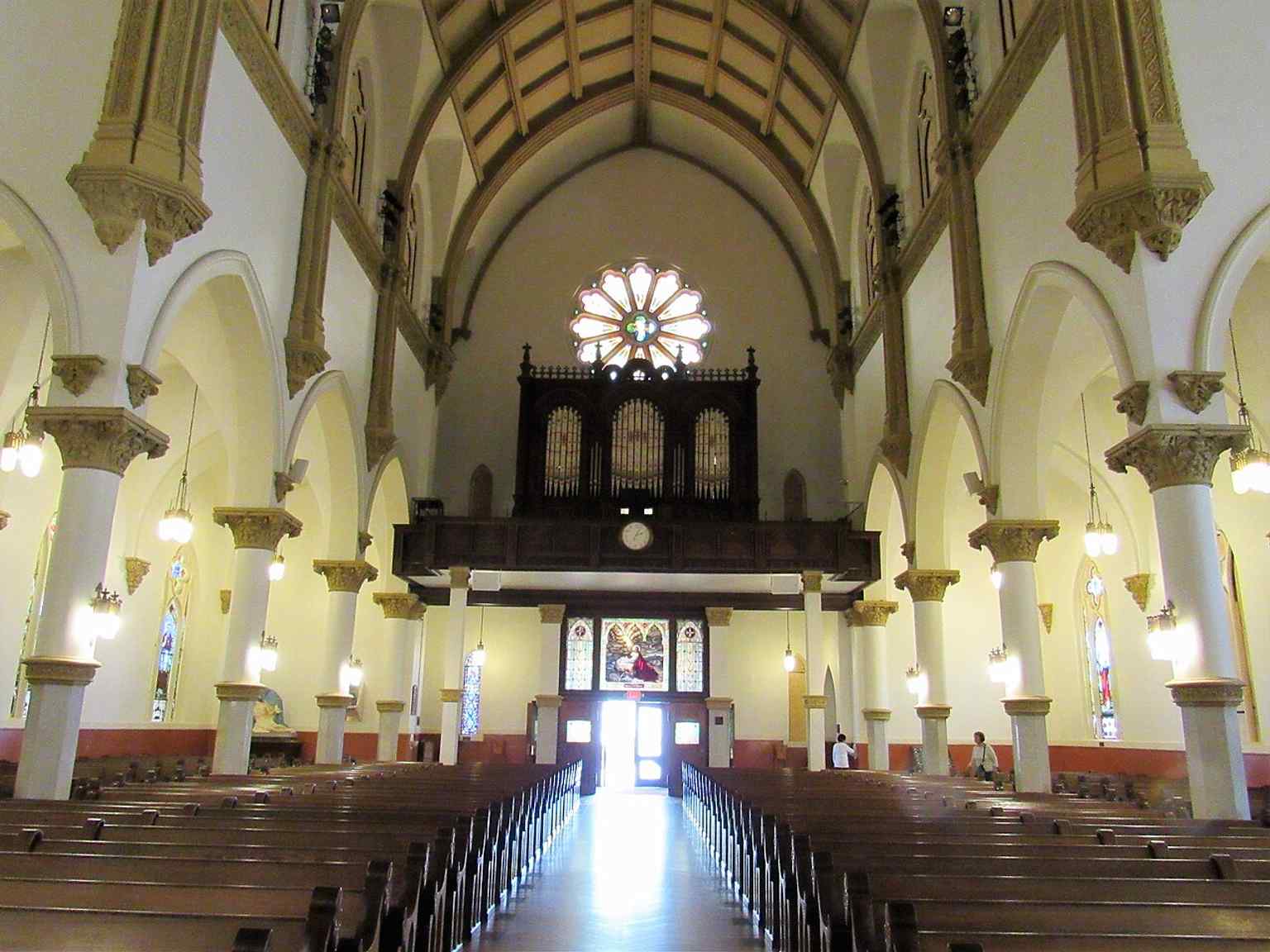
The bright interior of the cathedral, restored to recover more of its historic character after decades of alterations.Photo: Farragutful, Wikimedia Commons, CC BY-SA 4.0. Cropped & resized. From here, the city’s ambitions keep unfolding in another key: worship here, performance just ahead. Walk about three minutes to the Morton H. Meyerson Symphony Center. If you plan to return, the cathedral is generally open daily, with longer hours most weekdays and Sunday.
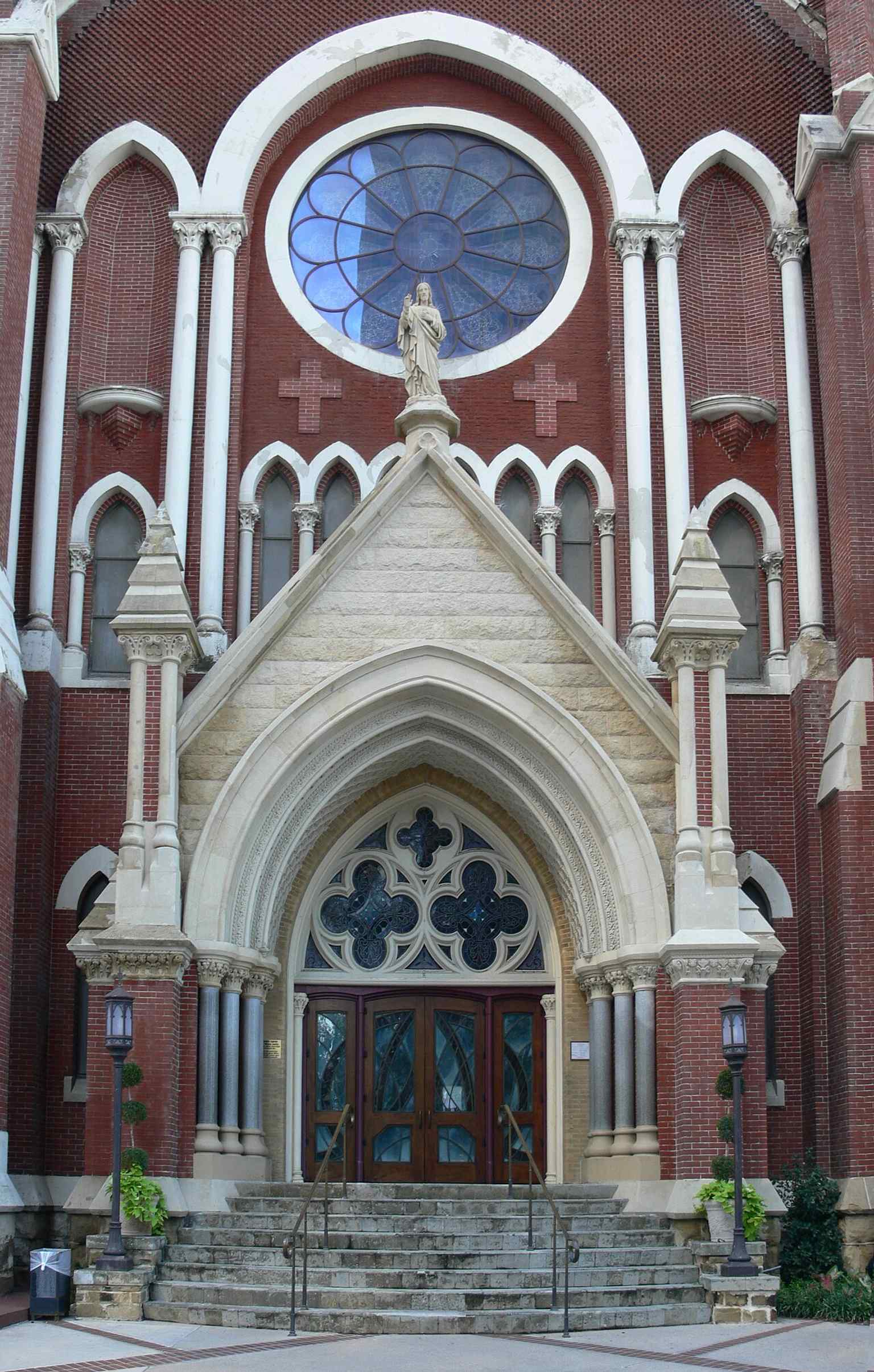
The main entrance, where generations of worshippers have entered the cathedral that became a National Shrine in 2023.Photo: Photo: Andreas Praefcke, Wikimedia Commons, CC BY 3.0. Cropped & resized. 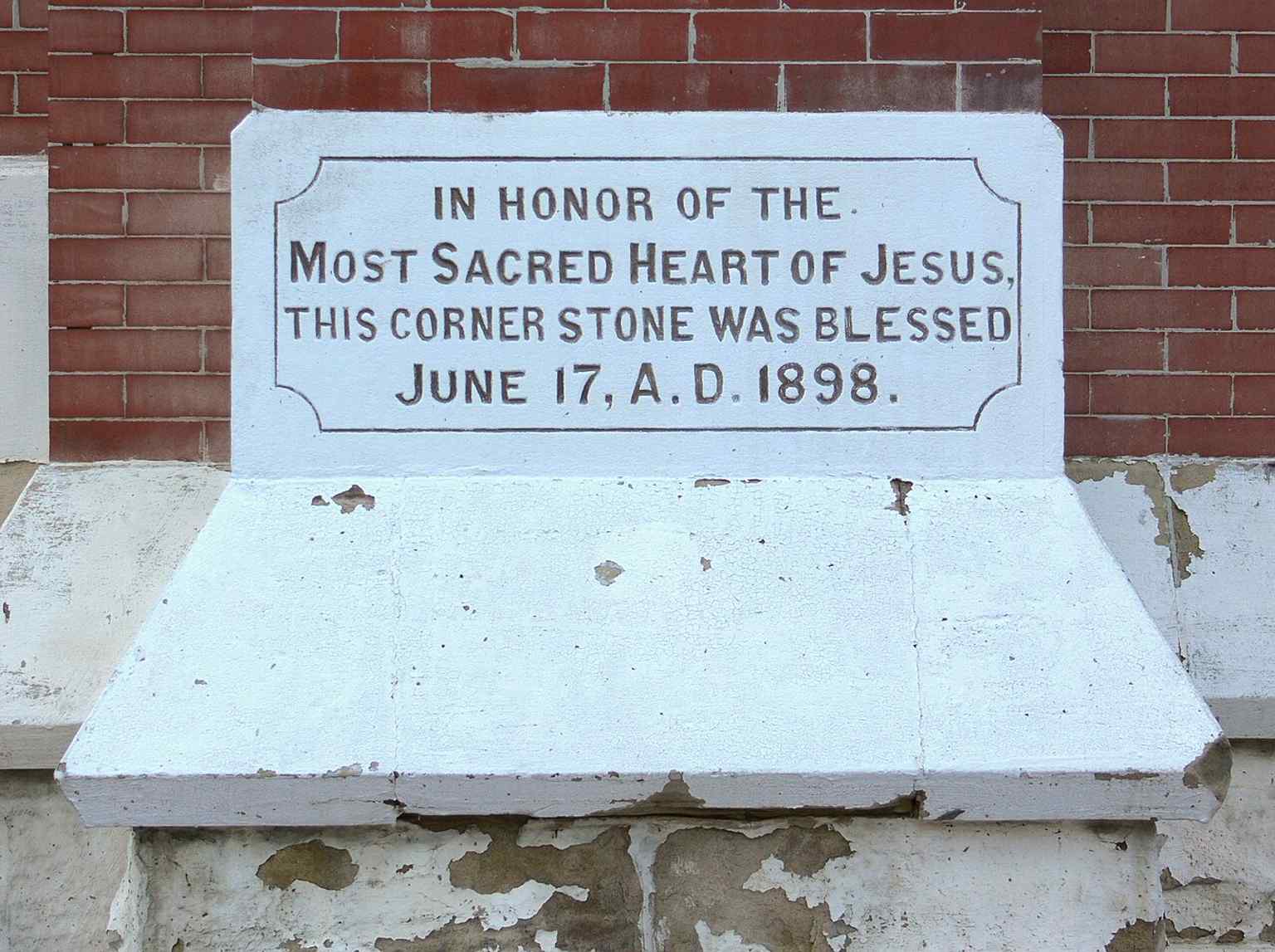
The 1898 cornerstone, laid at the start of construction before the church was dedicated in 1902.Photo: Photo: Andreas Praefcke, Wikimedia Commons, CC BY 3.0. Cropped & resized. 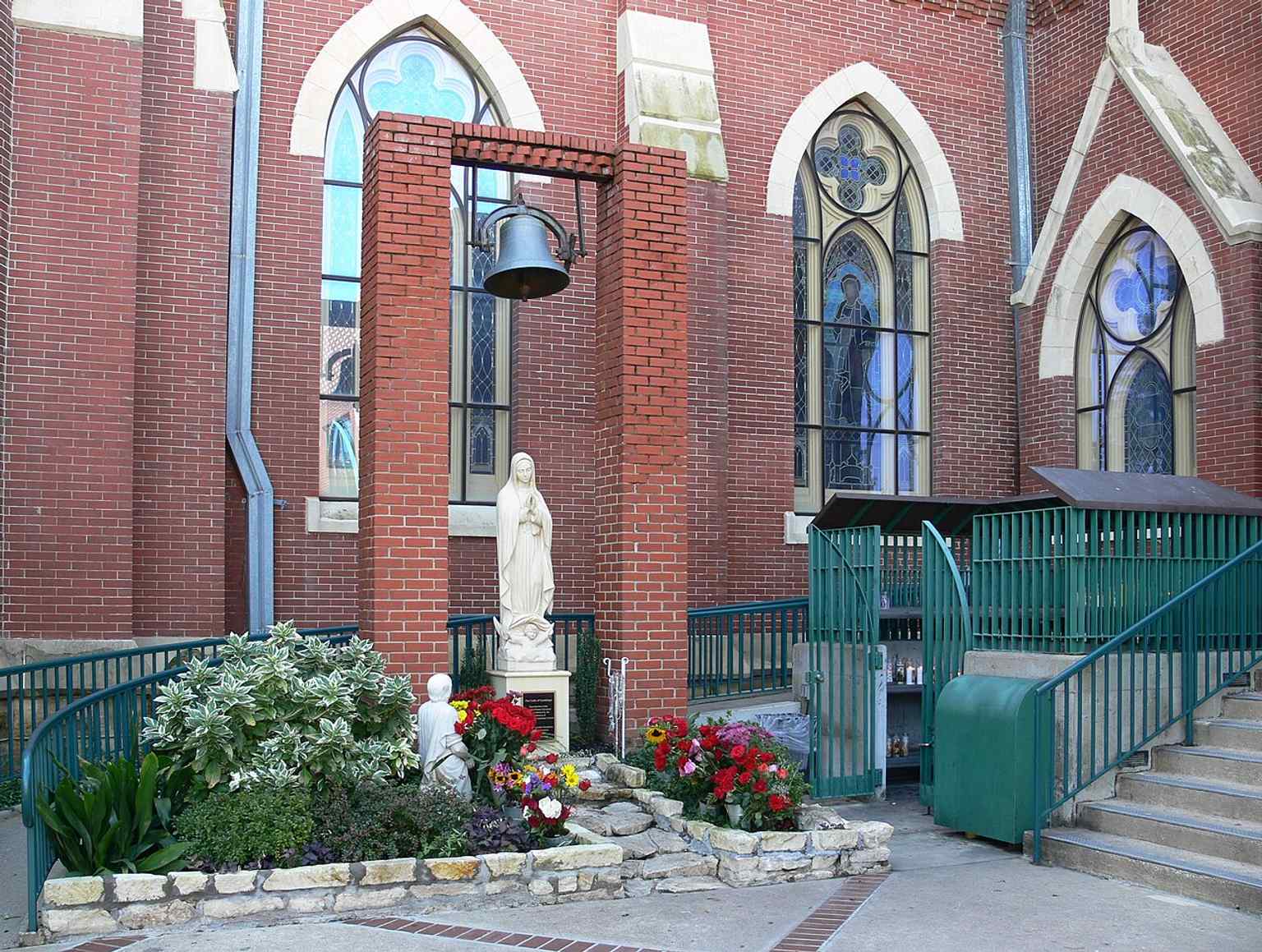
The outdoor statue of Our Lady of Guadalupe, a focal point for pilgrimages and the December feast crowds.Photo: Photo: Andreas Praefcke, Wikimedia Commons, CC BY 3.0. Cropped & resized. 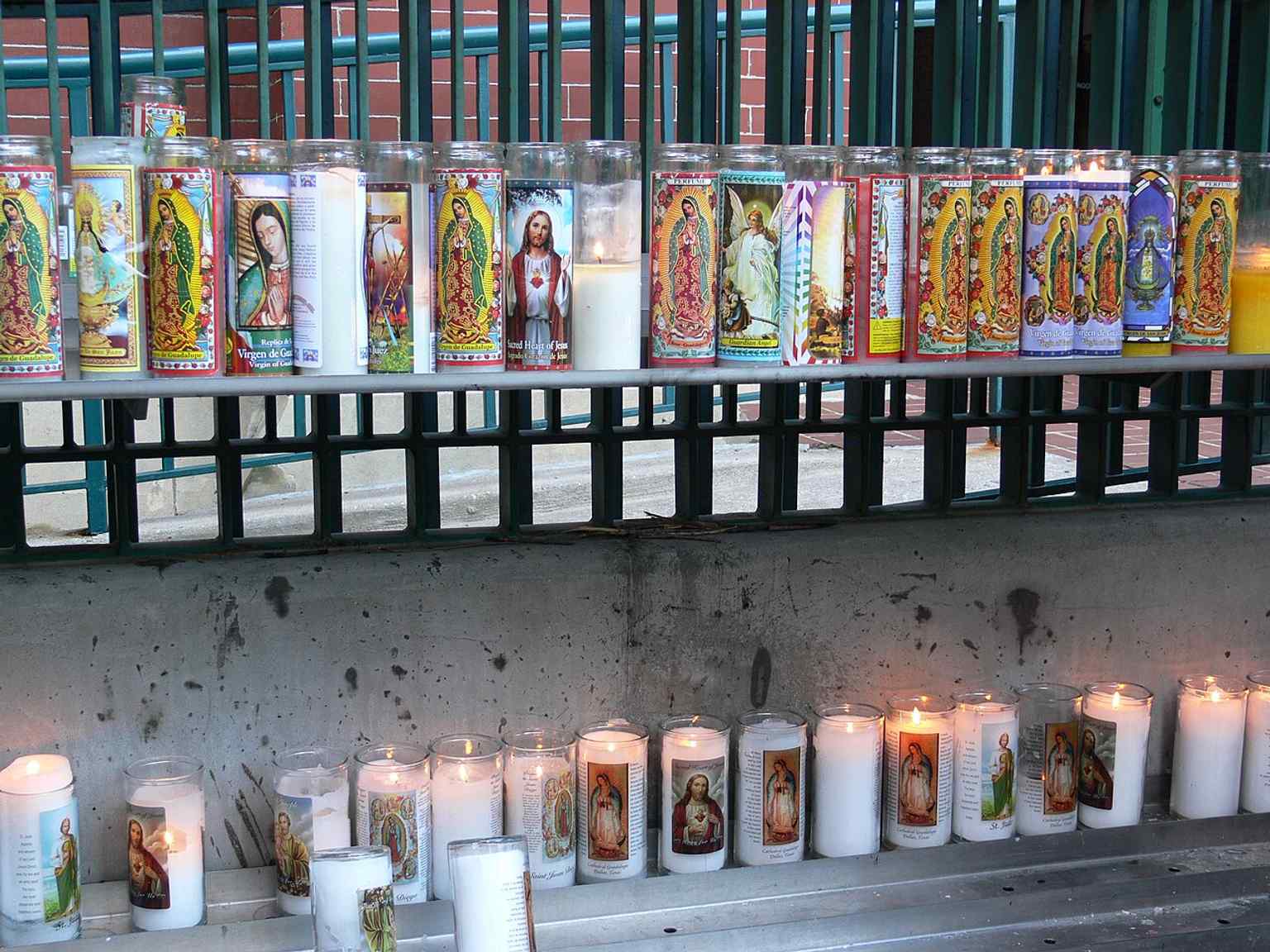
Votive candles beside the Guadalupe statue, reflecting the shrine’s deep devotional life and immigrant heritage.Photo: Photo: Andreas Praefcke, Wikimedia Commons, CC BY 3.0. Cropped & resized. 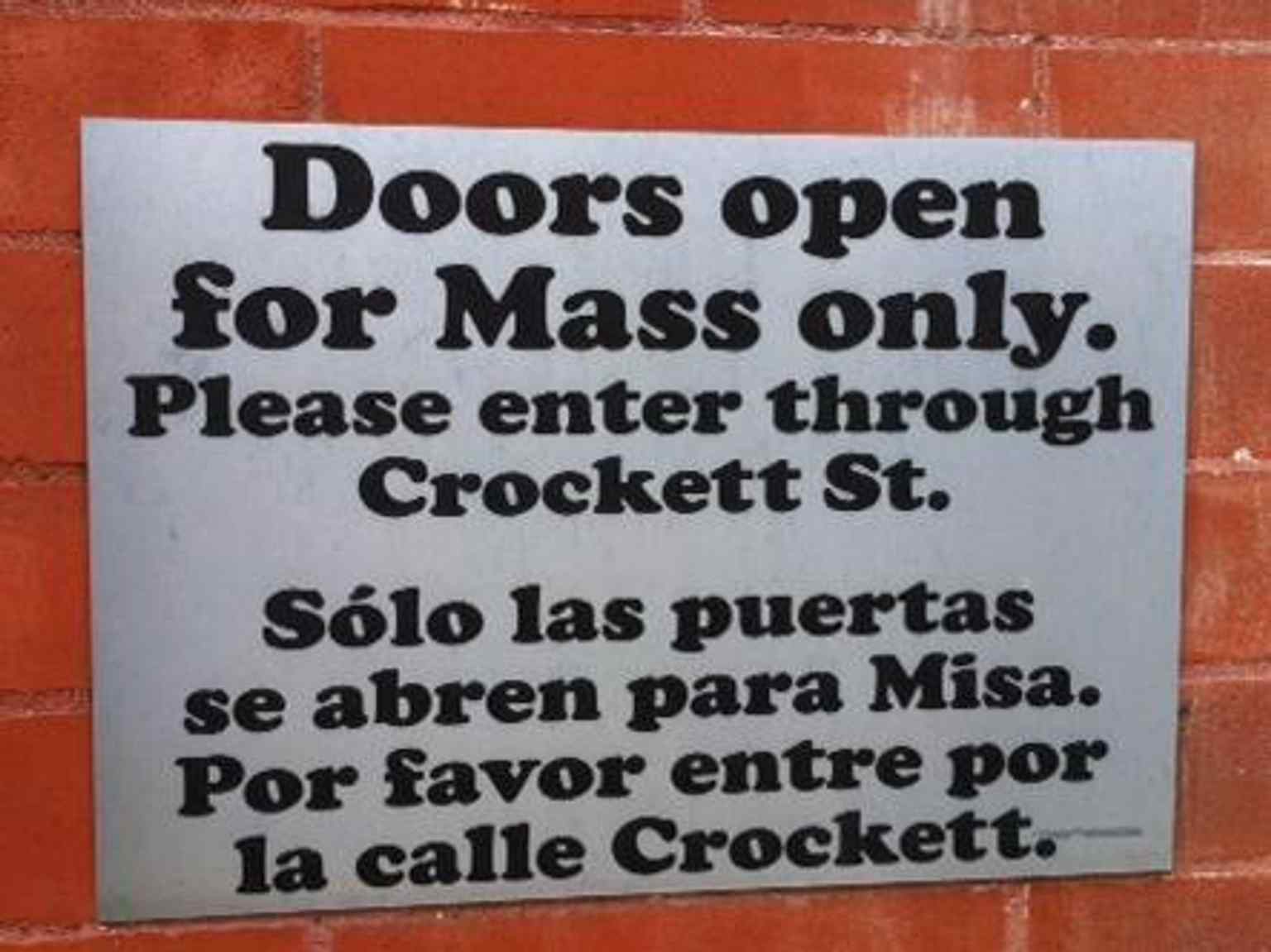
A bilingual sign showing how the cathedral serves both English- and Spanish-speaking parishioners.Photo: Pete unseth, Wikimedia Commons, CC BY-SA 3.0. Cropped & resized. 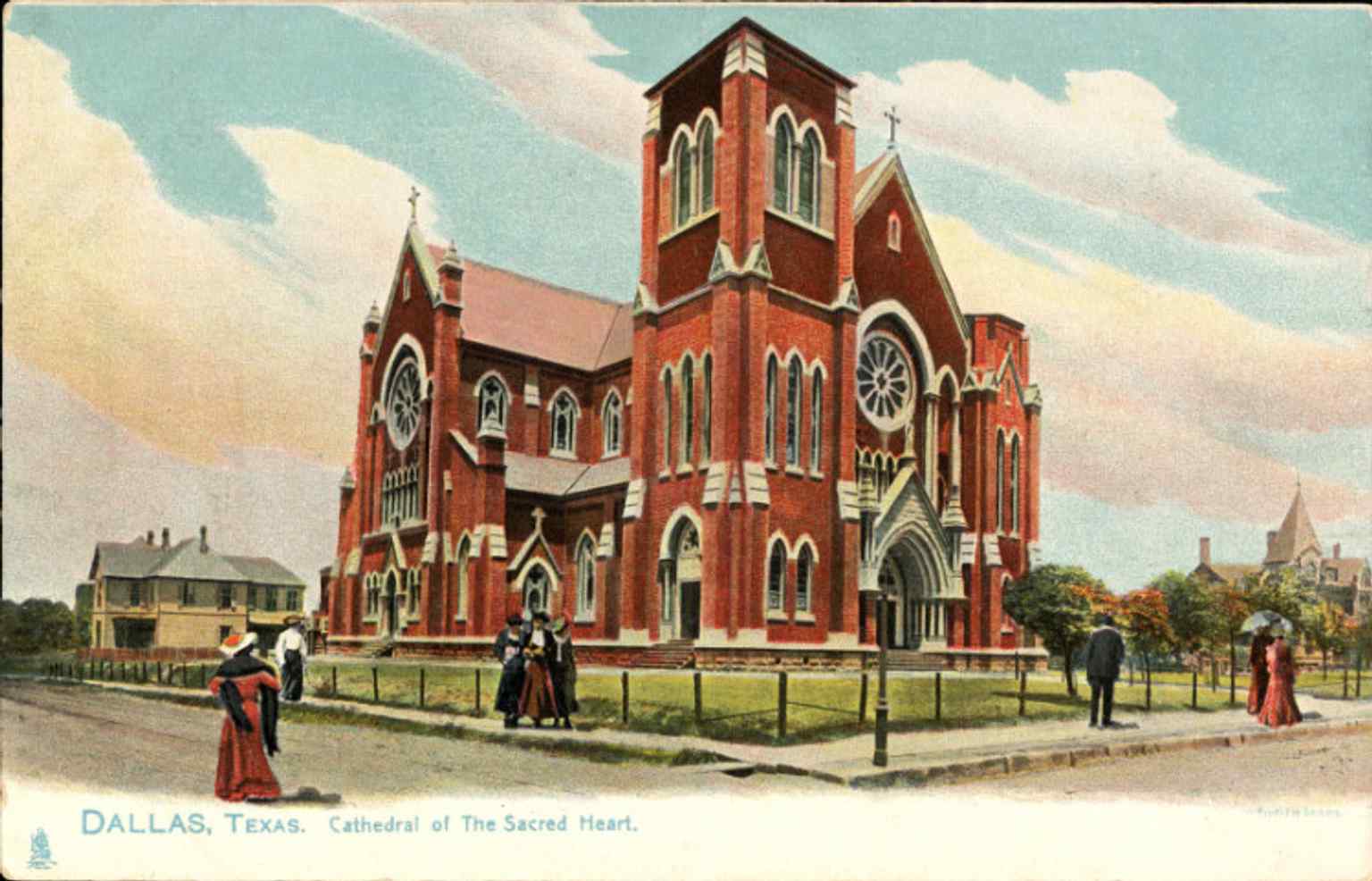
The original Cathedral of the Sacred Heart in the 1870s, Dallas’s first Catholic parish before the later cathedral was built.Photo: Raphael Tucker & Sons, Wikimedia Commons, Public domain. Cropped & resized. 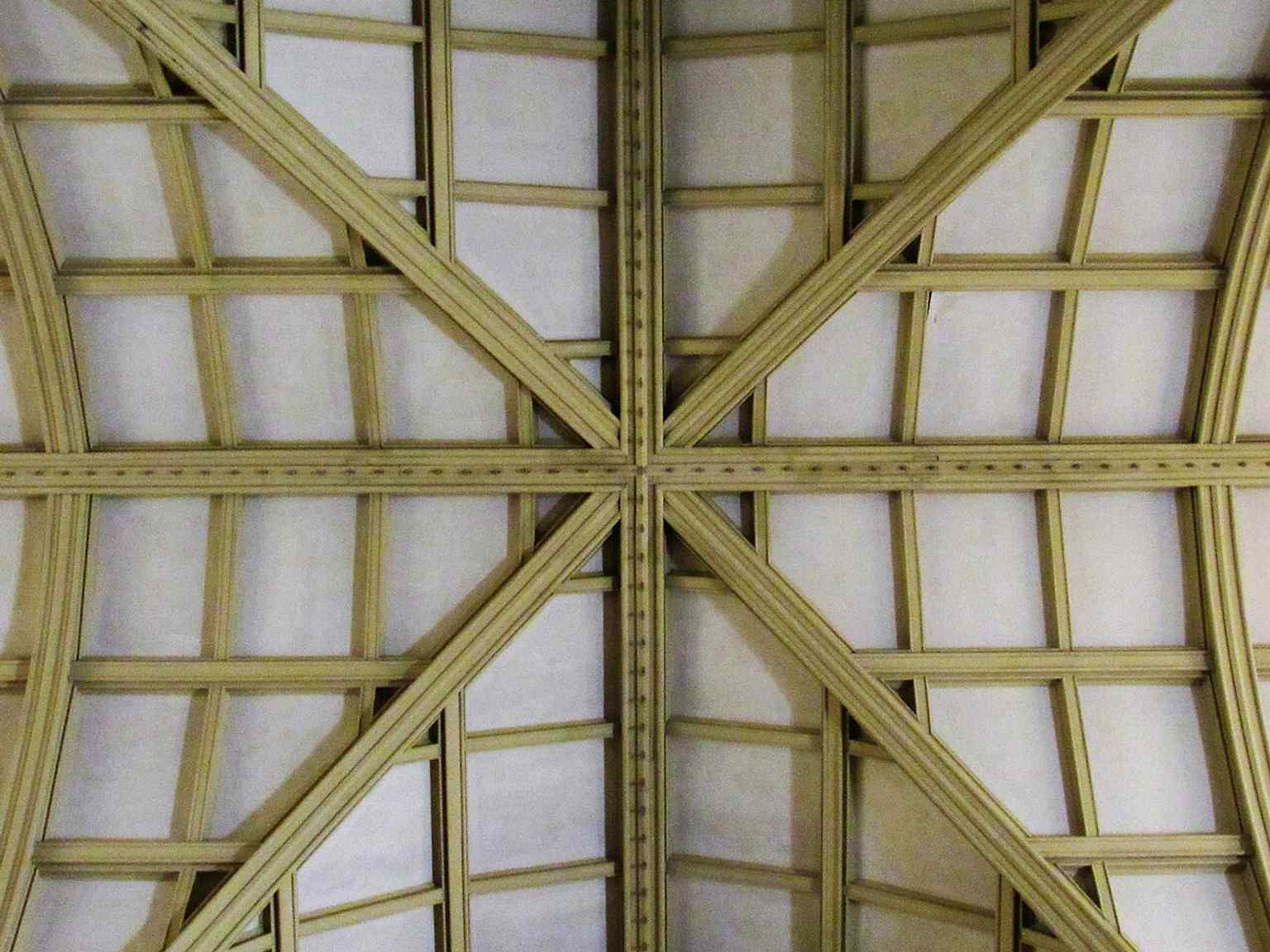
The crossing ceiling inside the cathedral, part of the architectural restoration that searched for Clayton’s lost design.Photo: Farragutful, Wikimedia Commons, CC BY-SA 4.0. Cropped & resized. 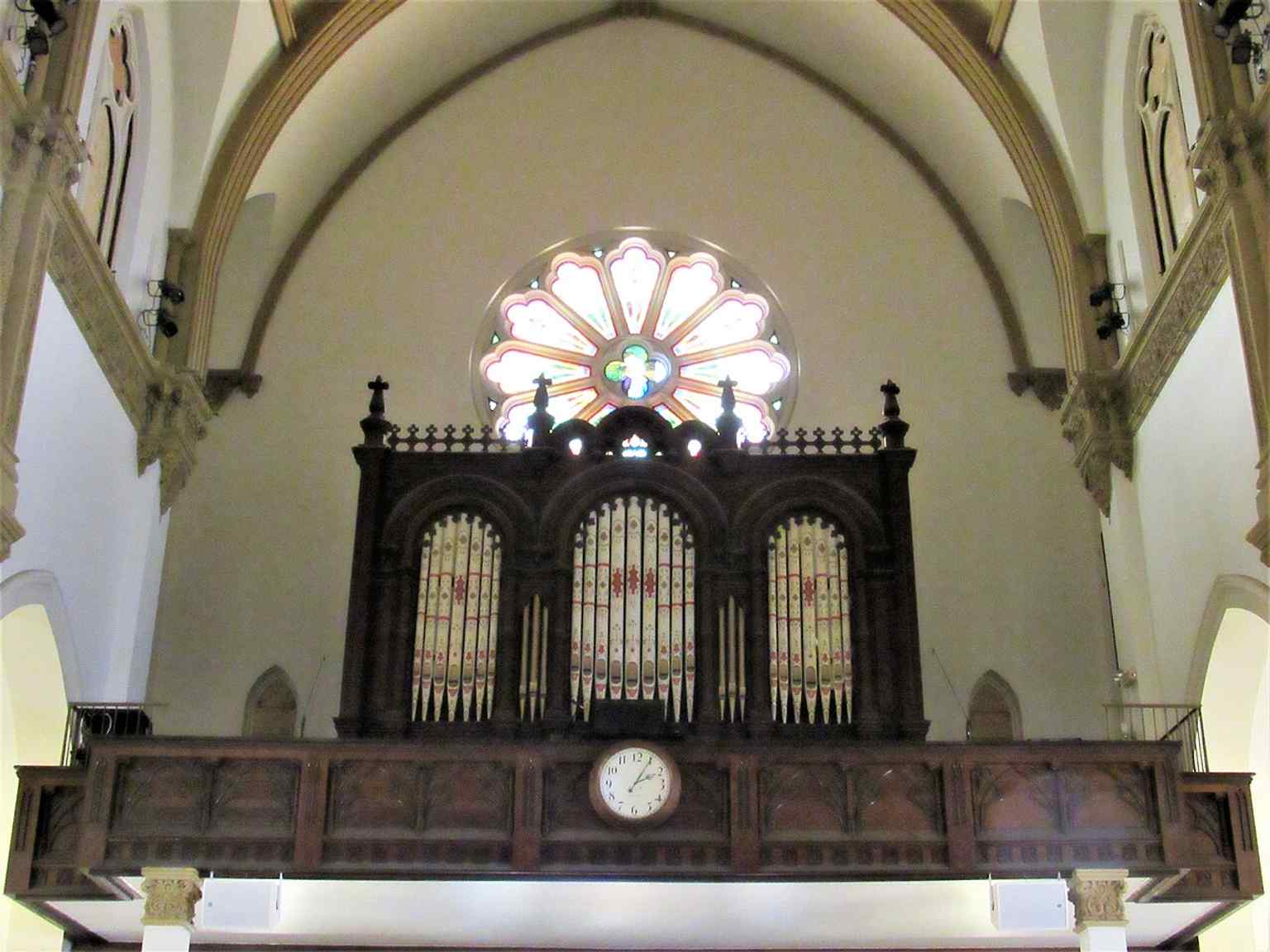
The pipe organ gallery, underscoring the cathedral’s role as both a worship space and a music venue.Photo: Farragutful, Wikimedia Commons, CC BY-SA 4.0. Cropped & resized. 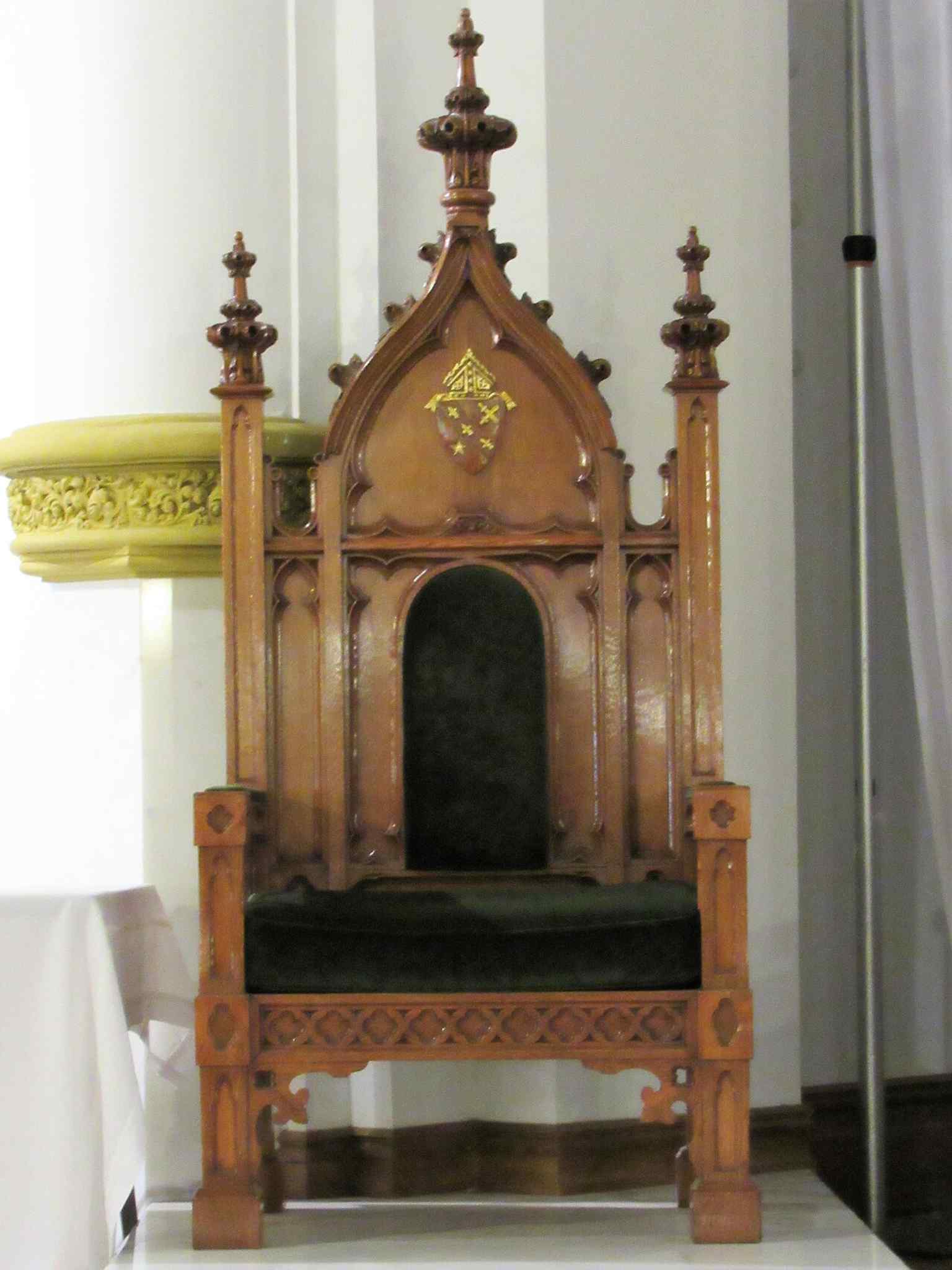
The cathedra, the bishop’s chair that marks this church as the cathedral of the Diocese of Dallas.Photo: Farragutful, Wikimedia Commons, CC BY-SA 4.0. Cropped & resized. In front of you, the Meyerson reads as a pale limestone hall wrapped in a curved glass-and-metal shell, with a giant circular opening framing the entrance like a modern stage…Read moreShow less
Open dedicated page →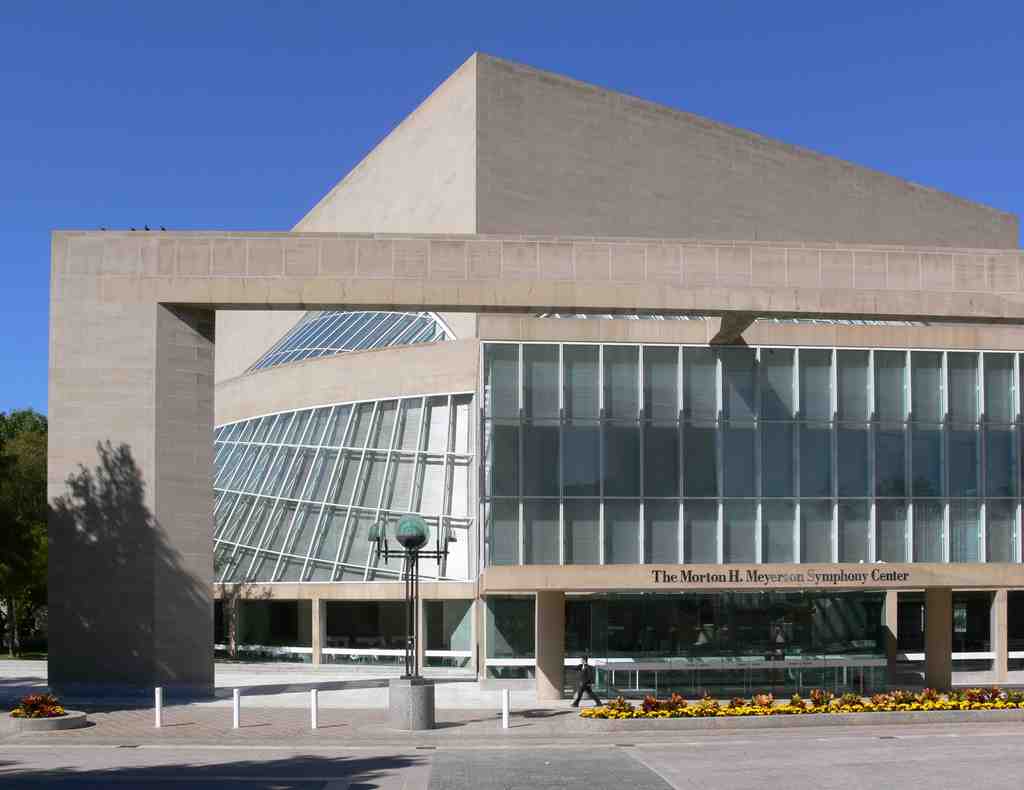
Morton H. Meyerson Symphony CenterPhoto: Photo: Andreas Praefcke, Wikimedia Commons, CC BY 3.0. Cropped & resized. In front of you, the Meyerson reads as a pale limestone hall wrapped in a curved glass-and-metal shell, with a giant circular opening framing the entrance like a modern stage set.
For a building devoted to harmony, this place came together through a remarkable amount of argument. Dallas started planning a new symphony hall back in nineteen sixty-seven. Then the site dragged, shifted, and nearly slipped away more than once. A big push came in nineteen eighty-one, when city leaders tried to assemble the land, and Borden chairman Eugene Sullivan helped by donating part of it. Local memory turned that deal into a small legend: a land swap, a rushed breakfast pitch, and, somehow, a carton of milk helping save the day. Civic glory often arrives in grand language... and office-park bargaining.
Then architect I. M. Pei looked at the plan and said, in effect, nice try, but I need about twice the land. That triggered new swaps, a legal fight over the former Borden property, and even a second groundbreaking before construction could really move. Costs climbed too, thanks to the larger design, the limestone exterior, the marble lobby, and the relentless demands of acoustics.
One man kept pushing through much of that long middle stretch: Morton H. Meyerson. He led a ten-year effort for the Dallas Symphony Association, mostly without making himself the star of the show. Then Ross Perot phoned from Chicago and offered ten million dollars, asking only that the new hall carry Meyerson’s name. At the time, it was an exceptionally large gift for an American arts organization. So yes, public culture and private influence shook hands here very firmly.
What you see from the street is Pei’s compromise turned into elegance. The trustees had already chosen a “shoebox” hall inside - basically a plain rectangular room, the shape many great concert halls use because sound behaves beautifully in it. Pei thought that interior was conservative, so he wrapped it in something freer: curves, glass, metal, and a sense of motion. If you check the image on your screen, you can see how the interior balconies keep that simple, disciplined shape even while the outer building performs a little more drama.
And Dallas wanted the sound to match the ambition. Acoustician Russell Johnson and his team fine-tuned the room with seventy-four heavy concrete chamber doors, fifty-six acoustic curtains, and adjustable canopies above the stage. The goal was not “pretty good for Texas.” The goal was to stand with the great halls of Vienna and Amsterdam. Johnson had a favorite line for people obsessing over the mechanics: stop listening for the acoustics, and start listening to the music.
When the hall opened in September of nineteen eighty-nine, protesters marched outside over the cost, more than two hundred journalists toured it with Pei, and concertgoers lined the block for the first free performance. That feels right, honestly. This building was never just a venue. It was Dallas stepping into the spotlight and announcing, with polished marble and very expensive echoes, what kind of city it believed it had become. Take a look at the foyer on your screen and you’ll catch that confidence in stone and geometry.
From here, the next walk leads to Klyde Warren Park, where the city tries a different kind of statement: not a masterpiece contained by walls, but a public space meant to stitch separate pieces back together. If you want to come inside another time, the center is generally open from ten in the morning to six in the evening Monday through Saturday, and closed on Sunday.
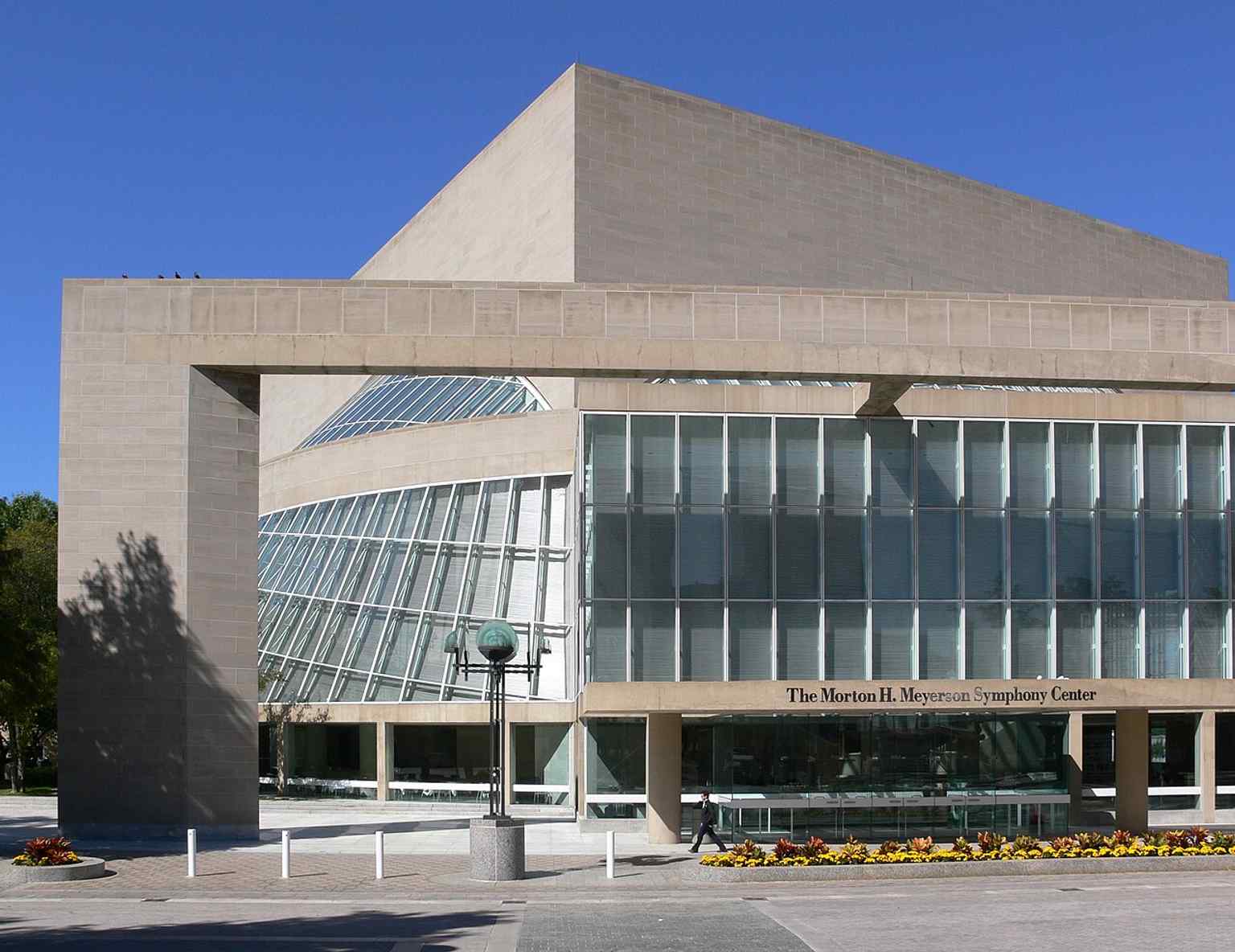
The Meyerson’s curved glass-and-metal exterior, designed by I. M. Pei to contrast with the concert hall’s boxy interior.Photo: Photo: Andreas Praefcke, Wikimedia Commons, CC BY 3.0. Cropped & resized. 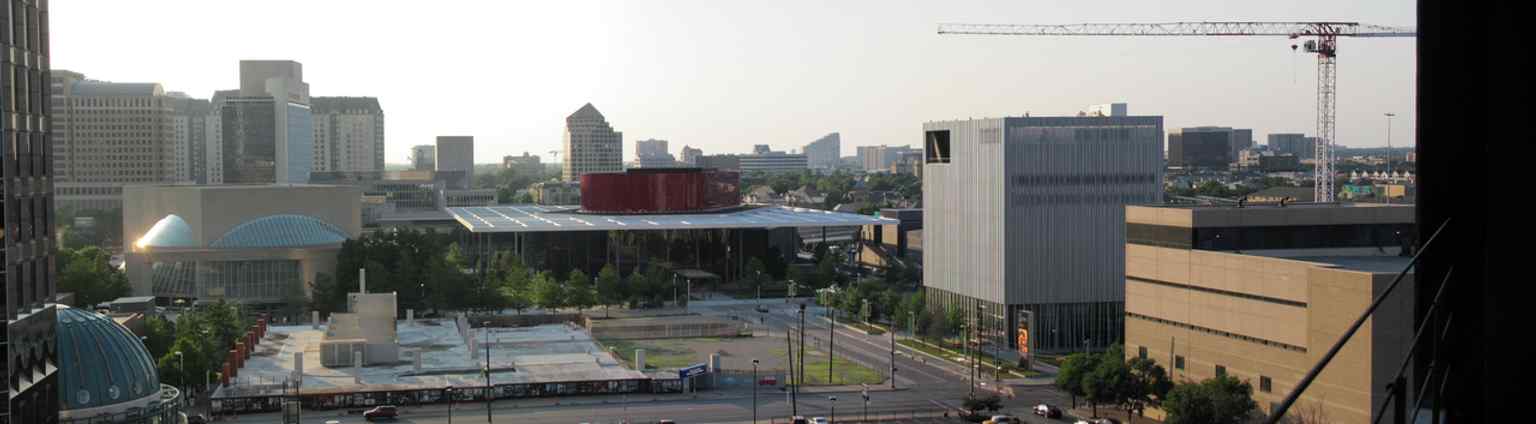
The Dallas Arts District skyline shows the Meyerson as part of the city’s major arts campus, home to the Dallas Symphony Orchestra.Photo: IcedCowboyCoffee, Wikimedia Commons, CC0. Cropped & resized. Look for a long green deck with pale concrete edges and straight walking paths, stretched in a broad rectangular band above the recessed Woodall Rodgers Freeway. This is Klyde…Read moreShow less
Open dedicated page →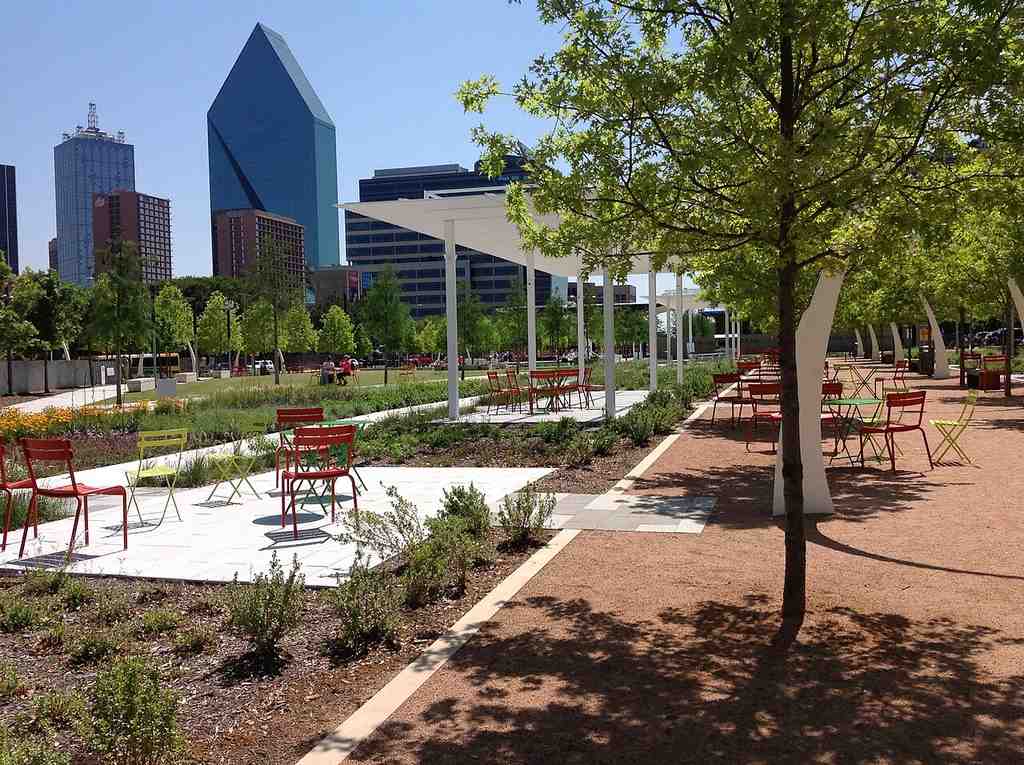
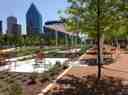
Klyde Warren ParkPhoto: Kevin1086, Wikimedia Commons, CC BY-SA 3.0. Cropped & resized. Look for a long green deck with pale concrete edges and straight walking paths, stretched in a broad rectangular band above the recessed Woodall Rodgers Freeway.
This is Klyde Warren Park... five point four acres of lawn, paths, play spaces, and public theater laid right on top of the traffic. Dallas opened it in twenty twelve, but the idea reaches back to the nineteen sixties, when Mayor J. Erik Jonsson pushed the freeway below grade. That left a scar with a lid waiting for it.
The modern campaign took off in two thousand and two, when John Zogg started rallying support. By two thousand and four, Jody Grant, Zogg, and Linda Owen had formed the Woodall Rodgers Park Foundation and turned a nice civic dream into the sort of project that needs donors, engineers, and a heroic tolerance for meetings. Landscape architect James Burnett shaped the park above, while Jacobs Engineering figured out how to hold a real park over a real freeway.
If you glance at your screen, the early image makes the trick plain: this is not a park beside the city, but a park stitching pieces of it together.
Kelcy Warren gave ten million dollars, the largest private gift, and used the naming rights for his nine-year-old son, Klyde. That stirred criticism. Warren reportedly felt stung by the reaction, and there was an odd little clause in the story: young Klyde was reportedly required to help clean up the park once a month. Dallas philanthropy... but with chores.
That tension matters here. This is public space, yes, but a private foundation runs it, programs it, and raises the money for its upkeep and roughly one thousand three hundred events a year. Even its success came with side-eye. Before opening, D Magazine argued the park would not magically fix Dallas. Fair point. No lawn, however stylish, can cure every urban headache.
Still, the place landed with force. More than forty-four thousand people showed up in the first two days. And the park changed the math around it: one analysis later found the city added fifty percent more office space and twice as many multifamily homes in the six years after the park than in the six years before. So yes, it is a civic gesture... and yes, it is also development fuel. Both things can be true, which is annoyingly realistic.
If you look at another photo, you can see how the deck turns a transportation trench into a front porch for downtown.
Standing over a freeway built to hurry people past one another, what kind of city do you think this park is trying to imagine? Maybe that is the final Dallas lesson: not erasing the old divisions underneath, but building across them anyway. The park is generally open from six in the morning to eleven at night. Dallas keeps building bridges, literal and symbolic, across histories it can neither erase nor fully resolve.

Frequently asked questions
How do I start the tour?
After purchase, download the AudaTours app and enter your redemption code. The tour will be ready to start immediately - just tap play and follow the GPS-guided route.
Do I need internet during the tour?
No! Download the tour before you start and enjoy it fully offline. Only the chat feature requires internet. We recommend downloading on WiFi to save mobile data.
Is this a guided group tour?
No - this is a self-guided audio tour. You explore independently at your own pace, with audio narration playing through your phone. No tour guide, no group, no schedule.
How long does the tour take?
Most tours take 60–90 minutes to complete, but you control the pace entirely. Pause, skip stops, or take breaks whenever you want.
What if I can't finish the tour today?
No problem! Tours have lifetime access. Pause and resume whenever you like - tomorrow, next week, or next year. Your progress is saved.
What languages are available?
All tours are available in 50+ languages. Select your preferred language when redeeming your code. Note: language cannot be changed after tour generation.
Where do I access the tour after purchase?
Download the free AudaTours app from the App Store or Google Play. Enter your redemption code (sent via email) and the tour will appear in your library, ready to download and start.
If you don't enjoy the tour, we'll refund your purchase. Contact us at help@audatours.com
Checkout securely with 












%20people%20mid%2016th-17th%20century%20CE%20Cast%20copper%20allow%20with%20laterite%20encrustation%20Dallas%20Museum%20of%20Art.jpg)
%20Kongo%20Peoples%20Africa%2019th%20century%20CE%20Dallas%20Museum%20of%20Art.jpg)


