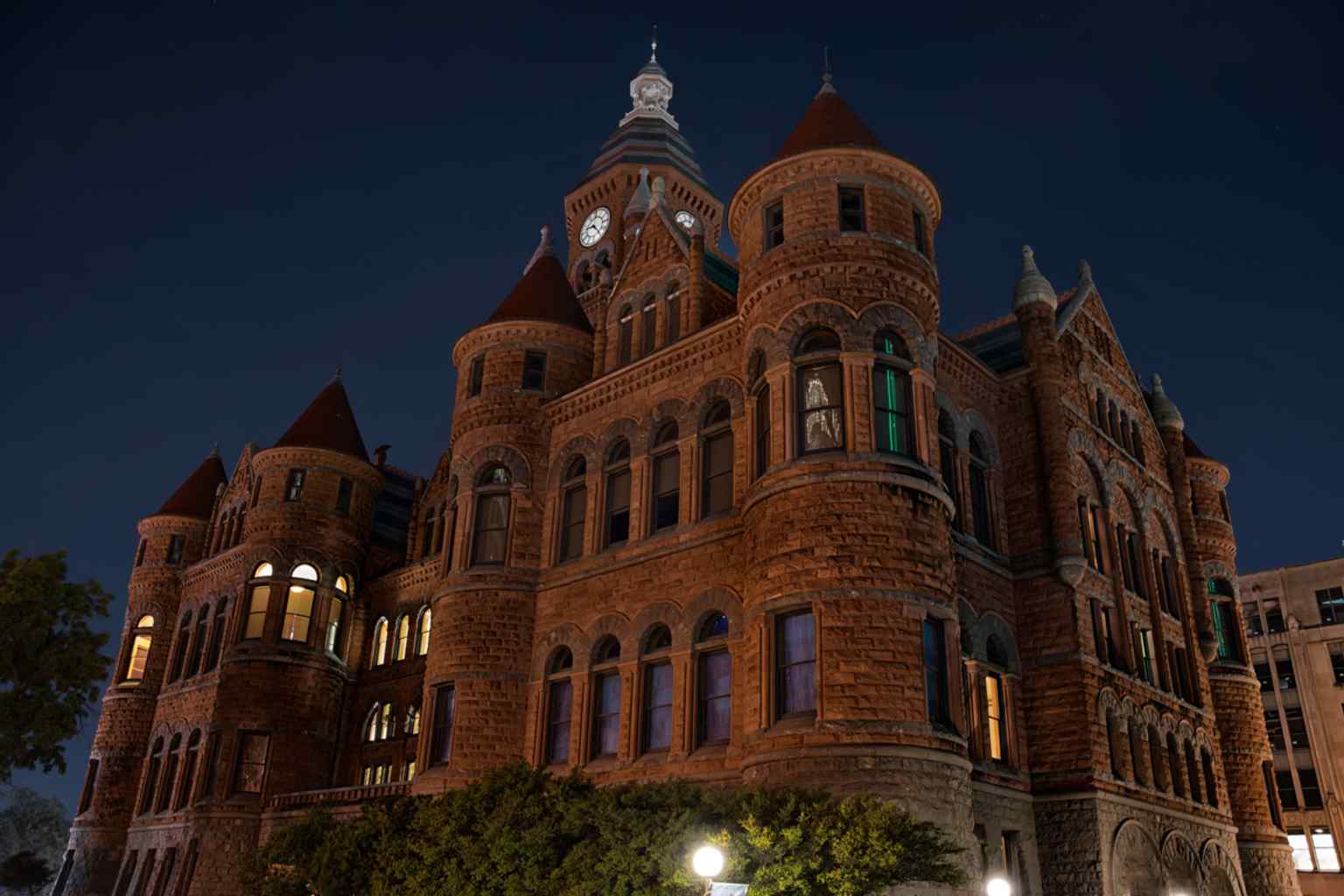
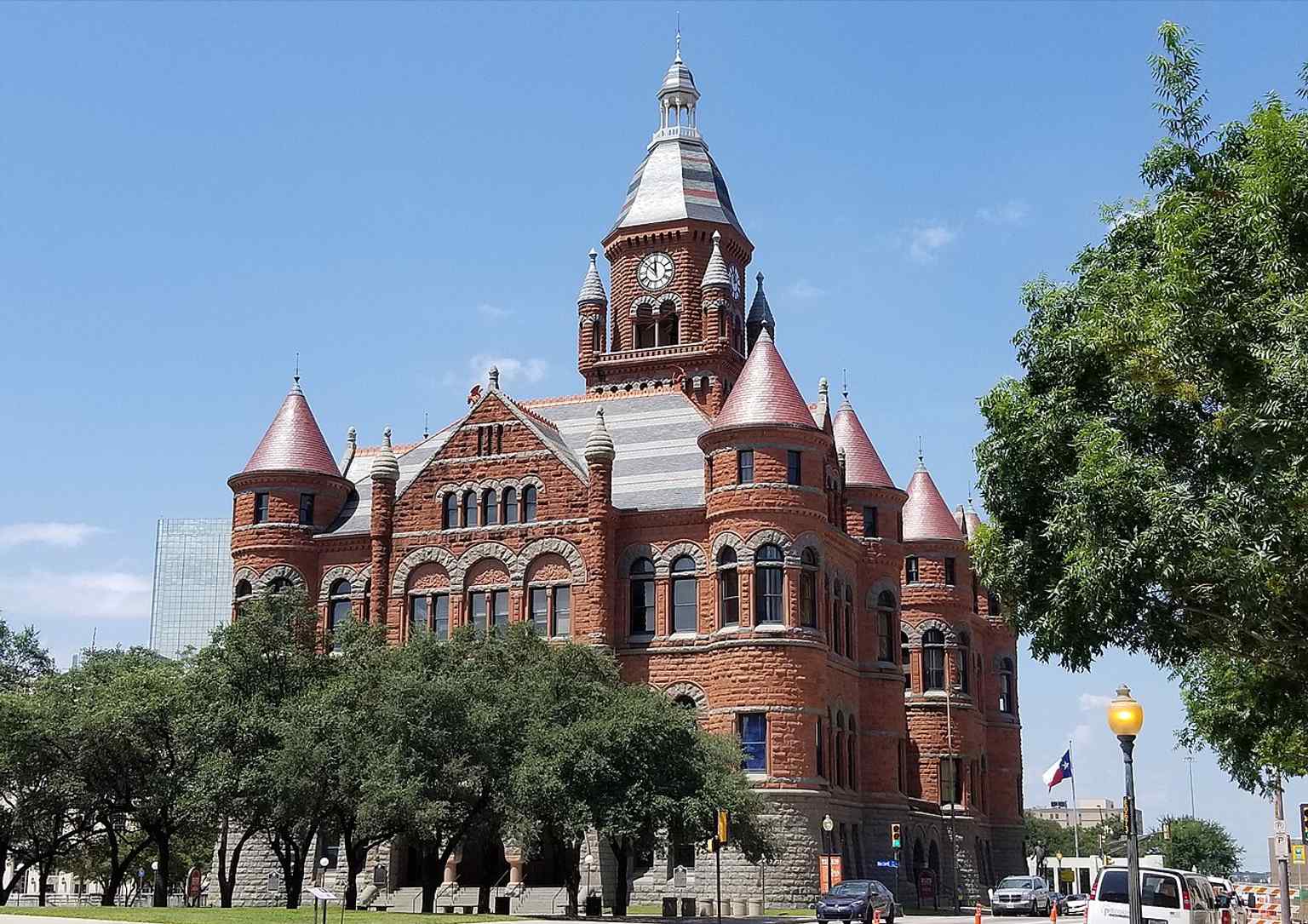
On your right, the Dallas County Courthouse looks like it means business... and, in fairness, it usually has. Built in eighteen ninety-two from red sandstone with rough-cut marble accents, it came from architect Max Orlopp Junior in the Richardsonian Romanesque style - that’s the big, heavy, fortress-like look, with deep arches and thick stone that seems designed to outlast both fashion and bad decisions. Dallas had reason to think that way: four of its five earlier courthouses burned.
If you glance at the image on your screen, the close-up shows that tough skin beautifully. This was public morality in stone, and civic shame in stone too. Courthouses are where a city performs its values in public... and sometimes reveals how badly it fails them.
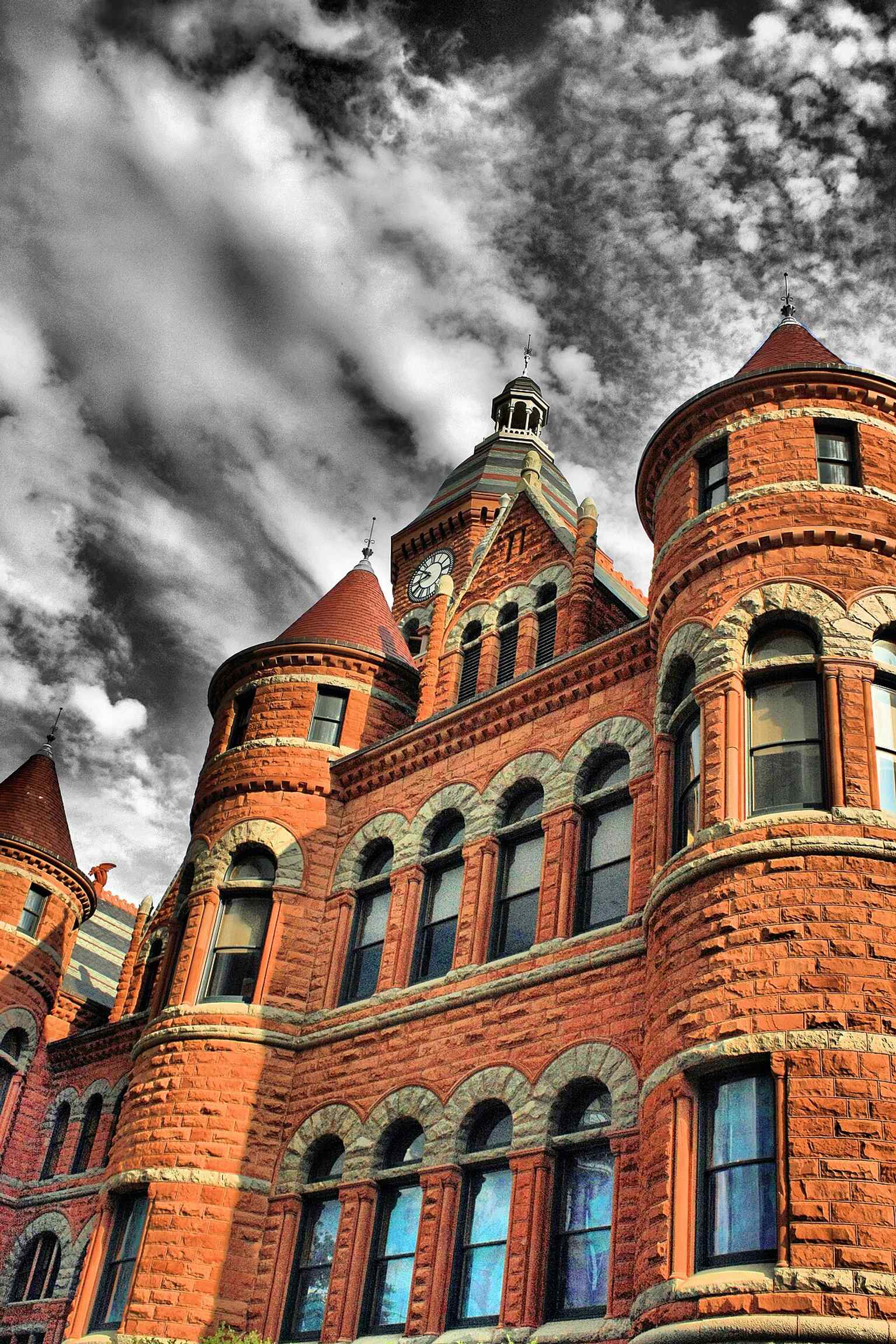
In nineteen oh four, Carrie Nation, the prohibition crusader with a talent for turning temperance into theater, gave a lecture inside. Locals still remember the detail most tourists miss: so many people showed up that the courtroom overflowed and listeners packed the hallways. The building became a civic stage, part sermon, part spectacle.
Then came one of the darkest moments in Dallas history. On the third of March, nineteen ten, Sheriff Arthur Ledbetter brought Allen Brooks, a Black handyman accused in a rape case, here for proceedings. A mob stormed the courthouse, pulled Brooks from a second-floor window, and lynched him downtown near Main and Akard. Afterward, a grand jury refused to pursue indictments. So this building carries not only the violence, but the official shrug that followed.
Its tower tells a smaller version of the same story. The original clock tower rose one hundred twenty-three feet and held a two-ton bell, but officials removed it in nineteen nineteen because they feared it might collapse into the building. The tower you see now was restored in the two thousand five to two thousand seven renovation. By then Old Red had already become a museum, which is how most visitors know it today. President John Fitzgerald Kennedy’s motorcade passed here minutes before his assassination, brushing this local drama with national catastrophe. Later, in nineteen thirty-five, Sarah T. Hughes took her oath here as the first female judge in Texas - proof that institutions can disgrace themselves and still change.
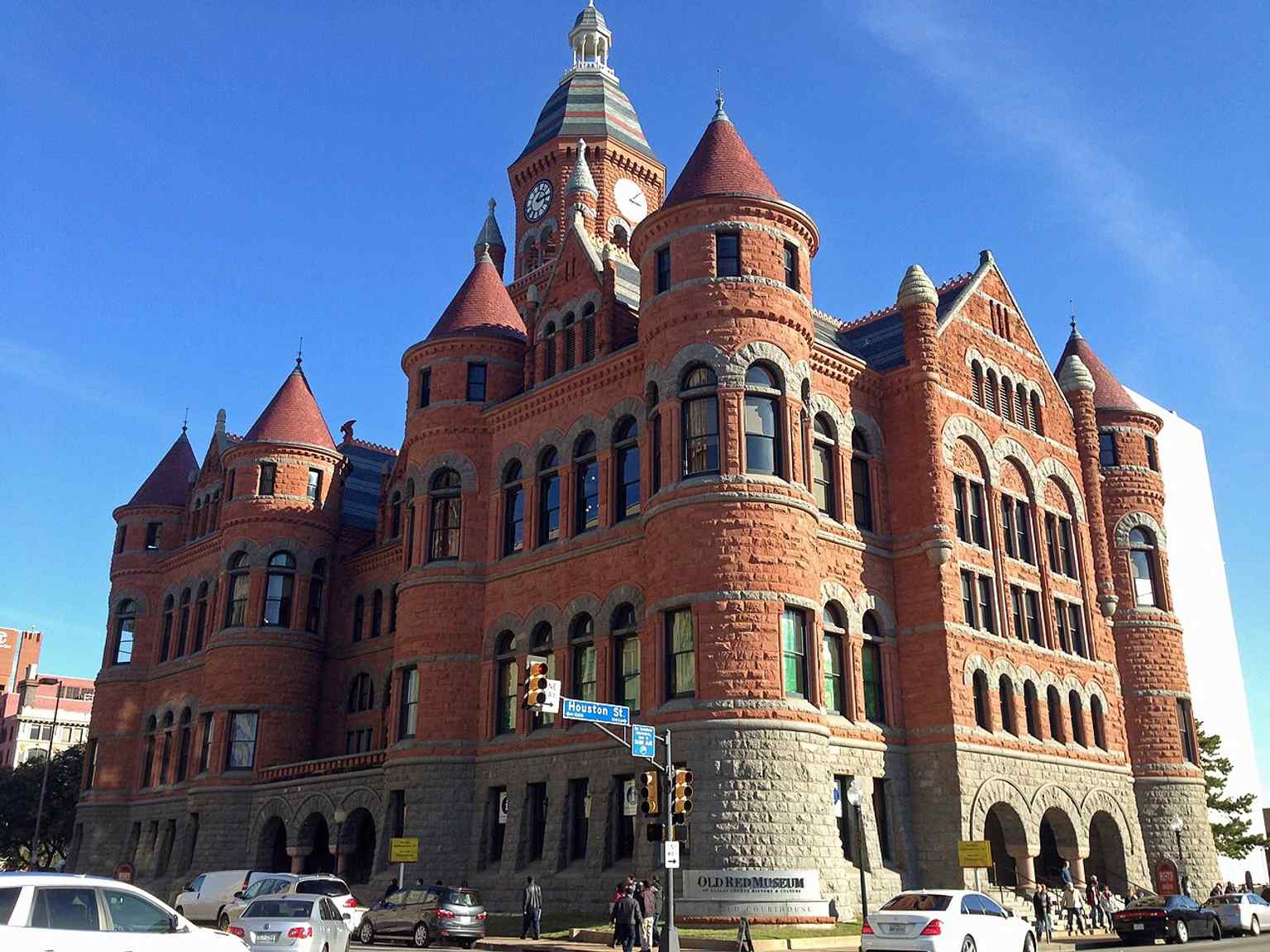
Take a look at the photo that frames the courthouse from Dealey Plaza, and you can feel how tightly these stories sit together.
From here, we leave formal power behind and head into the old warehouse district, where reinvention gets a little stranger and more tropical at the Dallas World Aquarium, about a ten-minute walk away. If you plan to come back inside, the courthouse is generally open weekdays from eight in the morning to four thirty in the afternoon.