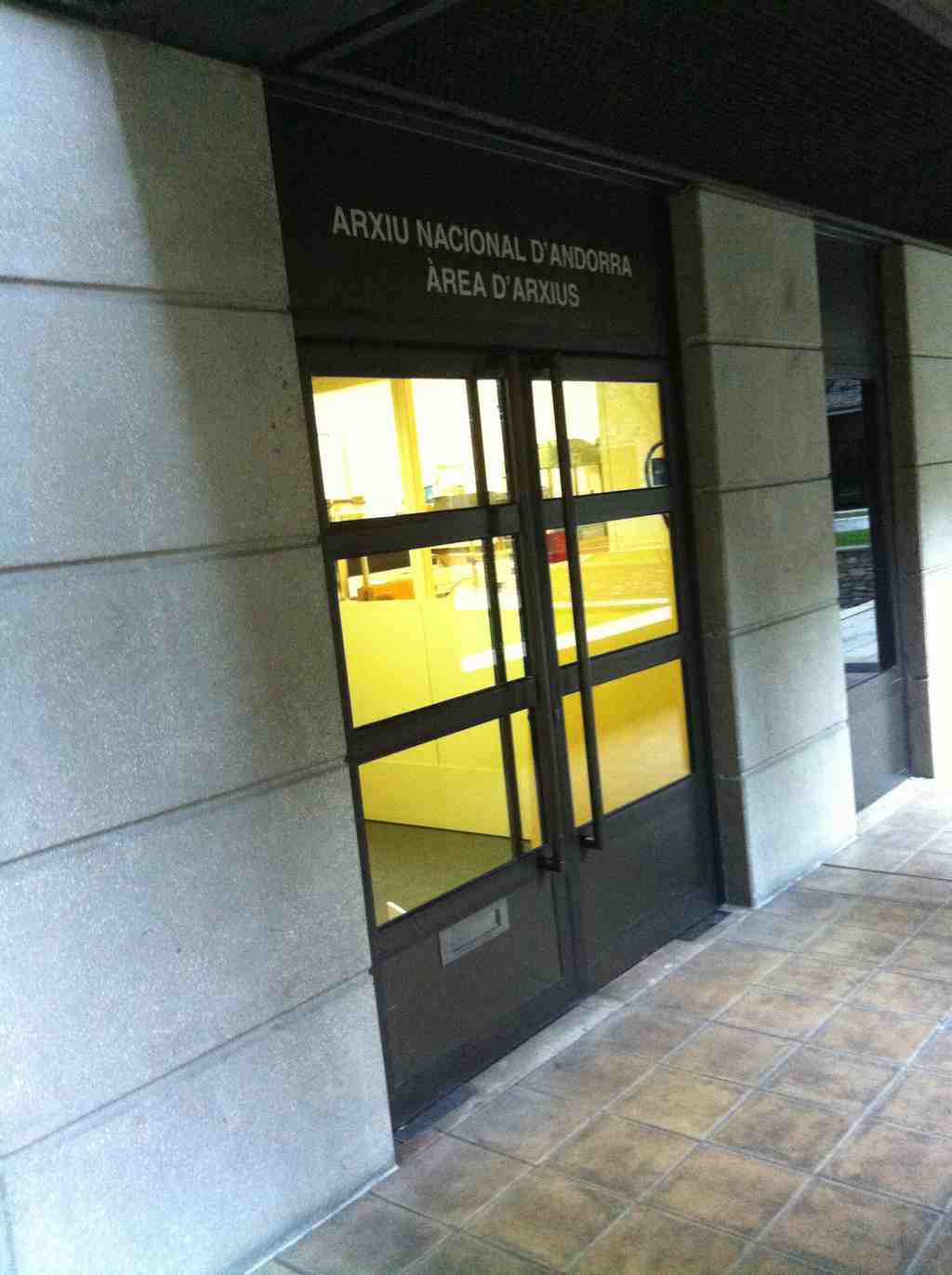
On your left, look for a modern stone-and-glass block with a clean rectangular shape, long window bands, and official lettering by the entrance.
This is the National Archives of Andorra, and if that sounds a little dry... stay with me. Places like this are where a small country teaches itself how not to vanish.
The General Council approved the national archives plan on the thirty-first of May, nineteen seventy-four, and the archive formally began in nineteen seventy-five. The timing mattered. After the population boom of the nineteen sixties, Andorrans worried that rapid change might blur the country’s language, institutions, and memory. So this was not simply about storing old papers in neat boxes. It was a determined effort to gather scattered evidence and make Andorra legible to itself.
One person stands right at the heart of that effort: Lídia Armengol i Vila. You met her influence earlier at the National Library, which she helped launch in nineteen seventy-four. Then she took on an even trickier job here. She helped build a national archive from fragments. She searched through departmental archives in France, found documents tied to Andorra, and brought them back as microfilm copies, meaning photographed reproductions on film rather than the original pages. France and Spain became the two great outside feeders of this new memory bank. The first headquarters sat modestly in the Casa de les Monges beside the General Council. From there, Armengol and her colleagues started stitching together a documentary homeland.
And what came in here? Letters, reports, notes, memos, photographs... but also whole collections from the Tribunal de Corts, Andorra’s old court records, as well as from Ràdio Andorra, town administrations, notaries, and even private companies. Archivists called it a fons de fons, basically a “collection of collections.” Good phrase, isn’t it? A country made visible one folder at a time.
Some of the most powerful records are painful ones. A document from fifteen fifty-one shows Andorran community leaders petitioning their lord against seizing the property of women condemned for witchcraft. They argued that torture and confiscation were ruining households and starving children. So the archive preserves not only persecution, but resistance to it. Researchers also recovered the story of Maria Martina, tried several times between fifteen fourteen and fifteen twenty-two, tortured with vinegar and boiling lard, then banished from the valleys. Another name survives too: Caterina Yvona of Escaldes, the first known woman accused of witchcraft in Andorra.
In nineteen ninety-seven, the system grew into a broader state structure, and the law in two thousand three made the mission plain: collect, preserve, share, and protect the country’s documentary heritage. Now much of that work reaches outward digitally too, through old photographs, sound, and film.
Let this place sink in... a nation can lose paintings, buildings, even voices, but documents keep leaving breadcrumbs. Next, we head to Parc Central, about seven minutes away, where the city turned public ground into shared breathing room. If you plan to come inside another time, the archives usually open from Monday to Friday in the morning through early afternoon, with shorter hours on Saturday, and they close on Sunday.