Andorra la Vella Audio Tour: Timeless Stories Amidst Mountain Majesty
A snow-capped principality hides secrets beneath its stunning peaks: Andorra’s stories ripple beyond the ski slopes. Between modern arenas and stone-clad halls, echoes of political intrigue and literary rebellion pulse through the heart of the city. This self-guided audio tour unlocks Andorra la Vella’s hidden tales, guiding you from roaring sports legends at the Poliesportiu d’Andorra to dusty archives in the National Library and into the stone shadows of Casa de la Vall. Peel back layers most visitors never see. What scandal threatened to unravel an entire government inside Casa de la Vall’s fortified walls? Why did ancient books vanish mysteriously from the National Library on a stormy night? And who was the bold athlete forever banned from Poliesportiu d’Andorra for breaking an unspoken rule? Traverse cobbled streets and secret corridors. Witness drama, rebellion and wonder as the city’s past springs to life with every step. Dive in and uncover Andorra’s astonishing depths waiting just below the surface.
Tour preview
About this tour
- scheduleDuration 70–90 minsGo at your own pace
- straighten2.9 km walking routeFollow the guided path
- location_onLocationSant Julia de Loria, Andorra
- wifi_offWorks offlineDownload once, use anywhere
- all_inclusiveLifetime accessReplay anytime, forever
- location_onStarts at Poliesportiu d'Andorra
Stops on this tour
lock_open 3 free previews · 6 unlock with purchase
Ahead of you stands a broad, pale concrete arena with a low curved roof and a glass-fronted entrance, marked by its sturdy, no-nonsense sports-hall façade. Welcome to the…Read moreShow less
Open dedicated page →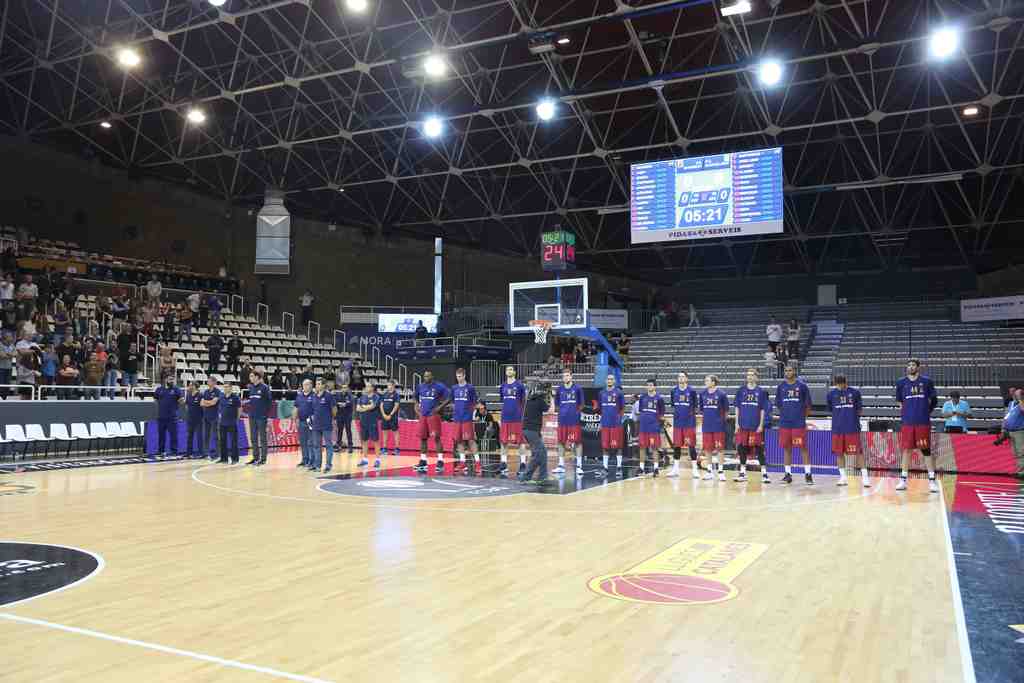
Poliesportiu d'AndorraPhoto: NASA World Wind, Wikimedia Commons, Public domain. Cropped & resized. Ahead of you stands a broad, pale concrete arena with a low curved roof and a glass-fronted entrance, marked by its sturdy, no-nonsense sports-hall façade.
Welcome to the Poliesportiu d'Andorra... or, as it is officially called now, the Pavelló Toni Martí. From where you’re standing, with the main entrance right in front of you, it may look straightforward enough: a place for games, whistles, scoreboards, maybe a little shouting from the cheap seats. In Andorra la Vella, though, buildings like this rarely stick to one job.
This hall opened in nineteen ninety-one with room for about three thousand people. Then B-C Andorra climbed toward Spain’s top basketball league, and the arena stretched with it. For a few seasons in the nineteen nineties, extra seating pushed capacity to five thousand. In twenty fourteen, after the club earned promotion again, the government moved fast... seven weeks fast. Workers put in new video scoreboards, new baskets, a fresh parquet floor - that’s the polished wooden playing surface - and retractable stands, all in time for the club’s return after eighteen years away from the top division.
That tells you something about this city. Public space here gets asked to reinvent itself on command. One month it serves elite basketball, another month handball or futsal, then a continental roller-hockey final, then a community gymnastics showcase with four hundred young athletes. Same shell, different heartbeat.
If you glance at the image on your screen, you can see that transformation in action: the interior becomes a bowl of light, signage, and steep seating, more theater than gymnasium when the crowd locks in. And that crowd matters. In a small capital tucked into a valley, voices carry. Announcers, chants, the slap of skates, a referee’s whistle, even a piano intro at a concert... they turn one room into something the whole city feels.
So here’s the question to carry with you: what does a country show about itself when one of its biggest public stages is a sports hall that can host a European final one year and Elton John the next?
Locals still remember one scheduling collision that most visitors never hear about. In twenty eleven, the roller-hockey Final Eight took over this building so completely that B-C River Andorra had to move its playoff home games to Joan Alay. That’s small-country life in one neat snapshot: when a major event lands, the whole calendar shifts sideways. The final itself ended with Liceo beating Reus Deportiu seven to four.
And then there’s Toni Martí, the man whose name the building now carries. He led the government from twenty eleven to twenty nineteen, and supporters saw him as someone who linked politics, sport, and public ambition in a very Andorran way. In January twenty twenty-five, before an Andorra-Real Madrid game, officials including Gorka Aixàs and Xavier Espot gathered here to unveil a sculpture and formally rename the arena in his memory.
We’re starting with noise, scale, and spectacle. Next, in about nine minutes on foot, we trade the roar of the hall for shelves, paper, and a quieter kind of nation-building at the Andorra National Library.
On your left, Casa de la Vall is a sturdy stone rectangle with a steep dark roof, a small corner turret shaped like a dovecote, and carved coats of arms set by the doorway. For a…Read moreShow less
Open dedicated page →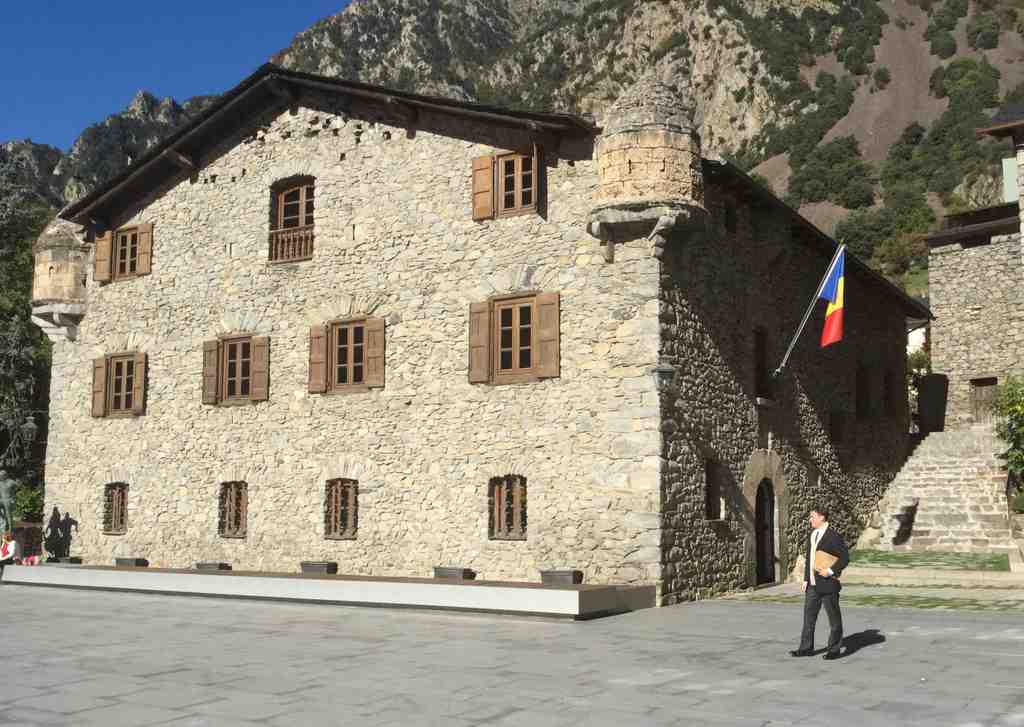
Casa de la VallPhoto: Zinneke, Wikimedia Commons, CC BY-SA 3.0. Cropped & resized. On your left, Casa de la Vall is a sturdy stone rectangle with a steep dark roof, a small corner turret shaped like a dovecote, and carved coats of arms set by the doorway.
For a country’s old parliament, it looks almost humble... and that is part of the charm. Before this house took on public life, Andorra’s governing body, the Consell de la Terra, had no fixed chamber at all. Meetings gathered in church porches, and when that failed, the heads of household met in cemeteries beside the churches. That is not a grand marble beginning. It is practical, local, and just a little astonishing.
Then Antoni Busquets enters the story. He was the vicar of Andorra la Vella, and in fifteen eighty he created this place as a family manor with a defensive tower. He even recorded it in his will of sixteen oh three. A clerical family house, solid and private, stood here waiting for a second life it could not have guessed.
That second life arrived when the General Council bought the house on the nineteenth of December, seventeen oh one, for one thousand six hundred and fifty lliures... a serious sum at the time. By seventeen oh two, the Busquets home had become the seat of the land’s government. Not bad for a family residence. One minute you are minding the household; the next, you are hosting the state.
Inside, each level picked up a job. The ground floor handled justice, with the courtroom set where stables once stood before restoration reshaped the space in the early nineteen sixties. Upstairs, the old family floor turned into the Council Chamber, a chapel dedicated to Saint Ermengol, and the famous closet of the seven keys, a cabinet for historic documents. Each parish held one key, so no single hand could open the archive alone. That little bit of locksmithing tells you plenty about Andorra’s political instincts.
Those documents included the Manual Digest and the Politar Andorrà, texts that helped define how this tiny country understood itself. For a brief spell in nineteen thirty, what became the National Library even moved in here, turning the old parliamentary house into a makeshift cultural storehouse too. Later, the top floor changed again: it held the Postal Museum until the early nineteen nineties, then made room for the three-party commission that drafted Andorra’s Constitution in nineteen ninety-three. If you want a quick time jump, check the before-and-after image in the app; the nineteen oh seven view makes this restored landmark’s many reinventions easier to spot.
And politics here was not neat and tidy. Winter sessions could drag on so long that councilors slept in the building and shared heavy meals under this roof. Parliament, court, hostel, archive... this house wore more hats than a mountain pack mule. If you look at the detail image on your screen, you can see the old arms by the doorway, where the Busquets family and Andorra quite literally meet on the same stone threshold.
Even after the new parliament opened next door in twenty eleven, this house kept its ceremonial role. So let me leave you with this: if your parliament began in porches and graveyards before settling into a former home, does that make power seem fragile... or wonderfully close to ordinary life?
And notice one more thing before we move on: here, government and worship stood almost side by side, which sets us up nicely for Església de Sant Esteve, about a four-minute walk away. If you plan to return, Casa de la Vall usually opens from ten to two and again from three to six, with shorter hours on Sunday.
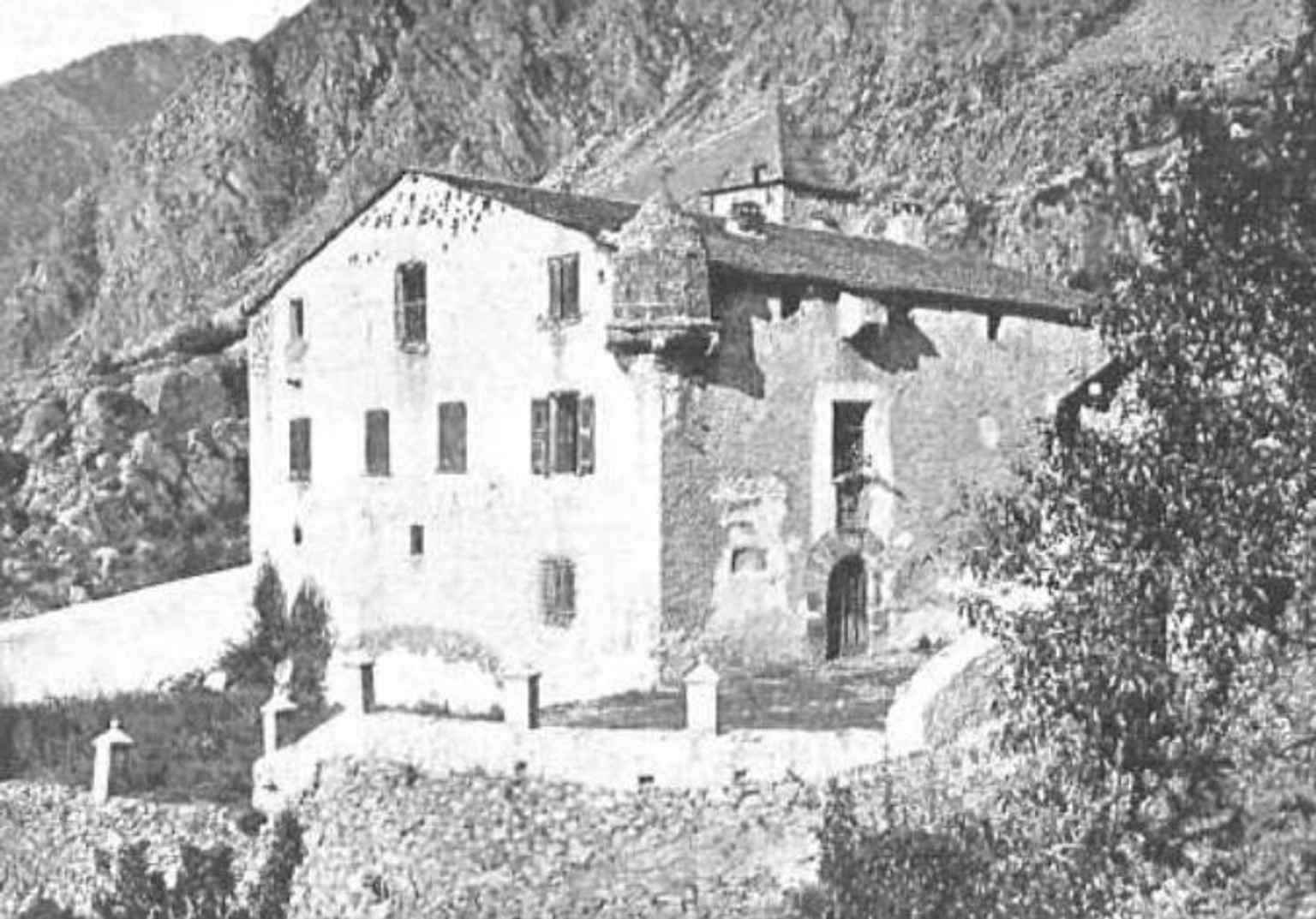
Casa de la Vall in a 1907 print — a rare early view of Andorra’s former parliament house before the 20th-century restorations.Photo: Josep Claverol, Wikimedia Commons, Public domain. Cropped & resized.

Show 6 more stopsShow fewer stopsexpand_moreexpand_less
On your left, Casa Felipó is a tall granite-faced block with a narrow vertical profile, stacked balconies, and a sharp corner façade that gives it a distinctly urban…Read moreShow less
Open dedicated page →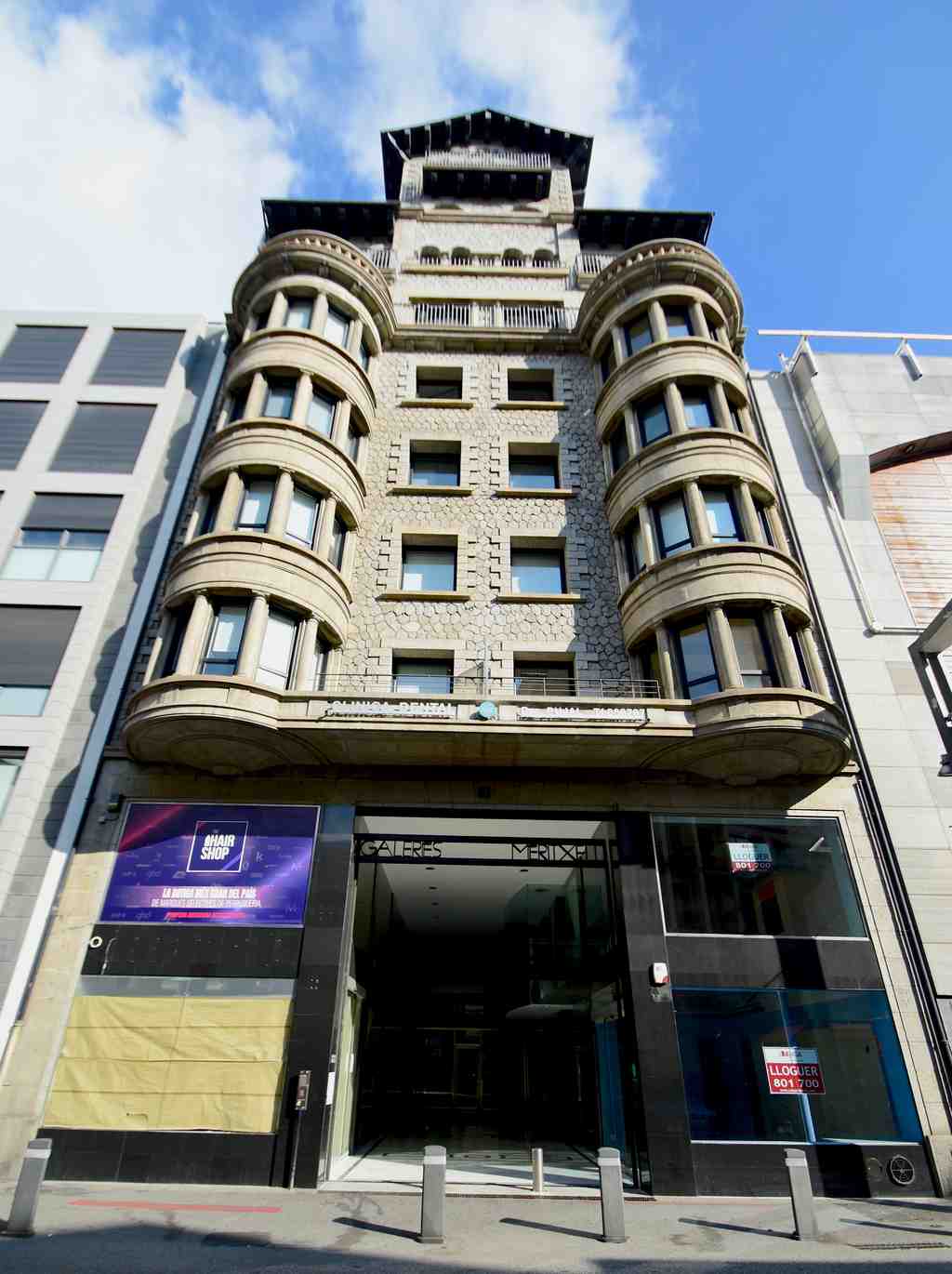
Casa FelipóPhoto: Ceesse, Wikimedia Commons, CC BY-SA 4.0. Cropped & resized. On your left, Casa Felipó is a tall granite-faced block with a narrow vertical profile, stacked balconies, and a sharp corner façade that gives it a distinctly urban swagger.
Businessman Josep Mariné Mèlich asked Barcelona architect Agustí Borrell Sensat to design this place in nineteen forty-eight, and together they gave Andorra la Vella something unusually modern for its day: height, a cosmopolitan look, and even an elevator... which, around here then, was a bit of a show-off move. If you glance at the image in the app, you can see how self-possessed the façade still feels. Today, Andorra protects it as part of the country’s cultural heritage.
But Casa Felipó kept a louder secret. By nineteen fifty, the telegraph service and Sud Radio studios were already inside, turning this address into a compact communications center. Then Radio de les Valls moved in during nineteen sixty-two, after its earlier life as Andor-Radio, and by nineteen sixty-four the Pic Blanc transmitter helped send voices from here far beyond this avenue.
Now lift your eyes toward the upper floors and imagine not quiet rooms, but studios, cables, and on the seventh floor, thousands of records. When Sud Radio closed in nineteen eighty-one, workers packed those discs into boxes and never unpacked them... a whole music library left sleeping overhead.
The sharpest turn came on New Year’s night, from nineteen ninety into nineteen ninety-one. Manel Sansa launched Ràdio Nacional d’Andorra from these old studios and later said the team found the place stripped of equipment, so they had to improvise, reconnect, and rebuild almost everything. For a while, Ràdio Valira squeezed in too. That’s Meritxell for you: polished frontage, busy shops, and behind the granite, a city learning to broadcast itself. We’ll catch the next chapter at Hotel Bellavista.
Look for the granite street façade: a tall, narrow front with rows of rectangular windows and a preserved stone face that stands a little like a mask in front of the newer…Read moreShow less
Open dedicated page →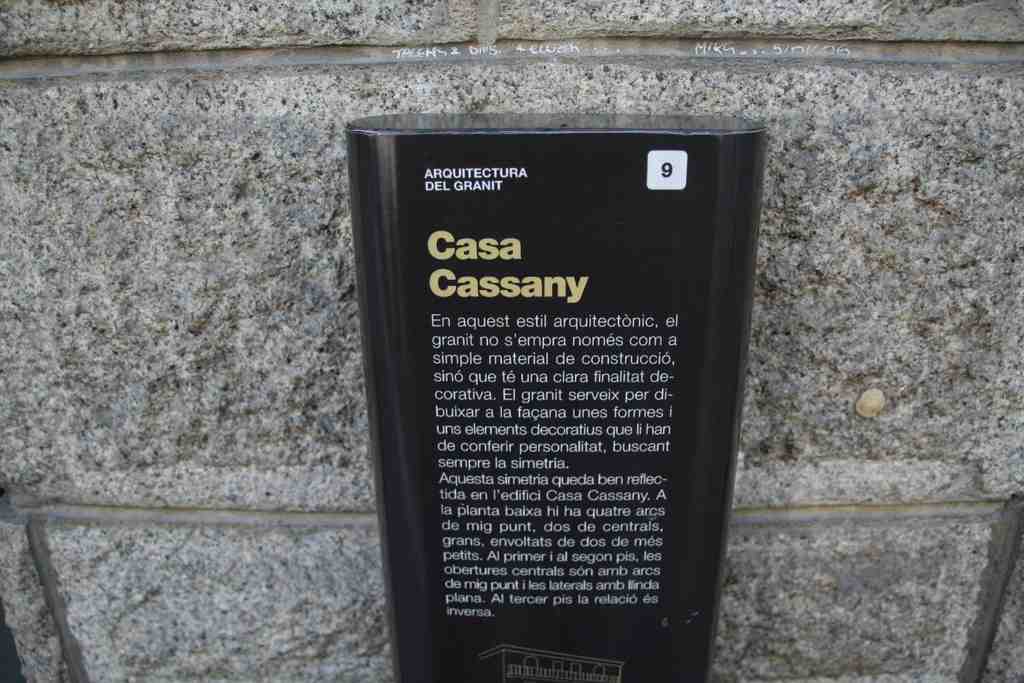
Hotel BellavistaPhoto: Kippelboy, Wikimedia Commons, CC BY-SA 3.0. Cropped & resized. Look for the granite street façade: a tall, narrow front with rows of rectangular windows and a preserved stone face that stands a little like a mask in front of the newer structure behind it.
This is Hotel Bellavista... or, more precisely, what survives of it. Joan Pujal, better known locally as Pageset, commissioned it between nineteen thirty-eight and nineteen forty, and that nickname matters. He was not some distant company man; he was a local builder-owner, which gives the whole place a family-business heartbeat.
Most people see a tidy heritage building. The paperwork tells a scrappier story. Construction came in fits and starts, and Pageset had to keep securing permission for more material just to keep the job moving, including a second shipment of timber from the Quart d'Andorra in March of nineteen forty. That is Andorra la Vella growing up in real time: not one grand leap, but a lot of practical patching and pushing.
And here is the twist. Bellavista entertained people before it really settled into hotel life. It had an early cinema already operating before the nineteen forties, and the cinema behind this façade still carries that thread forward. If you glance at the image on your screen, you can see that preserved street front doing its old job as a public face.
Inside, the ground floor first held the restaurant, reception, and kitchen. Later it turned into a toy shop, then fast food. By the nineteen nineties the hotel had faded out. In two thousand and four, workers demolished the rest and kept only this protected façade. Next, in about seven minutes, we head to the National Archives, where a place like this survives in paper as much as stone.
On your left, look for a modern stone-and-glass block with a clean rectangular shape, long window bands, and official lettering by the entrance. This is the National Archives of…Read moreShow less
Open dedicated page →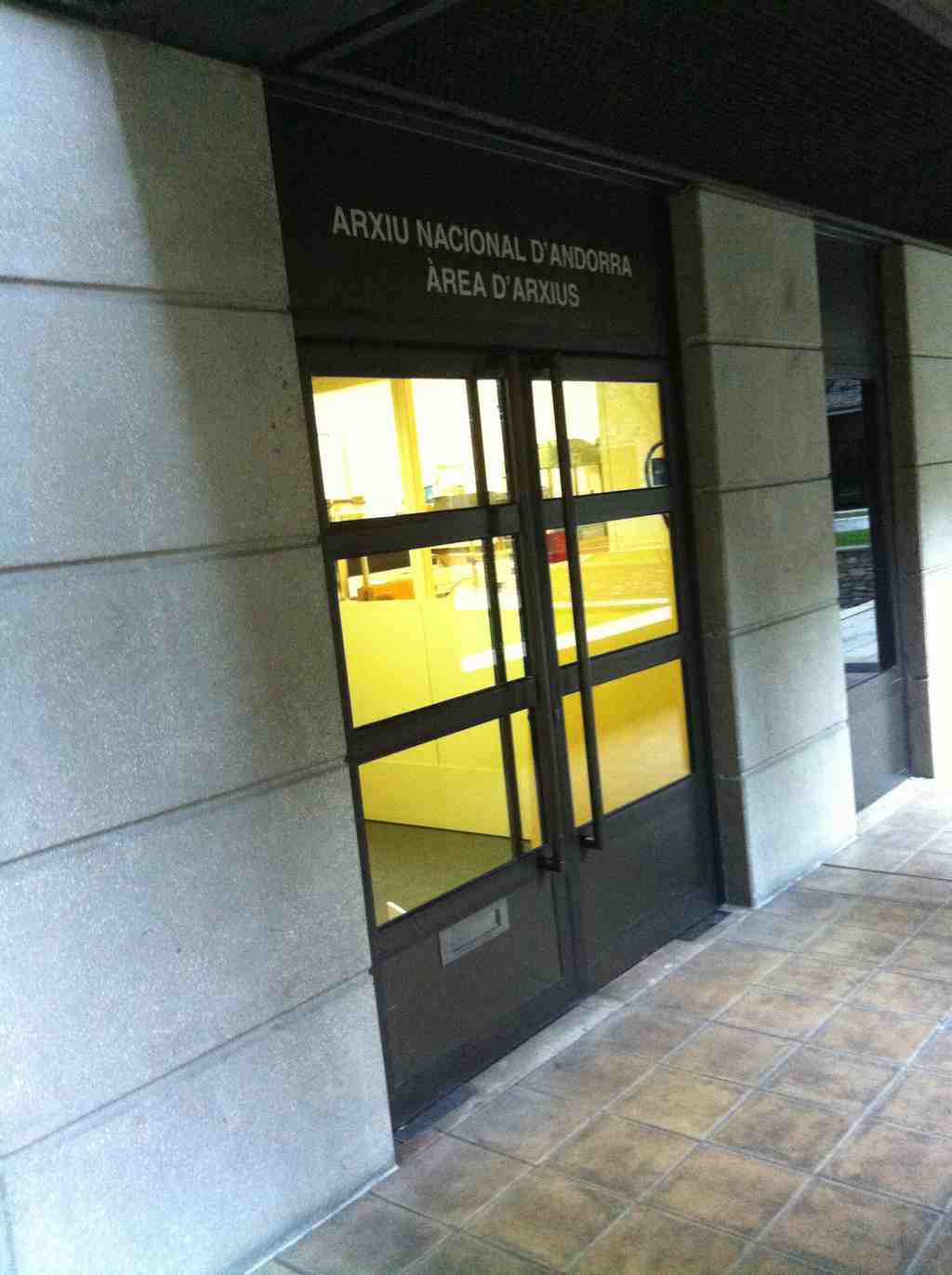
National Archives of AndorraPhoto: Kippelboy, Wikimedia Commons, CC BY 4.0. Cropped & resized. On your left, look for a modern stone-and-glass block with a clean rectangular shape, long window bands, and official lettering by the entrance.
This is the National Archives of Andorra, and if that sounds a little dry... stay with me. Places like this are where a small country teaches itself how not to vanish.
The General Council approved the national archives plan on the thirty-first of May, nineteen seventy-four, and the archive formally began in nineteen seventy-five. The timing mattered. After the population boom of the nineteen sixties, Andorrans worried that rapid change might blur the country’s language, institutions, and memory. So this was not simply about storing old papers in neat boxes. It was a determined effort to gather scattered evidence and make Andorra legible to itself.
One person stands right at the heart of that effort: Lídia Armengol i Vila. You met her influence earlier at the National Library, which she helped launch in nineteen seventy-four. Then she took on an even trickier job here. She helped build a national archive from fragments. She searched through departmental archives in France, found documents tied to Andorra, and brought them back as microfilm copies, meaning photographed reproductions on film rather than the original pages. France and Spain became the two great outside feeders of this new memory bank. The first headquarters sat modestly in the Casa de les Monges beside the General Council. From there, Armengol and her colleagues started stitching together a documentary homeland.
And what came in here? Letters, reports, notes, memos, photographs... but also whole collections from the Tribunal de Corts, Andorra’s old court records, as well as from Ràdio Andorra, town administrations, notaries, and even private companies. Archivists called it a fons de fons, basically a “collection of collections.” Good phrase, isn’t it? A country made visible one folder at a time.
Some of the most powerful records are painful ones. A document from fifteen fifty-one shows Andorran community leaders petitioning their lord against seizing the property of women condemned for witchcraft. They argued that torture and confiscation were ruining households and starving children. So the archive preserves not only persecution, but resistance to it. Researchers also recovered the story of Maria Martina, tried several times between fifteen fourteen and fifteen twenty-two, tortured with vinegar and boiling lard, then banished from the valleys. Another name survives too: Caterina Yvona of Escaldes, the first known woman accused of witchcraft in Andorra.
In nineteen ninety-seven, the system grew into a broader state structure, and the law in two thousand three made the mission plain: collect, preserve, share, and protect the country’s documentary heritage. Now much of that work reaches outward digitally too, through old photographs, sound, and film.
Let this place sink in... a nation can lose paintings, buildings, even voices, but documents keep leaving breadcrumbs. Next, we head to Parc Central, about seven minutes away, where the city turned public ground into shared breathing room. If you plan to come inside another time, the archives usually open from Monday to Friday in the morning through early afternoon, with shorter hours on Saturday, and they close on Sunday.
Frequently asked questions
How do I start the tour?
After purchase, download the AudaTours app and enter your redemption code. The tour will be ready to start immediately - just tap play and follow the GPS-guided route.
Do I need internet during the tour?
No! Download the tour before you start and enjoy it fully offline. Only the chat feature requires internet. We recommend downloading on WiFi to save mobile data.
Is this a guided group tour?
No - this is a self-guided audio tour. You explore independently at your own pace, with audio narration playing through your phone. No tour guide, no group, no schedule.
How long does the tour take?
Most tours take 60–90 minutes to complete, but you control the pace entirely. Pause, skip stops, or take breaks whenever you want.
What if I can't finish the tour today?
No problem! Tours have lifetime access. Pause and resume whenever you like - tomorrow, next week, or next year. Your progress is saved.
What languages are available?
All tours are available in 50+ languages. Select your preferred language when redeeming your code. Note: language cannot be changed after tour generation.
Where do I access the tour after purchase?
Download the free AudaTours app from the App Store or Google Play. Enter your redemption code (sent via email) and the tour will appear in your library, ready to download and start.
If you don't enjoy the tour, we'll refund your purchase. Contact us at help@audatours.com
Checkout securely with