
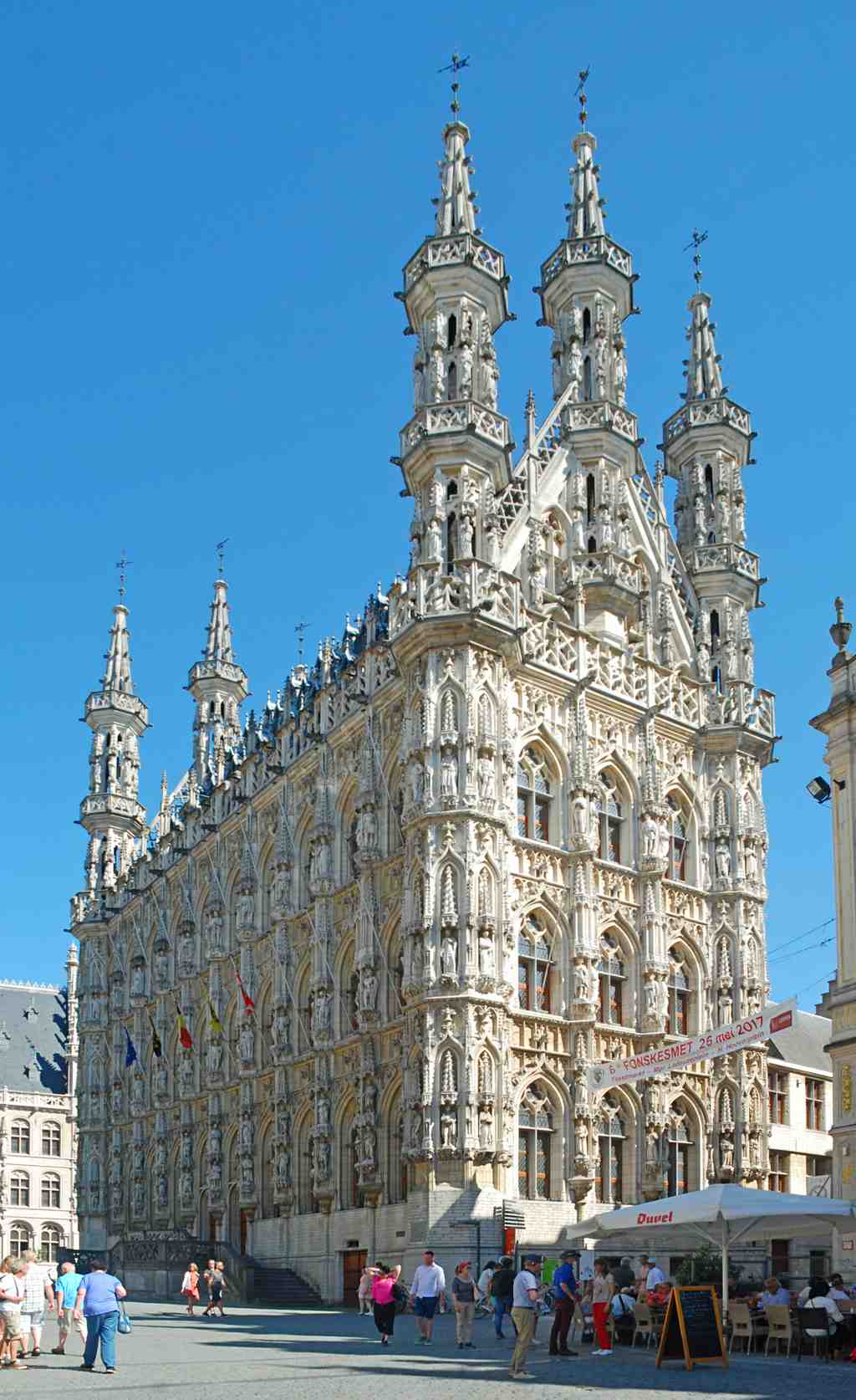
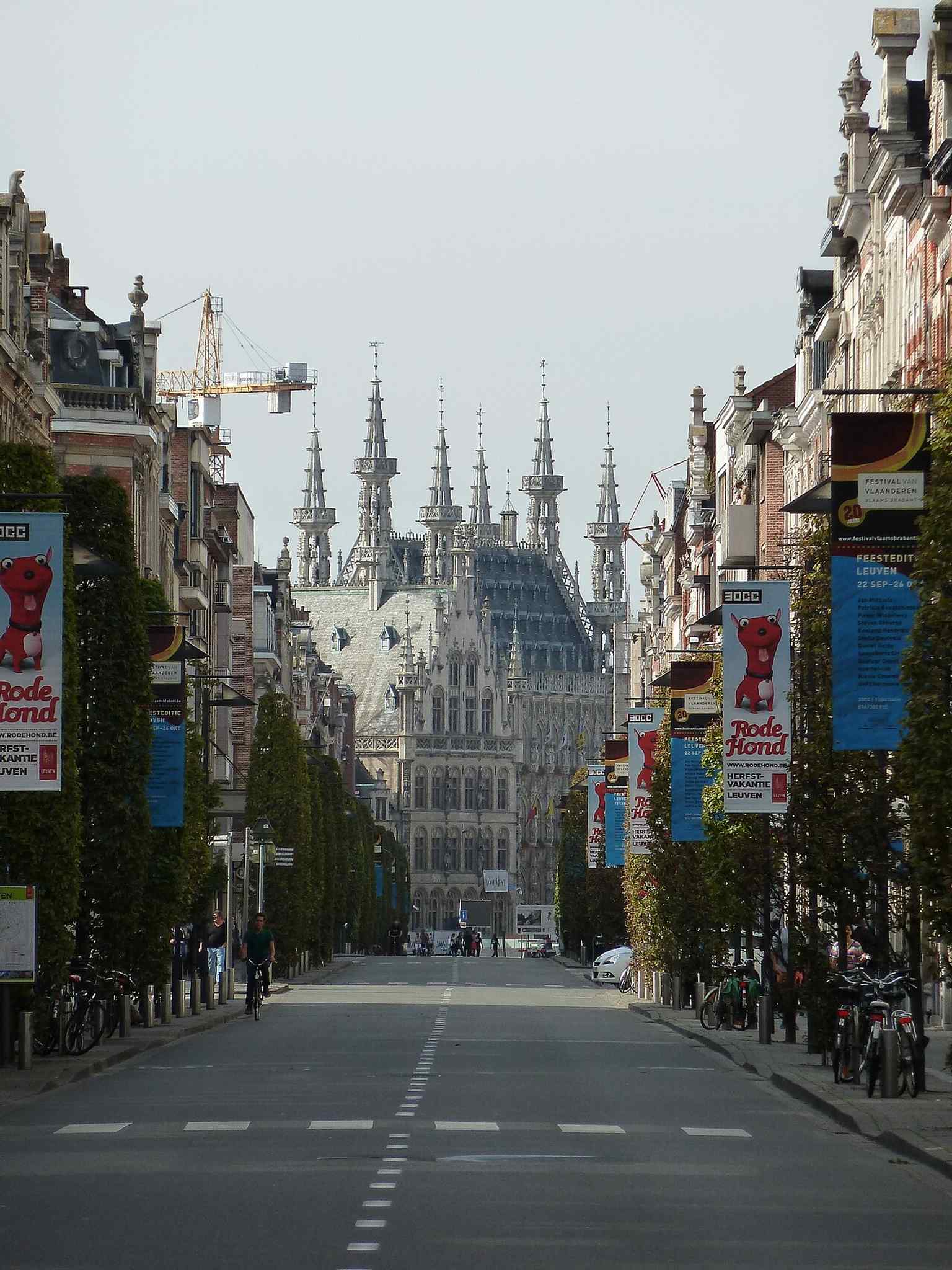
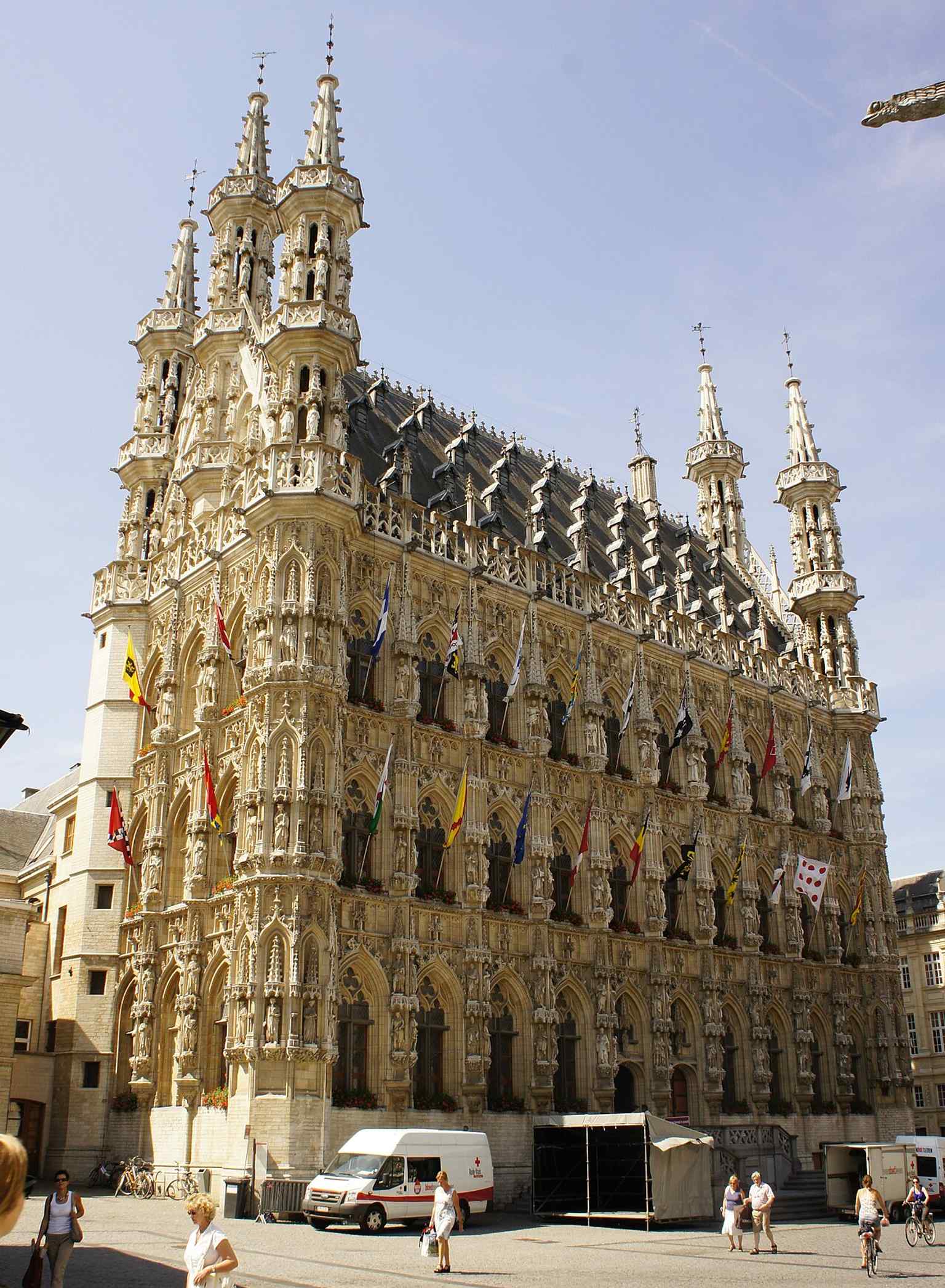
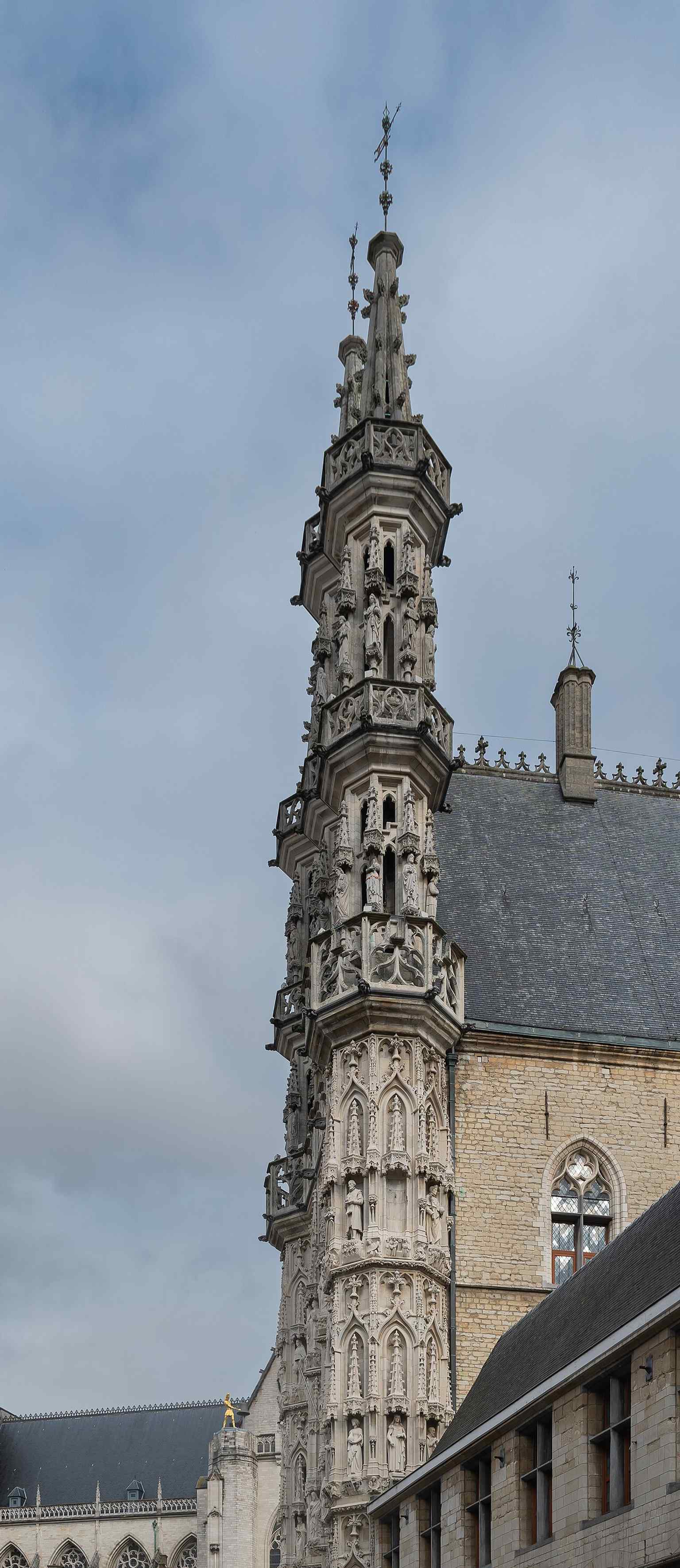
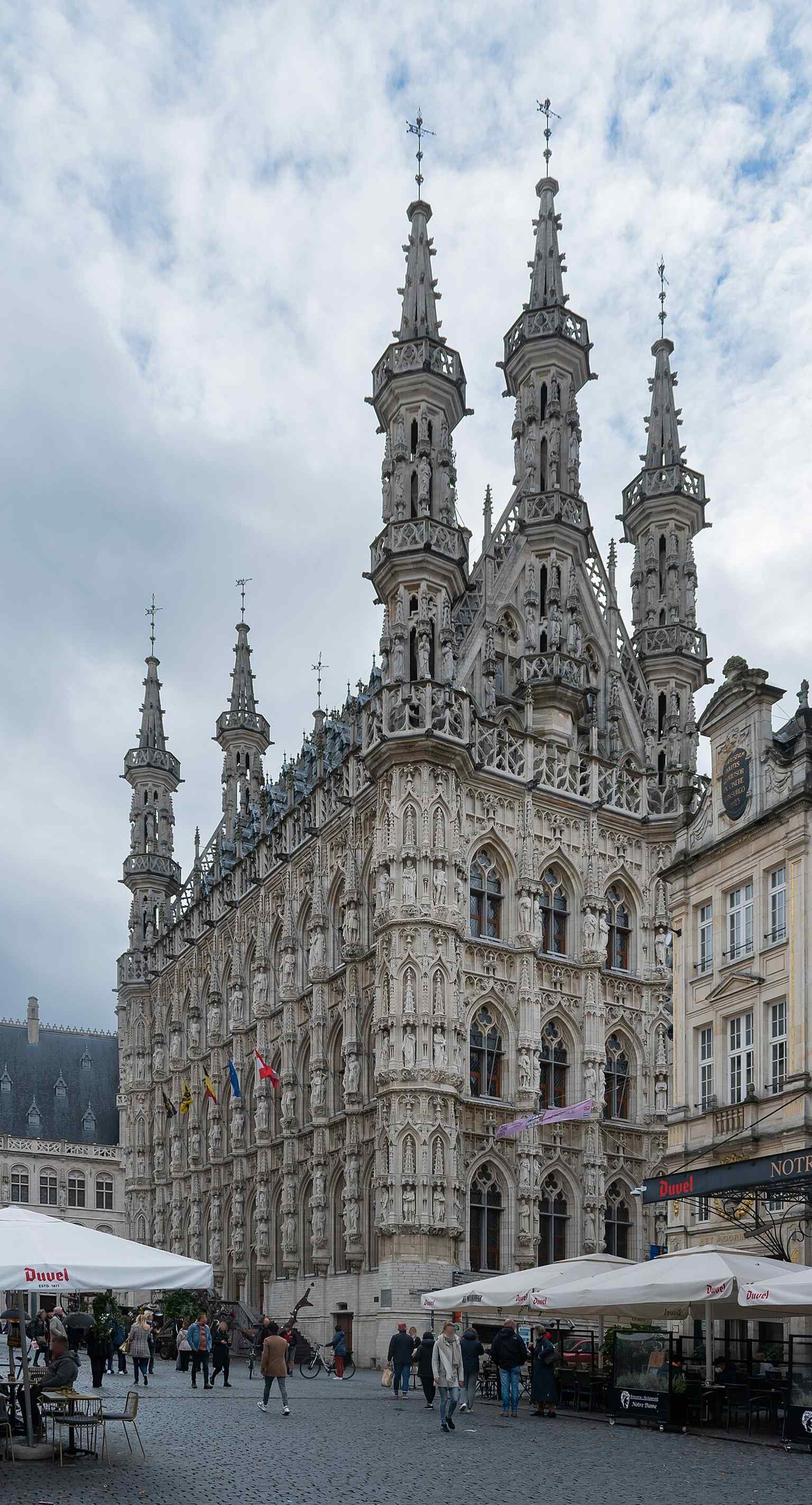
On your right, look for a pale stone façade like a giant lace-carved screen, with rows of pointed windows and a steep roof pricked by little octagonal turrets.
This is Leuven Town Hall, the city’s great civic counterweight to university learning and church authority. Across the Grote Markt from Saint Peter’s Church, it does not bow its head... it answers back. The square works like a formal stage, and these two façades face each other like old debaters in very expensive robes.
Construction started in the fourteen forties on the site of an older town hall. Sulpitius Van Vorst began the job, Jan Keldermans the Second briefly followed, and then Matheus de Layens took over in fourteen forty-eight and gave the story its famous ending. The original plan copied Brussels and called for a corner belfry, meaning a big civic bell tower. De Layens looked at the sandy ground and made the sensible call: no heroic tower, no dramatic collapse. Instead, he created the balanced crown of turrets you see now, a symmetrical design that makes the whole building look less like an office and more like a jeweled shrine for city pride.
Take a moment and scan the façade from left to right. Does it feel like administration... or theatre? Leuven is giving you its answer in stone: public life should be seen.
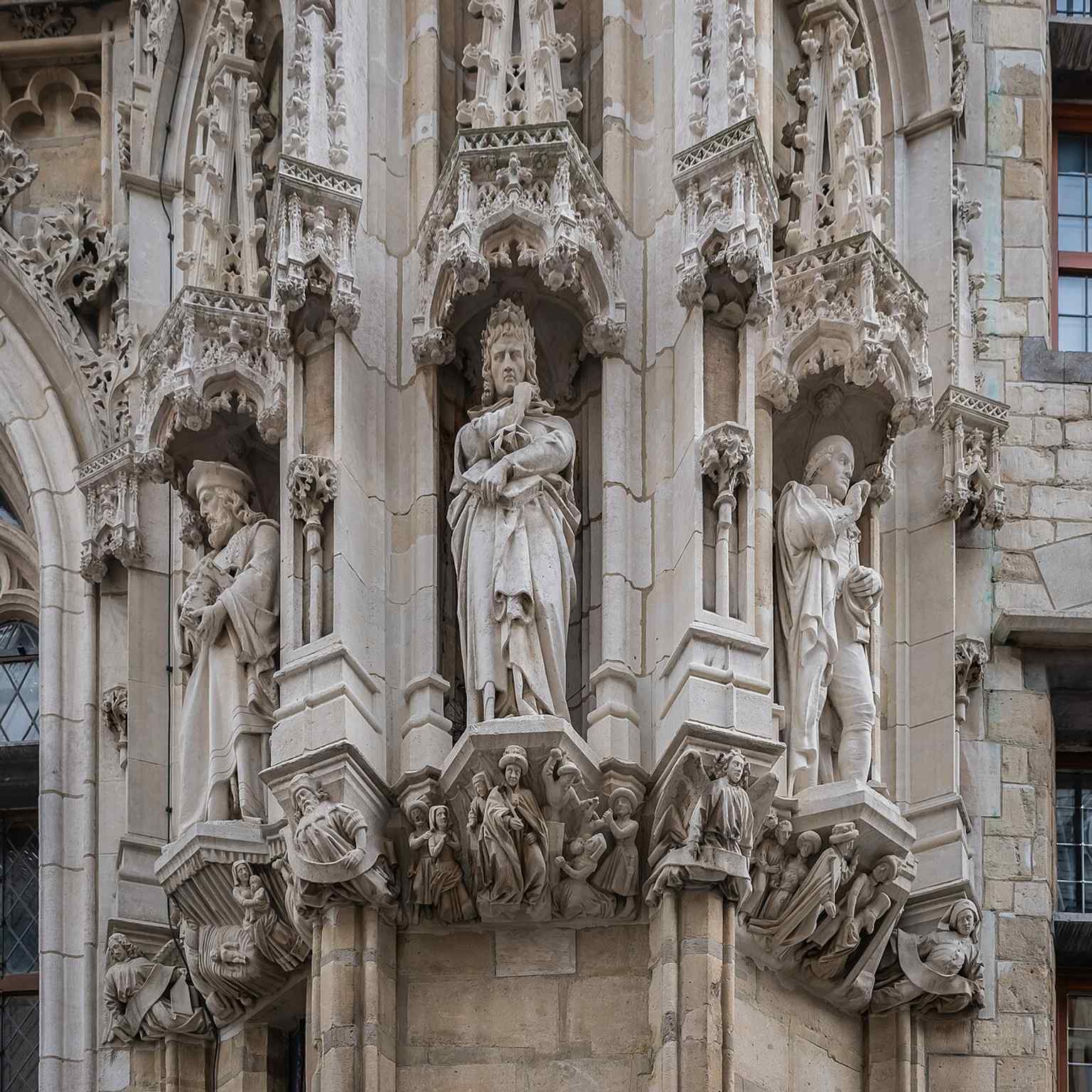
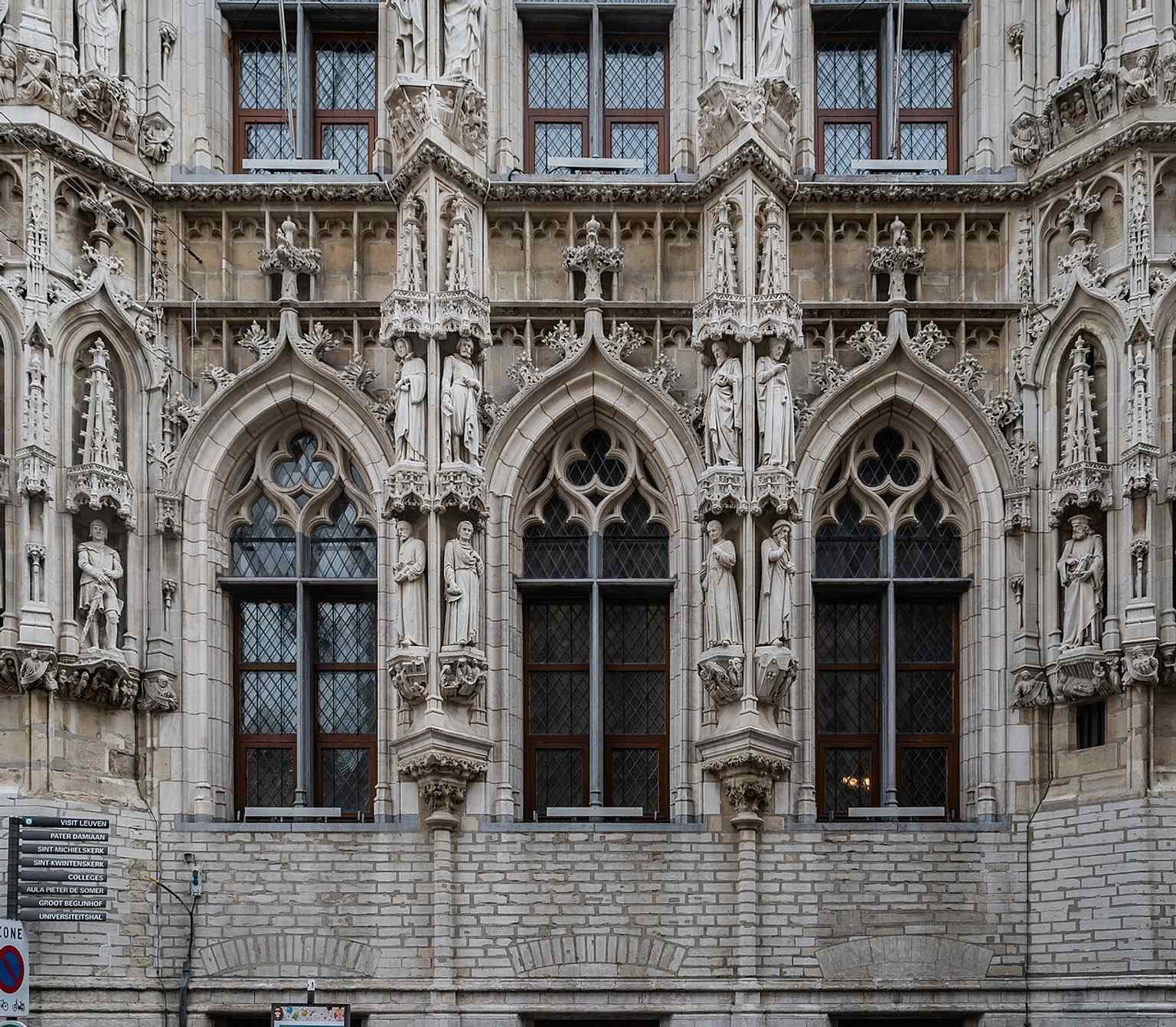
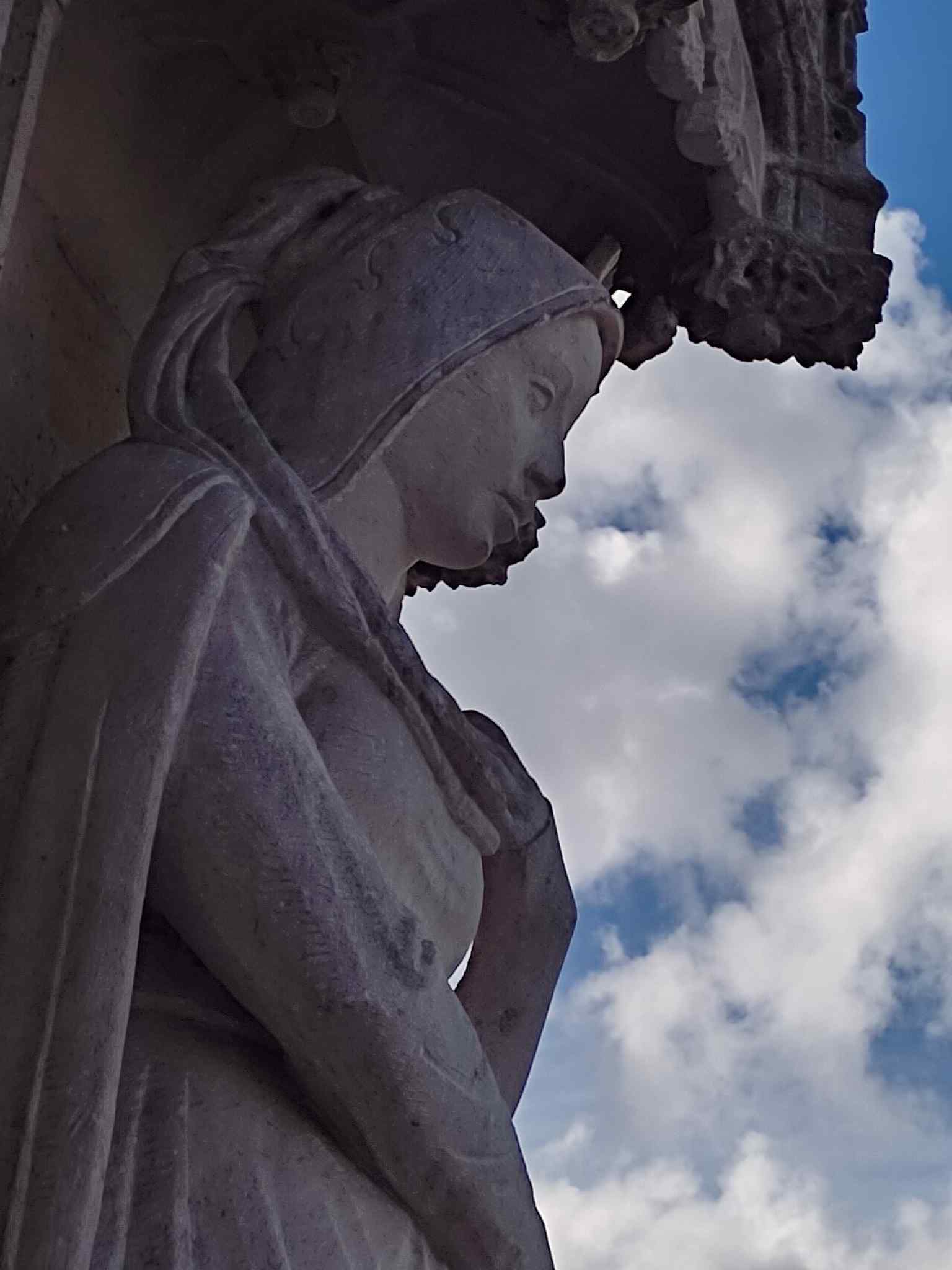
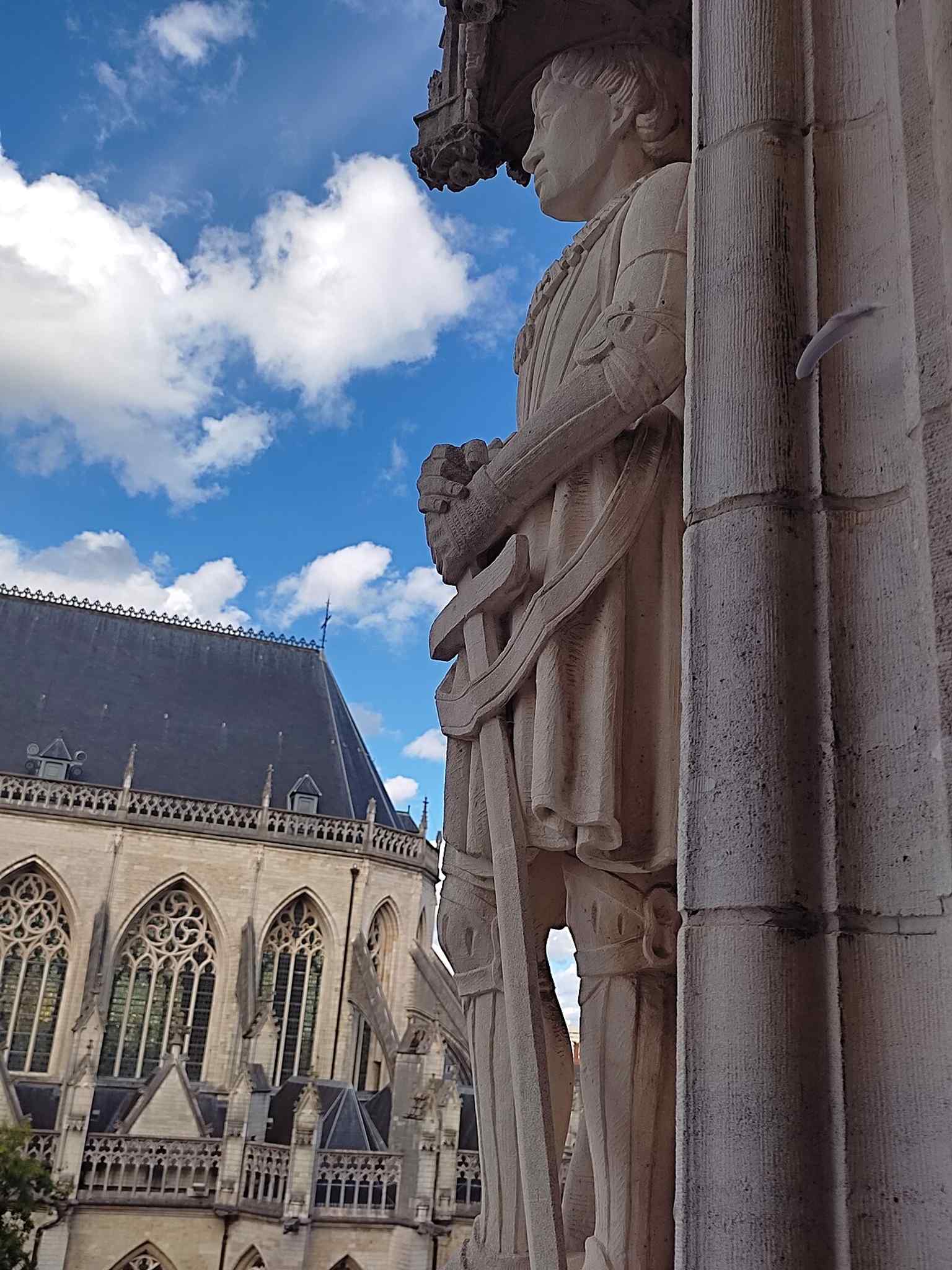
Those hundreds of niches and canopies carry another great Leuven story. For centuries, they stood empty, and locals nicknamed the building the reliquary without saints. One shipment of statues sank in a storm, a second was stolen, and a third crashed down during a tempest in fourteen seventy-seven. The city gave up for generations. Then, in eighteen fifty-two, Victor Hugo visited and fired off an angry little demand: fill the niches. By eighteen eighty, Leuven finally did. Today there are two hundred thirty-six statues here, from local figures on the lower level to saints and rulers above. One niche is empty again, though: the statue of King Leopold the Second came down in twenty twenty after protests over his colonial legacy. If you want a closer look at that sculptural crowd, tap the detail image in the app.
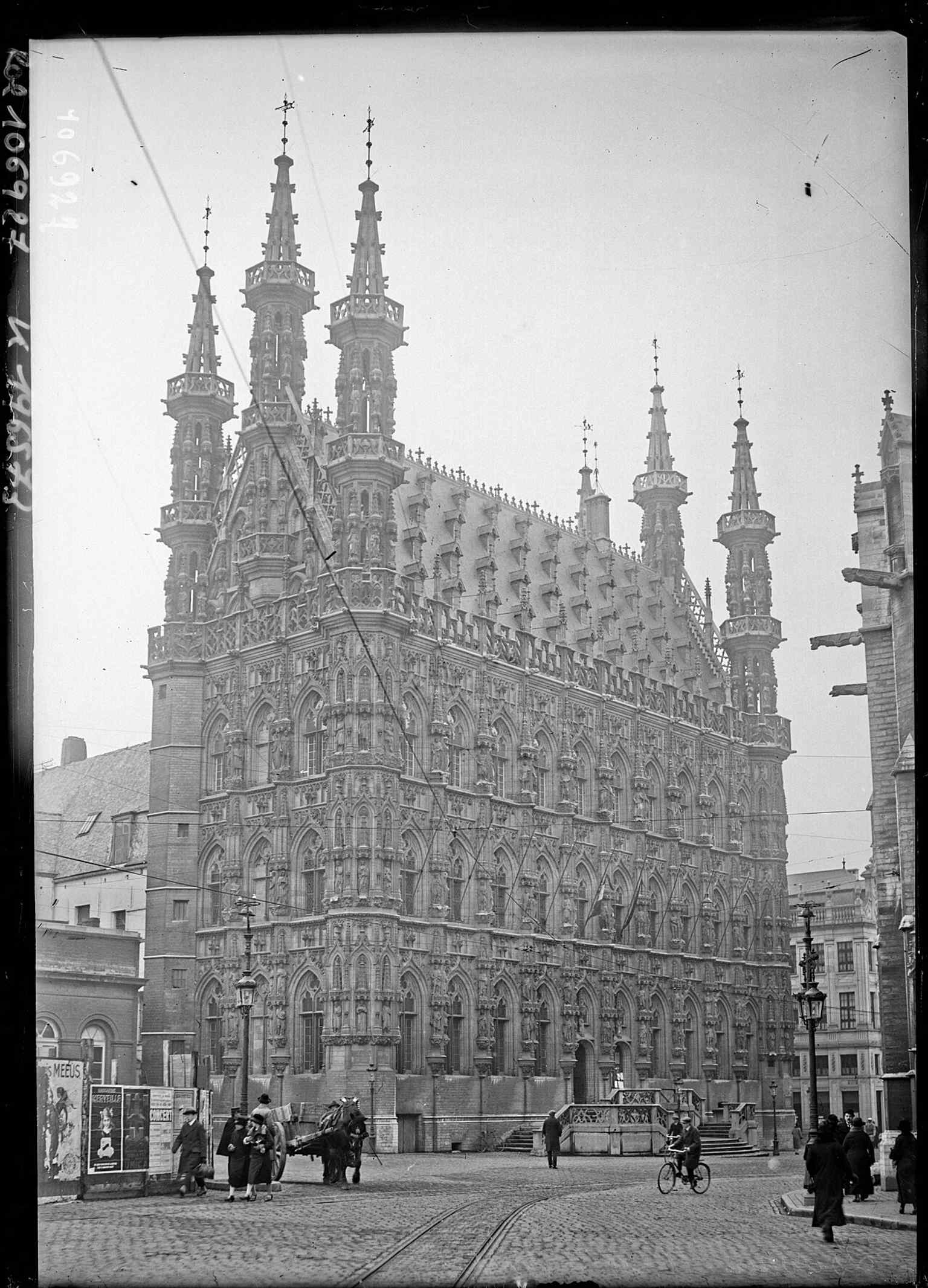
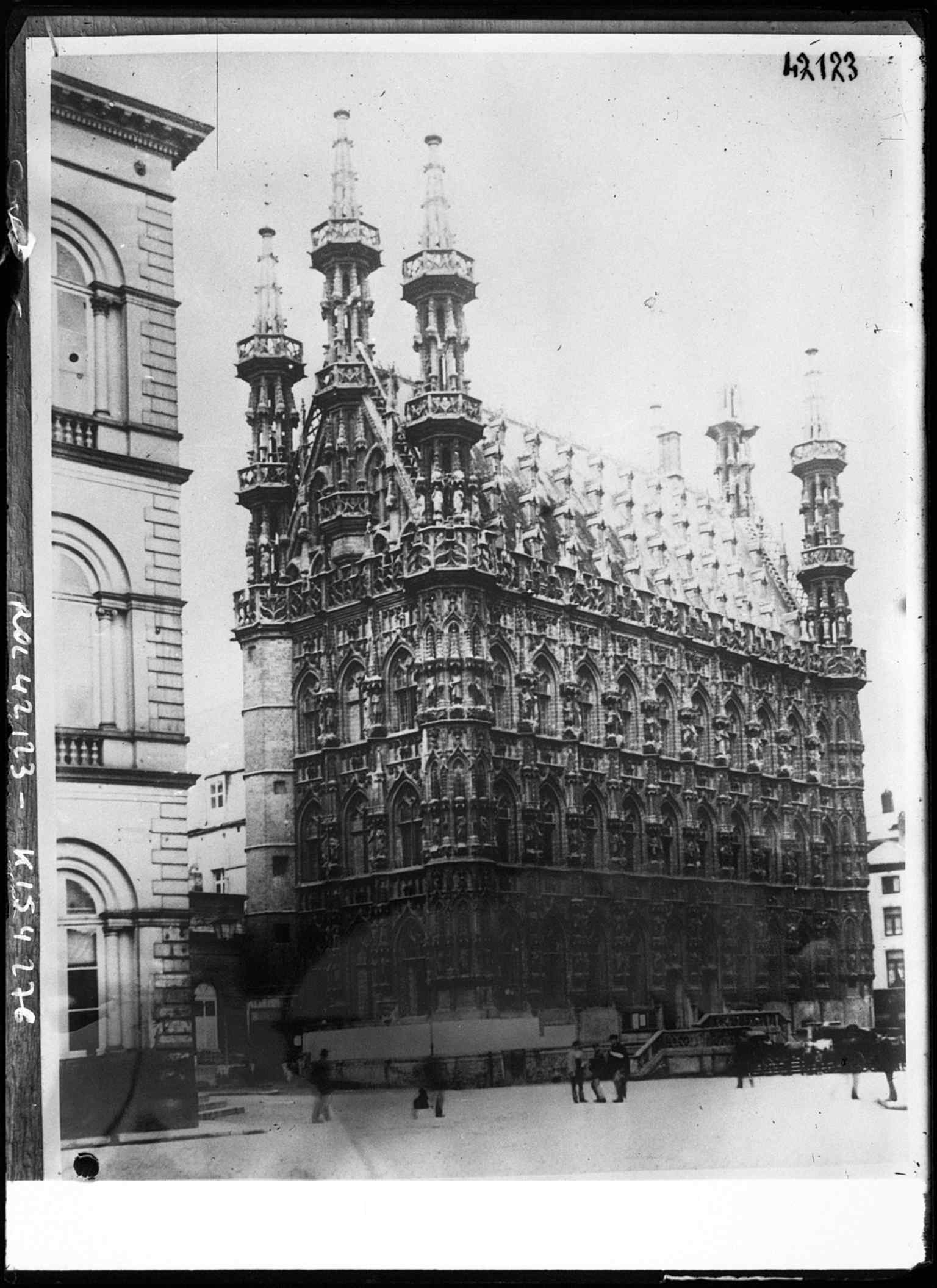
There is a pointed bit of dark irony in this building’s survival. In August of nineteen fourteen, German troops burned much of Leuven, including the university library across the way, destroying hundreds of thousands of books and manuscripts. The Town Hall survived largely because the occupiers chose it as their headquarters. So while the city burned around it, this civic symbol stood protected by the very force tearing Leuven apart. A bomb damaged the square again during the Second World War, and repairs lasted until nineteen eighty-three. If you like, check the before-and-after image; nearly a century changes the square around the building, but the Town Hall still holds center stage.
And yet, for all this grandeur, Leuven Town Hall still comes back to individual lives. People still enter here for civic rituals, including marriage, and the city keeps portraits of its mayors inside, adding each one only after their term ends. Public power, private memory... that is a very Leuven combination. In about four minutes, we’ll head to a quieter place shaped by one remarkable local son who rose from scholar to pope: the College of the Pope.





.jpg)


.jpg)
.jpg)
.jpg)
.jpg)
.jpg)