
50+ languages

 Montpellier · France
 Montpellier Audio Tours
Discover Montpellier with self-guided audio walking tours
headphones
4 tours
pin_drop
20 landmarks
translate
Montpellier tours
Pick a Montpellier worth walking.
Self-guided audio tours written by people who actually live there.
4 tours

Montpellier Highlights Audio Tour: Historic Gems and Cultural Treasures
Montpellier hides a violent heartbeat beneath its limestone skin, where medical ambition and religious zeal once collided in blood and fire. The streets hold secrets that history books conveniently forget. Experience this self guided audio tour to peel back the layers of a city defined by rebellion and scandal. Unlock the hidden narratives behind the Faculty of Medicine, the Botanical Garden, and Saint Peter’s Cathedral. Most tourists drift past these walls oblivious to the ghosts of centuries past. Why did the city’s elite orchestrate a desperate, midnight medical theft? Which forbidden pact was signed within the shadows of the ancient botanical gates? What exactly is buried beneath the cathedral floor that the church has spent centuries silencing? Roam through shifting centuries, tracing the echoes of political uprisings and forgotten betrayals. Transform your perspective as you walk the pulse of this defiant landscape. Start your journey now and claim the truth behind the stones.

Montpellier Audio Tour: An Audio Exploration
Beneath Montpellier’s golden light, ancient stones and shadowed arches conceal centuries of rebellion and reinvention. Set off on a self-guided audio tour and discover a city that most visitors never truly see—where every façade hides drama and faded whispers cling to the streets. Why did Saint Eulalie Church once stand empty and silent after violent civil war? What secrets linger beneath the triumphant carvings of Porte du Peyrou’s sunlit arch? Which forgotten scandal led to Rue Foch changing its name so many times in just one century? Follow winding boulevards and timeless plazas. Move through echoes of royal proclamations, ruined sanctuaries, riotous crowds, and secret conspirators’ paths. Feel the pulse of revolutions still beating just below the calm surface as you cross from stone chapel to imperial archway and down glamorous avenues lined with whispered history. Let curiosity guide your next step—dive into Montpellier’s living mysteries and begin your journey now.

Montpellier Audio Tour: Montpellier’s Timeless Tapestry Tour
Beneath the golden sunlight of Montpellier, secrets flicker in marble fountains and silent chapels just out of sight. This self-guided audio tour uncovers the city’s hidden pulse as you weave from grand squares to ancient alleyways, discovering the stories even locals walk past. Which forgotten scandal toppled a royal monument in Place de la Comédie? Why was the Chapel of the White Penitents rebuilt from ashes—twice? What strange rituals lingered behind closed doors on Rue du Pila-Saint-Gély? Step between myth and rebellion as each landmark reveals dramatic feuds, vanished art, lost bells, and neighborhoods forever changed. The pace of history guides your footsteps through vibrant marketplaces and shadowy passages where voices from centuries past still echo. Ready to unlock Montpellier’s true heart? The graces await—dive in and see what stories rise from the stones.
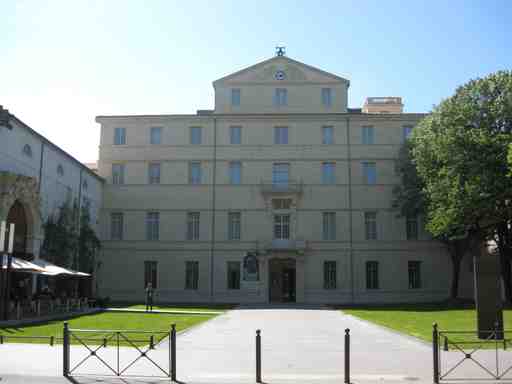
Montpellier Audio Tour: The Hidden Gems of Comédie
Petals once rained over secret plots as nobles whispered beneath the orange trees in Montpellier’s heart. Take a self-guided audio tour to unravel stories beneath the city’s dazzling surfaces—wandering where quiet revolts, missing masterpieces, and enigmatic disappearances are hidden in plain sight. This is your backstage pass to the moments history tried to forget. What made Place du Marché-aux-Fleurs ground zero for an explosive political scandal? Who vanished along the Charles-de-Gaulle Esplanade and left only riddles behind? Which painting at Musée Fabre sparked fierce artistic rivalry and whispers of sabotage? Move through vibrant boulevards and shadowed courtyards alike, stepping through centuries of ambition and intrigue. Every turn holds another secret; every corner might reveal the city anew. Curiosity already stirred? Hit play and chase Montpellier’s hidden heartbeat before it slips away again.
Top landmarks
The Montpellier everyone knows.
The landmarks in every guidebook — and the tours that tell you what guidebooks don't.
A few words on Montpellier
The oldest medical school. The youngest city.
Montpellier has been teaching medicine since 1180, when the Guilhem dynasty authorised anyone, regardless of origin or religion, to practice medicine and teach it here. Petrarch studied law at the university in the 14th century. Rabelais studied medicine here in the 16th century. The medical school that resulted from that 1180 authorisation is now the oldest continuously operating medical school in the western world, and the university it anchored has made Montpellier one of the youngest cities in France: over 40% of the population are students, and the city has a corresponding energy that most French provincial cities of this size do not have.
The Ecusson, the medieval heart of the city enclosed by the shape of a shield that gives it the name, is one of the largest and best-preserved medieval quarters in France.
The Promenade du Peyrou, a 17th-century elevated terrace with a triumphal arch dedicated to Louis XIV at one end and an 18th-century aqueduct bringing water into the city at the other, offers the best views across the city and towards the Pic Saint-Loup and the Herault hills. Place de la Comedie, the main square, has the Opéra Comedie at one end and a mosaic-paved pedestrian precinct stretching the other way.
Montpellier
Montpellier FAQ
Before you walk.
The historic Ecusson is compact and entirely walkable, about 15-20 minutes across in any direction. The four tram lines are an excellent way to reach outer areas and the train station, and are covered by the same ticket system. Montpellier's bike hire system (VeloMagg) is also popular for getting between areas. The city has made significant efforts to pedestrianise the centre.
Montpellier Saint-Roch station is on the TGV line from Paris Gare de Lyon, with journey times of about 3 hours 20 minutes. The station is at the southern edge of the Ecusson and within walking distance of most historic sights. Connections to Marseille take about 1 hour 20 minutes and to Barcelona about 3 hours.
The city sits between the Herault wine country and the Mediterranean coast, so local wine (particularly Picpoul de Pinet white and various Languedoc reds) and seafood are the strengths. The Halles Castellane and Halles Laissac covered markets have fresh produce and prepared food for lunch. The student population has also driven a good independent food scene around Place de la Comedie and the Rue de l'Ancien Courrier area.
Yes, and it is a fifteen-minute walk from Place de la Comedie through the Ecusson. The Promenade itself takes about 30 minutes to walk properly. The triumphal arch, the equestrian statue of Louis XIV, and the views towards the Herault hills from the elevated terrace make it one of the most satisfying walkways in the region. The 18th-century aqueduct at the end is a striking piece of engineering infrastructure rarely mentioned in standard guides.
Every Montpellier tour, in your language.
All 50+ languages, included with every booking.
🇬🇧 English🇫🇷 Français🇪🇸 Español🇩🇪 Deutsch🇮🇹 Italiano🇯🇵 日本語🇨🇳 中文🇰🇷 한국어+ 41 more
star AudaTours Unlimited
Visiting more than one city? Subscribe.
Unlock every Montpellier tour — plus thousands more worldwide. Cancel any time.
$4.99/week · Cancel anytime

More in France
Explore France arrow_forwardOther cities to walk in France.
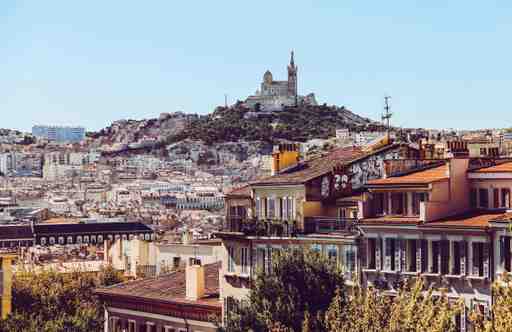

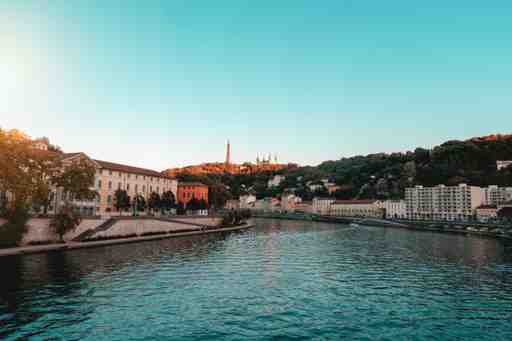

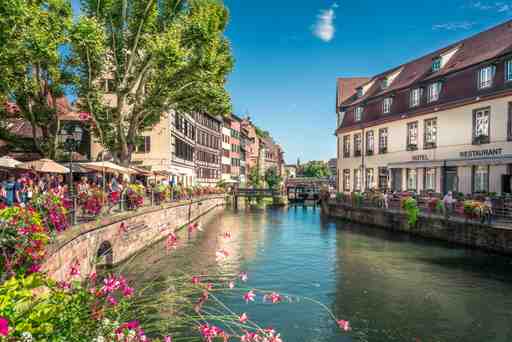

Loved by travellersThousands of tours started.
Thousands of tours started.
Plenty of opinions.
4.8 across the App Store and Google Play. Here's a few we keep coming back to.
starstarstarstarstar
This tour was such a great way to see the city. The stories were interesting without feeling too scripted, and I loved being able to explore at my own pace.

Jess
Tbilisi Tourstarstarstarstarstar
This was a solid way to get to know Brighton without feeling like a tourist. The narration had depth and context, but didn't overdo it.

Christoph
Brighton Tourstarstarstarstarstar
Started this tour with a croissant in one hand and zero expectations. The app just vibes with you, no pressure, just you, your headphones, and some cool stories.

John
Marseille Tourdownload Get the app Pop your headphones in.


Pop your headphones in.
Step outside.
Free to download. Tours in every city. Start in 60 seconds — no account, no card.

headphones
~ 4 min until your first tour starts
public
1,000+ cities worldwide
all_inclusive
AudaTours
Unlimited
Every tour. Every city. One subscription.
3097 tours2273 cities138 countries50+ languages
$39 /year
all_inclusive Explore Unlimited