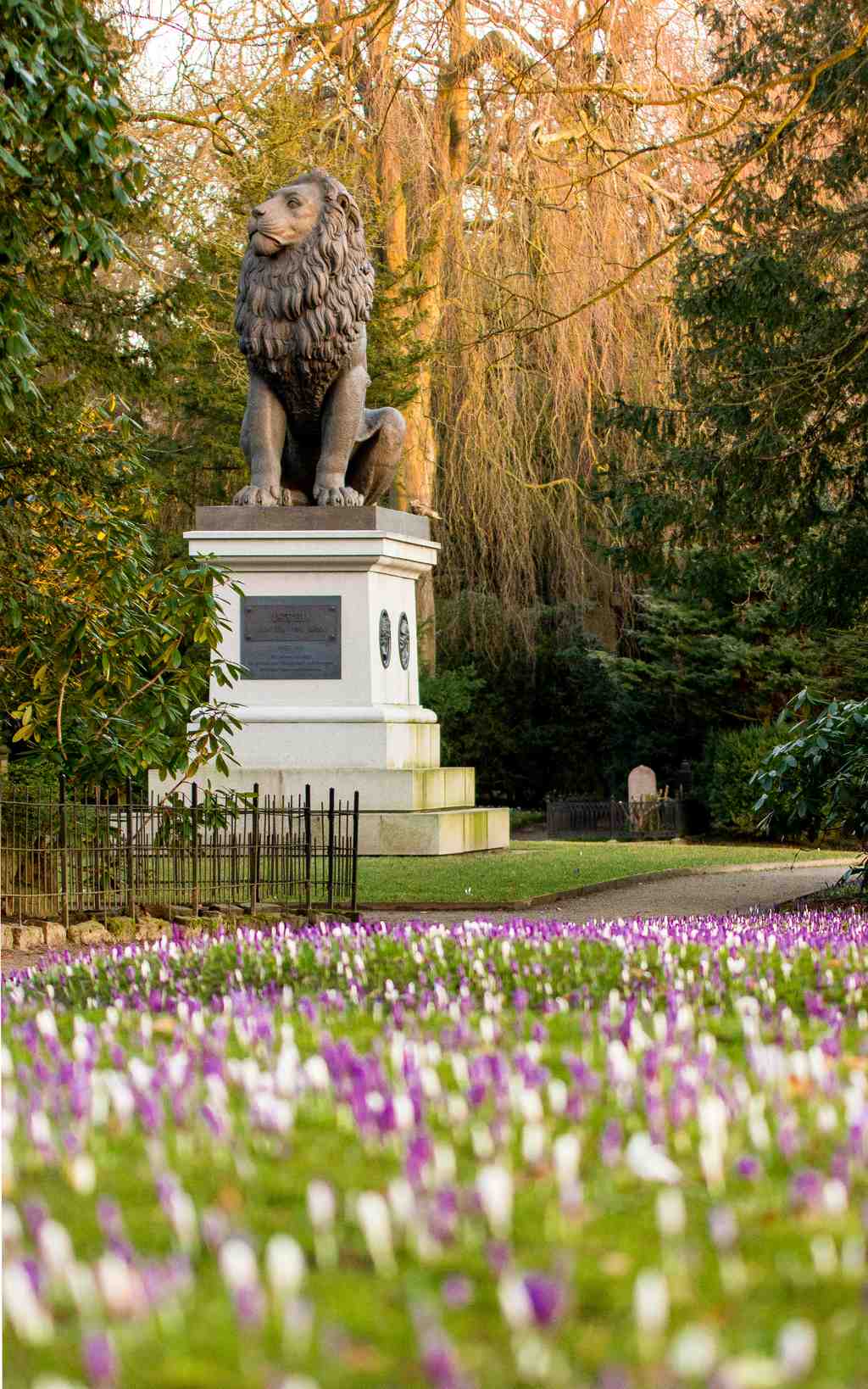
On your left stands a dark bronze lion with its head lifted high on a pale stone pedestal, marked by a plaque on the front.
For a monument that never takes a single step, this lion has had quite a travel schedule. The Idstedt Lion began here as a victory monument. In eighteen sixty-two, the Danish sculptor Herman Wilhelm Bissen placed it on the Old Cemetery to honor Denmark’s victory at the Battle of Idstedt on the twenty-fifth of July, eighteen fifty, during the Schleswig-Holstein uprising.
Bissen did not dash this off from imagination. He went to Paris and studied a living lion in the Jardin des Plantes, the city’s great zoological garden, because he wanted the muscles, stance, and proud lifted head to feel convincing. What you see here is not just symbolism; it is careful anatomy serving politics.
And politics, my friend, is the whole point.
The lion stood more than seven meters high with its stone base, facing south, with the Danish flag once flying before it. But the ground beneath it carried a wound. To give the monument firm footing, workers destroyed about two hundred German coffins and graves. No Danish dead lay here. So for many German-minded Flensburgers, this was not remembrance. It felt like triumph planted on top of loss.
That anger turned physical in eighteen sixty-four, during the next war between Denmark and the German powers. Townspeople tried to pull the monument down and broke off its tail. After Prussia took control, Otto von Bismarck ordered the damaged lion removed. In eighteen sixty-seven it went to Berlin, where officials treated it as a trophy. Later it stood at the Zeughaus, then at the Prussian cadet academy.
If you glance at the image in your app, you can see the lion’s clean silhouette and steady upward gaze. That calm pose is almost funny when you know the life it has had: Flensburg, Berlin, Copenhagen, then Flensburg again.
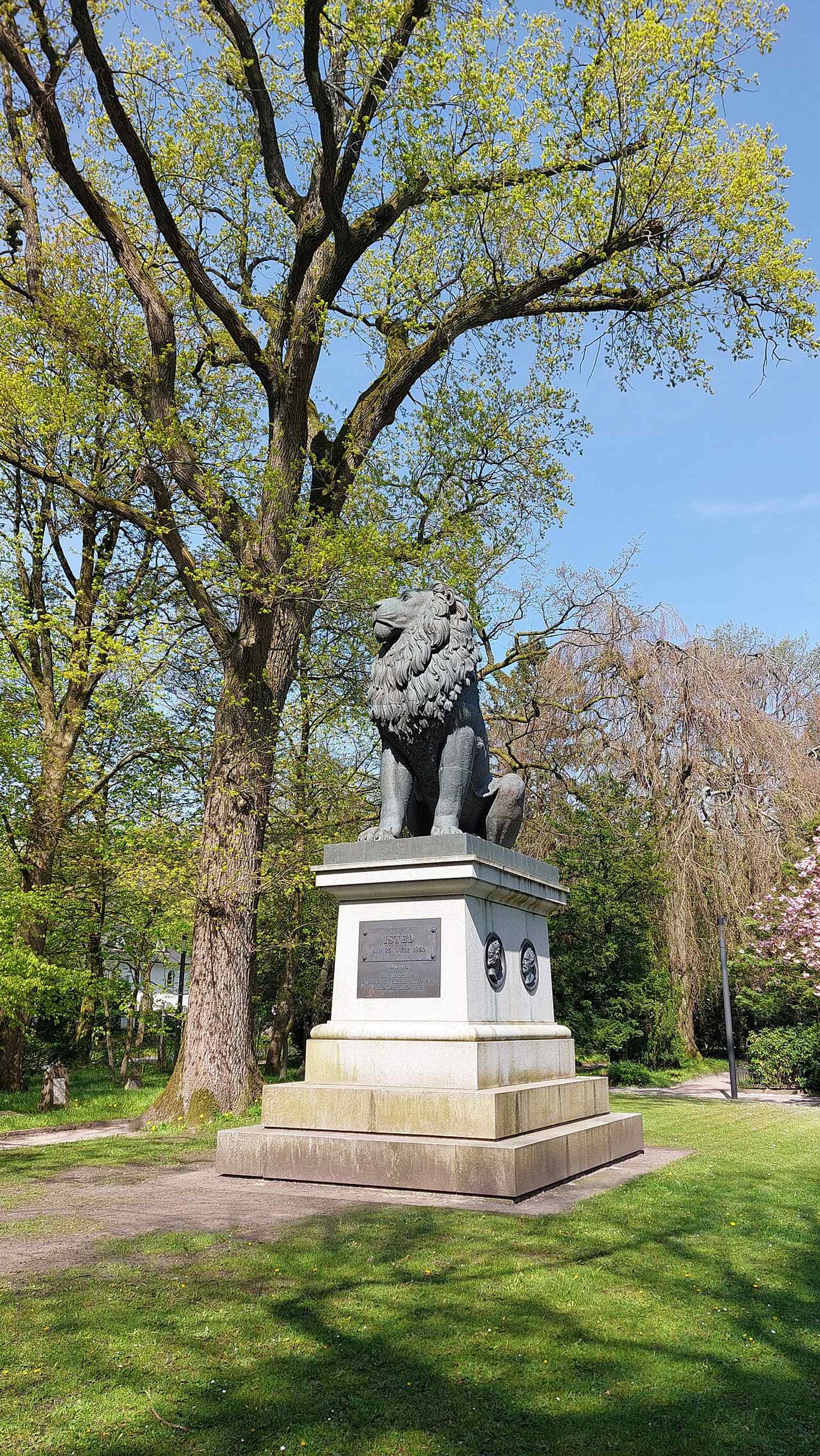
The move to Copenhagen came after the Second World War. A journalist named Henrik V. Ringsted pressed the case with the U-S occupation authorities in Berlin, and even Dwight D. Eisenhower enters the story. In nineteen forty-five, Denmark received the lion, and King Christian the Tenth said he hoped it might one day return here, if Flensburg wanted it.
That “if” mattered. For decades, people argued. Was this a war trophy, a grave marker, a nationalist statement, a lesson, an insult, a chance for reconciliation? In two thousand eleven, after long debate and a major shift in Danish-German relations, the lion returned to this original site. Prince Joachim of Denmark unveiled the new plaque. It says the monument was re-erected as a sign of friendship and trust between Danes and Germans.
But monuments do not become innocent just because we wish them to. This one still carries all its former meanings, like old luggage with fresh tags. That is why it belongs here. Flensburg has always asked hard questions about faith, language, trade, and allegiance. In the churches, the markets, the harbor lanes, and the museum hill, you’ve seen a city sorting out who speaks for it. Here, at the end, a bronze lion answers with a proud silence: no single nation, memory, or century gets the last word.
Practical note: this site is generally accessible all day from Tuesday through Sunday, while Monday is listed as closed.