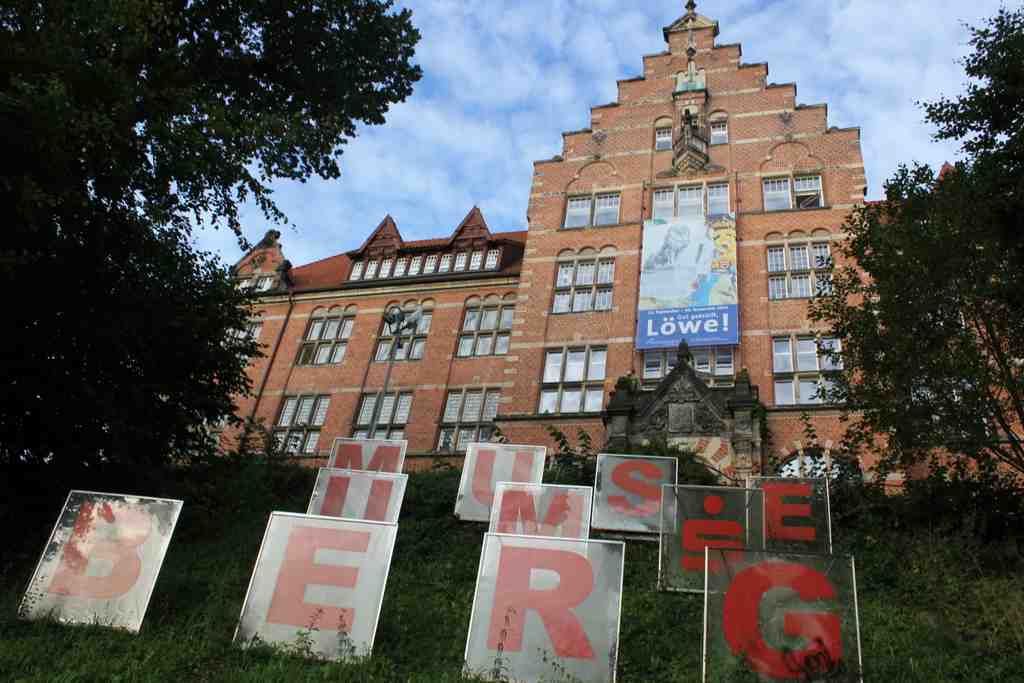
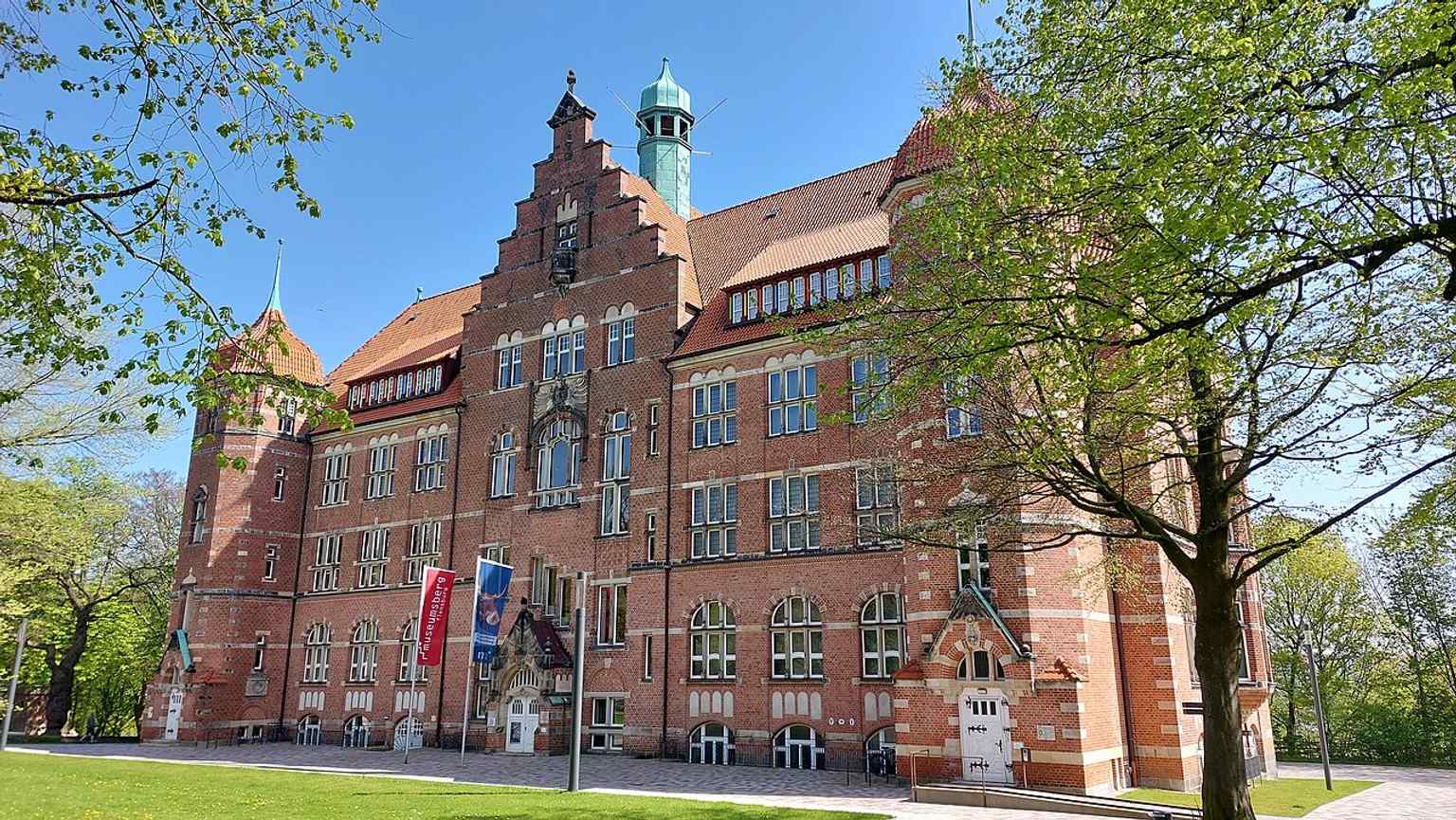
In front of you stands a pair of red-brick museum buildings with steep gables, pale stone trim, and the ornate Dutch-Renaissance front of the Heinrich-Sauermann-Haus.
This is Museumsberg, one of the largest museums in Schleswig-Holstein, and it sits here like Flensburg's memory made solid. More than three thousand square meters of galleries spread across two houses on this rise above the theater, beside the old cemetery and parkland. If you check the picture on your screen, you can see how the twin buildings hold that hill together, almost like two bookends for the city's story.
The man to remember here is Heinrich Sauermann. He was not a grand aristocrat with a gallery habit. He was a furniture maker and woodcarver, a craftsman with sharp eyes and, apparently, no interest in owning just one chair when nine hundred historic ones might do. In eighteen seventy-six, he sold his private collection of old furniture to the city. That sale gave Flensburg the seed of this museum.
And Sauermann had a practical reason. He wanted apprentices to learn from the real thing. Old cupboards, carved panels, room interiors... these were teaching tools, not dead trophies. Collection and classroom worked side by side here, which made the museum unusually modern for its time, an early example of preserving objects while using them to train new makers. In a city shaped by trade, ships, churches, and shifting loyalties, that mattered. Flensburg was deciding what was worth keeping and what kind of place it meant to be.
The older building, opened in nineteen oh three, still wears its Dutch Renaissance style proudly. Later, the former school next door, built in the eighteen nineties in a restrained neo-Gothic style, became the Hans-Christiansen-Haus. Since nineteen ninety-seven, it has given the painting collection room to breathe.
Inside, the museum stretches from the thirteenth century to contemporary art. Sauermann's furniture remains one of the most important collections of its kind in Germany. There are rebuilt farmhouse rooms from the seventeenth and eighteenth centuries, a Marian altar from fifteen seventeen, the high-Gothic Viöl Madonna, and paintings by artists such as Louis Gurlitt, Carl Ludwig Jessen, Käte Lassen, Emil Nolde, and Erich Heckel. Nolde studied in Sauermann's school, then later failed to get the director's job here. History has a sense of humor sometimes.
But this place does not pretend memory is neat. After the border plebiscite of nineteen twenty, the museum briefly had to call itself a borderland museum, and Sauermann himself remained a Danish citizen. Then, in nineteen thirty-seven, the Nazi campaign against so-called degenerate art struck here directly. Officials seized twenty-seven works by Nolde and a sculpture by Ernst Barlach. Later, director Fritz Fuglsang guided the museum through those years, brought much of the collection back after the war, and gave it an order that still shapes the house. More recently, the museum examined its own record by researching where certain artworks came from and how they were acquired. That kind of honesty is a form of care too.
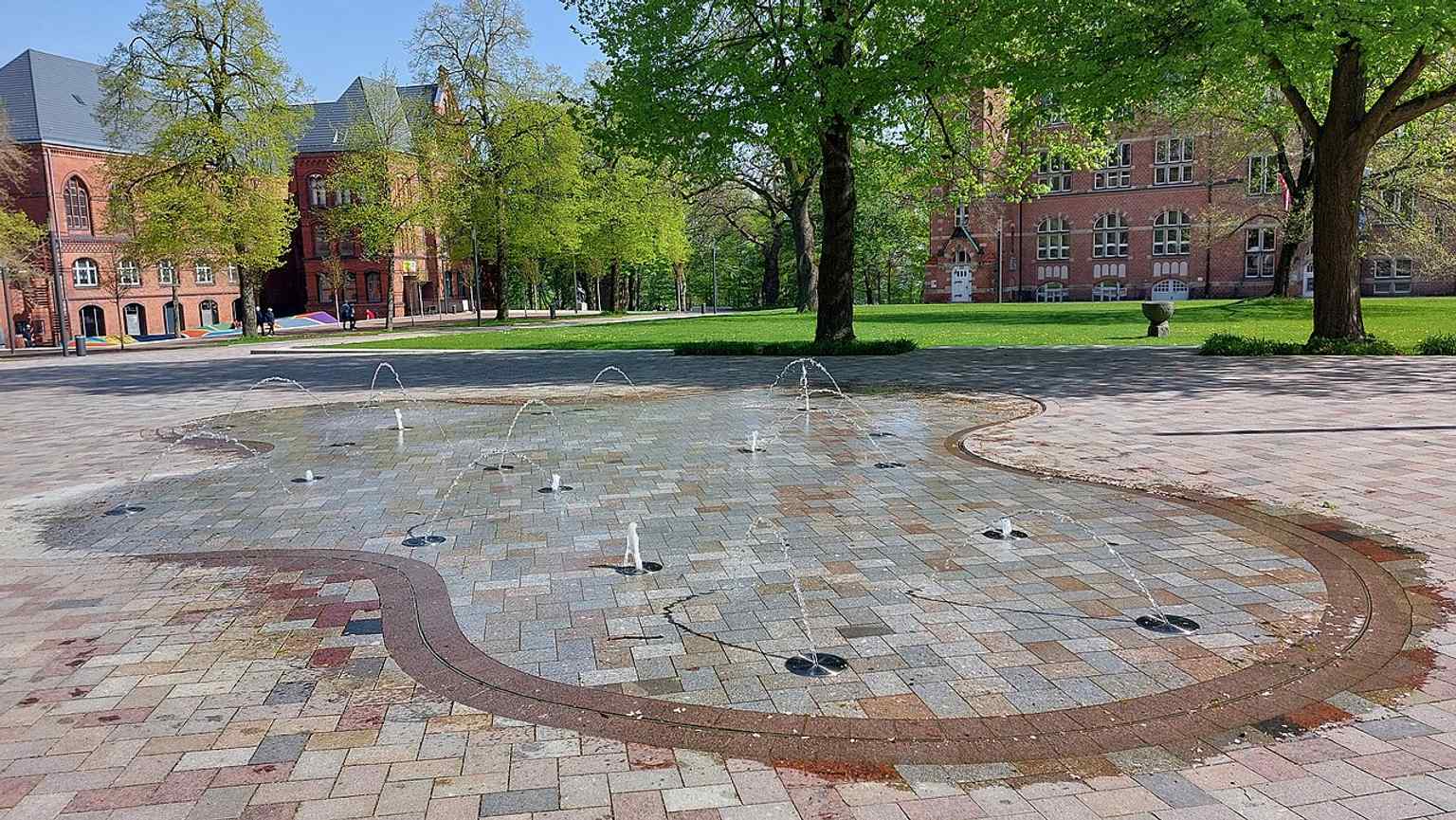
If you glance at the other image, the old cemetery beside the museum helps explain the setting. This whole hill is a place where Flensburg keeps company with its own past.
A museum gathers memory indoors. At the next stop, you will meet the same question out in the open: one lion, one border, and a great deal of feeling. If you want to come back inside, Museumsberg opens Tuesday through Sunday from ten to five and closes on Mondays.