
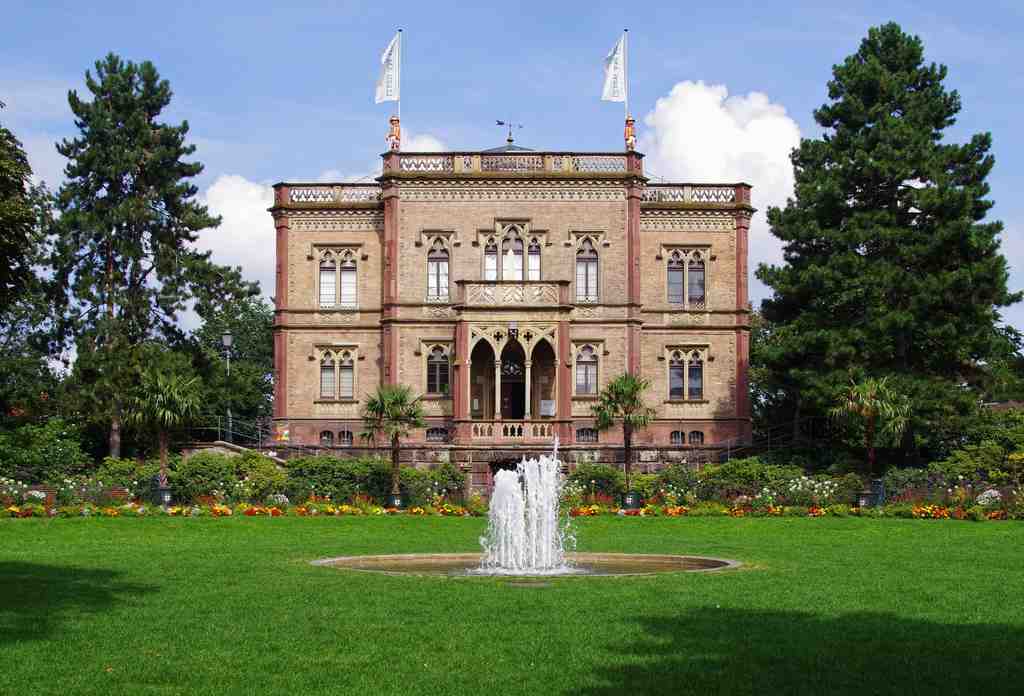
On your left, look for a pale stone villa with steep gables, pointed windows, and a small turret that makes it feel like a private castle.
That little performance is entirely intentional. Most visitors admire the villa and miss the trick under their feet: Colombischlössle stands on the buried Bastion Saint Louis, an old fortification that workers filled in with roughly fifteen meters of earth before anyone planted a garden here. So beneath this polished residence lies an entire defensive work... Freiburg, never one to waste a good foundation.
This city has a habit of laying new identities over older ones without quite erasing them. A military bastion becomes a garden. A garden becomes an aristocratic home. That home turns into a museum, government offices, and courtrooms. You start to see the pattern: Freiburg keeps rewriting itself in plain sight.
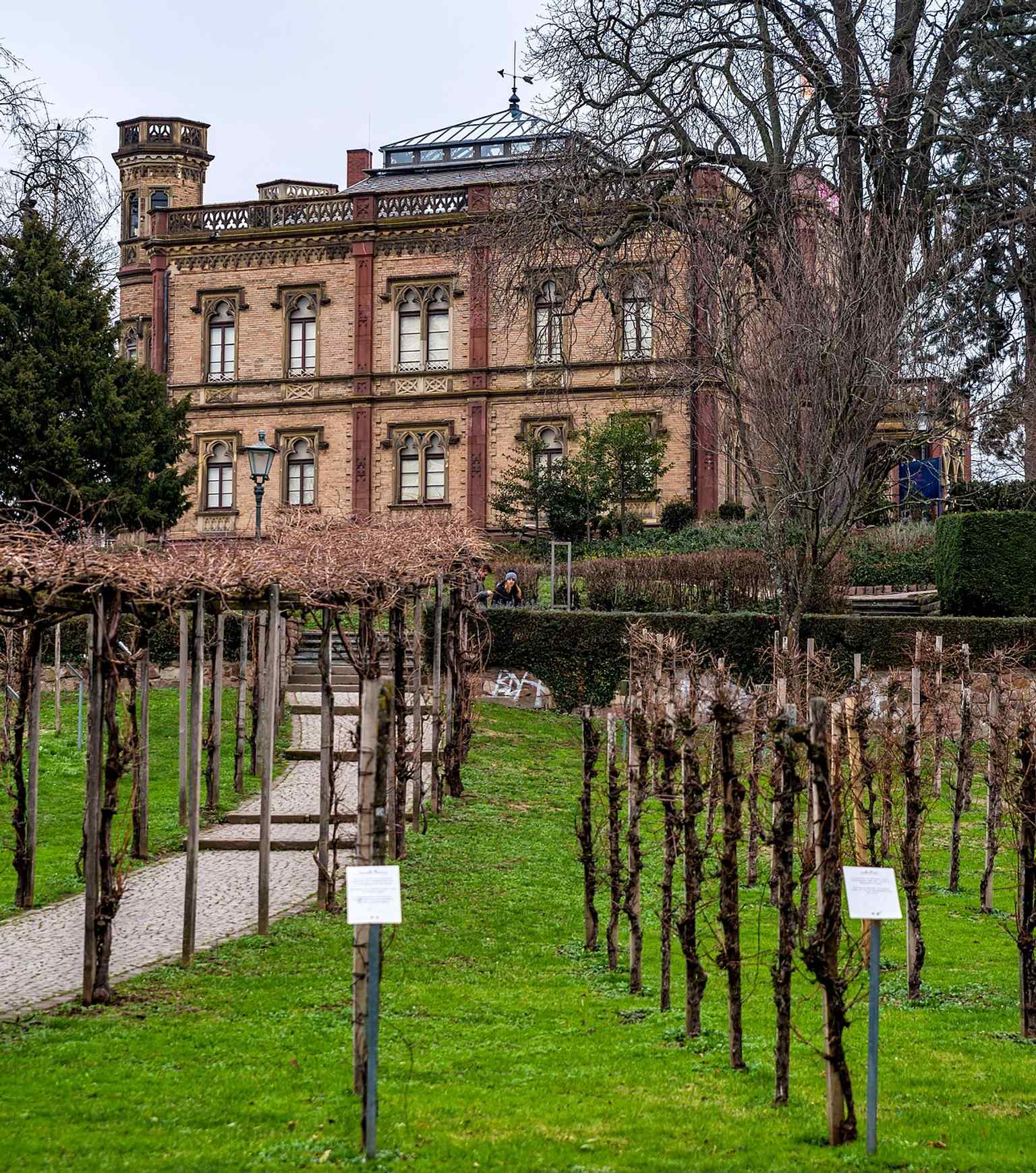
Countess Maria Antonieta Gertrudis de Colombi y de Bode ordered this villa between eighteen fifty-nine and eighteen sixty-one as her widow’s residence. She hired the Freiburg architect Georg Jakob Schneider, who chose the Tudor Gothic style, a revival of late medieval English design. In the nineteenth century, architects called that habit historicism, which simply means using older styles on purpose to give a new building the authority of age. If you glance at the image on your screen, you can see how carefully Schneider staged the steep rooflines and noble profile.
The bill came to about three hundred thousand goldmarks, roughly the equivalent of several million euros today, and that set local gossip humming nicely. Later newspaper stories said Freiburg speculated wildly about the Colombi family fortune, which gave the house an early aura of myth. Every city likes a rich family it can discuss at a safe distance.
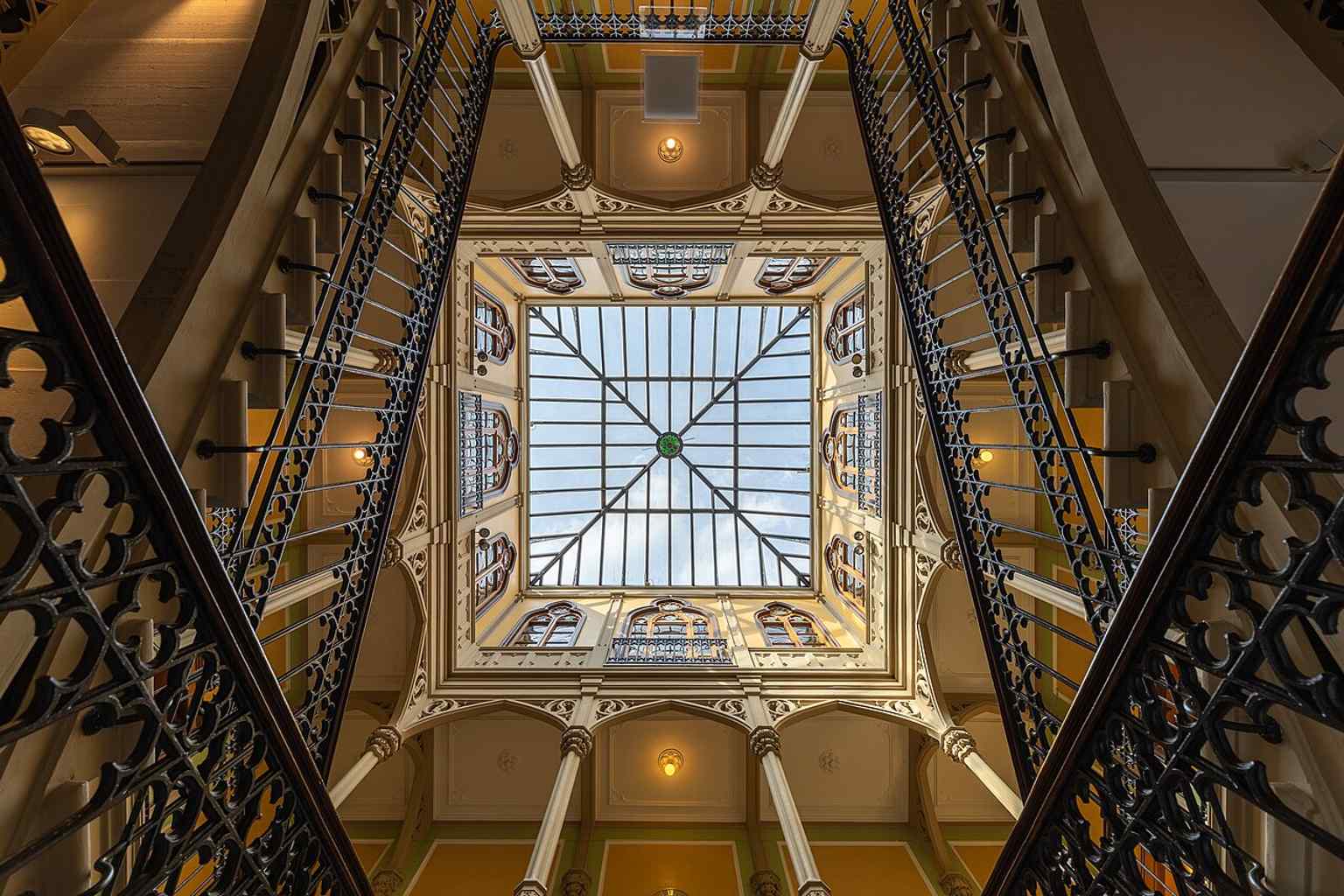
Inside, the countess left plenty of evidence of her means: a grand stair hall, original inlaid parquet floors - wood fitted together in decorative patterns - and a bright glass dome overhead. The interior photo in the app gives you a glimpse of that polished world.
After the family, the story kept changing. Factory owner Johann Georg Thoma bought the estate, sold off part of the land for development, and gave Freiburg Colombistraße and Rosastraße, named for his wife Rosa. Then the city bought the villa in eighteen ninety-nine. It served as the municipal art museum from nineteen oh-nine to nineteen twenty-three, then as an administrative building, then from nineteen forty-seven to nineteen fifty-two as the state chancellery of Baden under Leo Wohleb. For a house built as a widow’s retreat, it developed a surprisingly public career.
One person worth remembering here is Georg Kraft, the scholar who helped Freiburg’s prehistoric collection stand on its own as a museum. He died in the bombing of nineteen forty-four, and after the war the collection drifted through provisional quarters for years. Only in nineteen seventy-eight did the city council decide to bring it back here, and in nineteen eighty-three the archaeological museum reopened in this villa.
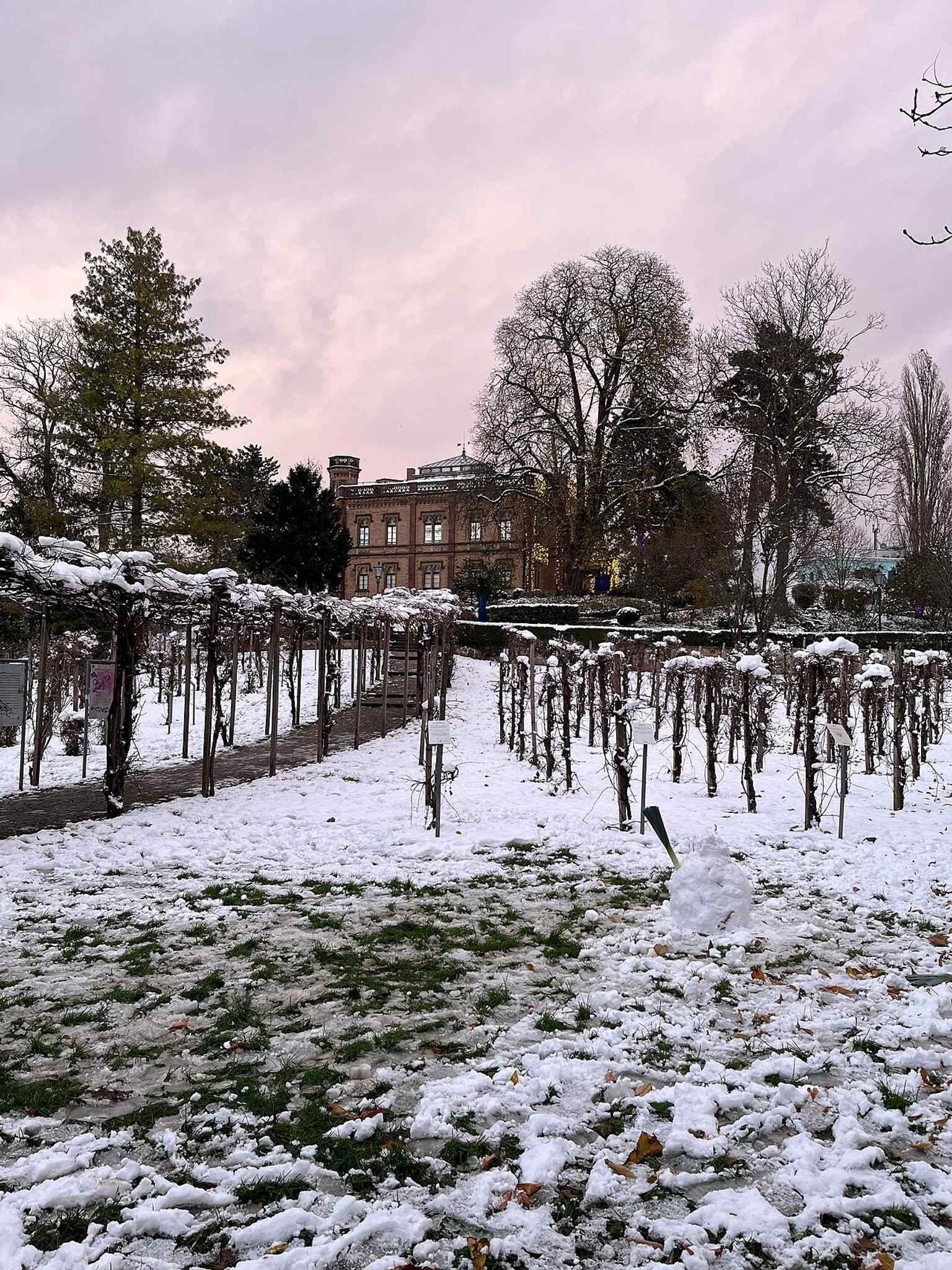
Even the park around it joins the act: laid out in the style of an English landscape garden with exotic trees and a large fountain, it turned a former edge of defense into a place for strolling and looking. That is very Freiburg.
Reinvention here is not hidden in back streets; it sits right out in the open, wearing a turret as if it had always belonged. When you’re ready, head on to Freiburg Theatre, about seven minutes away. If you want to return later, the museum is closed on Mondays and otherwise usually opens from ten to five, with a later closing at seven on Wednesdays.






.jpg)
