
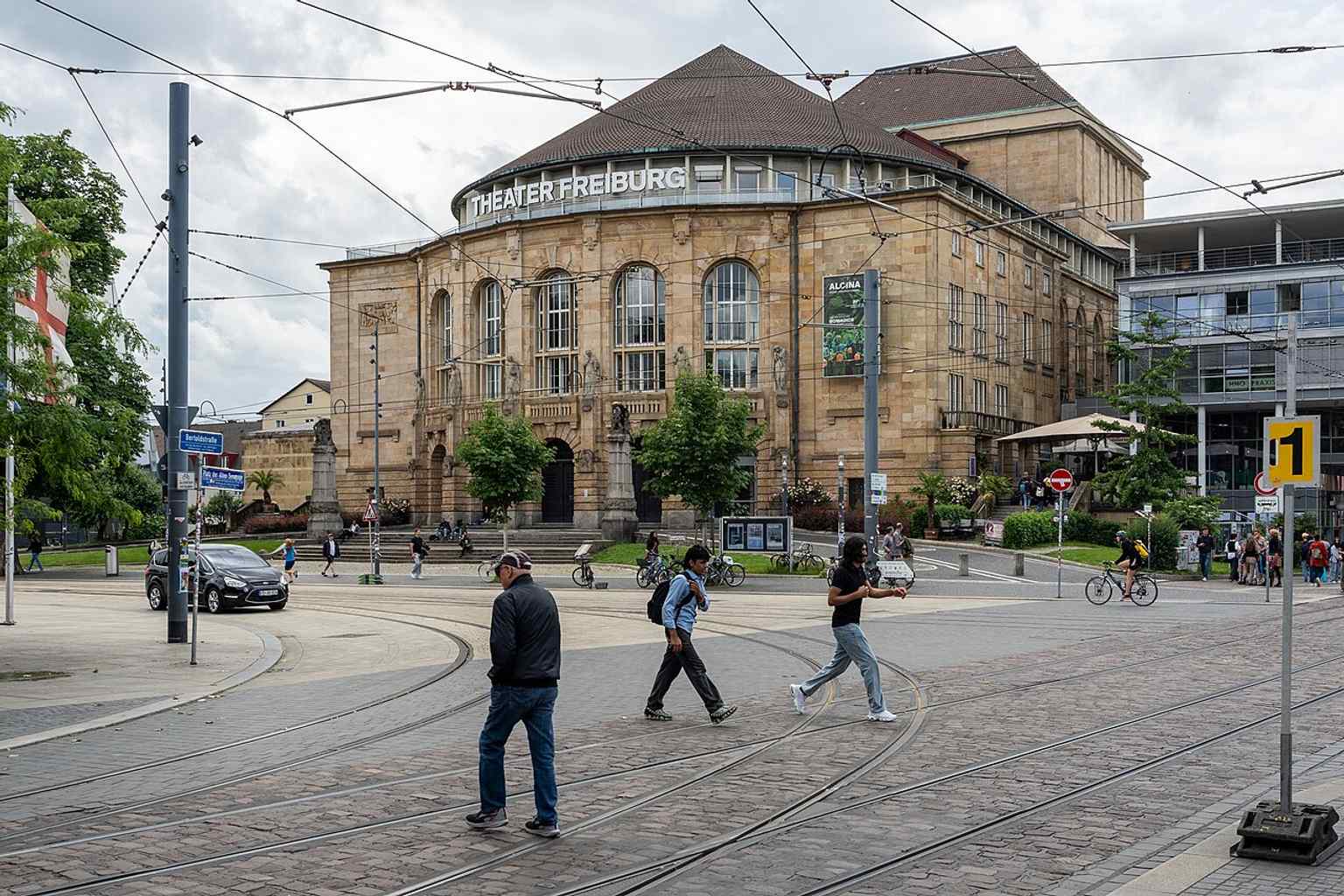
Look for the broad pale stone facade with its curved central entrance block, tall vertical window bands, and the bold Theater Freiburg lettering above the doors.
A theater is the obvious home of performance... but a city performs too. Squares, facades, and entrances tell people who belongs, who holds power, and what kind of place this wants to be. Freiburg has been practicing that civic art for centuries, and this building became one of its clearest stages.
Professional theater here began because royalty needed entertainment. In May of seventeen seventy, Marie Antoinette passed through on her bridal journey, and the regional estates hired the Korn company to perform for the occasion. Those early shows took place in the Jesuit Gymnasium, then officials allowed more performances in the Kornhaus on Münsterplatz. By the seventeen nineties, Freiburg audiences were hearing Mozart here in town: The Abduction from the Seraglio in seventeen ninety-three, then The Magic Flute a year later. Not bad for a city still figuring out where to put its actors.
When the old spaces started feeling too cramped and outdated, Freiburg did something it would do more than once: it rewrote the setting. In eighteen twenty-three, architect Christoph Arnold converted the empty Augustinian church into a theater. Then in eighteen sixty-six, the city took the house over itself and opened its first municipal season with Lessing's Emilia Galotti. That matters, because once the city owns the stage, performance becomes a civic business, not just passing amusement.
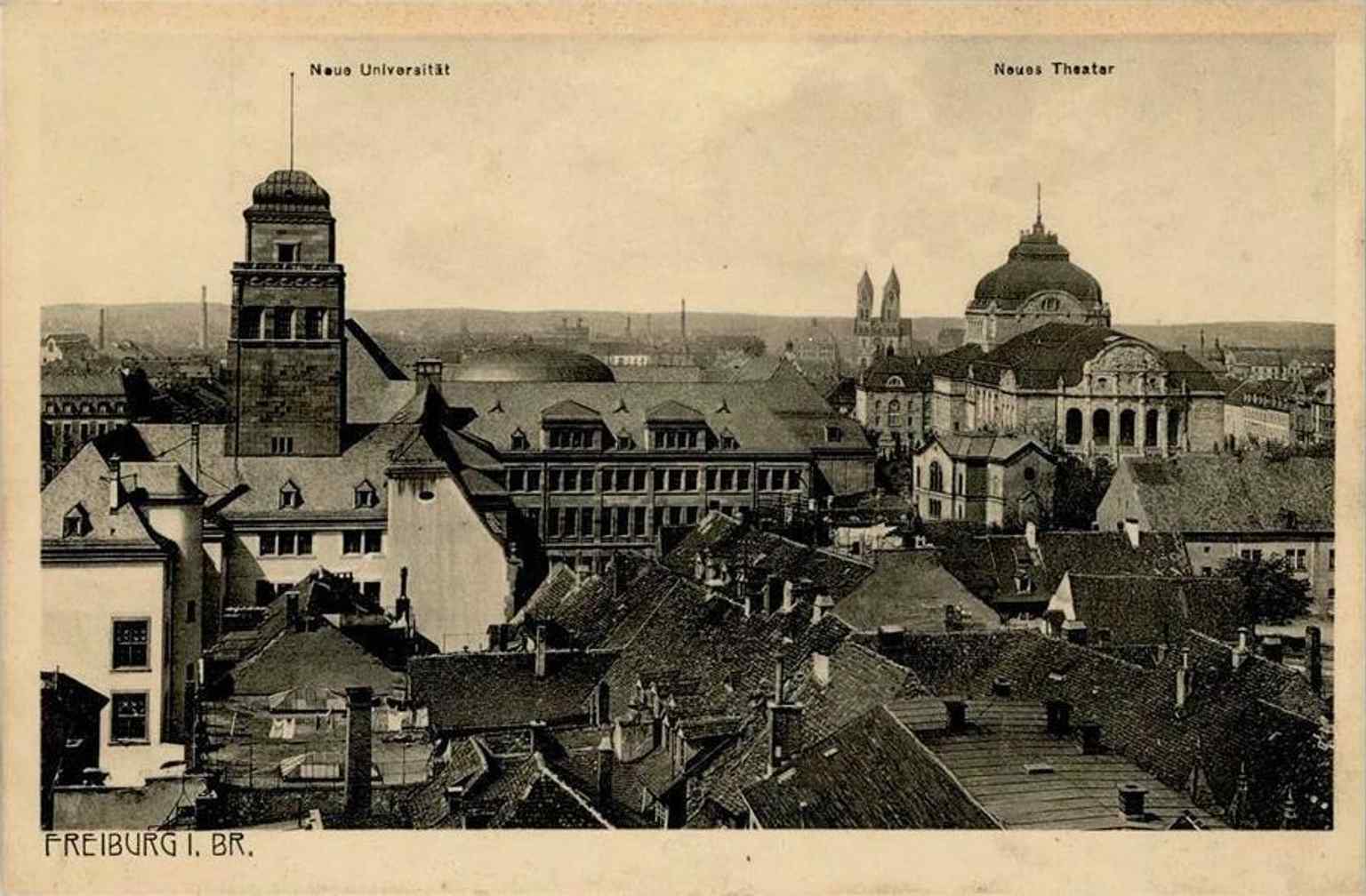
The building in front of you arrived in the early twentieth century, when Mayor Otto Winterer and city architect Rudolf Thoma pushed for a proper modern theater on the former Dauphin bastion, part of Vauban's old fortifications. Berlin architect Heinrich Seeling designed it in a neo-Baroque style, and the theater opened in nineteen ten with Schiller's Wallenstein's Camp and part of Wagner's Meistersinger. If you tap the before-and-after image, you can see how this new playhouse once stood in a very different urban scene.
Then history, being history, barged in. The theater took a hit in the First World War, and bombing in November nineteen forty-four damaged it heavily. One of the most human chapters belongs to Mayor Wolfgang Hoffmann. He did not just argue for rebuilding; he sat at the piano and played fundraising concerts himself, bringing in one hundred and twenty thousand Deutsche Marks, roughly a few hundred thousand euros in today's buying power. Civic leadership, Freiburg style: part mayor, part concert artist, part emergency fundraiser.
When the house reopened in nineteen forty-nine, the city got practical. The lower levels housed the Kamera and Kurbel cinemas to help pay for reconstruction. High culture and commercial tickets under one roof... not glamorous, but very sensible. Later the building kept changing again: more stages moved in, and today it holds the Großes Haus, the Kleines Haus, and the Weltraum, along with concerts, readings, and youth work. Under Barbara Mundel, the theater pushed outward into city life and asked, "What kind of future do we want to live in?" In twenty ten, a sign above the entrance even flashed between "Heart" and "Art"... subtle it was not, but the point landed.
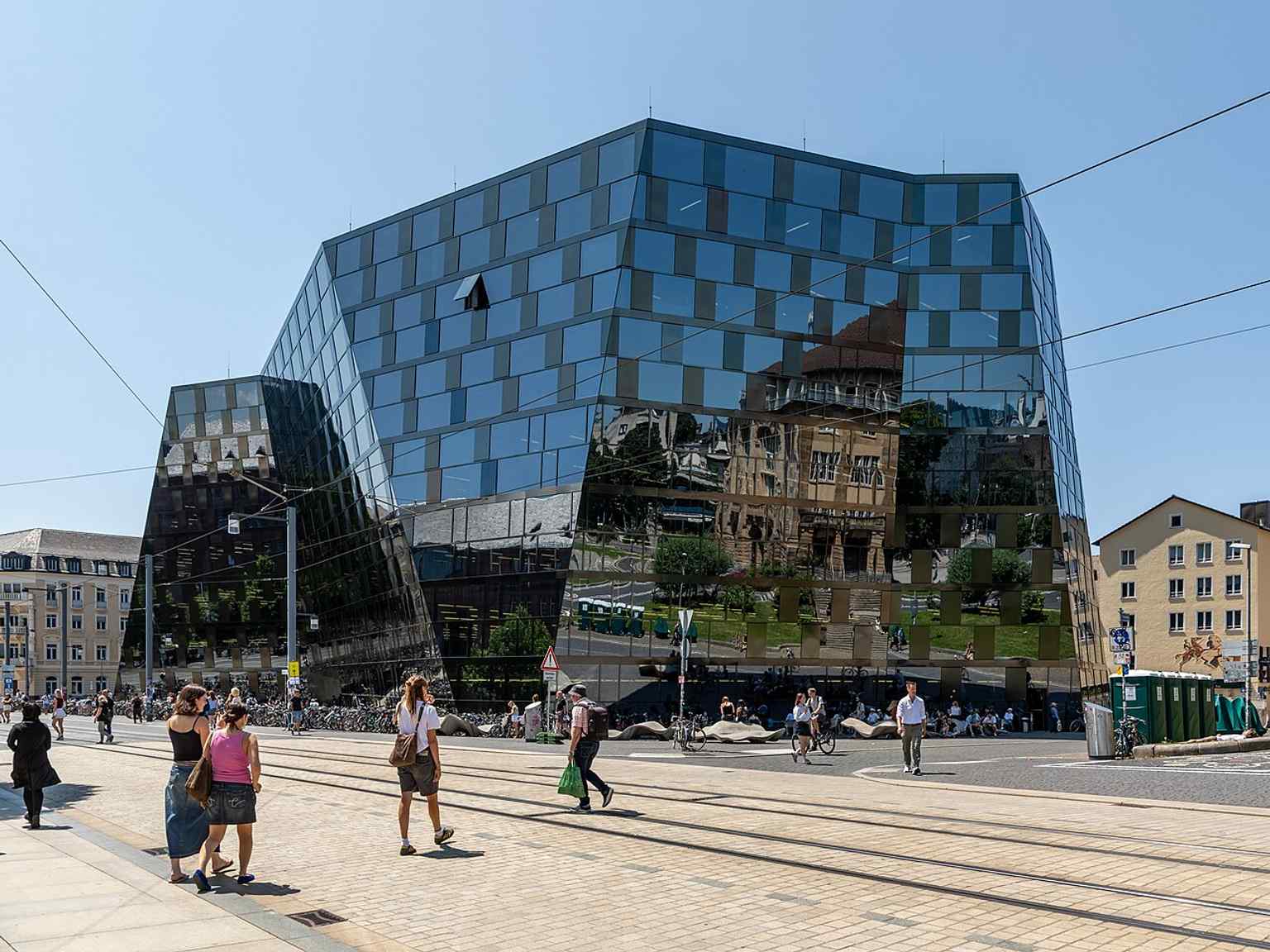
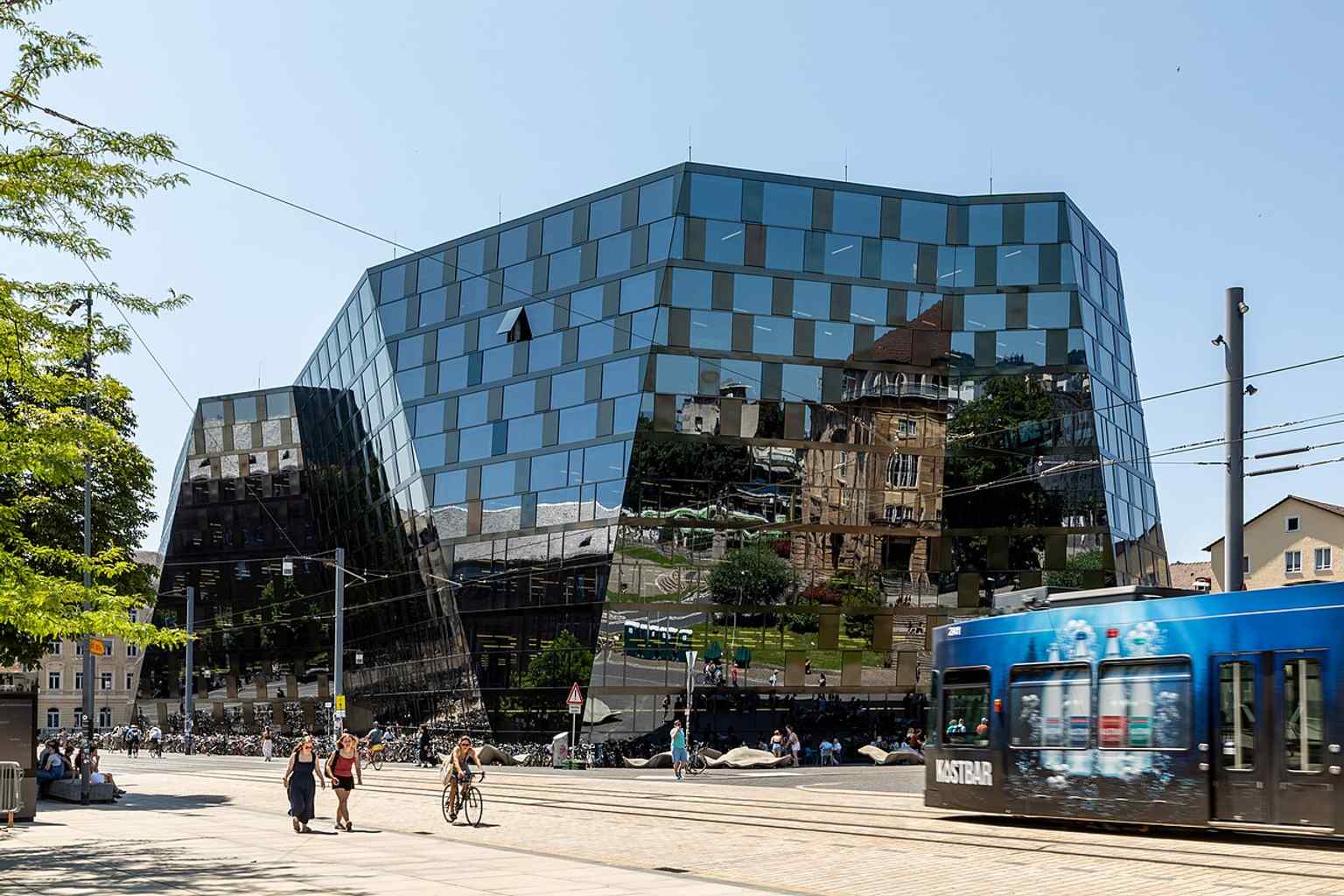
From here, we leave the place where Freiburg acts out its arguments and head toward the place where it stores them: the University Library, about a four-minute walk away. If you plan to come back, the theater is generally open Monday through Friday from ten to six, Saturday until one, and closed on Sunday.






.jpg)

