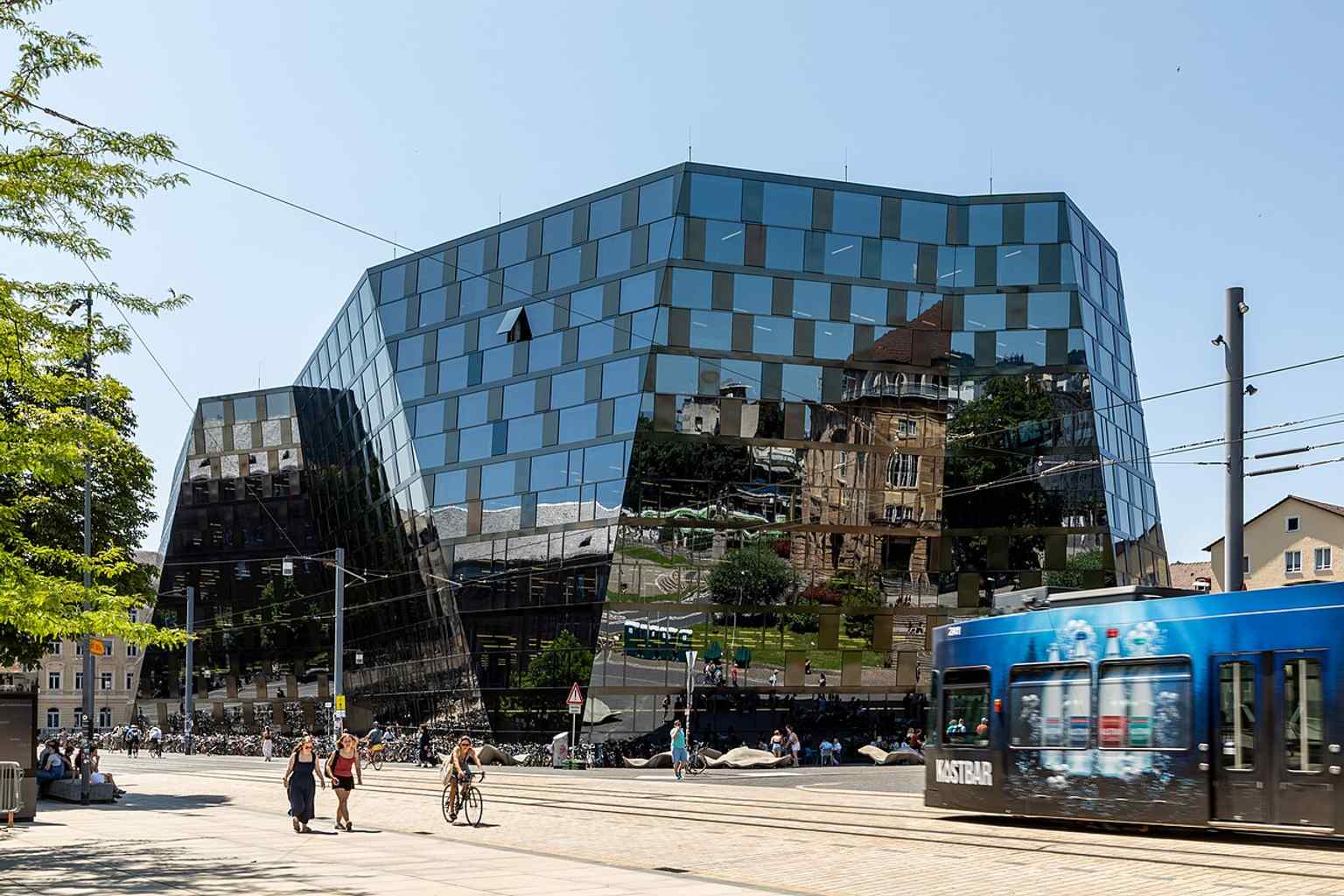
On your right is a dark glass-and-chrome wedge, its sloping sides and mirrorlike skin turning the library into a sharp, reflective block in the street.
This building looks almost futuristic, but the learning inside it is old enough to have wrinkles. Freiburg’s university dates to fourteen fifty-seven, and records mention its libraries by fourteen seventy; by fifteen oh five, senate notes already used the name bibliotheca universitatis, the university library. So what you’re seeing is not the birth of knowledge here... just its latest outfit.
For centuries, the books kept moving. First they lived in the New Town Hall with the young university. Later they moved into a former Jesuit building, where a baroque library hall stretched about thirty-five meters long, with wall-high shelves and a gallery running around the room. In nineteen oh three, architect Carl Schäfer gave the library a new neo-Gothic home on Rempartstraße. Then came a nineteen seventy-eight replacement that worked brilliantly inside, though outsiders sometimes mistook it for a parking garage.
Now take a second and study the facade. Notice how it reflects older buildings around it. Freiburg has a habit of layering one age over another, and this library makes that habit visible.
The current building came out of a two thousand six competition won by the Basel architect Heinrich Degelo. It opened in two thousand fifteen, nearly two years late, with dark matte chrome steel, triple glazing, and a big promise: modern study space, lower energy use, and room for serious academic life. Under director Antje Kellersohn, the library kept serving readers even during the rebuild, splitting itself between temporary quarters while the underground stacks still held millions of books. Institutional memory, in Freiburg, is stubborn in the best way.
And the scale is not small. This is the biggest library in southern Baden, one of the four largest in Baden-Württemberg, and it serves not only the university but the wider public as well. In two thousand twenty-four alone, it recorded more than four hundred seventy-three thousand loans and more than three million visits. That is less a quiet book shrine than a small republic of concentration.
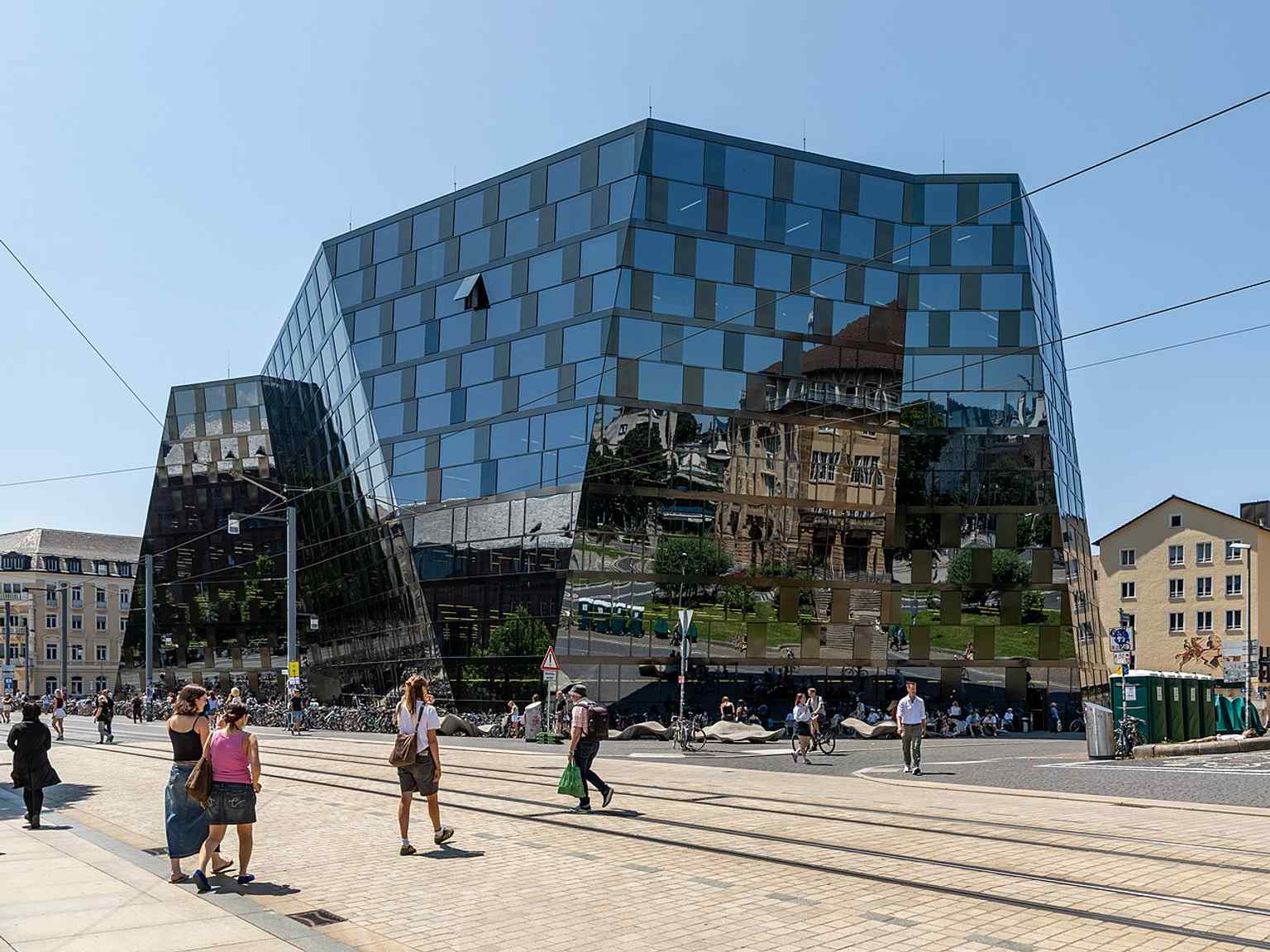
If you want a wider view, check the image in the app and see how firmly the library plants itself in the city around it. It is also full of older treasures: manuscripts, early printed books, papyri, and founding documents from the university’s earliest days, now digitized so medieval paperwork can enjoy a second career online.
Next, we step from the keeper of memory to the institution that kept creating it: the University of Freiburg, about a one-minute walk away. And if you’re thinking of coming back, the library keeps generous hours, open daily from seven in the morning until midnight.