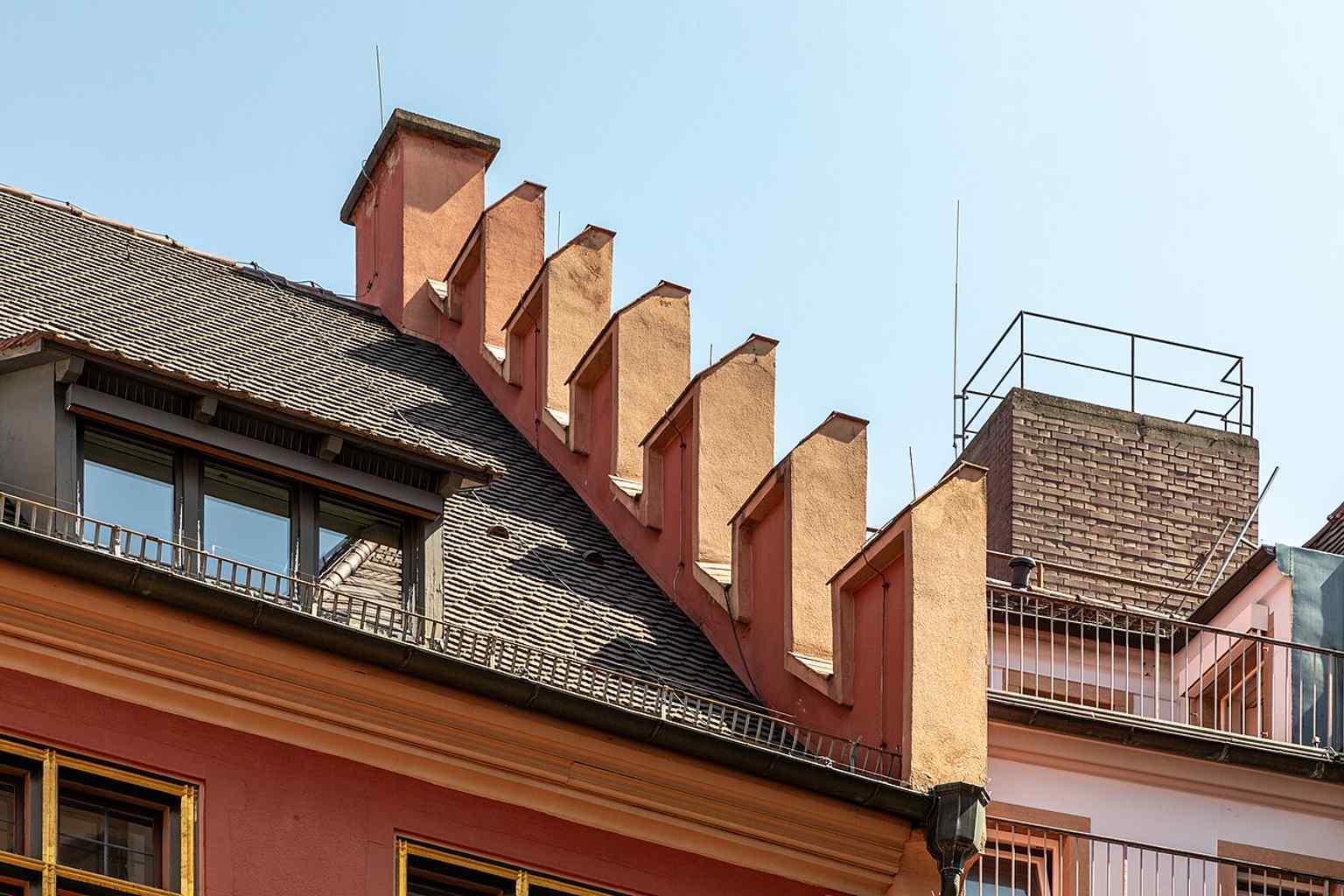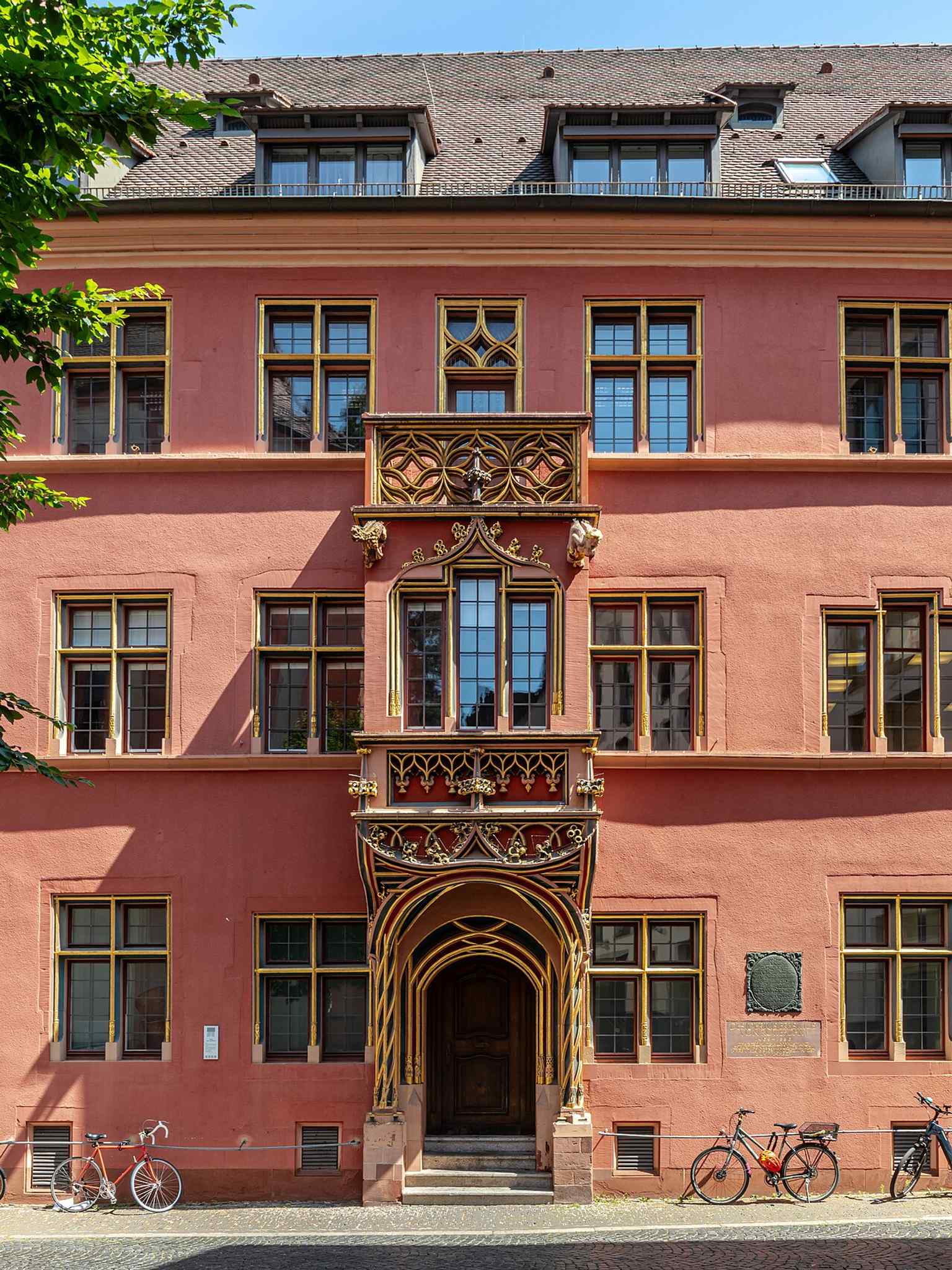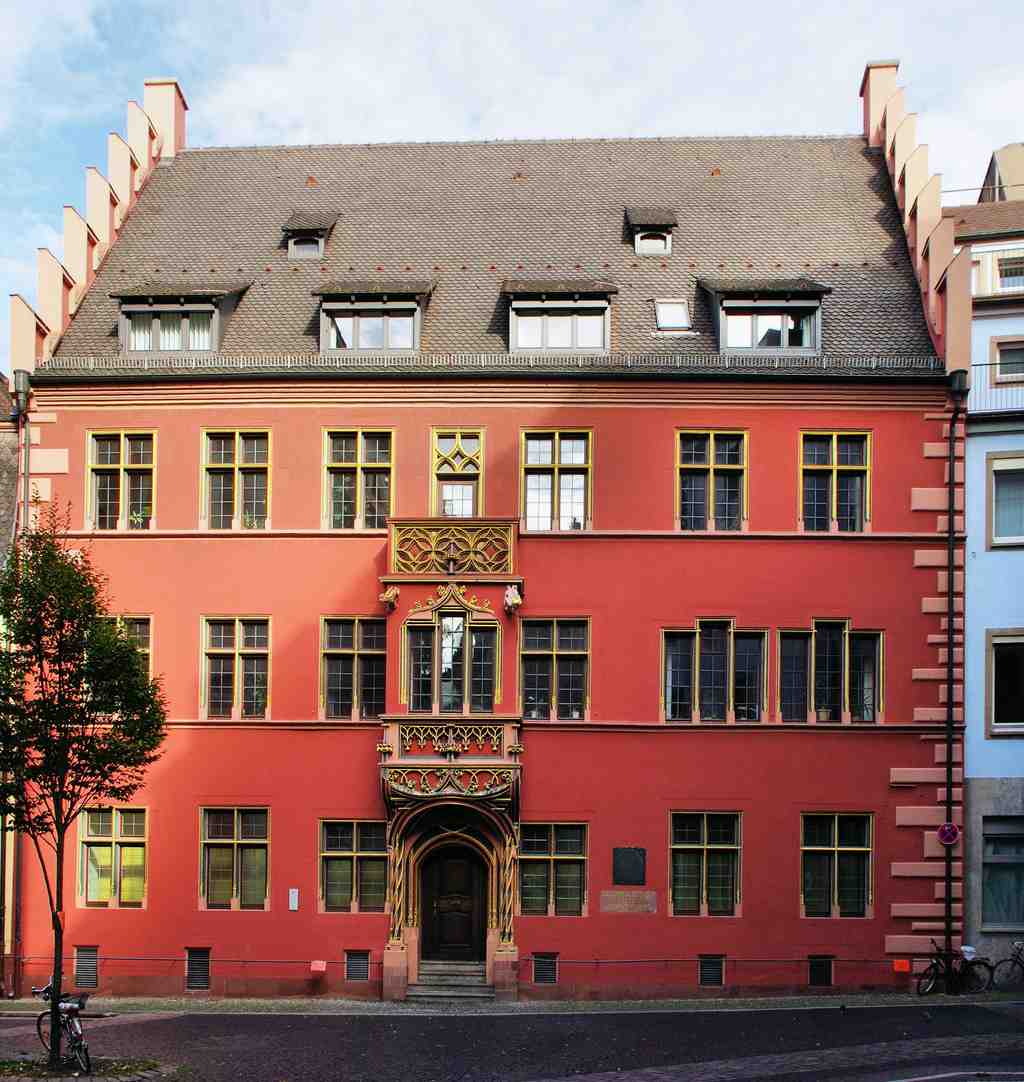
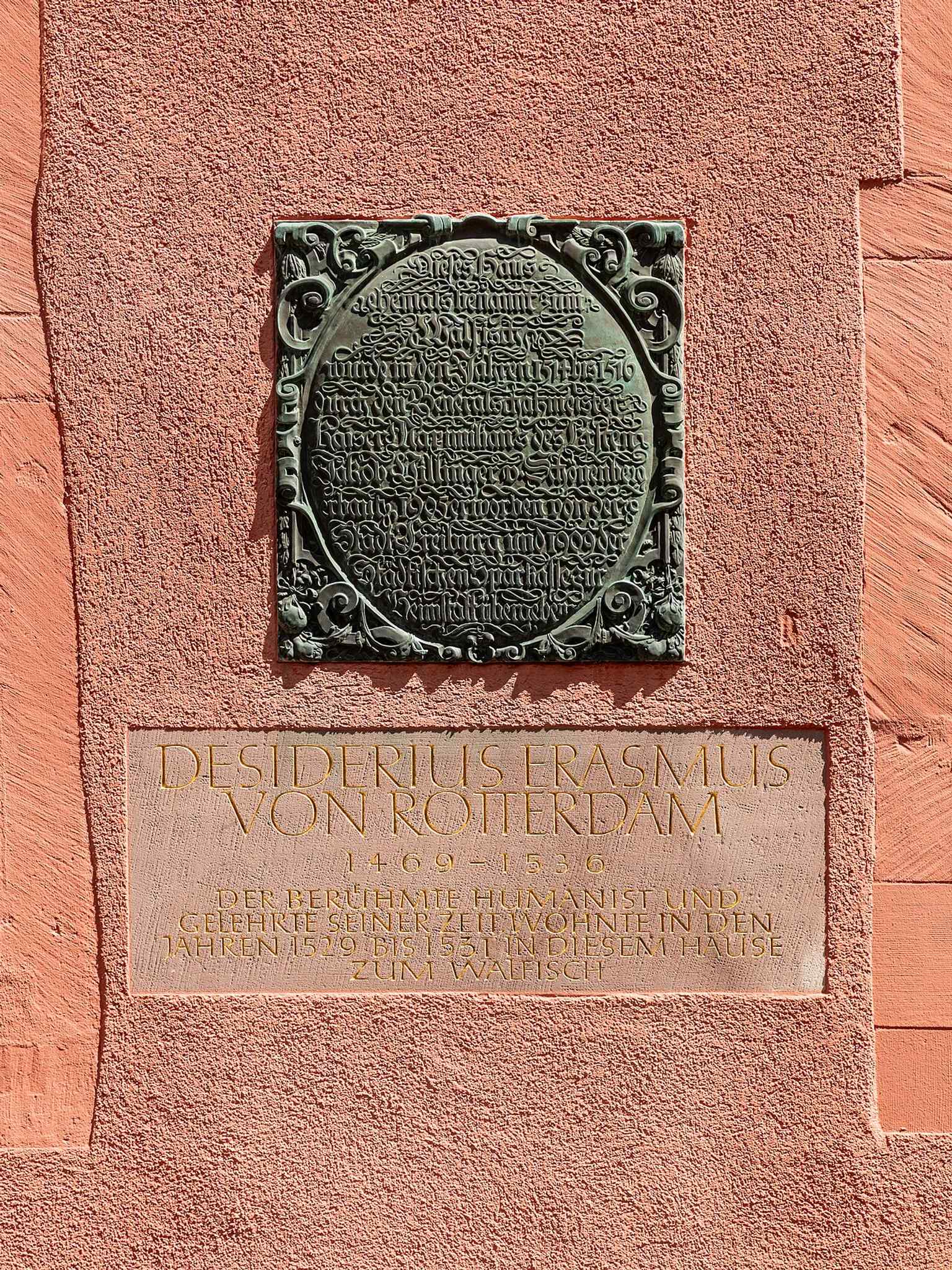
Look for the deep red facade, the steep stepped gable, and the stone memorial plaque set into the wall of this late Gothic house.
This is the Haus zum Walfisch, the House of the Whale... one of Freiburg’s grandest town houses, though its story is less about grandeur than about who needed shelter, who paid for it, and who held the key.
Jakob Villinger, treasurer to Emperor Maximilian the First, started gathering property here in the early fifteen hundreds, buying up neighboring houses and folding older walls into a new residence. By fifteen seventeen, this “important building,” as the city called it, was ready to occupy. The name House of the Whale appears later, from fifteen sixty-five onward, and one local historian suspects a nod to Jonah and the whale. Freiburg does enjoy a name with a little drama.
But the person most people remember here is Erasmus of Rotterdam. He arrived in Freiburg after fleeing Basel, already one of Europe’s most influential humanists - a scholar of language, faith, and education, and the sort of man cities liked to claim as proof they mattered. Freiburg took him in through a mix of civic favor and high-level recommendation from Ferdinand, the future emperor.
Now here’s the detail locals relish: Erasmus did not stay in the house exactly as you see it. He stayed in the earlier Villinger house on this site, an older layer hidden inside this famous address. So the plaque tells the truth... just not the whole truth. If you check the plaque on your screen, you’ll see the public memory of that stay fixed in stone.
And the stay itself was awkward. Erasmus thought the city had lodged him freely out of respect. Meanwhile, other humanists lived here too, including Otmar Nachtgall and Augustin Marius. Nachtgall even controlled the ground floor because he had the key. Then the city began rent negotiations, the owner’s widow wanted clarity, and Erasmus insisted he would only sign if he could have the whole house, not just the upper floor. In other words, one of Europe’s great minds got caught in a very ordinary housing dispute. Humanism, yes... but also landlords.
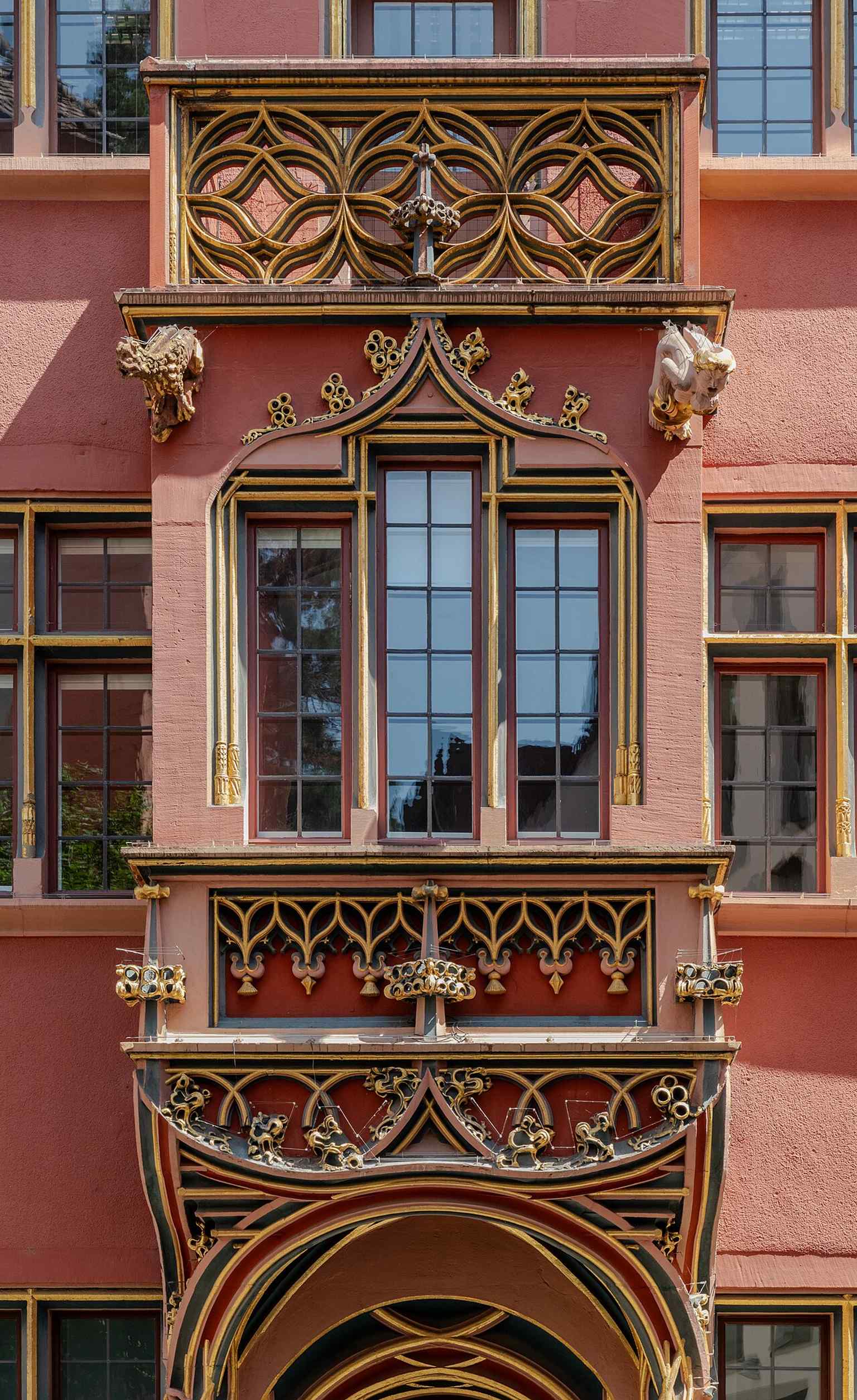
That is what makes this place so good. The history of ideas here does not float above daily life. It sits inside inheritance quarrels, property sales, patronage, exile, and borrowed rooms. Later, even Emperor Ferdinand the First stayed here, with a covered passage built from the upper floor to Saint Martin’s church. Much later, the city bought the house to preserve it, a bank adapted it, the bombing of nineteen forty-four destroyed the historic interiors, and the facade survived - which explains why the exterior still looks so self-assured. A closer look at the windows on your screen shows some of those preserved details.
From one scholar’s temporary refuge, we now head toward Freiburg’s older heart of power and devotion: the Minster, about two minutes away. And like much of Freiburg, this facade is yours to visit from the street at any hour.