
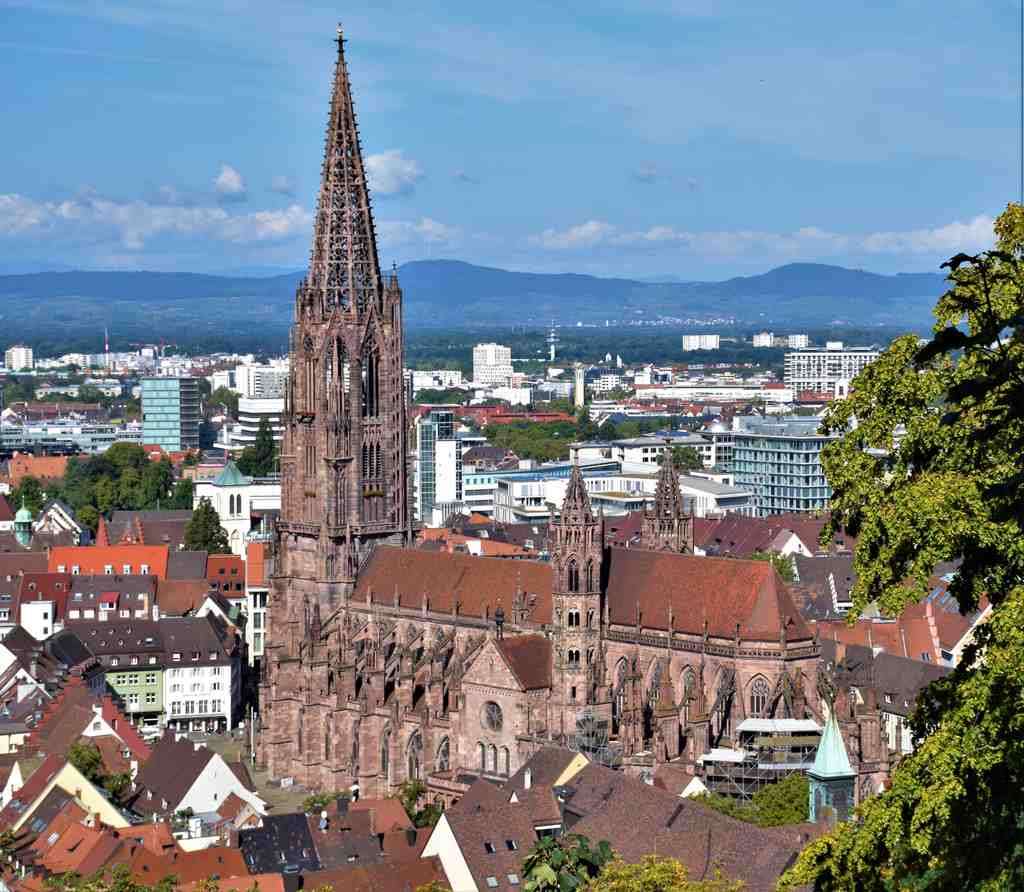
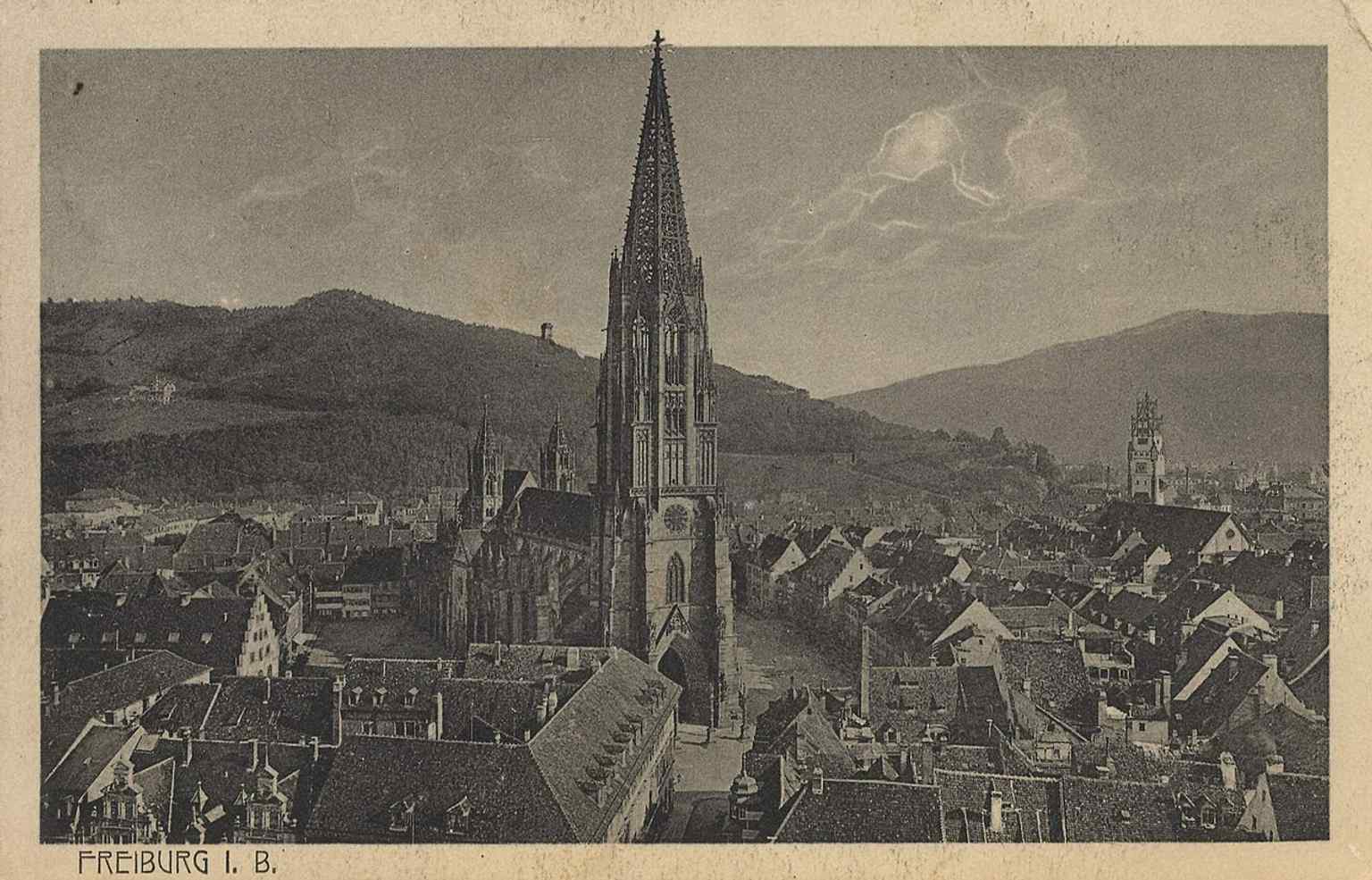
On your left rises a red sandstone church with a broad Gothic body and a lace-like west tower that climbs from a square base into a filigreed open spire.
This is Freiburg Minster, the church of Our Lady... and really, it is the city in stone. Builders worked on it from about twelve hundred to fifteen thirteen, starting in the heavy late Romanesque style and then switching, midstream, into Gothic. You can still read that change in the building itself: older, sturdier parts survive in the transept and the little side towers, while the main body and that famous tower reach upward with much more daring.
To understand why it exists at all, you have to meet the Zähringers. They were the ducal family who founded Freiburg and shaped its early identity, not just as a settlement but as a planned urban power. Berthold the Fifth of Zähringen wanted more than a parish church here; he wanted a dynastic statement and a worthy burial place in the city his family had helped define. So this Minster began as an act of faith, yes... but also of prestige, memory, and political self-advertisement. Medieval rulers were not exactly shy.
Now for the twist. This great church did not begin as property of the church. When the counts who inherited responsibility ran short of money in the thirteenth century, Freiburg’s citizens stepped in, funded the work, and created the Münsterfabrik, a legal building fund responsible for construction and repair. That arrangement still matters. The Minster is sacred space, but its survival has always depended on civic stubbornness, skilled labor, and a very long attention span.
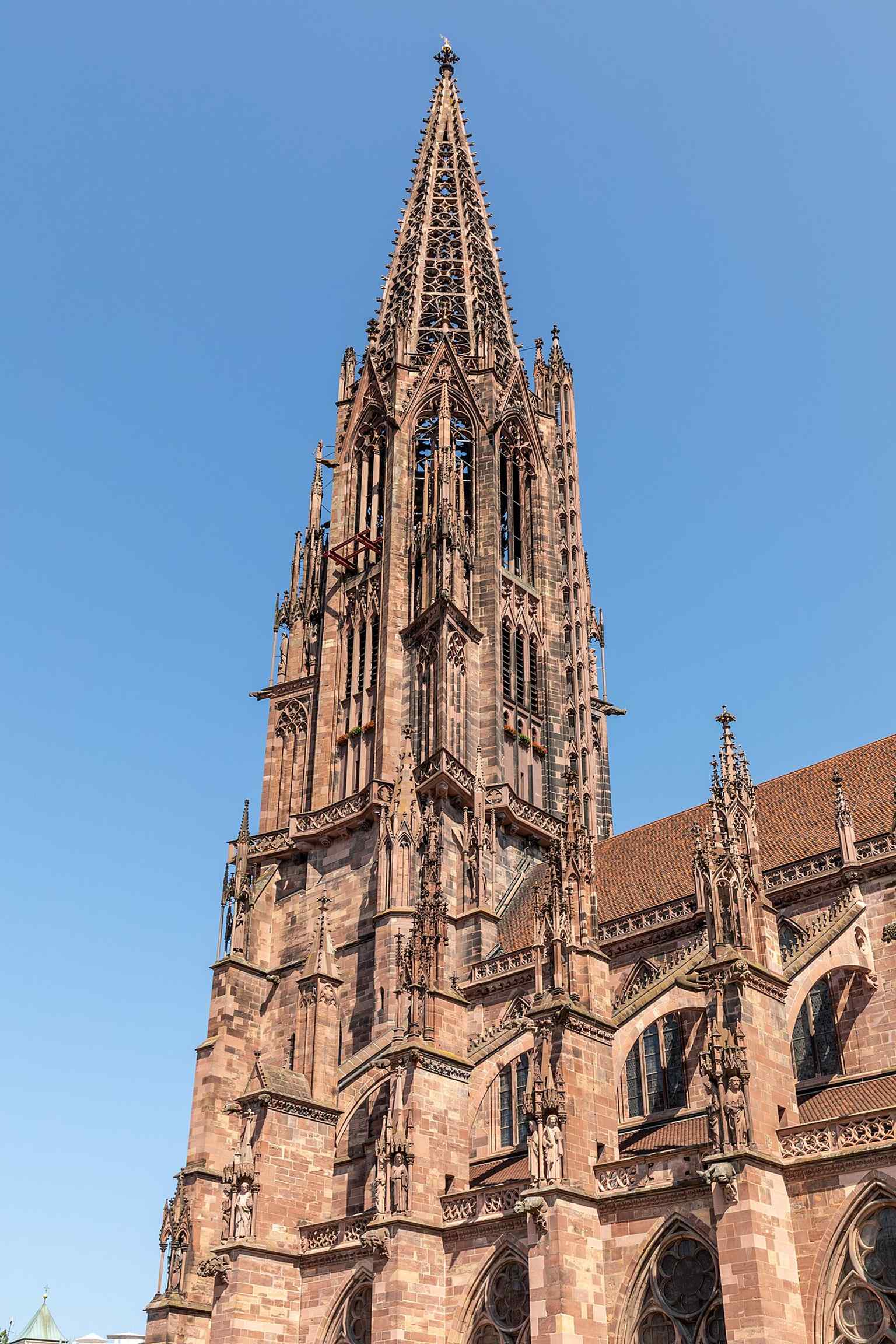
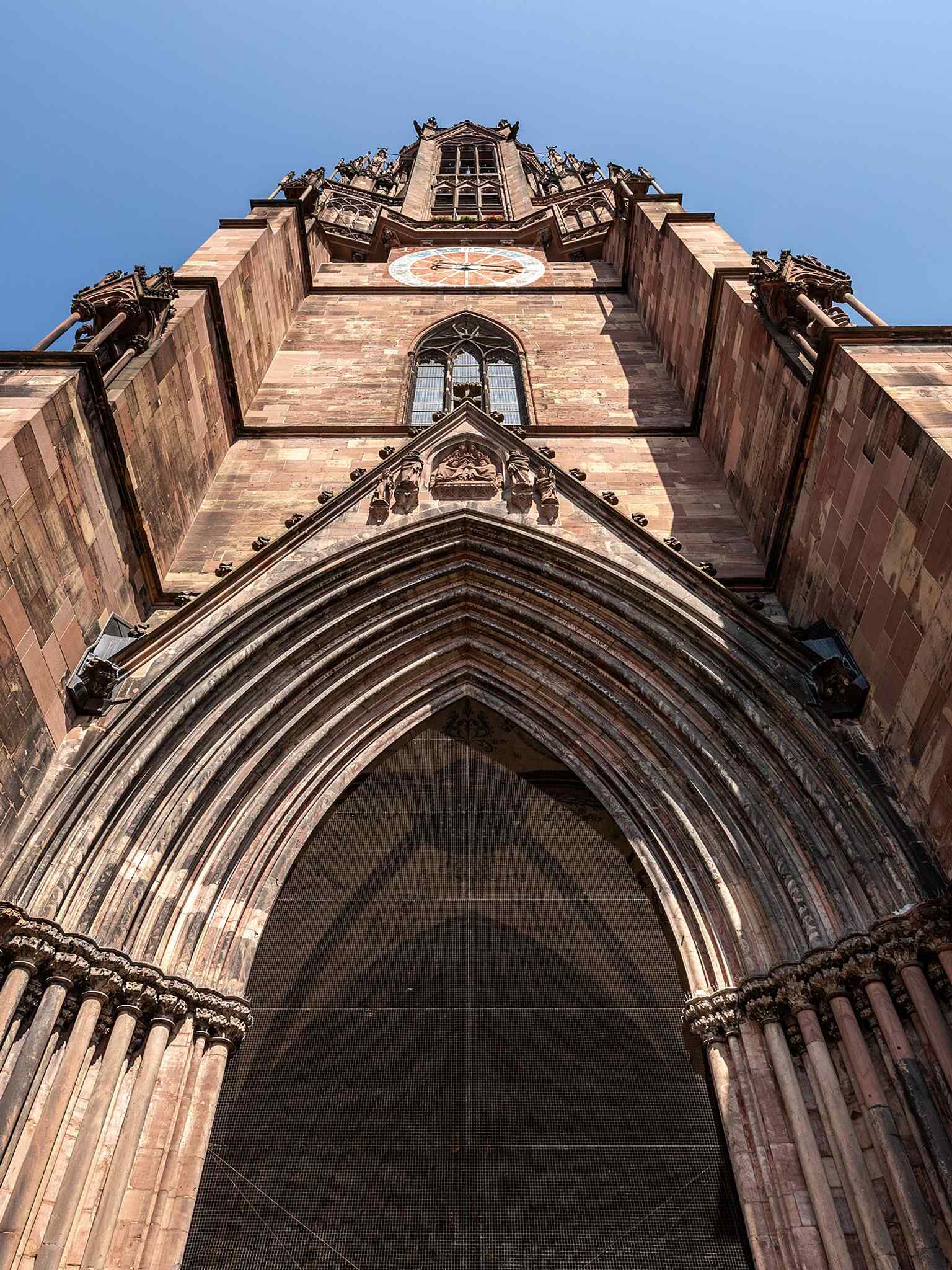
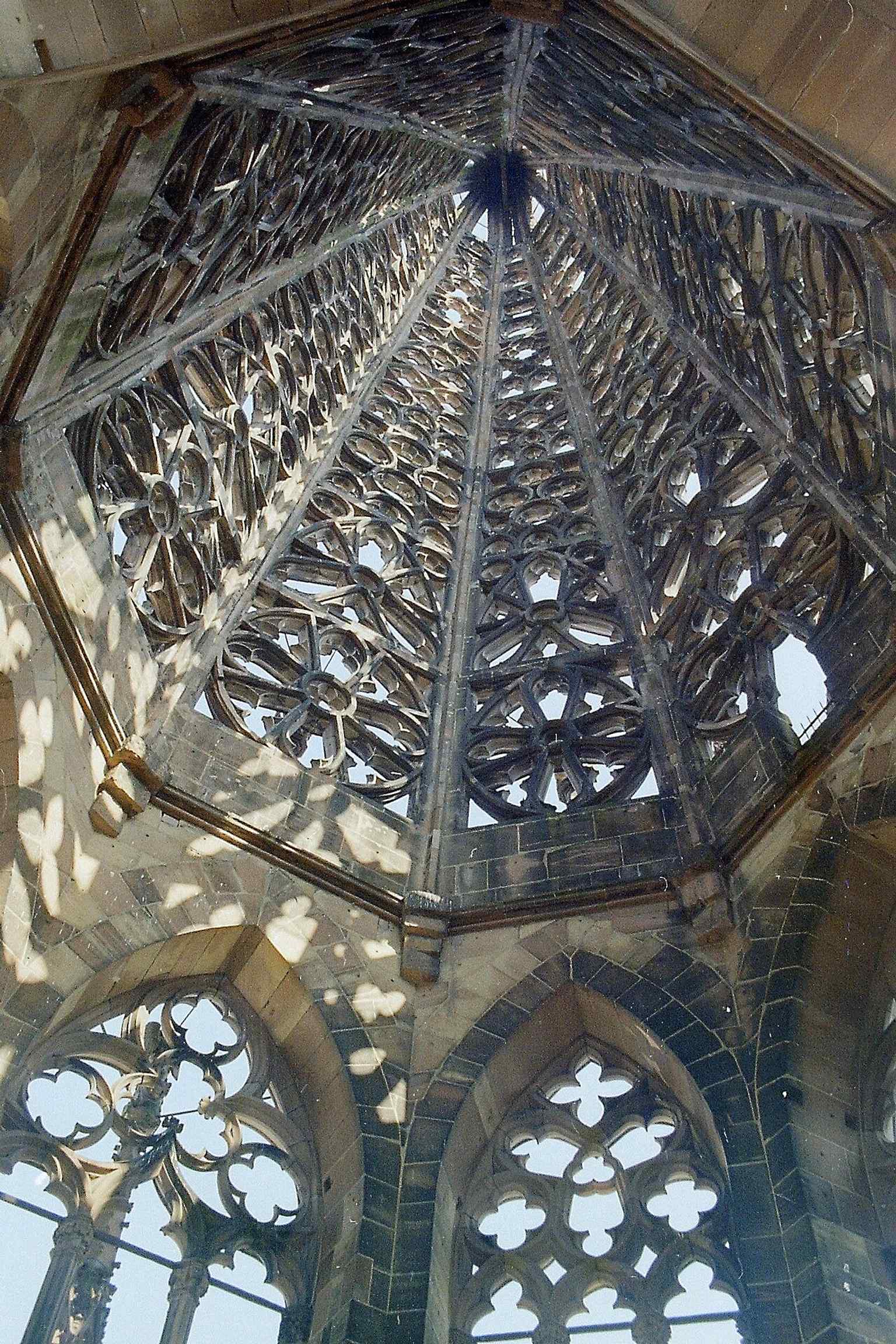
Take a moment and look up at the tower. Notice how it shifts from a solid square base to a twelve-sided gallery, then to an octagon, and finally to that open stone spire, almost like lace carved out of rock. No wonder the art historian Jacob Burckhardt said in eighteen sixty-nine that Freiburg’s would remain “the most beautiful tower on earth.” At one hundred sixteen meters, completed around thirteen thirty, it became one of Europe’s great Gothic statements, and one of the earliest Gothic tracery spires - tracery meaning that delicate stone webwork - of its era.
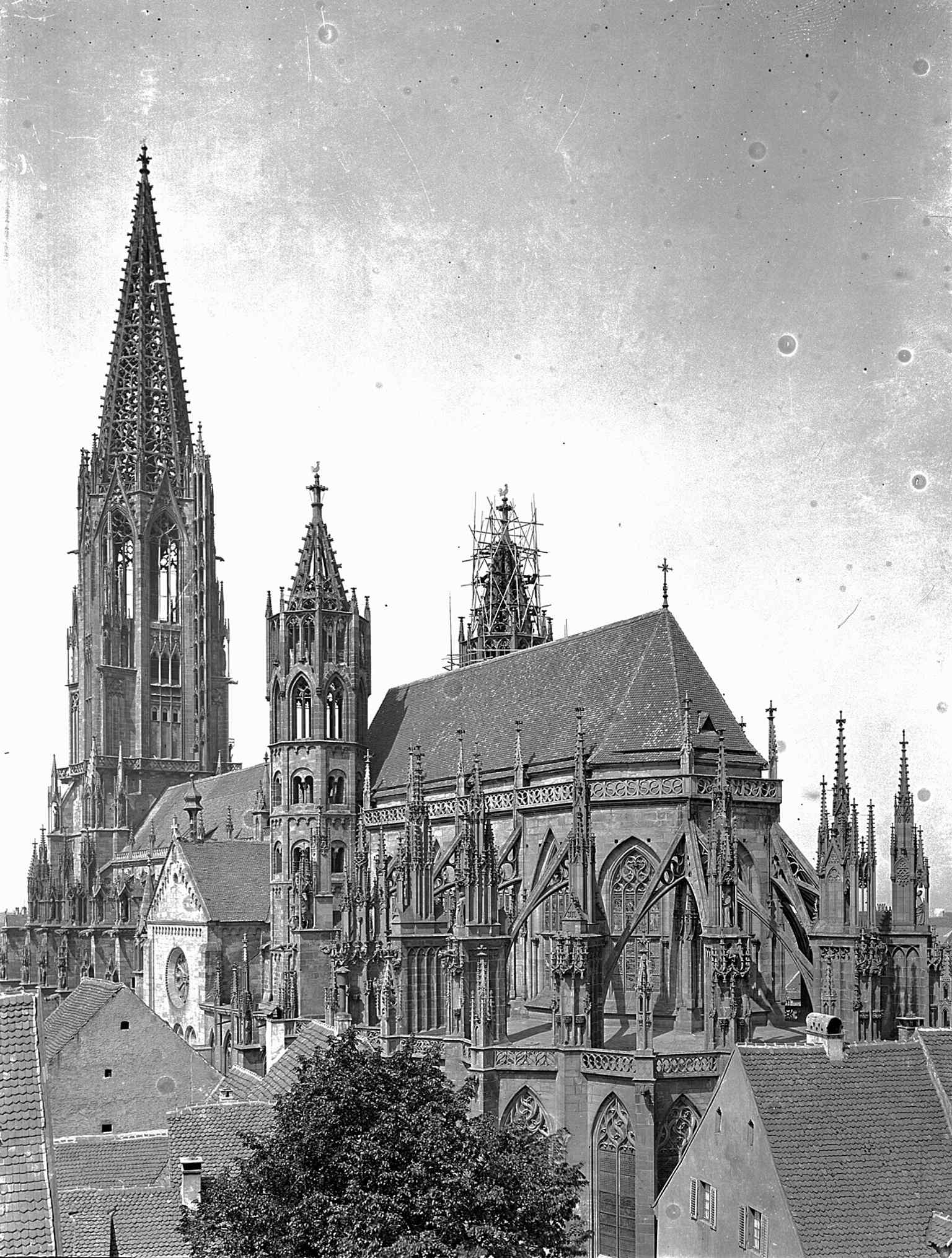
If you feel like it, open the before-and-after image in the app; the eighteen ninety-two view catches one Hahnenturm under scaffold, a quiet reminder that this place has spent more than a century being lovingly fussed over.
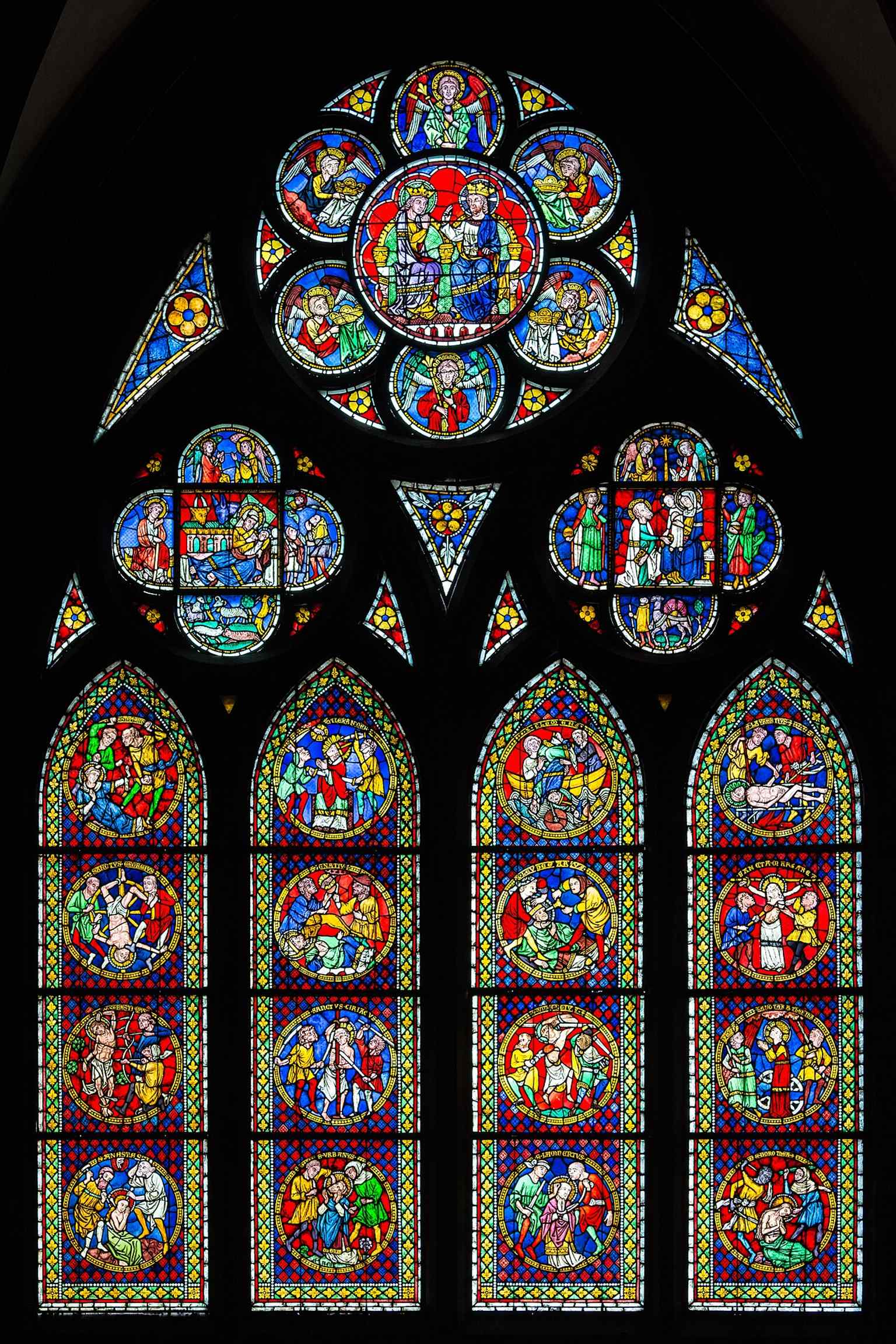
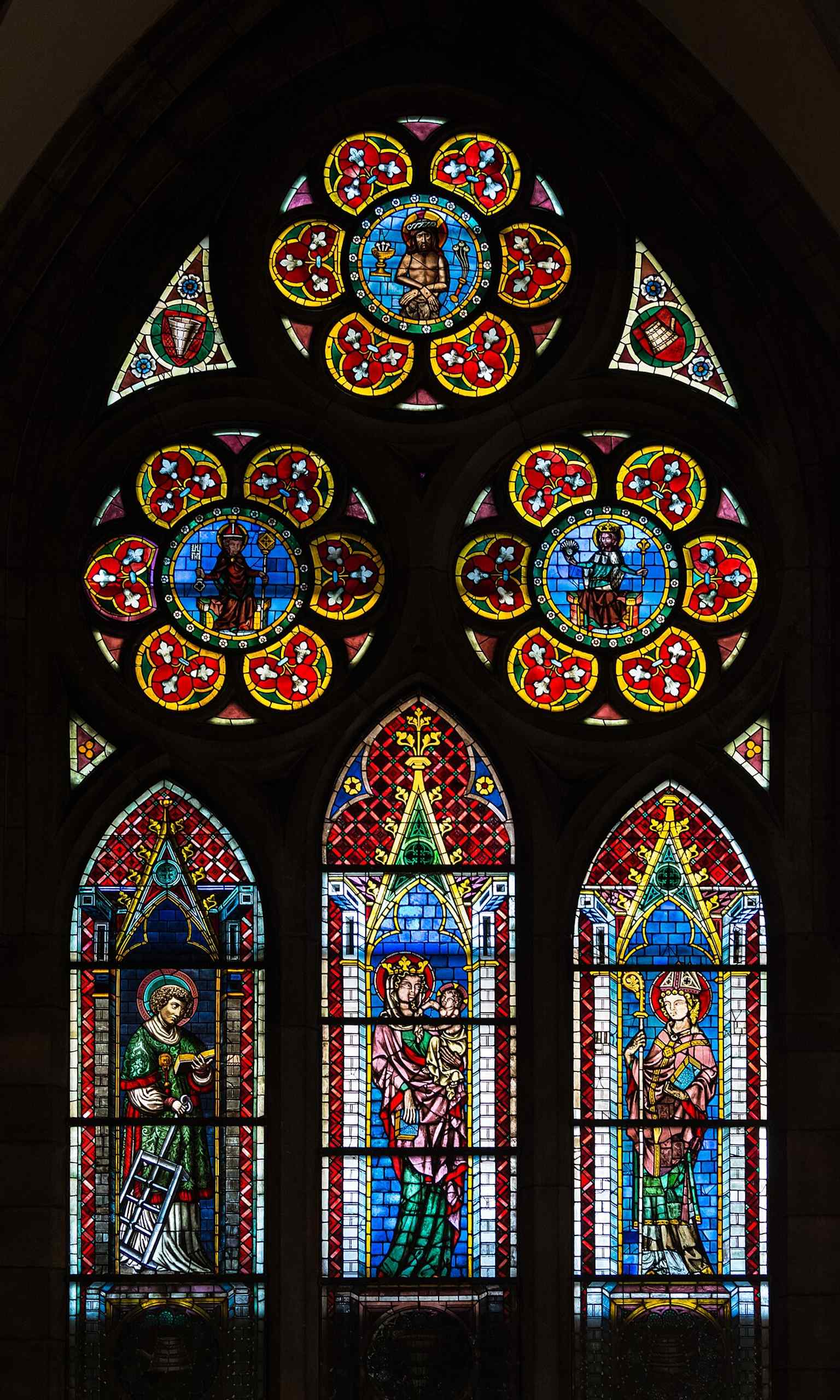
That care mattered terribly in November nineteen forty-four. Bombs wrecked the surrounding old town, but the Minster largely endured. Its roof took damage, yet the medieval stained-glass windows survived because people had removed them in time. If you glance at the Martyrs’ Window on your screen, you can see how medieval glass still lives here, later joined by restorations from Fritz Geiges, whose work sparked arguments that restorers still grumble about.
Officially, this became a cathedral in eighteen twenty-seven, when Freiburg gained its archbishop. But everyone still calls it the Minster, which feels right. Grand title, local habit... very Freiburg.
And now, after all that ambition and endurance, look down from the tower to the life gathered at its feet. The next story is not inside the church at all, but in the square that keeps it company: Münsterplatz.








.jpg)
