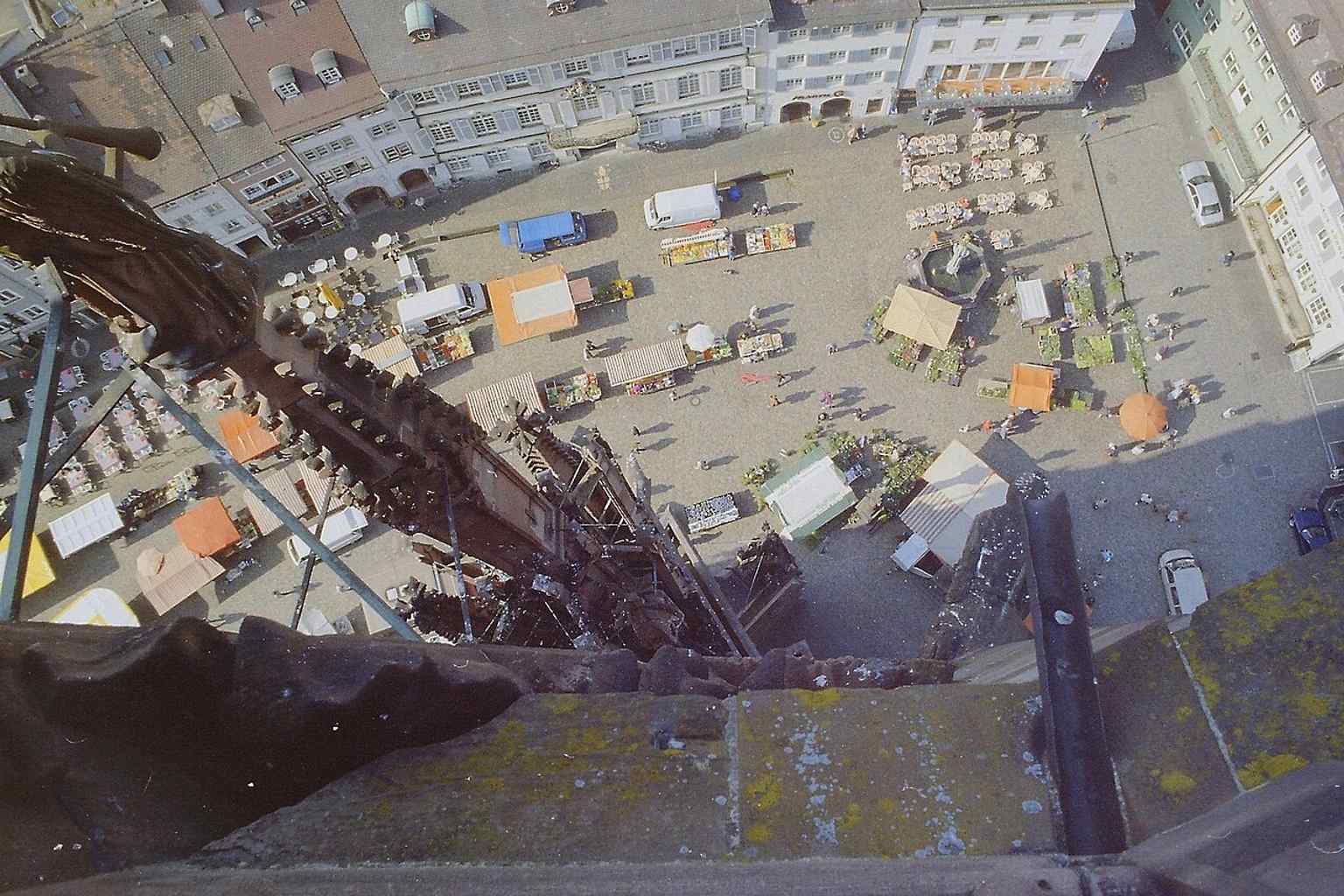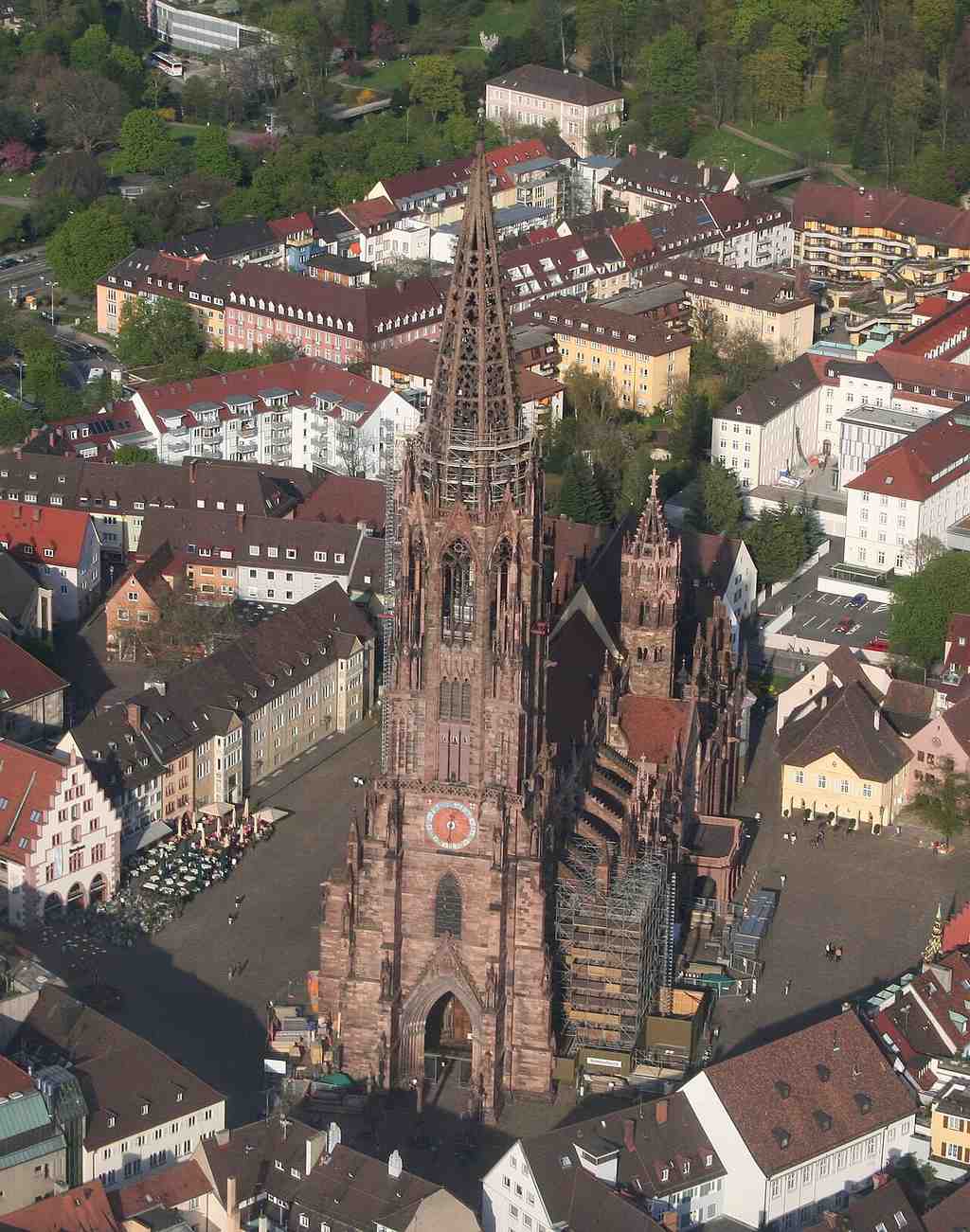
On your left, Münsterplatz opens as a broad cobbled apron around the red sandstone Minster, edged by narrow Bächle water channels and marked in the paving by the footprint of a vanished chapel.
This square is Freiburg’s living room... the place where sacred stone and daily bargaining learned to share the same address. It is the city’s largest square, but it never feels like a pompous parade ground. It feels social, practical, a little theatrical, and very Freiburg.
That practicality has old bones. In the Middle Ages, this area around the Minster was not simply a plaza at all. It was a churchyard, and on the north side, a cemetery for the city, enclosed by a wall about one and a half meters high. The little St. Andreas chapel, with an ossuary below it - an ossuary is a chapel for storing bones after burial space ran out - stood here too. When you spot that outline traced in the paving, you are looking at absence made visible... which is a very Freiburg trick.
The market itself did not always belong here. It first gathered on the old main street, the Große Gass, now Kaiser-Joseph-Straße. Then Emperor Maximilian the First ordered burials moved away in fifteen fourteen for hygiene reasons. Later, Vauban’s fortifications disrupted the replacement cemetery, soldiers of the French garrison ended up buried back here, and only after that whole tangle finally settled did the market truly take over the square. So yes... even a charming market square can have a rather complicated afterlife.
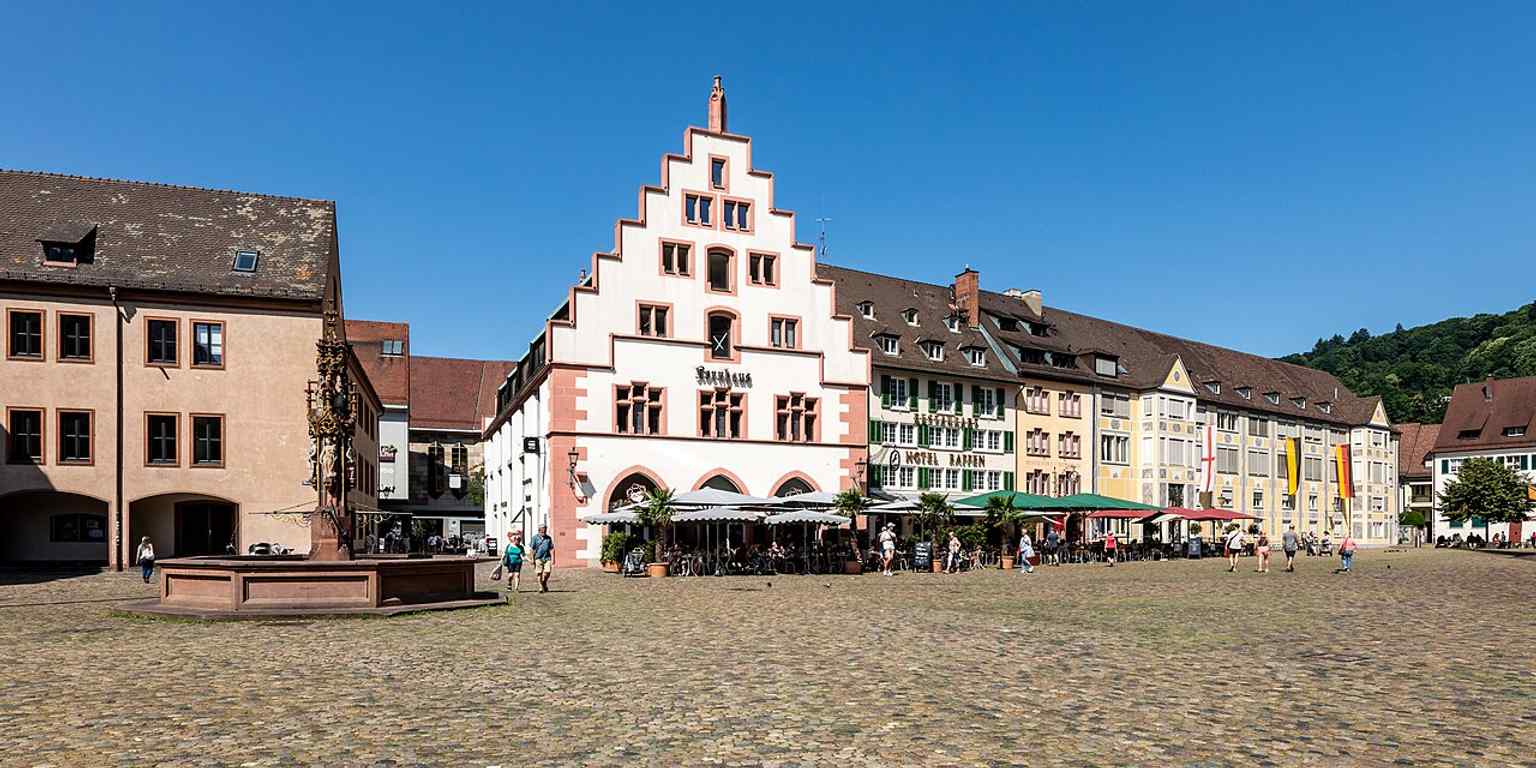
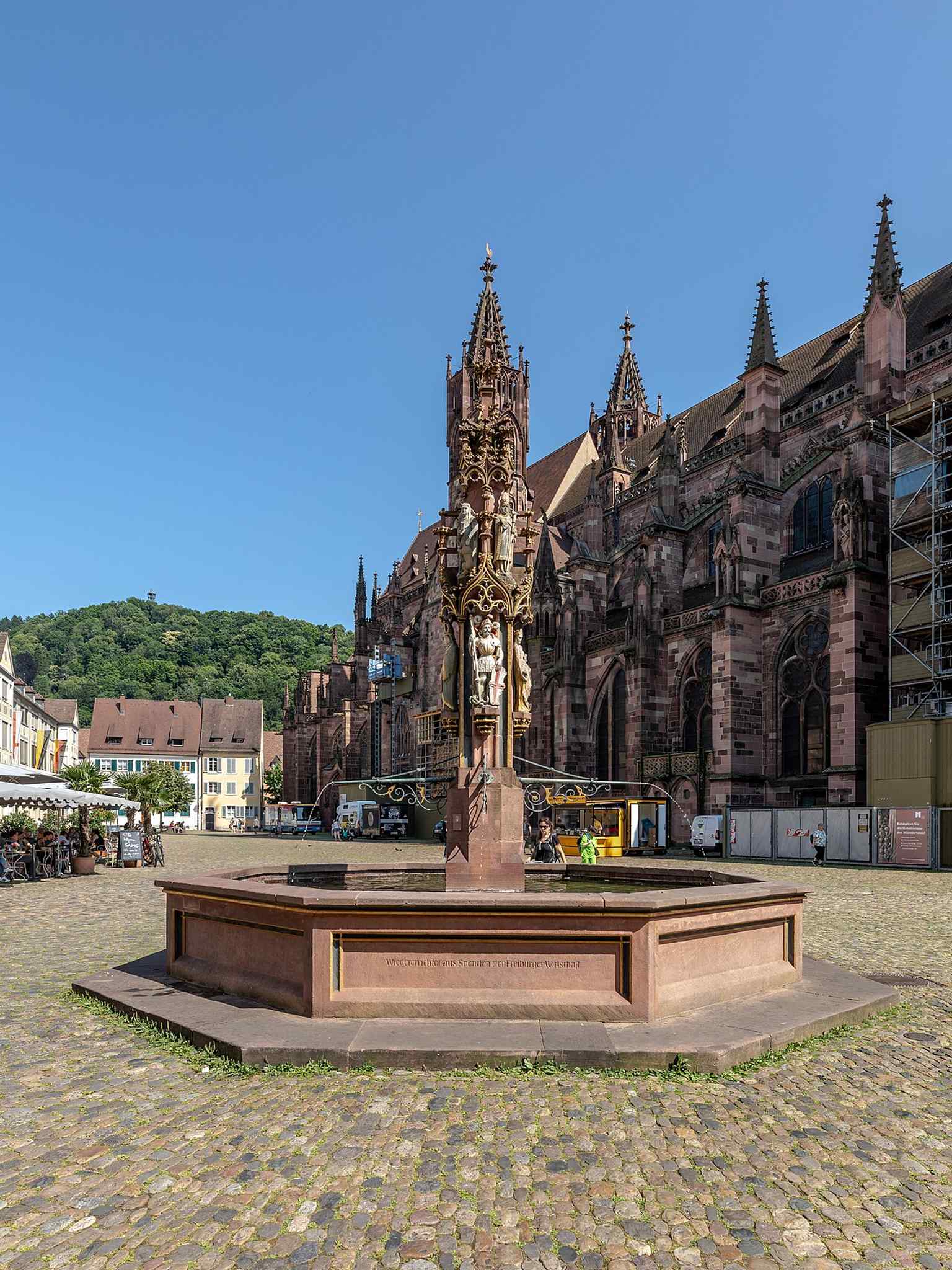
Look around the edges and you get Freiburg in miniature. On the south side stand the Haus zum Ritter, the Historical Department Store, the Wentzingerhaus, and the Alte Wache. On the north side sit the Kornhaus and the Fischbrunnen, the Fish Fountain. That fountain is a copy, placed here in nineteen seventy, of the city’s oldest and grandest market fountain from fourteen eighty-three. Fish were once sold around it, and its stacked figures turn a practical water source into a public sermon in stone.
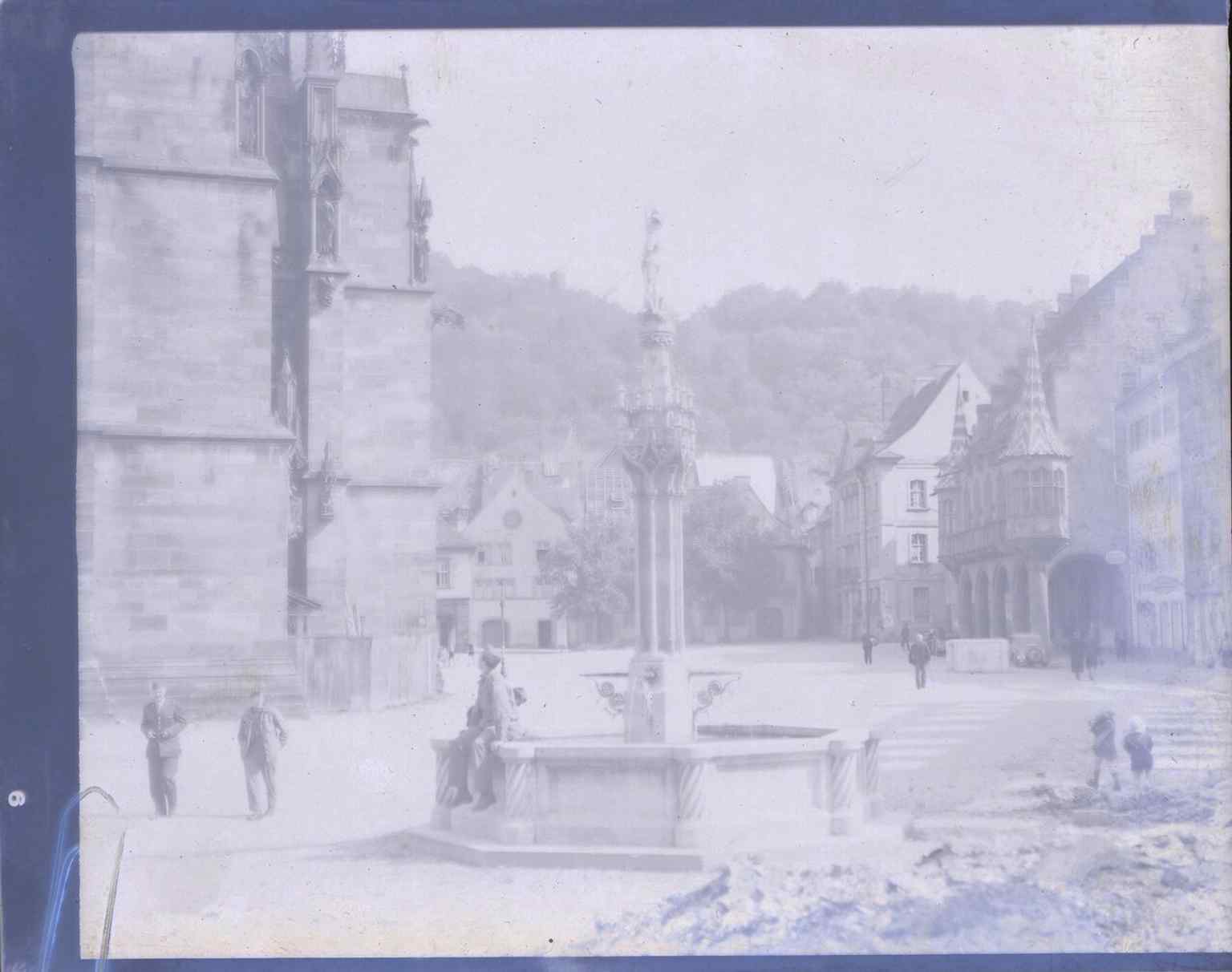
And then there is the Georgsbrunnen nearby, with Saint George as a gilded knight. Here’s the twist: what looks ancient is, in part, a twentieth-century act of memory. In nineteen thirty-five, Carl Anton Meckel rebuilt the old Saint George fountain from surviving fragments in the Augustinian Museum and an eighteen twenty-six lithograph. He switched the soft sandstone for tougher shell limestone and even slipped his own stonecutter’s mark into the work. Medieval authenticity, with a modern signature tucked into the fine print.
If you want, take a quick look at the before-and-after image; the nineteen forty-five view makes the square’s survival and rebuilding hit a little harder. On the twenty-seventh of November, nineteen forty-four, bombing destroyed almost all the buildings around this square. The southeast side - including the Historical Department Store, Wentzingerhaus, and Alte Wache - survived comparatively well, and that changed what Freiburg could remember directly and what it had to rebuild from fragments.
If you glance at your screen, the Fish Fountain photo shows that mix of market business and civic symbolism beautifully.
Now let your eyes settle on the richly decorated red facade on the south side. That building is our next stop.