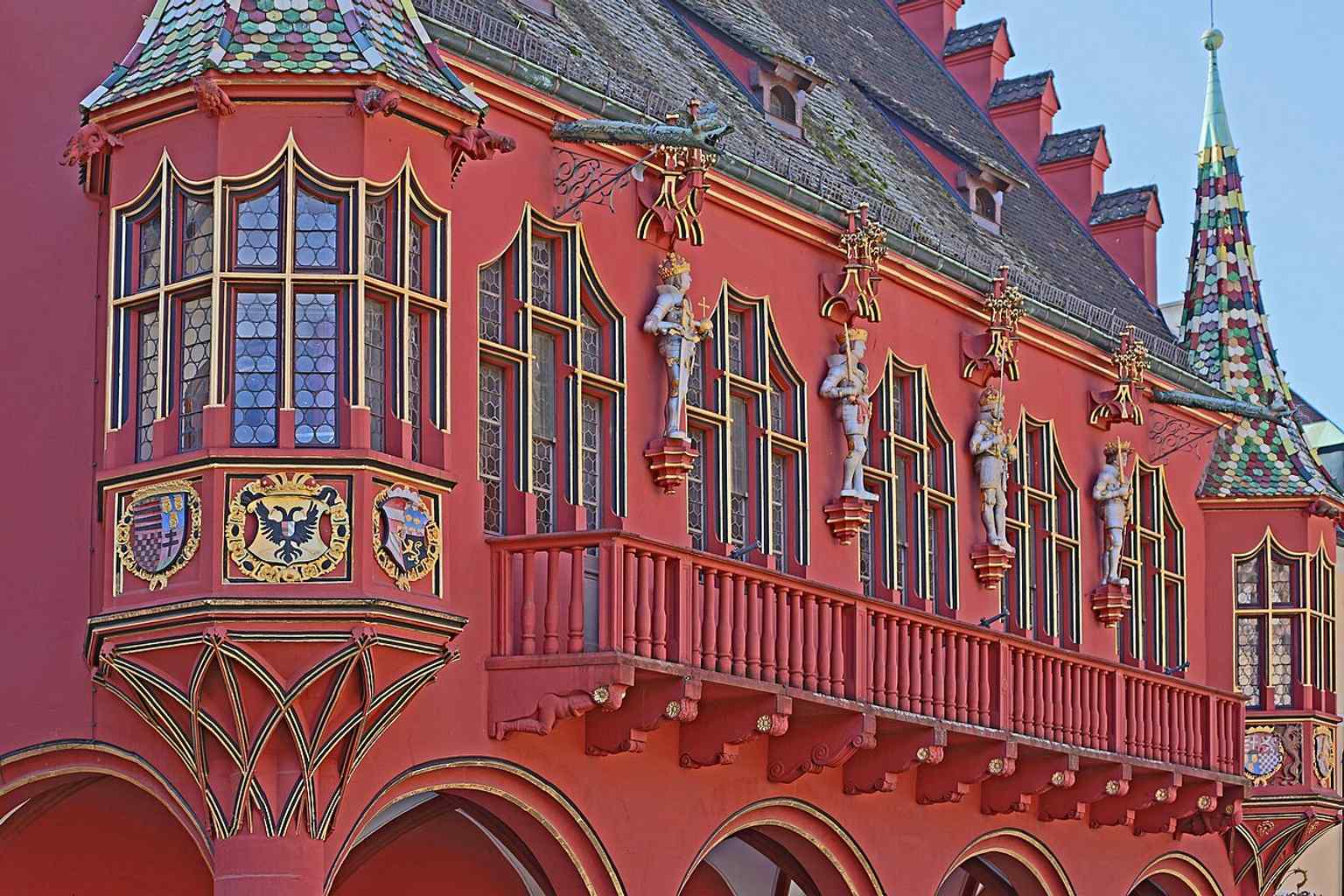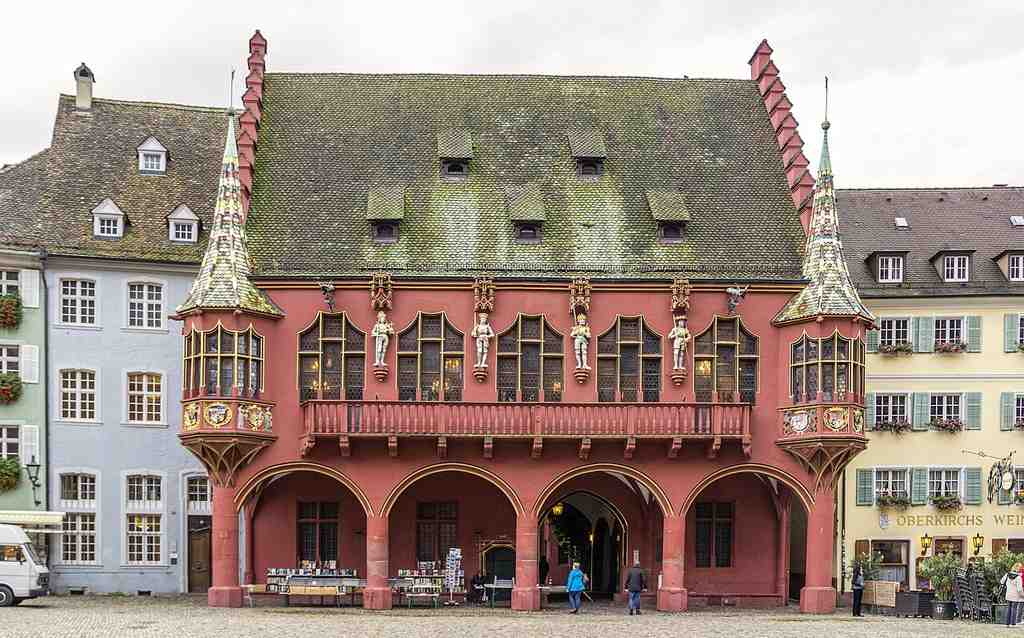
On your left, the Historical Department Store is the long deep-red building with open stone arcades at ground level, steep stepped gables, and two tiled corner bays marked with coats of arms.
This is where trade, tolls, and display came together... where Freiburg counted goods, collected money, and then wrapped the whole business in a very handsome costume. Bureaucracy, apparently, did not want to look boring.
The city’s first municipal warehouse stood nearby on Schusterstraße in the fourteenth century, first recorded in the year thirteen seventy-eight. Officials used it to handle goods coming through town and to process customs dues. Then, from around fifteen twenty to fifteen thirty-two, Freiburg pushed that practical machine outward into the square and built this “new” Kaufhaus facing the Minster. That move matters. Münsterplatz did not run on charm alone. Its market life depended on places like this one to weigh, store, regulate, and profit from the traffic of produce, cloth, wine, salt, and whatever else rolled in.
If you glance at the image on your screen, you can see how the upper part of the building still gives the game away: those stepped gables and roof levels were working storage floors, ventilated for the goods kept above the market action below. Along the west side, openings and projecting beams once helped load the storerooms. Down here, the arcaded ground floor announced the building’s job with admirable honesty: this was commerce under civic supervision.
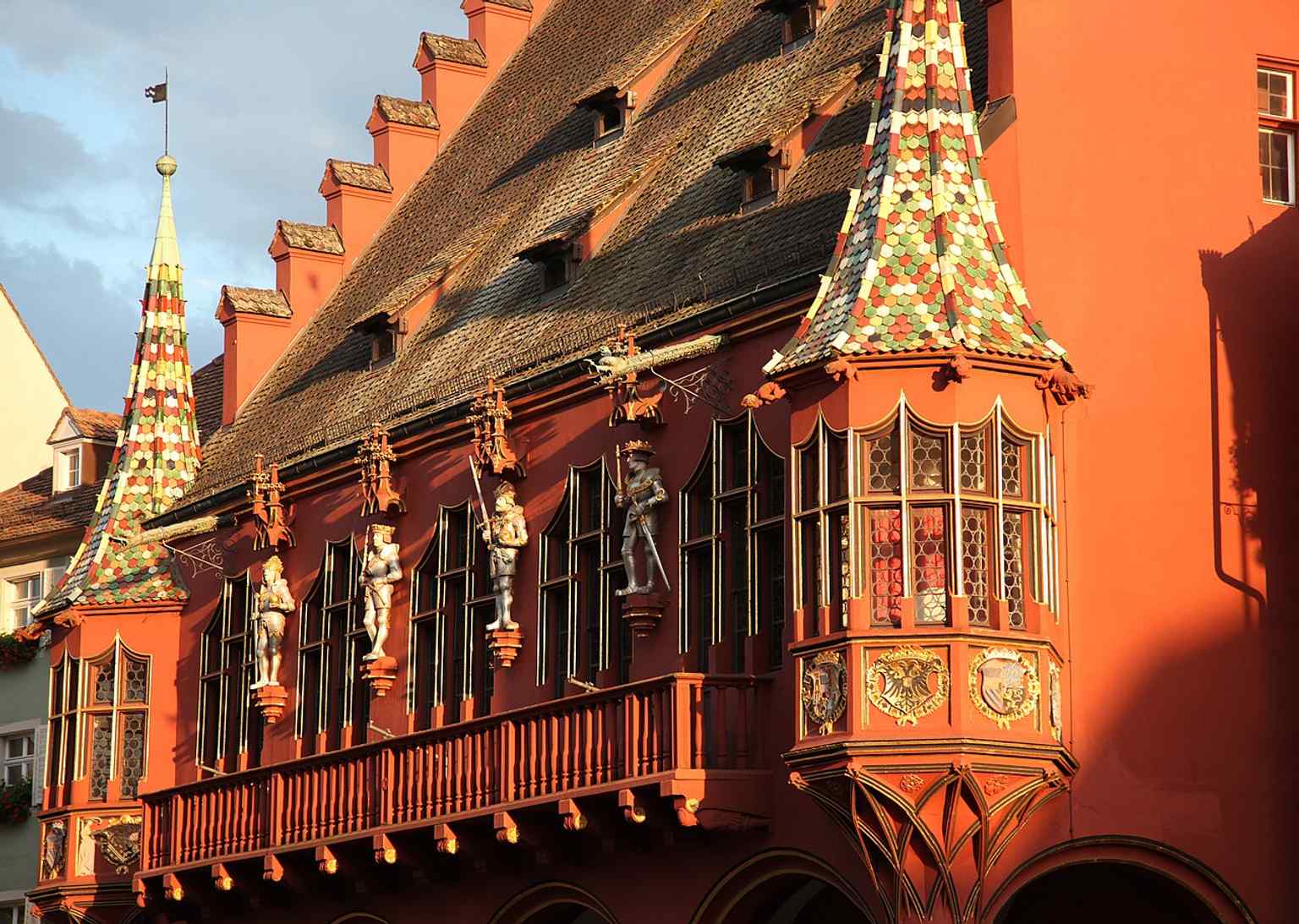
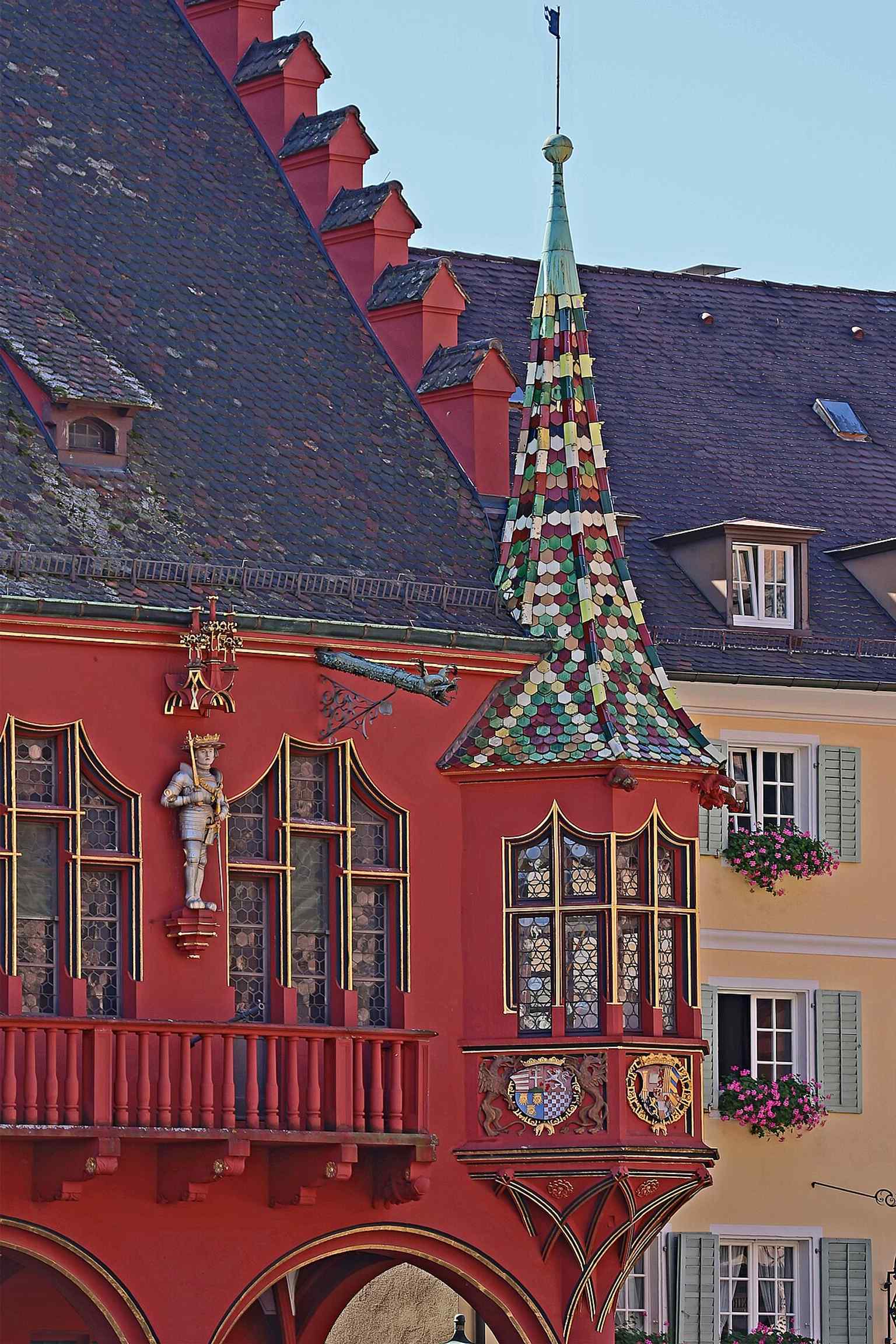
And yet Freiburg did not stop at usefulness. It staged authority. The sculptor Hans Sixt of Staufen carved the Habsburg rulers on the façade between about fifteen thirty and fifteen thirty-one: Maximilian the First, Philip the Fair, Charles the Fifth, and Ferdinand the First. Their statues stand above the square like a dynastic endorsement stamped onto a customs office. If you pull up the detail image, that corner bay is crowded with heraldry, including the imperial eagle and the Habsburg lands. In other words, buying and selling here unfolded beneath a very deliberate reminder of who claimed power.
Inside, things became even more theatrical. The whole upper floor formed a great hall opening toward the market through late Gothic windows. But here is the detail locals like to point out: the famous Kaisersaal, the “Emperor’s Hall,” does not owe its name to those sixteenth-century Habsburg figures. It got that name in eighteen seventy-six, when Freiburg hosted a banquet here for Kaiser Wilhelm the First during the celebrations for the Victory Monument. So the room that looks ancient and imperial earned its title from a comparatively late piece of civic stagecraft. Neat trick.
The building kept changing roles without losing its sense of ceremony. Simon Göser repainted the façade in eighteen fourteen. A heavy nineteenth-century makeover came and went. Then city architect Karl Gruber restored the older look in the nineteen twenties and added the Blue Salon for municipal meetings. After the Second World War, the same complex even served as the parliament building of Baden. So this was never just a pretty shell. It was a working engine that repeatedly learned new lines.
From civic wealth and public display, we head next to a former monastery where sacred architecture found another life as a museum... the Augustinian Museum is about a two-minute walk from here.