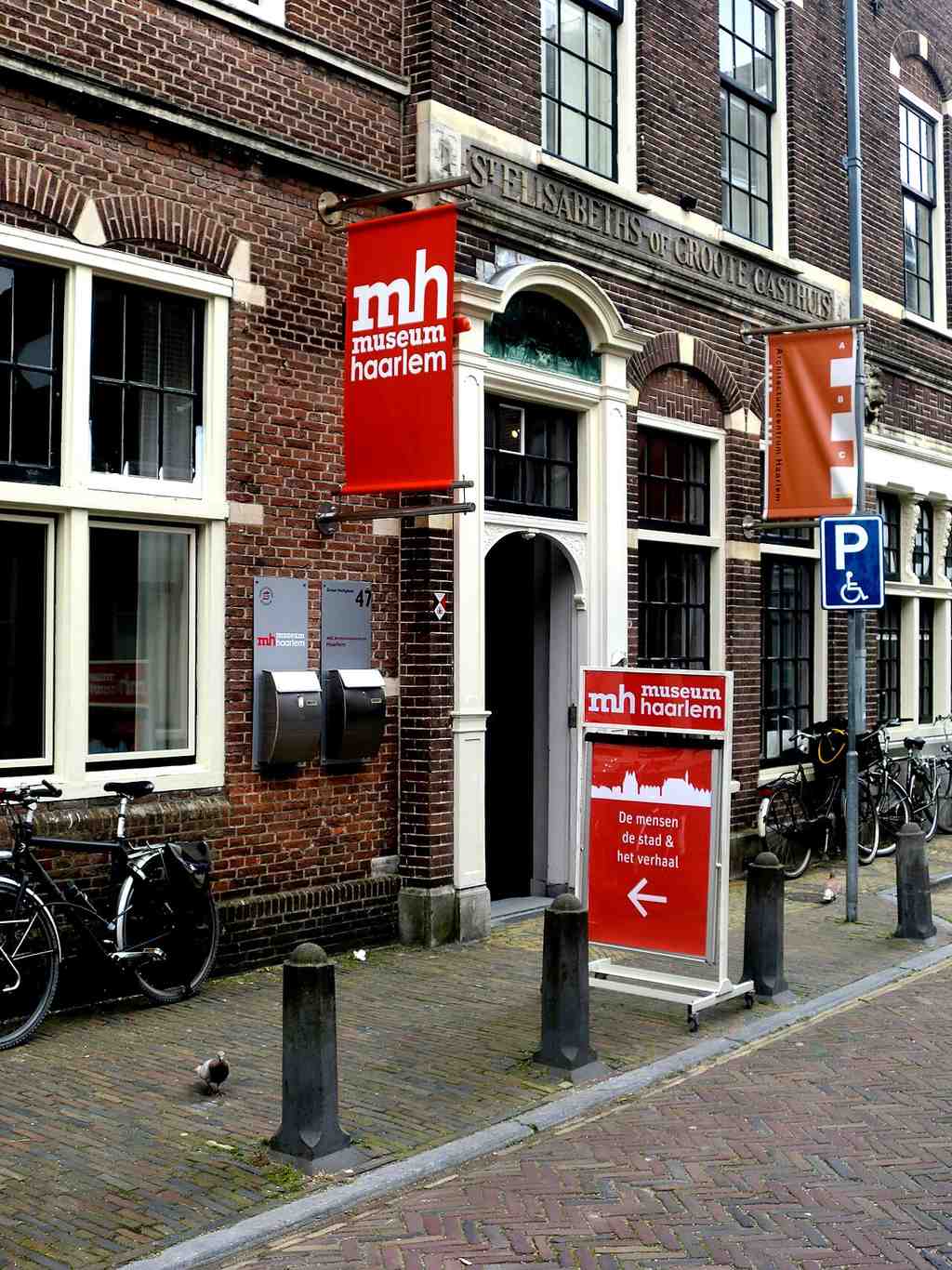
On your left stands a long brick former hospital with a formal stone gate and, above the entrance, a copper plaque showing Saint Elisabeth among the poor.
This place keeps the record of a city trying, again and again, to organize kindness. It began with disaster. In fifteen seventy-six, Haarlem’s great fire destroyed the original Sint-Elisabeths Gasthuis at the Verwulft, so the city had to find its hospital a new home. In fifteen ninety-seven, the hospital moved here, into a former monastery of the Minderbroeders, or Franciscan friars, between Kleine Houtstraat and Groot Heiligland.
For centuries, this was mainly a hospital for poor residents. Wealthier people usually recovered at home. So this building did more than treat illness... it showed who the city believed deserved care even without money in their pocket. That copper plaque above the entrance honors Elisabeth of Thuringia, born in twelve oh seven, married at fourteen, known for helping people during famine, dead by twenty-four, and later revered as a patron saint of hospitals and charity. A short life, but a long shadow.
If you glance at your screen, the eighteen twenty-seven map shows the neighborhood before later expansions trimmed and reshaped the old hospital grounds. In nineteen oh six, the city demolished eight houses to the left of the Gasthuispoort to build an outpatient clinic, and the restored top stone on the gate still remembers the fire that forced the whole institution here in the first place.
There’s another deeply human layer. In nineteen thirty, Mozes Joles financed a Jewish wing with its own nurses and kosher kitchen, though hospital doctors treated patients there like anywhere else. Later, after the Second World War, the complex grew too small. The hospital finally moved to Schalkwijk in nineteen seventy-one, and since nineteen ninety, this building has housed the city’s history museum. Rather fitting, really: a place that once cared for Haarlem’s bodies now keeps watch over its memory.
Care leaves architecture behind... gates, wards, courtyards, and quiet clues about who counted. Frans Hals Museum is about a one-minute walk from here. The museum here is generally open Tuesday through Sunday from ten in the morning to five in the afternoon, and closed on Mondays.