
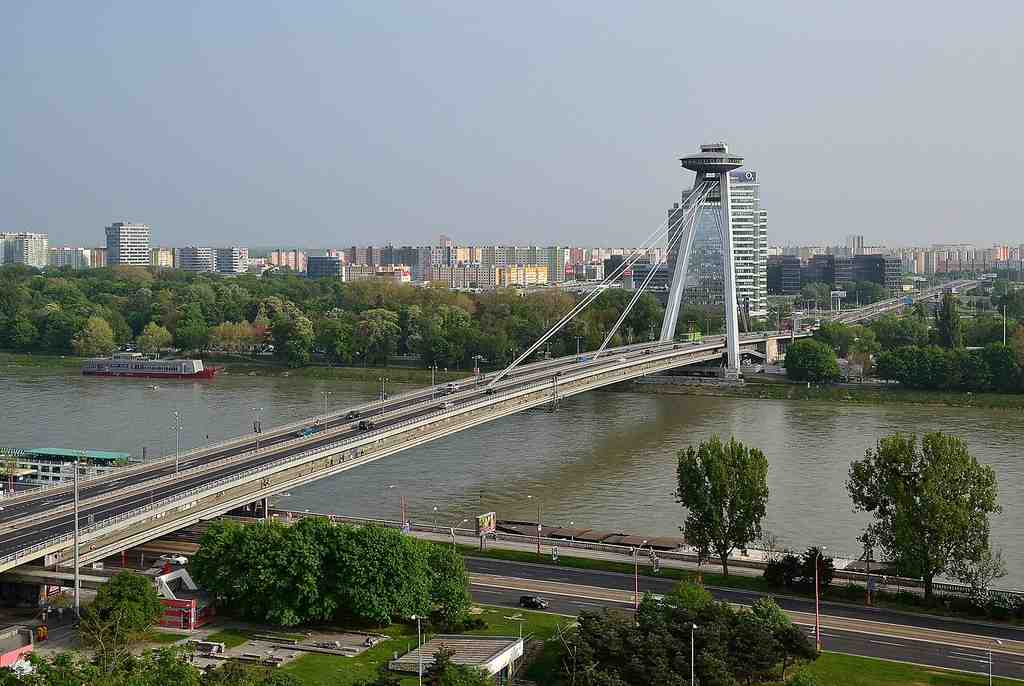
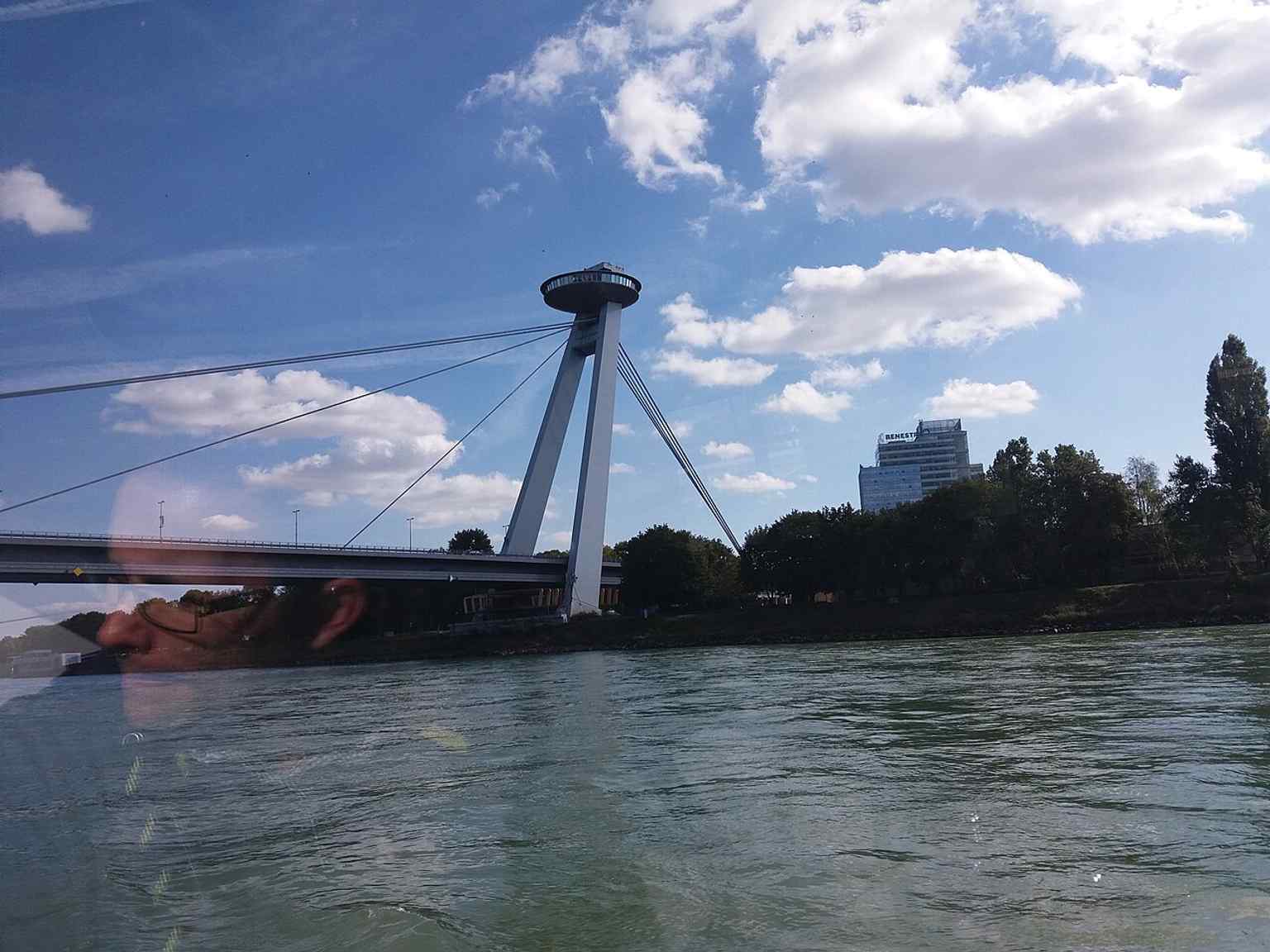
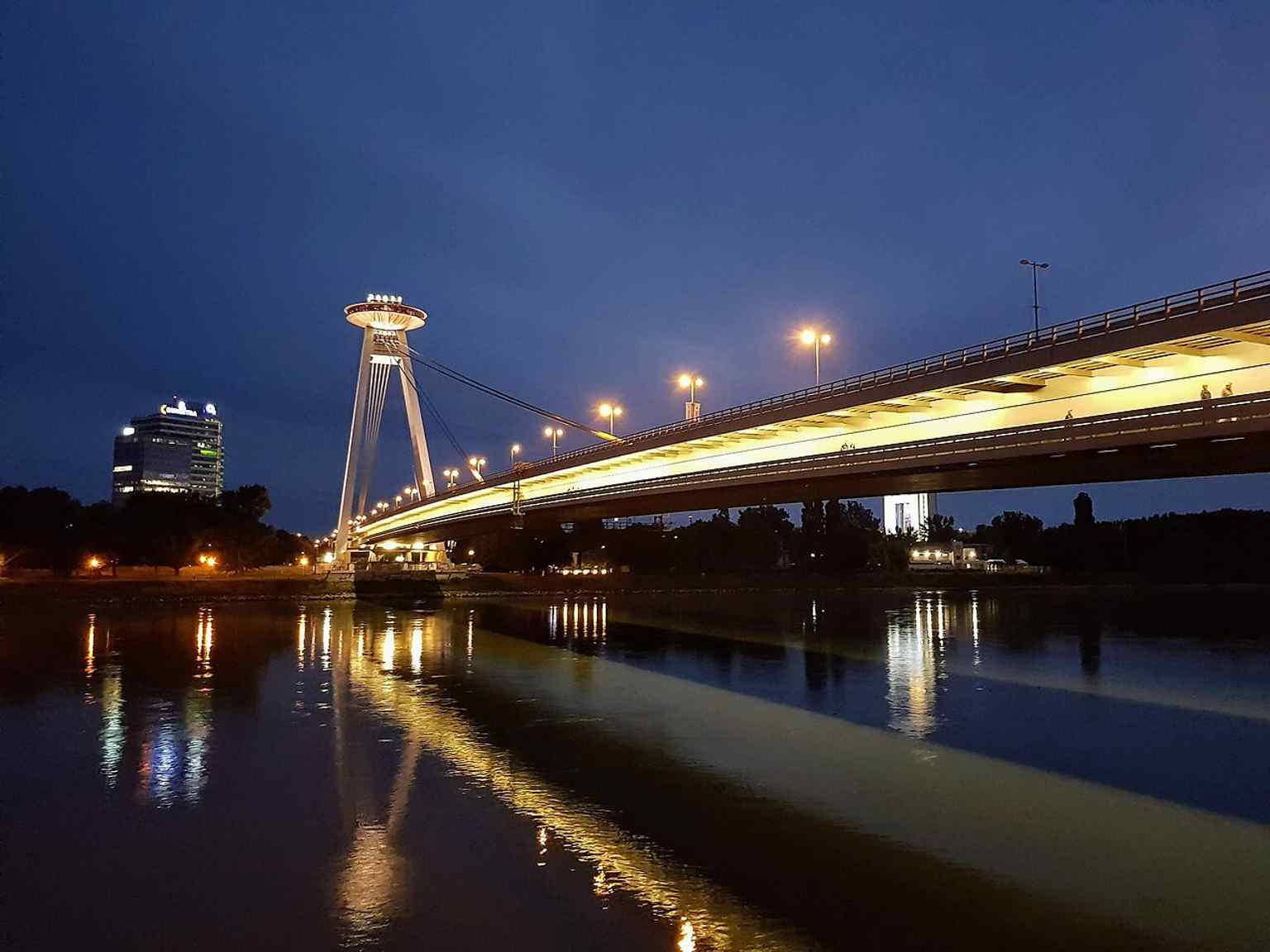
Ahead of you is a steel bridge with a long, flat deck, one leaning pylon, and a round saucer-like top that gives Bratislava its unmistakable U-F-O silhouette.
Take it in for a second... this is Most S-N-P, the Slovak National Uprising Bridge, one of the city’s proudest pieces of engineering and one of its deepest arguments. It opened on the twenty-sixth of August, nineteen seventy-two, after five years of construction, and even now it looks like it arrived from a future somebody sketched on a napkin.
Structurally, it is a single-pylon cable-stayed bridge. In plain English, that means one main tower holds the roadway with a fan of steel cables, like taut strings pulling up a giant instrument. That design gave Bratislava something rare: this is the only bridge here with no pillar standing in the current of the Danube. So the river runs clean beneath it, and the main span stretches farther than any other bridge in the city. When it opened, it ranked fourth in the world among cable-stayed bridges, and in the narrower category of bridges with one pylon and one plane of cables, it still holds a world first. Not bad for a town crossing with a flying saucer on top.
If you glance at the image on your screen, you can really see that asymmetrical balance, almost daring gravity to try something clever.
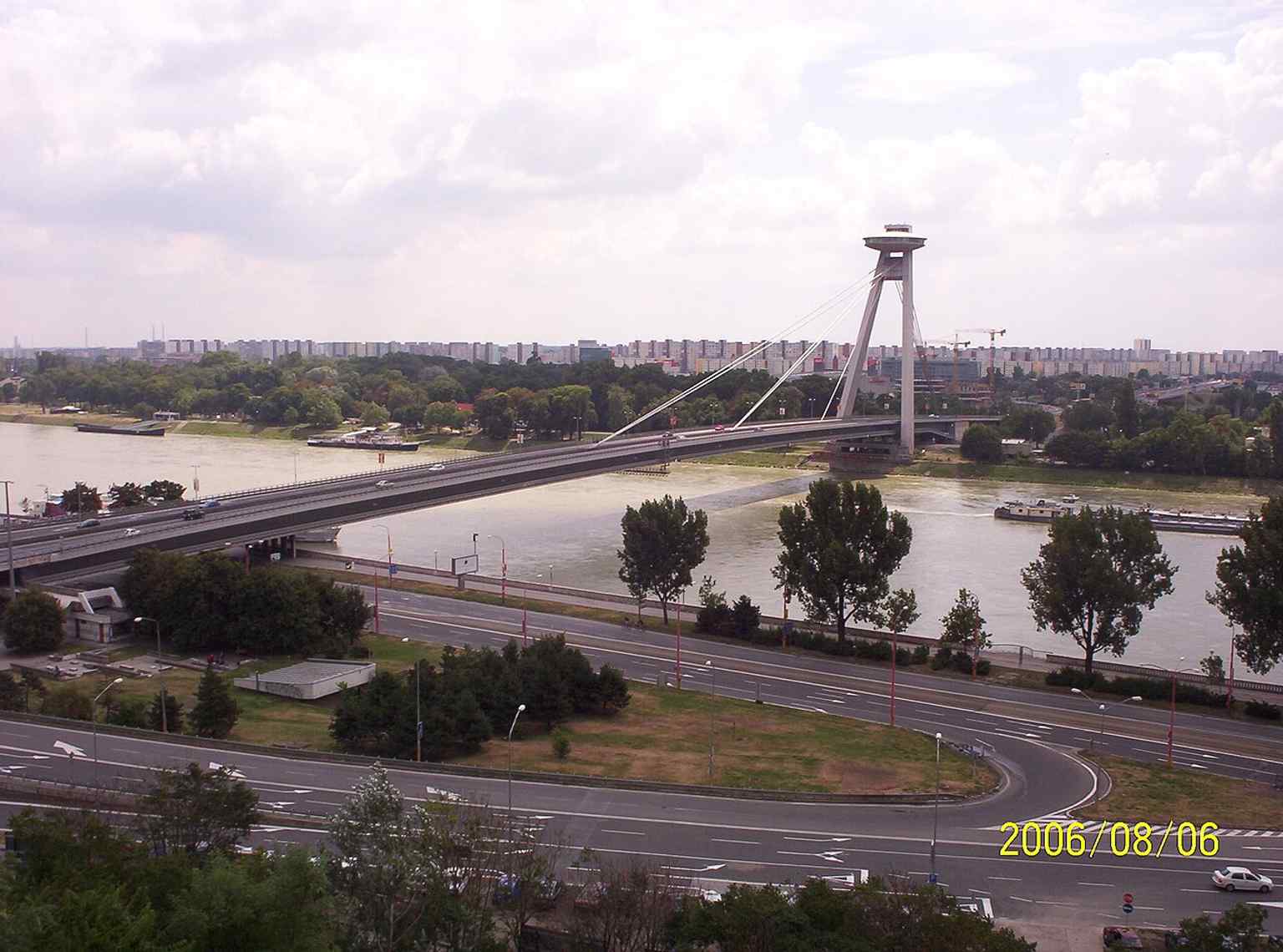
Most visitors never hear the little local twist behind that famous outline: the design that won the international competition did not get built. The bridge you’re looking at came from a proposal that placed only fourth in the competition, but the city chose it for economic reasons. So even this bold symbol of vision also carries compromise baked right into its bones.
Engineers Arpád Tesár and Jozef Zvara, with architects Jozef Lacko, Ladislav Kušnír, and Ivan Slameň, gave the city this striking form. Urbanist Emanuel Hruška looked at the same plan and worried. He argued against routing the bridge out at Rybné Square because he feared a heavy international traffic corridor would cut through the historic center. He was not just being fussy. He understood that roads do not simply pass through a city; they rewrite it.
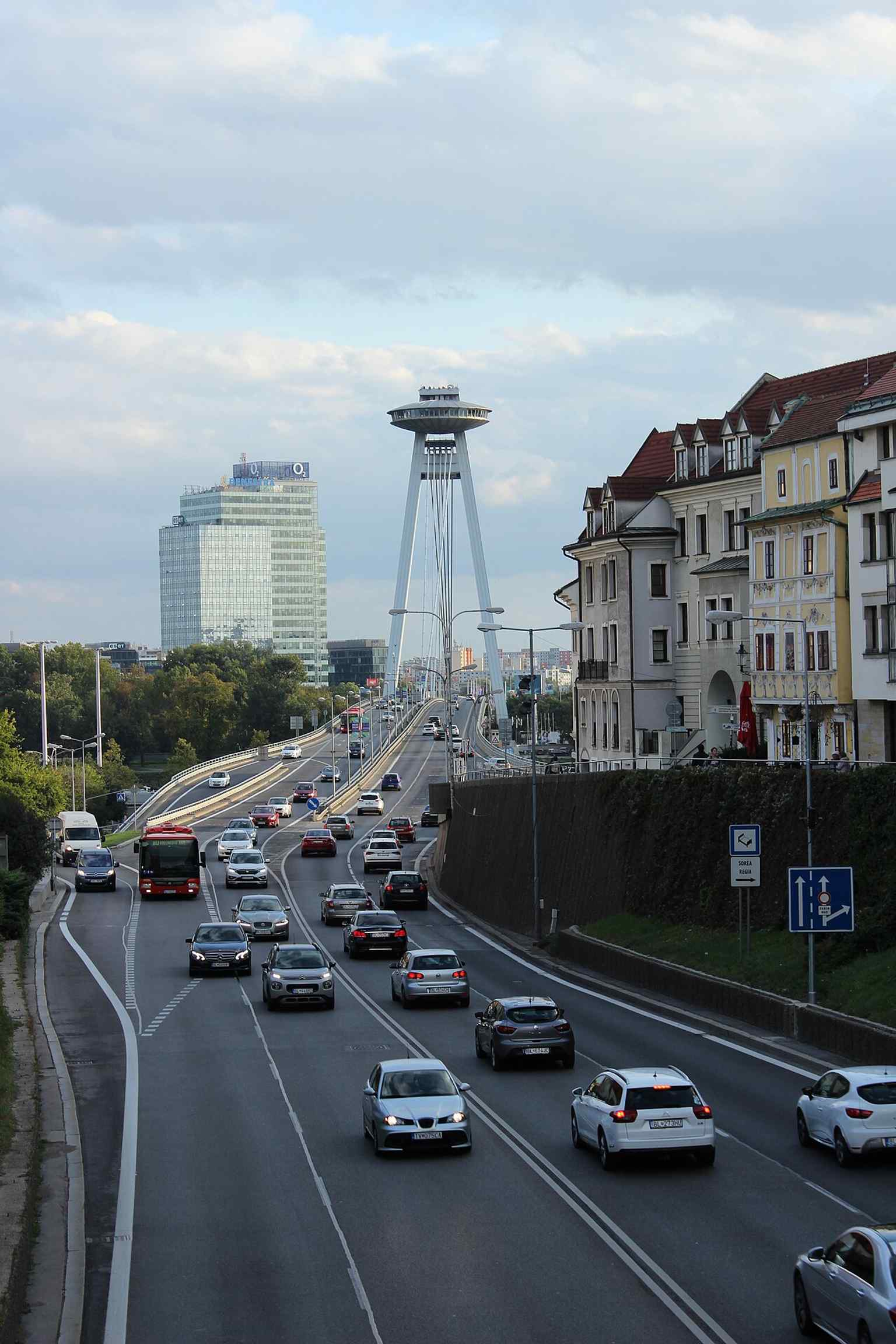
And that is the hard part standing here. To build this bridge, Bratislava erased much of Podhradie below the castle, including historic parts of Vydrica and a Moorish-style synagogue. Whole streets vanished. The bridge sped up traffic, helped connect the fast-growing Petržalka housing district, and pushed the modern city forward. But it did so by clearing away a piece of the old one so thoroughly that planners later spoke of needing to “heal the wound.”
Look at the wider city view on your phone and notice how the bridge slices across the riverfront. It does not hide what it changed.
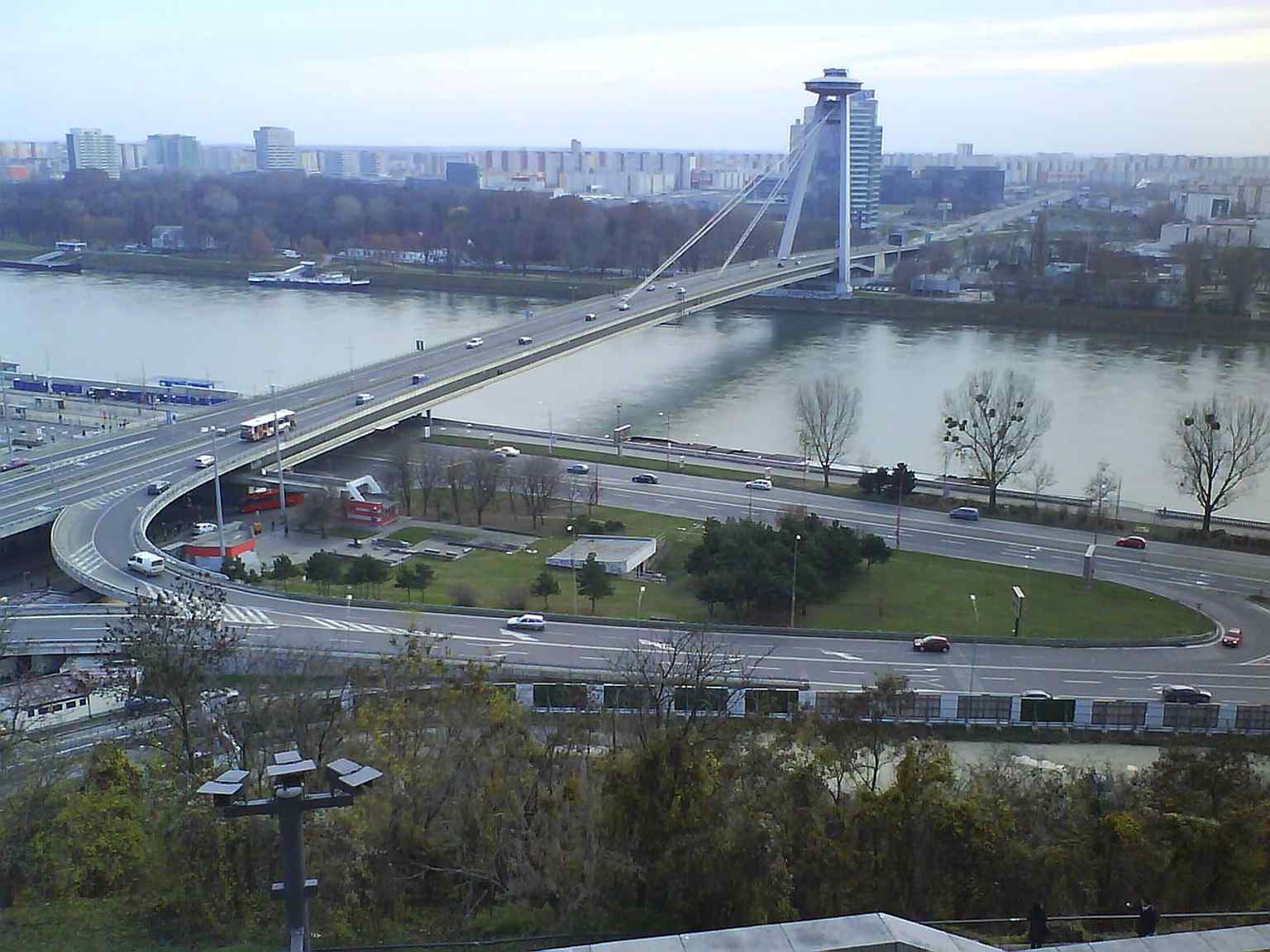
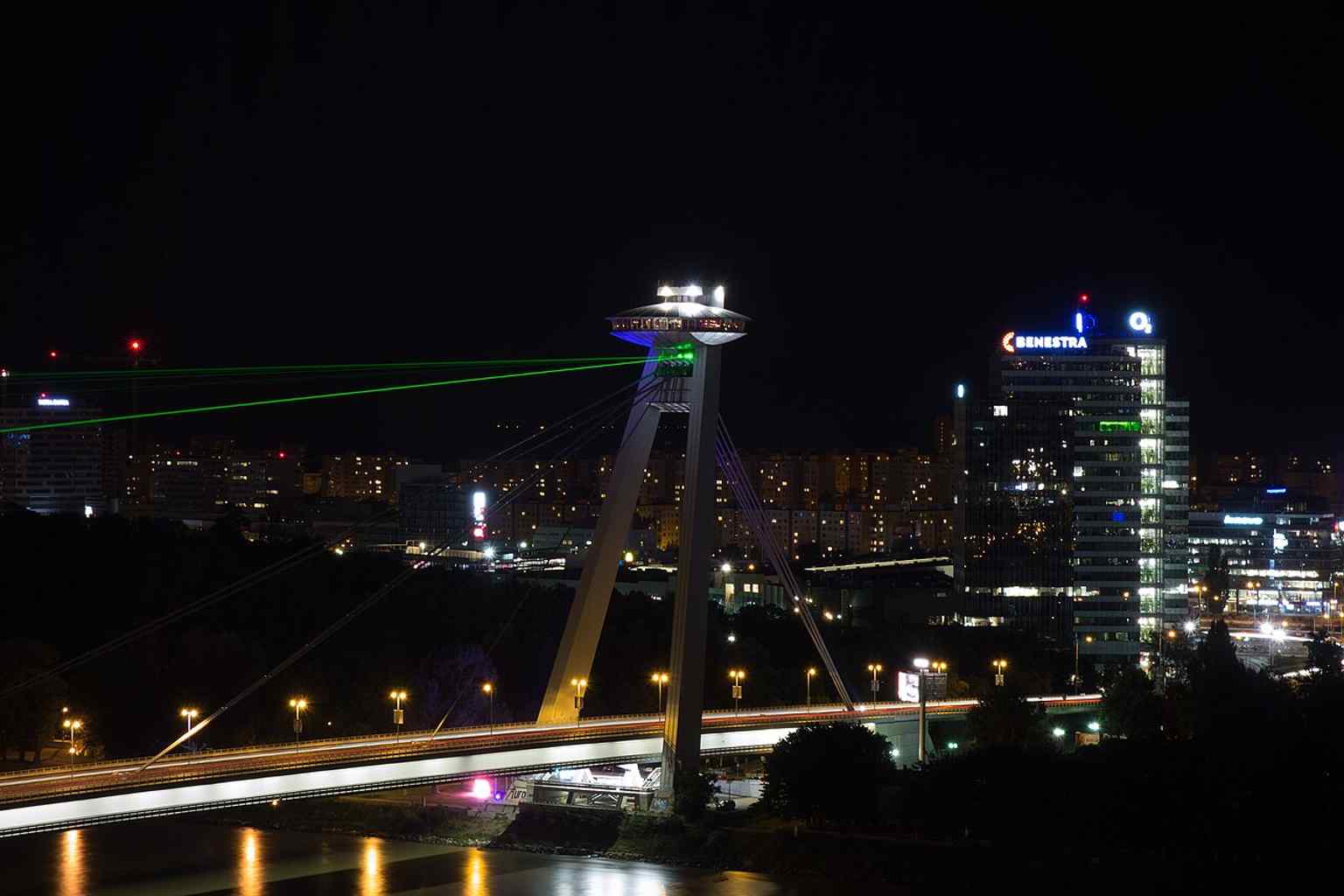
Up there, about eighty-five meters above the river, the U-F-O holds a restaurant and observation deck. An elevator rises through the eastern pylon, while the western one hides an emergency stair with four hundred thirty steps. Inside the bridge, quietly doing ordinary work, runs a water pipe feeding the Old Town from Petržalka. That feels right somehow. Even icons have chores.
In two thousand and one, Slovakia named it the construction of the century in its bridge category. In two thousand eighteen, the state protected it as a national cultural monument. So here at the end, Bratislava leaves you with no neat answer. This bridge is brilliant. This bridge is costly. The city asks you to hold both truths at once... and maybe that is the most honest view of it, and of everything you’ve seen.







%20at%20night.jpg)
.jpeg)